
Review · ART DECO TOURS
Art Deco, History and Crime Bike Tour with Design Enthusiast
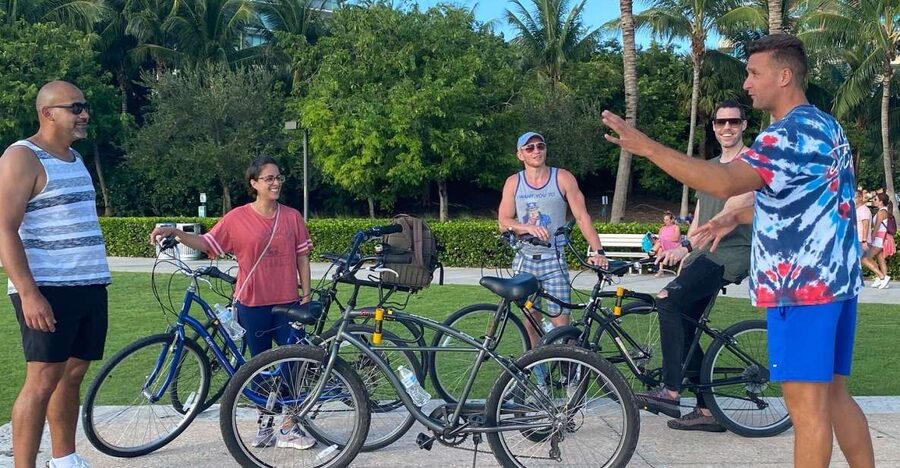
Miami Beach is a city built on a former swamp, shaped by developers, immigrants, crooks, boxers, and preservationists. This three-hour ride with Damian, a local historian and Art Deco preservation advocate, gives you a way to connect those stories while moving through the streets where they happened. The route reaches beyond the usual South Beach postcard scene, heading north toward Surfside and Bal Harbour.
I like two things right away. The architecture has context, so Art Deco, Mediterranean Revival, and MiMo buildings become part of a larger story instead of isolated photo stops. I also like the mix of subjects, from Black and Jewish history to Cuban migration, Miami Vice, cocaine cowboys, and the murder of Gianni Versace.
The main consideration is distance. The ride covers about 20 miles round trip, with scenic stops, so it is not a short, easy loop around Ocean Drive. Families and active cyclists should manage it well, but anyone hoping for a gentle sightseeing spin should plan for a fairly substantial outing.
Key points to know before you book
- About 20 miles round trip: The route reaches South Beach, Surfside, and Bal Harbour rather than staying in one compact district.
- Damian leads the ride: He is a local historian and Miami Design Preservation League member involved in Art Deco preservation.
- Architecture comes with social history: You learn about Art Deco, Mediterranean Revival, and MiMo alongside segregation, migration, and city growth.
- The darker side is part of the plan: Crime stories include the cocaine cowboys era, Miami Vice, and Gianni Versace’s murder.
- A good family option for active riders: A family with children aged 16 and 20 enjoyed the mix of cycling and storytelling.
- The $79 price includes the essentials: Your bicycle, water bottle, guided tour, and helmet if required are covered.
Why this Miami Beach bike ride feels different
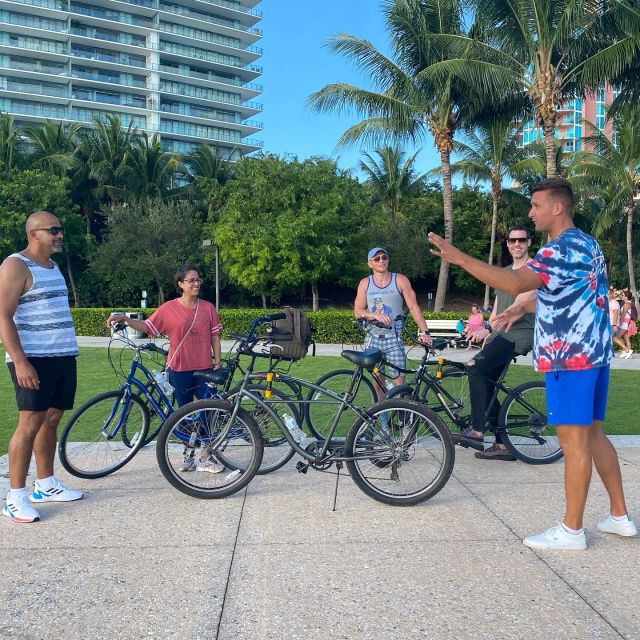
Many Miami Beach sightseeing tours stay close to Ocean Drive, where pastel facades, palms, and hotel signs do most of the talking. This ride uses those familiar streets as a starting point, then adds the less polished chapters: land reclamation, segregation, migration, organized crime, and the city’s repeated reinventions.
The first useful fact sets the tone: much of Miami Beach is man-made, and Biscayne Bay was once a shallow swamp. That changes how you look at the city. The grand hotels and clean boulevards were not simply waiting here for developers. They were part of a large effort to remake the coast into a resort city.
I like that the guide does not treat architecture as decoration. A building’s style helps explain when it appeared and what kind of Miami Beach it belonged to. You will encounter Art Deco, Mediterranean Revival, and MiMo, three design traditions that reveal different stages of the city’s growth.
The tour also connects local history to major figures. Muhammad Ali became world boxing champion for the first time in Miami Beach, adding a sports chapter to the city’s more familiar stories of nightlife and real estate. These details help turn a ride through streets into a look at how Miami Beach built its public image.
More Architecture Tours by Bike and Segway in Miami
- Miami: 2-Hour Art Deco Bike Tour
★ 4.6 · 155 reviews - Miami Beach Art Deco & History Bike Tour with Design Enthusiast
★ 5.0 · 135 reviews - Miami Beach Art Deco & Hidden Gems Bike Tour with Local Historian
★ 5.0 · 78 reviews
Starting among South Beach’s Art Deco buildings
The activity begins at a bicycle rental shop, where you receive the bike and water bottle. A helmet is included if required. The tour ends back at the same meeting point, which keeps the day simple and avoids the nuisance of arranging a return ride from another part of town.
South Beach is the natural opening chapter. Its streets hold the greatest concentration of the city’s famous Art Deco buildings, and the route takes you past historic sites, scenic parks, and hotel lobbies. Going inside selected lobbies matters because Art Deco is not only about a colorful exterior. The details continue indoors through entrances, decorative patterns, furniture, and the way hotels were designed to welcome visitors.
Here Damian’s background is important. He is involved with the Miami Design Preservation League, a group closely tied to the protection of Miami Beach’s historic architecture. That perspective should help you notice what preservation means in practical terms: not merely saving pretty facades, but keeping the physical record of how the city looked and functioned at different times.
You will also hear about the Great Depression and the early growth of Miami Beach. Those subjects add needed balance to the glamorous image. The resort did not develop in a straight line, and the city’s fortunes rose and fell with national events, construction, migration, and changing tastes.
This portion is likely the easiest section for photos and orientation. It is also the part most familiar to first-time visitors, so the value comes from Damian’s explanation rather than from simply seeing the buildings. If you have already taken a basic Art Deco walking tour, the bicycle route should still add range by carrying you beyond the central district.
Three architectural styles, three chapters of Miami
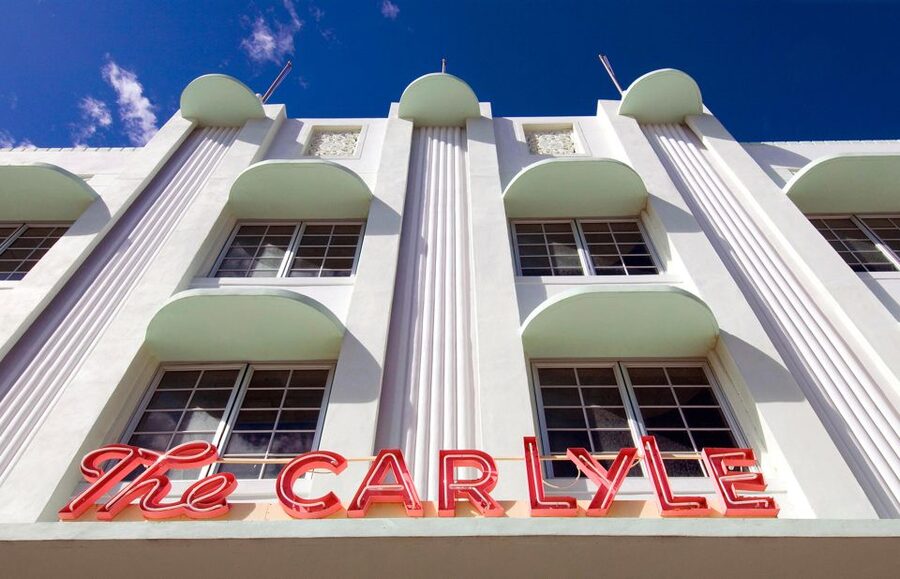
Art Deco gets top billing, but the tour also covers Mediterranean Revival and MiMo. That wider design lens is one of the strongest reasons to choose this experience over a standard beach ride.
Art Deco is tied closely to the visual identity of South Beach. The style’s clean lines, geometric details, and theatrical colors fit the resort setting, but the tour places those buildings within the city’s economic and social story.
Mediterranean Revival points to another idea of luxury. Its forms drew on European references and helped give Miami Beach a resort character that felt distinct from other American cities. You do not need a design background to follow the discussion. The useful part is learning to compare the styles as you ride.
MiMo, or Miami Modern, brings the story into a later period. Its presence shows that Miami did not stop changing once Art Deco became fashionable. The city kept experimenting with hotels, apartments, and commercial buildings as new eras brought new ideas about leisure and modern life.
I appreciate this approach because it gives you a simple viewing tool. Instead of seeing a row of unrelated buildings, you can ask what period each one represents, who it was meant to attract, and how the city wanted to present itself at that moment.
The social history behind the postcard
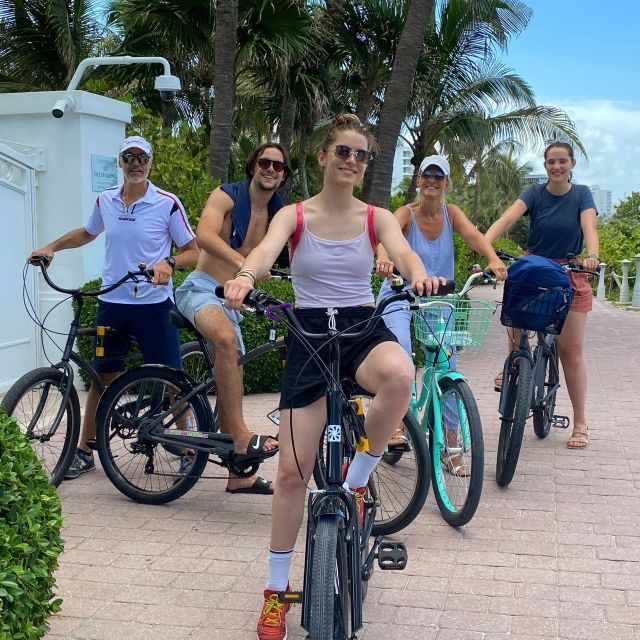
Miami Beach history can become shallow if it focuses only on hotels, celebrities, and nightlife. This tour gives more room to the people and communities that shaped the city.
Black history and segregation are part of the discussion. That is essential context. A resort city could sell an image of freedom and pleasure while still imposing unequal access and treatment. Learning about those contradictions helps you read Miami Beach with more care.
Jewish history is also included, adding another major strand to the city’s development. Cuban migration brings the story forward and shows how Miami’s identity was shaped by movement across the Florida Straits. These subjects are not side notes. They help explain the city’s language, food, neighborhoods, businesses, and political character.
I like that the tour places these themes beside the architecture rather than separating them. Buildings are connected to the people who financed them, worked in them, lived near them, and fought to preserve or change them. That makes the ride more useful than a list of dates and famous names.
The amount of detail will depend on the pace of the group and the stops that day. Three hours is enough to cover a wide range, but not enough to provide a full academic history of every community. Think of this as a strong introduction that gives you subjects to explore during the rest of your stay.
More Architecture Tours by Bike and Segway in the USA
- Miami Beach Art Deco Segway Tour
★ 4.5 · 17 reviews - Miami Beach Art Deco Bike Tour
★ 5.0 · 6 reviews - Miami Beach: Art Deco Segway Tour
★ 4.7 · 4 reviews - Palm Springs Modernism Architecture & History Bike Tour
★ 5.0 · 359 reviews
Heading north to Surfside and Bal Harbour
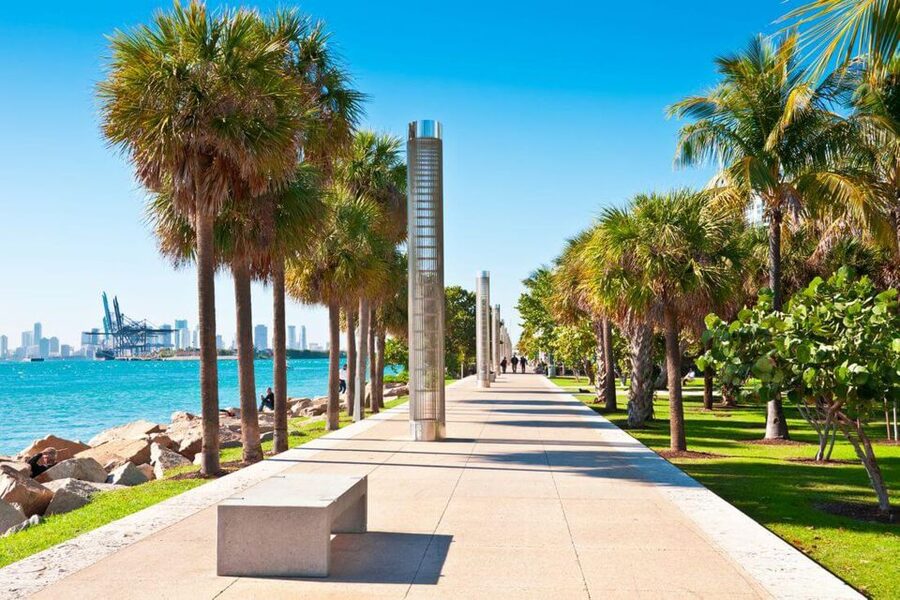
The ride does not turn around at the edge of South Beach. It continues north through Surfside and Bal Harbour, two other municipalities in the Miami Beach area. That broader route is a major advantage, since it shows you that the coastal resort zone is not one single place with one single identity.
The northern section also gives the ride a more scenic feel. You get picturesque stretches along the coast and a change in setting after the dense Art Deco core. The route is long enough to make the geography clearer: Miami Beach is not just Ocean Drive and the blocks immediately behind it.
This is where the distance becomes both a benefit and a limitation. Covering about 20 miles round trip gives you a wider view and more variety, but you should be comfortable spending several hours on a bicycle. The ride includes frequent stops, which makes it more manageable, yet it is still active sightseeing rather than a quick transport option.
A family of four with a 16-year-old and a 20-year-old enjoyed the route, which suggests that older children and teenagers who can handle the distance may find it a good fit. I would choose it for an active family, couple, or solo visitor who wants to see more ground without committing to a full day.
Crime stories, scandal, and the Miami Vice era
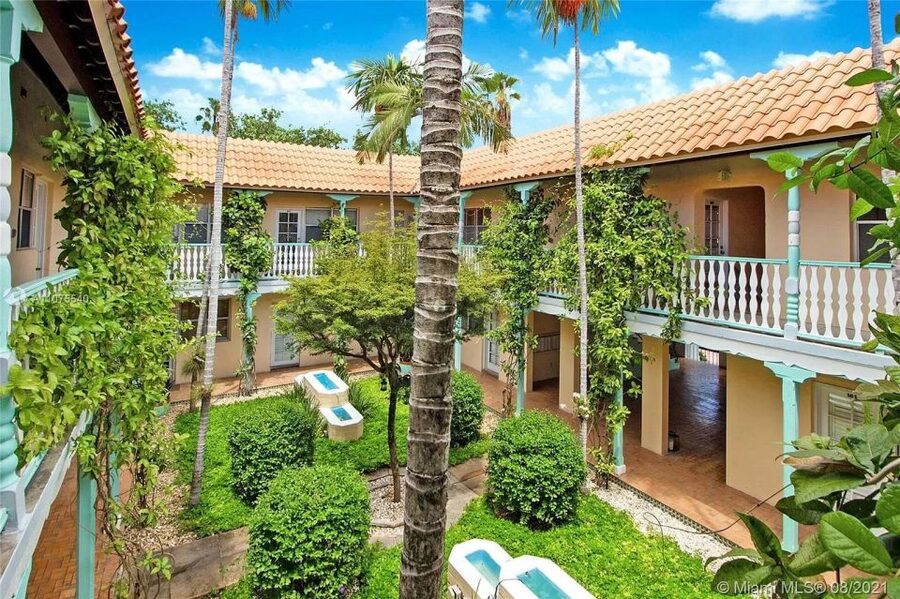
The darker material gives this tour its strongest sense of contrast. Miami Beach is often sold as sun, swimming pools, and pastel buildings. Damian also addresses the city’s scandals, organized crime, and the cocaine cowboys era.
The Miami Vice connection belongs to the same chapter of public image and criminal notoriety. The television series helped turn Miami into an international symbol of fast cars, nightlife, drug money, and bright coastal style. The tour uses that era to show how the city’s real problems and its entertainment image became tangled together.
The murder of Gianni Versace adds another famous location and another reminder that luxury districts can hold disturbing stories. True crime works well here because the setting is so polished. You may be looking at an attractive street while hearing about the violence and power struggles that once made national headlines.
This material will appeal to you if you enjoy history with a mystery angle. It may be less suitable if you want a purely architectural tour or prefer to avoid murder and organized crime stories. The description makes clear that these subjects are a central part of the ride, not a brief aside.
The best use of true crime is to explain place, not simply shock you. Here it appears alongside the city’s development, its nightlife economy, and its changing public reputation. That broader setting keeps the stories from becoming random sensational tales.
How Damian’s guiding style shapes the experience
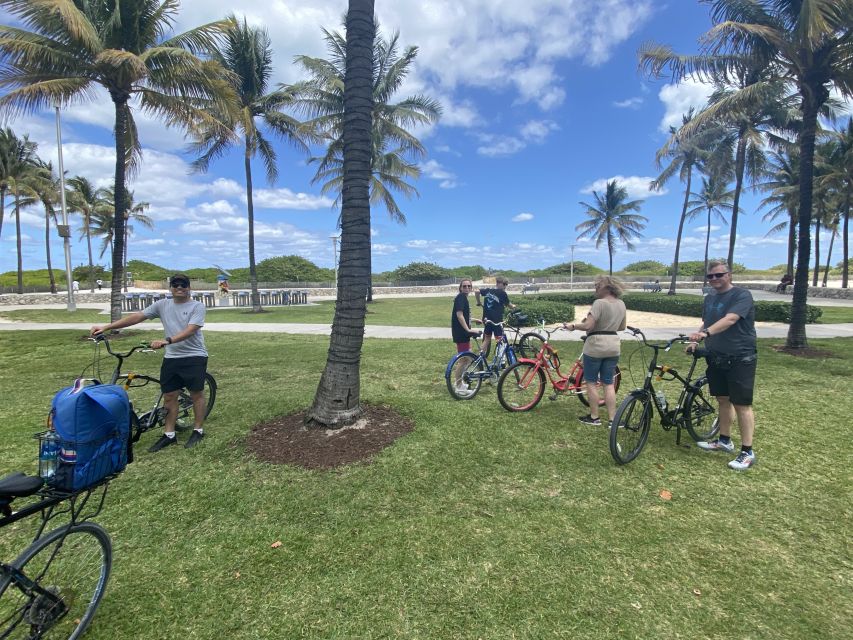
Damian is the named guide for this experience, and his role is more than leading a bicycle line through town. He designed the tour and works as a passionate local historian with ties to Art Deco preservation.
That combination matters. A guide who knows the architecture can point out details you might miss, while a guide who studies local history can connect those details to politics, migration, crime, and preservation. The result should feel more like a moving conversation about Miami Beach than a checklist of landmarks.
The strongest praise centers on his storytelling, friendly manner, and command of the city’s past. I would place particular value on the fact that the route is his own design. It suggests that the stops are selected to fit a larger story instead of being a random collection of popular locations.
The experience is in English, with a live guide. Because the subject list is broad, it is worth arriving ready to listen. You will get more from the ride if you are curious about why the city looks the way it does, not only interested in taking photographs.
Is $79 a fair price?
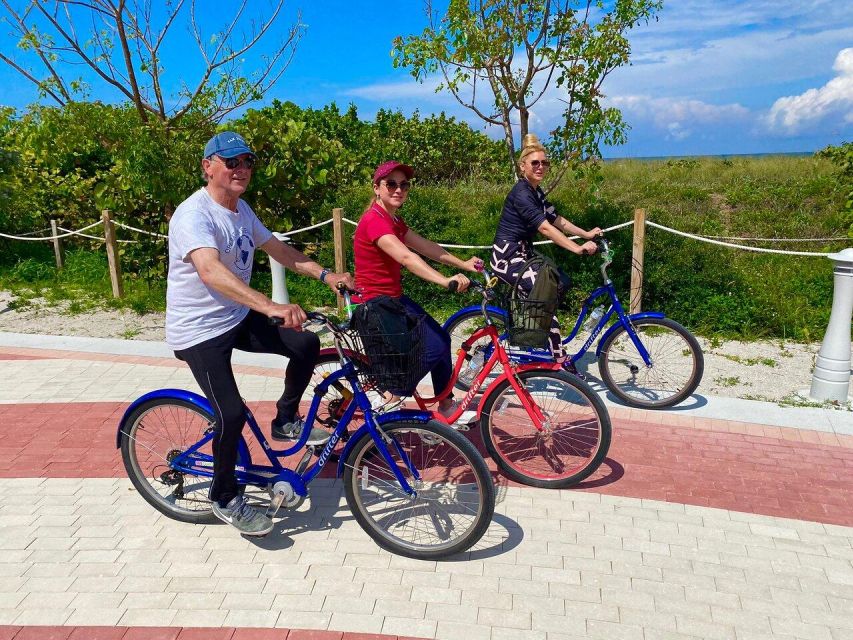
At $79 per person, the tour sits in a reasonable range for a three-hour guided experience that includes a bicycle, water bottle, and helmet if required. You are paying for more than equipment rental. The real value is Damian’s route, local knowledge, and the time spent connecting several parts of the city.
A self-guided ride might cost less, but it would not automatically give you access to hotel lobbies, preservation stories, or the historical links between Art Deco, segregation, Cuban migration, and the cocaine cowboys era. You could also miss the significance of places that look attractive but seem ordinary without explanation.
The price makes the most sense if you want a structured introduction during your first days in Miami Beach. One useful benefit is that the ride can help you find restaurants and places to visit later. A family who took the tour came away with new ideas for the rest of their stay, and that is a practical bonus.
It is less compelling if you already know the city well, have no interest in guided storytelling, or want only a short bicycle rental. In that case, you may not use enough of the historical side to justify the cost.
Timing, effort, and what to bring
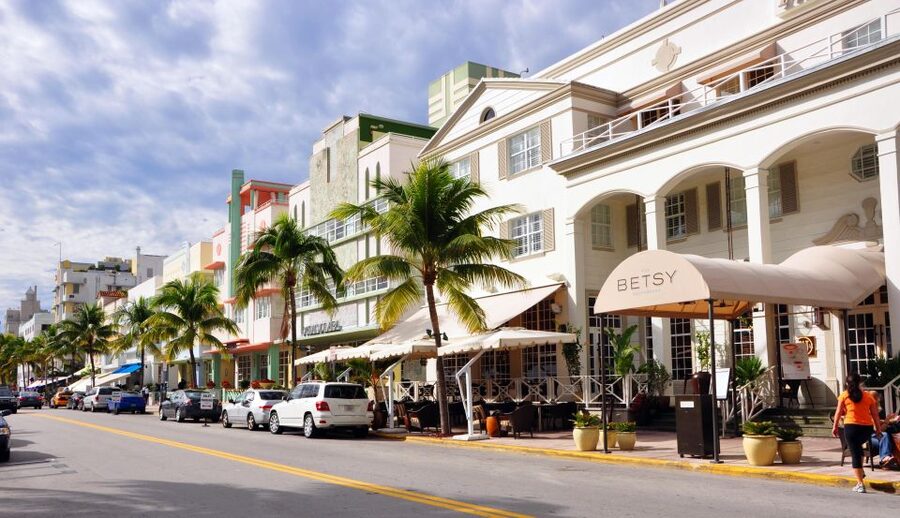
The activity lasts three hours, with starting times based on availability. Since the ride covers about 20 miles and includes several stops, I would avoid scheduling it immediately before another fixed activity.
You receive a water bottle, but you should still think about the practical demands of a long outdoor ride. Wear clothing suitable for cycling and choose footwear that feels secure on a bicycle. The supplied information does not specify bike types, group size, or a detailed accessibility policy, so ask the operator if those points affect your decision.
The activity has free cancellation up to 24 hours before the start, and you can reserve now and pay later. Those terms are useful when weather or a changing Miami Beach schedule makes planning uncertain.
Who should book this ride?
I would recommend it most strongly to:
- First-time visitors who want more than the standard South Beach view
- Architecture fans interested in Art Deco, Mediterranean Revival, and MiMo
- History-minded visitors who want social and political context
- Active families with older children
- People who enjoy true crime and Miami Vice era stories
- Visitors who prefer a local guide to a recorded tour
I would think twice if you want a short, relaxed ride with little talking. The length, broad subject list, and northbound route make this a full sightseeing activity. You should also be comfortable with the possibility of serious subjects, including segregation, organized crime, and murder.
Should you book the Art Deco, History and Crime Bike Tour?
Book it if you want Miami Beach explained from several angles at once. The route gives you the famous architecture, but it does not stop there. You also get the city’s man-made beginnings, social divisions, immigrant communities, sports history, crime era, and changing public image.
The strongest reason to choose it is Damian. His preservation work and local focus give the ride a clear point of view, while the roughly 20-mile route shows you more than a compact South Beach loop. At $79, the value is good for an active visitor who wants a guide, bicycle, and a serious amount of local context in three hours.
Skip it if you want only a quick beach ride, or if a long bicycle outing sounds tiring. For everyone else, this is a smart first look at Miami Beach, especially if you want the city’s polished facade and its stranger stories in the same afternoon.
FAQ
How long is the Art Deco, History and Crime Bike Tour?
The tour lasts three hours. The route is about 20 miles round trip, including scenic stops.
Where does the tour start and finish?
You meet at the bicycle rental shop. The activity ends back at the same meeting point.
Which areas does the bike tour visit?
The route explores South Beach and continues north through Surfside and Bal Harbour.
Who leads the tour?
Damian leads the experience. He is a local historian, a member of the Miami Design Preservation League, and a person involved in Art Deco preservation.
What is included in the price?
The $79 price includes the guided tour, bicycle, water bottle, and helmet if required.
Is the tour offered in English?
Yes. The tour has a live English-speaking guide.
More Art Deco Tours in the USA
- Award-winning Art Deco & Neon Lights Walking Tour in Miami Beach
★ 5.0 · 150 reviews - South Beach Food & Fun Art Deco Miami Food Tour
★ 5.0 · 138 reviews - Award-winning Art Deco & History Walking Tour in Miami Beach
★ 5.0 · 138 reviews - Miami Art Deco Gems & Jewels Small Group & Exclusive Access Tour
★ 5.0 · 55 reviews
More Art Deco Tours in Miami
- The Official Art Deco Walking Tour by The Miami Design Preservation League
★ 5.0 · 1,580 reviews - Miami South Beach Art Deco Walking Tour
★ 5.0 · 1,039 reviews - Miami Beach Food and Art Deco Walking Tour
★ 4.5 · 245 reviews - Miami Beach Art Deco Tour with Cocktails
★ 5.0 · 153 reviews
Newly added in Miami
- Miami: History through Architecture Private Tour with Transport★ 5.0 · 9 reviews
- Miami Beach Art Deco Private Tour With Cocktails★ 5.0 · 10 reviews
- Miami Beach Art Deco Bike Tour★ 5.0 · 6 reviews
- Self-Guided Audio Tour – Miami Art Deco★ 3.0 · 7 reviews
- Miami Beach Bar Tour: Art Deco & Neon Lights by Local Historian★ 5.0 · 5 reviews
- South Beach Art Deco Highlights and The Wolfsonian Museum Tour★ 5.0 · 5 reviews
- Miami : Art Deco & South Beach Walking Tour with a Guide★ 5.0 · 4 reviews
- Miami: South Beach Art Deco Walking Tour★ 4.5 · 4 reviews
Art Deco Tours, compared.
The Official Art Deco Walking Tour by The Miami Design Preservation League
Read our review →
Guided 10am Morning Art Deco Walk From Napier Art Deco Trust
Read our review →
Award-winning Art Deco & Neon Lights Walking Tour in Miami Beach
Read our review →
Art Deco and Architecture Midtown Landmarks Tour
Read our review →Browse the lists this tour appears in