

Review · USA ARCHITECTURE TOURS
New Orleans Garden District Architecture Tour
The best part of this tour is that it teaches you how to read the Garden District. Instead of simply pointing at pretty houses, your guide explains Italianate design, changing building styles, burial customs, and the people who lived behind those grand façades. Lafayette Cemetery adds a memorable look at New Orleans funeral traditions.
I like the small group size, capped at 14, and the way the walk mixes architecture with local stories. I also like that guides such as Angela, Doug, Lee, Pauline, and Gary use personal knowledge, photographs, humor, and extra research to make the buildings easier to understand.
The main consideration is the weather. This is a two-hour outdoor walk, and one review specifically notes that September can be very hot. Lafayette Cemetery may also close during services, so that part of the route is not guaranteed.
Key points to know before you book

- Architecture with a useful lesson: Learn to spot Italianate details and tell different building eras apart.
- Lafayette Cemetery No. 1: Get a short introduction to New Orleans burial customs in one of the city’s famous Cities of the Dead.
- Small groups: A maximum of 14 people gives the walk a more personal feel and leaves room for questions.
- Strong local storytelling: Guides including Angela, Doug, Lee, Pauline, and Gary bring in family stories, photographs, famous residents, and restaurant tips.
- A relaxed two-hour pace: The route covers several notable homes and buildings without turning into an all-day march.
- Good value for architecture fans: At $40, you are paying mainly for interpretation, context, and local insight rather than admission tickets.
Why the Garden District is best understood on foot
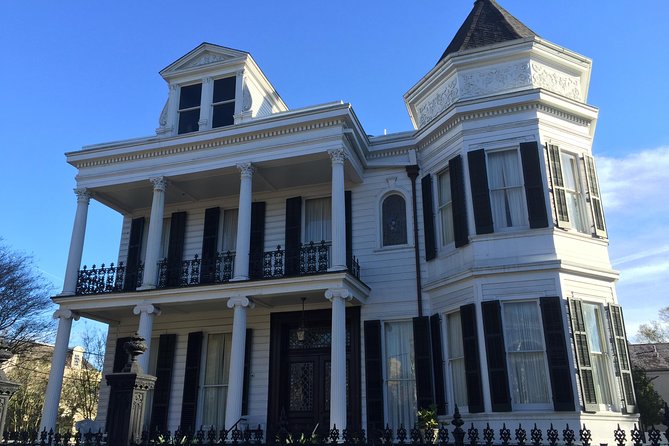
The Garden District rewards slow looking. Its broad streets, mature trees, ironwork, and large homes can be attractive at first glance, but the details become more interesting once someone explains what you are seeing.
A local guide can point out the difference between a home built in one period and a building altered later. That matters here because the neighborhood contains several styles close together. The tour gives you a basic visual vocabulary, especially for Italianate architecture, so you can keep identifying details after the walk ends.
The route also adds human stories. You hear about owners, designers, residents, and the changes that took place as private homes became schools or other public spaces. The result is more useful than a simple parade of famous addresses. You leave with a better sense of how the district developed and why its buildings look the way they do.
The pace is leisurely. You spend time looking up at cornices, windows, porches, and façades, then move on before the information becomes too dense. That makes this a good first activity in New Orleans, especially if you want a framework for the rest of your sightseeing.
A few more architecture walks in the USA worth a look
- Chicago Architecture River Cruise
★ 5.0 · 15,756 reviews - Chicago River 90-Minute Architecture Tour
★ 4.5 · 9,629 reviews - Chicago River: 1.5-Hour Guided Architecture Cruise
★ 4.8 · 8,046 reviews
Lafayette Cemetery starts the walk with New Orleans customs
The tour begins at 2727 Prytania Street, near Lafayette Cemetery No. 1. A short section of the walk focuses on New Orleans burial customs and the city’s above-ground tombs, a subject that helps explain an important part of local culture.
The cemetery stop is listed at about five minutes, so do not expect a long cemetery tour. Think of it as a focused introduction before the group turns toward the surrounding architecture. The cemetery is free to enter when access is permitted, but the City of New Orleans can close it when services are taking place.
That closure is worth keeping in mind. If Lafayette Cemetery is unavailable, the tour still has plenty of architectural material, but this stop may be shortened or skipped. Wear comfortable walking shoes, since the cemetery and Garden District streets are part of one continuous walk.
Commander’s Palace adds food and building history
Commander’s Palace receives only a brief stop, but it gives the guide a chance to connect architecture with New Orleans dining. You hear about the building, the history of its owners, and the culinary experience associated with the restaurant.
The restaurant itself is not included, so this is not a meal stop. It works better as a useful pointer for later. If you are planning where to eat in the Garden District, your guide can help put Commander’s Palace in context, and some guides also offer suggestions for food after the tour.
That practical touch comes through in the guide style. Lee, for example, was praised for sharing useful places to eat afterward. The exact guide changes, so the conversation will vary, but asking for restaurant advice is a sensible use of the small group format.
Italianate houses: Morris-Israel and Carroll-Crawford
The Morris-Israel House, designed by Samuel Jameson in 1869, is one of the clearest architecture lessons on the route. Here you learn about New Orleans Italianate design and how it relates to other homes nearby.
A short stop does not allow for an academic lecture, nor should it. The value comes from learning what to look for: the overall shape of the building, decorative treatment, windows, and other features that help distinguish Italianate work from neighboring styles. Once your guide explains the pattern, the rest of the district becomes easier to read.
The Carroll-Crawford House offers another Samuel Jameson example. Seeing two houses connected to the same designer helps you compare details rather than treat each mansion as an isolated curiosity. It also gives the guide a chance to talk about the people who commissioned these buildings and the design choices that shaped the street.
Architecture fans will get the most from these stops. If you mainly want celebrity stories or spooky tales, you may find the design discussion more detailed than expected. That is also the reason to choose this tour over a general neighborhood stroll.
Same city, a different facade:
- Chicago Architecture Center River Cruise aboard First Lady
★ 5.0 · 5,536 reviews - Chicago: Architecture River Cruise Skip-the-Ticket Line
★ 4.8 · 4,325 reviews - Chicago River 45-Minute Architecture Tour from Magnificent Mile
★ 4.5 · 2,924 reviews - Chicago Lake and River Architecture Tour
★ 4.5 · 2,308 reviews
The Women’s Opera Guild House shows change over time
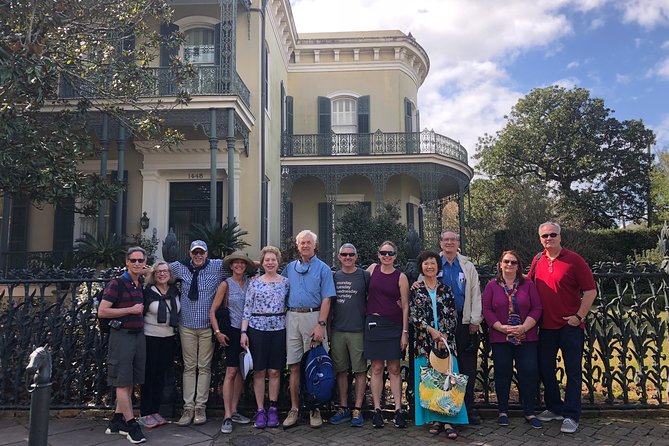
The Women’s Guild of the New Orleans Opera, often called the Women’s Opera Guild House, is useful because it contains two eras and two architectural styles. The stop is short, but the lesson is practical: buildings change, and a single façade can preserve more than one period of construction.
This is one of the tour’s better ideas. You are not only studying grand homes at their finished point. You are learning to notice additions, alterations, and shifts in taste. That kind of comparison gives you something to look for throughout New Orleans.
For a first-time visitor, this is an efficient way to gain confidence. You do not need to memorize architectural terms. You simply learn to ask why one portion of a building looks different from another.
Louise S. McGehee School tells a building’s second story
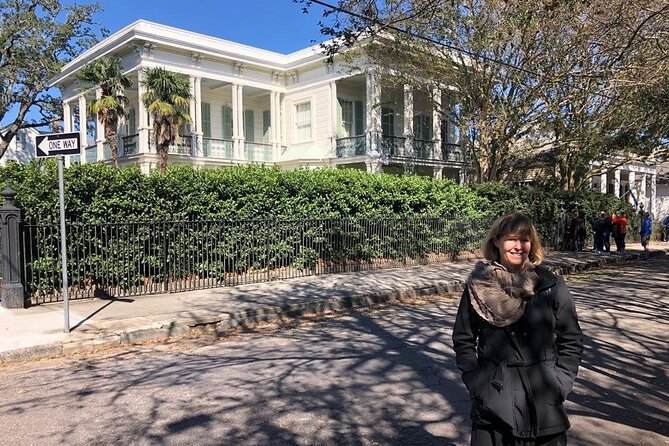
The Louise S. McGehee School receives one of the longer stops, about 10 minutes. Its history runs from a single-family residence to a library connected with the school, showing how an old home can take on a new role.
This is more than a school stop. It explains how the Garden District has changed while keeping much of its historic fabric. Buildings are not frozen museum pieces. They can become schools, libraries, restaurants, or other useful places while retaining traces of their earlier lives.
The longer pause also gives you a chance to absorb the building itself. You can study the exterior while your guide fills in the story. If you like architecture with a clear human timeline, this should be one of the more rewarding parts of the route.
The Rink recalls recreation in 1884

The Rink Shopping Center looks modest beside the district’s mansions, but its story gives the walk a welcome change of scale. Built in 1884, the building housed what was then the largest skating rink in the country.
This stop helps correct the idea that the Garden District is only about grand residences. People also came here to spend free time, socialize, and take part in popular recreation. A simple commercial building can reveal just as much about daily life as an ornate house.
The stop lasts about seven minutes. That is enough time to explain the building’s original purpose and its place in the neighborhood without pulling the tour too far from its architecture focus.
The wider Garden District route fills in the people and setting
The Garden District portion is the heart of the experience. Across roughly two hours, you admire antebellum mansions, tree-lined streets, and buildings connected to the district’s growth. Your guide discusses who designed the homes, who commissioned them, and who lived in them.
The route also includes stories about famous residents. One small-group walk with Doug included the Anne Rice house, along with celebrity connections. These details can be fun, but they work best as seasoning rather than the main course. The strongest part of the tour remains the connection between people, architecture, and place.
Guide quality matters a great deal here. Angela has been praised for her personal connection to New Orleans and for explaining the architecture in a way that helped a family understand the rest of the city. Doug is noted for his easy manner, photographs, local history, and ability to keep a good pace. Pauline brings extra research about how buildings changed over the decades. Gary uses photographs to clarify his points and welcomes questions.
Other named guides include Eva, John, Chelsea, Kelsey, Lee, and Phant, also identified as Caroline in one experience. Since guide assignments vary, you cannot book a particular personality based on the general tour description. Still, the pattern is clear: this experience depends on a guide who can turn façades into stories.
What the $40 price buys you
The cost is $40 per person. Admission is free at the listed stops, and transportation is not included, so you are paying primarily for the licensed, insured local guide and the interpretation that comes with the walk.
That is fair value if you want to understand what you are seeing. A self-guided walk through the Garden District can show you attractive homes, but it will not automatically explain Italianate architecture, the history of Commander’s Palace, the changing use of the McGehee property, or the former skating rink.
The price is less compelling if you prefer to wander alone or already know the neighborhood well. It is also not a bargain in the sense of including food, museum entry, or transportation. But for a two-hour orientation led by someone who knows the area, $40 is reasonable, especially early in a New Orleans visit.
The maximum group size of 14 helps protect that value. You are less likely to feel lost in a large crowd, and you have a better chance to ask about a particular house or return to a detail you missed.
Timing, meeting point, and practical comfort
The walk starts at 2727 Prytania Street and ends back at the meeting point. You arrange your own transportation to and from the location. The site is near public transportation, which helps if you are staying outside the Garden District.
Wear comfortable walking shoes. The route is outdoors, lasts about two hours, and includes standing while looking at buildings. Bring what you normally need for a warm-weather walk, since the tour operates only with favorable weather.
The activity is offered in English and uses a mobile ticket. Confirmation arrives when you book. Most people can participate, and service animals are allowed.
The weather policy is simple: if poor conditions cancel the walk, you receive the option of another date or a full refund. You can cancel for a full refund up to 24 hours before the start time. Inside that window, refunds are not available and changes are not accepted.
Who will enjoy this tour most
I would choose this walk if you are visiting New Orleans for the first time and want more than attractive street views. It is especially suited to anyone interested in architecture, local history, historic homes, or the way buildings change use over time.
Families can do well here, too. A 17-year-old enjoyed the tour with a family group, and the mixture of houses, famous residents, cemetery customs, and unusual buildings gives the walk more variety than a strict design lecture.
Couples and solo visitors should also find the format comfortable. The group is small enough for questions, and the pace is not built around rushing from one address to the next.
You may want a different activity if you have limited mobility for a two-hour outdoor walk, dislike hot weather, or want to go inside the homes. This is primarily an exterior architecture tour. The itinerary does not promise interior access to the residences or Commander’s Palace.
Should you book the Garden District Architecture Tour?
Book it if you want a clear introduction to one of New Orleans’ most attractive neighborhoods and prefer a guide who explains rather than simply points. The strongest reasons are the small group, the practical architecture lessons, the local stories, and the chance to connect famous homes with the people and uses behind them.
I would schedule it near the start of your stay. Afterward, you will notice more when you walk through other parts of the city, and you can use your guide’s restaurant suggestions for the rest of the day.
Skip it if you want a private tour, a full cemetery visit, interior access, or a food experience included in the price. For most first-time visitors who can manage a two-hour walk, though, $40 buys a useful and personable introduction to the Garden District.
FAQ
How long is the New Orleans Garden District Architecture Tour?
The tour lasts approximately two hours and ends back at the starting point.
Where does the tour start?
The meeting point is 2727 Prytania Street, New Orleans, Louisiana 70130.
What is the maximum group size?
The tour allows a maximum of 14 travelers, creating a small-group experience.
Is Lafayette Cemetery always open during the tour?
No. Entry is permitted by the City of New Orleans, but the cemetery may close when services are being held.
Is transportation included?
No. You are responsible for transportation to and from the meeting point and attractions.
What happens if bad weather cancels the tour?
You will be offered an alternative date or a full refund. You may also cancel up to 24 hours before the start time for a full refund.
Newly added in the USA
- Art Deco Tour of South Beach in French★ 4.5 · 8 reviews
- Award-winning Art Deco & Neon Lights Walking Tour★ 5.0 · 5 reviews
- Miami Beach Art Deco Segway Tour★ 4.5 · 17 reviews
- Boston: Freedom Trail History and Architecture Walking Tour★ 4.8 · 18 reviews
- Boston: Harbor and Charles River Architecture Boat Tour★ 4.6 · 9 reviews
- Iconic Capitol Hill Architectural Walking Tour★ 5.0 · 21 reviews
- Chicago: Guided Tour with Architecture River Cruise★ 4.5 · 20 reviews
- South Beach Food Tour- Culinary & Art Deco & History★ 5.0 · 22 reviews
USA Architecture Tours, compared.

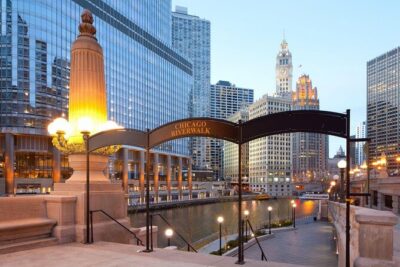

Chicago River: 1.5-Hour Guided Architecture Cruise
Read our review →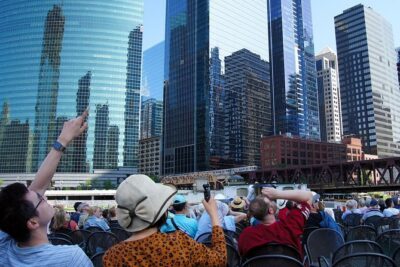
Chicago Architecture Center River Cruise aboard First Lady
Read our review →
Architecture River Cruise Skip-the-Ticket Line
Read our review →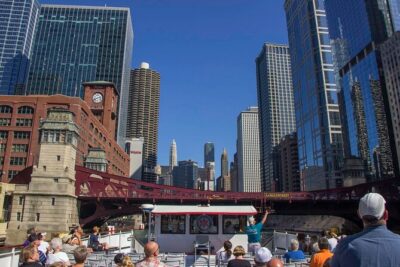
Chicago River 45-Minute Architecture Tour from Magnificent Mile
Read our review →

45-Minute Family-Friendly Architecture River Cruise
Read our review →Browse the lists this tour appears in