
Review · WALKING TOURS
Washington, DC: Georgetown Architecture Walking Tour
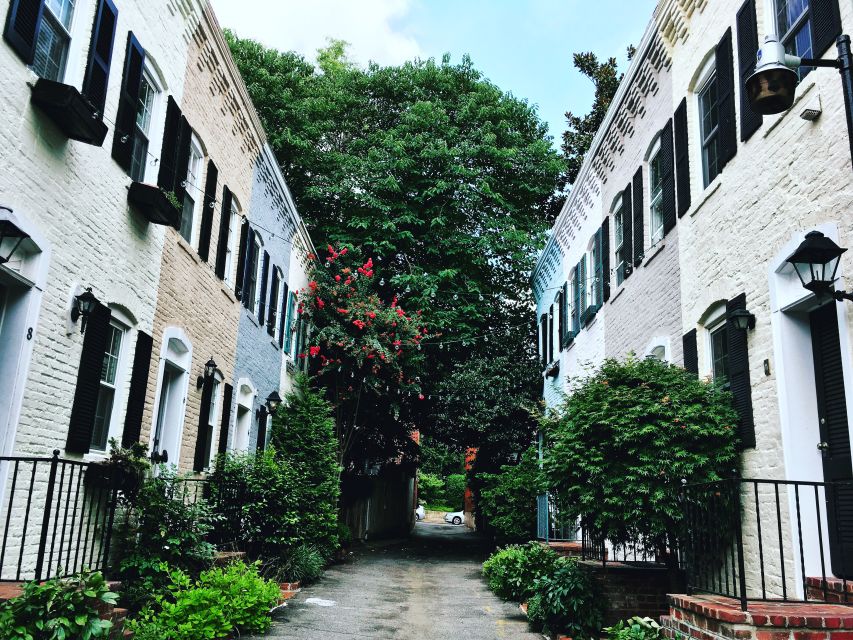
Georgetown’s story is written on its streets. This 150-minute walk connects grand homes, old schools, churches, a canal, university buildings, and tiny pastel row houses into one readable tale of a port town that moved from working waterfront to fashionable address. The C&O Canal and Pomander Walk are especially good stops because they show two very different sides of the neighborhood.
I like the relaxed pace and the focus on architectural details you could easily miss on your own. I also like the human stories attached to places such as the Lydia English Seminary and Alexander Graham Bell’s Volta Laboratory. The main drawback is simple: you will walk about two miles outdoors, rain or shine, and the tour leaves on time, so comfortable shoes and an early arrival matter.
Key points
- A two-mile route with real variety: The walk covers canals, historic houses, churches, schools, university buildings, a former streetcar depot, and the waterfront.
- Architecture tied to local stories: You learn how Georgetown’s buildings reflect its rise from a commercial port to an elite neighborhood.
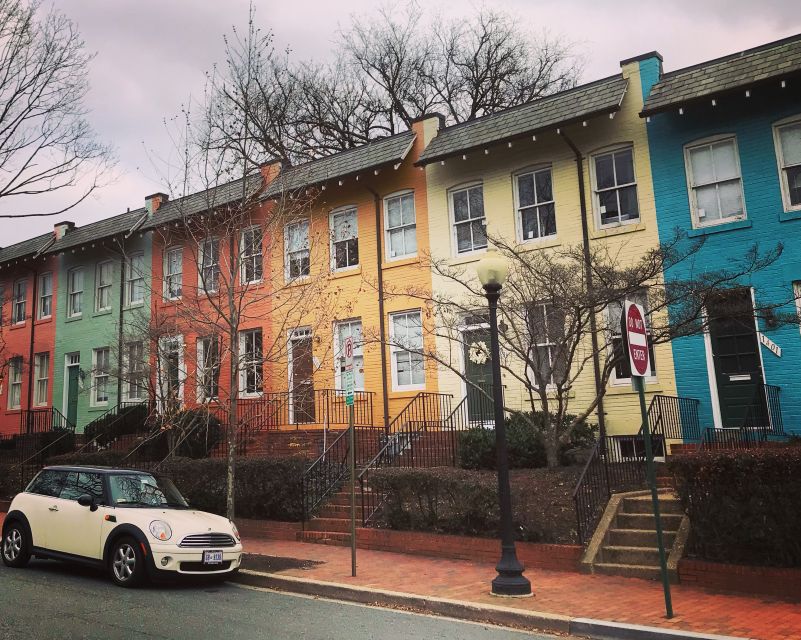
- Pomander Walk offers a change of scale: Its small, pastel row houses provide a memorable contrast to Georgetown’s larger homes and institutions.
- Several stops are easy to miss alone: Volta Laboratory, the Double House, the Yellow Tavern, and the Car Barn reward a guide-led walk.
- Guides add personality: Sam and Ellyn have led past tours, with history, architectural facts, and a few entertaining side notes.
- The finish is scenic and practical: The route ends at the Georgetown Waterfront, giving you a pleasant place to continue your afternoon.
Why Georgetown works so well as a walking tour
Georgetown is compact enough to explore on foot, but its story has plenty of turns. The neighborhood began as a port community along the Potomac, developed around trade and the canal, and later became known for elegant homes, schools, churches, and Georgetown University.
That change is what makes the walk more than a parade of old facades. You see how commerce, education, religion, and social status shaped the streets. A guide can point out those connections while you are standing in front of the actual buildings, instead of leaving you to sort out a list of dates afterward.
The tour moves at a leisurely pace over roughly two miles. That is a useful middle ground. You cover a good amount of Georgetown without spending the whole day on foot, yet the route is long enough to reach several corners you might skip on a short self-guided stroll.
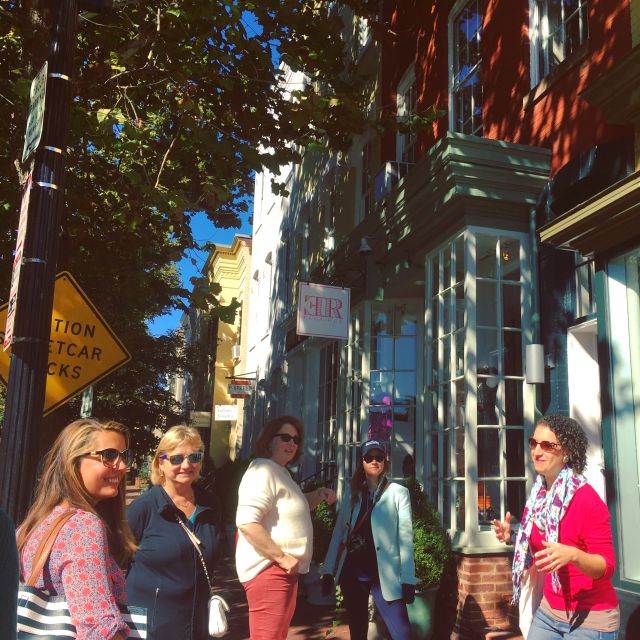
You meet outside Baked & Wired, a central Georgetown location. Look for a guide wearing a DC Design Tour shirt, and arrive about five minutes early. The group departs on time, so a late coffee stop is a poor trade for missing the opening story.
More Walking Tours in the USA
- The Official Art Deco Walking Tour by The Miami Design Preservation League
★ 5.0 · 1,580 reviews - Chicago in a Day: Food, History & Architecture Walking Tour
★ 5.0 · 1,153 reviews - Miami South Beach Art Deco Walking Tour
★ 5.0 · 1,039 reviews
The C&O Canal and Georgetown’s working past
The Chesapeake and Ohio Canal is an important early stop because it gives the neighborhood a practical foundation. The canal connected communities along the Potomac with markets and goods, helping Georgetown function as a place of business rather than simply a pretty residential district.
I like beginning here because it keeps the tour grounded. Georgetown can look polished today, with upscale shops and carefully maintained houses, but the canal points to a busier commercial past. It helps you understand why this particular stretch of Washington developed where it did.
Your guide uses the canal as a starting point for the neighborhood’s rags to riches story. That phrase is not just a slogan. It frames the shift from trade and transport to the grand homes and institutions that follow.
The canal itself also creates a break from the street grid. If you enjoy seeing how a city’s infrastructure shaped its buildings, this part will likely hold your attention. If you came mainly for grand houses, it may feel less glamorous at first, but it supplies the context that makes the later stops more meaningful.
Historic homes and the Lydia English Seminary
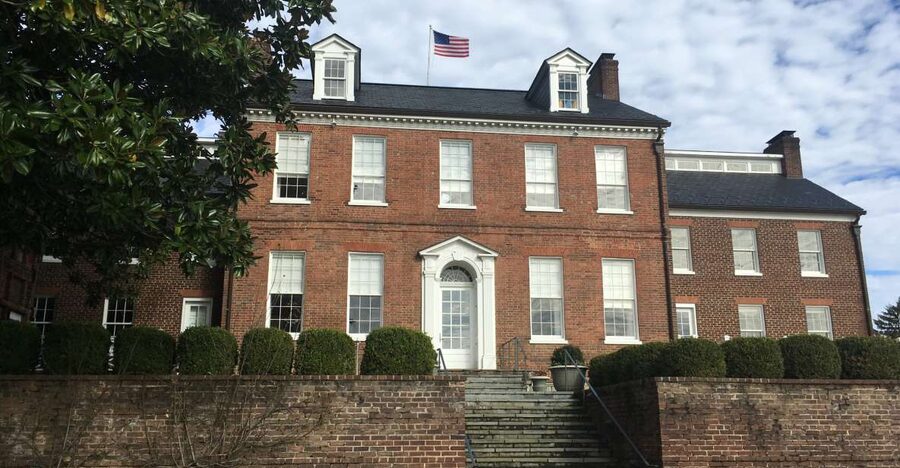
The route then brings you to several residential buildings, including the Laird-Dunlop House and the Newton D. Baker House. These stops let you study Georgetown at a close range, where doorways, proportions, brickwork, and street frontage tell their own story.
The tour is not limited to famous landmarks. That is one of its strengths. Local houses can reveal social history in a quieter way than a major monument, especially when a guide explains who lived there and how the neighborhood’s fortunes changed.
The Lydia English Seminary School for Girls adds another layer. This was a boarding school serving the upper class, so the building connects Georgetown’s architecture with education and social position. You are not simply looking at an old schoolhouse. You are considering who had access to this kind of education and how institutions helped shape the neighborhood’s identity.
The Grafton Tyler Double House is another useful stop. Its name alone hints at a building designed around more than one household, and the guide’s explanation gives you a reason to look closely rather than walk past it as just another historic facade.
These early residential stops are best for people who like detail. If you prefer quick photo stops and a packed list of major attractions, the pace may feel measured. The reward is a more thoughtful view of Georgetown, where ordinary-looking streets carry stories that a bus tour would miss.
Churches, schools, and the Yellow Tavern
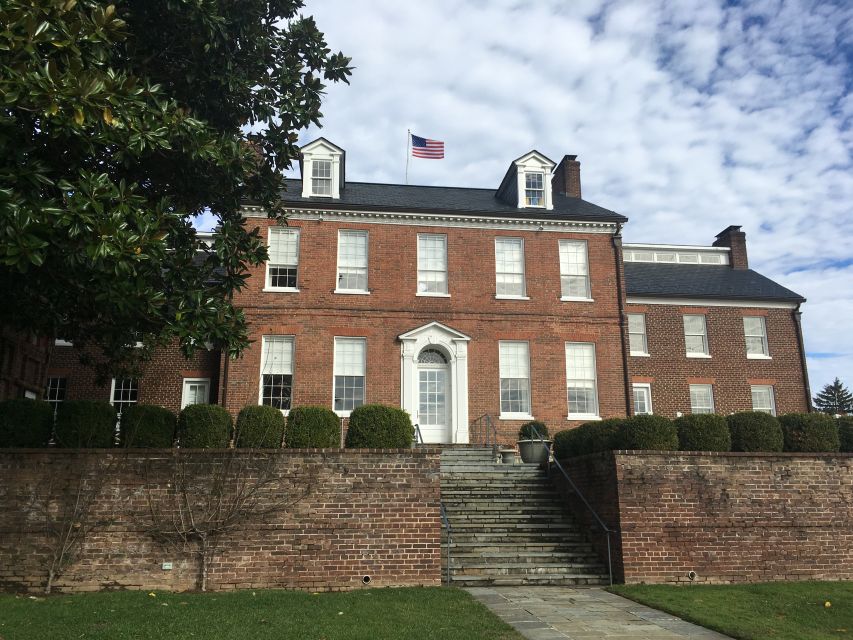
Christ Episcopal Church brings a religious and community dimension to the route. It is one of the tour’s historic destinations, and it helps show how Georgetown’s institutions developed alongside its homes and businesses.
The Hyde-Addison School shifts the focus back to public education. Together, the church and school show that the neighborhood was not built only around wealthy residences. It also needed places for worship, schooling, and daily community life.
The historic Yellow Tavern, also called the White Horse Tavern, adds a more social stop. Taverns were part of the older urban fabric, and this building gives the tour a chance to move beyond formal architecture into the everyday life of the neighborhood.
I like this sequence because it prevents the walk from becoming too polished. You see elite education, established religion, public schooling, and a tavern in the same broad story. Georgetown becomes a lived-in place, not a museum street.
Your guide may also add small facts along the way. Past guides Sam and Ellyn were praised for making the history engaging and for adding fun details. That matters here because many of the buildings are viewed from outside. The guide’s explanation supplies the context that the facade cannot provide by itself.
Same city, a different facade:
- Chicago Architecture River Cruise
★ 5.0 · 15,756 reviews - Chicago River 90-Minute Architecture Tour
★ 4.5 · 9,629 reviews - Chicago River: 1.5-Hour Guided Architecture Cruise
★ 4.8 · 8,046 reviews - Chicago Architecture Center River Cruise aboard First Lady
★ 5.0 · 5,536 reviews
Pomander Walk and Georgetown’s smaller scale
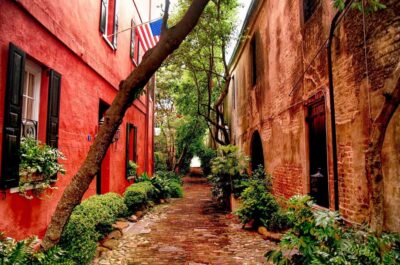
Pomander Walk is one of the route’s most distinctive stops. The path passes tiny pastel row houses, creating a strong contrast with the larger homes and institutional buildings seen earlier.
This is a good place to slow down for photographs, although you should be mindful that the walk passes residential buildings. One past participant specifically wished for a few extra minutes for photos, so keep your camera ready and do not assume the group will pause for a long picture session.
Pomander Walk also gives the tour visual rhythm. After brick houses, schools, and churches, these smaller colorful homes make Georgetown feel more varied. The neighborhood’s character is not tied to one architectural style or one scale.
For many people, this will be one of the most memorable parts of the tour. It is easy to understand at a glance, yet a guide can still explain why this tucked-away passage belongs in Georgetown’s larger architectural story.
Volta Laboratory and the academic side of town
The tour later reaches the site where Alexander Graham Bell founded Volta Laboratory. This stop adds invention and science to the route, showing that Georgetown’s history includes more than old money, churches, and university buildings.
It is also the sort of detail you might miss on a self-guided walk. You can pass an unassuming site without realizing its connection to Bell and his work. A guide helps turn an ordinary stretch of street into a meaningful stop.
The academic section continues with Georgetown Preparatory School, Healy Hall, and the University Library. These places show the neighborhood’s long connection with education and give you a better sense of how Georgetown University shapes the area.
Healy Hall is likely to be a visual highlight, while the university stops also bring scale and activity to the route. The buildings are not treated as isolated sights. They fit into the larger story of Georgetown as a place where education became an important part of local identity.
The tour also takes you to The Tombs, giving you a glimpse of campus nightlife. This is a useful change of mood after the formal academic buildings. It reminds you that the university is not only a collection of impressive facades. It is also a working campus with its own social life.
The Car Barn and a different kind of landmark
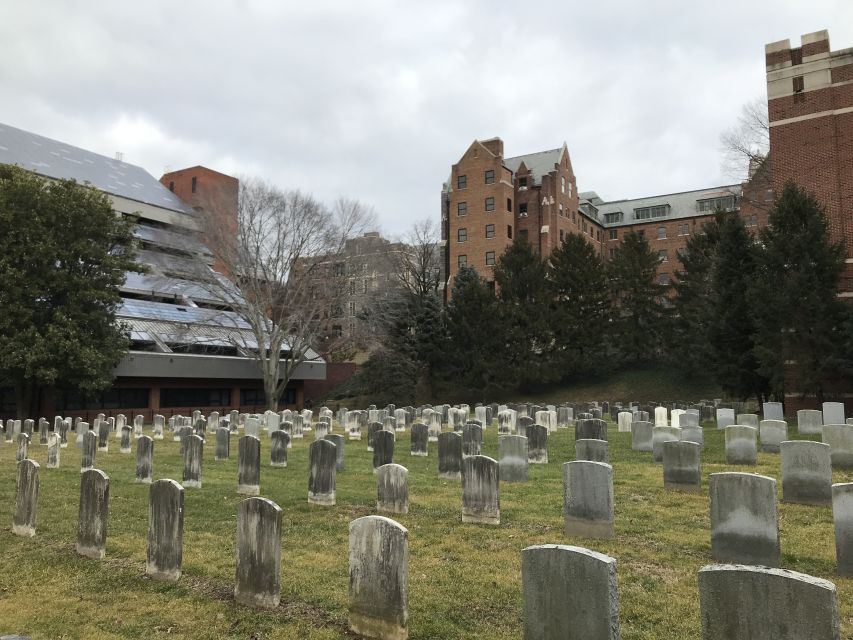
The Car Barn is a renovated streetcar depot. It is a strong example of how older transportation buildings can find new uses, and it connects neatly with the earlier canal and port discussion.
By this point, you have seen several kinds of Georgetown architecture: private houses, schools, religious buildings, university sites, and commercial spaces. The Car Barn adds transport to that list.
I appreciate this kind of stop because it broadens the definition of historic architecture. A tour focused only on grand homes can make a neighborhood seem frozen in one period. The Car Barn shows adaptation and reuse, which are part of how an old district remains useful.
It also helps the route feel complete. You began with infrastructure tied to goods and movement, and you later see another transportation building given a new life. The connection is not just visual. It helps you follow Georgetown through several stages of development.
The Key Memorial, Cady’s Alley, and the waterfront finish
Near the end, the route reaches the Francis Scott Key Memorial, Cady’s Alley, and the Georgetown Waterfront. These final stops bring together history, design, shopping, and the Potomac setting.
The Key Memorial gives the walk a notable historical figure and a point of reflection near the river. Cady’s Alley offers another change in architectural atmosphere, with a more modern commercial feel than the older homes and schools.
The waterfront is a sensible place to finish. After two hours and about two miles, you can take a break by the Potomac or continue exploring Georgetown on your own. Ending here also returns you to the neighborhood’s relationship with the river, which was central to its early growth.
I would plan a little time after the tour rather than rushing straight to another appointment. The route ends at the waterfront, not back at the starting point, so think of the experience as a one-way walk through Georgetown.
What the $43 price gives you
At $43 per person, this is not the cheapest way to see Georgetown. You can walk the streets without paying anything, and many of the buildings are visible from public areas.
The value comes from the organization and explanation. In 150 minutes, you cover a carefully linked route that includes places you might not identify on your own, such as Volta Laboratory, the Grafton Tyler Double House, the Yellow Tavern, and Pomander Walk.
A good guide also saves you from treating every old building as the same. Sam and Ellyn have been praised for clear explanations, engaging delivery, and memorable facts. That kind of interpretation is the main reason to pay for this tour.
The price makes the most sense if you are visiting Georgetown for the first time, enjoy architecture, or want a strong introduction before exploring independently. It makes less sense if you prefer to stop for long photo sessions, wander at your own speed, or already know the neighborhood well.
Pace, weather, and what to bring
The tour runs rain or shine unless conditions become dangerous. Georgetown’s streets and historic sites are outdoors, so weather can shape the experience more than the itinerary does.
Wear comfortable shoes and bring water. Two miles over 150 minutes is not a hard workout for most people, but the route still involves steady walking and standing. Weather-appropriate clothing is essential because there is no promise of indoor shelter at each stop.
Build in a few minutes before the start. The meeting point is outside Baked & Wired, and the guide will wear a DC Design Tour shirt. Arriving early gives you time to find the exact spot and avoid joining the group after it has left.
The pace is designed for looking and listening rather than racing. Still, keep your phone or camera ready. One past participant wanted more time for photographs, which is a useful reminder that the tour’s priority is covering the route and explaining the sites, not providing extended photo breaks at every stop.
Who should book this Georgetown walk
I would recommend it to first-time Georgetown visitors, architecture fans, history-minded families, and anyone who prefers a neighborhood story to a checklist of major monuments.
It also suits you if you want a guide to connect the dots. The canal, houses, schools, university buildings, streetcar depot, and waterfront make more sense as parts of one story than as unrelated stops.
You may want to skip it if you dislike walking in uncertain weather or want complete control over the schedule. The tour departs on time, follows a set route, and covers about two miles. It is also conducted in English, so you should be comfortable following a live English-language explanation.
The high rating is supported by repeated praise for the guides’ clear delivery and engaging facts. I would put particular weight on that point because the buildings are mostly viewed from the street. The guide is what turns a pleasant walk into a useful architectural tour.
Should you book the Georgetown Architecture Walking Tour?
Book it if you want to understand how Georgetown changed from a Potomac trading community into one of Washington’s best-known historic neighborhoods. The route has enough variety to hold your attention, and stops such as Pomander Walk, Volta Laboratory, the Car Barn, and the waterfront give it a clear sense of place.
At $43, you are paying for the guide’s organization and interpretation, not entry to private interiors. That is fair value if you would otherwise miss the stories behind the buildings.
Wear good shoes, arrive five minutes early, and leave room for weather and photographs. If that sounds like your kind of afternoon, this is a practical way to see Georgetown with more understanding than a casual stroll provides.
FAQ
How long is the Georgetown Architecture Walking Tour?
The tour lasts 150 minutes, or two and a half hours.
How far will I walk?
The route covers about two miles.
Where does the tour meet?
Meet your guide outside Baked & Wired in Georgetown.
How will I identify the guide?
The guide will be wearing a DC Design Tour t-shirt.
Where does the tour finish?
The tour concludes at the Georgetown Waterfront.
What language is the tour conducted in?
The live guided tour is conducted in English.
What should I bring?
Bring comfortable shoes, water, and clothing suited to the weather.
Does the tour operate in bad weather?
The tour operates rain or shine unless conditions are dangerous.
Can I cancel for a full refund?
You can cancel up to 24 hours in advance for a full refund. You can also reserve now and pay later to keep your plans flexible.
Newly added in the USA
- Washington DC: Dupont Circle & Embassy Row Architecture Tour★ 5.0 · 6 reviews
- New Orleans : Garden District Architecture Walking tour★ 4.8 · 5 reviews
- Wilmington History and Architecture Tour★ 4.8 · 18 reviews
- Private Colonial Williamsburg Architectural Tour★ 5.0 · 5 reviews
- Castle to Capitol: Museums of the National Mall Architecture Tour★ 4.5 · 9 reviews
- Tulsa: Art Deco Walking Tour of Tulsa★ 5.0 · 8 reviews
- Monuments and Memorials Architectural Walking Tour★ 5.0 · 17 reviews
- Saint Augustine Evening Architectural Photo Tour★ 5.0 · 15 reviews
Walking Tours, compared.

The Official Art Deco Walking Tour by The Miami Design Preservation League
Read our review →
Baroque Architecture and Underground Walking Tour
Read our review →
Chicago in a Day: Food, History & Architecture Walking Tour
Read our review →

Ramblas, Old Town, Gothic and Gaudi Architecture Walking Tour
Read our review →
Chicago’s Secret Interiors Architectural Walking Tour
Read our review →
Browse the lists this tour appears in