
Review · HISTORICAL TOURS
Wilmington History and Architecture Tour
Wilmington’s story is written across its streets: a colonial block, grand Victorian homes, church buildings, railroad-era growth, and the later rise of Hollywood East. This walking tour connects those sights to the harder parts of the city’s past, including the Civil War, Reconstruction, and the racial violence of 1898.
I like the way the tour joins architecture with history, rather than treating old houses as pretty objects with no context. I also like the focus on Wilmington as a working port and railroad town, not only as a charming old city. The main consideration is the heat: you’ll be outdoors for about 90 minutes, with no water provided and no restroom stop after the start.
- Colonial Wilmington in one compact walk: Begin near Front Street and pass through the city’s only colonial-era block.
- Victorian houses and churches: See homes linked to Wilmington’s mid-1800s business leaders and several notable houses of worship.
- A difficult civic history: The tour addresses the Civil War, Reconstruction, and the racial events of 1898.
- From port town to film center: Learn how commerce, World War growth, and the decline of a major local industry shaped modern Wilmington.
- Practical start: Meet outside The Front Street Inn, where coffee and a restroom are available before you begin.
- Good value at $25: The price is modest for a guided introduction to Wilmington’s architecture, politics, and changing economy.
Start at Front Street with coffee and a restroom
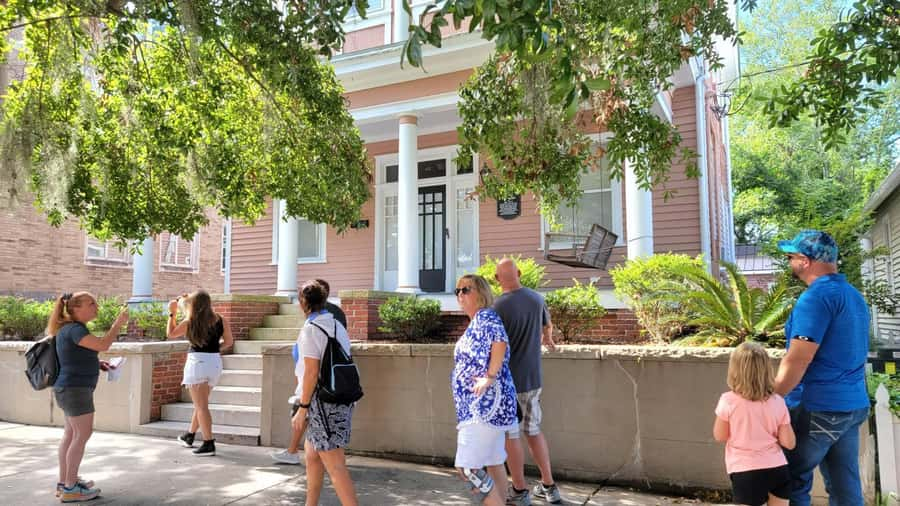
The tour begins on the sidewalk outside The Front Street Inn. This is a useful meeting point, not just a pin on a map. You can use the restroom and pick up coffee before setting out, since there is no later restroom stop built into the walk.
Plan to arrive with water already in hand. Water is not included, while sunscreen and bug spray are provided. That small touch helps on a warm day, but it does not replace a hat, comfortable shoes, and a bottle you can carry.
Metered parking is recommended. The local advice is to avoid the nearby surface lots, which can be expensive. If you are driving, give yourself a little time to find a meter and walk to the meeting point.
The tour is offered in English with a live guide. The group can be manageable rather than oversized. One recent departure had 12 people, a useful size for hearing the guide without feeling like you are part of a large procession.
Wilmington’s colonial block sets the first date
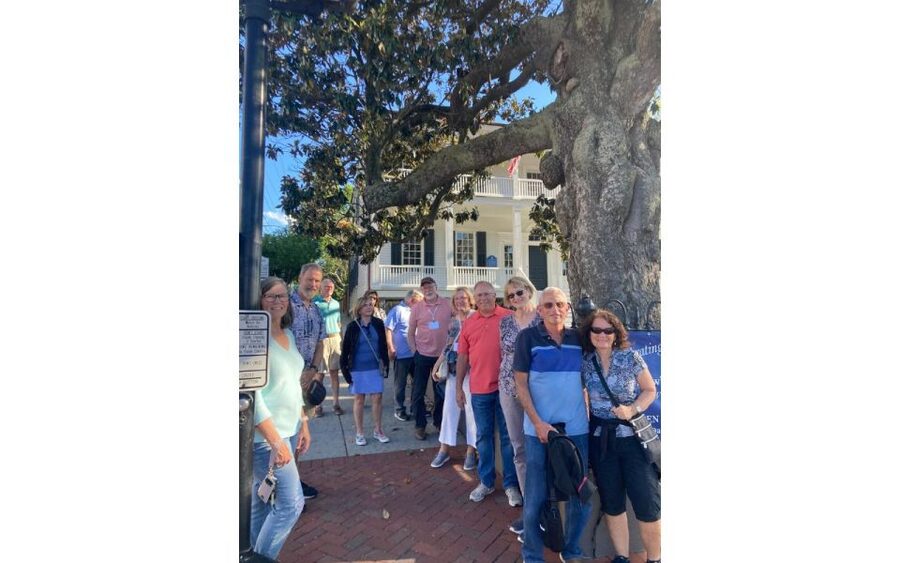
The walk begins with Wilmington’s earliest layer, including the city’s only colonial-era block. This gives you a quick sense of the town before the grander Victorian streets appear.
That first section matters because Wilmington’s later identity can easily overshadow its beginnings. The city is often associated with its historic homes, waterfront setting, tourism, and film production. Starting with the colonial period shows that the story is older and more complicated than the polished streetscape suggests.
You will not simply hear a list of dates. The route uses buildings and street patterns to explain how Wilmington developed. The city’s role as a port and railroad town becomes a thread running through the entire walk.
For you, the value is in having a timeline in mind before the tour reaches the nineteenth century. A house, church, or commercial building means more when you understand the growing town around it.
More History Walks in the USA:
- Chicago in a Day: Food, History & Architecture Walking Tour
★ 5.0 · 1,153 reviews - Charleston’s Best Highlights: History, Culture & Architecture
★ 5.0 · 422 reviews - Palm Springs Modernism Architecture & History Bike Tour
★ 5.0 · 359 reviews
Victorian homes reveal who shaped the city
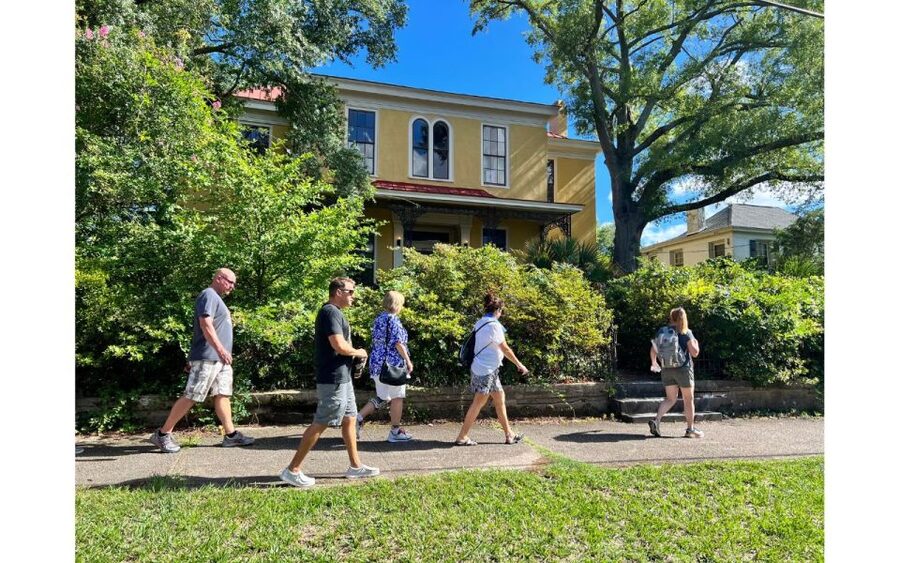
The strongest architectural section focuses on Wilmington’s Victorian buildings and homes linked to the city’s captains of industry in the mid-1800s. These houses give the tour a visual center, but the real point is the people and money behind them.
You will see how prosperity found its way into domestic architecture. The buildings help explain what Wilmington’s leading business figures wanted to display, how they lived, and how the city’s port and rail connections supported their position.
I like this approach because it gives the architecture a purpose. You are not left staring at ornament and guessing what it means. The guide explains the building styles while tying them to Wilmington’s commercial growth and the broader events taking place in the region and the United States.
One recent participant singled out the link between architectural types and the history of the period. That is a good description of what makes this walk useful. If you enjoy old houses but do not know how to read architectural details, the guide’s explanations should give you a clearer way to look.
Do not expect a house-by-house interior tour. This is a walking overview from public streets, with the emphasis on exterior architecture and historical context.
Churches add another view of Wilmington’s past
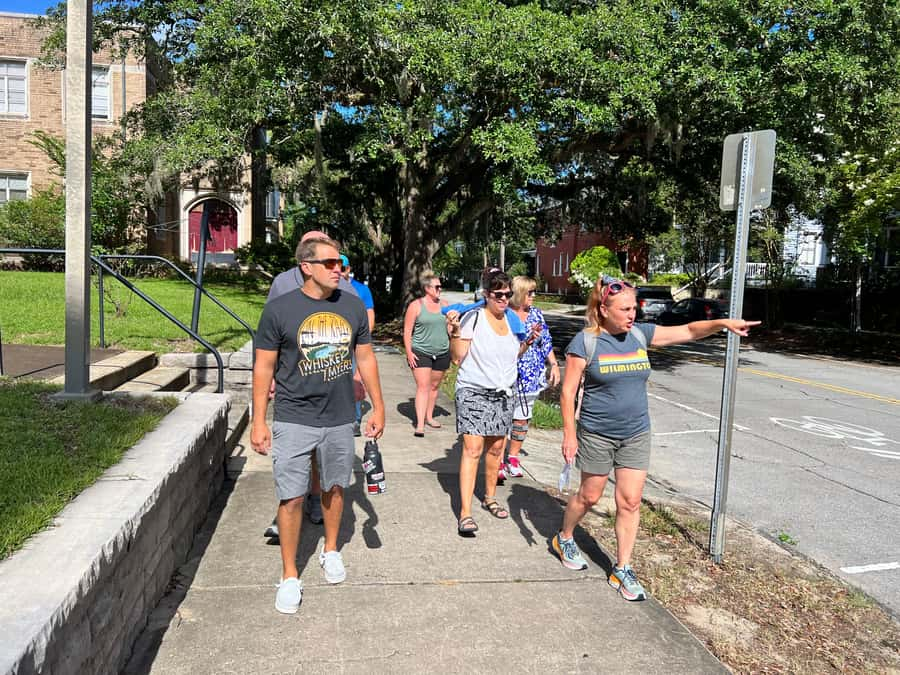
The route also includes some of Wilmington’s most notable houses of worship. These buildings broaden the story beyond wealthy homes and commercial leaders.
Church architecture can reveal a city’s population, religious life, social divisions, and periods of confidence or change. Here, the buildings help place Wilmington’s civic development alongside its private residences.
This part should appeal to you if you like architecture that serves a public purpose. Churches often carry more than one story, and the tour uses them as markers in Wilmington’s growth from colonial settlement to Victorian city and then into the twentieth century.
The guide’s job is especially important here. A church can look impressive while remaining historically distant. By linking the buildings to events and people, the walk makes them part of the city’s larger story rather than isolated photo stops.
Because the route is outdoors, you may spend part of this section listening from the shade of a nearby street or building. On a hot departure, the guide adjusted the discussion to shaded spots, which made the weather easier to manage.
Civil War Wilmington and the Confederacy’s lifeline
The tour does not skip Wilmington’s Civil War role. You will learn how the city functioned as a lifeline for the Confederacy, a subject that gives the port and railroad history sharper meaning.
This is one of the most important parts of the walk because it moves beyond architecture into the forces that shaped the city’s survival and identity. Wilmington was not simply watching national events from a distance. Its location and transportation links made it important during the war.
The tour also addresses what happened after the conflict. Wilmington survived the Civil War and moved into Reconstruction, when the city had to deal with political, economic, and social change.
For you, the benefit is a more honest account of the past. The city’s attractive streets do not erase its wartime role or the tensions that followed. The guide presents Wilmington as a place shaped by conflict, not just preserved by time.
Expect the history to move briskly. The walk covers several centuries in one sitting, so this is an introduction rather than a full military or political study. If the Civil War is your main interest, you may want a more specialized tour as a follow-up. For a first look at Wilmington, though, this broad view gives you the key setting.
A few more architecture walks in the USA worth a look
- Chicago Architecture River Cruise
★ 5.0 · 15,756 reviews - Chicago River 90-Minute Architecture Tour
★ 4.5 · 9,629 reviews - Chicago River: 1.5-Hour Guided Architecture Cruise
★ 4.8 · 8,046 reviews - Chicago Architecture Center River Cruise aboard First Lady
★ 5.0 · 5,536 reviews
Reconstruction and the events of 1898
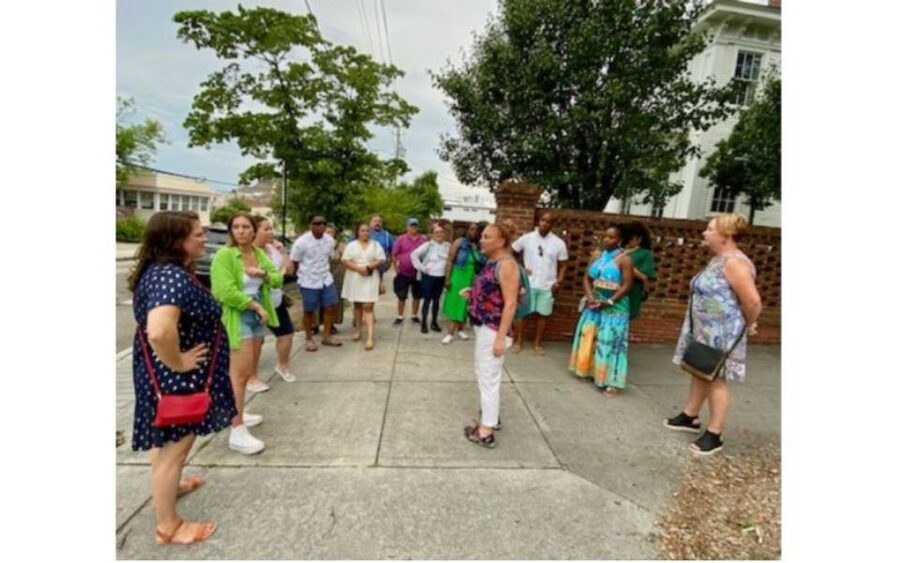
The tour also covers Wilmington during Reconstruction and the racial events of 1898, along with their aftermath. That subject is essential to understanding the city’s later development.
Including 1898 makes this more than a pleasant architecture walk. You are asked to connect buildings and civic spaces with the people who lived through Wilmington’s political and racial upheaval. The subject may be difficult, but leaving it out would produce a distorted picture of the city.
The guide places these events within the wider story of Wilmington rather than treating them as an unrelated footnote. That helps you see how local history can shape a city for generations.
This is also where the tour’s format has a limit. A 90-minute walk can introduce the events and their consequences, but it cannot cover every voice or detail. If you want a deep study of 1898, you should treat this tour as groundwork and seek additional historical material on your own.
Still, the inclusion matters. Many city walks stay safely with beautiful buildings and famous names. This one asks you to look at Wilmington’s past with more care.
Port, railroad, and World War growth
Wilmington’s commercial story continues into the twentieth century. The tour explains how the city developed as a port and railroad town, then grew during the World War period.
That economic history helps explain why Wilmington looks the way it does. Buildings are not only products of style. They also reflect trade, transportation, industry, labor, and moments when demand pushed the city forward.
You will learn about commercial Wilmington as a World War boomtown. This part gives the city a wider frame, showing how national events affected local business and employment.
I find this especially useful for visitors who want to understand how a historic downtown remained relevant after its Victorian era. The walk does not freeze Wilmington in the nineteenth century. It follows the city into modern economic change.
The route then asks what happened to the town’s largest industry. The supplied details do not name that industry, so the guide’s explanation will be your main source for the specific local transition. What matters for the tour’s overall arc is that Wilmington had to adapt when its old economic base changed.
From working city to Hollywood East
The final chapter reaches Wilmington’s later identity as a tourism and film and television community, often called Hollywood East. This gives the walk a satisfying link to the city you see today.
The change from port and industrial town to a place shaped by tourism and screen production did not happen in a vacuum. It followed earlier commercial growth, wartime activity, and the decline of a major industry.
This section should appeal to you if you have seen Wilmington used as a filming location or are curious about why the city attracts productions. The tour does not treat film and television as a random modern add-on. Instead, it places that role at the end of a longer story of reinvention.
The contrast is also useful. You can look back at colonial streets and Victorian homes, then consider how the same historic character supports a modern visitor economy and film community.
What the 90-minute format feels like
The activity is advertised as a 90-minute tour, while the route details also describe a 105-minute guided walk and a loop lasting about 1 hour and 40 minutes. I would allow up to 100 minutes and confirm the exact starting time when you book.
That extra time matters on a warm day or when the guide pauses for questions. One recent group was not too large, and the guide kept people in shaded areas when possible. The pace was described as manageable, with not a huge amount of walking, but this remains an outdoor walking tour.
The route starts and finishes at Front Street Inn. You do not need to arrange a separate ride between the sights. That makes it easy to fit before lunch, after a downtown visit, or at the beginning of a Wilmington stay.
The walk is not suitable for people with mobility impairments. The route includes outdoor walking and standing, and the activity details do not promise an accessible alternative.
Is $25 a fair price?
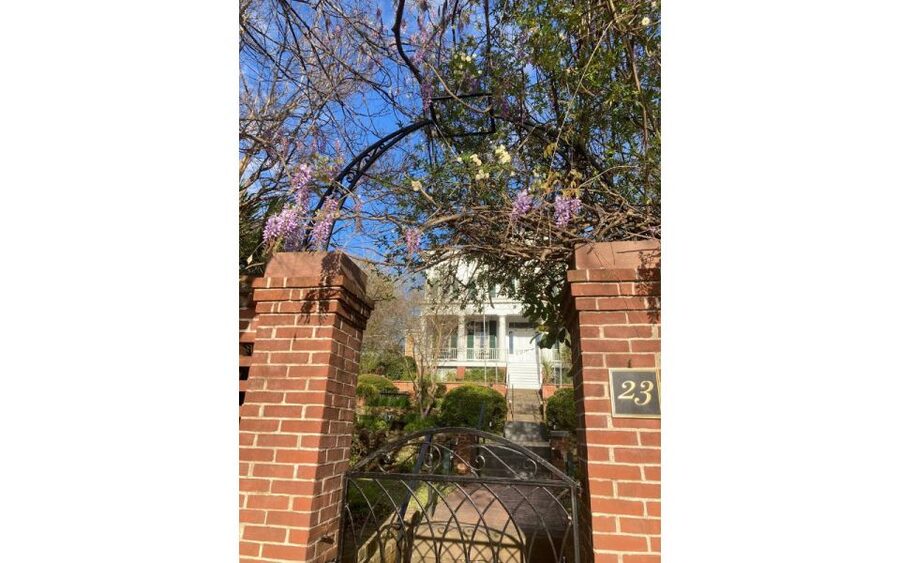
At $25 per person, this is a reasonable buy if you want a guided introduction rather than a self-guided stroll. You are paying for a local guide who brings together architecture, port history, war history, racial history, commerce, and film production.
The value is strongest if you are new to Wilmington. In one compact outing, you get a basic map of the city’s past and a list of buildings and subjects worth exploring later.
It is less compelling if you only want to admire houses without historical discussion. The tour’s strength is the connection between the buildings and the events around them. If you prefer a quiet photo walk at your own pace, a self-guided route may suit you better.
The price also compares well with the amount of ground covered intellectually. You are not just seeing Victorian facades. You are learning why Wilmington grew, how it endured war and Reconstruction, how 1898 changed the city, and how its economy later shifted.
Heat, water, and what to bring
Weather is the main practical concern. A September departure was hot, though the guide made good use of shade. Wilmington’s warm conditions can make even a moderate walk feel longer, so bring water, wear light clothing, and use comfortable shoes.
Sunscreen and bug spray are supplied, which is helpful. Still, I would not rely on the tour’s supplies alone. A hat and your own sunscreen are sensible, especially if you are sensitive to sun.
Use the restroom at Front Street Inn before leaving. There is no later restroom stop mentioned, and the route does not include water.
A small bag is best. You need room for a bottle and perhaps a phone for photographs, but there is no reason to carry heavy gear on a walk that includes standing and repeated stops.
Who will get the most from this walk?
This tour fits you best if you want a first look at Wilmington’s full story, not only its prettiest streets. It works well for couples, small groups, history-minded visitors, and anyone who wants context before exploring more of the city alone.
Architecture fans will appreciate the Victorian homes, churches, and discussion of building types. History fans will value the Civil War, Reconstruction, 1898, and World War sections.
It also suits people curious about Wilmington’s modern identity. The move from port town to tourism and film center gives the tour a clear reason for existing today.
You may want something else if you need step-free access, dislike outdoor heat, or want a narrow focus on one period. The route covers a lot, so its strength is range rather than specialist depth.
Should you book the Wilmington History and Architecture Tour?
Book it if you want Wilmington explained through its buildings and changing economy. The best parts are the mix of Victorian architecture and difficult local history, plus the clear path from colonial settlement to port town, wartime city, commercial center, and Hollywood East.
Go prepared for heat, carry water, use the restroom before leaving, and allow a little more than 90 minutes because the duration is also described as 105 minutes or about 1 hour and 40 minutes. At $25, it is a solid choice for a well-rounded introduction, especially early in your visit when you still need to get your bearings.
FAQ
Where does the Wilmington History and Architecture Tour begin?
Meet on the sidewalk outside The Front Street Inn in Wilmington, North Carolina. The listed coordinates are 34.2321414, -77.9480662.
Where does the tour finish?
The walking loop returns to The Front Street Inn.
How long does the tour last?
The activity is listed as 90 minutes. The route details also describe a 105-minute guided tour and a loop lasting 1 hour and 40 minutes, so allow extra time and confirm the exact duration when booking.
What language is the tour offered in?
The tour is conducted in English with a live guide.
Is water provided?
No. You should bring your own water. Sunscreen and bug spray are provided.
Is there a restroom available?
A restroom is available at The Front Street Inn at the start. No later restroom stop is listed.
Is the tour suitable for people with mobility impairments?
No. The activity is listed as not suitable for people with mobility impairments.
Newly added in the USA
- Washington, DC: Georgetown Architecture Walking Tour★ 5.0 · 8 reviews
- Washington DC: Dupont Circle & Embassy Row Architecture Tour★ 5.0 · 6 reviews
- New Orleans : Garden District Architecture Walking tour★ 4.8 · 5 reviews
- Private Colonial Williamsburg Architectural Tour★ 5.0 · 5 reviews
- Castle to Capitol: Museums of the National Mall Architecture Tour★ 4.5 · 9 reviews
- Tulsa: Art Deco Walking Tour of Tulsa★ 5.0 · 8 reviews
- Monuments and Memorials Architectural Walking Tour★ 5.0 · 17 reviews
- Saint Augustine Evening Architectural Photo Tour★ 5.0 · 15 reviews
Historical Tours, compared.
Chicago in a Day: Food, History & Architecture Walking Tour
Read our review →
Charleston’s Best Highlights: History, Culture & Architecture
Read our review →
Palm Springs Modernism Architecture & History Bike Tour
Read our review →
Historic Georgetown: History, Gossip, & Architecture Walking Tour
Read our review →
Charleston History, Homes, and Architecture Guided Walking Tour
Read our review →

Historical and Architectural Chicago Fireboat River & Lake Cruise
Read our review →Browse the lists this tour appears in