
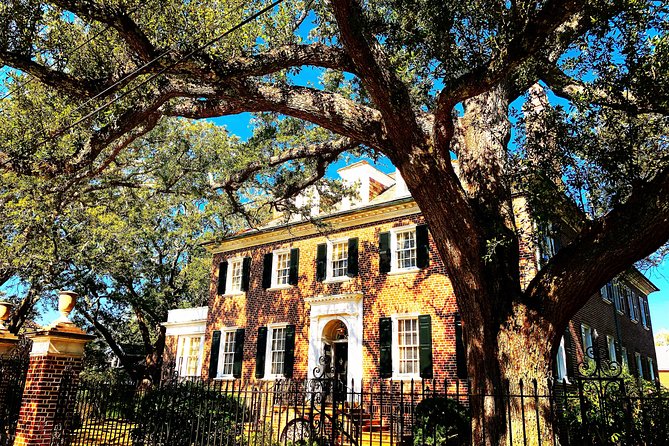
Review · WALKING TOURS
Charleston History, Homes, and Architecture Guided Walking Tour
Charleston’s history comes alive best at street level, where a single walk can take you from George Washington’s church to pastel Georgian houses, a colonial dungeon, and grand homes along the Battery. This two-hour tour keeps the route focused on the historic center rather than trying to cover the whole city.
I like the included Powder Magazine Museum admission, which gives you something to explore after the walk, and I like the small maximum group of 20, a useful limit when you need to hear a guide on busy streets. The main drawback is that the tour moves through Charleston’s historic streets in all weather, so heat, rain, and limited shade can affect your comfort.
Key points to know before you book
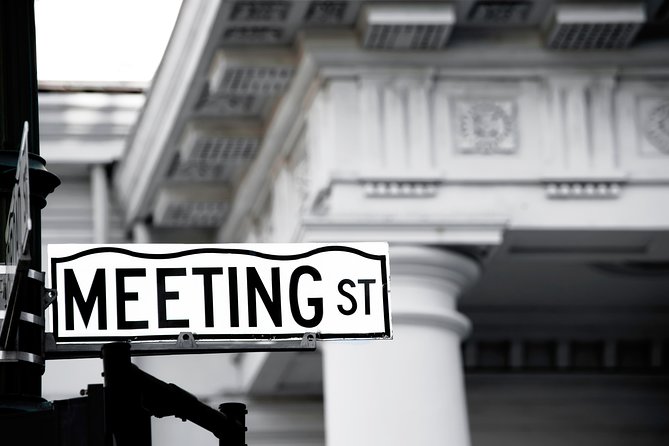
- City Hall is the starting point: Meet outside 80 Broad Street, at one corner of Charleston’s famous Four Corners of Law.
- The route covers major sights: Expect Washington Square, St. Michael’s Church, Rainbow Row, the Old Exchange, and the Battery.
- Guides make the difference: Dennis, Al, Duggard, Evans, Mark, Lawrence, and Captain Bobby are among the guides praised for humor, local detail, and clear storytelling.
- Powder Magazine is extra time, not the main walk: Admission is included, but you can visit the museum at your leisure.
- The walk ends near the Battery: The usual endpoint is 94 Battery Place, only a few blocks from the start.
- Plan for Charleston weather: Wear comfortable shoes, carry water, and arrive 15 minutes early.
A two-hour introduction to Charleston’s old center
At $28 per person, this tour is priced as an affordable way to get your bearings in Charleston. You are paying for a licensed local guide, two hours of commentary, a carefully chosen downtown route, and admission to the Powder Magazine Museum.
That is good value if you want more than a series of pretty façades. Charleston can look easy to understand at first glance: pastel houses, church steeples, narrow lanes, and waterfront views. The harder part is seeing how religion, slavery, trade, war, politics, and architecture shaped one another. A guide gives those buildings a useful frame.
The tour begins outside City Hall and ends a few blocks away near the Battery. That arrangement works well. You do not retrace every step, and the route carries you from the civic center toward the residential streets and seawall. If you prefer to return to the starting point, the guide will walk you back when requested.
Morning and afternoon departures let you fit the walk into a larger Charleston schedule. I would choose the morning during hot months if possible. The city has shade in places, but this is still an outdoor walk, and Charleston’s heat can make two hours feel longer than expected.
More Walking Tours in the USA
- The Official Art Deco Walking Tour by The Miami Design Preservation League
★ 5.0 · 1,580 reviews - Chicago in a Day: Food, History & Architecture Walking Tour
★ 5.0 · 1,153 reviews - Miami South Beach Art Deco Walking Tour
★ 5.0 · 1,039 reviews
Starting at City Hall and the Four Corners of Law
The meeting point is outside Charleston City Hall at 80 Broad Street. This is more than a convenient downtown address. City Hall forms one part of the Four Corners of Law, a local nickname for the meeting point of civil, religious, and legal authority in the old city.
Your guide uses this opening to explain how Charleston was organized and governed. It is a smart place to begin because it gives the rest of the walk a framework. You are not simply looking at buildings one by one. You are learning why churches, public offices, courts, markets, and private homes occupied such a compact area.
Arrive about 15 minutes early. The tour begins promptly, and the guide may leave after the opening explanation to continue to the next stop. If you are late, do not assume the group will still be waiting outside City Hall.
The first section is short, but it sets the tone. Guides such as Dennis and Al have been praised for mixing facts with humor, while others, including Evans and Lawrence, are known for personal local detail. The exact guide can shape the feel of the walk, but the subject remains the same: Charleston as a lived-in city, not just a collection of preserved buildings.
Washington Square and Charleston’s civic story
Washington Square is a brief stop, yet it helps connect Charleston’s public spaces with its political past. The tour uses the park as a place to discuss Washington and the city’s role in early American history.
Do not expect a long, formal lecture here. The stop lasts about five minutes, so the value comes from the guide’s ability to give the place context quickly. A good guide can turn a small patch of greenery into a reminder that Charleston’s streets have witnessed public ceremonies, political arguments, military tension, and ordinary daily life.
This is also a useful pause early in the tour. You are still settling into the walking pace, and the short stops keep the group from standing in one place for too long. The route is educational, but it is not arranged like a classroom. You move, look, listen, and then continue.
St. Michael’s Church and the Four Corners of Law
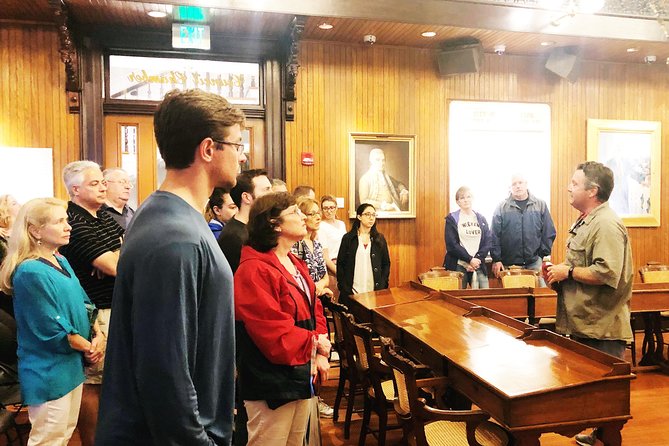
St. Michael’s Episcopal Church is one of the tour’s most important architectural stops. It is described as Charleston’s oldest surviving religious structure, and George Washington once worshipped here. Those details give the church more weight than its handsome exterior alone would suggest.
The guide explains the building and its place in Charleston’s religious life. You will hear about the way churches helped shape the city’s identity and public life. At the Four Corners of Law, St. Michael’s provides the religious corner of the story, balancing City Hall and the other civic institutions nearby.
The stop lasts about 10 minutes. That is enough time to examine the church from outside and hear the main points, but not enough for an extended interior visit. If you are especially interested in historic churches, treat this as an introduction and save extra time later for independent exploration.
The church also shows why a guided walk is useful for architecture. A guide can point out details you might pass without noticing and explain how the structure fits into the wider street plan. Several people who took this tour especially valued the way guides connected architecture to social history rather than treating buildings as decorative objects.
Same city, a different facade:
- Chicago Architecture River Cruise
★ 5.0 · 15,756 reviews - Chicago River 90-Minute Architecture Tour
★ 4.5 · 9,629 reviews - Chicago River: 1.5-Hour Guided Architecture Cruise
★ 4.8 · 8,046 reviews - Chicago Architecture Center River Cruise aboard First Lady
★ 5.0 · 5,536 reviews
Rainbow Row and the pleasure of looking up
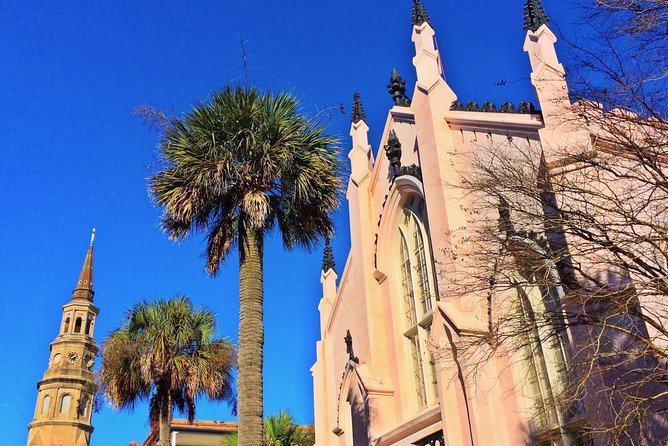
Rainbow Row is the most instantly recognizable stop on the route. The colorful Georgian houses along East Bay Street provide the postcard view many people expect from Charleston, but the guide adds background about the homes and the street itself.
This is a good place to slow down and look carefully. Notice the repeated shapes, the narrow fronts, the colors, and the way the houses sit close together. Your guide can help separate what is original, what has changed, and what makes this group of buildings so memorable within the French Quarter.
Rainbow Row is also one of the tour’s more photographed locations, so the group may need to share the sidewalk with people taking pictures. The maximum group size of 20 helps, but this is still a public street rather than a private viewing area.
I like this stop because it gives the walk a visual break. Discussions of war, slavery, politics, and religion can be heavy. Rainbow Row brings you back to the pleasure of Charleston’s streets while still showing that architecture carries clues about how people lived and worked.
The Old Exchange and Provost Dungeon
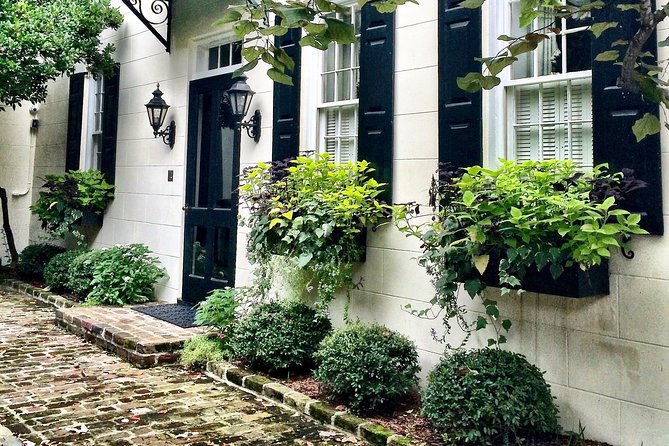
The Old Exchange and Provost Dungeon introduces a darker and more complicated part of Charleston’s past. The colonial building has roughly 300 years of association with pirates, patriots, and presidents, and it is described as one of South Carolina’s most historic buildings.
The tour discusses the building from the outside and explains its role in Charleston’s colonial and revolutionary story. The stop itself is listed as about five minutes, so you should not expect a full museum visit as part of the walking route. The included ticket mentioned for this experience is for the Powder Magazine Museum, not a separate extended visit inside the Old Exchange.
That distinction matters if you are comparing tours. This walk gives you a strong overview of the Old Exchange, but visitors who want detailed interior interpretation may need to return independently. The guide’s short explanation is still valuable because the building ties together commerce, government, imprisonment, and the city’s role in the American Revolution.
Charleston’s past also includes slavery, and the best guides handle that subject directly rather than skipping over it. The information provided for this tour points to discussions of slavery, war, and social life alongside the architecture. You should expect a serious account, balanced with humor where appropriate, not a sanitized parade of beautiful houses.
South of Broad and the Battery
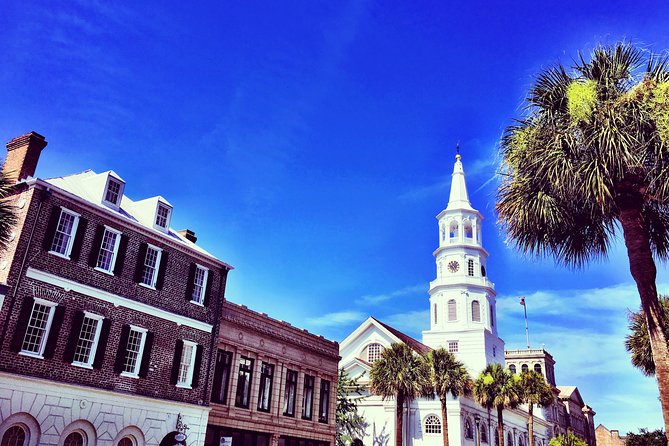
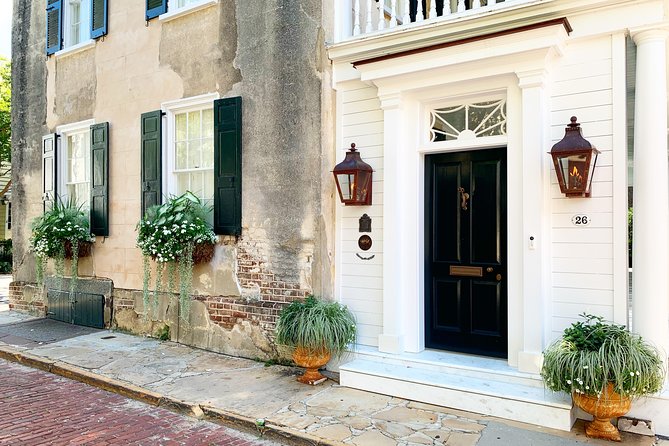
The route then heads into the residential area known as South of Broad. This is where the tour’s title, homes and architecture, becomes especially important. You walk past grand residences and hear about the people who lived in them, the social structure of the city, and the features that make Charleston houses distinct.
The exact path can vary by guide, but the tour ends a few blocks from the starting point at 94 Battery Place. Along the way, the guide points out architectural details and local stories that are easy to miss when walking alone. Several guides have been praised for showing homes and small details that would otherwise blend into the street.
The Battery and White Point Garden provide the final major stop. The listed visit lasts about 15 minutes, giving you time to stroll along the seawall and hear about the people associated with the stately houses nearby. This is one of the most pleasant parts of the route, but it is also exposed. On a hot day, bring water and use any shaded pauses wisely.
The Battery is not just a scenic finish. It shows how Charleston’s wealth, waterfront position, and defensive history shaped its public image. You get a view of imposing residences on one side and the water on the other, with the guide connecting the setting to the city’s past.
The Powder Magazine ticket and what it adds
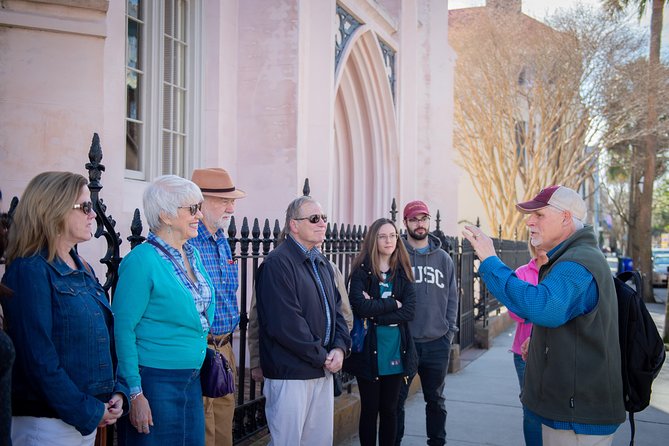
Admission to the Powder Magazine Museum is included, and you can visit at your leisure. The museum is a useful extra because the walking tour gives you the citywide framework while the museum can add a more focused look at Charleston’s military past.
Treat this inclusion as a bonus rather than the main reason to book. The advertised experience is a two-hour outdoor walk. The museum visit is separate time for you to use around the tour, not a substitute for the stops described above.
If you are building a day around the experience, leave room for the museum before or after the walk. The exact amount of time you spend there depends on your interests, and the supplied information does not set a required visit length.
What the guides do particularly well
The strongest part of this experience is the human delivery. Guides named Dennis, Al, Duggard, Evans, Mark, Lawrence, and Captain Bobby have been singled out for different strengths. Dennis is associated with a steady pace, local knowledge, bathroom planning, and a considerate approach to hot weather. Al is praised for enthusiasm and humor. Duggard is known for detailed storytelling and an easy manner.
Evans and Lawrence bring strong local feeling to the route, while Mark is praised for keeping the pace comfortable and making the history entertaining. Captain Bobby has been noted for fun facts and a holiday morning walk. These details suggest that the company has several personable guides, though your exact experience depends on who leads your departure.
The walking speed is generally manageable. Guides have made room for rest and bathroom stops, and one guide was praised for keeping the group in shade when possible. Still, this is a two-hour city walk, not a vehicle tour. You should be comfortable standing and walking on urban streets.
One useful caution: storytelling styles differ. A guide may spend longer on certain anecdotes than you prefer. If you want only quick facts and photographs, two hours can feel talk-heavy. If you like context, personal stories, and connections between buildings, that same detail is the point.
Practical details that affect your day
The tour is offered in English and uses a mobile ticket. Confirmation arrives when you book, and children must be accompanied by an adult. Most people can take part, and service animals are allowed.
It operates in all weather conditions, so dress for the forecast. At the same time, poor weather can lead to cancellation, with a different date or a full refund offered. That means you should not assume the walk will run during unsafe conditions.
Wear comfortable shoes and carry a water bottle. Those are not throwaway suggestions in Charleston. The route includes several outdoor stops, and the Battery can be sunny and exposed. If you need frequent shade or have trouble with extended walking, ask yourself if a two-hour street tour is the right format.
The group maximum is 20 people. That is large enough to create a social atmosphere but small enough for a guide to address the group without using an oversized public-address system. The tour is near public transportation, and the end point is only a few blocks from the start.
Free cancellation is available until 24 hours before the local start time. Cancellations or changes within 24 hours are not refunded, so check your schedule carefully before the cutoff.
Who will get the most from this walk
I would choose this tour for a first visit to Charleston, especially if you want a clear introduction before exploring on your own. It works well for couples, families with older children, and friends who enjoy history but do not want a full-day commitment.
It is also a good choice for architecture fans. Rainbow Row gets the photographs, but the walk gives equal attention to churches, public buildings, residential streets, and the Battery. You learn to read the city rather than simply collect snapshots.
History-minded visitors should appreciate the range of subjects: the American Revolution, the Civil War, churches, local society, slavery, pirates, presidents, and the city’s built environment. The tour does not treat Charleston as a single-period museum. It shows how the city changed over time.
You may prefer another format if you want extensive interior access, a private guide, or a tour devoted only to the Civil War or food. The Powder Magazine ticket is useful, but the main activity remains a guided walking overview.
Should you book the Charleston History, Homes, and Architecture tour?
Book it if you want a well-priced first look at downtown Charleston with a local guide who can connect architecture to the city’s difficult and fascinating past. The two-hour length is enough to see major sights without taking over your day, and the route finishes near the Battery, where you can continue exploring.
I would be cautious only if hot weather, rain, or a steady walking pace will make you uncomfortable. Arrive early, wear good shoes, carry water, and keep your schedule flexible enough for the Powder Magazine Museum.
At $28, the experience offers solid value for a focused introduction to Charleston. It is especially worthwhile when you want the stories behind St. Michael’s Church, Rainbow Row, the Old Exchange, and South of Broad, not just a quick photograph of each.
FAQ
Where does the Charleston walking tour begin?
It begins outside Charleston City Hall at 80 Broad Street, Charleston, South Carolina.
Where does the tour end?
The usual endpoint is 94 Battery Place. The guide may use a slightly different route, but the finish will be only a few blocks from the starting point. The guide will walk you back to City Hall if you request it.
How long does the tour last?
The guided walking tour lasts approximately two hours.
Is admission to a museum included?
Yes. Your ticket includes admission to the Powder Magazine Museum, which you can explore at your leisure.
What should I bring?
Wear comfortable shoes and bring a water bottle. Dress appropriately for the weather because the tour takes place outdoors and operates in all weather conditions.
What is the cancellation policy?
You can cancel at least 24 hours before the local start time for a full refund. Cancellations or changes made less than 24 hours before the start time are not refunded. If poor weather causes the tour to be canceled, you will be offered another date or a full refund.
More History Walks in the USA
- Charleston’s Best Highlights: History, Culture & Architecture
★ 5.0 · 422 reviews - Palm Springs Modernism Architecture & History Bike Tour
★ 5.0 · 359 reviews - Charleston: History and Architecture Guided Walking Tour
★ 4.8 · 349 reviews - Historic Georgetown: History, Gossip, & Architecture Walking Tour
★ 5.0 · 321 reviews
Newly added in the USA
- Miami Beach Art Deco Segway Tour★ 4.5 · 17 reviews
- Boston: Freedom Trail History and Architecture Walking Tour★ 4.8 · 18 reviews
- Boston: Harbor and Charles River Architecture Boat Tour★ 4.6 · 9 reviews
- Chicago: Guided Tour with Architecture River Cruise★ 4.5 · 20 reviews
- Iconic Capitol Hill Architectural Walking Tour★ 5.0 · 21 reviews
- South Beach Food Tour- Culinary & Art Deco & History★ 5.0 · 22 reviews
- Chicago: First Lady River Cruise & Architecture Center Combo★ 4.7 · 24 reviews
- Chicago River 90-Min Architecture Boat Tour★ 4.5 · 24 reviews
Walking Tours, compared.

The Official Art Deco Walking Tour by The Miami Design Preservation League
Read our review →
Baroque Architecture and Underground Walking Tour
Read our review →
Chicago in a Day: Food, History & Architecture Walking Tour
Read our review →

Ramblas, Old Town, Gothic and Gaudi Architecture Walking Tour
Read our review →
Chicago’s Secret Interiors Architectural Walking Tour
Read our review →

Browse the lists this tour appears in