Review · HIDDEN GEMS ARCHITECTURE TOURS
Chicago’s Secret Interiors Architectural Walking Tour
Chicago’s best architectural surprises are often indoors. This $35 walking tour takes you from Union Station through the Loop, where grand lobbies, mosaics, domes, and ornate stairways sit behind ordinary-looking doors. You get the city’s famous towers, but the real reward is seeing what happens below the skyline.
I like the way the tour connects buildings to the people and money that shaped Chicago, and I like its practical route from Union Station to the Marshall Field Building. Guides such as Ethan, Grant, Ty, and Matthew have earned praise for clear storytelling and good group control. The main drawback is that some stops may be brief, and the Rookery is left out on Sundays.
Key points to know
- The Rookery is the architectural prize: Frank Lloyd Wright reworked its grand lobby, which mixes Romanesque and Moorish details with ironwork and a light court.
- You see interiors you might otherwise miss: The route includes the Palmer House lobby, Marquette Building mosaics, and the Tiffany glass dome at the Marshall Field Building.
- The walk links Chicago’s financial story to its buildings: LaSalle Street, the Board of Trade area, Willis Tower, and Union Station all fit into one compact route.
- The price is modest for a guided two-hour city walk: At $35, you are paying mainly for access, interpretation, and a well-planned sequence of stops.
- Sunday has one important change: The Rookery is closed, so the route does not include it that day.
- Weather and group size matter: The tour requires good weather, and the booking information lists a maximum of 15 people, though group sizes can vary.
Why Chicago’s indoor architecture deserves two hours
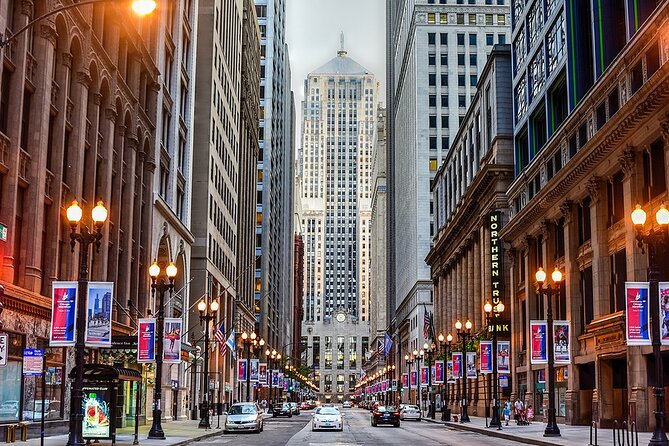
Chicago’s Loop can feel like an outdoor museum of tall buildings. Look up and you see the Willis Tower, the Chicago Board of Trade, and canyon-like streets framed by steel and stone. Look down and you may miss the best details.
This tour changes your pace. Instead of rushing from one famous facade to the next, you step inside working buildings, hotels, department stores, and transportation halls. You see the parts that photographs from the sidewalk cannot show: ceilings, staircases, mosaic floors, light courts, and carved metalwork.
I especially like this approach for a first visit to Chicago. The route gives you a basic timeline of the city’s growth, from early skyscraper experiments to the commercial confidence of the Gilded Age and the decorative style of the Art Deco period. You do not need an architecture degree. A good guide explains what you are seeing in plain language and shows how engineers solved the problems created by height, weight, light, and crowded city blocks.
The walk is also useful after an architecture boat tour. The boat gives you the broad skyline and river views. This outing puts you inside the buildings and helps you notice the smaller work that makes Chicago’s architecture special.
More Walking Tours in Chicago
- Chicago in a Day: Food, History & Architecture Walking Tour
★ 5.0 · 1,153 reviews - Chicago: Secret Interiors Architecture Walking Tour
★ 4.9 · 498 reviews - Chicago Walking Tour: Art Deco Skyscrapers Loop
★ 5.0 · 138 reviews
Starting at Union Station and entering the Loop
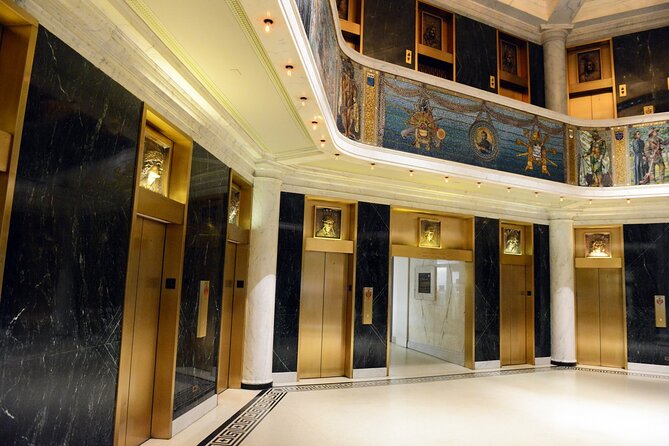
The meeting point is outside Chicago Union Station at 225 South Canal Street. This is a sensible place to begin, since Union Station gives you an immediate look at the scale and ambition of early twentieth-century Chicago.
Union Station was designed by Daniel Burnham and completed in 1925. Its Beaux-Arts exterior leads to the Great Hall, a grand interior with a large skylight and formal architectural details. The station is still used for transportation, so you are seeing a living part of the city rather than a preserved shell.
The stop is listed for about ten minutes, which means you should not expect a long architectural lecture inside the building. Instead, use the opening stop to get your bearings and understand Burnham’s influence on Chicago. Your guide will also begin connecting the city’s transportation network to its commercial growth.
A practical note: arrive ready to walk. The route begins near public transportation and ends downtown, but it is not a loop that returns you to the starting point. That one-way layout works well if you plan to continue shopping, visit the Cultural Center, or explore the State Street area afterward.
LaSalle Street and Chicago’s Financial Canyon
The LaSalle Street section puts the city’s financial identity in focus. Tall buildings form narrow urban corridors here, creating the effect often called a financial canyon. It is one of the best places to understand how Chicago used height to solve the problem of limited downtown land.
You will hear about the Chicago Board of Trade and the Willis Tower, along with the architects and business forces behind them. The emphasis is not simply on height. It is on why these buildings were built, who used them, and how commerce pushed Chicago toward new construction methods.
The listed stop lasts about ten minutes, so expect an outdoor explanation rather than a long visit inside every building mentioned. This part of the route is strongest when you pay attention to the contrast between styles. Art Deco ornament, older masonry buildings, and modern glass towers share the same streets.
The guide’s role matters here. Without context, LaSalle Street can look like a collection of imposing facades. With a good explanation, you begin to see a sequence of decisions about structure, business, and civic pride. Guides including Grant, Avery, Ethan, and Matthew have been singled out for keeping people together while feeding the group useful facts along the way.
The Rookery: the stop to protect on your calendar
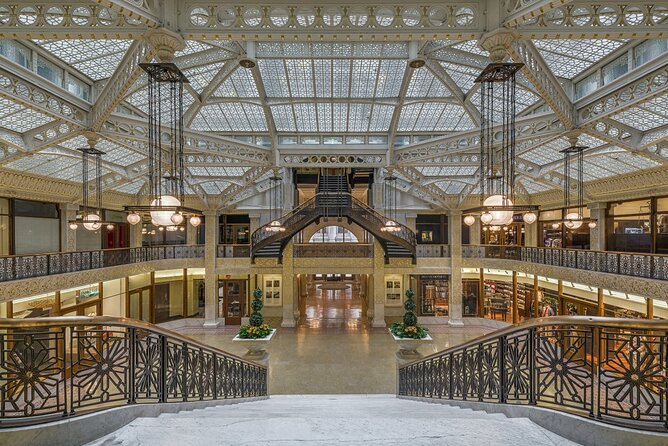
The Rookery is likely to be the high point for anyone who cares about interiors. Burnham and John Wellborn Root designed the building in 1888, and Frank Lloyd Wright later reworked its lobby. The result brings together Romanesque and Moorish touches, a bright central light court, decorative ironwork, and the distinctive oriel staircase.
This is the kind of place you can walk past without realizing what is inside. The exterior deserves attention, but the lobby is where the building reveals its personality. Look for the relationship between the open central space, the staircase, and the surrounding ornament. The design was not decoration added after the fact. It helped solve the problem of bringing light into a deep downtown building.
The Rookery is scheduled as a short stop, so do not count on lingering alone in every corner. Still, it gives the tour a strong architectural center. I would plan the outing on a day when the building is open if it is your main reason for booking.
The important catch is Sunday. The Rookery is closed then, and the route does not include it. If you have only one day in Chicago and care about this building, choose another day or confirm the current schedule before booking.
More Walking Tours in the USA
- Chicago Architecture Walking Tour: Incredible Art Deco Interiors
★ 5.0 · 85 reviews - Chicago Architecture Walking Tour: What’s New
★ 5.0 · 64 reviews - Chicago Walking Tour: Art Deco Skyscrapers Riverfront
★ 5.0 · 53 reviews - Chicago in a Day: Food and Architecture Private Walking Tour
★ 5.0 · 53 reviews
The Field Building and the shift to Art Deco
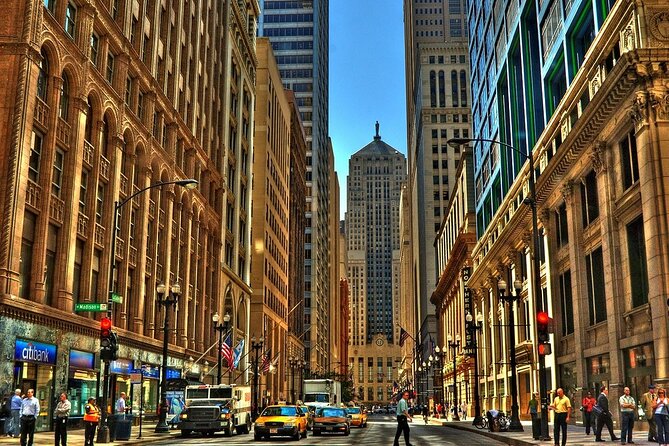
The Field Building brings a later look to the walk. Its Art Deco design shows how Chicago moved from the early skyscraper era into a style built around bold geometry, order, and modern business.
This stop helps break up the older Beaux-Arts and Chicago School buildings. You will see how decorative choices changed as commercial architecture became more streamlined. The building is not presented only as a pretty facade. Its details fit into the larger story of Chicago’s changing ambitions during the twentieth century.
The visit is listed for about ten minutes. That is enough for an introduction and a close look at key design elements, but it is not a full building tour. If you like ornament, listen for the guide’s explanation of how Art Deco differs from the earlier styles you have already seen.
The Marquette Building’s story in glass and mosaic
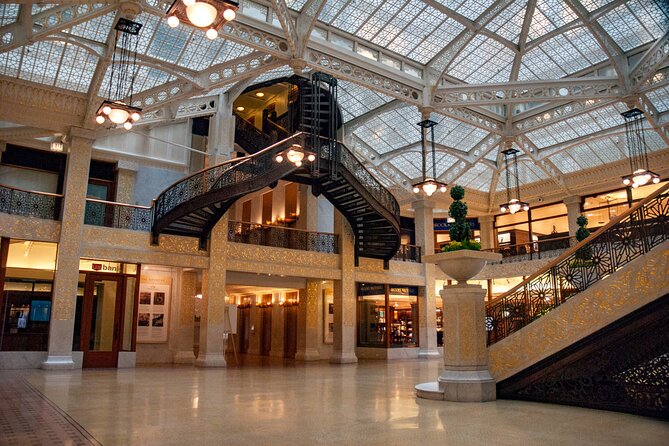
The Marquette Building is one of the route’s most satisfying interior stops. It is known for its Chicago School design, its use of the Chicago window, and its terra cotta exterior. Inside, mosaics tell the story of Jacques Marquette and his exploration of Illinois.
This is a fine example of architecture carrying a civic story. The lobby does not rely only on size. Its artwork gives the building a sense of place, tying commercial design to regional history. Look carefully at the mosaic work rather than rushing through it. The small pieces and colors reward a slower glance.
The Chicago window is also worth understanding. Its broad central pane with narrower side sections helped architects bring more daylight and ventilation into office buildings. Your guide can turn what looks like a technical detail into a clear explanation of how office architecture changed.
This stop is especially good for people who enjoy both art and buildings. The tour does not ask you to choose between them. It shows how they worked together in a public commercial space.
Palmer House: hotel history under a painted ceiling
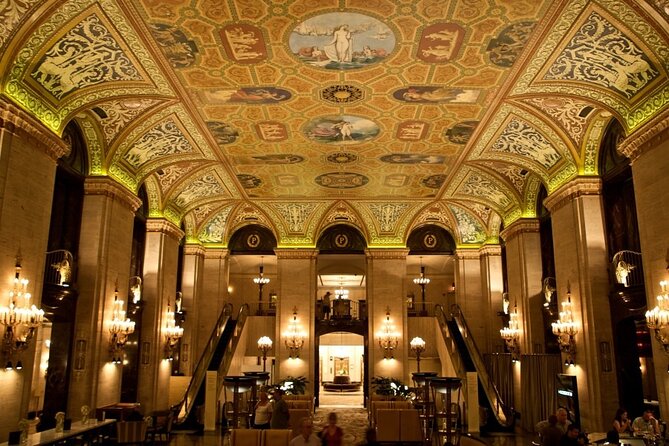
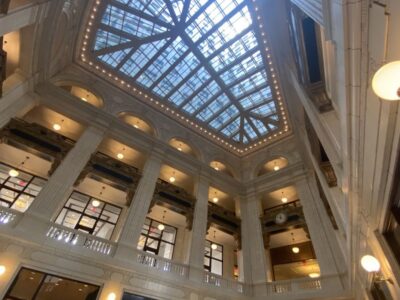
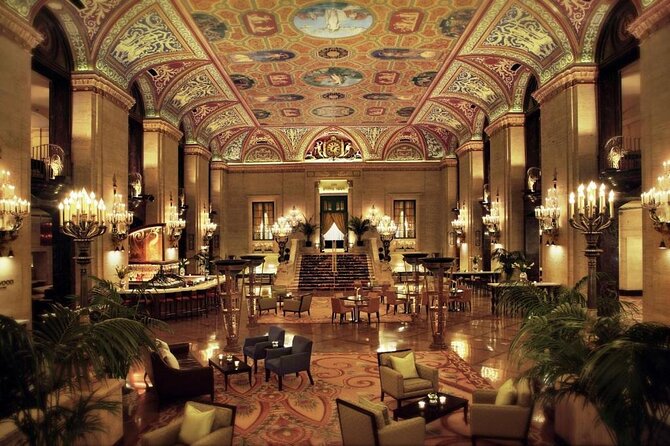
At the Palmer House, the tone changes from office architecture to grand hotel luxury. Rebuilt after the Great Chicago Fire, the hotel reflects the social world of the Gilded Age. Its lobby includes a frescoed ceiling, mosaic floors, and bronze peacock doors.
The Palmer House also brings the city’s famous names into the story. Celebrities and dignitaries have passed through its rooms over the years, and the guide uses that social history to explain why grand hotels mattered. They were not just places to sleep. They were meeting points for business, politics, entertainment, and display.
I like this stop because it makes architectural history personal. A large hotel can seem remote when you view it only from outside. The lobby shows how a building was meant to make people feel: impressed, important, and perhaps slightly aware of the bill.
Again, the listed time is about ten minutes. You should expect a focused look rather than a full hotel tour. Be respectful of guests and hotel operations as you move through the public spaces.
Chicago Cultural Center or the Monadnock Building
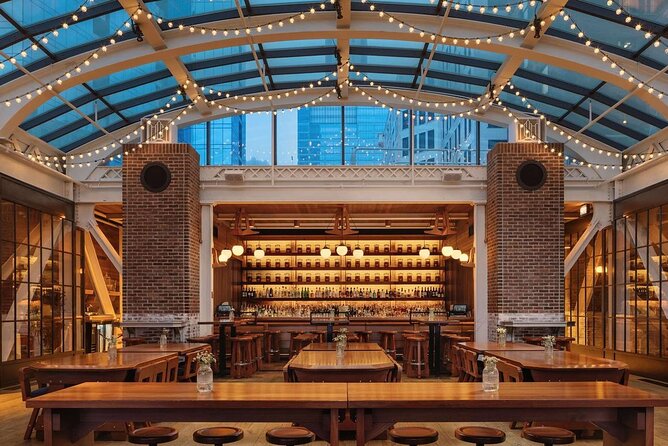
One part of the route may feature the Chicago Cultural Center or the Monadnock Building. These are different experiences, so the substitution matters.
The Chicago Cultural Center is known for its architectural beauty and cultural role. It offers another chance to see a major public interior and to consider how Chicago has reused important buildings for civic and cultural purposes.
The Monadnock Building represents the commercial style of the late nineteenth century. Its importance lies in the way it shows an earlier phase of downtown office construction, before later skyscrapers pushed height and structure in new directions.
You may not get to choose between the two. If one is especially important to you, ask about the day’s route before setting expectations. Either option keeps the tour focused on the connection between architecture and the city’s working life.
Marshall Field and Company: finishing under the Tiffany dome
The tour ends at the Marshall Field and Company Building, now home to Macy’s, at 111 North State Street. This is a fitting final stop because it shifts the story from finance and offices to retail spectacle.
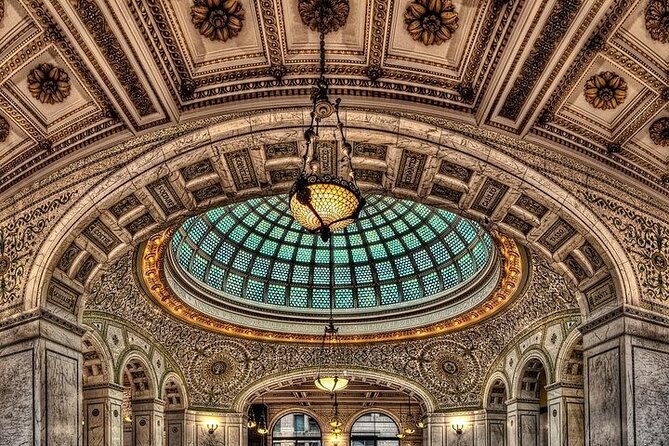
Inside, the famous Tiffany glass mosaic dome is the star. The building also contains a walnut-paneled Tea Room and other details that reflect the luxury expected from an early twentieth-century department store. Shopping was presented as an experience, and the architecture helped create that experience.
The ending is practical as well as beautiful. From here, you are in the center of downtown shopping and close to other Loop attractions. You can continue exploring on foot, stop for food, or head to another part of the city by public transportation.
Because the tour ends here, think of it as a one-way introduction to downtown rather than a round trip. That makes it easy to pair with an afternoon plan in the Loop.
Guide quality makes the difference
The tour’s strongest feature is the guide. The buildings are excellent, but a short explanation can make the difference between noticing a ceiling and understanding why it matters.
Several guides have drawn especially warm praise. Ethan is described as animated, passionate, and strong at keeping a group engaged. Grant is known for a calm, organized approach and for making sure the pace works for different people. Ty has been appreciated for his humor, useful detail, and accommodating manner. Matthew and Matt have also been praised for combining clear information with an easy style, while Avery has been credited with keeping the group moving and sharing helpful background.
Assignments can change, so do not book on the assumption that one particular person will lead your departure. The useful point is that the tour has a guide-led format rather than a scripted audio walk. You can ask questions and connect the buildings to broader Chicago topics.
Group control matters in the Loop. Streets are busy, sidewalks can be crowded, and the route includes repeated stops inside and outside buildings. The booking information lists a maximum of 15 people, but group sizes have not always been that small. If a compact group is important to you, ask before booking.
Timing, weather, and value at $35
The experience lasts about two hours, though some departures have run closer to an hour and a half, with a break of about 15 minutes. The individual stops are generally listed at ten minutes, so much of the time is spent walking between buildings and shifting from one interior to the next.
That format suits you if you want a concentrated introduction rather than a full-day architecture program. You get a lot of landmarks without spending too long at any one place. The tradeoff is that serious architecture students may want more time for photographs, sketches, or extended discussion.
At $35, I consider the tour a good value. You are paying for a guide, a planned route, and access to interiors that are easy to overlook. It costs less than many major sightseeing activities, while giving you useful context for exploring the Loop on your own later.
The walk requires good weather. Much of the experience is indoors, but you still move between buildings, so rain, snow, or severe cold can affect the day. If poor weather causes cancellation, you are offered another date or a full refund. You can cancel for a full refund up to 24 hours before the start time. Inside 24 hours, refunds are not provided.
Most people can participate, and service animals are allowed. Wear shoes suitable for city walking and bring clothing for changing conditions. You will be entering working buildings, so a quiet, respectful manner is appropriate.
Who should book this Chicago walking tour?
I would choose this tour if you enjoy architecture, urban history, old hotels, department stores, or the stories behind famous city buildings. It is also a smart choice for a repeat visitor who has already seen the skyline and wants to look inside the Loop.
It suits couples, families with older children, and solo visitors who prefer a guide to handle the route. It also works well before or after an architecture boat tour because the two experiences show Chicago from different angles.
I would think twice if you dislike walking, need long periods at each site, or want guaranteed entry to every building named. The Rookery is not included on Sundays, and the Cultural Center or Monadnock Building may vary by departure. The short stop format keeps the tour moving, but it limits time for detailed photography.
Should you book it?
Book it if you want a practical, affordable way to see Chicago’s Loop from the inside. The Rookery, Palmer House, Marquette Building, and Marshall Field Building give the route real substance, while the financial district and Union Station provide the larger story.
Choose a non-Sunday departure if the Rookery matters to you. Also allow a little flexibility around duration and group size. With those points in mind, this is a strong two-hour introduction to Chicago architecture, especially for anyone who wants more than a view from the sidewalk.
FAQ
How long is Chicago’s Secret Interiors Architectural Walking Tour?
The tour is advertised as lasting about two hours. Some departures may run closer to an hour and a half, with a short break during the walk.
Where does the tour start and end?
The tour starts at Chicago Union Station, 225 South Canal Street. It ends at the Marshall Field and Company Building, 111 North State Street.
Is the Rookery included every day?
No. The Rookery is closed on Sundays, so it is not included on the Sunday route.
What buildings are visited?
The route includes Union Station, the LaSalle financial district, the Rookery when open, the Field Building, Marquette Building, Palmer House, either the Chicago Cultural Center or Monadnock Building, and the Marshall Field and Company Building.
How much does the tour cost?
The listed price is $35 per person. An expert tour guide is included.
What happens if bad weather cancels the tour?
If the experience is canceled because of poor weather, you are offered a different date or a full refund. You can also cancel up to 24 hours before the start time for a full refund.
More Hidden Gem Architecture Tours in Chicago
- Delhi Hidden Gems: Mehrauli, Lodhi Art & Sunder Nursery
★ 5.0 · 108 reviews - Miami Beach Art Deco & Hidden Gems Bike Tour with Local Historian
★ 5.0 · 78 reviews - Barcelona: Exploring Gaudí’s Hidden Gem, Bellesguard Tower
★ 4.7 · 37 reviews - Detroit: Architectural Beauty and Hidden Gems Walking Tour
★ 4.9 · 33 reviews
Newly added in Chicago
- Chicago: Guided Tour with Architecture River Cruise★ 4.5 · 20 reviews
- Chicago: First Lady River Cruise & Architecture Center Combo★ 4.7 · 24 reviews
- Chicago River 90-Min Architecture Boat Tour★ 4.5 · 24 reviews
- Chicago: Historic Architecture Chicago River Small Boat Tour★ 4.6 · 26 reviews
- Chicago: Art Deco Skyscrapers Walking Tour★ 4.8 · 28 reviews
- Chicago River: 90-Min Architecture Boat Tour★ 4.9 · 29 reviews
- Chicago Art Deco Madness Walking Tour★ 5.0 · 31 reviews
- Chicago River Architecture Tour and Big Bus Hop-on Hop-off Tour★ 4.0 · 38 reviews
Hidden Gems Architecture Tours, compared.

Delhi Hidden Gems: Mehrauli, Lodhi Art & Sunder Nursery
Read our review →
Miami Beach Art Deco & Hidden Gems Bike Tour with Local Historian
Read our review →