
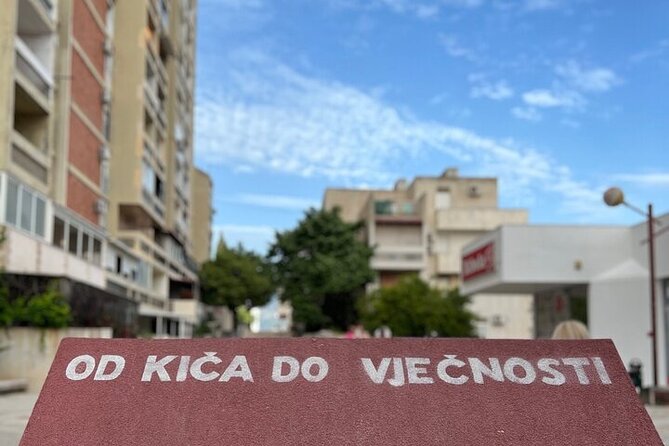
Review · BAUHAUS AND BRUTALIST ARCHITECTURE TOURS
Secret Split: Socialist Architecture & brutalism – Urban Utopia
Split 3 was not built to impress short-term visitors. It was built to test a new way of living. This private walk takes you into the concrete neighborhoods created after World War II, where pedestrian paths, open spaces, and bold geometric buildings reveal socialist ideas about community. Split 3 later appeared in MoMA’s 2018 exhibition Toward a Concrete Utopia, which tells you this is more than a local housing project.
I like the focus on urban planning as lived history, not just architecture as something to photograph. I also like the chance to meet local artists or activists and hear from guide Mirjana, who brings a personal connection to Split. The main drawback is simple: if you want Roman ruins, sea views, or polished old-town scenery, this is not that tour. Much of the appeal comes from raw concrete, repetition, and close attention to how people use space.
Key points about Secret Split
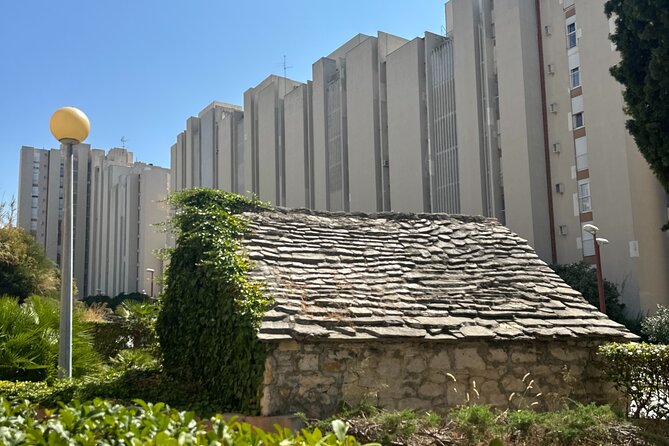
- Split 3 was a socialist urban experiment: Learn how architects planned a city within a city for a fast-growing population.
- The route leaves the historic center: You visit residential areas most short visits to Split never reach.
- Modern architecture takes center stage: Expect concrete, strong geometry, open courtyards, and pedestrian planning.
- The tour connects design with daily life: The guide explains how the plan was intended to serve children, families, and neighbors.
- Local art adds a critical voice: The experience includes meeting local artists or activists.
- It is a private experience: Only your group participates, with a licensed guide and certified heritage interpreter.
Why Split 3 deserves time beyond Diocletian’s Palace
Most first visits to Split stay close to the Roman core. That is understandable. Diocletian’s Palace gives you ancient walls, narrow lanes, lively squares, and a strong sense of place in a compact area.
Secret Split asks you to shift your attention several centuries forward. The subject is the city created during socialist Yugoslavia, especially the large Split 3 project built in the 1970s. This was a period of rapid population growth, and planners needed housing, roads, schools, public space, and a workable daily rhythm for a growing urban population.
The result was ambitious. Split 3 was planned as a residential district with pedestrian areas and shared space. It was not simply a collection of apartment blocks placed wherever land was available. The plan tried to organize modern life around people moving on foot, children playing, and neighbors meeting in communal areas.
That idea gives the tour its value. You are not only looking at concrete buildings. You are asking practical questions. Where do people walk? Where do children play? How close are homes to public spaces? Does a large housing project feel like a community, or only like a machine for storing people?
The project was never fully completed, but its design was important enough to enter international architectural discussion. Its inclusion in the Museum of Modern Art’s 2018 exhibition Toward a Concrete Utopia gave Split 3 an audience far beyond Croatia. On this walk, you can see why.
More Bauhaus and Brutalist Tours in the world:
- London: Brutalist Architecture & History Walking Tour
★ 4.8 · 42 reviews - Le Corbusier’s Chandigarh : A Complete Architecture Tour
★ 4.7 · 25 reviews - Architecture of New Belgrade – Brutalism Decoded
★ 4.5 · 24 reviews
Papandopulova ulica and the first look at Split 3
The tour begins at Ul. Šime Ljubića 3 and returns to the same meeting point. One listed stop is Papandopulova ulica, where you begin reading the architecture of Split 3 in place rather than through photographs or drawings.
Allow about 38 minutes for this part of the experience. Admission is free because this is an outdoor walk through a residential district, not a museum visit with a separate entrance fee.
Your guide points out the features that make Split 3 important. You will see raw concrete, repeated forms, strong lines, and a careful relationship between buildings and pedestrian routes. The style is often called brutalist, but the tour does not treat that word as a simple label for large gray blocks.
The key point is that brutalism was tied to an idea of public responsibility. Concrete was practical and durable, but the planning around it could also show care. Buildings, paths, and open spaces were meant to support ordinary routines. The design was intended for residents who needed a home, a safe route to walk, and a place to meet neighbors.
That context helps you look past first impressions. Some parts may seem severe or unfinished. Others may appear orderly and surprisingly calm. I would pay attention to the contrast between the heavy buildings and the spaces between them. In Split 3, the gaps matter as much as the walls.
Papandopulova ulica is also a useful introduction for anyone unsure about brutalist architecture. You do not need to arrive as a fan. The guide gives you a way to understand the choices, and you can decide for yourself if the result feels successful.
A city planned for people, not passing cars
The second part of the route focuses on Split-Dalmatia County and lasts about 25 minutes. Here the wider story of Split 3 comes into view.
The plan was a response to demographic growth. New residents needed housing, but the project also tried to create a complete residential environment. That meant thinking about movement, shared space, and access to daily needs rather than concentrating only on apartment construction.
The fully pedestrian sections are especially important. They show how planners imagined a safer and more social neighborhood. The idea was that people could move through the district without every path being dominated by traffic. Children could use outdoor areas, and adults could meet as part of everyday routines rather than only in planned social events.
You may find yourself comparing this plan with modern developments built around parking lots and fast roads. Split 3 belongs to another period, but its questions remain current. How much public space should a neighborhood provide? Can architecture encourage contact between neighbors? What happens when a project designed as a complete urban system is only partly built?
The tour also makes clear that the plan was never fully realized. That matters. You are not looking at a perfect socialist utopia preserved exactly as its designers imagined it. You are looking at an ambitious project shaped by limits, changes, and ordinary use over time.
This is where the experience becomes more useful than a standard architecture walk. You are not asked to admire every building. You are encouraged to consider the gap between an architect’s plan and the way residents actually live. A design can be bold on paper and still face practical problems. It can also succeed in small ways that are easy to miss from a passing car.
Art, activism, and the city’s unfinished conversation
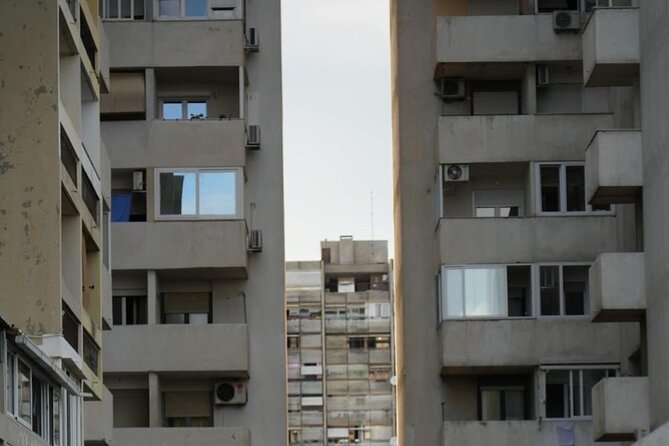
The final listed stop lasts about 35 minutes and connects Split’s built environment with art activism. The focus is not only on what the buildings look like, but on how people communicate criticism and ideas within the city.
The tour includes meeting local artists or activists. The available details do not specify exactly who you will meet on every departure, so you should treat this as a planned part of the experience rather than a guaranteed performance or workshop. Still, the addition gives the walk a useful human voice.
Architecture can feel remote when it is discussed only through dates, architects, and design terms. Art and activism bring the discussion back to residents. They show how public spaces and buildings can become subjects of debate, expression, and disagreement.
This part also keeps the tour from becoming nostalgic. The experience is not presented as a simple celebration of socialist planning. You will hear about the ideals behind Split 3, but you will also see the unfinished parts and the tension between planned community life and real city life.
That balanced approach matters. A tour about socialist architecture can easily become either a political lecture or a sentimental look at the past. This one is framed as a real walk through a living residential area. The buildings are still part of daily life, not frozen museum pieces.
More Hidden Gem Architecture Tours in the world:
- Chicago’s Secret Interiors Architectural Walking Tour
★ 5.0 · 635 reviews - Chicago: Secret Interiors Architecture Walking Tour
★ 4.9 · 498 reviews - Detroit: Architectural Beauty and Hidden Gems Walking Tour
★ 4.9 · 33 reviews - Private Secret La Jolla Art, Viewpoints and Architecture Tour
★ 5.0 · 2 reviews
What the guide adds to the experience
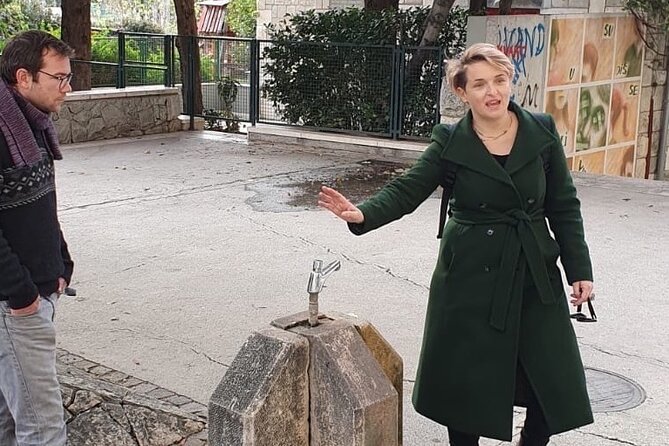
Your guide is a licensed tourist guide and certified heritage interpreter. Mirjana is specifically associated with the tour, and the available feedback describes her as deeply committed to her city and able to make the experience personal.
That personal element is important in a district like Split 3. Without guidance, you might notice the concrete and unusual shapes but miss the planning logic. You might photograph a walkway without understanding why its position matters. You might see an open area and assume it is leftover space, when it was designed as part of a larger system.
Mirjana’s role is to connect those details. You can expect explanations of the architects, their beliefs, and the social goals behind the project. The best questions to ask are practical ones: how residents use the spaces now, what parts of the original plan were completed, and how the area changed over time.
The tour is private, so your group is the only group participating. That usually makes it easier to pause, ask questions, and shape the discussion around your interests. If you care about planning, architecture, community design, or local politics, you can spend more time on those subjects than you would on a fixed large-group route.
The tradeoff is the price. At $113.90 per person, this is not a cheap casual walk, especially for one person. The value improves if you are sharing the private experience with family or friends, since group discounts are available and only your party joins the tour. You are paying for access to a specialist subject, a private guide, and a part of Split that is easy to miss on your own.
How long the walk takes and what to expect
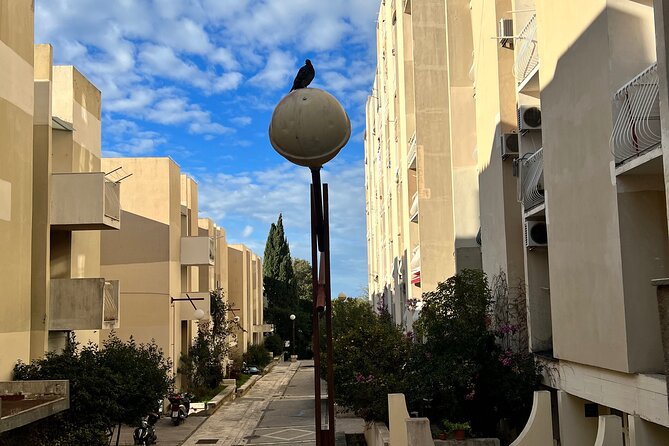
The stated duration is approximately one to three hours. The three listed sections add up to about 98 minutes, so a visit close to two hours is a reasonable expectation, with the total depending on walking pace, discussion, and the local art or activism component.
The route takes place in a residential area rather than inside a single attraction. You should be ready to walk outdoors and focus on buildings, paths, courtyards, and public spaces. The tour is near public transportation, which helps if you are staying outside the old center.
The meeting point is Ul. Šime Ljubića 3 in Split, and the walk ends back there. Check the confirmed start time carefully because the listed operating period is Monday through Thursday, from 8:00 a.m. to 7:00 p.m. Confirmation is provided when you book.
The tour is suitable for most participants, and service animals are allowed. Since the route is in a working residential district, avoid treating it like a quick photo stop. Look closely, listen, and give yourself time to notice how the spaces connect.
Who will get the most from this Split walk
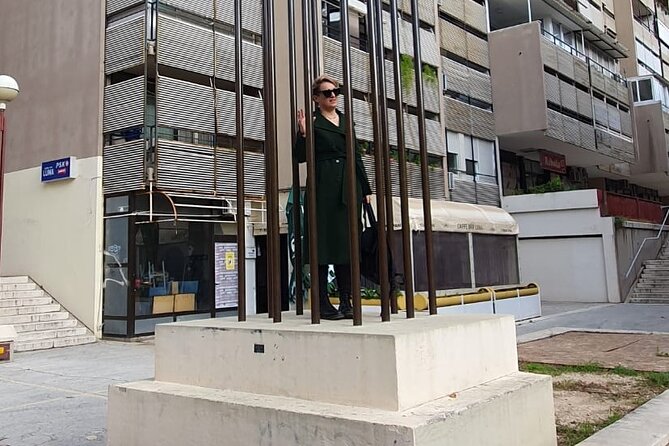
I would choose Secret Split if you have already seen the palace or if you want a second side of the city beyond ancient history. It is also a strong fit for anyone interested in:
- Socialist-era history and former Yugoslavia
- Brutalist or modern architecture
- Urban planning and public housing
- Community design and pedestrian neighborhoods
- Local art and activism
- The relationship between ideal plans and everyday life
You do not need formal architecture training. The guide supplies the background, and the route gives you physical examples to study. A basic curiosity about how cities work is enough.
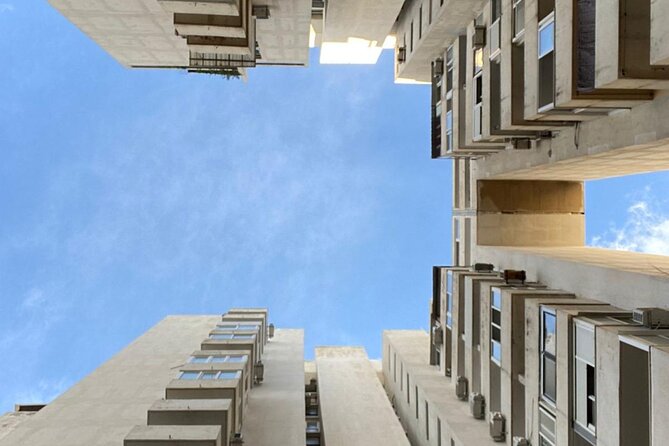
Families may find the focus on children, movement, and public space useful, though the tour is not described as a special children’s program. Art lovers may appreciate the local voices, while photographers will find repeated shapes, concrete surfaces, and unusual angles.
I would not make this your first or only Split activity if your main goal is ancient history, grand interiors, or scenic coastal stops. This is a specialist walk. It rewards attention more than spectacle.
Cancellation, booking, and practical value
You can cancel up to 24 hours before the start time for a full refund. Changes or cancellations within 24 hours are not accepted for a refund, and the cutoff follows local time.
The experience has a five-star rating from 17 published ratings, with 100 percent recommending it. That is a small sample, but it fits the tour’s clear purpose: people who want architecture, planning, community, and local insight are likely to find the subject rewarding.
Group discounts make the $113.90 price easier to justify when several people share the experience. For a solo visitor, the cost is harder to defend unless Split 3 is a major personal interest. A standard city walk may cover more sights for less money, but it will not offer the same focus or private format.
Should you book Secret Split?
Book this tour if you want to understand modern Split beyond Diocletian’s Palace. You will see an important socialist planning project, learn why its concrete architecture gained international attention, and connect the buildings with real questions about community and daily life.
Skip it if you want a conventional sightseeing route or if brutalist design does nothing for you. The buildings are not polished attractions, and the experience asks you to look carefully.
For architecture fans, urbanists, students, photographers, and curious repeat visitors, Secret Split offers a rare angle on the city. Mirjana’s personal approach, the private format, and the local art connection give the walk more depth than a simple circuit of apartment blocks. I would book it early if your schedule is fixed, since it is typically reserved about 12 days ahead.
FAQ
Where does the Secret Split tour begin and end?
It begins at Ul. Šime Ljubića 3, 21000 Split, Croatia, and ends back at the same meeting point.
How long does the tour last?
The experience lasts approximately one to three hours. The listed sections total about 98 minutes, though the exact length can vary.
Is this a private tour?
Yes. Only your group participates in the activity.
What does the tour focus on?
The walk focuses on Split 3, socialist architecture, brutalist design, urban planning, pedestrian neighborhoods, community spaces, and modern life in Split.
Who leads the experience?
The tour is led by a licensed tourist guide and certified heritage interpreter. Mirjana is the named guide associated with the experience.
Can I cancel for a full refund?
Yes. You can cancel at least 24 hours before the start time for a full refund. Cancellations or changes made less than 24 hours before the start time are not refunded.
Newly added in the world
- Washington, DC: Georgetown Architecture Walking Tour★ 5.0 · 8 reviews
- Washington DC: Dupont Circle & Embassy Row Architecture Tour★ 5.0 · 6 reviews
- New Orleans : Garden District Architecture Walking tour★ 4.8 · 5 reviews
- Wilmington History and Architecture Tour★ 4.8 · 18 reviews
- Vicenza: Palladian Architecture Private Walking Tour★ 3.3 · 3 reviews
- Walk & Discover KL’s Architectural and Heritage Gems★ 5.0 · 7 reviews
- Unveiling Brno: History, Culture & Architectural Delights★ 5.0 · 2 reviews
- Private Colonial Williamsburg Architectural Tour★ 5.0 · 5 reviews
Bauhaus and Brutalist Architecture Tours, compared.
Brutalist Tbilisi: Urban exploration and untold stories
Read our review →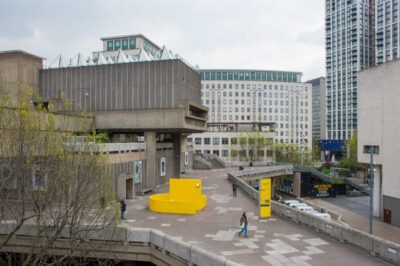
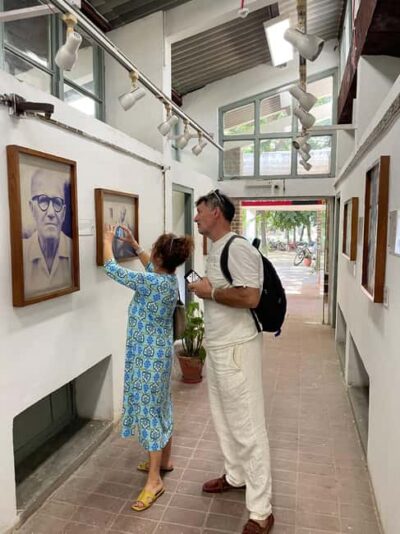
Le Corbusier’s Chandigarh : A Complete Architecture Tour
Read our review →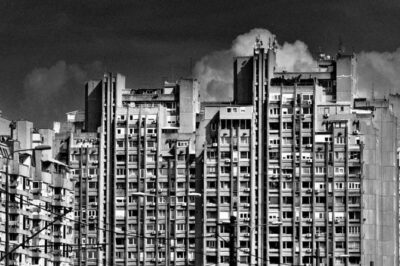
Architecture of New Belgrade – Brutalism Decoded
Read our review →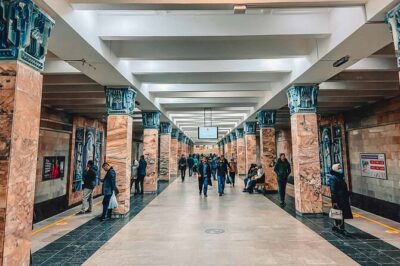
Tashkent Soviet Architecture (Modernism) and Subway station tour.
Read our review →
Space architecture tour – brutalist architecture
Read our review →
USSR History, Soviet Architects ,Statues & Mosaics
Read our review →
Brutal Tbilisi — Night Edition: Dark Side of Soviet Architecture
Read our review →Browse the lists this tour appears in