
Review · BAUHAUS AND BRUTALIST ARCHITECTURE TOURS
Belgrade: Space architecture tour – brutalist architecture
Belgrade’s modern architecture tells the story of a country that wanted to look forward, not backward. This four-hour tour takes you from Avala Mountain to New Belgrade, linking bold concrete buildings with the political ideas that shaped Yugoslavia. I especially like the Avala Tower viewpoint and the chance to see major sites such as Geneks Towers and the Palace of Serbia without piecing together several local rides.
I also like the small-group format, capped at 10 people, and the fact that private transport handles the wide spread between the mountain and New Belgrade. A possible drawback is that most buildings are viewed from outside, since residential and government sites are not open for casual visits.
Key points at a glance
- Avala Tower viewpoint: Ride up Belgrade’s tallest mountain and enter the rebuilt telecommunications tower for broad city views, weather permitting.
- Yugoslav political design: See how monumental buildings were used to express the power and ambition of socialist Yugoslavia.
- New Belgrade’s brutalism: Visit the Eastern Gate, Western Gate, Sava Center, and Palace of Serbia on a carefully linked route.
- Ada Bridge crossing: Cross the Sava River on one of Europe’s largest single-pylon bridges.
- Small-group transport: Travel by private vehicle with hotel pickup and drop-off, keeping a spread-out four-hour route practical.
- English-speaking guidance: A live guide explains the architecture and history, with Nemanja noted as one especially engaging guide on some departures.
Why this tour works for architecture fans
Belgrade is a particularly good city for seeing 20th-century architecture because Yugoslavia followed its own political and artistic path after World War II. The country was socialist, but it did not simply copy Soviet design. Its architects developed monumental, experimental buildings that mixed modern engineering with a strong national message.
You will see two related styles on this route. Brutalism uses exposed concrete, heavy forms, and strong geometric shapes. Structuralism is more concerned with repeating units and the way a building grows as a system. In Belgrade, the two often overlap. A building can look severe from a distance, then reveal clever patterns, unusual bridges, and carefully planned public spaces when you study it more closely.
The guide is important here. Without context, a concrete tower or enormous government block can look merely bleak. With a good explanation, you begin to see why scale, symmetry, height, and raw materials mattered. One guide named Nemanja is noted for clear explanations and strong knowledge of both Yugoslav history and architecture. If he leads your departure, expect plenty of background rather than a quick list of photo stops.
This is not a museum tour with long indoor visits. It is a moving lesson in city planning, ideology, engineering, and visual power. You spend part of the time in the vehicle, part walking, and part stopping for photos.
More Bauhaus and Brutalist Tours in the world:
- London: Brutalist Architecture & History Walking Tour
★ 4.8 · 42 reviews - Le Corbusier’s Chandigarh : A Complete Architecture Tour
★ 4.7 · 25 reviews - Architecture of New Belgrade – Brutalism Decoded
★ 4.5 · 24 reviews
Avala Mountain and the Monument to the Unknown Hero
The tour begins with pickup in Belgrade, followed by roughly 30 minutes in the van to Avala Mountain. The change from city streets to a wooded mountain setting gives the first half of the tour a different pace. You are not only seeing architecture here. You are also seeing how Belgrade relates to its surrounding high ground.
The first stop is the Monument to the Unknown Hero. You have about 30 minutes for a guided visit, sightseeing, walking, and photographs. The monument is a key example of monumental design used to honor national sacrifice. Its setting on Avala adds to the effect, placing a powerful memorial above the city rather than inside a busy urban square.
This is a useful opening stop because it prepares you for the political language used in later buildings. Monumental scale, formal composition, and a carefully chosen location all carry meaning. The guide can connect this memorial to the wider idea of state identity, which helps the later Yugoslav sites make more sense.
You should expect some walking here. The experience is partly outdoors and takes place in all weather, so sensible shoes and a weatherproof layer are wise. The tour does not list food or drinks, so handle those needs before pickup or carry what you require.
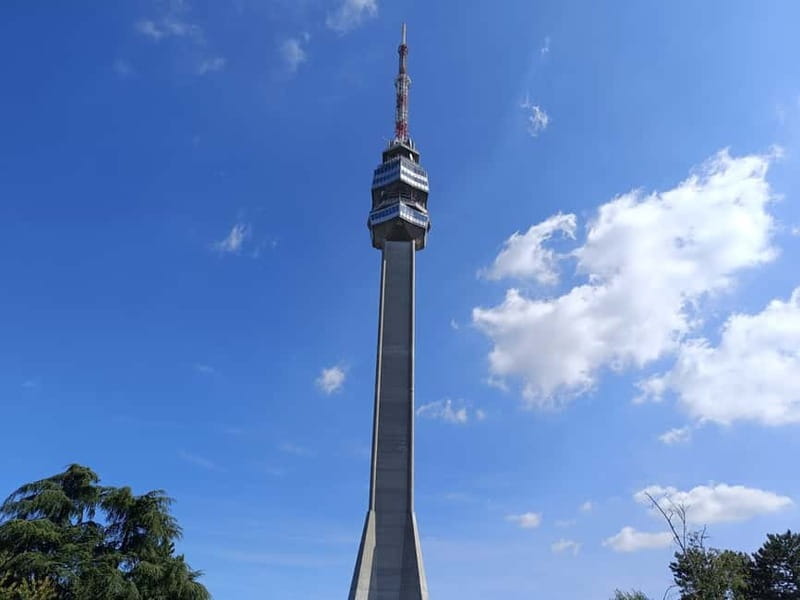
Avala Tower after its 2010 rebirth
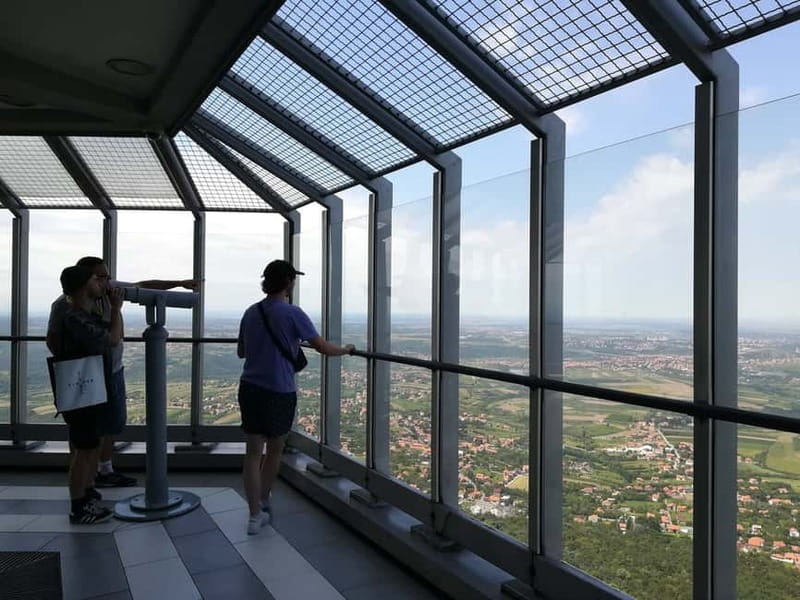
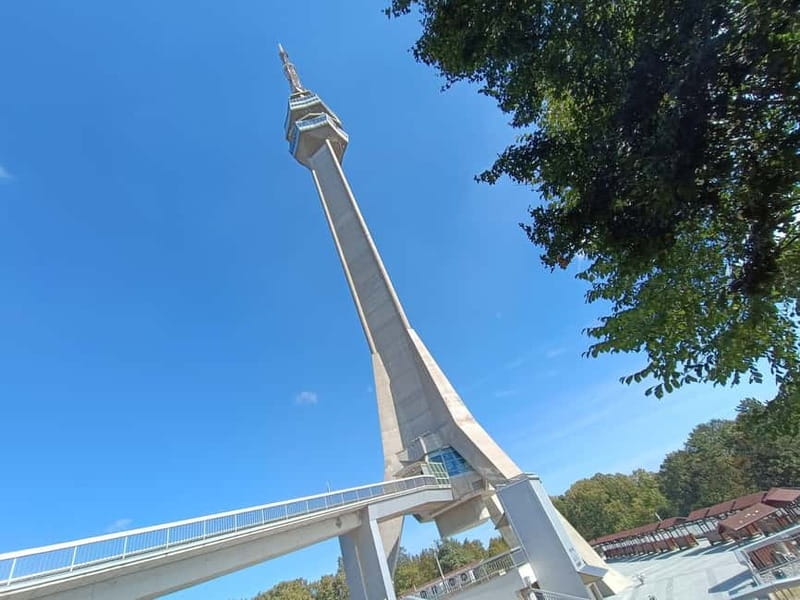
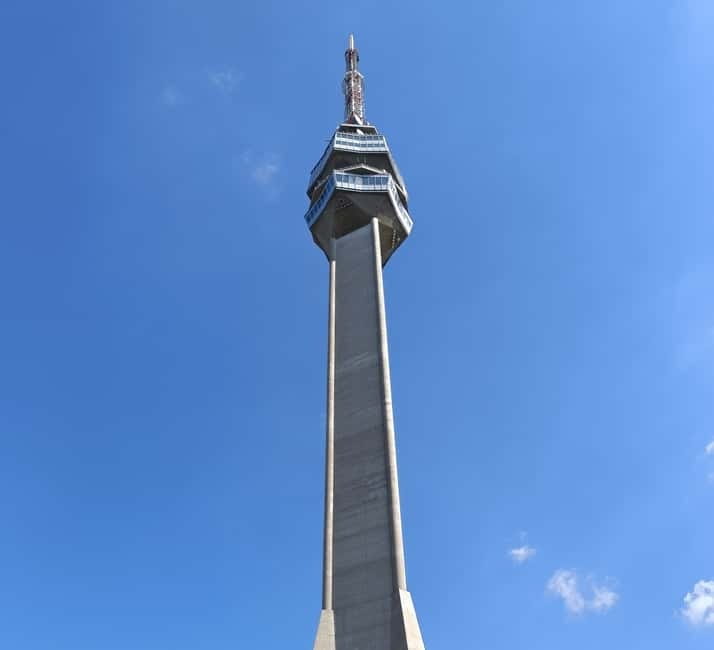
A short visit to Avala Tower follows. The tower ticket is included, and the stop lasts about 30 minutes. The main draw is the observation deck, where you can look across Belgrade and the surrounding area from a high point on Avala Mountain.
The tower has a striking modern shape and a complicated recent story. NATO bombing destroyed the original structure in 1999, and the tower was rebuilt and reopened in 2010. That makes this more than a simple viewpoint. It is also a visible example of how an important national symbol was restored after destruction.
The view depends on the weather. On a clear day, the height gives you a useful sense of Belgrade’s position, its rivers, and the broad spread of the city. Clouds, rain, or haze can reduce what you see, and the operator does not promise perfect visibility. The tour still runs in poor weather, so treat the tower view as a welcome bonus rather than the sole reason to book.
The included admission adds real value. You do not have to arrange a separate trip to Avala or buy a tower ticket on your own. The tradeoff is time: 30 minutes is enough for the main viewpoint and explanation, but not a leisurely mountain outing.
Eastern Gate, where housing becomes sculpture
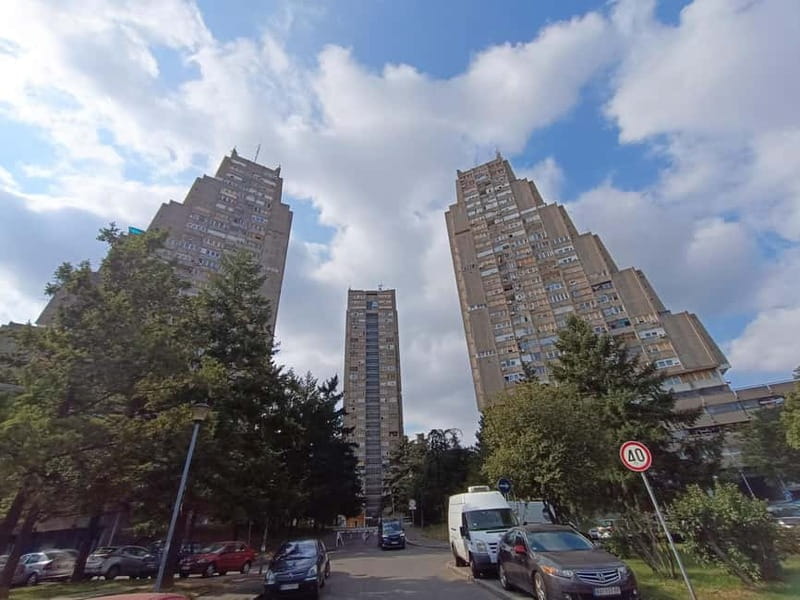
After around 20 minutes by van, you reach the Eastern Gate of Belgrade, also known as the Rudo buildings. The stop lasts about 20 minutes and focuses on photographs and a guided explanation.
These residential towers are a strong example of the city’s brutalist character. Their repeated forms create a powerful group effect, making ordinary apartment buildings look almost like a monumental gateway. You will see how housing could be designed to express the confidence of a modern socialist capital, not just provide practical shelter.
This is one of the stops where an outside view is the whole point. You should not expect to enter the buildings or inspect private interiors. That limitation is worth knowing in advance, especially if you prefer architecture tours with indoor access. Still, the exterior view is enough to appreciate the massing, repetition, and relationship between the towers.
Your guide’s explanation helps here because the buildings are easier to understand as part of New Belgrade’s urban plan. You are looking at more than isolated objects. The route shows how major roads, gateways, housing blocks, and public buildings were arranged to create a new city district.
A few more architecture walks in the world worth a look
- Chicago Architecture River Cruise
★ 5.0 · 15,756 reviews - Chicago River 90-Minute Architecture Tour
★ 4.5 · 9,629 reviews - Chicago River: 1.5-Hour Guided Architecture Cruise
★ 4.8 · 8,046 reviews - Chicago Architecture Center River Cruise aboard First Lady
★ 5.0 · 5,536 reviews
Crossing the Sava on Ada Bridge
The next major movement takes you toward the Sava River and across Ada Bridge. The bridge stop is listed as a 10-minute photo stop, so do not expect a long walk along the river or an engineering presentation inside the structure.
Ada Bridge is a modern counterpoint to the older Yugoslav buildings. Its single-pylon design gives it a clean, dramatic profile, and its construction was featured on the Discovery Channel. The tour describes it as the biggest single-pylon bridge in Europe, giving the crossing a useful engineering angle as well as a visual one.
The short stop works because the bridge is best understood in motion. You see its cable arrangement and pylon as you cross, then have a chance to take photographs. The vehicle also saves you from spending extra time navigating between Belgrade’s separate architectural zones.
If bridges are your main interest, the 10-minute stop may feel brief. If your goal is a broad survey of Belgrade’s 20th-century design, it fits the day well. The tour keeps moving rather than spending the whole afternoon at one structure.
Sava Center and New Belgrade’s wide scale
The route continues to Sava Center, with a short photo stop of about 10 minutes. The center was built for the 1977 Conference on European Security and Cooperation held in Belgrade. It was the first and largest conference center in former Yugoslavia, a fact that explains its immense scale and international purpose.
The building is especially interesting because of its polyhedral forms and structural design. From outside, look for the way the complex breaks away from simple rectangular blocks. The geometry gives the center a sense of movement, while its size signals the importance Yugoslavia wanted to project on the world stage.
You will also have a scenic drive through New Belgrade. This matters because the district is best understood as an urban plan, not a collection of unrelated buildings. Broad roads, large open spaces, housing blocks, offices, and public institutions reflect an ambitious postwar attempt to create a new capital district.
The drive is not a walking tour of every major block. It is a quick visual survey, so pay attention as the vehicle moves between stops. A camera with a wide lens may help with the large structures, though the exact photo opportunities depend on traffic and where the vehicle can safely stop.
The Western Gate and Geneks Twin Towers
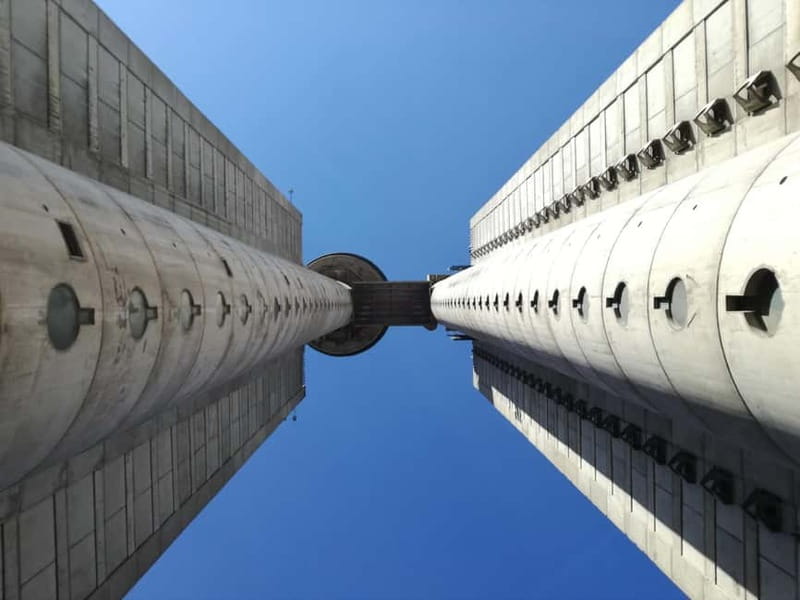
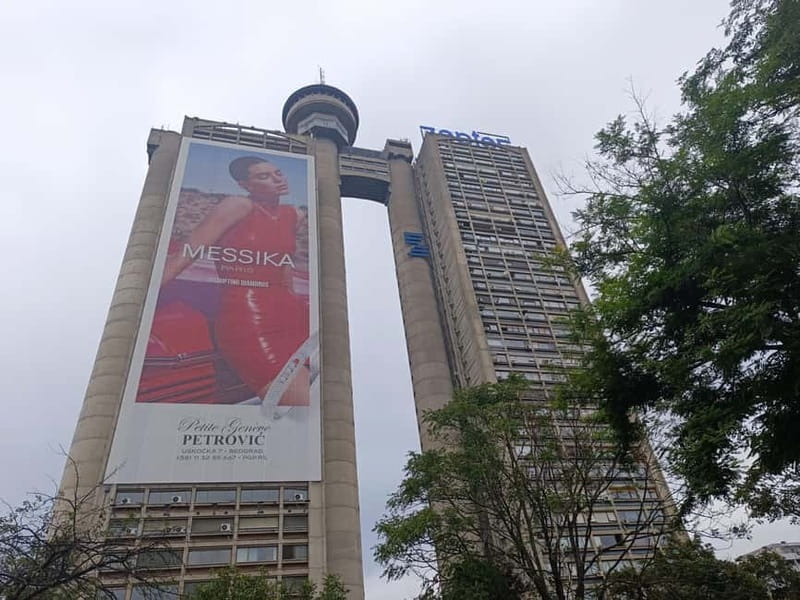
The Western Gate is one of the most memorable stops on the route. The tour allows about 30 minutes for photographs, sightseeing, and a guided explanation. The landmark is formed by the Geneks twin towers, linked by a bridge high above the ground on the 26th floor.
The design turns an office and residential complex into a literal gateway to Belgrade. Its height and connecting structure give it a strong visual identity, and the bridge makes the building feel almost like a piece of city infrastructure rather than a conventional pair of towers.
This stop also shows why the tour is useful for people who already know they like brutalism but want to understand its local form. The buildings are not simply rough concrete boxes. They use height, connection, repetition, and placement to shape how people experience the city from the road.
Again, the main experience is from outside. Geneks is not presented as an interior architectural visit, and the tour cannot offer access to residential or government spaces. You get the best value by treating the stop as a guided reading of the exterior, with time for photographs and questions.
Palace of Serbia and the architecture of authority
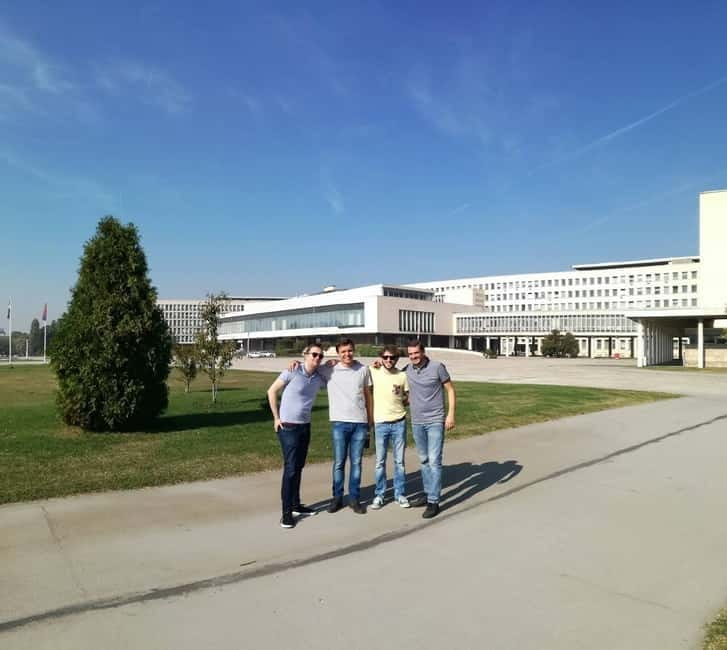
The final major stop is the Palace of Serbia, formerly the Federal Executive Council. You have about 20 minutes for photographs and a guided visit from outside.
The building is a fine example of late modernism, with a formal scale suited to the institution it housed. It was the first New Belgrade project after World War II, and its size, order, and placement were intended to show the authority of the new Yugoslav state.
This is where the tour’s theme becomes clearest. Architecture was not merely a matter of taste. Government buildings communicated ideas about unity, progress, order, and national power. The Palace of Serbia gives you a chance to compare official architecture with the more experimental forms of Geneks Towers, the Eastern Gate, and Sava Center.
You should not expect to go inside. The building remains a government site, so the exterior is the practical focus. That may disappoint anyone hoping to see grand halls or original interiors, but the outside tells much of the story the tour sets out to explain.
What the $88 price includes
At $88 per person, the tour offers fair value if you want several distant sites in one half-day. The price includes hotel pickup and drop-off, private transportation, a professional English-speaking guide, and entry to Avala Tower.
Transport is the main practical benefit. Avala Mountain and New Belgrade are not one compact walking circuit, and public transport would take extra planning and time. Here, the vehicle links the mountain, river crossing, conference center, residential towers, office landmarks, and government complex without forcing you to arrange separate trips.
The small-group limit of 10 also matters. You are not part of a large coach crowd, and the guide can usually keep explanations focused. The experience is still group-based, so it will not feel like a fully private architecture consultation.
Food and drinks are not included. Since the tour lasts four hours, this is not a major problem, but you should plan ahead if you need refreshments. The time is divided among driving, walking, and photo stops, so the tour is best viewed as a compact architecture circuit rather than a relaxed meal outing.
Free cancellation is available up to 24 hours before the tour for a full refund, and you can reserve while paying later. Starting times depend on availability, so check the available departure before committing to other plans.
Who should book this Belgrade tour
I would recommend this experience first to anyone with a real interest in brutalism, structuralism, modern engineering, or Yugoslav history. You do not need formal architecture training, but you should enjoy looking at buildings from the outside and thinking about why they were designed in such unusual ways.
It also suits a first visit to Belgrade if you want to understand New Belgrade quickly. The district can feel scattered and oversized when explored alone. A guide and vehicle give you a clear route and connect the buildings to the political goals of the period.
You may want a different experience if you prefer long indoor visits, galleries, cafés, or slow neighborhood walks. Several of the most important sites are government or residential buildings, so exterior viewing is unavoidable. The weather can also affect the Avala Tower view, and the tour runs rain or shine.
The strongest part of the experience is the guide’s ability to connect design with ideology. Guides such as Nemanja are praised for warm, clear explanations and strong background in architecture and history. That human element can turn a series of concrete buildings into a readable story about a country trying to define itself.
FAQ
How long does the architecture tour last?
The tour lasts four hours, including transportation, guided stops, sightseeing, and the return to Belgrade.
Is hotel pickup and drop-off included?
Yes. Pickup and drop-off in Belgrade are included. You should wait in your hotel lobby five minutes before the scheduled pickup time.
Is the Avala Tower ticket included?
Yes. Entry to Avala Tower is included in the price.
Will the tour visit the inside of every building?
No. The itinerary focuses mainly on exterior views, photographs, and guided explanations. Some sites are residential or government buildings and are not open for this type of visit.
Is the tour available in English?
Yes. The tour has a live English-speaking guide.
What happens if the weather is poor?
The tour runs rain or shine. The view from Avala Tower depends on weather conditions, so cloud, rain, or haze may limit what you can see.
Should you book it?
Book this tour if you want a focused look at Belgrade’s brutalist and structuralist architecture, especially if you value context as much as photographs. The combination of Avala Tower, Ada Bridge, New Belgrade, Geneks Towers, Sava Center, and the Palace of Serbia gives you a strong four-hour overview without transport hassles.
Skip it if you need extensive interior access or prefer a slow, unstructured city walk. For architecture fans, though, the price is reasonable because it covers private transport, a guide, hotel transfers, and the Avala Tower ticket. The tour’s real strength is its ability to show how Yugoslavia used concrete, height, scale, and geometry to express power.
Newly added in the world
- Washington, DC: Georgetown Architecture Walking Tour★ 5.0 · 8 reviews
- Washington DC: Dupont Circle & Embassy Row Architecture Tour★ 5.0 · 6 reviews
- New Orleans : Garden District Architecture Walking tour★ 4.8 · 5 reviews
- Wilmington History and Architecture Tour★ 4.8 · 18 reviews
- Walk & Discover KL’s Architectural and Heritage Gems★ 5.0 · 7 reviews
- Unveiling Brno: History, Culture & Architectural Delights★ 5.0 · 2 reviews
- Vicenza: Palladian Architecture Private Walking Tour★ 3.3 · 3 reviews
- Private Colonial Williamsburg Architectural Tour★ 5.0 · 5 reviews
Bauhaus and Brutalist Architecture Tours, compared.
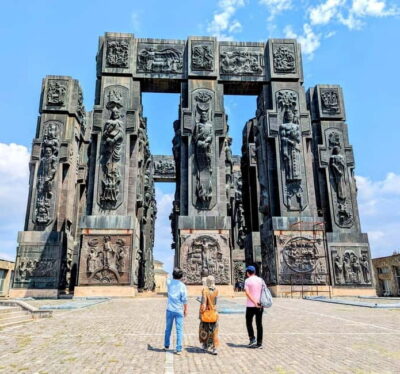
Brutalist Tbilisi: Urban exploration and untold stories
Read our review →
Le Corbusier’s Chandigarh : A Complete Architecture Tour
Read our review →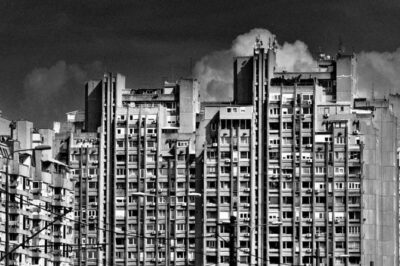
Architecture of New Belgrade – Brutalism Decoded
Read our review →
Secret Split: Socialist Architecture & brutalism – Urban Utopia
Read our review →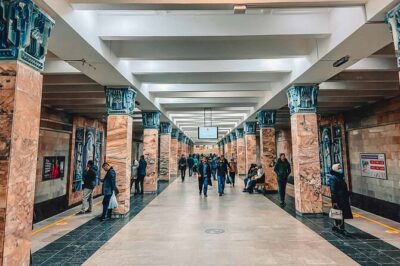
Tashkent Soviet Architecture (Modernism) and Subway station tour.
Read our review →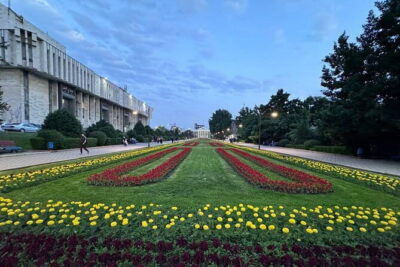
USSR History, Soviet Architects ,Statues & Mosaics
Read our review →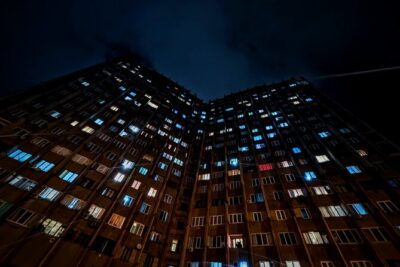
Brutal Tbilisi — Night Edition: Dark Side of Soviet Architecture
Read our review →Browse the lists this tour appears in