
Review · BAUHAUS AND BRUTALIST ARCHITECTURE TOURS
Le Corbusier’s Chandigarh : A Complete Architecture Tour
Chandigarh is not an old Indian city with a few modern buildings added later. It was planned almost from scratch as a new capital, with Le Corbusier, Pierre Jeanneret, Maxwell Fry, and Jane Drew giving concrete, sunlight, greenery, and strict order a central role. This tour takes you beyond the famous photographs and into buildings that are normally hard to see from the inside.
I especially like the rare building access and the way the tour links grand civic projects with ordinary housing. I also like Rusty’s background as a third-generation Chandigarh resident and former journalist. He brings local stories and sharp opinions, rather than delivering a polished speech about modernism.
The main consideration is access. Government conditions, holidays, and local politics can close some buildings, and the tour involves walking and stairs. The information says wheelchair access is available, but also says the experience is not suitable for wheelchair users or people with mobility impairments, so you should confirm your exact needs before booking.
Key points worth knowing
- Inside access matters: You may enter Gandhi Bhawan, parts of Punjab University, Maison Jeanneret, the Capitol Complex, Le Corbusier Centre, and the architecture museum.
- Rusty adds local context: He is a third-generation resident with more than 11 years of journalism experience.
- The tour covers more than Le Corbusier: Pierre Jeanneret’s social housing and homes receive serious attention, along with the work of Maxwell Fry and Jane Drew.
- The Capitol Complex is the visual high point: The Palace of Assembly, Secretariat, High Court, Open Hand Monument, Tower of Shadows, Geometric Hill, and Martyrs Monument are all part of the planned route when access allows.
- Transport removes hassle: Pickup, drop-off, fuel, parking, entry fees, and bottled water are included in the $75 price.
- Conditions can change: Bring identification, wear comfortable shoes, and contact Rusty on WhatsApp after booking.
Why Chandigarh rewards an architecture tour
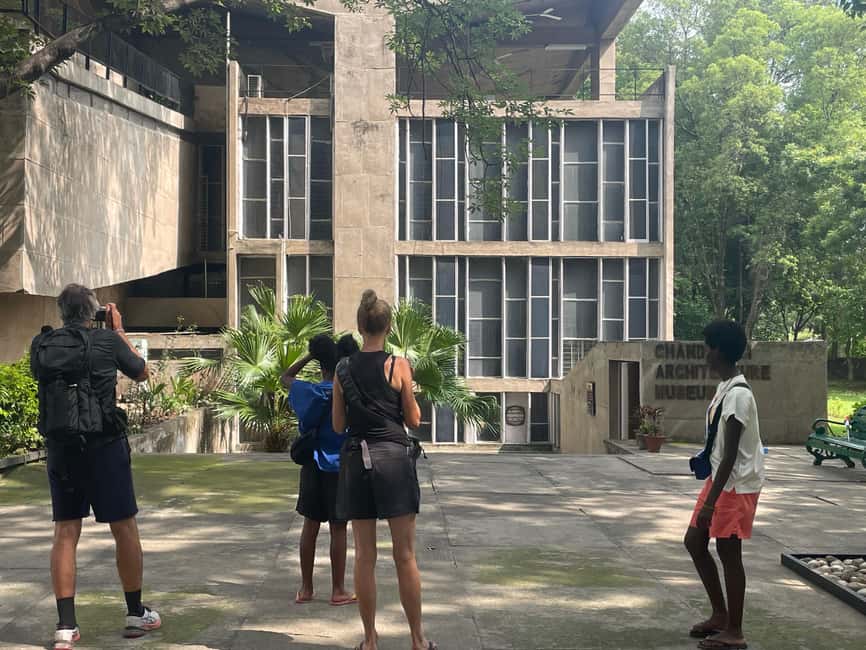
Chandigarh can look simple at first glance. The roads are broad, the sectors follow a grid, and the buildings often use exposed concrete and strong geometric forms. Without explanation, you may see a large government building and simply think, That is a lot of concrete.
The point of this tour is to show you the ideas behind that concrete. Chandigarh was planned around sectors intended to support daily life, with civic buildings, shopping areas, schools, open ground, and housing arranged in a controlled pattern. Le Corbusier’s vision was orderly and functional, but it was not cold in every sense. Light, shade, trees, ventilation, and movement all mattered.
Rusty’s role is important here. As someone raised in the city, he can explain how the original 1960s plan has changed over time. You are not asked to admire every decision. The experience looks at the difference between the city Le Corbusier imagined and the Chandigarh people use today.
That balance is one of the strongest reasons to book. You get architectural theory, but you also get practical local history, personal stories, and a sense of how the city has aged.
More Bauhaus and Brutalist Tours in the world:
- London: Brutalist Architecture & History Walking Tour
★ 4.8 · 42 reviews - Architecture of New Belgrade – Brutalism Decoded
★ 4.5 · 24 reviews - Bishkek : USSR History, Soviet Architects ,Statues & Mosaics
★ 4.9 · 14 reviews
Gandhi Bhawan and the first look at Chandigarh’s modernism
Gandhi Bhawan is an early stop that helps set the tone. Its unusual form and concrete construction show how Chandigarh’s architects moved away from familiar colonial and traditional styles. The building is not treated as an isolated object. Rusty explains how its shape, setting, and use connect to the larger modernist plan.
This is useful even if you already know Le Corbusier’s name. The tour is not limited to dates and design labels. You learn to watch for sun control, open space, strong structural lines, and the relationship between a building and the people moving through it.
The pace also matters. You can stop, look, and ask questions instead of racing through a checklist. One Japanese visitor specifically valued the pauses and the chance to think before moving on. That is a good sign for anyone who prefers a conversation to a nonstop lecture.
Punjab University: campus buildings with a working life
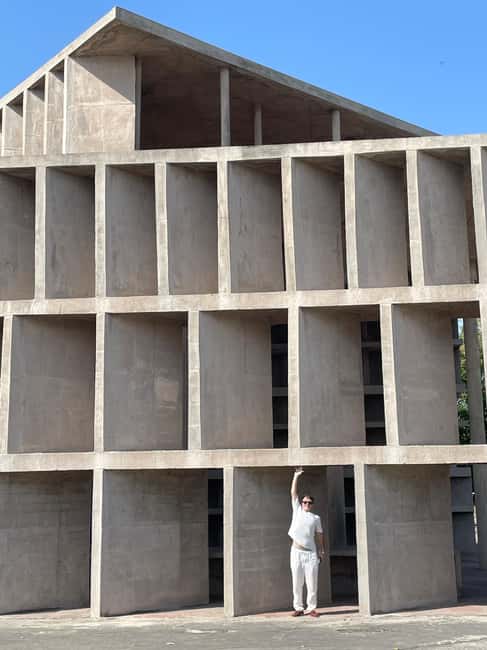
Punjab University gives you a different view of Chandigarh’s design. The campus includes Gandhi Bhawan, the AC Joshi Library, departments, and lecture halls. Access to the library and some interiors depends on local conditions, but the planned visit includes a detailed walk through the university grounds.
A working campus shows how modernist ideas function outside a monument. You see academic buildings being used for everyday purposes, not preserved only for photographs. The scale is also different from the Capitol Complex. Here, the architecture relates to students, teachers, reading, teaching, and movement across a large educational setting.
The campus stop is especially useful for architecture students and professionals because it lets you compare repeated forms and practical spaces. For general visitors, it provides a needed break from the most famous civic landmarks. You begin to understand that Chandigarh’s design was a citywide project, not a collection of celebrity buildings.
Do not count on every interior opening on every visit. National holidays, institutional schedules, and local permissions can affect access. If the AC Joshi Library or a department is closed, the outdoor campus walk and other buildings remain important parts of the experience.
Maison Jeanneret and Pierre Jeanneret’s human scale
Maison Jeanneret is one of the tour’s most appealing stops. It was the first house built in Chandigarh by Pierre Jeanneret, and Le Corbusier also stayed there. The house now functions as a museum, giving you a more intimate setting after the large university buildings.
Jeanneret’s contribution deserves this attention. Chandigarh is often reduced to Le Corbusier, but Jeanneret worked on housing and everyday urban life. His work helps explain how the city’s modernism reached beyond grand government offices and into homes for residents.
At Maison Jeanneret, you can think about proportion, domestic life, climate, and materials. A house tells a different story from a monumental assembly hall. It asks how modern design works at the scale of a person sitting, sleeping, cooking, or moving through a shaded room.
The stop also helps correct a common misunderstanding. Brutalist architecture is not only about huge masses of concrete. It can include careful openings, shade, ventilation, and a practical response to hot weather. Jeanneret’s housing work makes that point more clearly than a lecture would.
A few more architecture walks in the world worth a look
- Chicago Architecture River Cruise
★ 5.0 · 15,756 reviews - Chicago River 90-Minute Architecture Tour
★ 4.5 · 9,629 reviews - Chicago River: 1.5-Hour Guided Architecture Cruise
★ 4.8 · 8,046 reviews - Chicago Architecture Center River Cruise aboard First Lady
★ 5.0 · 5,536 reviews
The Capitol Complex and Chandigarh’s civic ambition
The Capitol Complex is the centerpiece. This is where Le Corbusier’s plan becomes most forceful, with massive government buildings and sculptural monuments arranged around broad open areas.
The route can include the Palace of Assembly, Secretariat Building, High Court, Open Hand Monument, Geometric Hill, Tower of Shadows, and Martyrs Monument. Access depends on political conditions and official permissions, so the exact experience can change. If one building is closed, Rusty provides alternatives where possible.
The Palace of Assembly shows Le Corbusier’s interest in bold form and controlled movement. The High Court, also known as the Palace of Justice, presents another version of civic power. The Secretariat is more repetitive and administrative, giving you a useful contrast with the more dramatic public buildings.
The monuments matter too. The Open Hand became a symbol associated with Chandigarh, expressing the idea of giving and receiving. The Tower of Shadows turns sunlight into part of the design problem. Geometric Hill and the Martyrs Monument add symbolic and sculptural elements to a district already filled with strong shapes.
This is not a quick photo stop. The value comes from having someone explain how the parts relate. Without guidance, you may notice the scale but miss the intended movement, shade, symbolism, and relationship between open ground and built form.
Security and access rules are the practical limits. Bring your passport or another form of identification. Follow instructions carefully, and allow for changes if an official building cannot receive visitors that day.
Le Corbusier Centre: where the city’s planning began
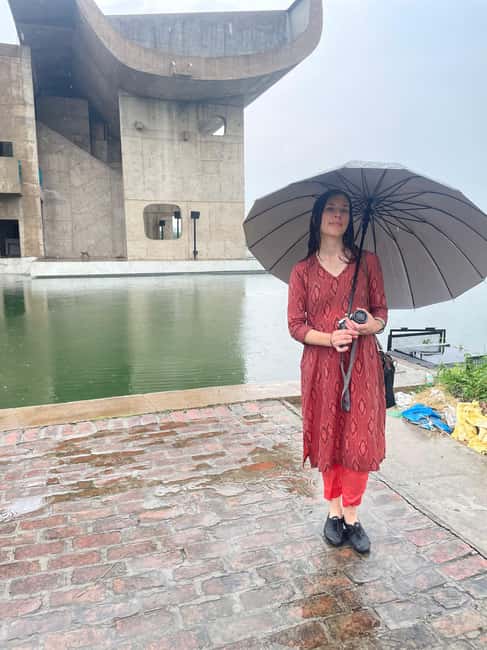
The old architect’s office is now the Le Corbusier Centre. This is one of the most useful stops for understanding the planning process rather than only the finished buildings.
The centre connects Chandigarh’s physical appearance with the people who worked on it. You can consider how an office team translated broad principles into roads, sectors, housing, public buildings, and open areas. The tour also addresses the early use of sustainability and green planning ideas in India.
That point deserves a little care. The word sustainability is used in many ways today, but Chandigarh’s planners were already dealing with shade, trees, natural ventilation, sun, and outdoor space. The centre helps place those concerns in their original setting instead of treating them as recent inventions.
Rusty’s journalism background should be particularly useful here. The experience promises a factual but entertaining account of the city’s development, without patriotic speeches or a single official version of the story. That is a welcome approach when discussing a planned city with both achievements and compromises.
The architecture museum and original working documents
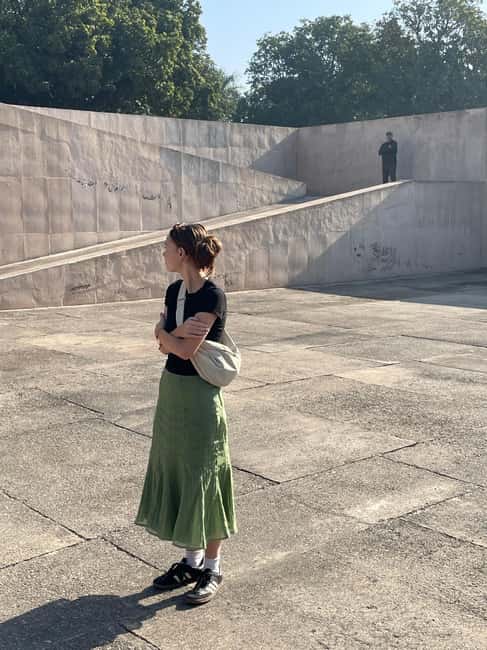
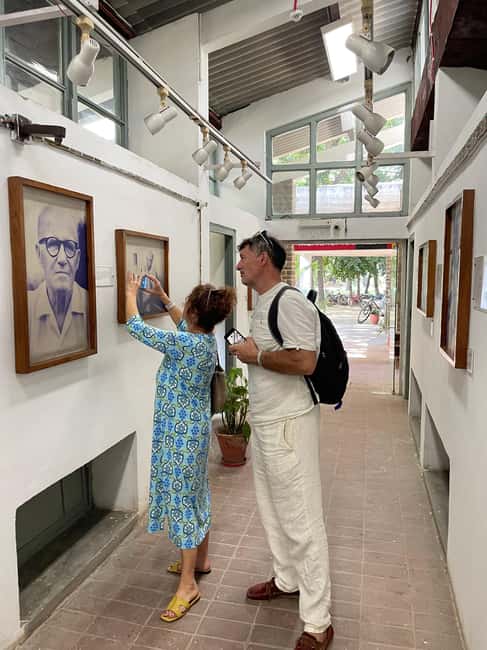
The architecture museum gives you the paper trail behind the city. Original letters, floor plans, sketches, and rare drawings help you see how ideas changed before they became concrete.
This is where the tour can become especially valuable for students, architects, and anyone who likes to understand process. A finished building can look inevitable. Plans and correspondence show that design involves choices, revisions, arguments, and practical limits.
You can also connect the drawings to the places visited earlier. A plan of a government building means more after you have seen its forms and spaces. A sketch of a sector becomes easier to read after driving through the city and noticing its grid.
The museum is also a good answer to the question of why you need a guide. Labels alone may identify a drawing, but Rusty can explain how the document fits into Chandigarh’s creation and later development.
What the $75 price includes
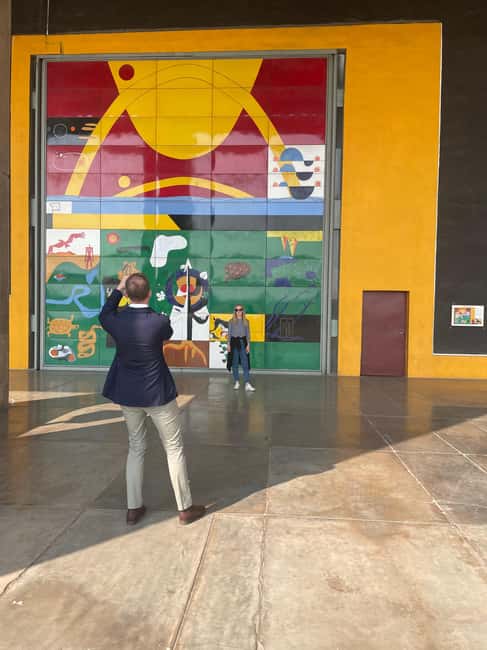
At $75 per person, this is not the cheapest way to look around Chandigarh. It is also not a simple driving tour. The price includes a private car for transport between sites, pickup and drop-off within a reasonable distance, entry tickets, parking, fuel, bottled water, and permissions connected with the visit.
That package has real value because the most important buildings are spread across the city. Arranging separate transport, finding the right entrances, paying individual fees, and trying to obtain access could take much of your day. Rusty may also handle permissions ahead of time when traffic or timing makes that helpful.
The tour lasts about 5.5 hours, which is long enough to create a connected story without taking your entire day. You should still expect a full morning or afternoon, with time in the car and on foot.
Food and drinks are not included. That is reasonable, since tastes and dietary needs differ. Rusty can suggest options ranging from vegan food and snacks to local specialties, meat dishes, kebabs, and sweets. You choose what you want and pay for your own meal, including his if you eat together.
The food help is a nice extra, especially if you are cautious about spice or hygiene. One Japanese visitor appreciated recommendations adjusted to personal preferences, including milder food and clean places. Treat this as useful local guidance, not as a forced restaurant stop.
How Rusty guides the day
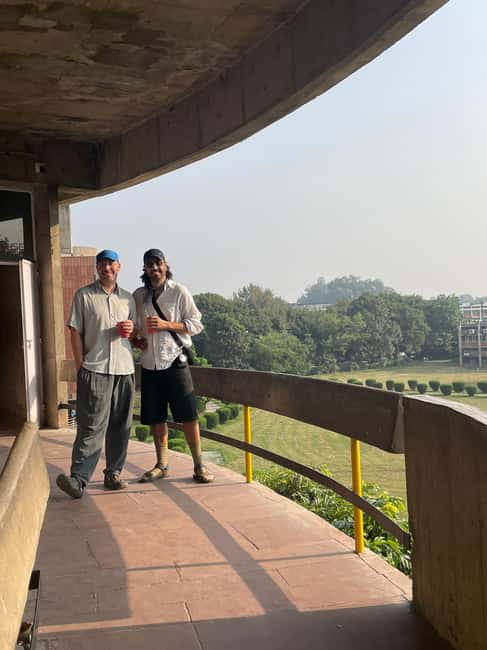
The guide can make or break a specialist tour. Rusty is described as friendly, professional, and easy to understand, with a broad conversational range. He is also comfortable using a translation app when needed.
That matters if English is not your strongest language. Several Japanese visitors found his spoken English clear and appreciated his use of translation technology. You should still be comfortable following an English-language tour, but you can ask for clarification and use your own translation tool if needed.
His style appears to leave room for questions. He does not need to fill every quiet moment, which suits architecture. You get time to look at a facade, notice a shadow pattern, or form your own opinion before moving on.
The humor is another part of the experience. The tour promises funny, fact-based stories about Chandigarh’s heritage and evolution. That can make technical material easier to remember, but you should choose this tour because you want a conversational guide, not a silent specialist escort.
Timing, access, and what to bring
The tour operates in English and includes pickup from a hotel, railway station, bus stand, Airbnb, or airport within a reasonable distance in Chandigarh. Confirm the pickup point after booking and message Rusty on WhatsApp using the number in your voucher.
Buildings can close because of national holidays, official schedules, or local political conditions. The tour can shift to other heritage buildings, but you should not book it assuming every named interior is guaranteed.
Wear comfortable shoes. You will walk around campuses, civic buildings, and outdoor monuments, and sun protection is sensible. Bring a hat, sunscreen, and passport or other identification.
The accessibility information needs special attention. The activity is marked wheelchair accessible, yet the practical notes say it is not suitable for wheelchair users or people with mobility impairments. Ask Rusty for a clear description of steps, walking distances, vehicle access, and interior entry before you reserve.
Free cancellation is available up to 24 hours before the start, and you can reserve now and pay later. Those policies are useful if your Chandigarh plans may shift, but the more important step is contacting the guide about access and building conditions.
Who will get the most from this tour
I would choose this experience if architecture is a major reason for visiting Chandigarh. It is also a strong choice if you have only one or two days in the city and want a clear introduction rather than a scattered set of stops.
Architecture students, practicing architects, photographers, urban planners, and design-minded travelers will get the most detail from the route. The original drawings, social housing, campus buildings, and civic monuments create a much fuller picture than a visit to the Capitol Complex alone.
You do not need technical training to enjoy it. Rusty explains the city in plain language, and the mix of humor, local memory, and visual examples should work for curious first-time visitors.
I would hesitate if you dislike planned schedules, walking, official security procedures, or changes caused by public access rules. I would also think twice if your main interest is food, shopping, or a relaxed sightseeing drive. Architecture is the focus from beginning to end.
Should you book Le Corbusier’s Chandigarh tour?
Book it if you want to understand how Chandigarh works, not just photograph its most famous buildings. The combination of inside access, local transport, Pierre Jeanneret’s homes, the Capitol Complex, planning offices, and original drawings gives you a rare look at the city from several angles.
The strongest reasons are Rusty’s local connection, his clear English and flexible communication, and the practical value of having access and transport handled for you. The $75 price is fair when you count the car, tickets, parking, fuel, water, and five and a half hours of guiding.
Before booking, confirm which buildings are open on your date and discuss mobility needs. If those points work for you, this is one of the better ways to make sense of Chandigarh’s unusual modernist story.
FAQ
How long does the Chandigarh architecture tour last?
The tour lasts approximately 5.5 hours.
What language is the tour conducted in?
The live tour is conducted in English. Translation apps may also be used to help with communication when needed.
Is pickup included?
Yes. Pickup and drop-off are included within a reasonable distance in Chandigarh, including hotels, the railway station, the bus stand, Airbnb accommodation, and the airport.
What is included in the $75 price?
The price includes transport between sites, entry tickets, parking, fuel, permissions, bottled water, and pickup and drop-off service.
Can every building listed be visited inside?
No building access is guaranteed in every case. The AC Joshi Library and parts of the Capitol Complex are subject to local conditions, national holidays, and political or official restrictions. Alternative heritage buildings may be included if needed.
What should I bring?
Bring a passport or identification card, comfortable shoes, a hat, and sunscreen. Contact Rusty on WhatsApp after booking using the number shown in your voucher.
Newly added in the world
- Venice Art and Architecture Private Walking Tour★ 4.5 · 11 reviews
- Basilica San Marco and the Pala d’Oro with Architect Guide★ 4.5 · 19 reviews
- Walking tour in Venice with an architect★ 5.0 · 16 reviews
- Lesser Poland Wooden Architecture Trail UNESCO Private Tour from Krakow★ 5.0 · 15 reviews
- Lisbon Contemporary Architecture★ 5.0 · 3 reviews
- Private Munich Tour for History Buffs with Architectural Gems and WWII sites★ 5.0 · 3 reviews
- Neoclassical Paris Architecture 2-Hour Private Walking Tour★ 5.0 · 7 reviews
- Street Art and Architecture:Porto Speaks Through Its Streets★ 3.0 · 2 reviews
Bauhaus and Brutalist Architecture Tours, compared.
Brutalist Tbilisi: Urban exploration and untold stories
Read our review →
Architecture of New Belgrade – Brutalism Decoded
Read our review →
USSR History, Soviet Architects ,Statues & Mosaics
Read our review →
Brutal Tbilisi — Night Edition: Dark Side of Soviet Architecture
Read our review →USSR History , Soviet Architects , Statues & Mosaics
Read our review →
Browse the lists this tour appears in