
Review · WALKING TOURS
Goa Walking tour: History, Culture, Art and architecture
Goa’s story is easiest to read at street level, among fishnets, spice stalls, faded Portuguese buildings, and the narrow lanes of Fontainhas. This four-hour private tour gives you that side of the state, with a tuk-tuk ride and a glass of beer or cashew feni to keep the morning moving.
I like the local markets, where you see ordinary Panjim life rather than a string of beach resorts. I also like the mix of transport and walking: private vehicle, tuk-tuk, and your own two feet. The main consideration is pace. Four hours covers a lot, but market visits and photography stops may feel brief if you want long shopping time or a detailed church visit.
Key points to know before booking
- Panjim’s working markets: Fish, vegetables, spices, and flowers give you a direct look at daily Goan commerce.
- A private experience: Only your group takes part, so the morning can feel more personal than a large sightseeing group.
- Portuguese-era architecture: See the old secretariat area, the former account department, Yusuf Adil Shah’s summer palace, and Fontainhas.
- A tuk-tuk ride included: The local three-wheeler connects the market area with the Latin quarter.
- Beer or cashew feni: A drink at a local restaurant is included, with feni offering a distinctly Goan option.
- Hotel pickup and drop-off: Transport is included, which makes an early start at 8:30 a.m. easier.
Why this tour gets beyond Goa’s beaches
Many first-time visitors meet Goa through its beaches, nightlife, and resort towns. Those are real parts of the state, but they do not explain Panjim very well. This tour shifts the focus to markets, public buildings, churches, old neighborhoods, and local art.
The experience begins with hotel pickup and transport to the Panjim Head Post Office. From there, the walking portion starts. That arrangement matters because you do not need to find a meeting point in an unfamiliar city, and you save your energy for the streets themselves.
The tour lasts about four hours. That is long enough to connect several parts of Panjim without turning the morning into an all-day march. It is also short enough to fit before lunch or another Goa activity. Since this is a private tour, your group is not combined with other participants.
No guide’s name is provided in the tour details, so you should not book this expecting a named historian or specialist. You can expect a professional guide, local transport, one bottle of mineral water, and a route built around walking and conversation.
More Walking Tours in India:
- British Architecture Walk, an immersive walking tour in Chennai
★ 5.0 · 60 reviews - Mumbai heritage walk- Story of Gothic and Art Deco buildings
★ 5.0 · 33 reviews - Victorian Gothic Heritage Quarter and Art Deco Walking Tour
★ 4.9 · 14 reviews
Panjim Head Post Office and the first steps into the city
The Head Post Office is the starting point, not a major ticketed attraction. Its value is practical: it places you near the old center of Panjim and gives the guide a clear point from which to begin the walking route.
The first part of the tour is about noticing how the city works. You pass public buildings and older structures while moving toward the fish market. This is a better introduction than simply driving past monuments because you have time to see shopfronts, street activity, and the small changes in architecture from one block to the next.
The route includes the old secretariat area and the account department building constructed during the Portuguese period. These stops help show that Panjim’s past is not confined to churches. Government offices, commercial buildings, and public spaces also carry the marks of earlier rule.
You do not need an admission ticket for these stops. The emphasis is on the streets and exteriors, so set your expectations accordingly. If you want extended interior visits at every building, this is not that kind of tour.
Fish, spice, vegetable, and flower markets
The market section is the tour’s most direct connection with present-day Panjim. The fish market is described as a busy place filled with fishnets and an assortment of fish. It is a working market, not a polished food hall prepared for sightseeing.
That distinction is useful. You may find strong smells, wet floors, crowded stalls, and fast-moving sellers. Those details are part of the point, but they may not suit anyone who wants a quiet, air-conditioned morning. Wear shoes that are comfortable for walking and easy to keep clean.
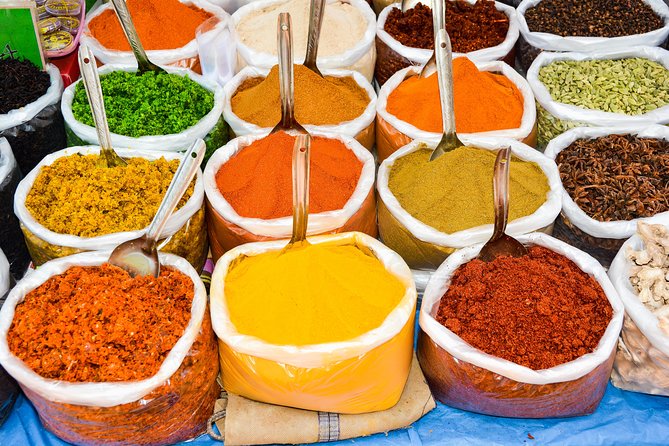
The vegetable and spice market adds color and scent to the route. You might find herbs and spices you do not see in ordinary supermarket displays, and the guide can help place them within local cooking and daily shopping. The flower market gives the final part of this section a different feel, with displays that offer an appealing contrast to the fish stalls.
I particularly like this sequence because it shows several parts of local commerce in one walk. You see seafood, produce, seasonings, and flowers rather than only historic façades. The markets also give you better photo subjects than a line of monuments, although you should be considerate when photographing people at work.
The market visit takes about two hours as part of the first major stop. That sounds generous, but it also includes the monuments along the way. If shopping is your chief aim, ask the guide early how much time can be set aside for browsing. The tour is designed as a moving introduction to Panjim, not as a dedicated market-shopping trip.
Yusuf Adil Shah’s summer palace and the Abbe Faria statue
Along the walk, you see the Gateway of the Palace of Yusuf Adil Shah and the summer palace associated with him. The building is described as one of Goa’s oldest surviving structures, dating to the 1500s, with distinctive Indo-Portuguese design.
This is one of the more unusual parts of the route. Goa’s architecture is often reduced to Portuguese churches, but this building points to an older and more layered past. Its form gives you a chance to compare local and European influences instead of treating Goa as a place with only one historical identity.
The route also passes a statue of Abbe Faria. Even if you know little about him before the tour, the statue adds another person and story to the city’s public spaces. The guide is the key to making these brief stops worthwhile, since the buildings and monuments may not explain themselves at a glance.
Keep in mind that the tour details do not promise lengthy interior access to the palace or the other public buildings. Think of these as architectural and historical waypoints during a walk. Their strength is the way they fit into the larger city route.
More History Walks in India:
- The Hipster Chandigarh Architecture History Tour
★ 5.0 · 54 reviews - Jaipur City Heritage and Architecture Tour
★ 5.0 · 32 reviews - Victorian Gothic Heritage Quarter and Art Deco Walking Tour
★ 4.5 · 13 reviews - Chicago in a Day: Food, History & Architecture Walking Tour
★ 5.0 · 1,153 reviews
The tuk-tuk connection to Fontainhas
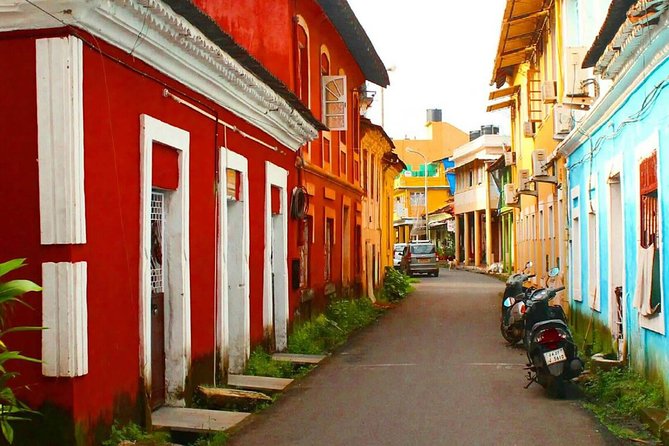
After the market and monument walk, you take a tuk-tuk toward Fontainhas. This is more than a novelty ride. It gives you a short taste of a common local form of transport and breaks up the walking before the next neighborhood.
The ride is included in the price, so you are not negotiating a separate fare or trying to flag down a vehicle. Since the tour is private, the transfer stays within your group. The supplied information does not specify the exact ride length, so expect it to function as a connection between stops rather than a long sightseeing circuit.
Fontainhas is known here as a Latin-style quarter with Goan and Portuguese character. Its appeal comes from the lanes, painted façades, and older residential feel. You stroll rather than race through it, which gives you time to notice details that are easy to miss from a car.
This part of the tour is especially useful if you want to see how Panjim’s architecture works at neighborhood scale. A single church or government building tells you about a city’s past. A residential quarter shows how that past shaped everyday streets.
Our Lady of the Immaculate Conception Church
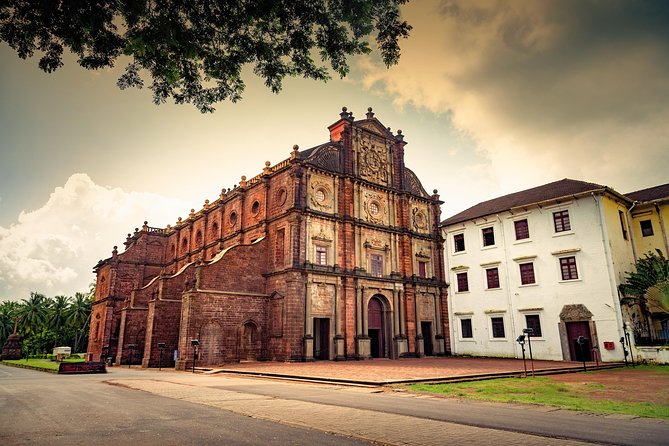
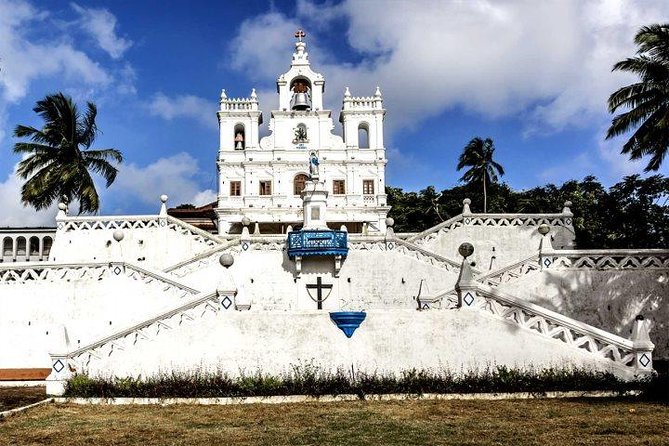
The church stop is a quick photography break at Our Lady of the Immaculate Conception Church, one of Goa’s best-known landmarks. The church was built in the 1560s, and its design is said to have been inspired by the Church of Bom Jesus de Braga in Portugal.
The broad stairway and Portuguese-inspired appearance make it an easy landmark to recognize. The available information also describes the church as large and beautiful inside, but the itinerary emphasizes a photo stop rather than a long guided interior visit. If seeing the inside matters to you, confirm the timing with the guide on the morning of the tour.
This is a good example of the tour’s balance. You get a major architectural sight without spending the whole morning in one church. At the same time, the short stop may disappoint you if you want time for quiet reflection, detailed photography, or close study of decorative features.
Dress and behave respectfully at the church. It is a religious site, not simply a backdrop for photos. The tour then returns to the streets of Fontainhas, where the experience becomes less formal and more neighborhood-focused.
Beer, cashew feni, and a slower Fontainhas walk

A local restaurant stop includes a mug of chilled beer or cashew feni, a spirit distilled from cashew fruit and produced in Goa. This is a small but important part of the experience because it gives you a taste of something tied specifically to the state.
Feni is not simply another drink on a menu. It is a local spirit with a strong identity, and trying it gives the tour a sense of place that a standard soft drink stop would not. If you prefer beer, that option is available instead. The included drink is limited to the stated offering, and additional food or drinks are not included.
The restaurant is also described as a Goan and Portuguese food spot, but the tour price does not include a meal. You can chat over the drink, ask questions, and enjoy a short pause before continuing through Fontainhas. Do not arrive expecting lunch to be covered.
The neighborhood walk after the drink is intentionally easygoing. You step back into the Latin quarter and look at its architecture at a slower pace. This is where the tour’s cultural pieces connect: market life, Portuguese influence, local transport, church architecture, and the continuing use of old residential streets.
The local art gallery and what the tour leaves out
The experience also includes a visit to a local art gallery. This broadens the morning beyond old buildings and religious sites. The art stop gives you a chance to see how Goa is represented by local artists, and it creates a useful link between historic surroundings and present-day creative work.
The details do not name the gallery or specify its size, collection, or the amount of time spent there. That uncertainty is worth noting if art is your main reason for booking. Treat it as one part of a varied city tour, not as a full gallery program.
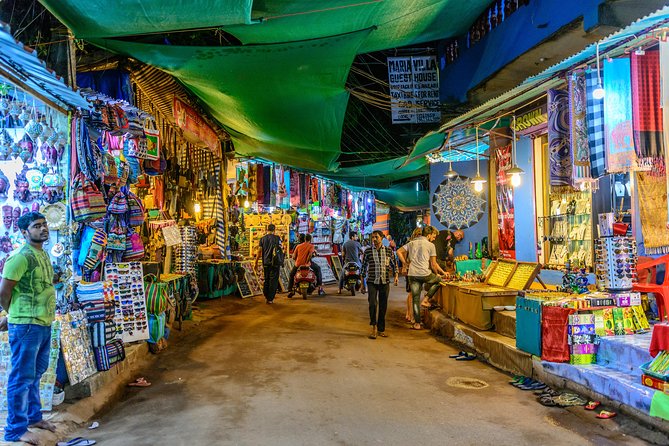
The same practical point applies to shopping. You pass places where you might see clothing, wearable art, and other items, but this is not marketed as a shopping tour. You may find something appealing, yet the schedule is built around seeing several types of place in one morning.
What the $94 price means
At $94 per person, this is not the cheapest way to walk around Panjim. The value depends on how much you want bundled into one private morning.
The price includes hotel pickup and drop-off, a private vehicle, a professional guide, walking, the tuk-tuk ride, one beer or feni, GST, and bottled water. If you are traveling with companions, the private format can make the cost easier to justify because you are paying for a dedicated experience rather than joining a large group.
You are also paying for structure. A guide connects the markets, monuments, church, Fontainhas, drink stop, and gallery into one route. Without that structure, you could see some of these places independently, but you would need to arrange transport, find the market areas, and manage the timing yourself.
The value is weaker if you only want a quick church photo or a short walk through an old neighborhood. It is stronger if you want Panjim explained through both its working markets and its architecture, and if hotel transport saves you planning time.
Who should book this Panjim morning
I would recommend this tour to first-time visitors who want Goa beyond the resort strip. It suits people who enjoy food markets, old buildings, local neighborhoods, and a little informal conversation over a drink.
It also fits couples, families, and small groups who prefer private attention. Most people can take part, and the tour runs near public transportation, though the experience itself includes a fair amount of walking.
You may want to skip it if you dislike market smells, uneven urban walking, or short stops at several sights. It is also not the right choice if your priority is a long beach day, a full meal, intensive church sightseeing, or a dedicated shopping excursion.
The start time is 8:30 a.m. That early hour is useful for a market-focused route, but it may not suit late-night visitors coming from Goa’s nightlife. Plan around the morning schedule rather than treating the tour as a flexible afternoon outing.
Should you book it?
Book this tour if you want a compact, private introduction to Panjim that mixes working markets with old architecture. The strongest parts are the fish, spice, vegetable, and flower markets, the unusual Yusuf Adil Shah stop, the tuk-tuk ride, and the Fontainhas walk.
Choose something else if you need long visits inside every monument or want a food tour with a full meal. At $94, the tour earns its price through private transport, hotel service, a guide, and a varied route rather than through admission tickets. For someone seeing Goa for the first time, that combination offers a useful morning with plenty of local texture.
FAQ
How long is the Goa walking tour?
The tour lasts approximately four hours.
What time does the tour start?
The stated start time is 8:30 a.m.
Is hotel pickup included?
Yes. Hotel pickup and drop-off are included.
Is this a private tour?
Yes. Only your group participates in the private activity.
What markets are visited?
The route includes a fish market, vegetable and spice market, and flower market in Panjim.
Is the tuk-tuk ride included?
Yes. Transport by tuk-tuk is included in the tour price.
Is a drink included?
Yes. The tour includes either beer or cashew feni at a local restaurant.
Is food included?
No. Food and drinks are not included unless specifically stated. The included drink is the stated exception.
Does the tour visit a church?
Yes. It includes a photography stop at Our Lady of the Immaculate Conception Church.
Can the tour be canceled for a refund?
Yes. You can cancel at least 24 hours before the local start time for a full refund. Cancellations or changes made less than 24 hours before the start time are not refunded or accepted.
Newly added in India
- New Delhi: Mughal’s architecture tour with transfers★ 4.0 · 7 reviews
- 2 day tour from Mumbai to architectural wonder of Mandu★ 5.0 · 2 reviews
- South India Tour- Temple Architecture and Backwaters★ 5.0 · 7 reviews
- British Architecture Walk in Chennai by Wonder tours★ 5.0 · 10 reviews
- Day trip from Bangalore to Lepakshi for Temple architecture & paintings★ 5.0 · 15 reviews
- Old & New Delhi Culture & Architecture City Private Tour★ 4.9 · 9 reviews
- Kanchipuram: Temple Architecture & Silk Weaving from Chennai★ 4.8 · 3 reviews
- Victorian Gothic Heritage Quarter and Art Deco Walking Tour★ 4.9 · 14 reviews
Walking Tours, compared.

The Official Art Deco Walking Tour by The Miami Design Preservation League
Read our review →
Baroque Architecture and Underground Walking Tour
Read our review →
Chicago in a Day: Food, History & Architecture Walking Tour
Read our review →

Ramblas, Old Town, Gothic and Gaudi Architecture Walking Tour
Read our review →
Chicago’s Secret Interiors Architectural Walking Tour
Read our review →
Browse the lists this tour appears in