
Review · WALKING TOURS
Small Group History And Architecture Walking Tour of Chicago
Chicago’s best architecture tour may be the one that keeps moving. This 2.5-hour walk links Cloud Gate, the Chicago River, the Pedway, Michigan Avenue, and Navy Pier, giving you a quick but useful introduction to the city’s public art, buildings, disasters, and street life. Guide Andrew gets especially strong praise for his clear storytelling and thoughtful care, including with older guests.
I like the small maximum of 10 people, which gives the walk a more personal feel than a large city march. I also like the mix of famous sights and less obvious city infrastructure, especially the Pedway and the working drawbridge at Michigan Avenue. The main drawback is pace: you cover a lot of ground in a short time, and coffee, snacks, and any food stop cost extra.
Key points at a glance
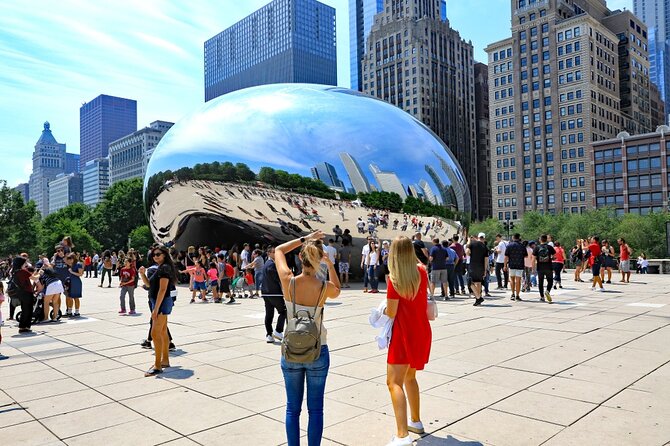
- Cloud Gate starts the walk with classic Chicago views: The Bean gives you a quick photo stop and a look at the skyline from a playful angle.
- The Chicago Pedway adds an unusual local detail: You enter the underground and bridge-linked system that helps people move through downtown in bad weather.
- The route connects architecture to city history: The Chicago Fire, the Wrigley Building, Tribune Tower, and the DuSable Bridge all fit into one walking story.
- A five-story coffee stop breaks up the sightseeing: Starbucks Reserve Roastery offers coffee and food for an additional charge.
- The tour finishes at Navy Pier: You can continue exploring the pier or choose the architecture cruise option afterward.
- Andrew is praised for warm, clear guiding: His approach appears especially useful for first-time visitors and older walkers, though the guide may not always be the same.
Starting beneath Cloud Gate in Millennium Park

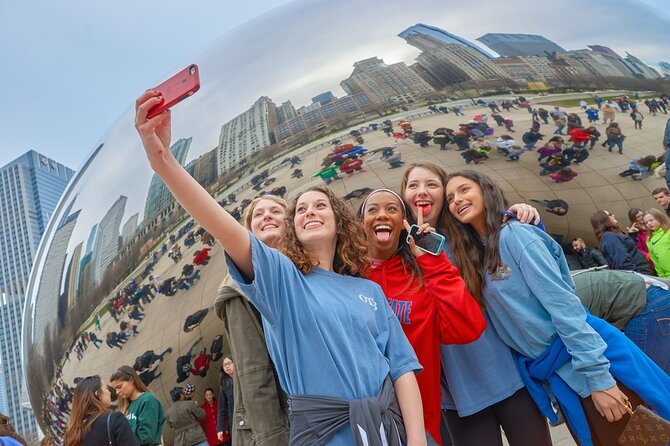
Meet at McCormick Tribune Plaza, at 1 North Michigan Avenue. The opening stop is Cloud Gate, Anish Kapoor’s polished steel sculpture in Millennium Park. You get about 15 minutes here, enough to see the familiar bean shape, catch reflections of the skyline, and take photos without turning the whole tour into a photo session.
Cloud Gate works well as a starting point because it introduces two ideas that run through the walk: Chicago likes bold public art, and the city’s buildings are meant to be seen from many angles. Millennium Park adds gardens, the Jay Pritzker Pavilion, and Crown Fountain, so your guide can place the sculpture within a larger public space rather than treating it as an isolated attraction.
You should expect a short stop, not a full park tour. If you want time to study the gardens or explore the pavilion, arrive early or return later. The park is free, as are the listed stops on the walk, which helps keep the $64.99 price focused on guiding rather than admission tickets.
More Walking Tours in Chicago
- Chicago in a Day: Food, History & Architecture Walking Tour
★ 5.0 · 1,153 reviews - Chicago’s Secret Interiors Architectural Walking Tour
★ 5.0 · 635 reviews - Chicago: Secret Interiors Architecture Walking Tour
★ 4.9 · 498 reviews
The Pedway: Chicago below street level
The Chicago Pedway is one of the more unusual parts of the route. This network of tunnels, sky bridges, and concourses connects buildings, hotels, offices, and public transit areas across more than 40 blocks. You spend about 20 minutes seeing a small part of a system that many first-time visitors never notice.
I like this stop because it shows the city as a place where people work and commute, not just a collection of postcard buildings. The Pedway also gives you a different view of Chicago’s design problems. Above ground, the city is built for grand avenues and river views. Below ground, practical connections help people get around when the weather turns cold or wet.
Do not expect a single polished underground attraction with a clear beginning and end. The Pedway is an urban network, and its character comes from its practical purpose. A guide matters here because signs and connections can be confusing. This is also one reason a small group helps: you can stay together more easily in a system designed for daily movement rather than sightseeing.
The Chicago Riverwalk and the city’s architectural stage
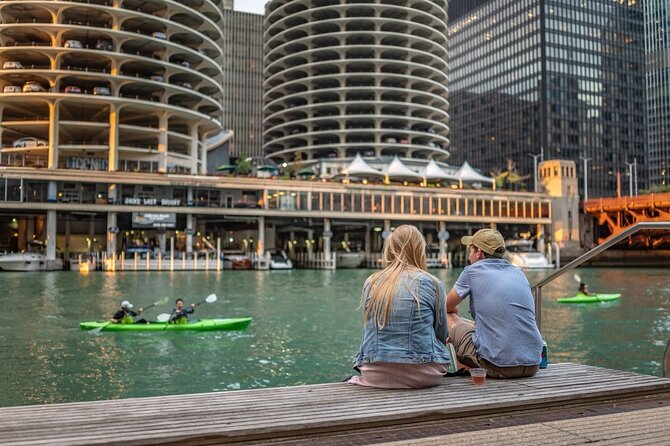
The route reaches the Chicago waterfront and Riverwalk, where paths, seating, restaurants, and river views open up the city. You can look up at the buildings from a lower and more open angle than you get on Michigan Avenue. The river also explains why Chicago’s architecture is so often experienced from the water.
The Riverwalk has become one of the city’s most pleasant public spaces, with room for walking, dining, boat tours, and kayaking. This tour does not include a boat ride, but you get a useful look at the river and can decide later if you want to return for one.
The Chicago Architecture Center receives about 30 minutes. Its exhibits and programs focus on Chicago’s buildings and design traditions. Admission is listed as included, though the tour details do not specify a separate ticketed exhibit or a full guided visit through every gallery. Think of this as a focused architecture stop, not a substitute for spending half a day at the center.
The river portion is valuable because it gives your guide a natural place to explain how Chicago’s buildings relate to one another. A good explanation here can turn a row of tall towers into a story about engineering, commerce, rebuilding, and civic ambition.
Crossing the DuSable Bridge on Michigan Avenue
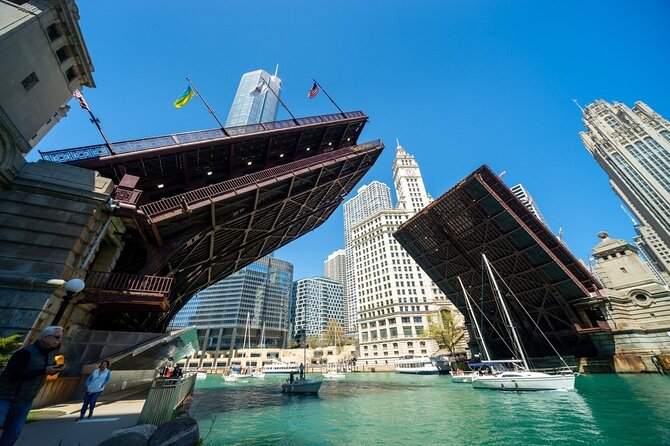
The DuSable Bridge carries Michigan Avenue over the main branch of the Chicago River. It is a movable bridge, and its location connects the downtown street grid with the city’s early development along the river.
This is a short walking moment, but it has real value. From the bridge, you can face the river in one direction and the Magnificent Mile in the other. Chicago’s grand scale becomes easier to understand when you are standing at a point where water, road traffic, historic buildings, and modern business districts meet.
The bridge can also be busy. Keep your group in sight and expect city noise rather than a quiet museum setting. The walk is about seeing how the city works, so that energy is part of the experience.
More Walking Tours in the USA
- Chicago Walking Tour: Art Deco Skyscrapers Loop
★ 5.0 · 138 reviews - Chicago Architecture Walking Tour: Incredible Art Deco Interiors
★ 5.0 · 85 reviews - Chicago Architecture Walking Tour: What’s New
★ 5.0 · 64 reviews - Chicago Walking Tour: Art Deco Skyscrapers Riverfront
★ 5.0 · 53 reviews
Tribune Tower and Chicago’s newspaper past
Tribune Tower is a 1925 neo-Gothic skyscraper on Michigan Avenue. Its detailed exterior includes stones taken from famous landmarks around the world. You get about 10 minutes here, enough to look carefully at the facade and hear why the building became such a strong symbol of the Chicago Tribune.
This is one of the route’s best stops for readers who enjoy details. The building is not simply tall. Its design uses medieval-looking forms, carved decoration, and pieces of other places to create a very deliberate identity. Your guide can also connect the tower to the role of newspapers in shaping Chicago’s public life.
The brief timing means you will mostly view the exterior. If you want interior architecture or a longer look at the stone fragments, plan a separate return visit. Still, the building earns its place because it rewards close attention, even during a short stop.
A look at the InterContinental’s Medinah Athletic Club past
The InterContinental Chicago Hotel on the Magnificent Mile occupies a building first created in 1929 as the Medinah Athletic Club. The stop lasts about 15 minutes and focuses on the building’s historic character, including its opulent Grand Ballroom and unusual junior Olympic-size swimming pool.
This is a useful reminder that Chicago’s grand buildings were not all built as office towers. Some began as clubs and social spaces, designed to make daily life feel theatrical. The hotel now combines historic details with modern accommodation, so you see how older buildings continue to serve new purposes.
You are passing by rather than booking a hotel visit. Access to interior areas may depend on the property, so treat the stop as an architectural look, not a guaranteed tour of every room.
Coffee and architecture at Starbucks Reserve Roastery
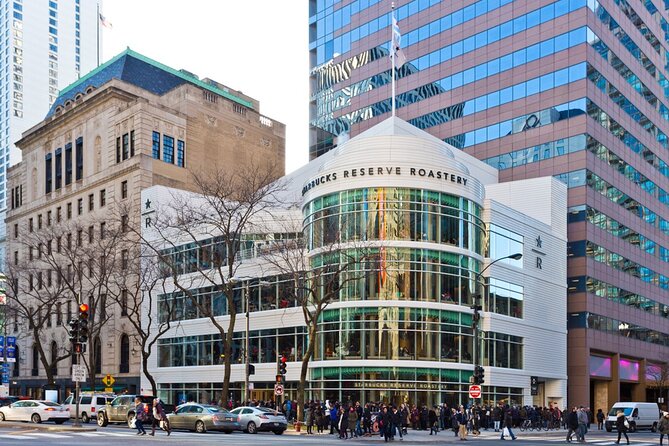
The Starbucks Reserve Roastery takes about 30 minutes and occupies five stories on the Magnificent Mile. Opened in 2019, it includes on-site roasting, Reserve coffee, and artisanal food. The building itself is part of the attraction, with multiple levels and an elaborate setting for the coffee operation.
This stop gives the walking route a needed pause. You can buy coffee or a snack, sit for a moment, and continue with a more relaxed look at Chicago’s commercial side. It also suits people who want a recognizable break rather than a formal museum visit.
Food and coffee are not included in the tour price. That matters when you compare the $64.99 cost with a self-guided walk. If you are keeping spending low, you can skip the purchase, but the stop may feel less useful without ordering anything. If you enjoy coffee, the Roastery is a stronger value because the setting and roasting operation add more than a standard café visit.
Wrigley Building views and the road to Navy Pier
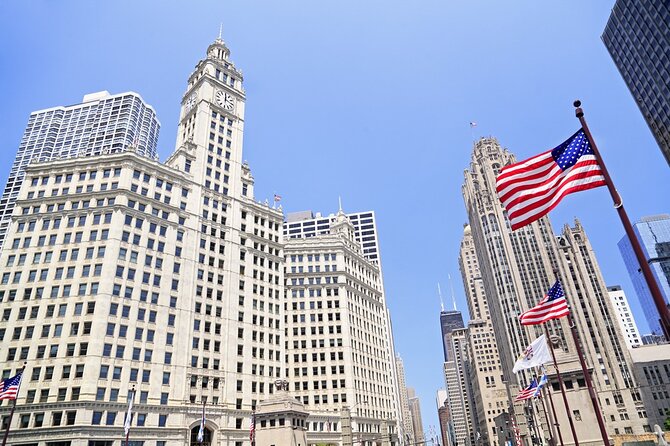
The Wrigley Building is another Magnificent Mile landmark, with two towers, white terra cotta, and Spanish Colonial Revival design. It was completed in the 1920s as the headquarters of the Wrigley Company. The building is especially photogenic when viewed from the river and Michigan Avenue, so the route gives you more than one way to appreciate it.
The walk ends at Navy Pier, at 600 East Grand Avenue. Navy Pier reaches into Lake Michigan and includes dining, entertainment, theaters, museums, seasonal events, and the famous Ferris wheel. You receive about 30 minutes here as part of the route, but the ending is designed to give you a choice.
You can stay and explore the pier, or take the architecture cruise option mentioned at the end of the tour. The cruise is not included in the $64.99 walking price, so confirm the added cost before committing. Ending here is practical because Navy Pier can easily fill the rest of an afternoon.
What the $64.99 price really buys
At $64.99 per person, this is not the cheapest way to see downtown Chicago. You can walk past many of these buildings for free with a map and a phone. The price makes more sense if you want a guide to connect the sights, keep the route moving, and explain details you might otherwise miss.
The group limit of 10 is important. A small group can ask questions, hear the guide more clearly, and avoid the slow shuffle common on large city tours. All fees and taxes are included, and the tour uses a mobile ticket. Coffee, snacks, and any optional food are extra.
The route also covers a wide spread of downtown sights in about 2.5 hours. That saves planning time, especially if Chicago is one stop in a busy trip. The tradeoff is limited time at each place. You get an overview with useful context, not a long visit to every attraction.
The experience is usually booked about 14 days ahead, so I would reserve early if your schedule is fixed. Free cancellation is available up to 24 hours before the start time. Cancellations or changes inside that window are not refunded or accepted.
Group size, walking demands, and guide quality
You need a moderate level of fitness. The tour lasts 2.5 hours and includes city streets, an underground network, bridges, and the walk from Millennium Park toward Navy Pier. Wear comfortable shoes and consider the weather, since much of the route is outdoors even though the Pedway offers a sheltered section.
Andrew is the guide named most often in the supplied feedback. He is praised for clear communication, strong knowledge of Chicago’s past and present, friendliness, and careful attention to older guests. Several comments describe him as the reason the experience felt fun and memorable. That is a meaningful strength for a history walk, where the quality of the explanation matters as much as the buildings.
The operator is See Sight Tours USA, but the guide is not guaranteed to be Andrew unless your booking specifically confirms him. Service animals are allowed, and the meeting point is near public transportation.
There is also one serious safety concern in the feedback: one person described a guide contacting them by text before the meeting, saying he had looked up their phone number, and leaving them uncomfortable enough to seek help from a police officer before taking a Lyft. The account is sharply different from the positive comments, but it should not be brushed aside. Confirm the guide and meeting details through the official booking channel, meet in the public plaza, and trust your instincts if communication feels inappropriate.
Who should book this Chicago walk?
I would recommend it to a first-time Chicago visitor who wants a guided orientation before exploring more deeply. It is also a good fit if you enjoy architecture but do not want a long specialist lecture. The route gives you public art, historic buildings, river views, city infrastructure, coffee culture, and a lakefront finish in one compact outing.
Older visitors may appreciate the guide’s reported care and the chance to ask questions in a small group. Coffee fans will enjoy the Roastery stop, while architecture fans will likely value Tribune Tower, the Wrigley Building, and the river views most.
I would hesitate if you dislike walking, want extended indoor visits, or prefer to set your own pace. You should also choose another option if your main goal is a full architecture cruise or a detailed visit to the Chicago Architecture Center. This tour can point you toward those experiences, but it does not replace them.
Should you book it?
Book this walk if you want a friendly, efficient introduction to central Chicago and value explanation over admission tickets. The strongest reasons are the small group, the unusual Pedway stop, the range of landmarks, and Andrew’s praised guiding style when he leads the group.
Skip it if you already know downtown well, need a slow pace, or want every stop to receive serious interior time. At $64.99, the value depends on the guide. With a clear, considerate guide, you get a useful city story rather than just a parade of famous facades. Confirm the guide and meeting details, bring good shoes, budget extra for coffee or food, and use the Navy Pier ending to keep your afternoon flexible.
FAQ
How long does the Chicago history and architecture walking tour last?
The tour lasts approximately 2 hours and 30 minutes.
Where does the tour begin?
It begins at McCormick Tribune Plaza, 1 North Michigan Avenue, Chicago, Illinois 60602.
Where does the tour end?
The tour ends at Navy Pier, 600 East Grand Avenue, Chicago, Illinois 60611.
What is the maximum group size?
The group can include a maximum of 10 travelers.
Is coffee or food included?
No. Coffee, tea, snacks, and food are not included in the tour price.
Is admission to the listed stops included?
All fees and taxes are included, and the listed stops show no separate admission charge. Any optional architecture cruise after the walk is not stated as included.
Can I cancel for a full refund?
Yes. You can cancel at least 24 hours before the experience start time for a full refund. Cancellations within 24 hours are not refunded.
Are service animals allowed?
Yes. Service animals are allowed on the tour.
More History Walks in Chicago
- Historical and Architectural Chicago Fireboat River & Lake Cruise
★ 5.0 · 246 reviews - Chicago: Food, History and Architecture Tour
★ 4.8 · 104 reviews - Chicago River Architecture Tour Aboard a Historic Yacht
★ 5.0 · 45 reviews - Chicago: Historic Architecture Chicago River Small Boat Tour
★ 4.6 · 26 reviews
Newly added in Chicago
- Private Frank Lloyd Wright Architectural Tour by Luxury Vehicle★ 3.5 · 7 reviews
- Private Chicago Architecture Tour★ 5.0 · 5 reviews
- Chicago History and Architecture Walking Tour with Boat Cruise★ 4.5 · 10 reviews
- Private Chicago Architecture Walking Tour★ 5.0 · 6 reviews
- Chicago Luxury Minibus City Tour and Architecture River Cruise★ 4.5 · 8 reviews
- Chicago Walking Tour: See Inside Art Deco Masterpieces★ 4.9 · 8 reviews
- Chicago: Icons Guided Architecture Walking Tour★ 4.4 · 4 reviews
- Chicago: History and Architecture Guided Kayak Tour★ 5.0 · 3 reviews
Walking Tours, compared.
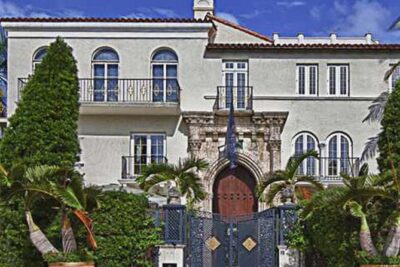
The Official Art Deco Walking Tour by The Miami Design Preservation League
Read our review →
Baroque Architecture and Underground Walking Tour
Read our review →
Chicago in a Day: Food, History & Architecture Walking Tour
Read our review →

Ramblas, Old Town, Gothic and Gaudi Architecture Walking Tour
Read our review →
Chicago’s Secret Interiors Architectural Walking Tour
Read our review →
Browse the lists this tour appears in