
Review · WALKING TOURS
Private Chicago Architecture Walking Tour
Chicago’s architectural story is packed into three walkable hours on this private tour, from the 19th-century office boom at the Marquette Building to the Gothic drama of Tribune Tower and the bright clock tower of the Wrigley Building. You get a useful mix of interiors, street views, and practical city history rather than a parade of façades.
I like the private format, since your guide can shape the pace and explain details that are easy to miss alone. I also like the route itself: it links several of the Loop’s finest buildings and finishes near the river, making a strong first introduction to downtown Chicago.
The main caution is building access. Some interiors may be closed, especially on weekends, and one booking reported that lunch was not provided despite being listed as included. Confirm both points before you go.
Key points to know before you book
- The Marquette and Rookery begin the tour with landmark interiors and a clear look at Chicago’s early skyscraper era.
- The route is private, so only your group participates with an English-speaking guide.
- The Chicago Cultural Center includes the world’s largest Tiffany stained glass dome, one of the day’s most rewarding interior stops.
- The Chicago Athletic Association adds a hotel interior, with ornate paneling, elaborate molding, and old club details across from Millennium Park.
- The tour covers about three hours on foot, with bottled water, admission fees, and taxes included.
- Access can change by day and operating schedule, so do not assume every building will be open inside.
Why this private Chicago architecture walk works
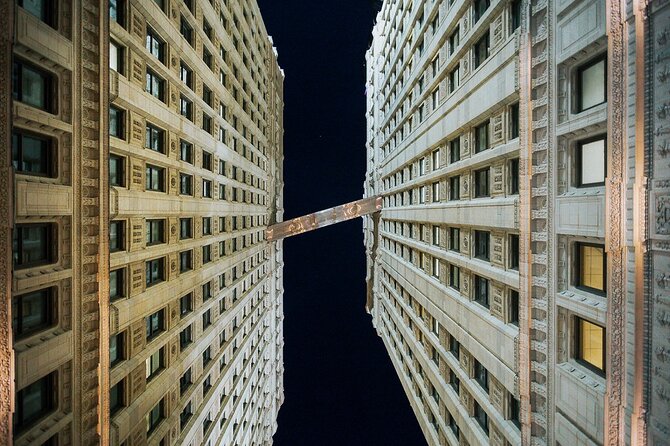
I see this tour as a fast but substantial introduction to Chicago’s Loop. You are not simply looking at famous buildings from the sidewalk. You move through a story about office speculation, retail design, private clubs, hotels, stained glass, Gothic revival, and the city’s rise as a center of tall-building design.
The private setup matters. A group of only your party can ask questions, pause at a detail, or move along when a building is quiet. The supplied information does not name individual guides, so you cannot choose a particular guide in advance. It does confirm an English-speaking guide and a private activity.
The walking route begins at the Fine Arts Building at 410 South Michigan Avenue and ends at the Wrigley Building at 400 to 410 North Michigan Avenue. That gives you a useful northward path through central Chicago, though you should still wear comfortable shoes and allow time to walk between stops.
The tour price is $211 per person. That is a serious charge for a three-hour walk, but the value depends on what you want. If you prefer a private guide, planned access to major interiors, and a focused explanation of Chicago architecture, the price can make sense. If you mainly want exterior photographs and a general city introduction, you may find the cost harder to justify.
Bottled water, taxes, fees, and lunch are listed as included. Because one person reported that lunch was not supplied, I would confirm exactly what the meal includes and when it is served before paying. That small check can prevent a disappointing surprise.
More Walking Tours in Chicago
- Chicago in a Day: Food, History & Architecture Walking Tour
★ 5.0 · 1,153 reviews - Chicago’s Secret Interiors Architectural Walking Tour
★ 5.0 · 635 reviews - Chicago: Secret Interiors Architecture Walking Tour
★ 4.9 · 498 reviews
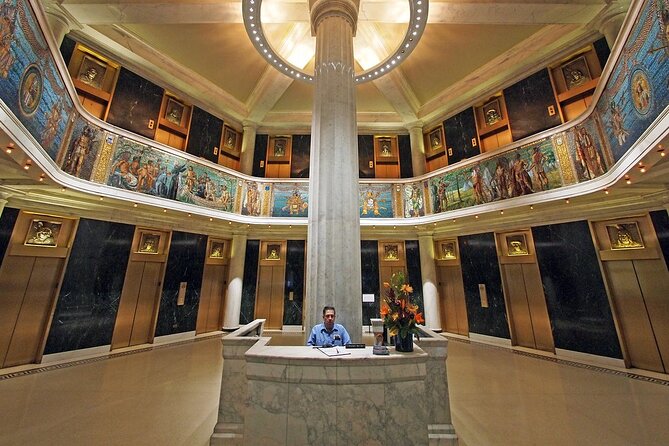
The Marquette Building explains Chicago’s office boom
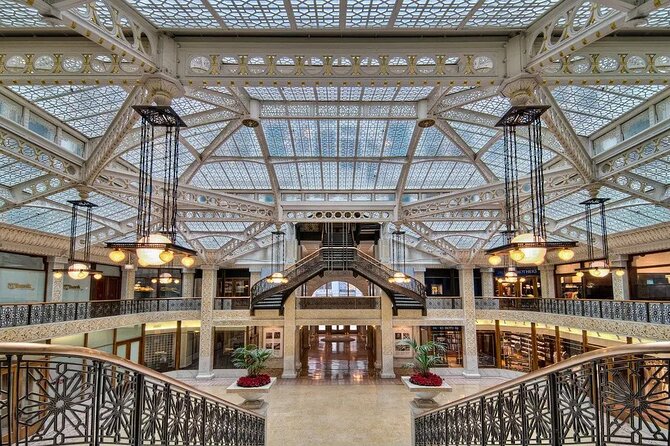
The first stop, the Marquette Building, sets up the economic side of Chicago architecture. Built during the city’s 19th-century building boom, it was designed as a speculative commercial office building. Investors created a large collection of first-class office spaces and expected rents to repay the gamble.
That point gives you a better way to read the rest of the tour. These early skyscrapers were not built only as civic monuments. They were working business machines, designed to attract tenants, support real estate investment, and prove that a growing city could support tall commercial buildings.
You have about 20 minutes here, with admission included. Look beyond the general impression of age and ask your guide how the building’s design served its original office purpose. The stop is especially useful if you want architecture explained through money, business, and urban growth.
The Rookery brings in Burnham and the financial district
The Rookery Building sits at LaSalle and Adams, in the heart of the old financial corridor. When it opened, it was considered the largest and finest office building in the United States. Even now, it is one of the most elegant addresses on the route.
You have another 20-minute visit with admission included. The Rookery is important because it connects Chicago’s early commercial ambition with the city’s growing confidence in large-scale architecture. Its location also helps you understand why LaSalle Street became such a powerful business center.
This is one of the stops where a private guide can add real value. A quick photograph cannot explain why the building mattered when it opened. Ask about its original office use, its role in the financial district, and the design choices that helped make it famous.
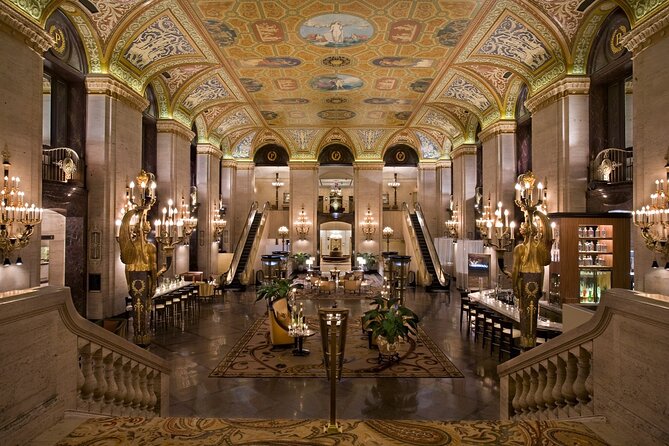
The Palmer House adds hotel history in ten minutes
The Palmer House Hilton provides a short change of pace. Its historic lobby belongs to one of North America’s longest continuously operating hotels, and the building claims several firsts in Chicago hotel life. It was the city’s first hotel with elevators, and it was also the first hotel with electric light bulbs and telephones in guest rooms.
The visit lasts about 10 minutes and is free. That short timing is sensible, since this is a lobby visit rather than a full hotel tour. You get a glimpse of how new technology changed daily life for hotel guests, then move on to the larger architectural set pieces.
The Palmer House is worth keeping in the route because it connects grand design with practical invention. A building can be historically important not only for its façade, but also for the services it brought indoors.
More Walking Tours in the USA
- Chicago Walking Tour: Art Deco Skyscrapers Loop
★ 5.0 · 138 reviews - Chicago Architecture Walking Tour: Incredible Art Deco Interiors
★ 5.0 · 85 reviews - Chicago Architecture Walking Tour: What’s New
★ 5.0 · 64 reviews - Chicago in a Day: Food and Architecture Private Walking Tour
★ 5.0 · 53 reviews
Sullivan Center shows Chicago School design in retail form
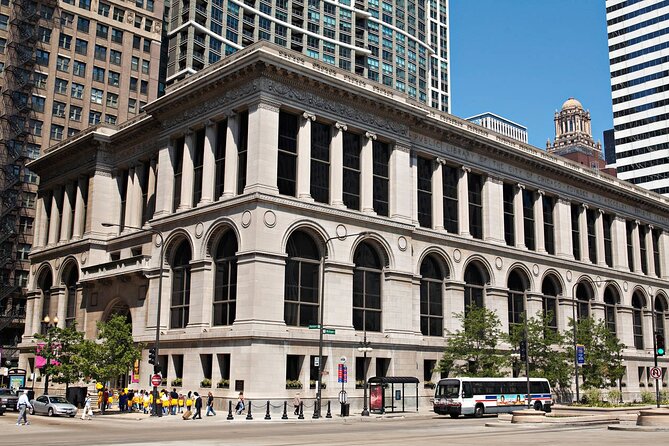
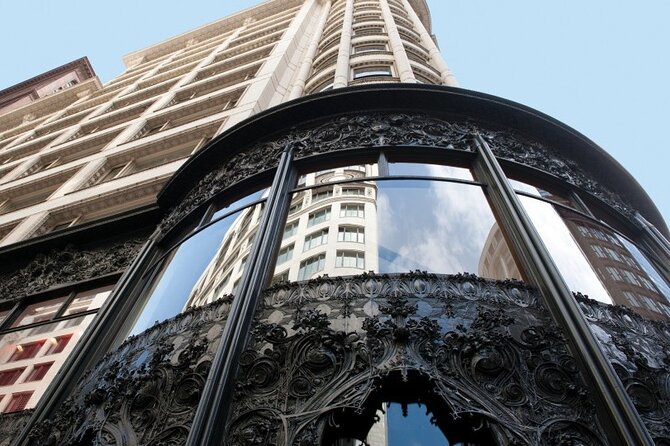
The Sullivan Center, once the Carson Pirie Scott department store, gives you one of the clearest examples of Chicago School architecture on the route. Built between 1899 and 1903, it was designed for retail, and it has continued to serve that purpose throughout its life.
You spend about 20 minutes here with admission included. The building was declared a Chicago landmark in 1975, and its importance reaches beyond one department store. It shows how architects handled a tall commercial building that needed to attract shoppers at street level while supporting business above.
I like this stop because it widens the usual skyscraper story. Chicago architecture was not only about banks and office towers. Retail buildings needed their own visual language, one that could draw people inside from a busy street.
The Chicago Athletic Association reveals an old private club
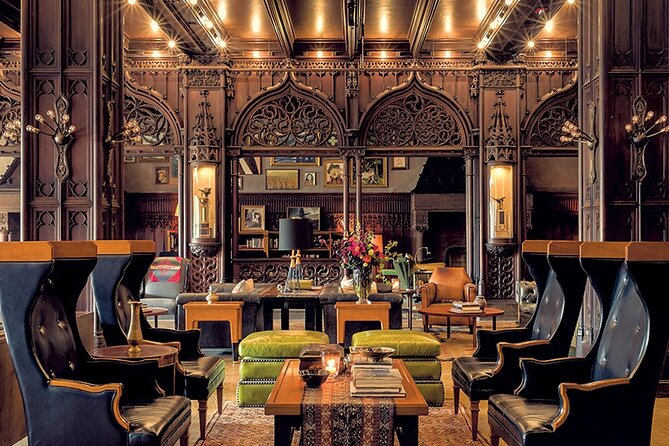
The Chicago Athletic Association hotel occupies an 11-story Venetian Gothic building completed in 1893. From its opening until 2007, it operated as a private club for wealthy Chicagoans. Today, the building functions as a hotel, but much of the old interior character remains.
You have about 30 minutes here, and admission is free. The interior includes ornate paneling, elaborate molding, and carefully finished trim. Modern hotel functions have been added, yet the old club atmosphere still shapes the rooms and corridors.
The setting across from Millennium Park gives you a useful visual contrast. Outside, you have one of Chicago’s most visited public spaces. Inside, you see the formal world of an exclusive private club. The hotel also has restaurants, pubs, ballrooms, and views toward Lake Michigan, although this walking tour does not promise a full visit to each of those spaces.
This is one of the most appealing stops for anyone who enjoys adaptive reuse. You can see how an old building can serve a new purpose without stripping away every trace of its earlier life.
The Chicago Cultural Center is the interior highlight
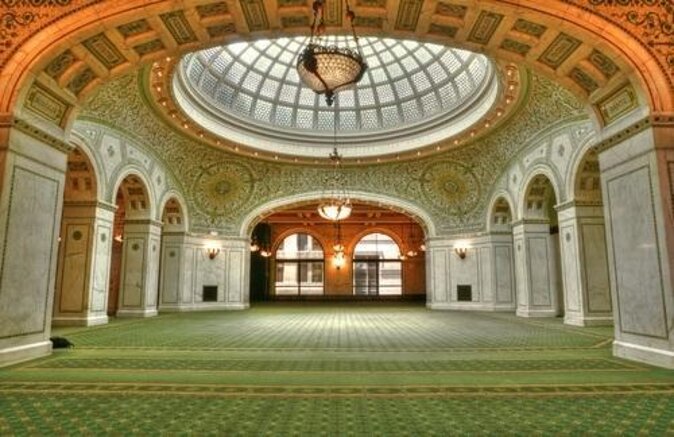
The Chicago Cultural Center takes up an entire city block and functions as the cultural heart of the Loop. Its biggest draw is the world’s largest Tiffany stained glass dome, and the building presents more than 700 humanities programs each year, many of them free and open to the public.
The tour allows about 30 minutes here with admission included. That is enough time for a strong first look, though you could easily spend much longer studying the architecture if you return on your own.
I would pay close attention to the dome and the way the building uses grand interior space for public culture. This stop shows Chicago architecture in a different setting. The earlier buildings focus on offices, finance, retail, or private membership. The Cultural Center puts public access and civic life at the center.
If you are planning your own return visit, check the center’s program schedule separately. The tour includes the building, but it does not promise attendance at a concert, lecture, or exhibition.
Tribune Tower turns the skyline into Gothic theater
Tribune Tower is one of Chicago’s most recognizable buildings. It rises 36 stories, but the height is only part of its effect. Its Gothic spires and shrine-like lobby give it a strong visual identity, and inspirational quotes add to the theatrical interior.
You spend about 15 minutes here with admission included. That is a short visit, so you will want to listen closely while your guide points out the features that make the tower different from the earlier commercial buildings.
Tribune Tower helps explain why Chicago can feel like an architectural museum while still functioning as a modern city. The building uses Gothic references in a tall urban setting, turning a newspaper headquarters into a piece of civic imagery.
Because the stop is brief, do not expect a long exploration of every floor or room. The value is in seeing the lobby and understanding how the building uses style to create an identity that people remember.
The Wrigley Building provides a fitting finish
The tour ends at the Wrigley Building, one of downtown Chicago’s most familiar landmarks. It dates from the 1920s and uses French Renaissance elements, but the clock tower is the feature most likely to catch your eye. The tower reaches about 425 feet.
You have about 15 minutes here with admission included. The building makes a strong final stop because it combines decoration, height, and a prominent position along the riverfront area of North Michigan Avenue.
By this point, you have moved through several eras and building types. The Wrigley Building shows how Chicago architecture continued to use historical styles even as towers grew taller and commercial development pushed northward.
Ending here also gives you a practical advantage. You are near major downtown sights and public transportation, so it is easy to continue your day after the tour. The stated endpoint is not the same as the starting point, so plan to make your own way back or onward after finishing.
Access, timing, and the weekend question
The experience lasts about three hours. The listed stop times add up to roughly two hours and 40 minutes, leaving a little room for walking, transitions, and discussion. That makes the pace fairly active without requiring a full day.
Building access is the biggest variable. The tour includes admission at several stops, but that does not mean every interior will always be open at the time of your visit. One booking specifically noted that access was more limited on weekends, and the provider explained that closures can be beyond its control.
I would choose a weekday if interior access is your top priority. If you can only go on a weekend, treat the route as a mix of exterior architecture and selected interiors rather than a guaranteed look inside every building.
Most people can take part, and service animals are allowed. The tour is near public transportation, which helps with reaching the Fine Arts Building and leaving from the Wrigley Building. Confirmation is provided at booking, and free cancellation is available if you cancel at least 24 hours before the local start time.
Who will get the most from this tour
I would recommend this walk to you if you want a private introduction to Chicago’s architecture and prefer explanation over a simple sightseeing route. It suits first-time visitors, architecture fans, history-minded travelers, and anyone who wants to understand why the Loop looks the way it does.
It also works well for a small family group or several friends who want to keep the day on their own schedule. The private format lets you ask more questions than you usually can on a large group outing.
I would think twice if you dislike walking, need guaranteed access to every building, or are booking mainly for a full meal. The lunch detail needs confirmation, and the interior schedule can shift. You should also be comfortable paying a premium for a three-hour private experience.
The tour has an overall rating of 4.8 based on six ratings, with especially strong praise for its personal approach, detailed explanations, friendly guide service, and careful planning. Those strengths fit the design of the experience, but they do not remove the need to check weekend access and lunch arrangements.
Should you book the Private Chicago Architecture Walking Tour?
Book it if you want a focused, private route through Chicago’s most important downtown buildings and you value a guide who can connect design with business, technology, hotels, retail, and city life. The Marquette Building, Rookery, Sullivan Center, Cultural Center, Tribune Tower, and Wrigley Building give you a broad picture in a short time.
Before booking, confirm two things: what lunch actually includes and which buildings will be open inside on your date. If the answers work for you, $211 buys a well-planned introduction with several included admissions and a route that would take more effort to organize alone.
FAQ
How long does the Chicago architecture walking tour last?
The tour lasts approximately three hours.
Where does the tour begin?
It begins at the Fine Arts Building, 410 South Michigan Avenue, Chicago, Illinois 60605.
Where does the tour end?
It ends at the Wrigley Building, 400 to 410 North Michigan Avenue, Chicago, Illinois 60611.
Is this a private tour?
Yes. Only your group participates in the activity.
Is the tour offered in English?
Yes. An English-speaking guide is included.
Is lunch included?
Lunch is listed as included, but one booking reported that lunch was not provided. Confirm the meal details before booking.
Can I cancel for a full refund?
Yes. You can receive a full refund if you cancel at least 24 hours before the experience start time. Cancellations within 24 hours are not refunded.
Newly added in Chicago
- Private Frank Lloyd Wright Architectural Tour by Luxury Vehicle★ 3.5 · 7 reviews
- Private Chicago Architecture Tour★ 5.0 · 5 reviews
- Chicago Luxury Minibus City Tour and Architecture River Cruise★ 4.5 · 8 reviews
- Chicago History and Architecture Walking Tour with Boat Cruise★ 4.5 · 10 reviews
- Small Group History And Architecture Walking Tour of Chicago★ 4.5 · 8 reviews
- Chicago: Icons Guided Architecture Walking Tour★ 4.4 · 4 reviews
- Chicago Walking Tour: See Inside Art Deco Masterpieces★ 4.9 · 8 reviews
- Chicago: History and Architecture Guided Kayak Tour★ 5.0 · 3 reviews
Walking Tours, compared.
The Official Art Deco Walking Tour by The Miami Design Preservation League
Read our review →
Baroque Architecture and Underground Walking Tour
Read our review →
Chicago in a Day: Food, History & Architecture Walking Tour
Read our review →

Ramblas, Old Town, Gothic and Gaudi Architecture Walking Tour
Read our review →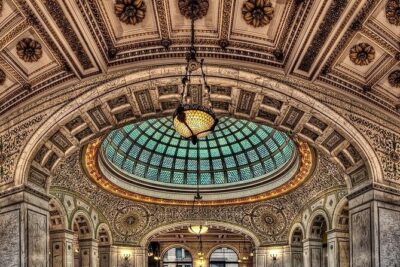
Chicago’s Secret Interiors Architectural Walking Tour
Read our review →
Browse the lists this tour appears in