

Review · ARCHITECTURE RIVER CRUISES
City Cruises Chicago: 75-min Speedboat Architecture Cruise
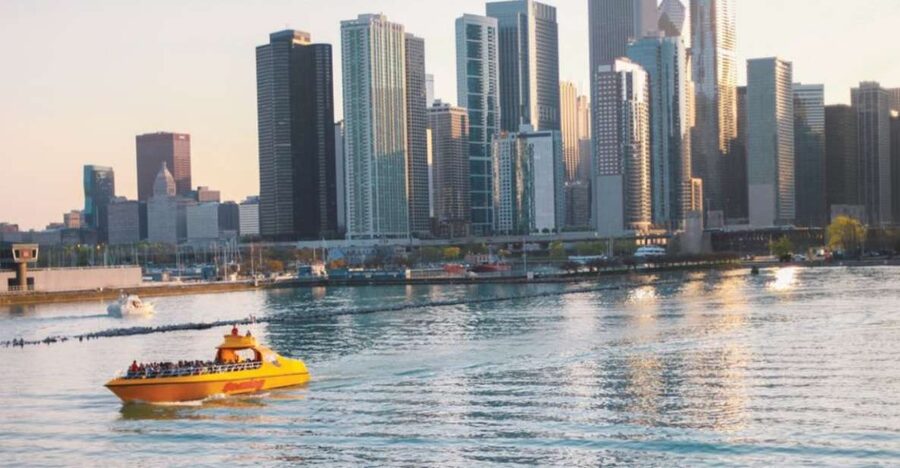
Chicago’s best city tour may be the one that shows you the skyline from two very different angles. This 75-minute Seadog cruise starts at Navy Pier, squeezes through the Chicago Harbor Locks, and slowly tracks the Chicago River before turning into a speedboat ride on Lake Michigan.
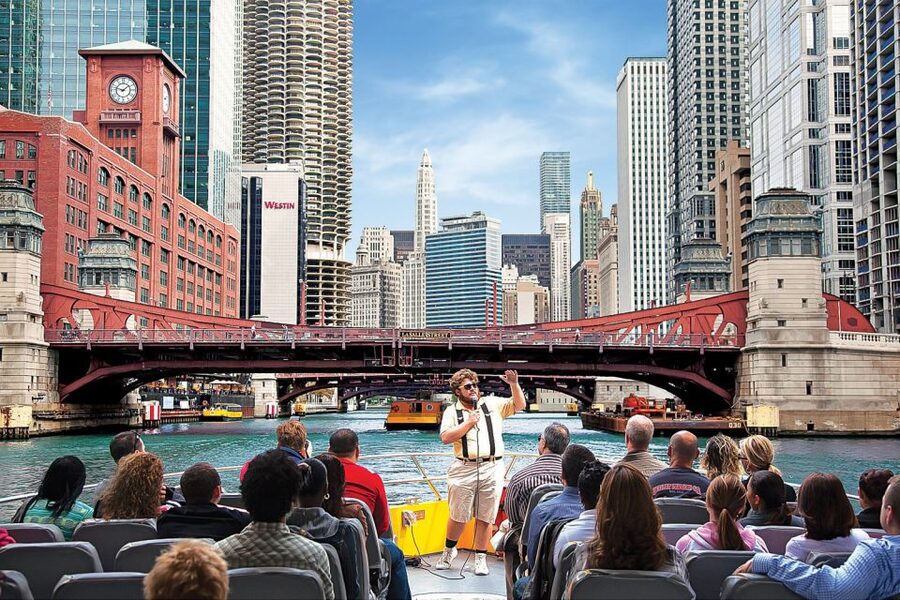
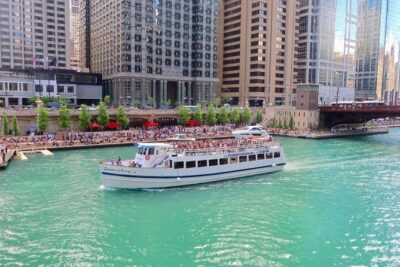
I like the mix of architecture and excitement. You get close views of major buildings, bridges, and riverfront engineering, then finish with open water and a quick burst of speed. I also like the live guides, who have included Andy, Anna, Lucious, and others known for mixing building facts with humor.
The main tradeoff is time. Lock traffic, boarding, and the river transition can take a noticeable part of the 75 minutes, and rough weather may cancel or shorten the lake portion. The boat is open air, so bring layers and expect to get wet.
Key points to know before boarding
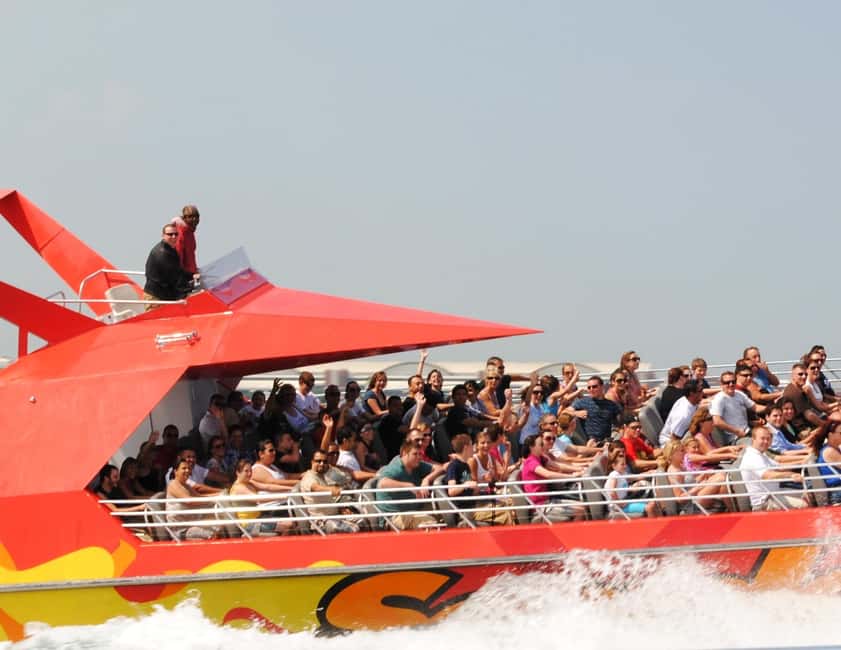
- Chicago Harbor Locks: Passing from Lake Michigan into the Chicago River gives you a close look at one of the city’s most unusual pieces of working infrastructure.
- Architecture at river level: You see the Wrigley Building, Marina City, Merchandise Mart, Willis Tower, Civic Opera House, and many other landmarks from a useful low angle.
- A real speedboat finish: The final Lake Michigan run provides wide skyline and shoreline views, though the fast section may be shorter than you expect.
- Funny, live narration: Guides such as Andy, Anna, Lucious, and Griffin have been praised for clear facts, humor, and strong storytelling.
- Open-air conditions: Sun, wind, rain, and spray are part of the experience. Weather can change the route or cancel the lake ride.
- Good value for a short visit: At $61, the tour is most useful when you want both the river architecture cruise and a quick lake outing in one booking.
Why this 75-minute route works so well

Chicago’s architecture is easy to admire from the sidewalks, but the river gives you a different sense of scale. From the water, the towers rise directly above you, bridges pass overhead, and the city’s central business district feels less like a collection of separate buildings and more like one tightly packed urban story.
This tour is not a formal architecture lecture. It is a lively sightseeing ride with a guide speaking as the boat moves. The best guides make the buildings memorable by adding stories, dates, and small details, then keep the pace moving with jokes. Andy was especially praised for his humor and building knowledge, while Anna, Lucious, Griffin, and others have also led entertaining departures.
You pay $61 per person. That is more than a basic sightseeing boat, but the price covers two settings: the narrow, detail-heavy Chicago River and the wide views of Lake Michigan. If you have only a short time in Chicago, that combination makes the fare easier to justify.
The tour is also a practical choice for a first visit. It covers a large number of central landmarks without asking you to navigate downtown streets, and the live narration gives you a basic framework for later exploring on foot.
More Architecture River Cruises in Chicago:
- Chicago Architecture River Cruise
★ 5.0 · 15,756 reviews - Chicago River: 1.5-Hour Guided Architecture Cruise
★ 4.8 · 8,046 reviews - Chicago Architecture Center River Cruise aboard First Lady
★ 5.0 · 5,536 reviews
Navy Pier gives you an immediate skyline view
Your starting point is at 600 East Grand Avenue, on Navy Pier. Enter through the main entrance, walk toward the south-side dock, and look for the Seadog ticket booth near the bright yellow and red speedboats.
Navy Pier is an enjoyable place to begin because the skyline is already in view before you board. You can see the city from the pier, Lake Michigan opening eastward, and the boat’s low profile waiting near the dock. Check in at the booth and collect your boarding passes before heading to the vessel.
The boat is open air. Choose clothing for wind rather than just the temperature on land. Even on a pleasant day, the lake can feel cooler, and the speedboat may throw spray. A fully charged phone or camera is useful, but keep it secure during the faster sections.
Restrooms are available onboard, which matters on a 75-minute outing. Snacks and drinks have also been available on some departures, though the supplied details only specifically guarantee restroom facilities.
The Chicago River begins with the Harbor Locks
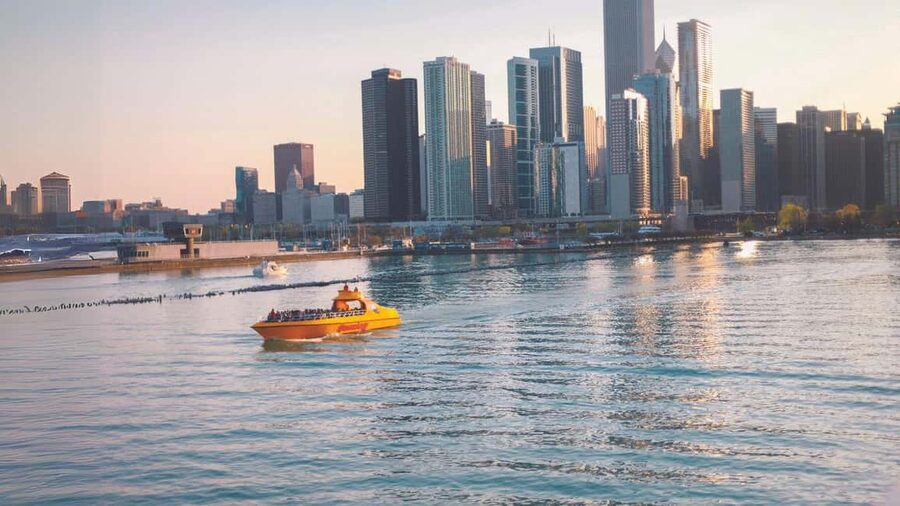
The unusual part of this cruise comes early. The Seadog passes through the Chicago Harbor Locks, the controlled connection between Lake Michigan and the Chicago River.
This is not a fast section. The boat must make the transition carefully, and you may spend about ten minutes entering the river and another ten minutes leaving it, based on the timing described by previous riders. That can feel slow if you expected nonstop speed, but it is also one of the most distinctive parts of the route.
The locks help explain how Chicago manages the relationship between the lake and the river. You are not simply riding past buildings. You are watching a working waterway system handle the boat while the guide explains what you are seeing.
If you are prone to motion sickness, the lock transition may be the least comfortable part. One person found the speedboat easier on the stomach overall but noticed mild discomfort during the lock movement. Sitting where you have a clear view ahead may help, though the tour does not promise a particular seat.
DuSable Bridge and the classic downtown towers
Once on the Chicago River, the boat moves at a slower pace. This is the part to use your camera and listen closely.
The route passes the DuSable Bridge and the Wrigley Building, two landmarks that help frame the north end of the central river corridor. The Wrigley Building is especially recognizable for its light-colored exterior and clock tower. From the boat, you get the river-level view that pedestrians miss when they see it from Michigan Avenue.
The Jewelers Building follows, then Marina City. Marina City’s twin cylindrical towers are among Chicago’s most distinctive forms. Their rounded balconies look very different from the rectangular office towers around them, and the river provides a clean angle for seeing their unusual shape.
The guide also points out the Merchandise Mart, a huge riverfront building with a long, imposing facade. It is easier to understand the building’s size from the water than from a nearby street, where surrounding towers can make it feel less dominant.
A few more architecture walks in Chicago worth a look
- Chicago River 90-Minute Architecture Tour
★ 4.5 · 9,629 reviews - Chicago: Architecture River Cruise Skip-the-Ticket Line
★ 4.8 · 4,325 reviews - Chicago River 45-Minute Architecture Tour from Magnificent Mile
★ 4.5 · 2,924 reviews - Chicago Lake and River Architecture Tour
★ 4.5 · 2,308 reviews
Wolf Point, Goose Island, and Chicago’s working river
The boat continues past Wolf Point West and toward Goose Island. This section shifts the mood from famous tourist landmarks to the changing river corridor.
Wolf Point is where branches of the Chicago River meet, making it an important point in the city’s river geography. Goose Island adds another layer, showing how the waterway moves through a city shaped by trade, industry, transportation, and later redevelopment.
You will also pass locations connected with Union Station and the St. Charles Air Line Bridge. These sights are less instantly familiar than Willis Tower, but they help explain how rail lines, bridges, and commercial buildings fit together around the river.
That variety is one of the tour’s strengths. You are not just collecting postcard buildings. You are seeing office towers, bridges, rail infrastructure, riverfront marinas, and new construction in one continuous view.
Carbide and Carbon, Reid Murdoch, and the riverfront details
The Carbide and Carbon Building is one of the more decorative stops along the route. Its dark, polished exterior and gold-colored upper section give it a different character from the glass towers nearby.
The Reid Murdoch Building offers another change of style. Along with 333 West Wacker Drive and the LondonHouse area, it shows how Chicago’s riverfront mixes older architecture with newer glass and steel construction.
The boat’s low position is useful here. You can look straight up at facades, bridge undersides, setbacks, rooflines, and details that disappear when you view the skyline from a distant observation deck. The downside is that the slow-moving boat may not linger equally at every building, so listen for the guide’s explanation rather than trying to photograph everything.
Willis Tower and the Civic Opera House
Willis Tower, formerly known as Sears Tower, is one of the central landmarks of the trip. From the river, you see how its tall, dark form relates to the lower buildings around it.
The route also includes 150 North Riverside Plaza, 100 North Riverside Plaza, and the Civic Opera House. These buildings make the river corridor feel layered, with very different periods and design choices close together.
The Civic Opera House is particularly rewarding if you enjoy older theatrical architecture. You may find its scale easier to appreciate from the water, where the long facade has room to unfold.
The boat continues past 311 South Wacker, 110 North Wacker, and 2 North Riverside Plaza. Some of these will be memorable mainly as part of the overall downtown wall of buildings, but the guide helps connect the names and shapes to the larger story of Chicago’s central business district.
Trump Tower and the return through the locks
Trump Tower appears among the modern riverfront buildings before the boat returns toward the Chicago Harbor Lock. The sight is part of the current downtown skyline, while the nearby older structures show how quickly the riverfront has changed.
The return through the lock is another slower stretch. This is where timing can feel tight. A 75-minute tour sounds generous, but the lock operations can take roughly twenty minutes altogether, leaving less time for both the river commentary and the lake ride.
That does not make the lock a flaw. It means you should book this tour for the combination of working waterway, architecture, and speedboat views, not for a long uninterrupted sprint. If your only goal is a detailed study of Chicago’s buildings, a dedicated architecture boat may give you more river time.
Lake Point Tower and the final speedboat run
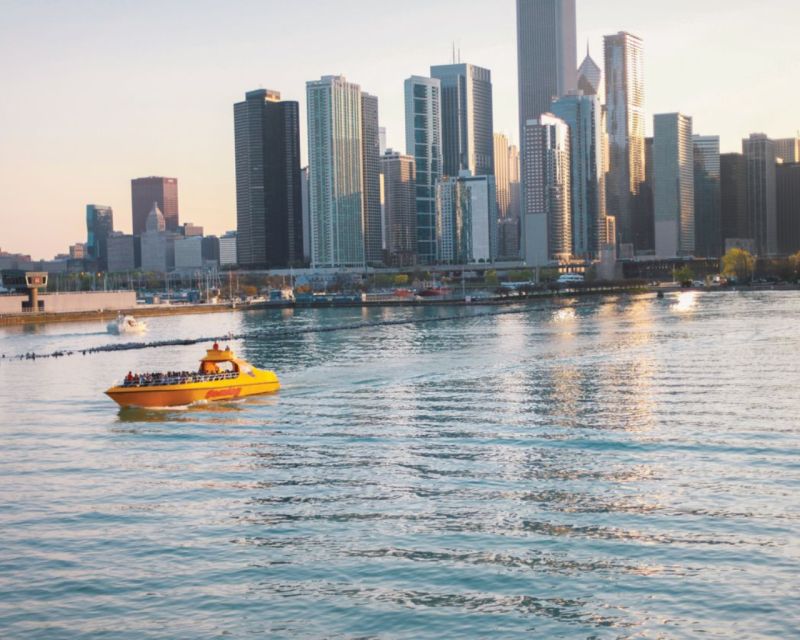
Back on Lake Michigan, the route includes Lake Point Tower and returns toward Navy Pier. The city now opens up. Instead of looking upward between tall buildings, you get a broad view of the shoreline and skyline.
The lake section is the tour’s payoff for anyone who wants more than architecture. The boat picks up speed, and the change from slow river cruising to open-water movement gives the outing its fun factor. You may also see shoreline sights associated with Grant Park, Buckingham Fountain, the Chicago Museum Campus, and the Navy Pier area, depending on the exact route and conditions.
The fast portion is not always as long or intense as the word speedboat might suggest. One account described it as a quick but adequate ride, while another was disappointed when rough conditions caused the lake section to be skipped. The captain has the final say for safety, and weather can change the experience.
The route finishes back near Navy Pier, with views toward the NBC Tower and the surrounding skyline. If you have an evening departure, the shoreline can look especially attractive as the light changes, though the tour schedule and weather determine what you see.
The guides are a major part of the experience
The buildings matter, but the guide can make or break this kind of tour. The strongest guides turn a list of addresses into a clear story about Chicago.
Andy has been praised for combining humor with detailed architecture commentary. Anna has also been singled out for explaining Chicago’s buildings in a way that works for different ages. Lucious, Griffin, Tyler, Tia, and others have been described as lively and able to answer questions.
That does not mean every departure will have the same personality. Live narration varies by guide, and one account found the historical detail lighter than expected. Still, the tour gives you a human voice rather than a recorded script, which allows for jokes, questions, and adjustments to the group.
If you enjoy learning while moving, this is a strong fit. If you want silence and uninterrupted photography, the running commentary may feel like part of the bargain you did not ask for.
Who should book it, and who should skip it
I would recommend the Seadog cruise to first-time Chicago visitors, families with children, couples who want a short outing, and anyone with limited sightseeing time. It is also useful if you want to see the river and lake without booking two separate activities.
The experience is family-friendly, and infants ride free when you select the proper infant ticket. Children under 12 must be accompanied by an adult, and unaccompanied minors are not allowed.
The boat is accessible for most wheelchairs. If you use an extra-large wheelchair, the marine crew can assist with boarding. Pregnant people and those with back problems should avoid this activity because of the speedboat motion and open-air conditions.
Plan on possible sun, wind, rain, and spray. The ride operates weather permitting, and the lake portion may be changed or canceled when conditions are not safe. One departure ended in heavy rain and received a full refund, which shows that weather decisions can affect the outing in a practical way.
Booking value and final verdict
At $61, this is fair value if you want a compact introduction to Chicago from the water. You get live narration, the Harbor Locks, a broad list of architectural landmarks, and a Lake Michigan speedboat run in one 75-minute trip.
The value drops if you expect a full-length high-speed ride or a slow, detailed study of every building. The lock crossings use time, and the lake portion is weather-dependent. For a pure architecture lesson, choose a longer river-focused cruise. For a mix of city views, facts, and excitement, this route is more flexible.
I would book it early in a Chicago visit. The guide’s overview can help you decide which buildings and neighborhoods deserve more time on foot later. Choose a mild, clear day if possible, sit where you have a good forward view, bring a layer, and protect your camera from spray.
You should book this tour if you want Chicago architecture with a little throttle. Skip it if you need a sheltered boat, dislike motion, or would be disappointed by a shortened lake ride.
FAQ
Where does the cruise depart?
The Seadog departs from Navy Pier at 600 East Grand Avenue in Chicago. Enter through the main entrance, walk along the south-side dock, and look for the Seadog ticket booth and its bright yellow and red speedboats.
How long is the cruise?
The cruise lasts 75 minutes.
What landmarks can I see?
The route includes the DuSable Bridge, Wrigley Building, Jewelers Building, Marina City, Merchandise Mart, Willis Tower, Civic Opera House, Trump Tower, Lake Point Tower, NBC Tower, and several other buildings, bridges, and riverfront locations.
Does the boat enter the Chicago River?
Yes. The boat passes through the Chicago Harbor Locks and cruises along the Chicago River before returning to Lake Michigan.
Is there a speedboat section?
Yes. The tour includes an open-water speedboat ride on Lake Michigan, usually toward the end of the route. Weather and water conditions can affect this section.
Is the boat open air?
Yes. The speedboat is open air, and you may get wet from rain or spray. Dress for changing conditions.
Is live narration included?
Yes. An English-speaking guide provides live narration about Chicago’s architecture and history.
Are restrooms available?
Yes. Restroom facilities are available on the speedboat.
Are infants and children allowed?
Infants are allowed free of charge when you select the free infant ticket option. Children under 12 must be accompanied by an adult, and unaccompanied minors are not permitted.
Is the cruise wheelchair accessible?
The speedboat is accessible for most wheelchairs. If you use an extra-large wheelchair, the marine crew can assist you with boarding.
Can I cancel the booking?
You can cancel up to 24 hours in advance for a full refund. The reserve-now, pay-later option allows you to hold a spot without paying immediately.
Newly added in Chicago
- Chicago: Guided Tour with Architecture River Cruise★ 4.5 · 20 reviews
- Chicago River 90-Min Architecture Boat Tour★ 4.5 · 24 reviews
- Chicago: First Lady River Cruise & Architecture Center Combo★ 4.7 · 24 reviews
- Chicago: Historic Architecture Chicago River Small Boat Tour★ 4.6 · 26 reviews
- Chicago: Art Deco Skyscrapers Walking Tour★ 4.8 · 28 reviews
- Chicago River: 90-Min Architecture Boat Tour★ 4.9 · 29 reviews
- Chicago Art Deco Madness Walking Tour★ 5.0 · 31 reviews
- Chicago River Architecture Tour and Big Bus Hop-on Hop-off Tour★ 4.0 · 38 reviews
Architecture River Cruises, compared.
Chicago River: 1.5-Hour Guided Architecture Cruise
Read our review →
Chicago Architecture Center River Cruise aboard First Lady
Read our review →
Architecture River Cruise Skip-the-Ticket Line
Read our review →
45-Minute Family-Friendly Architecture River Cruise
Read our review →
Chicago River 90-Minute Architecture Boat Tour
Read our review →Browse the lists this tour appears in