
Review · USA ARCHITECTURE TOURS
Honolulu: Liljestrand House Architectural Tour
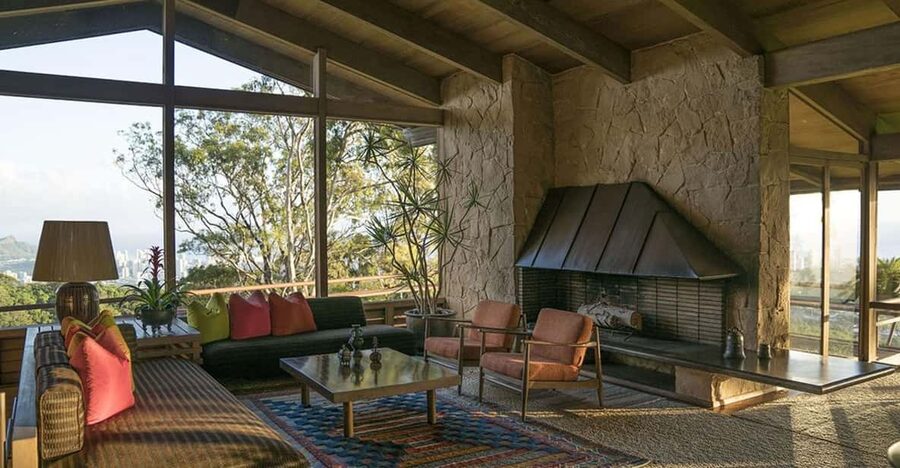
The Liljestrand House is not a museum filled with objects behind glass. It is a preserved home where Hawaiian modern architecture still feels lived in, from its natural materials to its carefully placed windows. You see how architect Vladimir Ossipoff shaped rooms around light, air, and views rather than treating the house as a sealed box.
I like the small group limit of 10, which suits a house tour where details matter. I also like that your admission helps the Liljestrand Foundation protect the property and share it for education. The main drawback is practical: the house has no air-conditioning, and it can feel hot in summer and fall. You must also remove your shoes to protect the wood floors.
Key points
- Original Ossipoff design: See one of Honolulu’s best-preserved examples of Hawaiian modern architecture.
- A home with a personal story: Learn about the Liljestrand family and their friendship with Ossipoff.
- Views shaped by design: Notice how the architect used windows, room placement, and natural materials to connect the house with its setting.
- Small-group access: Tours are limited to 10 people, making it easier to see and discuss fine details.
- A preservation-minded visit: Your ticket supports the Liljestrand Foundation’s work.
- Plan for bare feet: Shoes, backpacks, large bags, tripods, extension poles, and selfie-sticks are not permitted.
Why the Liljestrand House matters in Honolulu
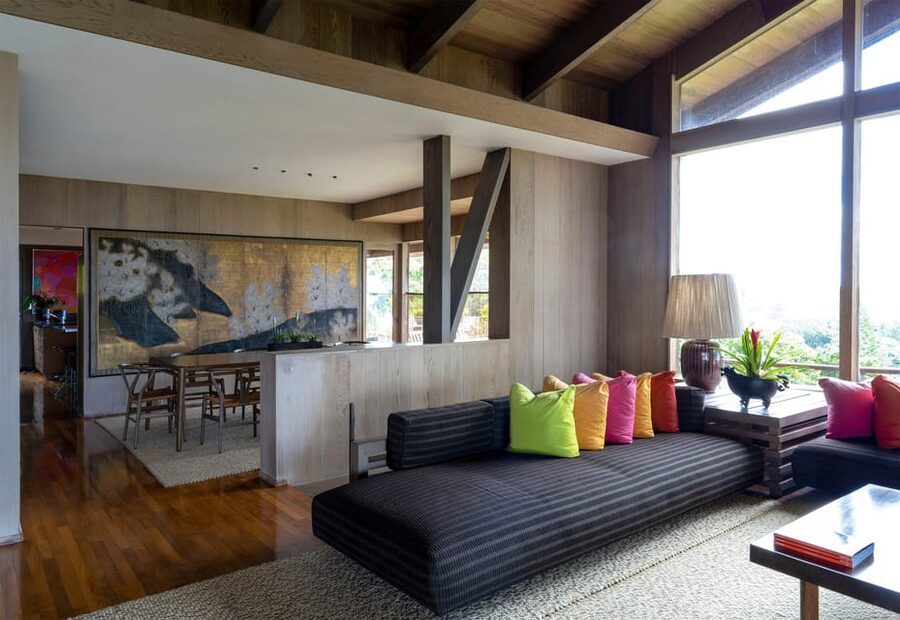
The Liljestrand House gives you a direct look at a key idea in Hawaiian modern architecture: a home should respond to its setting. Ossipoff did not simply place a fashionable mid-century structure on a lot. His work focused on how rooms, materials, openings, and views could work together.
That makes this tour more useful than a quick photo stop. You are encouraged to look at the decisions behind the house. Why is a window placed there? How does a room guide your eye? What changes when wood, glass, and other natural materials are allowed to remain visually connected?
The house also carries a personal story. You learn about the Liljestrand family and their lasting friendship with Ossipoff, which adds a human layer to the architectural discussion. This was not an anonymous commission with no people attached. The bond between the family and architect forms part of what makes the visit feel intimate.
For anyone interested in architecture, design, preservation, or Honolulu’s cultural past, the house offers substance. You do not need a professional background. A good docent can help you notice how ordinary features, such as a doorway or a ceiling line, support the larger design.
A few more architecture walks in the USA worth a look
- Chicago Architecture River Cruise
★ 5.0 · 15,756 reviews - Chicago River 90-Minute Architecture Tour
★ 4.5 · 9,629 reviews - Chicago River: 1.5-Hour Guided Architecture Cruise
★ 4.8 · 8,046 reviews
Entering the preserved mid-century home
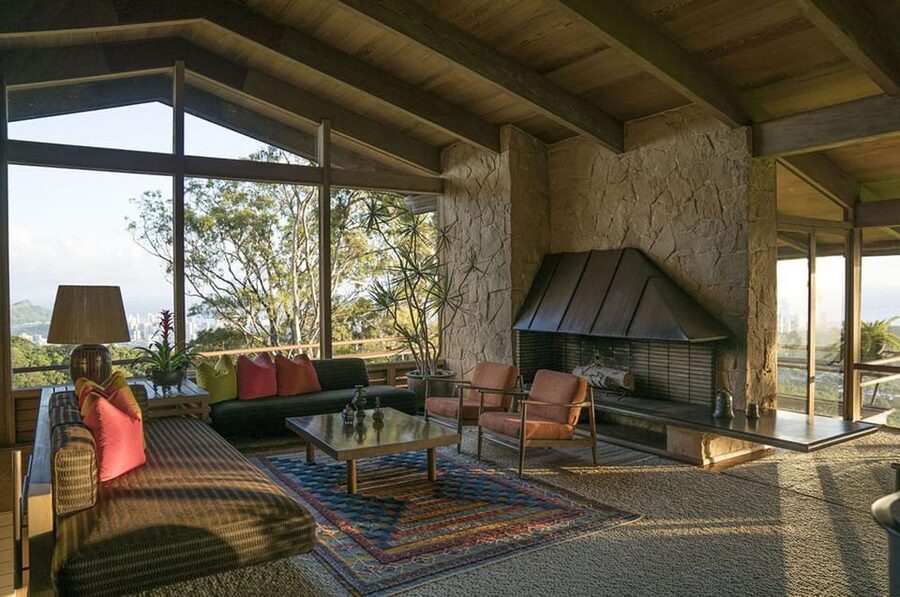
The 90-minute visit is long enough to move beyond a basic introduction but short enough to fit into a busy Honolulu day. You enter the Liljestrand House and spend the tour looking at the building as a complete work, not as a collection of unrelated rooms.
The house’s preservation is central to the experience. Original furnishings and artworks remain part of the setting, so you can consider the rooms as Ossipoff and the Liljestrand family intended them to be seen. That matters because furniture, art, and architecture often lose their connection when displayed separately.
Here, each supports the others. A chair is not just an old chair. A piece of artwork is not only decoration. Together, these details show how carefully the home was planned and maintained.
You should expect to remove your shoes before entering because the wood floors are fragile. Wear socks if you prefer not to go barefoot, and choose footwear that is easy to take off and put back on. The house does not allow smoking or vaping, and pets are not permitted.
Following Ossipoff’s view management
One of the tour’s strongest subjects is Ossipoff’s handling of views. You learn to see the house not only as a shelter but as a device for directing attention toward its surroundings.
The phrase view management may sound technical, but the idea is simple. A well-placed opening can frame a particular outlook, bring in daylight, or make a room feel larger without adding more floor space. Ossipoff’s design principles become clearer when you watch how the house controls what you see and when you see it.
Your guide can point out how the structure connects indoor rooms with the natural setting. Rather than treating the exterior as a background, the design brings it into daily life through orientation, windows, and material choices.
This is where the tour rewards slow looking. Give yourself time to notice transitions between spaces. Look at the relationship between solid walls and open areas. Watch how natural materials affect the mood of a room. The value is not just in hearing that Ossipoff cared about these things. It is in seeing the choices in front of you.
Original furnishings, artworks, and daily life
Architecture can feel distant when it is presented only through floor plans and dates. The original furnishings and artworks help prevent that problem. They show how the house functioned as a home and how design decisions shaped everyday life.
You get a glimpse into the Liljestrand family’s world while also learning how the furnishings fit Ossipoff’s ideas. The objects are not isolated historic pieces. They help explain proportion, color, texture, and the way people used the rooms.
I especially like this part of the experience for visitors who are not sure they care about modern architecture. You may not want a lecture on building theory, but you can still respond to a room that feels balanced, open, calm, or closely tied to its surroundings.
The tour also gives you a chance to consider preservation in practical terms. Keeping a house intact means caring for floors, furniture, artworks, and structural details at the same time. The request to remove shoes is a small example of the care required to protect a historic interior.
Same city, a different facade:
- Chicago Architecture Center River Cruise aboard First Lady
★ 5.0 · 5,536 reviews - Chicago: Architecture River Cruise Skip-the-Ticket Line
★ 4.8 · 4,325 reviews - Chicago River 45-Minute Architecture Tour from Magnificent Mile
★ 4.5 · 2,924 reviews - Chicago Lake and River Architecture Tour
★ 4.5 · 2,308 reviews
A small group makes the house easier to read
The group is limited to 10 people, a useful feature in a private-scale house. You are less likely to feel lost in a crowd, and it should be easier to hear the guide and ask a question when the group pauses.
A small group also suits the subject. Architectural details are often easy to miss when people are moving quickly from room to room. With fewer people, you have a better chance to look closely at materials and room connections instead of simply following a line.
The tour is guided in English. One guide, Perry, has a particularly personal connection to the subject. He lived on the mountain and knew Ossipoff, giving him first-hand context to share when he leads a visit. Your guide may vary by date, but the format remains focused on explanation rather than a self-guided walk.
The strongest part of a docent-led house tour is usually the connection between visible details and human decisions. Instead of simply telling you that a feature is original, the guide can explain why it matters and how it fits into the home’s design.
What the 90 minutes feel like
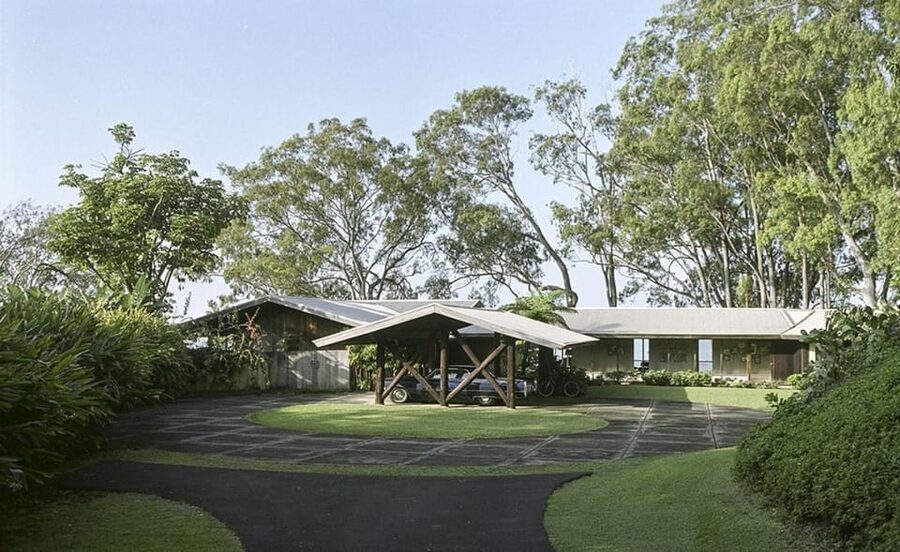
The tour follows a natural progression. First, you get oriented to the house and its place in Hawaiian modern architecture. Then the guide draws your attention to Ossipoff’s approach, the family’s connection with him, and the way the rooms handle materials and views.
As you move through the interior, expect the emphasis to remain on design rather than on a long list of dates. Original furnishings and artworks help make the discussion concrete. You can compare the architect’s intentions with the actual spaces around you.
The final impression comes from seeing preservation as an active effort. The Liljestrand Foundation opens the house for cultural and educational use, but doing so also requires care. Your admission helps support that mission, so the visit has a purpose beyond sightseeing.
Ninety minutes is a sensible length for this kind of tour. It gives the guide time to explain the main ideas without turning the visit into an all-day commitment. Still, you should arrive ready to pay attention. This is not a quick walk-through where you can absorb everything in a few minutes.
Heat, footwear, and what to leave behind
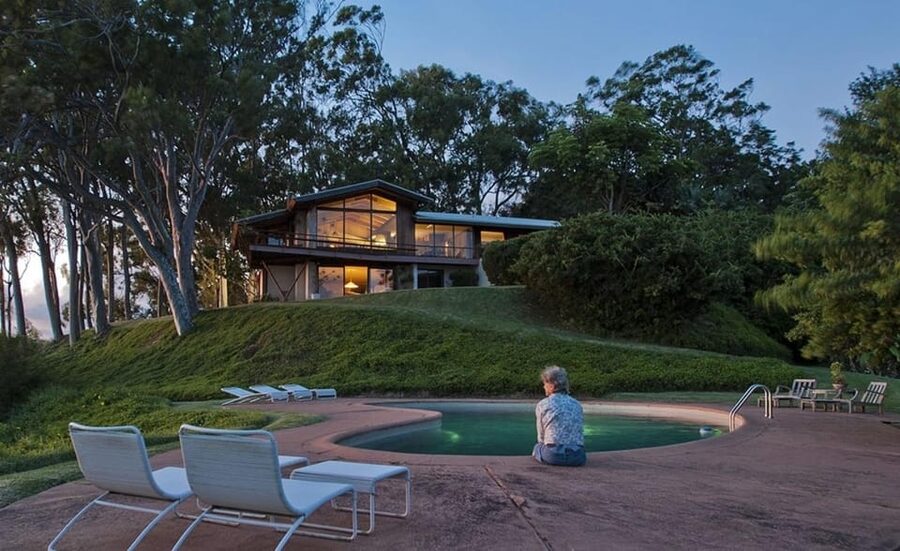
The lack of air-conditioning is the clearest comfort issue. The house can be quite hot during summer and fall, so dress lightly and consider how comfortable you are in warm indoor conditions for 90 minutes.
You must remove your shoes because of the fragile wood floors. That rule protects the house, but it is worth knowing before you arrive. Avoid complicated footwear, and bring socks if that makes the visit more comfortable.
Backpacks and large bags are not allowed, along with tripods, extension poles, and selfie-sticks. Pack lightly and leave bulky photography equipment elsewhere. The restrictions may feel strict if you normally carry a day bag, but they make sense in a preserved home with delicate interiors.
Children under 10 are not suitable for this activity. The tour is better for older children, teens, and adults who can listen carefully and respect the house’s preservation rules. The content and setting favor people who enjoy design, history, and close observation.
Is the $78 price worthwhile?
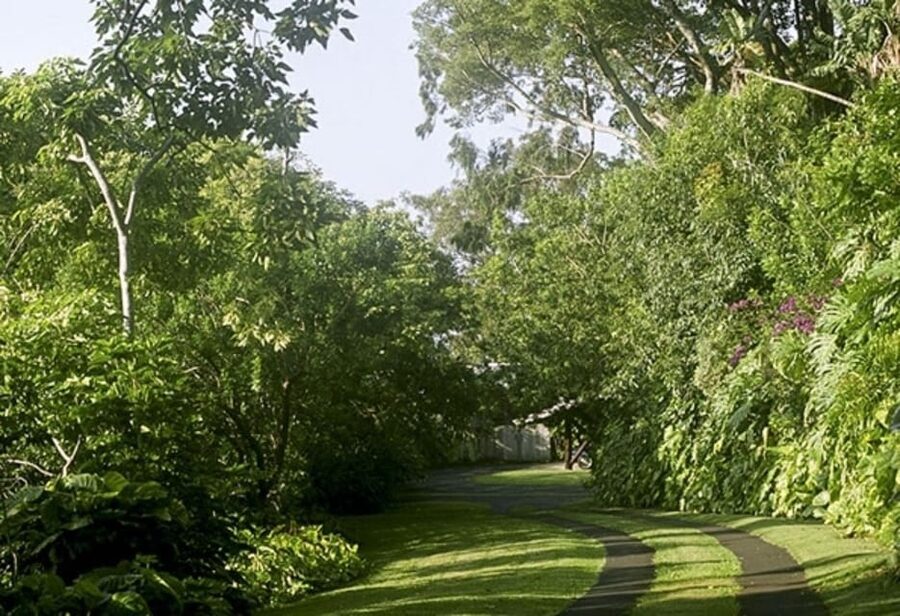
At $78 per person, this is not a bargain attraction. You are paying for access to a preserved private home, a live English-speaking guide, a small group, and the Foundation’s preservation work.
The value depends on your interests. If you enjoy architecture or want to understand Honolulu beyond beaches and major public sights, the price is easier to justify. You are seeing an important example of Ossipoff’s work in the place where its design can be understood best, with original furnishings and artworks still present.
The small group adds value because the house benefits from quiet, focused attention. A cheaper, crowded visit would not offer the same chance to study details or ask questions. The guide’s role also matters, especially if you are lucky enough to have someone such as Perry, who can add personal knowledge of Ossipoff and the area.
If your main goal is a broad overview of Honolulu, this may feel expensive for 90 minutes. It is a specialist experience, not a general city tour. I would choose it when the house itself is a priority, rather than booking it as an afterthought between unrelated activities.
You can cancel up to three days in advance for a full refund. That policy gives you some room to adjust plans, but you should still check the available starting times before building the rest of your day around the visit.
Who should book this architectural tour?
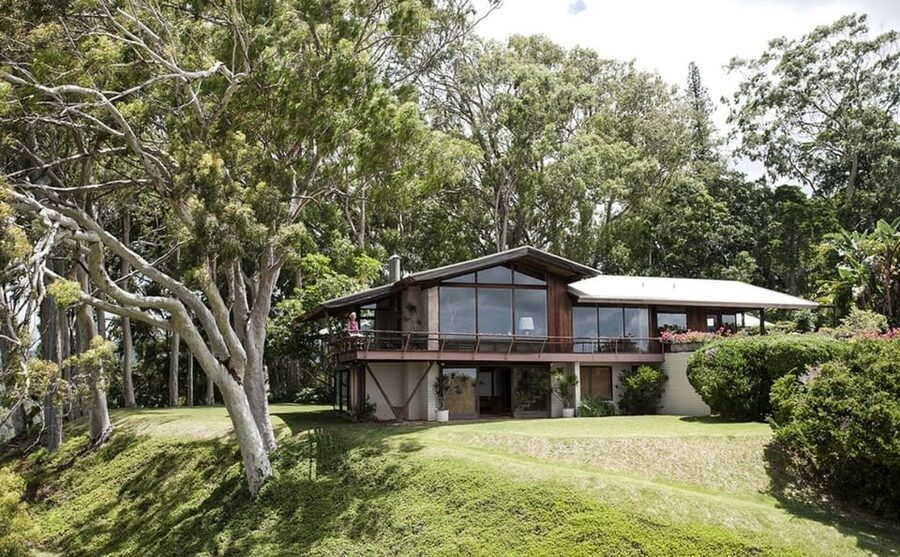
I would recommend the Liljestrand House to you if you enjoy mid-century design, historic homes, Hawaiian architecture, or preservation. It also suits photographers and art-minded visitors, though the restrictions on tripods and selfie-sticks limit equipment.
You do not need to know Ossipoff’s work in advance. The tour is designed to explain the ideas as you see them. Still, you will get more from it if you are willing to slow down and look closely at how the house handles light, materials, furnishings, and views.
Families with younger children should choose another activity because children under 10 are not suitable. Anyone sensitive to heat should also think carefully about the season and the lack of air-conditioning.
The tour has earned a perfect rating from five published bookings, with especially strong praise for the house itself, the depth of the docent presentation, and the detail about how the home was built. Those are exactly the areas where this visit offers its best value.
Should you book the Liljestrand House?
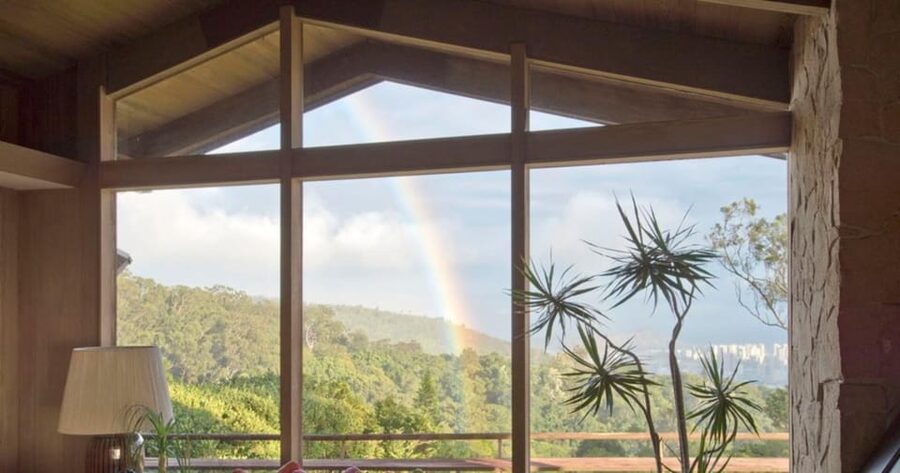
Book it if you want a thoughtful, small-group look at Hawaiian modern architecture rather than another standard Honolulu sightseeing stop. The preserved house, original interior details, Ossipoff’s view-focused design, and personal connection to the Liljestrand family give the visit a clear identity.
Skip it if you dislike removing your shoes, struggle in warm rooms, or prefer fast-moving tours with broad city coverage. At $78, it deserves a place in your schedule only if architecture and preservation genuinely interest you.
For the right visitor, this is a focused and meaningful 90 minutes. You leave with a better sense of how a home can belong to its setting, and your ticket helps keep that lesson available for the next group.
FAQ
How long is the Liljestrand House tour?
The tour lasts 90 minutes.
What language is the tour conducted in?
The live tour is conducted in English.
How many people can join the tour?
The group is limited to 10 participants.
What is included in the ticket?
Admission to the Liljestrand House and a tour guide are included.
How much does the tour cost?
The listed price is $78 per person.
Do I need to remove my shoes?
Yes. Visitors must remove their shoes to help protect the fragile wood floors.
Is the house air-conditioned?
No. The house is not air-conditioned and can sometimes be hot during summer and fall.
Are children allowed on the tour?
Children under 10 are not suitable for this activity.
Can I bring a backpack or tripod?
No. Backpacks, large bags, tripods, extension poles, and selfie-sticks are not permitted.
Can I cancel for a refund?
Yes. You can cancel up to three days in advance for a full refund.
Newly added in the USA
- Washington, DC: Georgetown Architecture Walking Tour★ 5.0 · 8 reviews
- Washington DC: Dupont Circle & Embassy Row Architecture Tour★ 5.0 · 6 reviews
- New Orleans : Garden District Architecture Walking tour★ 4.8 · 5 reviews
- Wilmington History and Architecture Tour★ 4.8 · 18 reviews
- Private Colonial Williamsburg Architectural Tour★ 5.0 · 5 reviews
- Castle to Capitol: Museums of the National Mall Architecture Tour★ 4.5 · 9 reviews
- Tulsa: Art Deco Walking Tour of Tulsa★ 5.0 · 8 reviews
- Monuments and Memorials Architectural Walking Tour★ 5.0 · 17 reviews
USA Architecture Tours, compared.


Chicago River: 1.5-Hour Guided Architecture Cruise
Read our review →
Chicago Architecture Center River Cruise aboard First Lady
Read our review →
Architecture River Cruise Skip-the-Ticket Line
Read our review →
Chicago River 45-Minute Architecture Tour from Magnificent Mile
Read our review →

45-Minute Family-Friendly Architecture River Cruise
Read our review →Browse the lists this tour appears in