
Review · SELF-GUIDED AUDIO TOURS
Woodlawn Cemetery: A Self-Guided Audio Tour of Gilded Age Art and Architecture
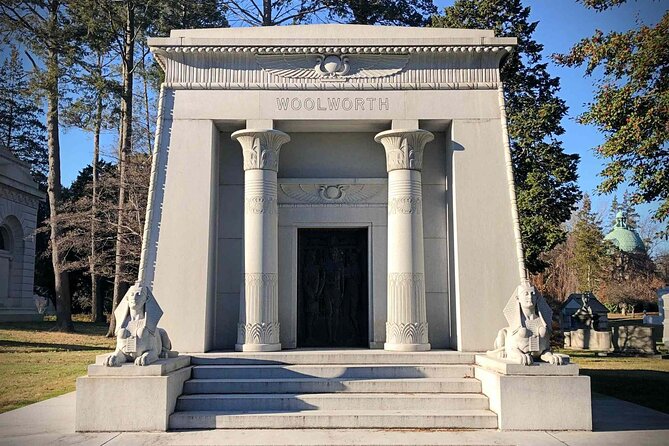
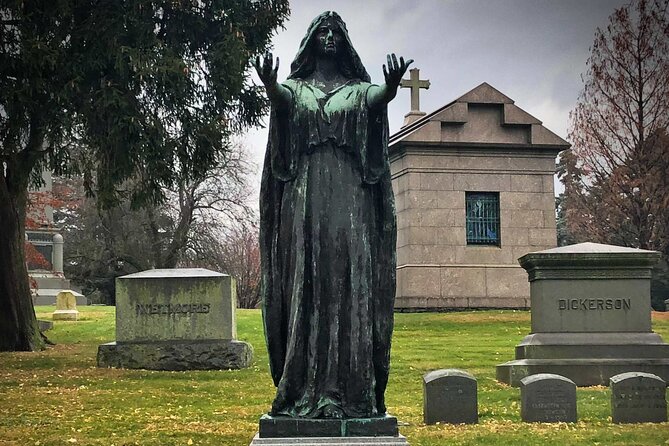
Woodlawn Cemetery is not simply a place to see graves. It is an outdoor gallery of Gilded Age architecture, filled with grand crypts, sculpture, old trees, and the stories of people who shaped New York. This self-guided tour adds the human drama: dancers, playwrights, heiresses, socialites, and tycoons who left behind more than marble monuments.
I like the freedom to start when you want and linger where a story catches you. I also like the audio itself, produced by New York advertising creative director Tom Darbyshire, whose interest in Woodlawn led to this VoiceMap tour. The main consideration is that you need your own smartphone and headphones, and the tour is non-refundable after booking.
Key points to know before you go
- Meet Irene Castle and Alva Vanderbilt Belmont: The route connects famous residents to dance, fashion, politics, television, and New York society.
- Explore a National Historic Landmark: Woodlawn combines cemetery art, mausoleums, sculpture, and an arboretum with more than 390 tree species.
- Let GPS guide you: VoiceMap plays the right audio as you walk and includes turn-by-turn directions.
- Use it offline: Download the audio, map, and location data before arriving so you are not dependent on a mobile signal.
- Expect two to two-and-a-half hours: You control the pace, but stopping for photos or lingering with the stories can extend the visit.
- End with Barbara Hutton: The final stop is the crypt of the heiress remembered as the Poor Little Rich Girl.
Why Woodlawn makes such a good walking tour
The first surprise is how quickly the setting changes once you reach Woodlawn. The cemetery is only minutes from Manhattan by subway, yet the experience feels far removed from the city streets. Instead of rushing between crowded attractions, you follow paths through a large cemetery known for its architecture, sculpture, and carefully planted grounds.
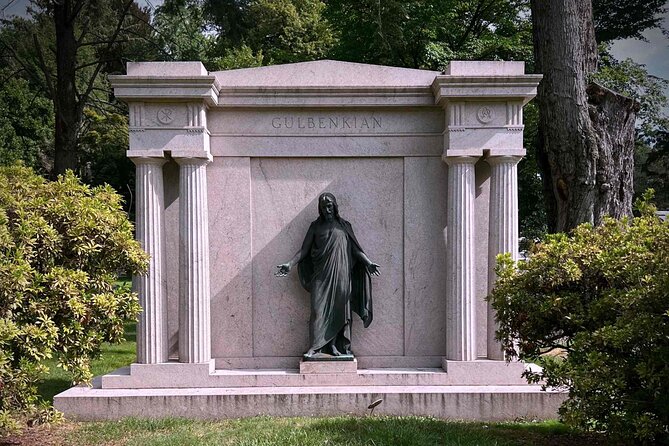
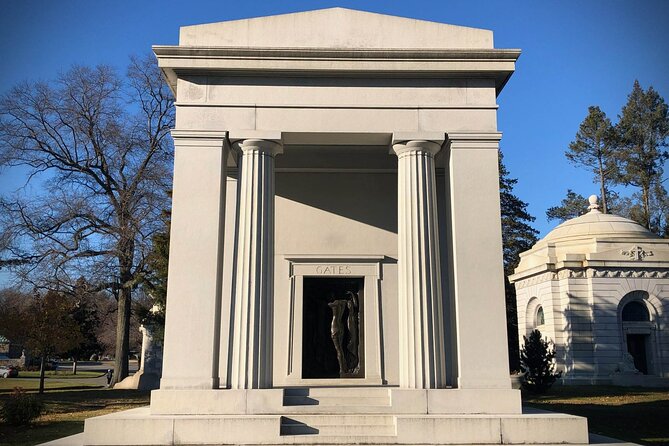
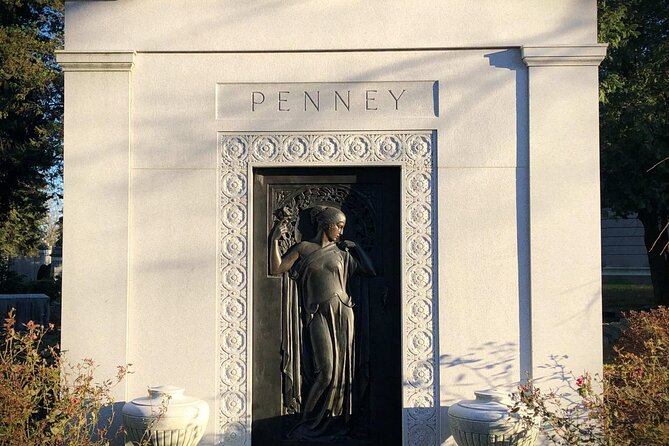
Woodlawn is a National Historic Landmark, and the tour uses that setting well. You are not just looking at a series of tombstones. You are seeing mausoleums built to project wealth, taste, family power, and social standing. The buildings are part of the story, but the people inside them give the tour its real pull.
Tom Darbyshire provides the narration. He works as a creative director in New York’s advertising world, and the tour grew from his interest in Woodlawn and its residents. That background matters because the route is built around memorable stories rather than a dry list of dates and names.
You will hear about the sort of people who make a cemetery feel like a collection of unfinished novels. Irene Castle connects the route to dance and the flapper style of the 1920s. Alva Vanderbilt Belmont brings in old New York wealth, social power, and the world represented in HBO’s The Gilded Age. Claude Fitch introduces a successful but largely forgotten Broadway playwright.
The tone is lively, but the setting remains quiet. That contrast is one of the tour’s best qualities. The audio gives you scandals and ambition while the cemetery offers time to look closely at stonework, trees, and sculpture.
More Self-Guided Audio Tours in the USA:
- Self-Guided Audio Tour – Miami Art Deco
★ 3.0 · 7 reviews - Philadelphia Architecture: Discover Every American Style on a GPS Audio Tour
★ 5.0 · 2 reviews - Gaudi and La Sagrada Familia Exterior Self-Guided Audio Tour
★ 3.5 · 25 reviews
Starting at Woodlawn Conservancy
The tour begins at Woodlawn Conservancy, at 3800 Jerome Avenue in the Bronx. The app provides directions to the starting point, so you do not need to work out the first stop from a paper map. Once you arrive, you put on your headphones, open the VoiceMap app, and tap start.
The route is designed for independent walking. There is no group leader to find, no scheduled departure time to meet, and no need to keep pace with strangers. Your booking is for your own party, which makes this a good choice if you prefer quiet sightseeing or want to pause often.
The opening section introduces Woodlawn as both cemetery and arboretum. More than 390 tree species grow across the property, so the trees are not just background decoration. They help shape the mood of the walk and make the setting feel more like a large garden than a conventional urban burial ground.
The tour also points out art and sculpture. This is useful because you might otherwise focus only on the largest mausoleums and miss smaller details along the route. The audio gives you a reason to look up, slow down, and notice how the memorials fit into the surrounding grounds.
You should bring comfortable shoes and allow time beyond the advertised two hours if you like to stop for photographs. The basic route can fit into roughly two hours to two and a half hours, but the app lets you linger. A packed schedule would take away from what makes the visit work.
Irene Castle and the style of the 1920s
One of the most appealing stops introduces Irene Castle, a dancer credited here with inventing every part of the flapper look. Her story gives the cemetery visit a welcome connection to popular culture, fashion, and performance.
This is the kind of detail that makes the audio more useful than a simple list of famous burials. A name on a monument may mean little until you understand what that person changed. Irene Castle turns one stop into a story about how dance, clothing, and public image can influence an entire era.
The route does not ask you to know much in advance. You can arrive with only a general interest in New York history and still follow the connections. Darbyshire’s storytelling provides context as you move from one memorial to the next.
The drawback is that the audio depends on your attention. If you want to stop and study a building, take a photo, or read a marker, you may need to pause playback. That is not a serious problem, but it is different from having a live guide who can adjust instantly to your pace.
Alva Vanderbilt Belmont and Gilded Age power
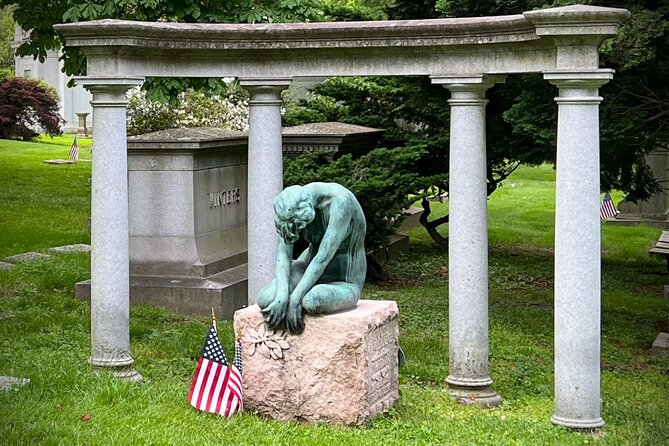
Alva Vanderbilt Belmont is another major character on the route. Her life fits Woodlawn’s grand setting: money, social ambition, public influence, and the complicated rules of New York high society.
She is also described as a real-life inspiration for HBO’s The Gilded Age. That link gives you an easy way into the period, especially if you enjoy seeing how television characters relate to actual people and social forces. The tour uses Belmont to show that these residents were not merely wealthy names carved in stone. They had rivalries, ambitions, and carefully managed public identities.
This stop is valuable because it puts the architecture in context. The oversized mausoleums can look like displays of pure wealth, but the stories explain why that wealth mattered to the people who commissioned them. You begin to read the buildings as statements about family, rank, memory, and control.
If you prefer military history, religious history, or a tour focused on cemetery design alone, this route may feel too personality-driven. Its main appeal is the combination of architecture and colorful biography.
More Self-Guided Walks in the USA:
- Self-Guided Tour of Ísafjörður: Art, History, and Architecture
★ 5.0 · 23 reviews - Bastille’s Architecture & Artisans Self-Guided Walking Tour
★ 4.5 · 18 reviews - Palau Guell by Gaudi with Audio Guide in Barcelona
★ 4.5 · 13 reviews - Self-Guided Audio Tour-The Surrealist Barcelona of Dalí and Gaudí
★ 3.5 · 8 reviews
Claude Fitch and the forgotten Broadway connection
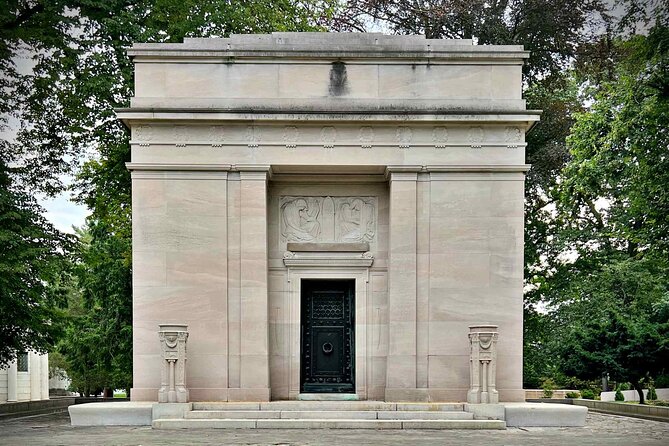
The route also introduces Claude Fitch, described as Broadway’s most successful and forgotten playwright. That combination of success and obscurity is exactly the sort of cemetery story that works well in an audio format.
A famous person needs no explanation. A forgotten person does. The narration gives you a reason to care about someone whose name may not appear in most modern New York sightseeing plans. This broadens the tour beyond the usual list of presidents, financiers, and celebrities.
The stop also reinforces a larger point about Woodlawn. Cemeteries preserve people who were once central to public life, even when their reputations fade. You can walk through a place filled with former household names and still find that the most rewarding story belongs to someone you have never heard of.
For you, that means the tour is strongest when you enjoy small discoveries. It is less about checking off famous people and more about seeing how fame changes over time.
Anna Bliss and the Titanic Memorial
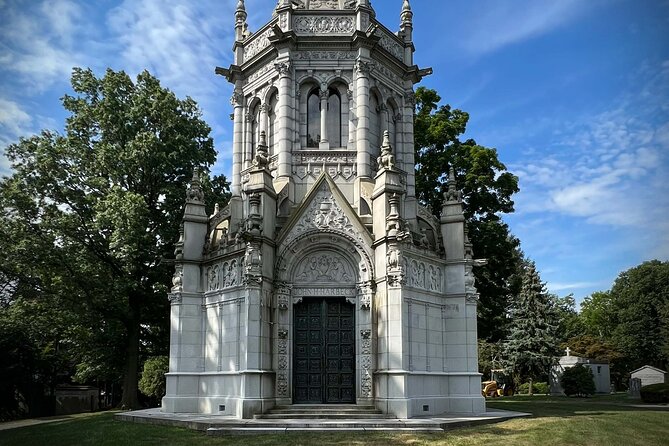
Anna Bliss is connected to a Titanic Memorial along the route. This gives the walk a direct link to one of the most recognizable disasters of the early twentieth century.
The memorial adds variety to the tour. You are not only moving among family crypts and private mausoleums. You are also seeing how public tragedy can be remembered through a dedicated monument. The story creates a natural pause in the route and gives you another way to think about memorial design.
This is a good place to slow down and consider the difference between a private family burial site and a memorial connected to a widely known event. The contrast helps explain why Woodlawn feels like both a cemetery and an open-air collection of public and private memory.
The tour does not include museum admissions or other attraction tickets, so you should not expect indoor exhibits along the way. Its focus remains on what you can see outdoors, supported by the audio.
Ending at Barbara Hutton’s mausoleum
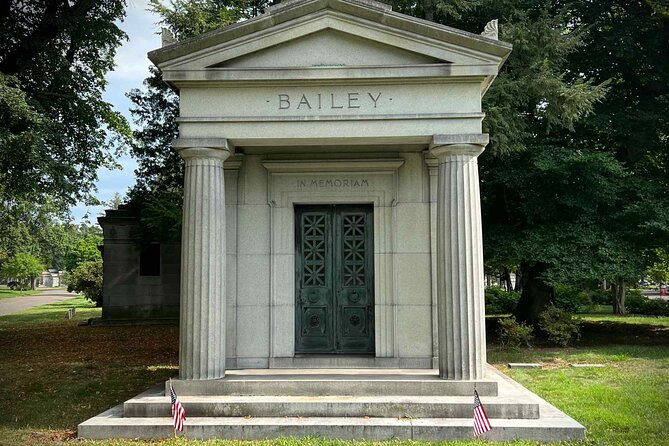
The route ends at the crypt of Barbara Hutton, remembered as the Poor Little Rich Girl. Her story supplies a suitably dramatic finish.
Hutton traded her vast fortune for titles and married and divorced seven times, including five marriages to royals. That is the sort of life story that makes a final stop memorable without needing a grand finale built around spectacle. You arrive at the mausoleum with a clear sense of the gap between wealth and happiness, or at least the gap between public glamour and private life.
The ending is at Barbara Hutton’s mausoleum in the Bronx. This matters for planning: the tour does not return you to the starting point. Since this is a walking route, you should allow for the fact that your final position differs from your arrival point.
The endpoint also gives the tour a clear shape. It begins with the cemetery as a place of art and architecture, moves through stories of famous New Yorkers, and ends with a highly personal tale of money, marriages, and status.
How the VoiceMap app works
After booking, you receive instructions and a unique code. You install the VoiceMap app on an Android or iOS phone, enter the code, and use the app to reach the starting point.
VoiceMap uses GPS to trigger audio as you move. It also provides turn-by-turn directions, so you do not have to keep checking a separate map after every stop. The audio, map, and geodata are available offline, which is especially helpful in a large cemetery where you may not want to rely on a strong mobile connection.
Bring your own smartphone and headphones. They are not included, and the tour does not provide transportation, food, or drinks. The app gives you lifetime access in English, so you can return to the material after the visit or use the virtual tour option from home.
That last feature makes the purchase more flexible than a single-use audio guide. You can listen again later, revisit a story you only partly caught, or explore the tour virtually if you cannot get to the Bronx right away.
The GPS format is generally easy to follow. Still, you should start with your phone charged and download the material before you arrive. The tour is self-guided, so you are responsible for keeping track of your device, headphones, and route.
Time, cost, and overall value
The price is $14.99 per person. For a two to two-and-a-half-hour walk, that is a reasonable cost if you are interested in New York stories and want a private experience without paying for a live guide.
The value improves because access lasts for life. You are paying not only for one visit, but also for future use of the English audio and the virtual version. That makes the price easier to justify for someone who may want to hear the tour again or share the experience with members of the same booking group on another day.
The route is booked, on average, six days ahead. That gives you a rough idea of how far in advance people plan it, though the tour itself does not require a fixed departure time. The listed opening hours run from midnight to 11:59 p.m. every day, so the published schedule is unusually broad.
There is no food, drink, transportation, museum admission, or other attraction ticket included. Pack what you need for the walk, and budget for your subway or other transportation separately.
One important financial point: the booking is non-refundable and cannot be changed for any reason. You should only reserve once your plans are firm.
Who will enjoy this tour most
I would choose this tour if you enjoy unusual New York stops, cemetery art, architecture, and stories about people who once shaped public life. It suits independent visitors who dislike fixed group schedules and want to set their own pace.
It also works well for anyone interested in the Gilded Age, Broadway, fashion, dance, old wealth, or famous families. The range of characters keeps the visit from becoming a narrow architecture tour.
Families may find the stories engaging, but the experience is still a walking tour through a cemetery, not a hands-on attraction. The audio format also requires everyone in your group to listen through headphones, unless you arrange another way to share the sound.
You may want a different experience if you prefer a live guide, a short visit, or a tour that begins and ends at the same place. You also need to be comfortable navigating with a smartphone.
Should you book Woodlawn Cemetery?
Book it if you want a calm, story-led look at New York away from the usual sightseeing circuit. The strongest reasons are the mix of Gilded Age mausoleums and personal scandals, the easy GPS route, and the freedom to stop whenever you like.
Skip it if your main goal is a quick cemetery visit or a guided group conversation. The non-refundable booking policy also makes it a poor choice for uncertain plans.
For $14.99, the tour offers a lot of material: two-plus hours on site, offline directions, lifetime English access, and a virtual option. If Barbara Hutton, Irene Castle, Alva Vanderbilt Belmont, and forgotten Broadway names sound more interesting to you than another crowded Manhattan attraction, Woodlawn is a smart addition to your New York plans.
FAQ
How long does the Woodlawn Cemetery audio tour take?
The tour takes approximately two hours to two and a half hours. You control the pace and can linger at stops, so your visit may take longer.
Where does the tour begin?
It begins at Woodlawn Conservancy, 3800 Jerome Avenue, Bronx, New York 10467.
Where does the tour end?
The tour ends in front of Barbara Hutton’s mausoleum in the Bronx, New York 10470.
Is this a guided group tour?
No. It is a self-guided private activity for your own group. The VoiceMap app provides the narration, GPS playback, and walking directions.
Who narrates the tour?
The audio is produced and narrated through the work of Tom Darbyshire, a New York advertising-industry creative director whose interest in Woodlawn inspired the tour.
Does the tour work without internet access?
Yes. VoiceMap provides offline access to the audio, maps, and geodata. You should download the material before starting.
What do I need to bring?
You need a smartphone and headphones. They are not included. Transportation, food, and drinks are also not included.
Can I use the tour more than once?
Yes. The booking includes lifetime access to the English tour, as well as a virtual tour option for use at home.
More Audio Tours in the USA
Newly added in the USA
- Washington, DC: Georgetown Architecture Walking Tour★ 5.0 · 8 reviews
- Washington DC: Dupont Circle & Embassy Row Architecture Tour★ 5.0 · 6 reviews
- New Orleans : Garden District Architecture Walking tour★ 4.8 · 5 reviews
- Wilmington History and Architecture Tour★ 4.8 · 18 reviews
- Private Colonial Williamsburg Architectural Tour★ 5.0 · 5 reviews
- Castle to Capitol: Museums of the National Mall Architecture Tour★ 4.5 · 9 reviews
- Tulsa: Art Deco Walking Tour of Tulsa★ 5.0 · 8 reviews
- Monuments and Memorials Architectural Walking Tour★ 5.0 · 17 reviews
Self-Guided Audio Tours, compared.

Gaudi and La Sagrada Familia Exterior Self-Guided Audio Tour
Read our review →
Self-Guided Tour of Ísafjörður: Art, History, and Architecture
Read our review →
Bastille’s Architecture & Artisans Self-Guided Walking Tour
Read our review →
Palau Guell by Gaudi with Audio Guide in Barcelona
Read our review →
Self-Guided Audio Tour-The Surrealist Barcelona of Dalí and Gaudí
Read our review →

Riga’s Architecture: A self-guided audio tour of the city’s art nouveau history
Read our review →
Philadelphia Architecture: Discover Every American Style on a GPS Audio Tour
Read our review →Browse the lists this tour appears in