
Review · CHICAGO ARCHITECTURE TOURS
Explore Chicago’s Hidden Past: Prohibition Culture & Architecture
Chicago’s Prohibition story is only part of the appeal here. The real treat is moving through the Loop on foot, from the Chicago Theatre marquee and underground Pedway to the river, the Cultural Center, and Cloud Gate. I especially like the small-group format and the chance to step inside grand public buildings instead of simply photographing them from the street.
I also like the local food samples, including Chicago-style popcorn, and the useful advice you get at the end for lunch, drinks, and nearby sights. The main caution is that the Prohibition theme can feel lighter than the title suggests, and some of the architecture stops are viewed from outside rather than studied in depth.
Key points to know before you book
- The route covers about 4.8 km: You will walk for roughly two and a half hours, with stops at major Loop landmarks.
- The Bean is the finale: The tour ends at Cloud Gate in Millennium Park, a handy place to continue sightseeing.
- The Chicago Cultural Center is a highlight: You go inside this former library and see its grand interior.
- The guide makes the difference: Rich, Dave, Dash, and Kevin have each led tours, with a friendly, conversational approach.
- The Prohibition angle is present but not dominant: Expect city stories, architecture, food, and local color alongside 1920s history.
- Weather does not stop the tour: The walk runs in rain, snow, or sunshine, with the riverfront and Pedway subject to weather conditions.
A city walk that links Chicago’s best sights
This tour starts at the Chicago Theatre, 175 North State Street, and ends at Millennium Park. That point-to-point design makes good use of your time. You are not looping back to the starting place, and you finish near several major downtown sights, restaurants, and transit connections.
The route is built for orientation. Instead of treating Chicago’s landmarks as separate photo stops, it connects them through the city’s streets, bridges, public spaces, and underground passages. You see how the Loop functions as a working part of the city, not just a display of famous buildings.
The group can include no more than 15 people. That matters on a walking tour. You have a better chance of hearing the guide near a busy street, asking questions, and keeping a comfortable pace than you would in a large coach group.
The experience is advertised at $49.96 per person. I consider that reasonable if you want a broad introduction to central Chicago and prefer a guide who can point out details you could easily miss. It is less compelling if you already know the Loop well or want a serious architecture lecture focused on architects, materials, and design choices.
A few more architecture walks in Chicago worth a look
- Chicago Architecture River Cruise
★ 5.0 · 15,756 reviews - Chicago River 90-Minute Architecture Tour
★ 4.5 · 9,629 reviews - Chicago River: 1.5-Hour Guided Architecture Cruise
★ 4.8 · 8,046 reviews
Starting beneath the Chicago Theatre marquee
The Chicago Theatre is a fitting meeting point. Its bright marquee gives you an easy landmark in the middle of the Loop, and the guide begins by placing you in the center of Chicago’s entertainment district.
From here, the walk quickly shifts from famous facades to the city’s working infrastructure. That change is part of the fun. You are not simply collecting postcard views. You are learning how downtown Chicago connects its streets, offices, shops, government buildings, and underground walkways.
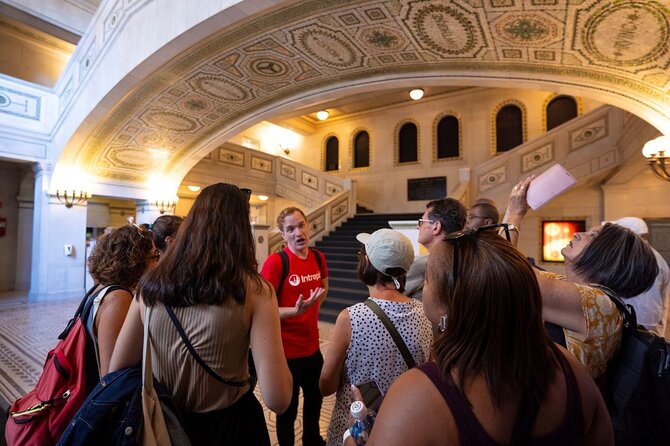
The guide style is conversational rather than formal. Rich is often praised for making the walk feel like time with a well-informed local friend. Dave is described as easy to talk with and full of useful details, while Dash has a talent for keeping a group together during crowded city events. On a private outing, Kevin has adjusted the pace and focus around a guest with a sore knee, showing the benefit of a smaller group.
Your guide may use photos or personal anecdotes to explain places that look ordinary at first glance. That helps turn a standard downtown stroll into a more rewarding first look at Chicago.
The Chicago Pedway and the city beneath your feet
The Chicago Pedway is one of the route’s more unusual stops. This network of underground passages is used by commuters and locals, and it gives you a different view of how Chicago handles its dense downtown setting.
The Pedway is explored when conditions allow. That wording matters because the route is not guaranteed in every situation. Still, when you do go below street level, the change of pace is welcome. You leave the traffic and sidewalks for a short stretch and see a side of downtown most visitors would miss if they stayed above ground.
The tour also passes the City Hall and County Building, where Chicago’s government and Cook County offices are located. This is not a long interior visit, but it adds civic context to the walk. The route moves from entertainment to government, then onward to public art and the river.
Daley Plaza and the Chicago Picasso
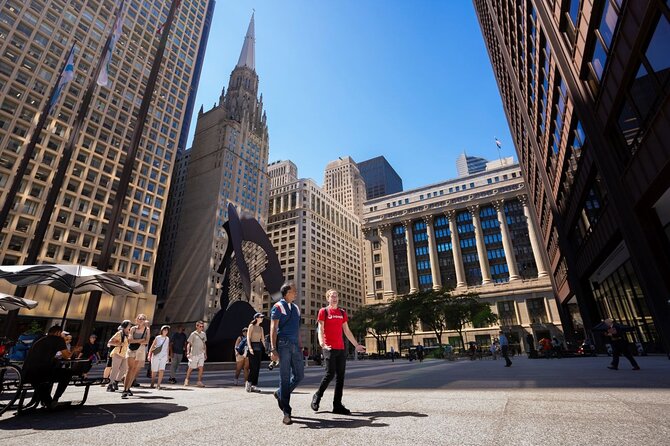
At Daley Plaza, the group stops at the Chicago Picasso, installed in 1967. The sculpture changed the feel of the plaza and helped push public art into the center of urban life.
This is a useful stop for anyone who wants more than dates and building names. The guide can explain why a large modern sculpture mattered in a city already famous for its skyscrapers. It also gives you a chance to look at Chicago as a place where public space, art, and architecture work together.
The stop lasts about 10 minutes. That is enough time for an explanation, photographs, and a few questions, but not enough for a full art-history discussion. If you want long pauses at every work of art, this fast-moving route may feel brisk.
Same city, a different facade:
- Chicago Architecture Center River Cruise aboard First Lady
★ 5.0 · 5,536 reviews - Chicago: Architecture River Cruise Skip-the-Ticket Line
★ 4.8 · 4,325 reviews - Chicago River 45-Minute Architecture Tour from Magnificent Mile
★ 4.5 · 2,924 reviews - Chicago Lake and River Architecture Tour
★ 4.5 · 2,308 reviews
Walking beside the Chicago River

The Chicago River is where the city’s architecture begins to feel most dramatic. You walk along a major downtown artery while the guide points out buildings and shares stories about the city’s growth, business life, and built environment.
I like this section because the views open up. On a narrow city street, you look mostly upward. Along the river, you can see several buildings together and understand how Chicago’s skyline fits into the streets below.
The route includes time on the Chicago Riverwalk when weather permits. From here, you may see Marina Towers, the Wrigley Building, and Tribune Tower. The riverfront is also a good place for photographs because the water gives you a wider view of the skyline.
Do not expect a boat tour in walking-tour form. You remain on foot, and the experience is more about street-level views, movement, and stories than a long, fixed look at each building. If the riverfront is wet, icy, or unpleasant, this part may be shortened or adjusted.
The Wrigley Building, Tribune Tower, and Magnificent Mile
The walk passes the Wrigley Building at 400 North Michigan Avenue. Its prominent location makes it one of the most recognizable buildings on the route, and the guide uses it to explain the visual character of central Chicago.
You also pass Tribune Tower, the 463-foot neo-Gothic skyscraper at 435 North Michigan Avenue. Its height and Gothic details create a sharp contrast with the modern forms seen elsewhere along the river.
The route continues toward the Magnificent Mile on North Michigan Avenue. This district is now known for shops, restaurants, and major attractions, but the guide connects it to the 1909 Burnham Plan, an important piece of Chicago’s city-planning story.
These stops are excellent for a first visit because they place several famous sights in one walk. The tradeoff is depth. You may hear when a building was built, what it was used for, and why it matters, but the tour may not satisfy you if you want a detailed study of architectural decisions or the work of individual architects.
One past tour experience felt rushed and spent too much time in Marshall Field’s and buying popcorn. That is useful advice: tell the guide early if architecture is your priority. Guides can often shape the emphasis, especially in a very small group or private booking.
Stepping inside the Chicago Cultural Center
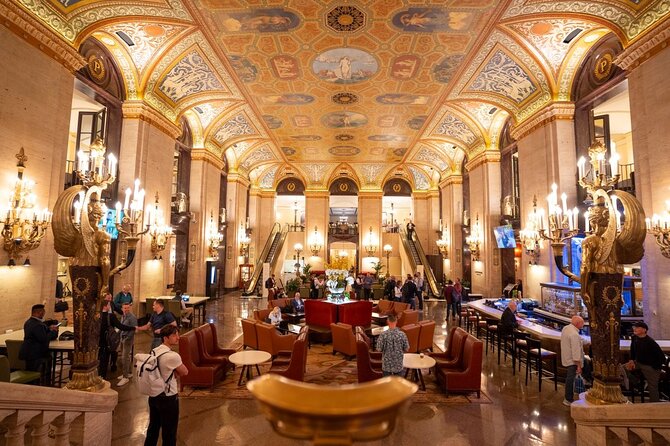
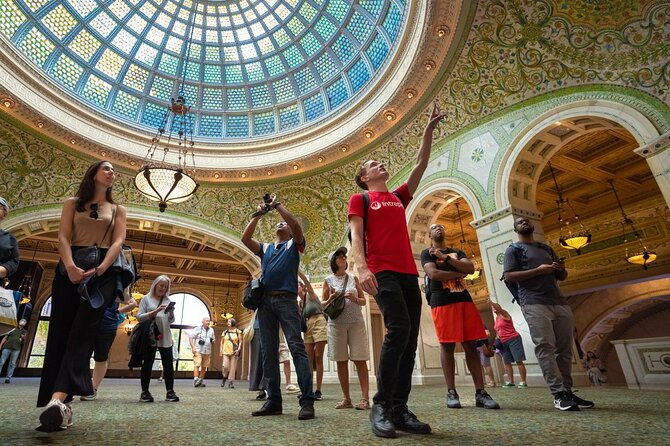
The Chicago Cultural Center is one of the strongest parts of the walk. You go inside a Chicago Landmark where mayors have welcomed presidents, royalty, and other dignitaries.
The building’s interior gives you something many outdoor architecture walks cannot: a chance to look up, slow down, and study the decorative details. One guest singled out the Cultural Center as the best stop, and another was especially pleased to see the former library’s interior.
This is also a good break from the sidewalk. After several outdoor stops, you can spend about 15 minutes indoors while the guide explains the building’s public role and design.
The time is still limited, so you should not expect a full guided visit through every room. Think of it as a focused introduction. If the interior catches your attention, you can return later with more time.
Millennium Park and Cloud Gate
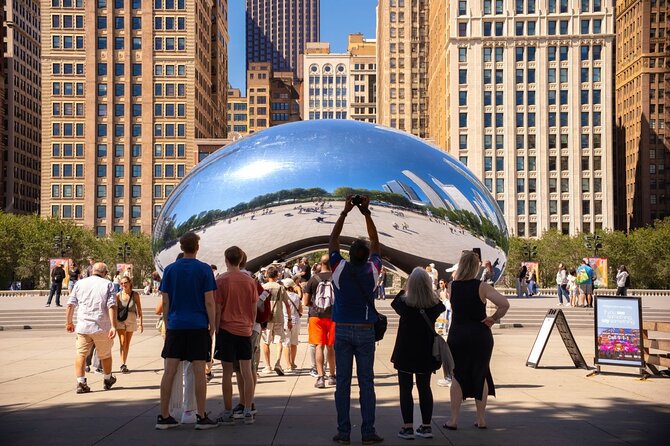
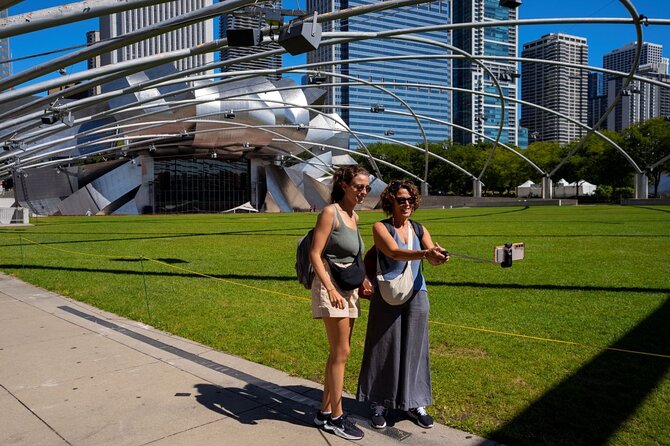
The tour ends in Millennium Park, with Cloud Gate, better known as the Bean, as the final stop. This gives you the classic Chicago photo and a natural place to continue your day.
The timing works well. You arrive after seeing the city’s older civic buildings, riverfront towers, public art, and commercial avenues. Cloud Gate then provides a polished modern finale, reflecting the skyline and the people around it.
The guide finishes with suggestions for nearby sights, lunch spots, and drinks. That practical handoff is valuable, especially if you take this walk early in your visit. Several people wished they had booked it on their first day because it helped them understand where other Chicago sights fit together.
Millennium Park is also close to the Art Institute of Chicago, though the standard route does not promise an Art Institute visit. On a private tour, Kevin has tailored the experience around a guest’s interests and included a return visit to the museum. Do not assume that option applies to every booking, but a private format may allow more flexibility.
What the Prohibition theme really delivers
The 1920s theme gives the walk a useful thread. Prohibition shaped Chicago’s public image, nightlife, politics, and popular stories, and the guide uses that period to add atmosphere to the city streets.
Still, you should set your expectations carefully. The experience is not presented as a bar crawl, a speakeasy visit, or a dedicated study of organized crime. One particularly fair criticism was that the Prohibition material felt limited compared with the title.
I would book this for a mix of Chicago history, architecture, public art, skyline views, and local food. If your main goal is a detailed account of bootlegging and 1920s crime, you may want a more narrowly focused tour.
Popcorn, local treats, and the value of small groups
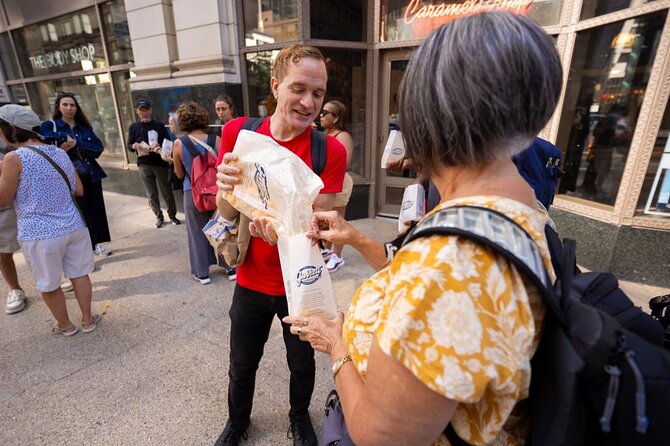
Chicago-style popcorn is included, along with surprise local treats along the way. The food adds a light, sensory break to a tour that could otherwise become a long stream of dates and building names.
The samples are not a full meal. Additional food and drinks are not included, so plan to eat before or after the walk. The guide may also suggest local places to try, which can be more useful than a generic restaurant list because the advice comes in the context of the route.
The small group is the bigger value. At $49.96, you are paying for a local voice, a structured route, and the chance to ask questions. The maximum is 15 people, though private options may be available. The experience has a 4.8 rating from 87 ratings, with 93 percent recommending it, but the mixed comments point to an important distinction: the guide often receives the strongest praise, while the exact balance of architecture, Prohibition stories, and food can vary.
Walking conditions, children, and practical details
Plan on about 2.5 hours and roughly 4.8 km of walking. The route is described as suitable for all ages and fitness levels, but you still need comfortable shoes and enough stamina for a steady urban walk.
The tour runs in rain, snow, or sunshine. Dress for the forecast, and remember that weather can affect the Pedway and Riverwalk portions. The tour is near public transportation, starts at the Chicago Theatre, and ends at Millennium Park and Michigan Avenue.
Children under six join free. Children ages six to eleven pay the adult rate, and you should list children in your booking details. Service animals are allowed, and most people can participate.
The ticket is mobile, and confirmation arrives at booking. You can cancel for a full refund up to 24 hours before the start time. Inside that window, refunds and changes are not accepted. Gratuities are not included.
Who should book this Chicago walk?
I would choose this tour early in a Chicago stay, especially if you want a quick sense of how the Loop fits together. It suits first-time visitors, families, couples, and anyone who likes a guide with stories and practical suggestions rather than a formal lecture.
It is also a good choice if you have only a short visit. In one outing, you see the Chicago Theatre, Pedway, Picasso, riverfront, Wrigley Building, Tribune Tower, Magnificent Mile, Cultural Center, Millennium Park, and Cloud Gate.
I would hesitate if you have already spent several days walking downtown and want places far from the central sights. I would also look elsewhere if you want a specialist architecture course or a Prohibition-focused nightlife experience.
Should you book it?
Book it if you want an easy introduction to central Chicago with strong skyline views, a welcoming local guide, a few food samples, and an excellent finish at the Bean. The Cultural Center and riverfront are the best reasons to go, while the small group makes it easier to ask questions and adjust the pace.
Before booking, decide what matters most to you. If it is architecture and city orientation, this is a good-value choice at $49.96. If it is specifically Prohibition history or detailed architectural criticism, choose a more specialized experience instead.
FAQ
How long does the walking tour last?
The tour lasts approximately 2 hours and 30 minutes.
How far does the group walk?
The route covers about 4.8 km, or roughly 3 miles.
Where does the tour start?
The meeting point is outside the Chicago Theatre at 175 N State Street, Chicago, Illinois 60601.
Where does the tour end?
The tour ends at Millennium Park near Cloud Gate, also known as the Bean.
Is the Chicago Riverwalk always included?
The Riverwalk portion is included when weather permits. The tour operates in rain, snow, or sunshine, but weather can affect outdoor sections.
Is food included?
Chicago-style popcorn and surprise local treats are included. Additional food and drinks are not included.
Can children join the tour?
Yes. Children under six join free. Children ages six to eleven can join at the adult rate, and you should provide those details when booking.
What is the cancellation policy?
You can cancel at least 24 hours before the start time for a full refund. Cancellations or changes made less than 24 hours before the start time are not accepted.
Newly added in Chicago
- Chicago: Guided Tour with Architecture River Cruise★ 4.5 · 20 reviews
- Chicago: First Lady River Cruise & Architecture Center Combo★ 4.7 · 24 reviews
- Chicago River 90-Min Architecture Boat Tour★ 4.5 · 24 reviews
- Chicago: Historic Architecture Chicago River Small Boat Tour★ 4.6 · 26 reviews
- Chicago River: 90-Min Architecture Boat Tour★ 4.9 · 29 reviews
- Chicago: Art Deco Skyscrapers Walking Tour★ 4.8 · 28 reviews
- Chicago Art Deco Madness Walking Tour★ 5.0 · 31 reviews
- Chicago River Architecture Tour and Big Bus Hop-on Hop-off Tour★ 4.0 · 38 reviews
Chicago Architecture Tours, compared.
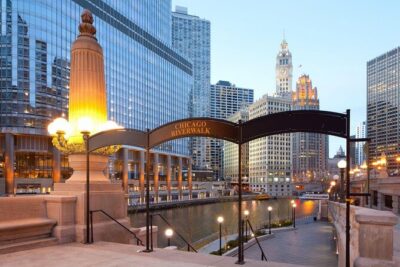

Chicago River: 1.5-Hour Guided Architecture Cruise
Read our review →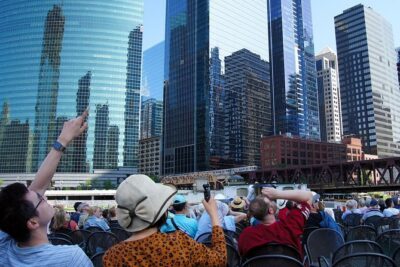
Chicago Architecture Center River Cruise aboard First Lady
Read our review →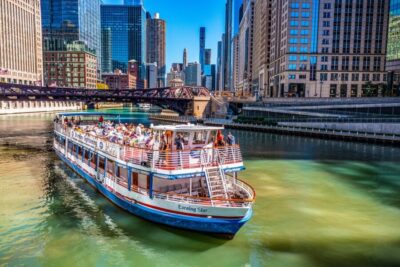
Architecture River Cruise Skip-the-Ticket Line
Read our review →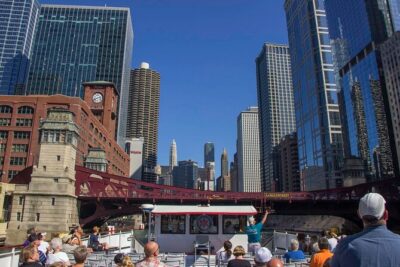
Chicago River 45-Minute Architecture Tour from Magnificent Mile
Read our review →
45-Minute Family-Friendly Architecture River Cruise
Read our review →Browse the lists this tour appears in