
Review · SAGRADA FAMILIA TOURS
Barcelona: Sagrada Familia, Modernism, and Old Town Tour
Barcelona makes a strong first impression, but its best details can be easy to miss. This tour connects Sagrada Família and Gaudí’s Modernism with the Roman and medieval lanes of the Gothic Quarter, giving you a useful city overview in a single morning or afternoon.
I like the way the route moves between major sights and small details, from Casa Batlló’s famous façade to the Roman Temple of Augustus and the Kiss Mural. I also like the small group limit of 10, which makes it easier to ask questions and keep up with guides such as Albert, Caio, David, and Carlos.
The main catch is important: you do not go inside Sagrada Família or the other monuments. This is an exterior walking tour, so it works best as an introduction before you choose which interiors deserve your time and admission money.
Key points before you book
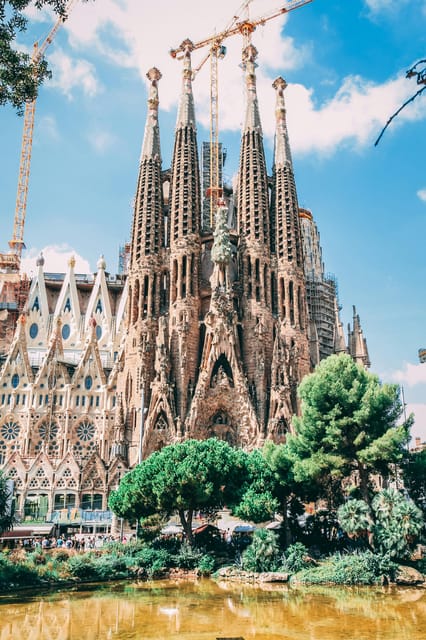
- Sagrada Família is an exterior visit: You receive a guided explanation and time for photos, but interior admission is not included.
- Gaudí’s Passeig de Gràcia is covered well: See Casa Milà, Casa Batlló, Casa Amatller, Casa Lleó Morera, Casa Pascual i Pons, and other notable façades.
- The Gothic Quarter goes beyond the cathedral: The route includes Bishop’s Bridge, the Jewish Quarter, Roman remains, Plaça de Sant Felip Neri, and Plaça del Rei.
- A metro ride saves time: One Zone 1 ticket takes you between the Sagrada Família area and central Barcelona.
- The guides are a major part of the experience: Local artist and actor guides use stories, architecture, humor, and questions to bring the streets to life.
- Plan for a proper walk: Comfortable shoes matter, and large bags or luggage are not allowed.
Why this route works as a Barcelona introduction
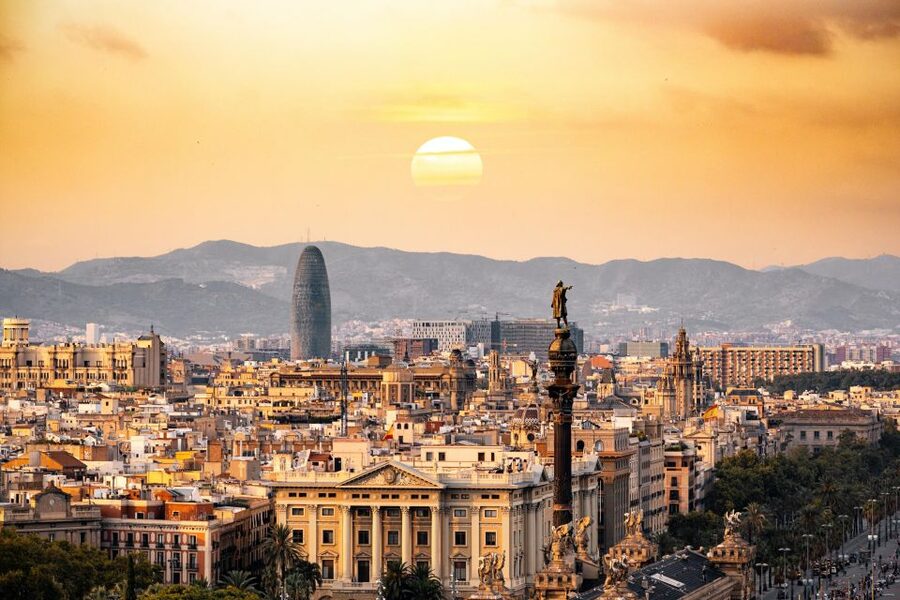
Barcelona is not one simple historic center. Its character comes from layers: Roman Barcino, medieval Barcelona, the 19th-century expansion beyond the old walls, and the Modernist architecture associated with Antoni Gaudí and his peers.
This tour gives you a quick look at all of them. You begin near Sagrada Família, then use the metro to reach Passeig de Gràcia, where Barcelona’s wealthy industrial families commissioned extravagant homes. From there, you continue through Plaça de Catalunya and Las Ramblas toward the Gothic Quarter.
I would treat the tour as a well-explained orientation walk, not as a collection of full museum visits. In three to three and a half hours, you see more than 15 places, but most stops last around 10 to 15 minutes. That is enough for context, photographs, and a clear sense of what you may want to revisit.
The small group format helps. With no more than 10 participants, you should have a better chance of hearing the guide, asking questions, and taking photos without being swallowed by a large crowd. The guides also appear to bring different strengths. Caio draws on his own interest in art, while David and Albert are especially strong at explaining history and answering questions in English. Carlos is known for humor and local suggestions.
More Sagrada Familia Tours in Barcelona:
- Sagrada Familia & Gaudi Tour Private or Small Group with Tickets
★ 4.5 · 1,188 reviews - Complete Gaudi Tour: Casa Batllo, Park Guell & Sagrada Familia
★ 5.0 · 1,152 reviews - Barcelona: Discover Gaudí, Sagrada Familia, and Park Güell
★ 4.8 · 651 reviews
Sagrada Família: a close look from the outside
The tour begins in front of KFC near Sagrada Família. Look for the blue umbrellas and arrive ready to start on foot.
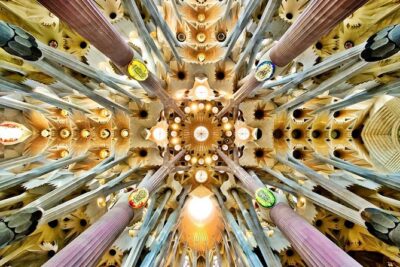
The basilica receives about 45 minutes, making it the longest single stop. That is sensible. Even from the street, Sagrada Família has a great deal to explain: its towers, sculpted façades, religious symbols, construction history, and Gaudí’s unusual approach to form and light.
A guide can point out details you might miss on a quick self-guided stop. The exterior explanation is particularly useful if you have limited time in Barcelona and need help deciding if an interior visit belongs on your schedule.
Still, keep your expectations clear. The guide does not take you through the basilica. The entrance ticket is not included, and this tour cannot replace a dedicated Sagrada Família visit. If seeing the interior is one of your main reasons for coming to Barcelona, book that separately and allow time for it.
The meeting point is in a busy part of the city, so the blue umbrellas matter. You should also avoid bringing large luggage, since it is not permitted on the tour.
Crossing town by metro
After Sagrada Família, the group takes the metro for roughly 15 minutes. One Zone 1 metro ticket is included, so you do not need to arrange this part of the transport yourself.
This short ride is practical rather than scenic. It prevents the tour from spending a large part of its limited time walking between Sagrada Família and Passeig de Gràcia. You get a look at two different parts of Barcelona without paying for a private vehicle or losing an hour on foot.
The route then shifts from Gaudí’s major basilica to the grand apartment buildings of the Eixample, Barcelona’s planned expansion district.
Passeig de Gràcia and the Modernist façades
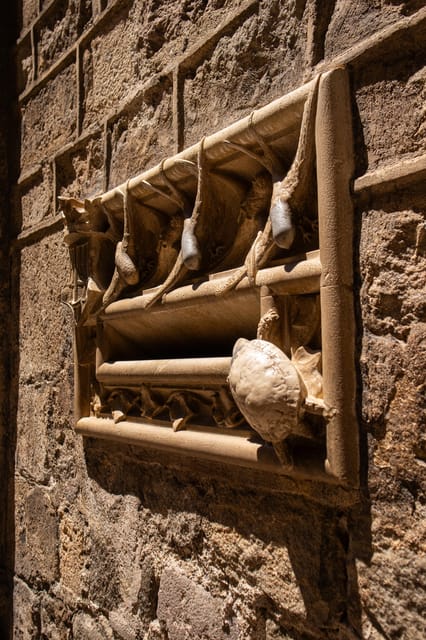
Passeig de Gràcia is one of the strongest parts of the tour for architecture fans. The avenue presents a concentrated collection of Barcelona Modernism, often called Catalan Modernisme.
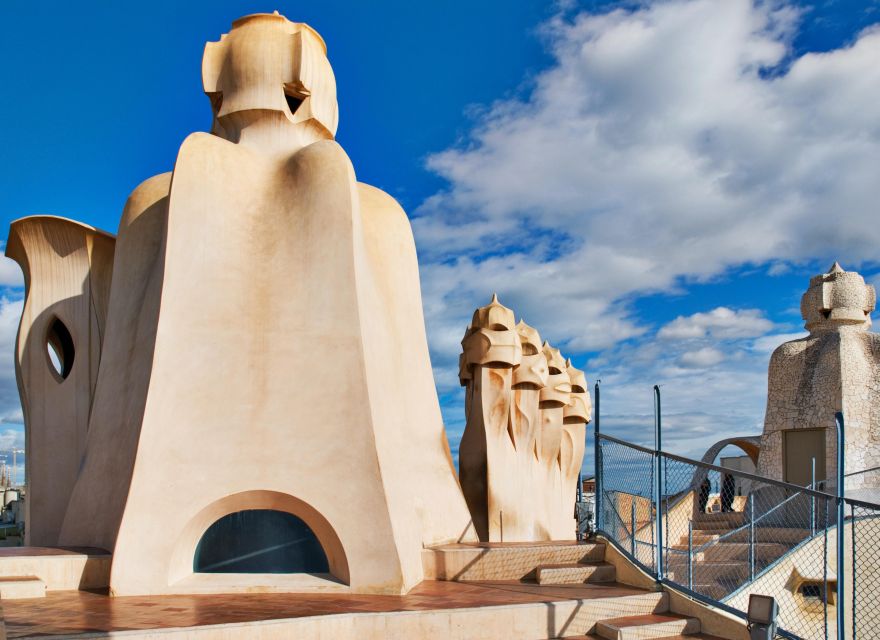
Casa Milà, also known as La Pedrera, receives about 15 minutes. Its rippling stone façade and unusual rooftop forms make it immediately recognizable. The guide can explain how the building differs from a conventional apartment block and why its exterior caused such a stir.
Again, this is an outside visit. You will not see the interior courtyards or rooftop sculptures as part of this tour. If Casa Milà interests you most, note the details that catch your eye and return later with an admission ticket.
Casa Batlló is another major stop. Its façade is full of curved lines, colored ceramic, and bone-like forms. The building is often associated with dragons, masks, and underwater imagery, and a good guide can help you read the decorative details instead of simply taking a quick photo and moving on.
Next comes Casa Amatller, designed by Josep Puig i Cadafalch. Its stepped roofline and decorative surface make it a useful comparison with Gaudí’s work. Seeing the neighboring buildings together helps you understand that Modernisme was a broader movement, not a style created by one architect alone.
Casa Lleó Morera adds another layer. It is associated with architect Lluís Domènech i Montaner and forms part of the famous block sometimes called the Block of Discord, where several striking façades compete for attention.
The route also passes Casa Pascual i Pons and the Antonio Rocamora House. These stops may be brief, but they widen the picture. You are not just visiting the three buildings that appear on every postcard. You are seeing how the whole avenue became a showcase for wealth, design, and civic ambition.
I like this section because you can compare buildings immediately, side by side. The drawback is that 15 minutes per main façade goes quickly. You get explanation and photographs, not a slow architectural study.
More Old Town Architecture Walks in Barcelona:
- Barcelona e-Bike Tour: Gaudí & Old Town Small Group
★ 5.0 · 769 reviews - Ramblas, Old Town, Gothic and Gaudi Architecture Walking Tour
★ 5.0 · 723 reviews - Barcelona 1.5h Private Old Town, Gothic & Ramblas Walking Tour
★ 5.0 · 318 reviews - Barcelona: Ramblas, Old Town & Gaudí Houses Walking Tour
★ 4.9 · 239 reviews
Plaça de Catalunya and Las Ramblas
The route continues to Plaça de Catalunya, one of Barcelona’s main central squares. You receive about 10 minutes here, enough to understand its role as a meeting point between the newer Eixample and the older center.
From here, the tour heads toward Las Ramblas, Barcelona’s famous central promenade. The walk helps connect the grand avenue you have just seen with the older streets ahead.
Las Ramblas itself is not listed as a long dedicated stop, so think of it as part of the transition. The value is in seeing how the city changes within a short distance. Wide boulevards give way to narrow lanes, old façades, small squares, and stone buildings.
Plaça de Sant Felip Neri and the quieter Gothic Quarter
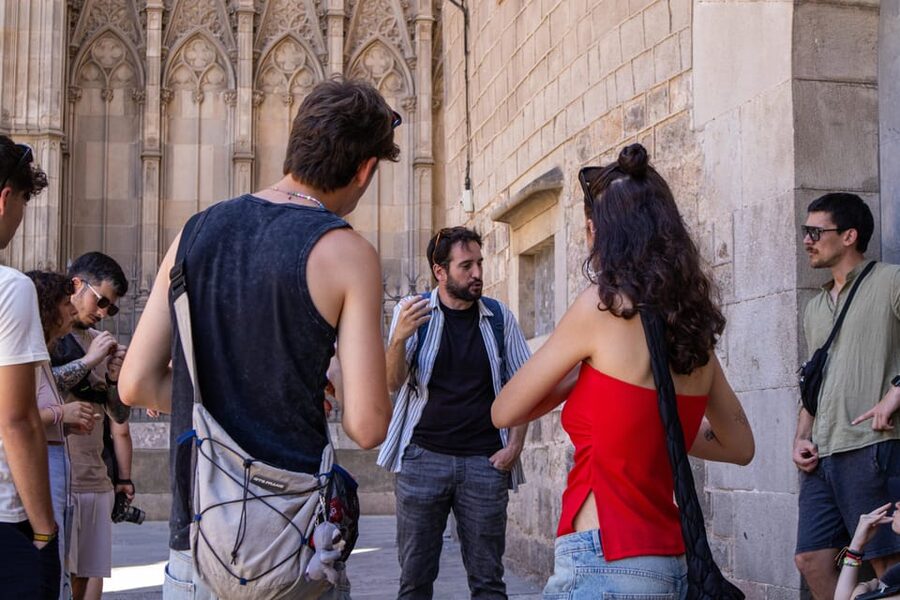
The Gothic section begins with places that reward a slower eye. Plaça de Sant Felip Neri is a small, atmospheric square with a complicated past and a distinctive setting. It feels far removed from the broad avenues and heavy traffic nearby.
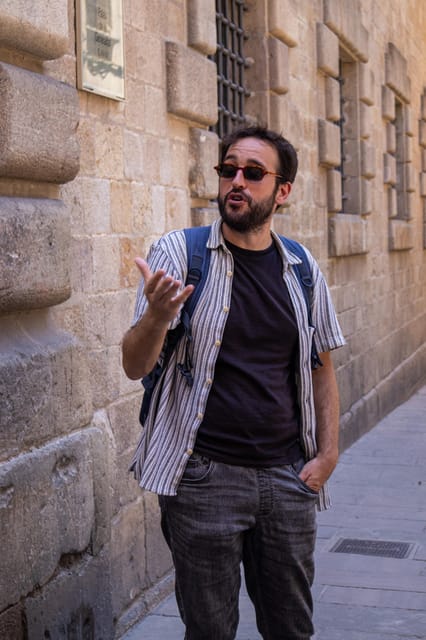
The guide uses the square to introduce the old city in a more personal way. This is where storytelling can make a real difference. Several guides, including David, Carlos, and Caio, are praised for combining historical facts with humor and conversation, rather than delivering a rigid speech.
Barcelona Cathedral comes next, with about 10 minutes for explanation and photographs. You can admire the exterior, learn about its place in the old city, and decide if you want to return for an interior visit. The cathedral is not entered during this experience.
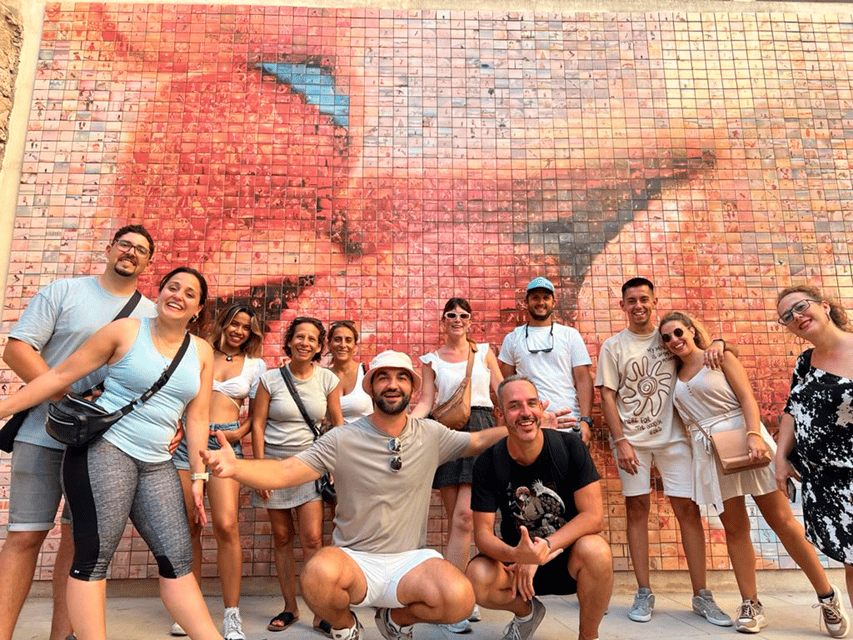
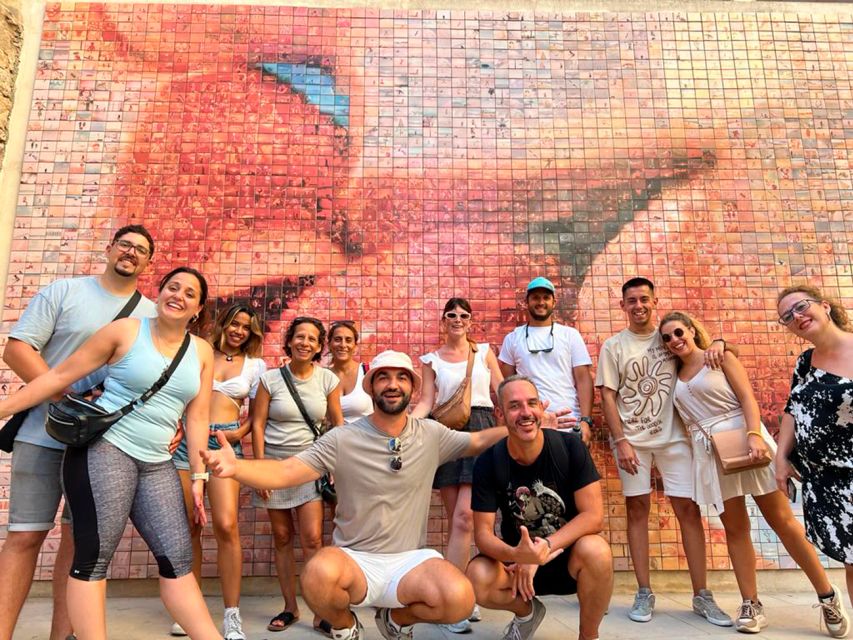
You will also see the Kiss Mural, known locally as El Mural del Petó. The image is made from many small photographs and offers a modern artistic counterpoint to the medieval streets around it. It is an easy detail to miss if you are walking alone, which is one reason a guide is useful here.
Roman Barcelona beneath the medieval streets
La Casa de l’Ardiaca and the General Archive of the Crown of Aragon add architectural and historical depth to the route. The former sits beside the cathedral area and reflects the layers of power, administration, and domestic life that shaped the old city.
The Roman Aqueduct is another reminder that Barcelona is older than its Gothic appearance suggests. You may see only surviving sections incorporated into later structures, but the guide explains how Roman infrastructure once supported the city.
The Temple of Augustus is especially valuable because it is easy to overlook. Tucked into the Gothic Quarter, its surviving columns are a striking piece of Roman Barcelona. The tour includes a photo stop and explanation, but not an interior visit.
This part of the walk is where the 2,000-year perspective becomes most useful. You are not simply moving from one pretty building to the next. You are seeing Roman remains, medieval institutions, Jewish Quarter streets, and later civic spaces occupying the same compact center.
Bishop’s Bridge, the Jewish Quarter, and Plaça de Sant Jaume
Bishop’s Bridge is one of the most photographed details in the Gothic Quarter. Its narrow stone span links buildings above the street and gives the area a storybook look. The guide can explain its setting and help you frame a photograph without blocking the passage.
The Jewish Quarter brings another important part of Barcelona’s past into view. The streets are narrow and atmospheric, but the value lies in understanding the people and communities who once lived and worked here.
Plaça de Sant Jaume is the political heart of the old city. The square connects major civic buildings and provides a useful explanation of Barcelona’s public life and regional identity. It is a good place to pause and connect the small lanes you have walked with the larger city around them.
The tour also refers to the Cathedral of the Sea, a landmark associated with the medieval Ribera district. Depending on the exact route and timing, your guide explains its place in Barcelona’s Gothic story rather than taking the group inside.
Ending at Plaça del Rei
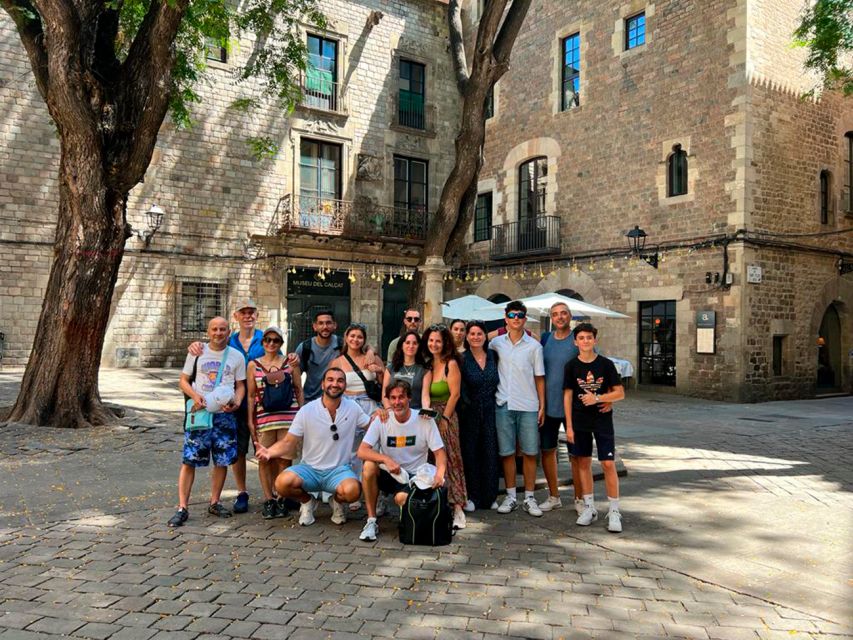
The experience ends at Plaça del Rei, a handsome medieval square surrounded by important historic buildings. It is a fitting finish because the tour has moved from Roman Barcelona through the Gothic center and finally to one of the city’s most evocative royal spaces.
You also receive a scenic comfort break during the tour, with restrooms available. That matters on a three-hour walking route, especially in warm weather or when you are traveling with children or older family members.
From Plaça del Rei, you are well placed to continue exploring the old city. The guide may also offer food or activity suggestions. David, for example, is particularly praised for sharing practical places to eat and ideas for what to do next.
Is $52 a fair price?
At $52 per person, this is not the cheapest way to walk through Barcelona. Free walking tours and pay-what-you-wish options are widely available, and one review specifically compared this paid experience with GuruWalk.
The value here comes from the structure. You get a small group, a professional guide, the metro connection, a planned route between three major areas, and explanations at more than 15 sights. If you are new to Barcelona, that can save you a great deal of planning time.
The price makes less sense if you mainly want to enter Sagrada Família, Casa Batlló, or Casa Milà. None of those admission fees are covered. You would still need to buy separate tickets, and the tour does not provide the long interior time that a dedicated visit requires.
I see the $52 as fair for a first-day overview, especially if your stay is short or you are stopping in Barcelona before a cruise. It is also useful for visitors who want a guide to help sort out the city’s architecture before spending money on individual monuments.
Who should take this tour?
You should consider it if you:
- Have only one day or one evening in Barcelona
- Want both Gaudí and the Gothic Quarter in the same outing
- Prefer stories and context to simply collecting photographs
- Like small groups and the chance to ask questions
- Want help choosing which buildings to visit inside later
- Enjoy architecture, art, Roman remains, and urban history
It is less suitable if you dislike walking, want a slow visit inside one landmark, or expect Sagrada Família admission to be included. Families and visitors with mobility needs should note that the tour is listed as wheelchair accessible, but the route still involves a substantial amount of city walking.
Wear comfortable shoes. Bring water if you need it, and leave large bags or luggage behind.
Practical details that matter
The tour lasts three to three and a half hours and is offered in English, Spanish, French, Italian, and German. Check the available start time when booking, since the experience may work better in the morning or afternoon depending on your broader plans.
Free cancellation is available up to 24 hours before the start, and you can reserve now while paying later. Those policies are useful if your Barcelona schedule is still changing.
The most important booking detail is the exterior-only format. The description should be read as a guided look at Sagrada Família and other landmarks from the outside, not as admission to them.
Should you book it?
I would book this tour if you want to get your bearings fast and prefer a guide who can connect Gaudí’s architecture with Roman and medieval Barcelona. The route is ambitious, the small group is a real advantage, and guides such as Albert, Caio, David, Carlos, and Nacho have shown a strong ability to answer questions, adjust to the group, and keep the history lively.
I would not book it as your only Sagrada Família experience if you want to see the interior. In that case, pair this tour with a separate timed entry.
For a first visit, a short stay, or a cruise stop, this is a practical use of three hours. You see the major façades, hear the stories behind them, and finish with a clearer plan for what deserves a closer look.
FAQ
Does the tour go inside Sagrada Família?
No. The tour includes an exterior visit with a guided explanation and photo time, but admission inside Sagrada Família is not included.
Are entry tickets to Casa Batlló or Casa Milà included?
No. The tour visits these buildings from the outside. Any interior admission must be arranged separately.
How long does the tour last?
The tour lasts approximately three to three and a half hours.
How large is the group?
The group is limited to 10 participants.
Is public transport included?
Yes. One Zone 1 metro ticket is included and used during the tour.
Where does the tour meet?
Meet in front of the KFC near Sagrada Família. Look for the blue umbrellas.
What languages are available?
The live guide may conduct the tour in German, Spanish, French, Italian, or English.
Newly added in Barcelona
- Barcelona: The Genuis of Gaudi & Modernist Architects Tour★ 5.0 · 20 reviews
- Barcelona Private Walking Tour through the City of Gaudi★ 4.5 · 20 reviews
- Offer: Be Gaudí mosaic class Barcelona for families (max 4 pax)★ 5.0 · 20 reviews
- Private Montserrat, Gaudi and Modernism Day Trip from Barcelona★ 4.5 · 20 reviews
- Barcelona: Wonders of Gaudi Bike Tour★ 5.0 · 22 reviews
- Barcelona: Gaudí Segway Tour★ 4.6 · 21 reviews
- Gaudi Guided Tour: Casa Batllo, La Pedrera & Casa Vicens★ 3.5 · 24 reviews
- Gaudi and La Sagrada Familia Exterior Self-Guided Audio Tour★ 3.5 · 25 reviews
Sagrada Familia Tours, compared.
Sagrada Familia & Gaudi Tour Private or Small Group with Tickets
Read our review →
Complete Gaudi Tour: Casa Batllo, Park Guell & Sagrada Familia
Read our review →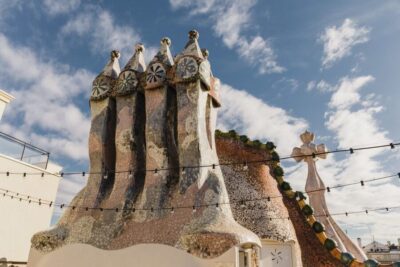
Discover Gaudí, Sagrada Familia, and Park Güell
Read our review →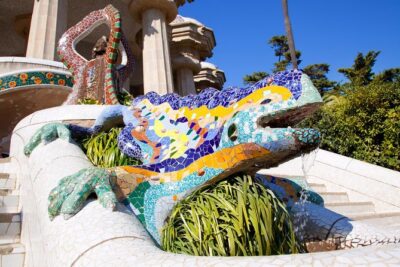
Fast Track Sagrada Familia & Park Guell the best of Gaudí
Read our review →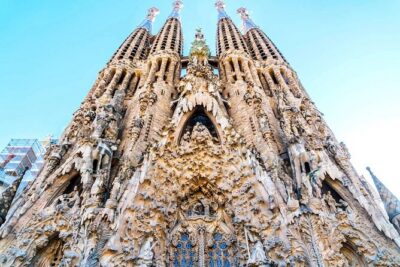
Sagrada Familia & Park Güell Optional: Small Group Tour
Read our review →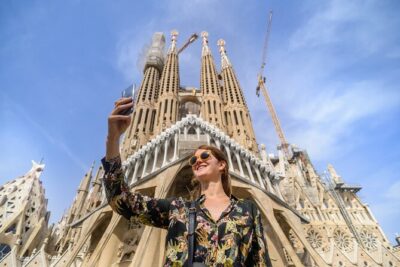
Sagrada Familia: Small Group Tour, hotel pick-up with Fast-Track
Read our review →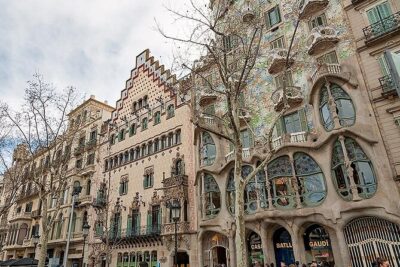
Browse the lists this tour appears in