
Review · BARCELONA ARCHITECTURE TOURS
Visit to the Modernist houses of the Americans
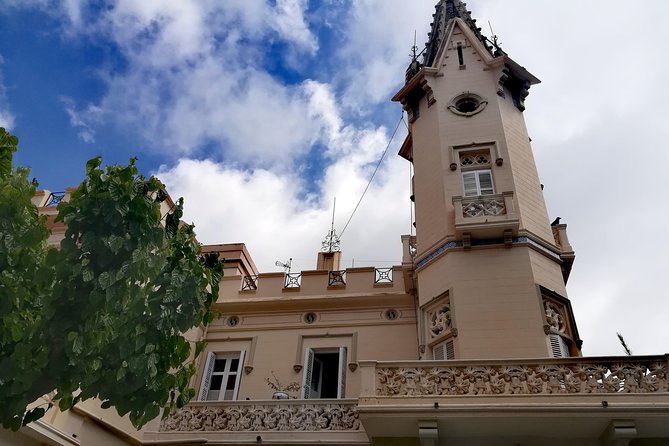
Sitges’ Americanos houses tell a sharper story than a simple architecture walk. These grand homes belonged to locals who went to the Americas, especially Cuba, made money, and returned home determined to show it. The route links their fortunes to Modernist design, local streets, and the town’s public life.
I like the focus on Isla de Cuba street, where several of Sitges’ most striking houses sit close together. I also like the chance to see a garden inside one of these former homes, though entry is not guaranteed. The main caution is the timing: the listing gives an approximate duration of 1 to 30 minutes, while the experience has also been described as lasting about 90 minutes or even three hours with food and drinks.
Key points to know
- Isla de Cuba street offers the clearest look at Sitges’ Americanos architecture in one part of town.
- House Bartomeu Carbonell is known for its colorful Modernist trencadis decoration.
- The Americanos story connects Sitges to Cuba and the late 19th-century return of successful emigrants.
- A former house garden may be open during the walk, but access is not promised.
- The tour is private, so only your own group takes part.
- An evening start at 6:00 pm suits a gentle walk before or around dinner, depending on the actual length of your departure.
Why Sitges’ Americanos houses are worth your time
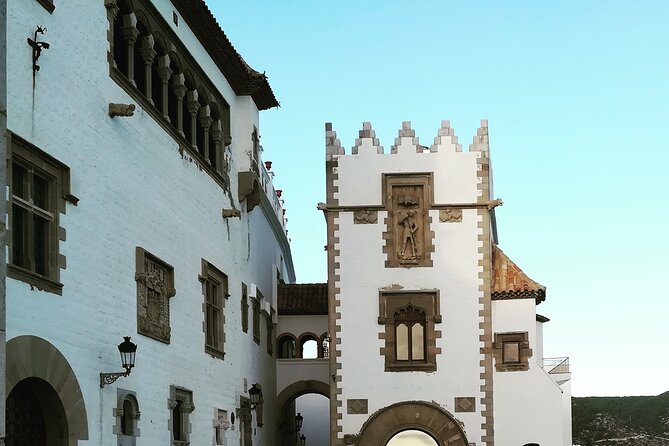
Sitges is often treated as a beach stop, but its streets carry another story. In the late 19th century, local people left for the Americas, particularly Cuba, hoping to make their fortunes. Those who returned built large homes that announced their new status.
These returnees are commonly associated with the town’s Americanos tradition. Their houses combine personal ambition with the architectural taste of the period. The result is a streetscape of decorative façades, formal entrances, and Modernist flourishes that feel quite different from Sitges’ seaside image.
I like this tour because it gives those buildings a human reason for being there. You are not simply told that a façade is beautiful. You hear why someone might have built it, what the connection to Cuba meant, and how the town changed when successful emigrants came home.
The route also gives you a different view of Sitges. The beach and nightlife are easy to find. The Americanos story requires a little more attention, and a guide can point out details you might otherwise pass without noticing.
A few more architecture walks in Barcelona worth a look
- Barcelona: Sant Pau Recinte Modernista Entry Ticket
★ 4.6 · 2,567 reviews - Barcelona: Sagrada Familia, Modernism, and Old Town Tour
★ 4.7 · 1,621 reviews - Ramblas, Old Town, Gothic and Gaudi Architecture Walking Tour
★ 5.0 · 723 reviews
Isla de Cuba street and the grand return home
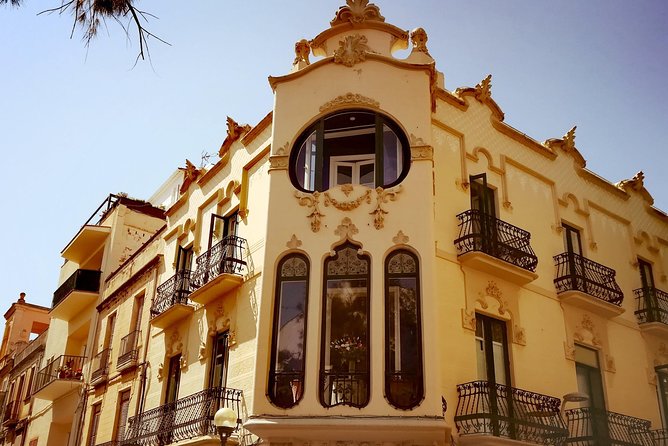
The first major stop is Isla de Cuba street. Its name refers to the many houses connected with Sitges’ Americanos, who came back from Cuba at the end of the 19th century.
This is the strongest part of the walk for anyone interested in architecture. Several of the town’s most emblematic Modernist houses can be seen here, making the street a useful place to compare façades and design choices. You can look at the houses as a group rather than treating each one as an isolated building.
The street name itself adds meaning. It keeps the town’s overseas connection visible in everyday life. That makes the stop more than a photo opportunity. You begin to see Sitges as a place shaped by departure, success abroad, and return.
The houses also show how private wealth affected a small town. Their owners were not building anonymous blocks. They were placing their names, taste, and new social position directly on the street. A guide can help you connect decorative choices with the ambitions of the people who commissioned them.
I would pay close attention to the upper façades and ornamental details here. The supplied information does not identify every house by name, so the exact buildings discussed may depend on the guide and the day. Still, Isla de Cuba street is clearly the central architectural section of the walk.
House Bartomeu Carbonell and Sitges’ meeting point
The route continues to house Bartomeu Carbonell, described as one of the most beautiful houses in Sitges. Its most recognizable feature is Modernist trencadis, a decorative surface made from small, irregular pieces of ceramic.
Trencadis gives a building a lively, patterned finish. It is less formal than a plain tiled wall and often catches the eye through color and texture. At Bartomeu Carbonell, the decoration helps explain why Sitges’ Americanos houses are memorable even for people who do not usually follow architectural history.
The house also sits at an important public point in town. This is where many Sitges festivities take place, and where the town’s commercial streets meet. That makes the stop useful in two ways: you see an important building, then understand how it fits into daily town life.
I like this connection between architecture and public space. A grand house is easier to understand when you see its position in the town rather than viewing it as a detached monument. Bartomeu Carbonell is part of the setting where people gather, shop, and celebrate.
Because the route ends at the Monument al Greco on Passeig de la Ribera, this section also helps shift the walk toward the seafront. The stated endpoint is in front of the monument, so you finish near a recognizable place rather than being left at an uncertain street corner.
The garden visit is a welcome bonus, not a promise
One of the more unusual features is the possibility of entering a garden belonging to one of these houses. The property is now converted into a hotel, and the garden may sometimes be accessible during the tour.
This can add a valuable inside look. Street façades show how the Americanos presented themselves to the public, while a garden gives you a sense of the private side of the property. It can help you picture how these homes functioned beyond their exterior walls.
You should treat entry as a bonus, not a guaranteed part of the booking. The information specifically says that access is not always possible. Hotel operations, private use, or other practical limits may affect whether the group can go in.
That uncertainty is worth keeping in mind if interior access is your main reason for booking. The walk still has solid content without it, thanks to Isla de Cuba street and Bartomeu Carbonell. But if the garden is open, it adds a more unusual layer to the experience.
Same city, a different facade:
- Barcelona: Park Güell and Gaudí House Museum Entry Ticket
★ 4.5 · 6,326 reviews - Barcelona: Gaudí’s Park Güell Tour with Fast-Track Ticket
★ 4.8 · 4,512 reviews - Sagrada Familia & Gaudi Tour Private or Small Group with Tickets
★ 4.5 · 1,188 reviews - Complete Gaudi Tour: Casa Batllo, Park Guell & Sagrada Familia
★ 5.0 · 1,152 reviews
A private walk with a flexible feel
This is a private activity. Only your group participates, which matters if you want to ask questions or move at a comfortable pace. You are not trying to hear a guide over a large crowd, and the experience can feel more personal than a standard group walk.
The stated start time is 6:00 pm. You meet at Sitges railway station, Estació Renfe, at 08870 Sitges, Barcelona. The walk ends at the Monument al Greco on Passeig de la Ribera, in front of the monument.
That start and finish are practical. Sitges is served by public transportation, and the meeting information notes that the tour is near public transport. Starting at the station makes the first meeting point easy to identify, while ending by the seafront gives you a clear place to continue your evening.
The duration needs a closer look. The headline information gives an approximate duration of 1 to 30 minutes, which is unusually vague and does not fit the fuller descriptions available for the experience. One account describes a comfortable three-hour walk with three stops for tapas, cava, and beer. Another describes a 90-minute wander focused on the historic Americanos properties.
For planning, I would not schedule a tight dinner reservation immediately afterward. Ask Agisitges to confirm the expected length for your date, especially if you are booking around train times, a restaurant, or another evening activity.
Food and drinks may change the shape of the evening
The core description centers on culture, architecture, stories, and history. A separate account of the experience included three food and drink stops, with tapas, cava, and beer. It also described the amount as generous enough to be more than the group could eat.
That sounds like a substantial addition, but you should confirm it before booking if food is important to you. The supplied tour details do not clearly state that tapas, cava, and beer are included on every departure. The walk may be offered in different formats, or the food-focused version may affect the total duration.
If those stops are part of your booking, the price becomes easier to assess. You are not paying only for a short architecture explanation. You are also receiving a longer evening outing with local food and drinks.
If the experience is only the 90-minute architecture walk, the value depends more on your interest in Sitges’ Americanos story and the privacy of the format. At $34.70 per person, a private tour can be reasonable for a small group that wants direct attention and a focused route. For one or two people, the same price may feel higher than a self-guided stroll unless the guide provides strong historical context.
What the guide adds to the buildings
The architecture is visible without a booking. The value of the tour comes from the connections between the buildings, the people who built them, and the town’s wider story.
You can see a decorative façade on your own. A guide can explain why the houses are tied to Cuba, why the street is called Isla de Cuba, and how the return of successful emigrants shaped Sitges. That human angle is the main reason to choose a guided walk instead of simply photographing the buildings.
Rosa is the named contact associated with Agisitges, the provider. The information does not say that Rosa personally leads every departure, so I would not assume she will be your guide. Her replies show that the company is attentive to participant feedback and handles communication directly.
A private format is especially useful if you have questions about Modernist details or the people behind the houses. You can ask about the trencadis, the Americanos tradition, or the role of the buildings in local festivities without waiting for a large group to move on.
Who will get the most from this experience
I would choose this tour if you want to see a less obvious side of Sitges. It suits you if you enjoy architecture, local history, or stories of migration and money. The route is also a good fit if you have already seen the seafront and want an activity that uses the town’s streets in a more thoughtful way.
It may work well for a small private group with mixed interests. The food and drink version, if confirmed, gives the outing a social side, while the houses and anecdotes provide enough substance for people who enjoy history.
You should think twice if you want guaranteed access inside a historic home. The garden visit is not always possible, and the main architectural sights are viewed from the streets. You should also check the duration if your schedule is tight, since the available timing details range from a short walk to several hours.
Most people can participate, and service animals are allowed. The experience requires good weather. If poor weather causes cancellation, you are offered another date or a full refund.
Is $34.70 a fair price?
The answer depends on what your departure includes. For a private architecture walk lasting around 90 minutes, $34.70 per person is most attractive for a small group that values a personal guide and does not want a large scheduled tour.
For a three-hour version with three stops for tapas, cava, and beer, the price looks more competitive. Food and drinks add practical value, and the longer format gives the evening more shape. Again, confirm those inclusions rather than assuming they apply to every booking.
The possible garden entry also adds interest, but it should not be counted as guaranteed value. I would book for the Americanos houses, the Cuba connection, and the guide’s storytelling. Consider the garden a pleasant extra.
Free cancellation is available if you cancel at least 24 hours before the start time. Changes or cancellations made within 24 hours are not accepted for a refund. The weather rule is useful, since poor conditions can lead to a new date or a full refund.
Should you book the Sitges Americanos walk?
Book it if you want an intimate, story-led look at Sitges beyond the beach. The best reasons are the concentration of Modernist houses on Isla de Cuba street, the striking trencadis at house Bartomeu Carbonell, and the chance to connect local architecture with the town’s Cuban past.
Before paying, confirm two points with Agisitges: the expected duration and whether food, drinks, or garden access are included on your date. If you want a relaxed evening and enjoy architecture with a human story, this private walk offers good value. If you need a strictly timed activity or guaranteed interior access, the uncertain schedule may frustrate you.
FAQ
Where does the tour start?
The tour starts at Estació Renfe in Sitges, Barcelona, at 6:00 pm.
Where does the tour finish?
It ends at the Monument al Greco on Passeig de la Ribera, in front of the monument.
How much does the experience cost?
The listed price is $34.70 per person.
How long does the tour last?
The supplied information gives an approximate duration of 1 to 30 minutes, but descriptions of the experience also give examples of about 90 minutes and three hours. Confirm the expected duration with Agisitges.
Is this a private tour?
Yes. Only your group participates.
What is the tour about?
It focuses on Sitges’ Modernist houses, the local people who went to the Americas and returned with money, related anecdotes, and the town’s history.
What is special about Isla de Cuba street?
It contains many of Sitges’ most emblematic Americanos houses. The street’s name refers to the people who returned from Cuba in the late 19th century.
Can you enter one of the houses?
You may enter a garden belonging to one of the houses, now converted into a hotel, but access is not always possible.
Does the tour include food and drinks?
A description of one version includes three stops for tapas, cava, and beer. Confirm whether these are included in your specific departure.
What happens if the weather is poor?
The experience requires good weather. If it is canceled because of poor weather, you are offered a different date or a full refund.
Newly added in Barcelona
- Roman & Gotic & Gaudi in Barcelona: private walking tour★ 4.5 · 2 reviews
- Barcelona Gaudi Tour: Sagrada Familia, Casa Batllo & Casa Mila★ 5.0 · 4 reviews
- Barcelona Street Escape: Gaudi and the Hidden Treasure★ 5.0 · 17 reviews
- Gaudí & Catalan Modernism Private Walking Tour★ 5.0 · 11 reviews
- Self-Guided Audio Tour-The Surrealist Barcelona of Dalí and Gaudí★ 3.5 · 8 reviews
- Gaudí and Barcelona Legends – Private Tour★ 5.0 · 4 reviews
- Sagrada Familia Private Tour – Unlock the mysteries of Gaudi★ 5.0 · 10 reviews
- Gaudi’s Casa Batlló and La Pedrera with Chocolate Tasting★ 5.0 · 5 reviews
Barcelona Architecture Tours, compared.

Park Güell and Gaudí House Museum Entry Ticket
Read our review →
Gaudí’s Park Güell Tour with Fast-Track Ticket
Read our review →
Sagrada Familia, Modernism, and Old Town Tour
Read our review →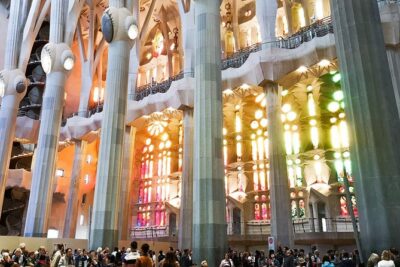
Sagrada Familia & Gaudi Tour Private or Small Group with Tickets
Read our review →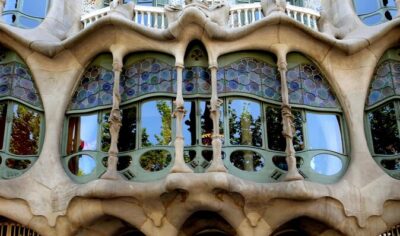
Complete Gaudi Tour: Casa Batllo, Park Guell & Sagrada Familia
Read our review →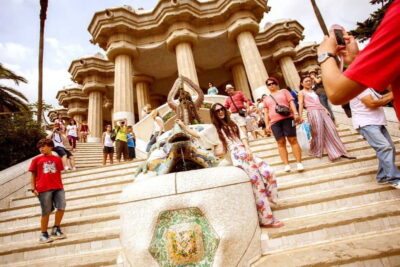
Park Güell: Guided Tour with Optional Gaudí Experience Entry
Read our review →
Barcelona e-Bike Tour: Gaudí & Old Town Small Group
Read our review →Browse the lists this tour appears in