
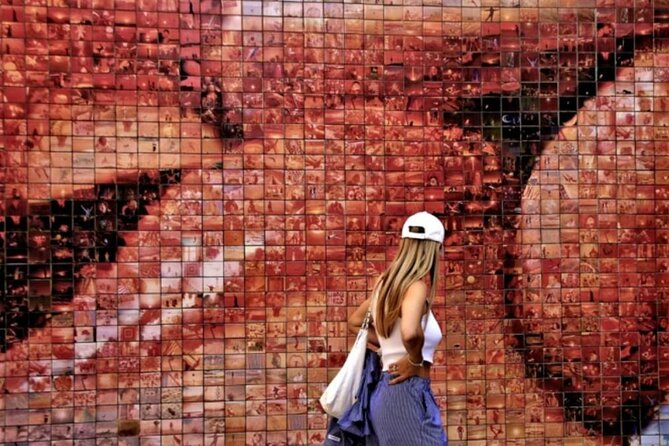
Review · GAUDí TOURS
Roman & Gotic & Gaudi in Barcelona: private walking tour
Barcelona’s old town is at its best on foot, where narrow lanes suddenly open onto a grand cathedral, a medieval palace, or a quiet square marked by centuries of change. This private walk links the Gothic Quarter’s main landmarks with Roman remains, the old Jewish Quarter, Boqueria Market, La Rambla, and the Gaudí-designed Palau Güell.
I like the private format, since your guide can adjust the pace and spend more time on the places that interest you. I also like the route’s mix of famous sights and small corners such as Plaça Sant Felip Neri and Carrer de la Llibreteria. The main drawback is time: two hours is enough for a strong introduction, but not enough for extended interior visits or a slow market stop.
Key points
- A private two-hour walk lets your group set the pace through Barcelona’s oldest district.
- Barcelona Cathedral and the Royal Palace provide the clearest look at medieval Barcelona.
- Boqueria Market is included as a short stop, with time for tapas, snacks, or drinks at your own expense.
- Roman, Jewish, medieval, and modern Barcelona all appear along one compact route.
- The tour ends at Palau Güell, one of Antoni Gaudí’s early projects for the Güell family.
- Morning and afternoon departures make this easy to place before or after another Barcelona activity.
A strong first walk through Barcelona’s old town
I see this tour as an orientation walk with plenty of substance. It starts at the Col·legi d’Arquitectes de Catalunya beside Plaça Nova and finishes at Palau Güell on Carrer Nou de la Rambla, taking you through the historic center rather than keeping you on one straight tourist street.
The route covers a lot in roughly two hours. You will pass government buildings, Gothic churches, medieval archives, Roman wall remains, market stalls, theaters, and grand public squares. That range helps you understand Barcelona as a layered city, not just a collection of Gaudí façades.
A private guide is useful here because the Gothic Quarter can feel confusing at first. Several lanes are narrow, and major sights can appear with little warning. A guide can explain what you are seeing while keeping the walk moving, which matters when your time in Barcelona is limited.
The tour is priced at $210.68 per person, so value depends heavily on group size. For one or two people, it is a costly two-hour introduction. For a family or small group, the private arrangement and possible group discounts may make the price easier to justify. You are paying for a personal route and a local guide, not for a long list of admission tickets.
More Walking Tours in Barcelona
- Ramblas, Old Town, Gothic and Gaudi Architecture Walking Tour
★ 5.0 · 723 reviews - Barcelona 1.5h Private Old Town, Gothic & Ramblas Walking Tour
★ 5.0 · 318 reviews - Barcelona: Ramblas, Old Town & Gaudí Houses Walking Tour
★ 4.9 · 239 reviews
Starting beside Plaça Nova and the Roman walls
The meeting point is COAC, the Col·legi d’Arquitectes de Catalunya, at Plaça Nova, 5. This puts you close to the cathedral and the old Roman boundary of the city.
The first look at the area gives you a useful sense of Barcelona’s past. At Plaça de Ramon Berenguer el Gran, you can see traces of the first wall built to protect the city in Roman times. It is a good reminder that the Gothic Quarter is not only medieval. Its street plan and surviving fragments reach back much further.
Because the walk is in a central old-town area, it is close to public transportation. Transport to the meeting point is not included, but a different meeting point may be arranged on request. That flexibility could help if your hotel or earlier activity is nearby, but you should settle the details before the tour begins.
Barcelona Cathedral, the route’s grand opening
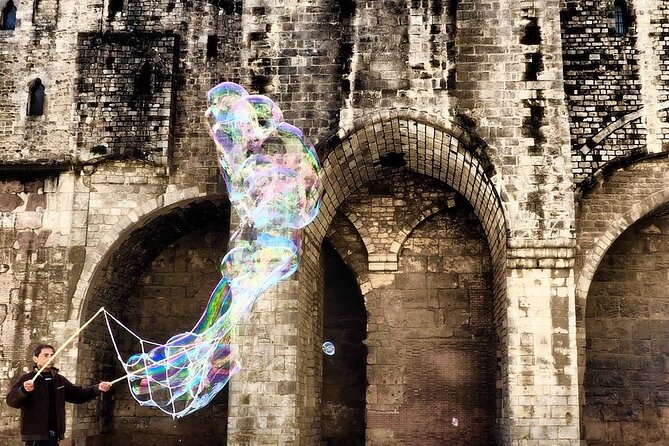
Barcelona Cathedral receives a short visit of about 15 minutes, with admission not included. The church was built during the 14th century by local masons and took almost two centuries to complete, with several architects involved.
Even a brief stop gives you time to look at the building’s Gothic form and hear how the long construction period shaped it. The cathedral is one of the places where the old quarter’s tight lanes suddenly give way to a much larger civic and religious space.
If entering the cathedral matters to you, ask about current admission arrangements and allow extra time beyond the scheduled stop. The tour provides the setting and explanation, but the ticket is not part of the price. One useful point is that the cathedral has been described as free to visit, yet entry arrangements can vary by time or area, so check locally rather than assuming every part is open without conditions.
Casa de l’Ardiaca, an interesting medieval building now adapted as archives, is also passed along the way. It adds another example of how old structures in this district continue to serve modern purposes.
Palau Reial Major and Plaça del Rei
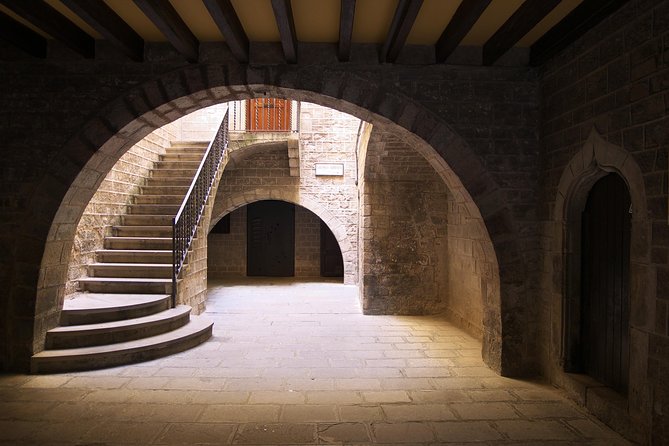
The walk continues to Palau Reial Major, the former royal palace of the kings of the Crown of Aragon. The palace was used until the 16th century, and the stop lasts about 15 minutes.
This is one of the best points on the route for connecting Barcelona to the wider political story of medieval Aragon. You are not simply looking at an old façade. You are standing in a former royal setting, in the same compact quarter where religious, political, and commercial power once operated close together.
The palace stop is free, which helps balance the tour’s price. Nearby Plaça del Rei and the Museu d’Història de Barcelona, or MUHBA, add to the medieval setting. The museum is passed rather than entered, so you should not expect a museum visit during this walk.
The route also passes the Palau de Lloctinent. This building once served as a residence and meeting place for the lieutenant of the Crown of Aragon’s army and the governor of Barcelona. Today it holds the Crown of Aragon’s medieval archives. It is a fine example of the tour’s approach: the guide points out buildings whose purpose changed over time, even when there is no interior visit.
More Walking Tours in Spain
- Barcelona Architecture Walking Tour With Casa Batlló Upgrade
★ 5.0 · 137 reviews - Treasures of Barcelona: Private Gaudi Walking Tour
★ 5.0 · 128 reviews - Night Tapas Walking Tour in Barcelona Modernist Area with Small Group and Dinner
★ 4.5 · 56 reviews - Private Barcelona Modernism and Gaudí Walking Tour
★ 4.7 · 54 reviews
Small Gothic Quarter corners worth slowing down for
Some of the most appealing parts of this walk are not the official landmarks. Plaça Sant Felip Neri is a quiet square tucked into the old quarter, and it feels very different from the open spaces nearby. You pass through rather than stop for a formal visit, but a private guide can still explain why the square matters.
Pont del Bisbe is another favorite photo spot. This striking bridge connects historic buildings and is one of the Gothic Quarter’s most recognizable views. Its details are easy to miss if you are walking alone and looking only for the cathedral.
Carrer de la Llibreteria, known for its old bookshops, gives the route a more local street feel. It is the kind of place that makes a walking tour worthwhile because you would be less likely to notice its character from a sightseeing bus.
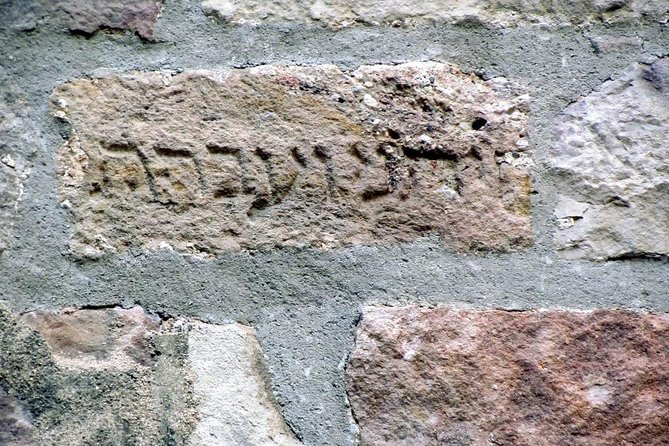
The remains of Barcelona’s medieval synagogue are also passed at MUHBA El Call. This stop points toward the former Jewish Quarter and adds another part of the city’s story to a route otherwise dominated by royal and Christian landmarks.
Plaça de Sant Jaume and Barcelona’s civic center
Plaça de Sant Jaume is the political heart of Barcelona’s old town. The City Council and the Catalan regional government face each other across the square.
The tour passes here rather than scheduling a full interior visit. Still, it is an important stop because it shows how the old quarter remains a working civic center, not simply a preserved historic zone. Your guide can place the buildings in the context of Barcelona’s local and regional institutions.
The City Hall itself receives about 10 minutes. Its original medieval building was created for the councillors of the Consell de Cent, then arranged for use by the modern democratic city government in the 19th century.
That short stop should be enough to appreciate the building’s role and location, but not enough for a detailed examination inside. If public buildings are a major interest, consider returning later with more time.
Boqueria Market, the best practical pause
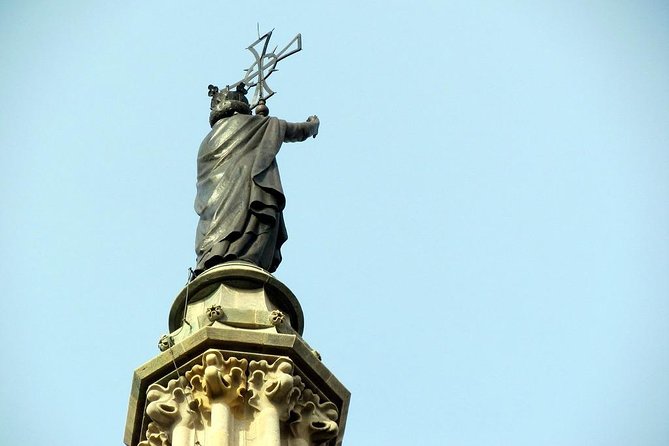
Mercat de la Boqueria is scheduled for about 20 minutes, and admission is included. This is the one place on the route where you have a clear chance to pause for food or a drink.
The market remains a popular working food hall, so it can be busy and easy to rush through. Twenty minutes is enough to get a taste of the place, look at the displays, and buy a small snack or drink. It is not enough for a long meal or a careful survey of every stall.
Food is not included, so bring some spending money if you want tapas, snacks, or drinks. I would treat this as a sampling stop rather than your main lunch. The market works best when you keep your order simple and stay aware of the tour’s schedule.
For many people, Boqueria will be the most immediately enjoyable part of the walk because it adds everyday food culture to the stones and institutions of the Gothic Quarter. It also gives your feet a short break without taking you away from the route.
La Rambla, from market street to grand promenade
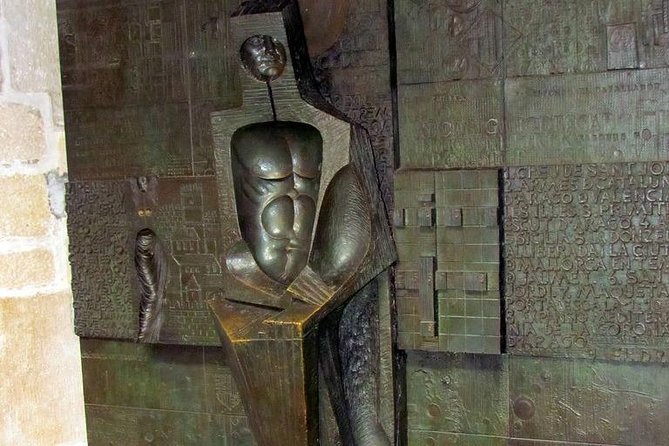
The walk reaches La Rambla more than once, with a total of roughly 30 minutes divided between two stops. You pass the famous promenade, which is lined with entertainment, bars, restaurants, historic buildings, and the constant movement of central Barcelona.
The advantage of including La Rambla is simple: you see how the quiet lanes of the old quarter connect with one of the city’s best-known public streets. The drawback is that La Rambla can feel more commercial and crowded than the side streets. I would use the guide’s commentary to understand the street, then keep your expectations realistic. This is a busy urban promenade, not a peaceful walk.
The route passes the Gran Teatre del Liceu, Barcelona’s opera house. Even from outside, it gives the street a stronger cultural character. Casa Bruno Quadros, noted for its playful façade, adds a lighter architectural detail among the grander buildings.
Santa Maria del Pi and Palau Güell
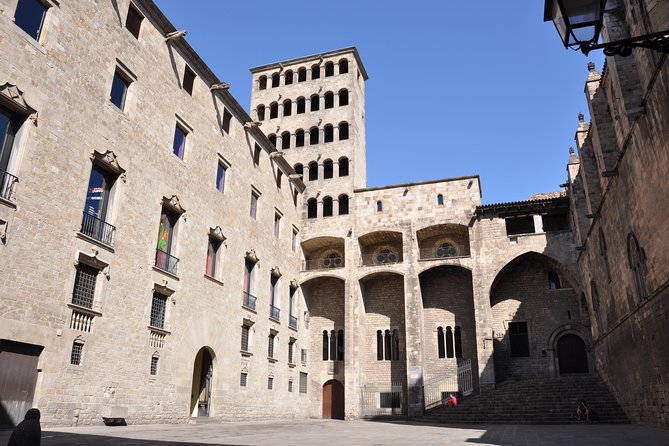
The Basilica de Santa Maria del Pi is another impressive Gothic church seen from the route. Like the cathedral, it shows how much religious architecture is packed into the old center. Since it is passed rather than scheduled as an interior visit, you will need a separate stop if you want to explore it inside.
The tour ends at Palau Güell, at Carrer Nou de la Rambla, 3 to 5. This was one of Gaudí’s early projects, commissioned by Eusebi Güell as a private residence for the Güell family.
Ending here gives the walk a clear architectural payoff. You begin with Roman and medieval Barcelona, pass through the city’s civic and commercial center, and finish with an early work by the architect most associated with Barcelona’s modern identity.
Palau Güell is viewed as the endpoint, not a full guided interior visit. If you want to tour the building, plan that separately and check its opening arrangements. The end location also puts you in a useful position for continuing along La Rambla or exploring more of the old town.
How the private format changes the experience
A private tour is most useful in a place where the route can easily become a blur of stone lanes and famous names. You can ask about the cathedral, Roman walls, the Crown of Aragon, local government, Jewish heritage, food markets, or Gaudí without waiting for a large group to move on.
The private setup also helps if your group has mixed interests. One person might care about architecture, another about political history, and another about food. In a two-hour walk, the guide can adjust the emphasis, though the number of stops means you should not expect a long lecture at every site.
The physical demand is moderate. You will be walking through the historic district for about two hours, often on narrow old-town streets. Wear comfortable shoes and avoid planning a major timed activity immediately afterward if you prefer a relaxed pace.
Morning and afternoon departures make the tour easy to fit into a Barcelona schedule. A morning start could work well before an afternoon museum visit. An afternoon walk could help you get your bearings after arriving in the city, though Boqueria and other businesses may have different hours depending on the day.
Who should book this walk?
I would recommend it most to first-time visitors who want a guided introduction to central Barcelona without joining a large group. It also suits families or friends who want to move at their own pace and may benefit from group pricing.
It is a good fit if you like architecture, urban history, and small street details more than long museum visits. The route gives you plenty of context, but most places are viewed from outside or passed briefly.
I would think twice if your priority is entering the cathedral, Palau Güell, the city museums, and the opera house. Those sites are important parts of the route, but this is a walking overview, not an interior sightseeing package.
At $210.68 per person, the tour needs to deliver personal attention to feel worthwhile. It is easier to defend for a larger private group than for a solo visitor. Free cancellation up to 24 hours before the start gives you some useful flexibility, but changes or cancellations inside that window are not refunded.
Should you book Roman, Gothic, and Gaudí in Barcelona?
Book this tour if you want a short, private introduction to Barcelona’s oldest center, with a guide connecting Roman walls, medieval power, food culture, La Rambla, and early Gaudí. The cathedral, quiet squares, and Boqueria Market give the route a pleasing mix of grand sights and ordinary city life.
Skip it if you want lengthy visits inside major buildings or a lower-cost group walk. The two-hour limit means you will see many places but linger at only a few. For the right group, though, this is an efficient way to get oriented, ask questions freely, and finish near Palau Güell with a clearer sense of how Barcelona’s past fits together.
FAQ
How long does the private walking tour last?
The tour lasts approximately two hours.
Where does the tour begin?
It begins at COAC, the Col·legi d’Arquitectes de Catalunya, at Plaça Nova, 5, Ciutat Vella, Barcelona.
Where does the tour end?
The tour ends at Palau Güell, at Carrer Nou de la Rambla, 3 to 5.
Is the tour private?
Yes. Only your group participates in the activity.
Are morning and afternoon departures available?
Yes. The tour is offered in both the morning and afternoon.
Is admission to Barcelona Cathedral included?
No. Admission to Barcelona Cathedral is not included.
Is food included at Boqueria Market?
No. Snacks, tapas, and drinks are not included, although the itinerary allows about 20 minutes at the market.
Is transportation to the meeting point included?
No. Transport to the meeting point is not included, although a different meeting point may be arranged on request.
What is the cancellation policy?
You can cancel at least 24 hours before the start time for a full refund. Cancellations or changes made less than 24 hours before the start time are not accepted for a refund.
More Gaudi Tours in Barcelona
- Barcelona: Park Güell and Gaudí House Museum Entry Ticket
★ 4.5 · 6,326 reviews - Barcelona: Gaudí’s Park Güell Tour with Fast-Track Ticket
★ 4.8 · 4,512 reviews - Sagrada Familia & Gaudi Tour Private or Small Group with Tickets
★ 4.5 · 1,188 reviews - Complete Gaudi Tour: Casa Batllo, Park Guell & Sagrada Familia
★ 5.0 · 1,152 reviews
Newly added in Barcelona
- Visit to the Modernist houses of the Americans★ 5.0 · 2 reviews
- Barcelona Gaudi Tour: Sagrada Familia, Casa Batllo & Casa Mila★ 5.0 · 4 reviews
- Barcelona Street Escape: Gaudi and the Hidden Treasure★ 5.0 · 17 reviews
- Gaudí & Catalan Modernism Private Walking Tour★ 5.0 · 11 reviews
- Self-Guided Audio Tour-The Surrealist Barcelona of Dalí and Gaudí★ 3.5 · 8 reviews
- Sagrada Familia Private Tour – Unlock the mysteries of Gaudi★ 5.0 · 10 reviews
- Gaudi’s Casa Batlló and La Pedrera with Chocolate Tasting★ 5.0 · 5 reviews
- Gaudí and Barcelona Legends – Private Tour★ 5.0 · 4 reviews
Gaudí Tours, compared.
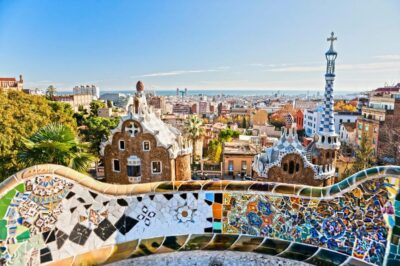
Park Güell and Gaudí House Museum Entry Ticket
Read our review →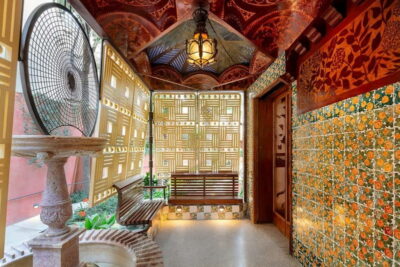
Gaudi’s Casa Vicens Skip-the-Line Entrance Ticket
Read our review →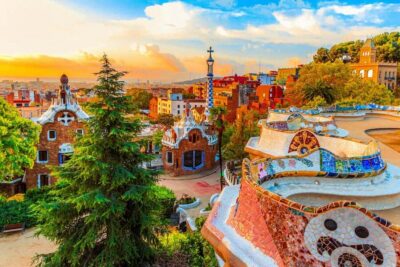
Gaudí’s Park Güell Tour with Fast-Track Ticket
Read our review →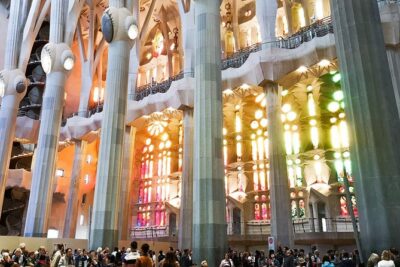
Sagrada Familia & Gaudi Tour Private or Small Group with Tickets
Read our review →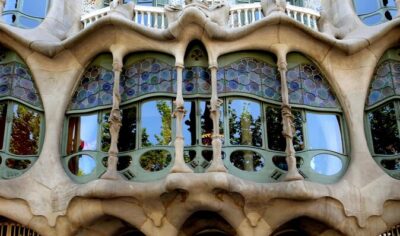
Complete Gaudi Tour: Casa Batllo, Park Guell & Sagrada Familia
Read our review →
Park Güell: Guided Tour with Optional Gaudí Experience Entry
Read our review →
Barcelona e-Bike Tour: Gaudí & Old Town Small Group
Read our review →
Ramblas, Old Town, Gothic and Gaudi Architecture Walking Tour
Read our review →Browse the lists this tour appears in