
Review · GAUDí TOURS
Private Barcelona Modernism and Gaudí Walking Tour
Barcelona’s Modernist architecture is best understood from the street, where Gaudí’s fanciful shapes meet the work of Domènech i Montaner, Puig i Cadafalch, and other Catalan architects. This tour links the major façades with the urban story of Eixample, showing how Barcelona grew beyond its medieval walls.
I like the combination of famous sights and lesser-known buildings, and I like that an expert guide can explain why Casa Batlló looks like a rolling sea while Casa Calvet feels far more restrained. The main consideration is the walking: the buildings are spread across the city, and the exact meeting point and route can vary by booking option.
Key points at a glance
- See Barcelona’s Modernist greats together: Sagrada Familia, Casa Batlló, La Pedrera, Casa Amatller, and Casa Lleó Morera all appear on the route.
- Look beyond Gaudí: Learn how Lluís Domènech i Montaner and Josep Puig i Cadafalch shaped the same streets.
- Walk through Eixample: Understand Ildefons Cerdà’s grid plan and the city’s move beyond its old medieval walls.
- Expect a guide-led experience: Past guides have included Stephanie, Isabel, Antonio, André, Roberto, Olga, Jordi, Miguel, and Flora.
- Plan for a long city walk: The tour lasts about 3 to 3.5 hours, with comfortable shoes essential.
- Good value at $21: You get a live English or Spanish guide and a focused introduction to Barcelona’s architecture, but monument entry is not included.
Why Barcelona’s Modernism makes a strong walking tour
Barcelona’s Modernisme is not just a collection of pretty façades. It reflects a period when the city was expanding, local industry was growing, and Catalan identity was finding new public expression.
I find that context useful because it keeps the tour from becoming a simple parade of balconies and rooflines. Your guide can show how architects responded to the same city, wealthy clients, and artistic climate in very different ways.
Gaudí is the name most people associate with Barcelona, but this walk gives you a wider view. You see Gaudí’s organic forms alongside Domènech i Montaner’s decorative detail and Puig i Cadafalch’s more historic, often medieval-inspired style.
That range is one of the tour’s best features. If you only visit Sagrada Familia and Casa Batlló, you may leave thinking Barcelona’s architecture begins and ends with Gaudí. This route gives you the fuller picture.
More Walking Tours in Barcelona
- Ramblas, Old Town, Gothic and Gaudi Architecture Walking Tour
★ 5.0 · 723 reviews - Barcelona 1.5h Private Old Town, Gothic & Ramblas Walking Tour
★ 5.0 · 318 reviews - Barcelona: Ramblas, Old Town & Gaudí Houses Walking Tour
★ 4.9 · 239 reviews
Starting with Sagrada Familia
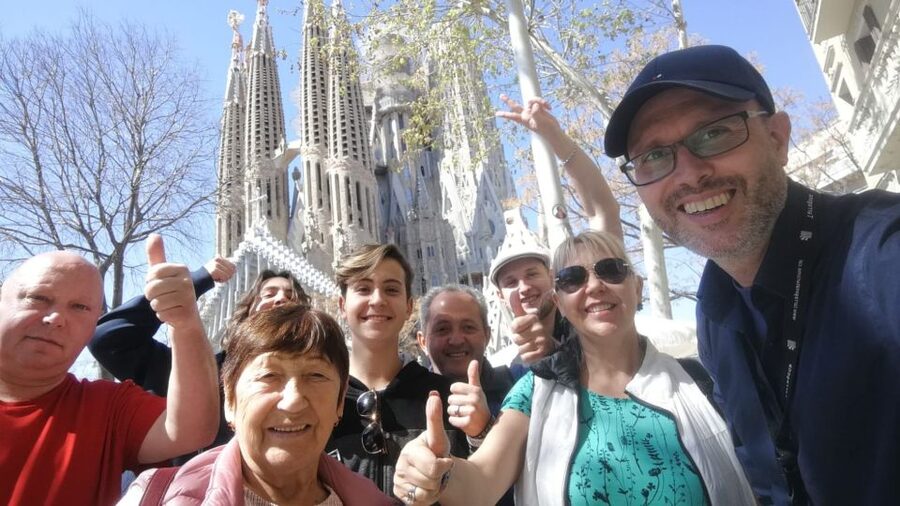
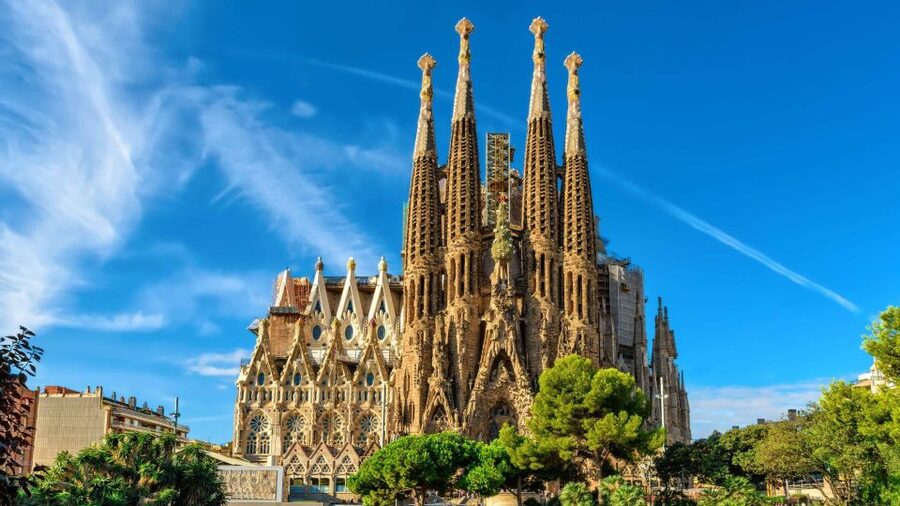
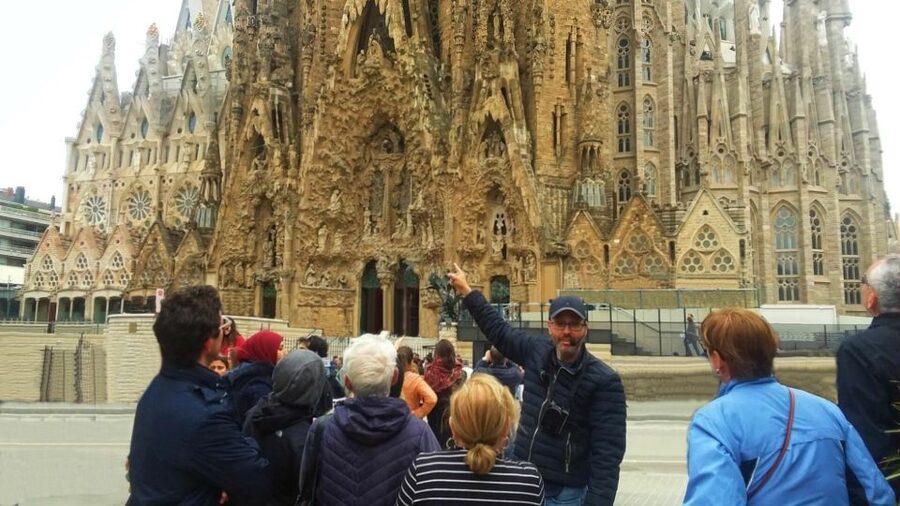
The tour begins with La Sagrada Familia, Gaudí’s immense basilica and one of Barcelona’s defining sights. Even from outside, there is a great deal to take in: towers, sculpted façades, religious symbols, and a structure that seems to grow rather than simply rise.
Your guide explains Gaudí’s approach to design and the long construction story behind the basilica. Work has continued for more than a century, which makes Sagrada Familia both a finished work of art and an ongoing building project.
One especially useful topic is the Passion façade. It was created by Josep Subirachs, Gaudí’s successor, and its sharper, more severe sculpture differs from Gaudí’s more flowing forms. That contrast has led to plenty of discussion about how a later artist should continue an unfinished masterpiece.
The tour description focuses on admiring Sagrada Familia and explaining its architecture. Entry inside is not listed among the inclusions, so you should not assume that the walking tour provides basilica admission. If you want to see the interior, arrange a separate ticket or confirm an add-on when booking.
That limitation is not necessarily a problem. A street-level introduction can help you decide if you want to return for a longer visit inside. One practical tip: check where your tour finishes. At least one route ended at Sagrada Familia, and a previous participant wished they had known this because they would have arranged an interior visit afterward.
Eixample and Ildefons Cerdà’s city plan
From the famous basilica, the experience turns toward Eixample, the broad central district created as Barcelona expanded beyond its medieval walls.
The district’s grid is easy to see as you walk. Wide streets, repeated blocks, and chamfered corners give Eixample a very different feel from the tight lanes of the old city. Your guide explains Ildefons Cerdà’s plan and its aim to balance homes, movement, air, greenery, and public life.
This city-planning background adds real value. You begin to notice that the buildings are not isolated works of art. They belong to a planned district where wealthy families commissioned elaborate homes and architects competed for attention along the same avenues.
I like this part of the route because it gives your eyes a break from the most famous façades. Instead of rushing from one landmark to the next, you learn how the streets themselves shaped Barcelona’s growth.
The exact order may change, since the meeting point varies by option. The walk can also include part of the historic city, depending on the guide and route. That flexibility appears to be a strength for private groups, though you should confirm the starting point before setting out.
Passeig de Gràcia and the famous architectural trio
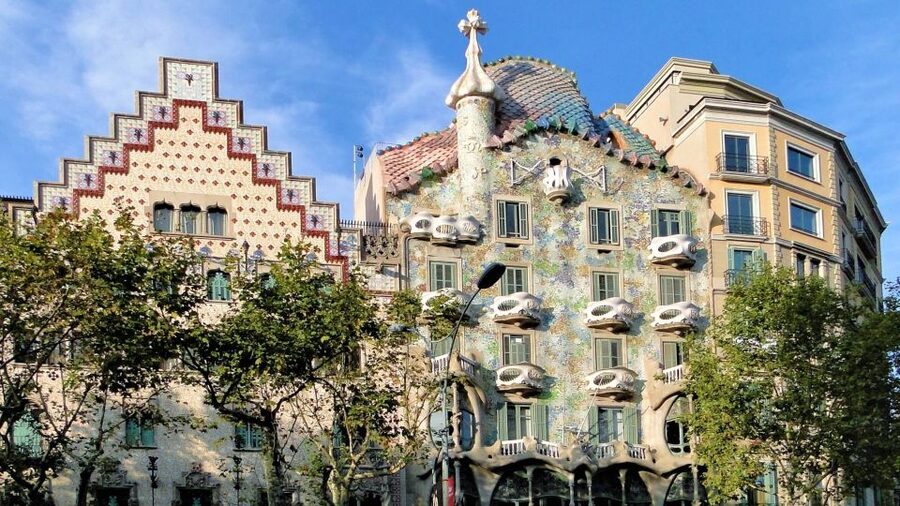
Passeig de Gràcia is the tour’s main showcase. This prestigious avenue contains several of Barcelona’s best-known Modernist buildings, including three neighboring works often grouped together as an architectural trio: Casa Batlló, Casa Amatller, and Casa Lleó Morera.
More Walking Tours in Spain
- Barcelona Architecture Walking Tour With Casa Batlló Upgrade
★ 5.0 · 137 reviews - Treasures of Barcelona: Private Gaudi Walking Tour
★ 5.0 · 128 reviews - Night Tapas Walking Tour in Barcelona Modernist Area with Small Group and Dinner
★ 4.5 · 56 reviews - Gaudi’s Modernist Legacy: Small Group Walking Tour
★ 4.5 · 43 reviews
Casa Batlló
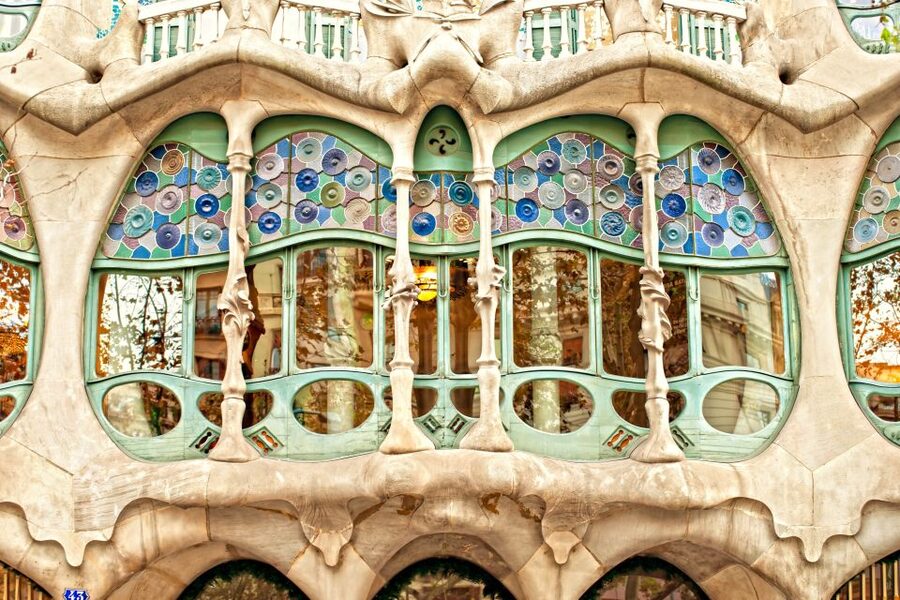
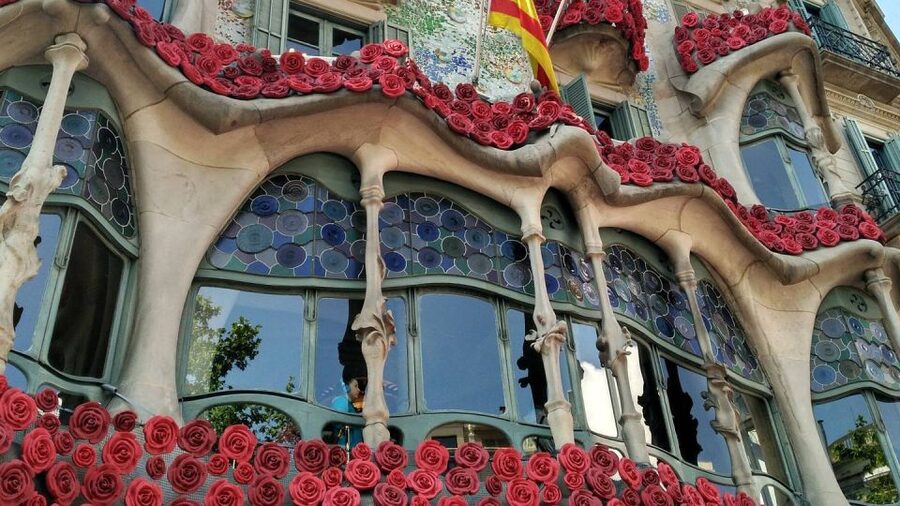
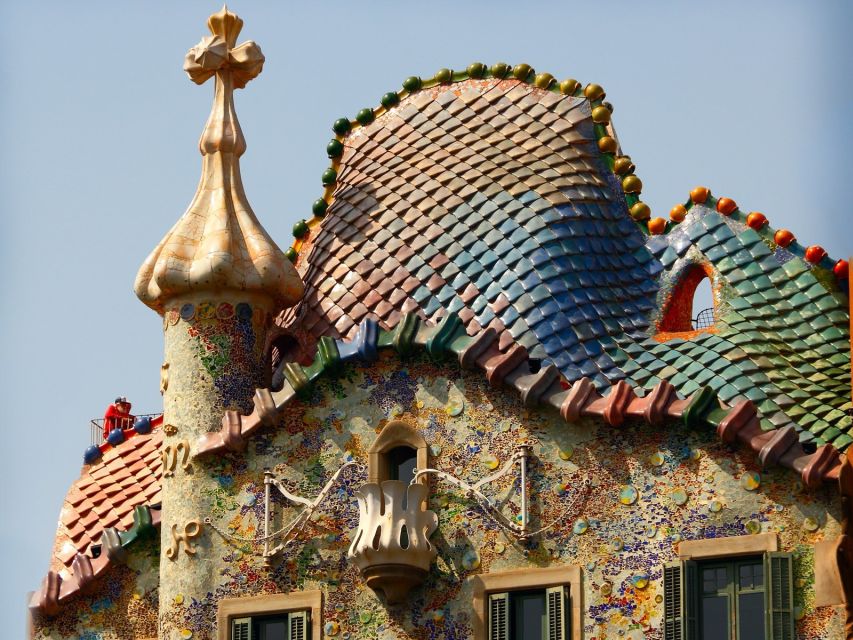
Gaudí’s Casa Batlló is one of the easiest buildings to recognize in Barcelona. Its undulating façade, colorful surface, unusual windows, and sculpted details suggest the movement of the sea or the bones of some fantastic creature.
Your guide can help you separate the main ideas from the visual overload. Look closely at the curved lines and the way the façade avoids a rigid, flat appearance. Gaudí treated the building as a complete artistic object, not just a practical apartment block.
You may find that Casa Batlló rewards a slower look than a quick photograph. The exterior is busy, and a guide can point out details you might otherwise miss. The tradeoff is that the avenue can feel crowded and noisy, making it harder to hear at times. Staying close to your guide matters.
Casa Amatller
Next door, Casa Amatller gives you a useful contrast. Josep Puig i Cadafalch designed it with a more historical character, including forms that recall medieval Catalan architecture.
Placed beside Casa Batlló, it shows how two architects could work within the same Modernist movement while producing very different results. I consider this comparison one of the most educational moments of the walk. You do not need an architecture background to see that Gaudí’s fluid shapes and Puig i Cadafalch’s sharper composition speak different visual languages.
Casa Lleó Morera
Casa Lleó Morera, by Lluís Domènech i Montaner, completes the trio. Its decoration is detailed and elegant, with an emphasis on craftsmanship and ornamental design.
The building helps broaden the story beyond Gaudí. Domènech i Montaner was a major figure in Catalan Modernisme, and seeing his work beside Casa Batlló and Casa Amatller makes the differences easier to understand than a lecture alone would.
La Pedrera and Gaudí’s civil work
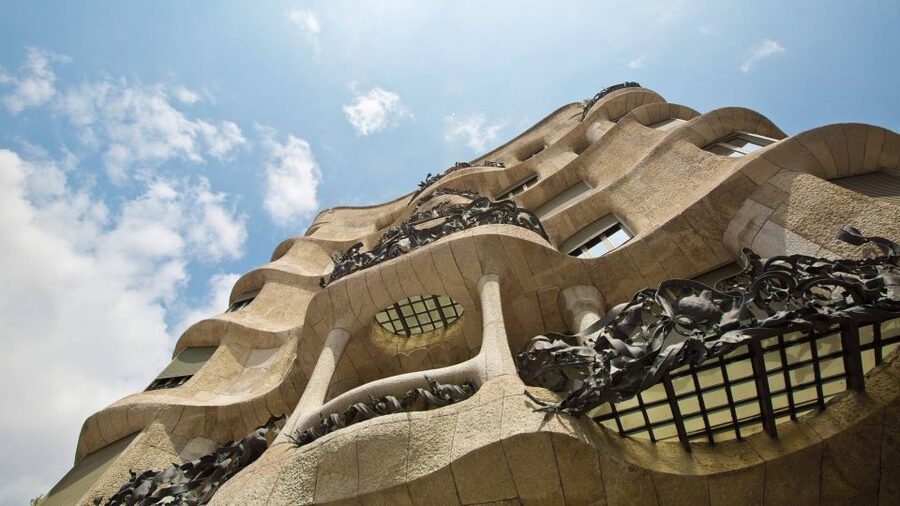
La Pedrera, also known as Casa Milà, is another major stop along Passeig de Gràcia. It was Gaudí’s last civil project and is protected as a UNESCO World Heritage Site.
Its stone façade appears to ripple, with balconies and railings that seem to have been shaped by natural forces rather than conventional building rules. The rooftop forms are especially famous, though this walking tour is primarily a street-level experience unless your booking specifically includes admission.
La Pedrera is a good place to think about Gaudí’s practical side. The building was not designed only as a sculpture. It was also an apartment house, and Gaudí worked to create a structure with unusual internal forms and flexible space.
I like seeing La Pedrera after Casa Batlló because the comparison shows Gaudí’s range. Casa Batlló is colorful and theatrical. La Pedrera is heavier, rougher, and more monumental. Both are unmistakable, but they create very different moods.
Casa Calvet and the quieter side of Gaudí
Casa Calvet shows an earlier and more reserved side of Gaudí. Compared with his later works, it has a more formal façade and a less openly organic appearance.
That makes it an important stop. You see that Gaudí did not begin with the full visual language of Sagrada Familia or La Pedrera. His style developed over time, and Casa Calvet helps place his later work in sequence.
This is also where a good guide matters most. A quick photograph will not tell you much about the building’s place in Gaudí’s career. The tour’s focus on design ideas, artistic development, and the needs of Barcelona’s growing city turns a less instantly famous building into a useful part of the story.
Casa Comalat and organic Modernist details
Casa Comalat is strongly influenced by Gaudí’s organic forms. It is one of the buildings that helps you see how Gaudí’s ideas spread through Barcelona’s architectural culture.
You may find the smaller or less famous stops more rewarding than expected. They provide contrast and show that Modernisme was not a one-person project. The movement included architects with their own approaches, clients with their own ambitions, and craftsmen whose work added detail to the finished buildings.
The route is not simply a checklist of major ticketed attractions. Much of its value comes from learning how to read the streets between them.
Palau del Baró de Quadres and Casa de les Punxes
Palau del Baró de Quadres, designed by Josep Puig i Cadafalch, is another striking example of Catalan Modernisme. It shows the architect’s interest in historic references, decorative stonework, and a strong visual outline.
Casa Terradas, better known as Casa de les Punxes, offers a different kind of drama. Its design has a castle-like character, with pointed roof features that give it an instantly memorable profile.
These stops are useful for travelers who want more than the standard Gaudí circuit. You still see the major names, but you also gain a better sense of how varied Barcelona’s architecture can be within just a few blocks and avenues.
Palau Montaner and the wider Modernist story
Palau Montaner adds another layer to the route. Together with the other buildings, it shows the breadth of Barcelona’s Modernist heritage and the competition among wealthy families and leading architects.
I appreciate that the tour includes works by several architects rather than presenting Gaudí as an isolated genius. His work is central, but Barcelona’s visual character came from a wider group of designers, builders, artists, and patrons.
Your guide also connects these buildings to the city’s cultural identity. The result is a better understanding of why Modernisme matters in Catalonia, rather than just a collection of facts about unusual windows and balconies.
Guides, group size, and the feel of the walk
The activity includes a professional English or Spanish-speaking local guide. Named guides who have led this experience include Stephanie, Isabel, Antonio, André, Roberto, Olga, Jordi, Miguel, and Flora.
The strongest praise has focused on guides who explain ideas clearly, answer questions, and make the walk feel personal. Stephanie has been described as especially strong in art and architecture, while Isabel has been praised for creating an easy, conversational atmosphere. Jordi and Miguel were also noted for making the city and Gaudí easier to understand.
The maximum group size is 12, with private groups available. That is small enough for questions to be practical, though the experience can feel different depending on how many people book your time slot.
Plan on 3 to 3.5 hours, though one past participant described a tour closer to two hours. That may reflect a particular route or timing, so confirm the expected duration if your schedule is tight.
Wear comfortable shoes. Large bags and luggage are not allowed, and personal expenses are not included. Children up to age two can join free of charge.
Is $21 a good value?
At $21 per person, I consider this a strong value for a guided introduction to Barcelona’s Modernist center. You are paying for a live guide, a planned route, and explanations that connect the buildings to urban planning and Catalan culture.
The price looks especially good if you are new to Barcelona and want orientation on your first day. You can see where several important buildings are located, learn which ones deserve a return visit, and pick up practical suggestions for the rest of your stay.
The main limit is that the price does not include personal expenses or stated admission to the monuments. If you want to enter Sagrada Familia, La Pedrera, or Casa Batlló, budget separately and check timing carefully.
Who should book this walk?
I would recommend it to first-time visitors, architecture fans, and anyone who wants Barcelona explained rather than simply photographed. It also suits families with older children who can manage several hours on foot and appreciate visual details.
It is a particularly good choice if you are unsure how Gaudí fits into the larger Modernist movement. The route gives you the major names, the city plan, and enough comparisons to make the buildings more memorable.
I would think twice if you dislike long walks, want extended interior visits, or need a fixed meeting point and tightly controlled schedule. The route covers a lot of ground, and the exact starting point can vary.
Should you book it?
Book this tour if you want an affordable, guide-led introduction to Barcelona’s Modernist architecture, with Gaudí at the center but not the whole story. The strongest reason to choose it is the combination of major sights, lesser-known buildings, and guides who explain the city in an approachable way.
If you already know Barcelona’s architecture well, you may prefer a tour that spends more time inside individual monuments. For most first-time visitors, though, this walk offers a smart starting point. Wear good shoes, confirm where the tour begins and ends, and plan separate admission if you want to enter Sagrada Familia or another landmark.
FAQ
How long does the Barcelona Modernism and Gaudí tour last?
The tour is scheduled to last about 3 to 3.5 hours. One past experience lasted closer to two hours, so confirm the expected timing when booking if your day is tightly planned.
What languages are available?
The live guide is available in English or Spanish.
Is the tour private?
Private groups are available, and the standard small group has a maximum of 12 participants.
Does the tour include entry to Sagrada Familia?
Admission to Sagrada Familia is not listed among the included services. The experience focuses on guided sightseeing and architectural explanations, so arrange separate entry if you want to go inside.
What should I bring?
Bring comfortable shoes because the tour involves substantial walking. Luggage and large bags are not allowed.
Can children join the tour?
Children up to two years old can join free of charge.
More Gaudi Tours in Barcelona
- Barcelona: Park Güell and Gaudí House Museum Entry Ticket
★ 4.5 · 6,326 reviews - Barcelona: Gaudí’s Park Güell Tour with Fast-Track Ticket
★ 4.8 · 4,512 reviews - Sagrada Familia & Gaudi Tour Private or Small Group with Tickets
★ 4.5 · 1,188 reviews - Complete Gaudi Tour: Casa Batllo, Park Guell & Sagrada Familia
★ 5.0 · 1,152 reviews
Newly added in Barcelona
- Barcelona: The Genuis of Gaudi & Modernist Architects Tour★ 5.0 · 20 reviews
- Barcelona Private Walking Tour through the City of Gaudi★ 4.5 · 20 reviews
- Offer: Be Gaudí mosaic class Barcelona for families (max 4 pax)★ 5.0 · 20 reviews
- Private Montserrat, Gaudi and Modernism Day Trip from Barcelona★ 4.5 · 20 reviews
- Barcelona: Wonders of Gaudi Bike Tour★ 5.0 · 22 reviews
- Barcelona: Gaudí Segway Tour★ 4.6 · 21 reviews
- Gaudi Guided Tour: Casa Batllo, La Pedrera & Casa Vicens★ 3.5 · 24 reviews
- Gaudi and La Sagrada Familia Exterior Self-Guided Audio Tour★ 3.5 · 25 reviews
Gaudí Tours, compared.
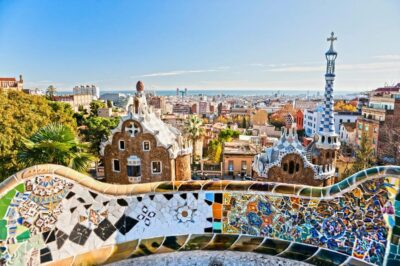
Park Güell and Gaudí House Museum Entry Ticket
Read our review →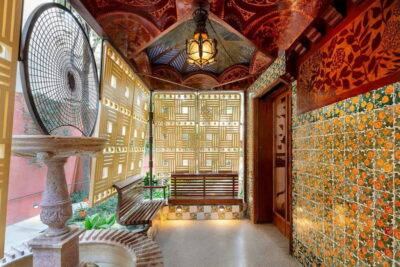
Gaudi’s Casa Vicens Skip-the-Line Entrance Ticket
Read our review →
Gaudí’s Park Güell Tour with Fast-Track Ticket
Read our review →
Sagrada Familia & Gaudi Tour Private or Small Group with Tickets
Read our review →
Complete Gaudi Tour: Casa Batllo, Park Guell & Sagrada Familia
Read our review →
Park Güell: Guided Tour with Optional Gaudí Experience Entry
Read our review →
Barcelona e-Bike Tour: Gaudí & Old Town Small Group
Read our review →
Ramblas, Old Town, Gothic and Gaudi Architecture Walking Tour
Read our review →Browse the lists this tour appears in