
Review · CHICAGO ARCHITECTURE TOURS
Chicago Architecture Tour: Underground Pedway and the Loop
Chicago’s Pedway is one of those city features you can walk past for years without understanding. This tour shows you how its tunnels, stairs, shops, and building connections fit together, then brings you back above ground at some of the Loop’s most recognizable sights.
I like two things right away: the tour gives you a useful way to move around downtown in bad weather, and it looks at Chicago from a less familiar angle than the usual river cruise. I also like the small group, capped at 15, which makes it easier to hear the guide and ask questions.
The main consideration is that this is a walking tour through a working downtown system, not a polished museum attraction. You’ll encounter stairs, commercial spaces, changing access points, and a few outdoor stretches, so comfortable shoes and moderate fitness matter.
Key points to know before you book
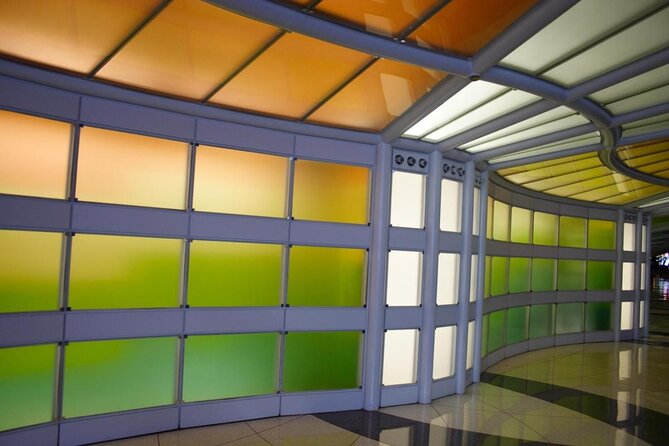
- Chicago’s underground shortcut system: Follow tunnels and stairs beneath several downtown blocks, including access points near City Hall and major commercial buildings.
- A strong cold-weather choice: Most of the route is indoors or underground, making it useful during Chicago’s winter cold, rain, or wind.
- Small groups help: The maximum group size is 15, allowing for a more personal tour and clearer explanations.
- Architecture beyond the famous skyline: Expect stories about buildings, public art, interior details, and the way downtown connects below street level.
- Weekend and weekday routes differ: Weekend departures include the Chicago Cultural Center interior and may show interior areas at Macy’s, while weekday tours use a different interior stop.
- A practical endpoint: The tour finishes near Aqua, just north of Millennium Park, putting you close to several central Chicago sights.
Why the Chicago Pedway is worth two hours
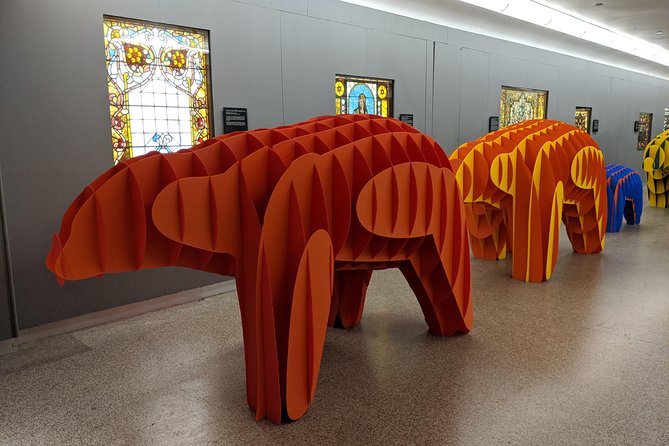
The Pedway is not one perfectly planned underground corridor. It is a network of connected passages, stairs, building entrances, and indoor routes that grew across the Loop over time. That makes it useful, but not always easy to understand on your own.
You may see signs pointing toward offices, shops, transit connections, or nearby buildings, only to find that the route changes at a lobby or stairwell. A guide gives you the larger picture: where the Pedway runs, why it was built, and how downtown buildings relate to it.
I especially like that this is not just a tour of underground hallways. The route uses the Pedway as a thread connecting public art, architecture, department-store history, civic buildings, and modern commercial development.
That mix gives the experience more substance than a simple rainy-day walk. You learn how to navigate, but you also get a clearer sense of how Chicago’s Loop developed above and below ground.
The tour lasts about two hours, which is long enough to cover several parts of downtown without turning into an exhausting half-day commitment. The pace has been described as comfortable, though you should still expect plenty of walking and repeated stairs.
A few more architecture walks in Chicago worth a look
- Chicago Architecture River Cruise
★ 5.0 · 15,756 reviews - Chicago River 90-Minute Architecture Tour
★ 4.5 · 9,629 reviews - Chicago River: 1.5-Hour Guided Architecture Cruise
★ 4.8 · 8,046 reviews
Starting at 120 North LaSalle Street
The meeting point is at 120 N LaSalle Street, near the civic center of the Loop. This is a practical place to begin because the route can quickly connect downtown streets with interior passageways.
Your guide may use sketches, building details, dates, and short stories to explain what you are seeing. One guide, for example, used drawings on a folder with a dry-erase marker to make architectural points easier to follow. That kind of visual explanation can help when you are looking at a building from an angle or trying to understand a complicated route.
Guide quality matters a great deal on this experience. The strongest guides have included Heath, Adam, Kaylee, Kayley, Hillary, Colleen, Jessica, Jess, and Henry. Their styles differ, but the best common thread is enthusiasm for Chicago and an ability to explain why ordinary-looking corners matter.
The tour has a 4.9 rating based on 388 ratings, with 97 percent of customers recommending it. That is unusually strong, though you should still remember that a walking tour depends heavily on the guide assigned to your departure.
There has also been at least one serious complaint about a guide behaving inappropriately and failing to provide useful context. The operator apologized, refunded the customer, and described the incident as an exceptional situation. It is worth noting for balance, but the broader record points to consistently strong guide performance.
Beneath City Hall and the first Pedway routes
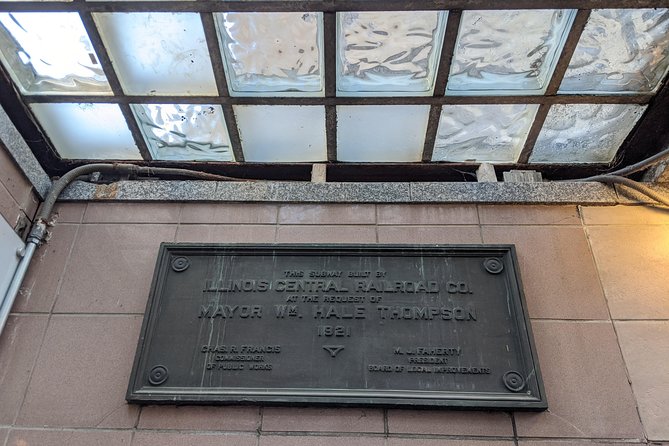
The first major portion spends about 45 minutes in the Pedway. You follow tunnels and stairs under several blocks, with access to buildings such as City Hall.
This part is valuable because it teaches you how to read the system. You are not simply led from point A to point B. You are shown entrances, connections, and the signs that can help you find your way later.
City Hall also adds civic context. Interior details give the guide a chance to explain how public buildings express Chicago’s identity, and how the Loop combines government offices with retail, transit, hotels, and workplaces.
The exact experience can vary by access and route conditions. The Pedway is a working part of downtown, not a preserved historic exhibit, so some sections may feel plain or utilitarian. That is part of its appeal. You are seeing a functional side of Chicago that many sightseeing routes skip.
If you are fascinated by city planning, this may be the most rewarding section. You begin to see the Loop as a three-dimensional place, with street traffic above, building lobbies at ground level, and pedestrian routes below.
Picasso in the open air
The stop at The Picasso lasts about 10 minutes. You get a close view of the famous public artwork before returning underground.
This is a useful above-ground pause. After spending time in corridors and stairwells, you regain your sense of the city’s scale and see how public art fits into the civic center.
The guide can also connect the sculpture to Chicago’s broader support for modern public art. The work was given to the city by Picasso, making it more than a photo stop. Its unusual form also gives the group something immediate to discuss, even if you are not an art specialist.
The stop is free, and the tour does not treat it as a long museum visit. Expect a focused look, some context, and time to see it from close range. If you want an extended art lecture, this will feel brief. If you want a well-placed city landmark between underground sections, the timing works well.
Same city, a different facade:
- Chicago Architecture Center River Cruise aboard First Lady
★ 5.0 · 5,536 reviews - Chicago: Architecture River Cruise Skip-the-Ticket Line
★ 4.8 · 4,325 reviews - Chicago River 45-Minute Architecture Tour from Magnificent Mile
★ 4.5 · 2,924 reviews - Chicago Lake and River Architecture Tour
★ 4.5 · 2,308 reviews
Macy’s and the old Marshall Field’s connection
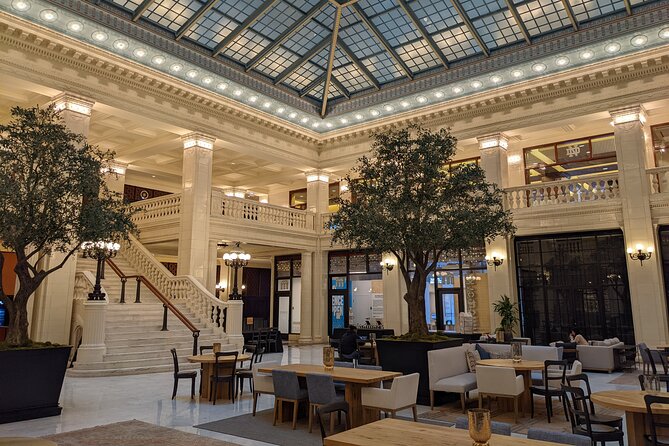
The tour then reaches Macy’s on State Street, occupying the former Marshall Field’s building. You walk through one of the more interesting Pedway sections beneath the department store.
This stop helps explain how Chicago’s retail architecture and underground routes developed together. The building is not simply a shop on State Street. It is part of a larger system of indoor movement, and the Pedway gives you a different view of that relationship.
Weekend tours may include some interior areas of Macy’s. On weekdays, the tour skips that particular interior and uses a different one. If seeing the inside of the old department-store building matters to you, choose a weekend departure and check the current schedule before booking.
That variation is important. The core Pedway experience remains, but the tour is not identical every day. A weekday may be better for your schedule, while a weekend may give you more interior architecture.
Block 37 and downtown’s commercial core
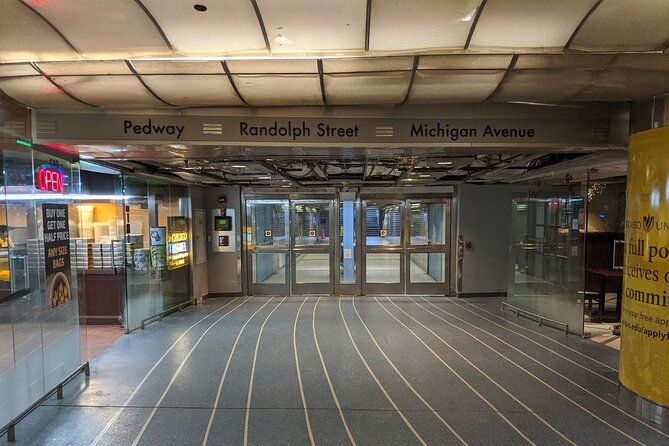
Block 37 is another major stop, reached through the Pedway. The group checks out several favorite spots inside this large commercial complex.
Here, the tour shows how the underground network connects older civic and retail spaces with newer development. That contrast is one of the most useful parts of the route. Chicago is often presented through famous historic buildings, but the city keeps changing, and the Pedway helps you see those layers side by side.
The stop is listed as about 10 minutes, so do not expect a full architectural tour of every part of Block 37. Instead, think of it as a short but revealing look at how the complex fits into the Loop’s pedestrian system.
The commercial setting may be less atmospheric than a landmark interior. Still, it makes the tour practical. You learn where you are, how the blocks connect, and how to stay indoors when weather or crowded streets make surface walking unpleasant.
The Chicago Cultural Center on weekend departures
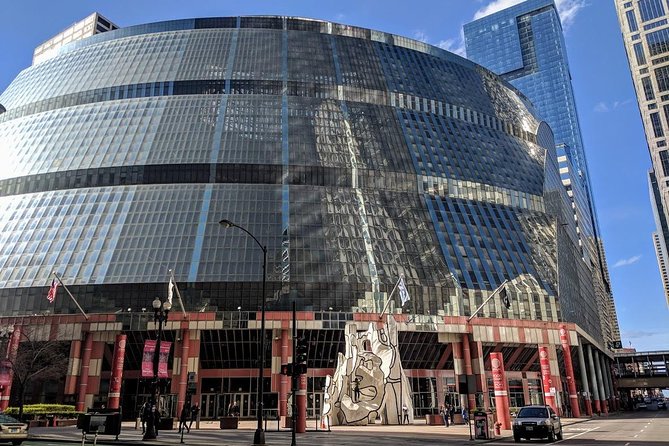
Weekend tours include the interior of the Chicago Cultural Center, a beautiful 19th-century building near Millennium Park. This is one of the strongest above-ground architectural stops because it adds ornament and civic grandeur to the more functional Pedway experience.
The Cultural Center also gives the route a natural connection to Millennium Park. You finish the tour near Aqua, just north of the park, so the stop helps bridge the underground portion and the attractions you may want to visit next.
The schedule difference matters here too. The Cultural Center interior is specifically included on weekend offerings. If you are booking a weekday, plan on a different interior experience instead.
I would choose a weekend if you want the fullest architectural version of the tour. I would choose a weekday if timing, weather, or a quieter downtown visit matters more to you.
What the guides add to the experience
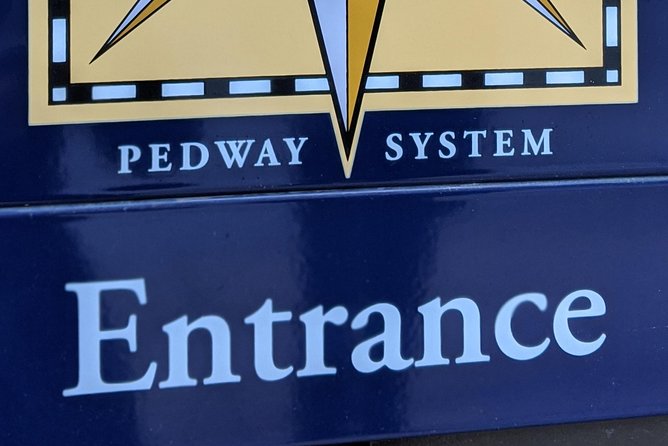
This tour rises or falls on storytelling. A map of underground passages is useful, but a good guide explains why the route matters.
Heath has been praised for combining humor with a deep store of Chicago facts. Adam has been described as fun, informative, and proud of the city. Kaylee, Kayley, Hillary, Colleen, Jessica, Jess, and Henry have also led departures praised for clear explanations and strong energy.
The best guide style here is not a formal lecture. It is a running conversation about architecture, city geography, shortcuts, building dates, and small details you might miss while walking alone.
You may hear about the people behind the buildings, the structure of a tower, the purpose of a passage, or the way local residents use the system. One of the most useful outcomes is that you begin to recognize entrances and signs you might otherwise ignore.
For Chicago residents, that local-navigation angle can be just as valuable as it is for first-time visitors. You may have lived near the Loop for years and still not know how the underground paths fit together.
A smart tour for cold, rainy, or windy days
Chicago weather can change your sightseeing plans quickly. The tour operates in all weather, and much of the route is inside or below street level.
That does not mean you can leave your coat at home. You still need to reach the meeting point, move between some buildings, and spend time outdoors at places such as The Picasso. Dress for the forecast and wear shoes that handle stairs and hard floors comfortably.
The indoor focus is especially useful during winter. Several people have taken the tour during bitter cold, including days with temperatures well below freezing, and found it a good way to keep exploring without spending two hours outside.
It also works on wet days. You will not be sheltered every second, but the route reduces your exposure compared with a fully outdoor walking tour.
Physical effort, group size, and pace
The operator recommends moderate physical fitness. The main challenge is not speed or steep hiking. It is the repeated walking, stair use, and movement through busy buildings.
There are lots of stairs. An elevator was reportedly available as an option on a tour, but you should confirm your needs before booking rather than assume every connection will be step-free.
The group maximum is 15 people, a sensible size for narrow passages and indoor spaces. It is small enough for the guide to answer questions without shouting across a large crowd.
Because the Pedway is a working network, the route may involve pauses while the guide gathers the group or explains a junction. That is not wasted time. It is part of learning how the system works, though anyone wanting a brisk, uninterrupted walk may find the stop-and-start rhythm less appealing.
Is $35 a good value?
At $35 per person, the tour is reasonably priced for a two-hour guided experience in central Chicago. You are paying for a local guide, route-finding help, architecture commentary, public art, and access to parts of the city that are difficult to understand on your own.
The value is strongest if you care about architecture, city planning, local stories, or practical downtown navigation. It is also a good use of time when bad weather limits outdoor sightseeing.
The value is weaker if you want a grand tour of Chicago’s most famous exteriors. You will not spend the whole time photographing skyline landmarks, and some of the underground sections are functional rather than beautiful.
Still, the tour covers several types of places for one modest fee: the Pedway, City Hall surroundings, The Picasso, Macy’s, Block 37, and sometimes the Chicago Cultural Center. There are no extra admission charges listed for the included Pedway and Block 37 portions, while The Picasso and the other listed public stops are free.
Who should book this Chicago architecture tour?
I would recommend it to first-time visitors who want a useful orientation to the Loop, repeat visitors who have already seen the standard sights, and locals curious about a part of downtown they rarely use.
Architecture fans will get the most from the building details and comparisons between civic, retail, historic, and modern spaces. Families with young teenagers can manage it, provided everyone is comfortable walking and using stairs.
It is also a strong choice for a winter trip or a rainy afternoon. The tour gives you an indoor plan without reducing Chicago to shopping centers or museums.
I would be less likely to choose it for someone who dislikes enclosed spaces, wants a fully outdoor route, or has difficulty with stairs and extended walking. The Pedway is the subject, so its practical, sometimes plain character is central to the experience.
Final recommendation
Book this tour if you want to understand how downtown Chicago works beneath the obvious street grid. At $35, it offers strong value, especially in poor weather, and the small group gives the guide room to explain the city rather than simply point at it.
Choose a weekend if the Chicago Cultural Center interior and Macy’s interior details are priorities. Choose any suitable departure if your main goal is learning the Pedway and gaining a local shortcut for future visits.
You should leave with more than a collection of facts. You will know where to look for the signs, how the underground routes connect, and why Chicago’s Loop has another city quietly operating below the streets.
FAQ
How long does the Chicago Architecture Tour last?
The tour lasts approximately two hours.
How much does the tour cost?
The price is $35 per person.
Where does the tour begin?
The meeting point is 120 N LaSalle St, Chicago, Illinois 60602.
Where does the tour finish?
The tour ends at Aqua, 225 N Columbus Dr, just north of Millennium Park.
What language is the tour offered in?
The tour is offered in English.
How large is the group?
The tour has a maximum of 15 travelers.
Does the tour operate in bad weather?
Yes. It operates in all weather conditions, so you should dress appropriately for the forecast.
Is the Chicago Cultural Center included on every departure?
No. The interior of the Chicago Cultural Center is included on weekend tour offerings.
Can I cancel for a refund?
Yes. You can cancel at least 24 hours before the experience start time for a full refund. Cancellations or changes made less than 24 hours before the start time are not accepted for a refund.
Newly added in Chicago
- Chicago: Guided Tour with Architecture River Cruise★ 4.5 · 20 reviews
- Chicago River 90-Min Architecture Boat Tour★ 4.5 · 24 reviews
- Chicago: First Lady River Cruise & Architecture Center Combo★ 4.7 · 24 reviews
- Chicago: Historic Architecture Chicago River Small Boat Tour★ 4.6 · 26 reviews
- Chicago: Art Deco Skyscrapers Walking Tour★ 4.8 · 28 reviews
- Chicago River: 90-Min Architecture Boat Tour★ 4.9 · 29 reviews
- Chicago Art Deco Madness Walking Tour★ 5.0 · 31 reviews
- Chicago River Architecture Tour and Big Bus Hop-on Hop-off Tour★ 4.0 · 38 reviews
Chicago Architecture Tours, compared.
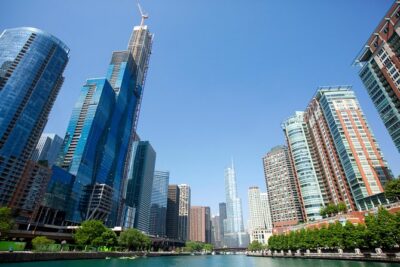
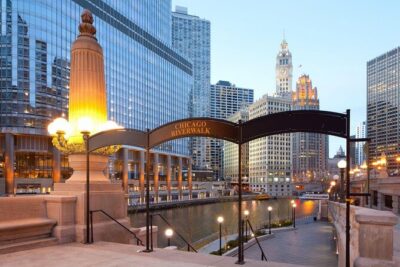

Chicago River: 1.5-Hour Guided Architecture Cruise
Read our review →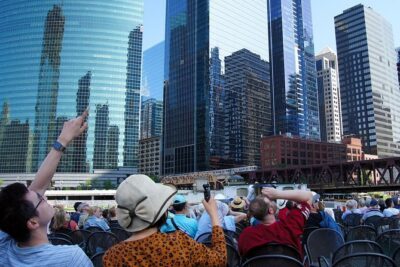
Chicago Architecture Center River Cruise aboard First Lady
Read our review →
Architecture River Cruise Skip-the-Ticket Line
Read our review →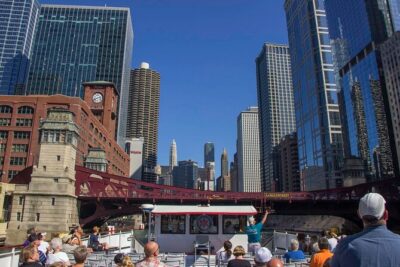
Chicago River 45-Minute Architecture Tour from Magnificent Mile
Read our review →
45-Minute Family-Friendly Architecture River Cruise
Read our review →Browse the lists this tour appears in