
Review · CHICAGO ARCHITECTURE TOURS
Magnificent Mile Tour With Optional 360 Chicago Upgrade
Chicago’s Magnificent Mile is more than a shopping street. It is a fast-moving lesson in Chicago architecture, told through grand department stores, Art Deco towers, Beaux Arts landmarks, and polished luxury storefronts. This two-hour walking tour connects those buildings with the stories behind the city’s growth.
I like the way the route links Millennium Park, the river, and Michigan Avenue instead of treating the Magnificent Mile as one isolated strip. I also like the optional 360 Chicago ticket, which gives you a chance to see the city from 1,030 feet after the walk. The main drawback is pace: you cover a lot of ground, and the tour is about architecture rather than the Bean, which is not a stop on this route.
Key points at a glance
- Architecture is the main event: Learn how Chicago’s Beaux Arts, Art Deco, Chicago School, and late Modernist buildings shaped the city.
- The route covers real ground: You walk from the Federal Building Columns near Millennium Park to 360 Chicago at 875 North Michigan Avenue.
- Guides bring personality: Ben is praised for lively stories and humor, while Chris is noted for keeping the walk interesting.
- The 360 Chicago upgrade adds height: Look over Michigan Avenue and Lake Michigan from the 94th floor, 1,030 feet above the city.
- The Bean is not included: If Cloud Gate is a priority, plan a separate visit at Millennium Park.
- The price is reasonable for a small-group city walk: The tour costs $39 per person, with a maximum of 20 people, before any optional add-on.
Why this walk works for first-time Chicago visitors
A good city walk should help you understand what you are seeing, not just point at buildings and name them. This one focuses on the forces that made Chicago famous for architecture: rebuilding, commerce, new construction methods, and the rise of Michigan Avenue as a major address.
You meet at the Federal Building Columns on East Randolph Service Street at 10:00 a.m. That puts you near Millennium Park, a useful starting point because Chicago’s lakefront story begins here. From there, the route moves toward the Chicago River and then north along Michigan Avenue.
The tour lasts about two hours. That is long enough to cover a broad slice of central Chicago without turning into an all-day march. You should still wear comfortable shoes. The route includes several outdoor stops, and the walking itself is part of the experience.
The group can have up to 20 people. That is not an intimate private tour, but it is small enough for questions if the guide manages the group well. The strongest guide comments point to Ben’s exuberant delivery, humor, and ability to explain the pioneers and businesspeople connected with the street. Chris is also named as a guide who keeps the walk engaging.
Other buildings people go and look at in Chicago:
- Chicago Architecture River Cruise
★ 5.0 · 15,756 reviews - Chicago River 90-Minute Architecture Tour
★ 4.5 · 9,629 reviews - Chicago River: 1.5-Hour Guided Architecture Cruise
★ 4.8 · 8,046 reviews
Millennium Park starts the story
The first stop takes about 20 minutes at Millennium Park. You meet near the Federal Building Columns and hear about the history of Chicago’s lakefront before getting a look at the nearby Chicago Cultural Center.
The Cultural Center brings a little Italian Renaissance style into the opening section of the walk. That contrast matters. Chicago is often presented as a city of steel towers and modern engineering, but its central buildings draw from many older design traditions.
Do not arrive expecting an extended visit inside Millennium Park or a dedicated Cloud Gate photo stop. The Bean is not included in this route. This is an important planning point because the shiny sculpture is one of Chicago’s best-known sights, and the tour’s name may lead you to assume it is part of the day.
If you want to see Cloud Gate, go before or after the tour on your own. The guide’s focus is the city’s architecture and the way its buildings relate to one another.
The Chicago River reveals three eras of design
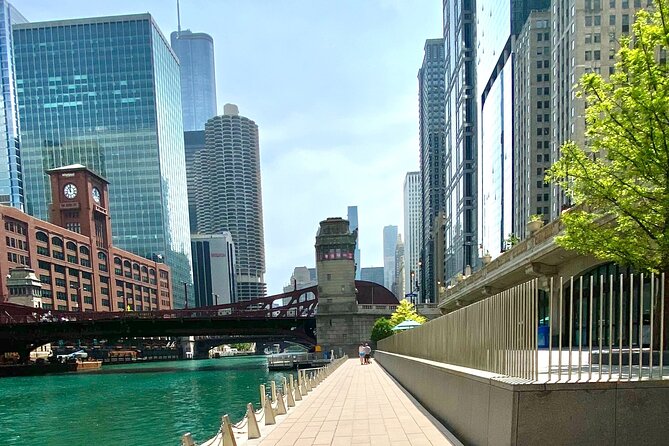
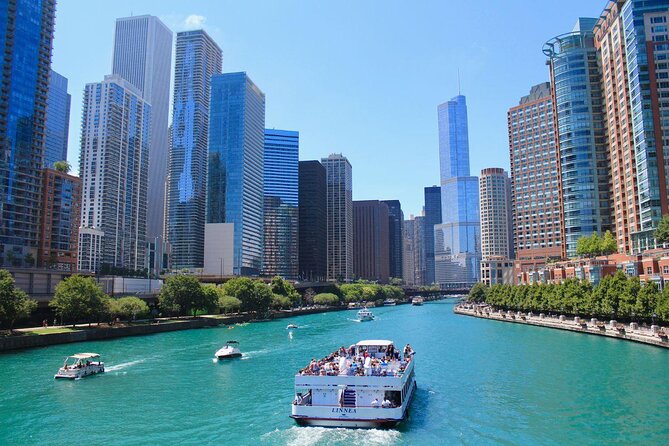
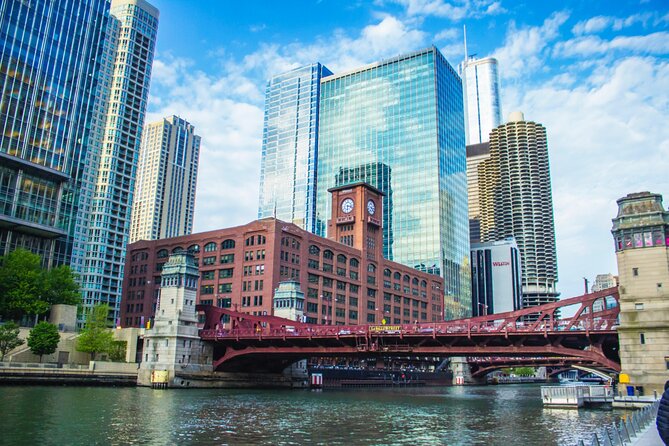
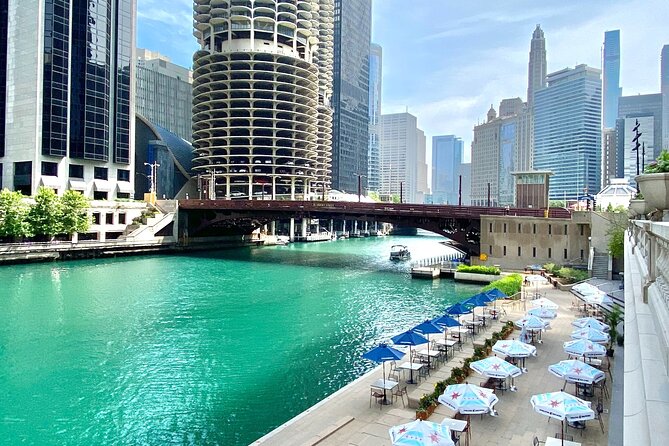
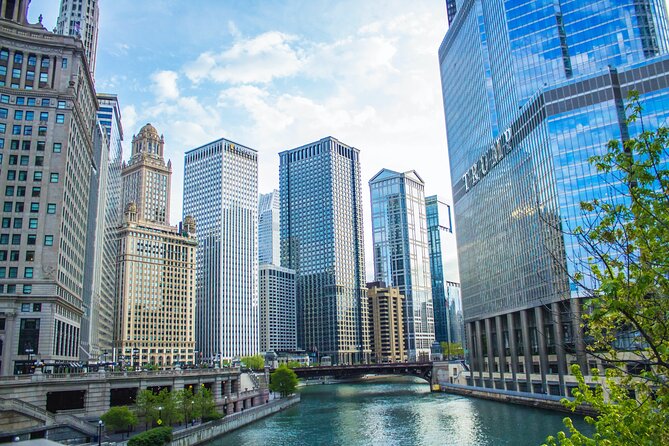
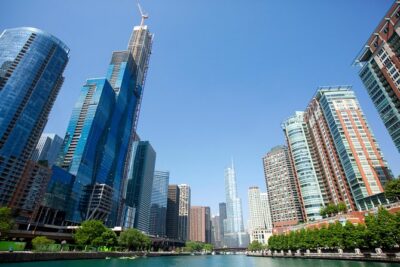
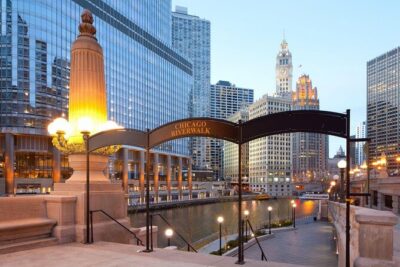
From the park, the route heads toward the Chicago Riverwalk for about 20 minutes. Here you get views of three Chicago buildings from the 1920s, with Beaux Arts and Art Deco details close by.
This is one of the more useful parts of the walk because the river gives you a clean view of building façades. From street level, a tall structure can be hard to read. Along the water, you can take in its height, decoration, and position in relation to neighboring buildings.
You also hear about the Chicago School of Architecture. That term matters because Chicago became a testing ground for new approaches to tall commercial buildings. The tour does not simply point out pretty façades. It gives you a way to notice how Chicago architects dealt with height, business, decoration, and the need to rebuild a growing city.
The stop is free, but it is not a museum visit with indoor exhibits. Your experience depends on the weather and on how much time the group spends looking and asking questions. Still, the river setting gives the walk a welcome change of pace before the shopping streets begin.
Michigan Avenue turns architecture into a city walk
The longest stop is the Magnificent Mile, at about 50 minutes. This is where the tour feels most like a guided reading of Michigan Avenue.
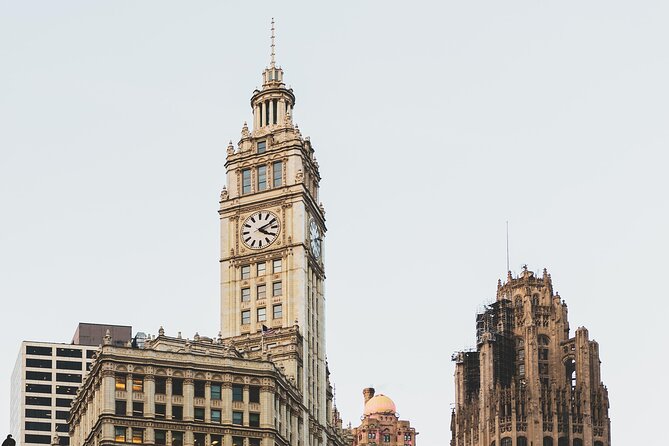
You pass the Wrigley Building and Tribune Tower, two of the street’s best-known architectural landmarks. The route also points out Art Deco work and later Modernist design, so you can see how the avenue changed over time rather than viewing it as one fixed style.
The guide also calls attention to details you might miss while shopping. The world’s largest Starbucks retailer is part of the route, as is Burberry’s distinctive façade. You pass the only Harry Potter themed store in the country outside Orlando. These stops add a bit of fun to a walk that otherwise leans heavily toward architecture.
I like this mix. You get major landmarks, but you also see how the avenue functions today. Michigan Avenue is not a preserved monument. It is a working commercial street, with cafés, retail brands, restaurants, offices, and historic buildings sharing the same blocks.
The shopping itself is not included, and the walk does not promise time to browse. Think of the stores as visual landmarks and examples of how modern retail uses historic streets. If you want a serious shopping session at Cartier, Burberry, or another brand, schedule it separately.
Same city, a different facade:
- Chicago Architecture Center River Cruise aboard First Lady
★ 5.0 · 5,536 reviews - Chicago: Architecture River Cruise Skip-the-Ticket Line
★ 4.8 · 4,325 reviews - Chicago River 45-Minute Architecture Tour from Magnificent Mile
★ 4.5 · 2,924 reviews - Chicago Lake and River Architecture Tour
★ 4.5 · 2,308 reviews
The Chicago River section brings luxury into view
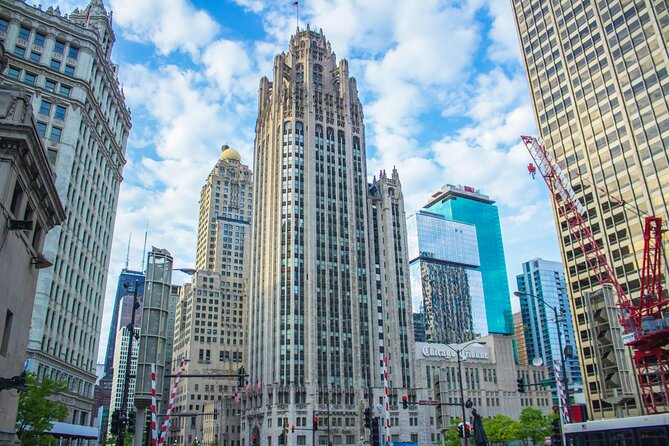
The next 20-minute portion returns to the Chicago River area and examines the relationship between high-end retail and mainstream commercial life. Storefronts connected with St. Laurent and Cartier appear alongside other city landmarks, including the Esquire Theater.
This section helps explain the social and commercial character of the Magnificent Mile. One block can carry old theater architecture, luxury labels, office buildings, and ordinary street traffic. You are not touring a single historic district frozen in time. You are watching a commercial corridor adapt its image from building to building.
The route also shows why a walking tour can be more useful than a sightseeing bus here. You can look up at façades, notice entrances and decorative details, and move between different types of architecture. You get a sense of scale that is harder to grasp through a window.
The tradeoff is that the tour remains an outdoor walk. The information is delivered while moving between sites, not from a seated theater or museum gallery. On a busy day, you will need to stay with the group and listen carefully.
Optional 360 Chicago views from the 94th floor
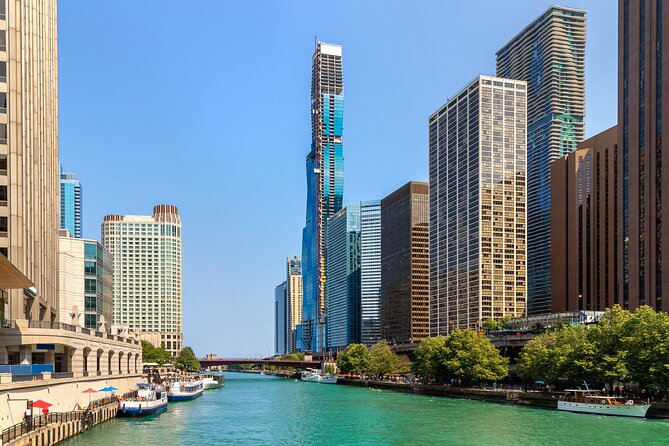
If you add the upgrade, the tour ends at 360 Chicago, located at 875 North Michigan Avenue. The observation deck sits on the 94th floor, 1,030 feet above the city.
Your visit there is self-guided. You can stay as long as you like, which is a useful contrast to the timed walking portion. After hearing about the buildings from street level, you can look back over Michigan Avenue, Lake Michigan, and the surrounding city from above.
This is the clearest reason to choose the add-on. The walking tour explains the city’s buildings in close detail. 360 Chicago lets you understand their position and scale. Together, the two views work better than either one alone.
The listed tour price is $39 per person, and the 360 Chicago ticket costs extra unless you select the upgrade. I consider the base price fair for a two-hour guided walk with a professional local guide and a group limit of 20. The upgrade is worth considering if you want a major view from above and prefer the convenience of ending at the observation deck.
The 360 Chicago ticket does not include TILT. That thrill ride extends out from the building and can be purchased on-site if you decide you want the extra challenge. You do not need TILT to use the observation deck.
The supplied timing gives only 10 minutes to the 360 Chicago stop, but the important detail is that an upgraded visit is self-guided after the walking tour. You are welcome to stay as long as you like. Treat the 10-minute figure as the transition into the attraction, not as a strict limit on your time above Michigan Avenue.
What the guides add to the route
The guide makes a major difference on an architecture walk. Facts alone can become a blur when you are looking at several large buildings in a row. The strongest guide feedback points to Ben’s humor, clear presentation, and stories about the people who built the street and its surrounding neighborhoods.
That style suits this route. Chicago architecture can sound dry if it is presented as a list of dates and design labels. Stories about businesspeople, pioneers, and the city’s changing ambitions give the buildings a human angle.
Chris is also identified as a guide who keeps the walk interesting. You should expect the guide to answer questions and offer Chicago suggestions, though the exact guide depends on the departure.
The tone appears energetic and lighthearted rather than formal. That is good news if you like history with personality. It may be less ideal if you want a slow, scholarly architecture seminar with long periods at each building. The tour covers many sights in a limited time.
Timing, meeting point, and practical planning
The tour begins at 10:00 a.m. at the Federal Building Columns, East Randolph Service Street, Chicago, Illinois 60601. It finishes at 360 Chicago, 875 North Michigan Avenue, on the 94th floor.
Starting and ending in different parts of central Chicago is useful if you are planning a full day. You begin near Millennium Park and finish near the northern end of the Magnificent Mile. From there, you can continue with shopping, meals, or your own sightseeing.
The tour is offered in English and uses a mobile ticket. Confirmation arrives when you book. The meeting area is near public transportation, and service animals are allowed. Most people can take part, but remember that this is a walking experience with outdoor sections and several city blocks between stops.
You can cancel for a full refund up to 24 hours before the start time. Cancellations or changes made less than 24 hours before the start time are not accepted for a refund.
Who should book this Magnificent Mile tour
I would choose this walk if you are visiting Chicago for the first time and want a useful orientation to the central city. It is especially suitable if architecture interests you, but you do not want to spend half a day inside a formal museum.
It also works well for people who want a guide to connect Millennium Park, the river, and Michigan Avenue. The route gives you a sense of how these parts of downtown fit together, instead of sending you to one isolated attraction.
The tour may suit Chicago locals who want a fresh look at familiar streets. A guide can point out details you have passed without noticing, especially on façades and storefronts.
I would choose something else if your main goal is the Bean, extensive shopping time, or a slow visit to each landmark. The Bean is not part of the route, stores are viewed rather than toured, and the two-hour format keeps things moving.
Is the $39 price good value?
At $39, the base tour offers a reasonable way to spend two hours in central Chicago. You are paying for a local guide, a structured route, architectural context, and a group capped at 20 people. You are not paying for entry to the major buildings along the walk, since the outdoor stops are free.
The value improves if you would otherwise wander Michigan Avenue without understanding what you are seeing. The guide turns a collection of famous names into a connected story.
The 360 Chicago upgrade is a separate value decision. Choose it if you want the city view and like the idea of ending your walk at the observation deck. Skip it if you already have another high viewpoint planned or would rather spend your budget on museums, meals, or shopping.
Should you book it?
Book this tour if you want architecture, stories, and a strong downtown orientation in a compact morning walk. Ben and Chris fit the lively guide style the route needs, and the mix of river views, landmark buildings, retail details, and optional 360 Chicago access gives the experience range.
Before booking, be clear about two points: the Bean is not included, and the route is active rather than leisurely. For a first look at Chicago’s central streets, the $39 base price is fair. Add 360 Chicago if you want to finish with a broad view of the city and Lake Michigan.
FAQ
How long does the Magnificent Mile tour last?
The guided walking tour lasts approximately two hours.
What time does the tour start?
The tour starts at 10:00 a.m.
Where does the tour begin?
The meeting point is at the Federal Building Columns on East Randolph Service Street near Millennium Park in Chicago.
Where does the tour end?
The tour ends at 360 Chicago, located at 875 North Michigan Avenue on the 94th floor.
Is the 360 Chicago ticket included?
The 360 Chicago ticket is included only if you purchase the optional upgrade.
Does the tour include TILT?
No. TILT is not included, but you can purchase that upgrade on-site.
Is the Bean included in the tour?
No. The Bean is not a stop on this tour, which focuses on Chicago architecture and the Magnificent Mile.
Newly added in Chicago
- Chicago: Guided Tour with Architecture River Cruise★ 4.5 · 20 reviews
- Chicago River 90-Min Architecture Boat Tour★ 4.5 · 24 reviews
- Chicago: First Lady River Cruise & Architecture Center Combo★ 4.7 · 24 reviews
- Chicago: Historic Architecture Chicago River Small Boat Tour★ 4.6 · 26 reviews
- Chicago: Art Deco Skyscrapers Walking Tour★ 4.8 · 28 reviews
- Chicago River: 90-Min Architecture Boat Tour★ 4.9 · 29 reviews
- Chicago Art Deco Madness Walking Tour★ 5.0 · 31 reviews
- Chicago River Architecture Tour and Big Bus Hop-on Hop-off Tour★ 4.0 · 38 reviews
Chicago Architecture Tours, compared.

Chicago River: 1.5-Hour Guided Architecture Cruise
Read our review →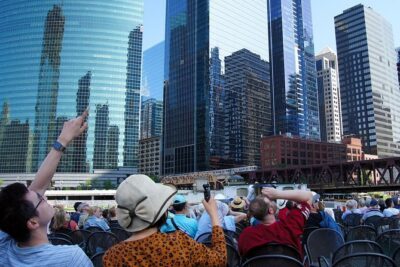
Chicago Architecture Center River Cruise aboard First Lady
Read our review →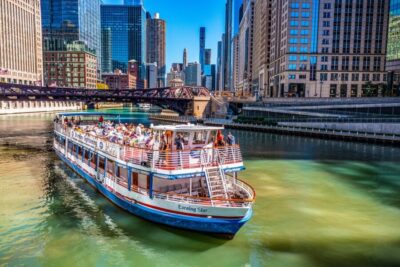
Architecture River Cruise Skip-the-Ticket Line
Read our review →
Chicago River 45-Minute Architecture Tour from Magnificent Mile
Read our review →
45-Minute Family-Friendly Architecture River Cruise
Read our review →Browse the lists this tour appears in