
Review · NEW ZEALAND ARCHITECTURE TOURS
Explore the legacy of artist, ecologist, architect, visionary
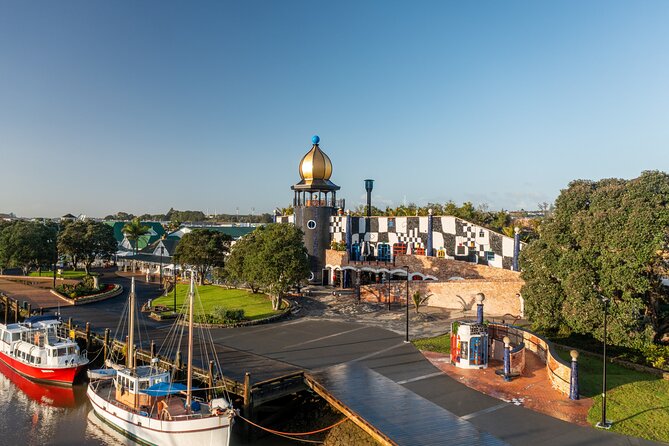
Whangarei’s Hundertwasser Art Centre is more than a gallery. It is a colorful working example of Hundertwasser’s ideas, with irregular shapes, bright tiles, planted roofs, and a gold cupola overlooking the Hātea River. I like that you can take your time here, and I especially like the combination of Hundertwasser’s work with contemporary Māori art at the Wairau Māori Art Gallery.
The main consideration is scale. Admission costs $18.62 per person, but the interior collection is not enormous, and some people may find the building more exciting from the outside than within. The optional one-hour guided tour can help if you want more explanation.
Key points at a glance
- Largest Hundertwasser collection outside Vienna: See artworks, models, and examples of his ecological thinking in one place.
- Award-winning Afforested Roof: Walk to the top for 360-degree views over Whangarei, the Hātea River, and the city.
- Wairau Māori Art Gallery: Visit the world’s first dedicated Māori public art gallery, with changing exhibitions.
- Self-guided or guided: Explore alone with full-day access, or arrange an additional one-hour interactive tour.
- A good Town Basin stop: The centre sits near restaurants, riverside walking, and other downtown attractions.
- Family-friendly subject matter: Bright colors, unusual shapes, and hands-on-looking displays can appeal to children and teenagers as well as adults.
Why Hundertwasser matters in Whangarei
Friedensreich Hundertwasser was an artist, architect, and ecologist who argued that people should live with nature rather than push it aside. His work often rejects straight lines, plain surfaces, and rigid urban design. In their place, you find uneven forms, strong color, planted spaces, and buildings that appear to grow rather than simply occupy a site.
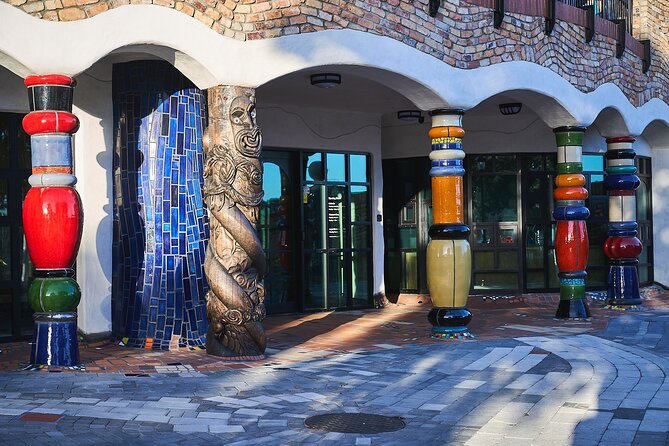
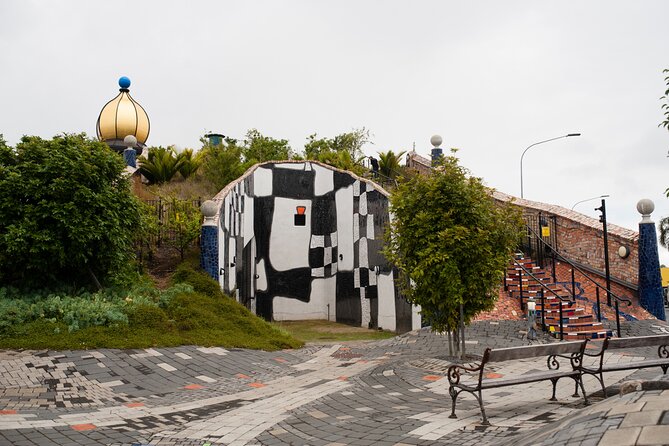
That idea is easy to understand at this centre. You are not only looking at paintings on white walls. You are seeing a building shaped by the same concerns that guided Hundertwasser’s art. The planted roof, decorative details, flowing stairs, colorful tiles, and golden cupola turn the centre itself into part of the exhibition.
His connection to New Zealand is important here. The main exhibition, Hundertwasser in New Zealand 1973 to 2000, explores his work and time in the country. The presentation links his art to his ecological practices, giving you a better sense of the person behind the unusual buildings and cheerful colors.
I find that this context makes the visit more useful than a quick look at an eccentric façade. If you already know Hundertwasser’s work, you can compare the New Zealand examples with projects seen elsewhere. If his name is new to you, the centre gives you a clear introduction without requiring a background in modern art.
A few more architecture walks in the world worth a look
- Chicago Architecture River Cruise
★ 5.0 · 15,756 reviews - Chicago River 90-Minute Architecture Tour
★ 4.5 · 9,629 reviews - Chicago River: 1.5-Hour Guided Architecture Cruise
★ 4.8 · 8,046 reviews
Entering the Hundertwasser Art Centre
Start outside. This is where the building makes its first impression, and it deserves a slow look before you go in. You will see quirky shapes, bright tiles, decorative railings, curving stairs, and brickwork that seems to swoop instead of stack in a tidy pattern.
The architecture is playful, but it is not decoration for decoration’s sake. Hundertwasser believed that buildings should make room for nature and allow people to feel more connected to their surroundings. The green roof and planted areas put that belief into practice.
The building is located by Whangarei’s Town Basin, an active part of the city with restaurants and riverside walking. That makes it easy to pair the art centre with a meal or a stroll along the Hātea River. You do not need to set aside a full day unless you want to study every display carefully.
Allow between one and three hours for the experience. The admission itself gives you access for the entire day, so you can leave for lunch and return later. That flexibility is useful if you are building a full Whangarei day around the centre.
The Hundertwasser in New Zealand exhibition
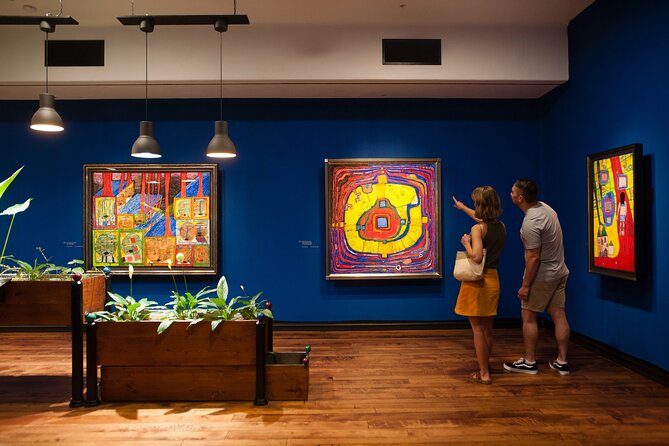
Inside, the main focus is the collection of Hundertwasser art connected with New Zealand from 1973 to 2000. It is described as the largest collection of his work outside Vienna, which gives the centre importance beyond its local role.
Expect a mix of artworks, models, and material explaining his approach. The models are particularly useful because they show how his ideas translated into buildings. A painting can suggest his use of color and shape, but a model helps you understand how he imagined architecture that bends, curves, grows, and makes space for trees.
The ecological side is just as important. Hundertwasser’s slogan, You are a guest of Nature, so behave, sums up the message. The centre presents his belief that people have a duty to protect the natural world, not treat it as an afterthought.
This is where I would slow down if you are interested in environmental design. The displays ask a practical question: what would cities look like if trees, soil, irregular forms, and human comfort mattered as much as efficiency? You may not agree with every idea, but the exhibition gives you plenty to consider.
A small film theatre shows documentaries on a loop. This can add useful background, especially if you want to understand Hundertwasser’s life and work beyond the objects in the galleries. The film is not a reason to visit on its own, and some people may find it less effective than the building and displays. Treat it as an optional pause rather than the centrepiece of your visit.
Wairau Māori Art Gallery and Aotearoa’s story
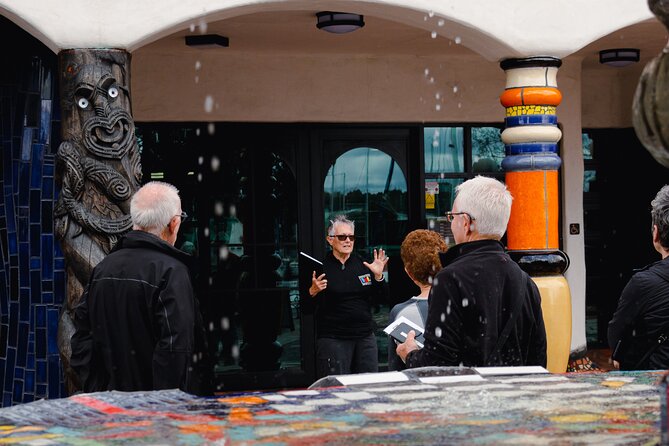
Your admission also includes the Wairau Māori Art Gallery. This is the world’s first dedicated Māori public art gallery, and its exhibitions change over time. The focus is contemporary Māori art, with artists exploring indigenous themes and the history of Aotearoa.
This gives the visit a second layer. Hundertwasser’s work asks how people can live more responsibly with nature, while the Māori gallery presents contemporary artistic responses to identity, place, culture, and New Zealand’s past. The two spaces are different, but both encourage you to think about how people relate to land and community.
Because the exhibitions change, the exact experience depends on what is showing when you visit. You should expect a more current, artist-led presentation here rather than a fixed display of historic objects. That variety is one reason the centre can be worth returning to, especially if you are spending more time in Northland.
Give the Māori gallery proper attention rather than treating it as a quick extra. The bright Hundertwasser architecture may grab you first, but the Wairau exhibitions provide a more direct connection to contemporary Aotearoa.
Same city, a different facade:
- Chicago Architecture Center River Cruise aboard First Lady
★ 5.0 · 5,536 reviews - Chicago: Architecture River Cruise Skip-the-Ticket Line
★ 4.8 · 4,325 reviews - Chicago River 45-Minute Architecture Tour from Magnificent Mile
★ 4.5 · 2,924 reviews - Barcelona: Sant Pau Recinte Modernista Entry Ticket
★ 4.6 · 2,567 reviews
The Afforested Roof and Whangarei views
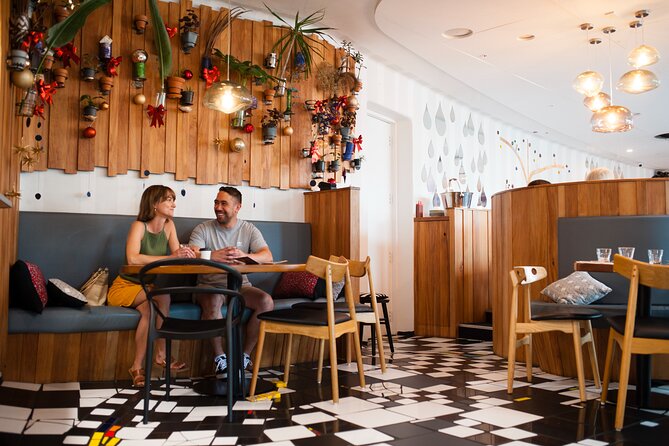
The roof is one of the clearest reasons to include this stop in your plans. The award-winning Afforested Roof is planted and topped by a golden cupola. From here, you get sweeping 360-degree views of Whangarei, the Hātea River, and the surrounding city.
This is not a separate lookout that you need to book. It is part of the centre, so you can treat it as the final stage of your visit or head up early to get your bearings. The views help you understand the building’s relationship with the city below.
The roof also makes Hundertwasser’s ecological ideas physical. Instead of leaving the top of a building as a hard, unused surface, the design brings plants into the architecture. It is a simple concept, but seeing it in use makes the idea easier to grasp.
Take your time up here if the weather is good. The cupola and planted roof are worth examining, but the main reward is the open view. If you are deciding how to use a limited amount of time, combine the roof with the exterior architecture and the main exhibition.
Self-guided entry or the one-hour guided tour
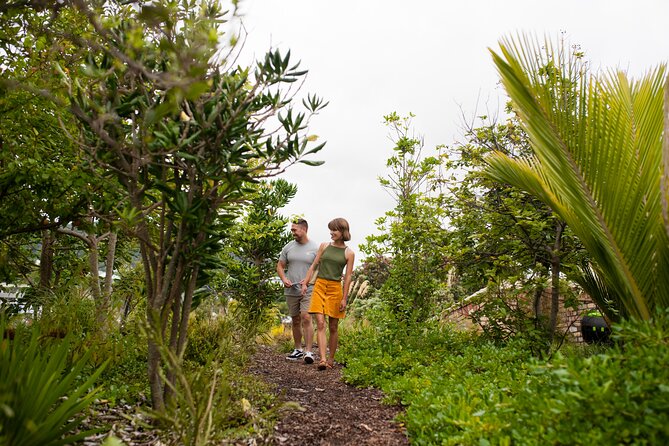
The standard admission is self-guided. That suits you if you like to move at your own speed, read selected displays, and spend extra time on the parts that interest you. You can also return later the same day because admission provides full-day access.
An additional one-hour interactive guided tour is available if you want a more structured visit. The supplied information does not name individual guides, so you should not expect to book around a particular guide. The useful point is the format: a guide can connect the art, architecture, ecology, and New Zealand setting in a shorter, more focused visit.
I would choose the guided option if Hundertwasser is new to you, or if you have only one hour and want the main ideas explained clearly. I would choose self-guided entry if you are comfortable reading displays and want time for both galleries and the roof.
The difference matters because the centre contains several kinds of material. Without guidance, you can enjoy the colors and shapes immediately, but you may miss some of the thinking behind the design. With guidance, you gain context, but you lose some freedom to linger alone.
Is $18.62 good value?
At $18.62 per person, the admission is reasonable if you plan to use the full-day access and visit both galleries. The value improves if you combine the Hundertwasser exhibition, Wairau Māori Art Gallery, film theatre, and Afforested Roof rather than stopping only for a quick look at the façade.
The price may feel high if your main interest is architecture and you only want to see the outside. The building is free to admire from around the Town Basin, and one criticism of the paid visit is that the interior architecture may not feel as strong as the exterior.
I would think of the ticket as paying for a compact cultural centre, not just a gallery room. You receive access to multiple spaces and can return later the same day. A meal at the on-site restaurant, if open during your visit, can extend the stop, though food is not included in admission.
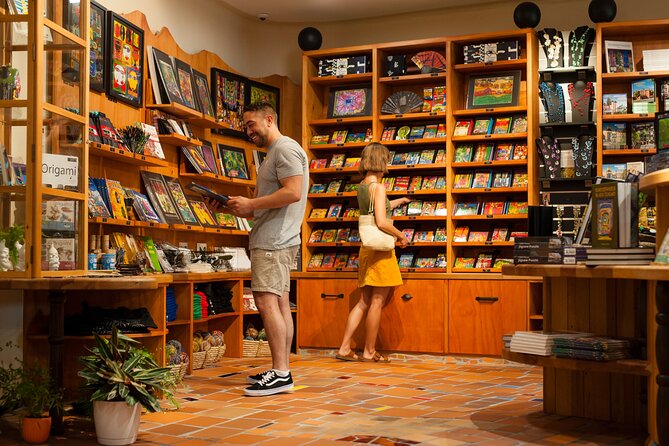
The MuseumShop is another optional part of the visit. It carries Hundertwasser applied art, unusual objects, gifts, and Wairau-related items. You do not need to buy anything, but it gives you a chance to take home something connected with the centre rather than a generic souvenir.
Who will enjoy this most?
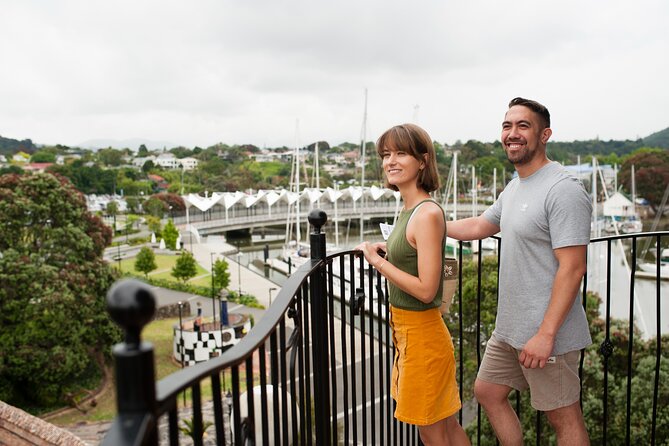
This experience suits you if you like architecture, modern art, environmental ideas, or contemporary Māori art. It also works well for families because the shapes and colors are easy to enjoy before children understand the larger ideas.
Teenagers may find the building more approachable than a conventional museum. The irregular design, strong colors, roof, and models give them something visual to discuss. The ecological message also offers a practical subject rather than an abstract art lesson.
You may be less satisfied if you want a large collection of original paintings or a long, detailed documentary. The centre’s appeal depends on the complete setting: building, art, ecological ideas, Māori gallery, roof, and city views. It is not designed as a major national museum with endless rooms.
The Town Basin location also helps. You can combine the centre with nearby restaurants and a riverside walk, making the ticket part of a wider Whangarei outing rather than an isolated stop.
Practical details before you go
You can receive confirmation when booking, and the ticket is mobile, so you do not need a printed voucher. The centre is near public transportation, and service animals are allowed. Most people can take part.
Admission is available for the whole day, which gives you room to plan around lunch or other downtown activities. The advertised visit takes roughly one to three hours, depending on whether you read closely, watch the films, spend time in the Māori gallery, and linger on the roof.
The guided tour costs extra, so check that you are booking the option you want. If you choose the self-guided ticket, you still receive access to the full centre, but not the additional guided experience.
Free cancellation is available if you cancel at least 24 hours before the start time. Cancellations or changes made less than 24 hours ahead are not accepted for a refund, and cut-off times use local time.
Should you book the Hundertwasser Art Centre?
Book it if you want an unusual Whangarei stop that combines art, architecture, ecology, Māori creativity, and city views. The Afforested Roof and striking exterior are the most immediate rewards, while the two galleries give you reasons to stay longer.
I would book the self-guided visit if you have one to three hours and want flexibility. Add the guided tour if you prefer a clear explanation of Hundertwasser’s ideas or have limited time. I would skip the ticket only if you are interested solely in exterior architecture, since the inside collection may feel limited for the price.
For most people spending time in Whangarei, this is a worthwhile Town Basin stop. Come ready to look closely at the building, not just snap a photo, and the centre will give you a better sense of Hundertwasser’s unusual way of joining art, nature, and everyday life.
FAQ
Where is the Hundertwasser Art Centre located?
It is in Whangarei on New Zealand’s North Island, near the Town Basin and the Hātea River.
How much does admission cost?
The listed price is $18.62 per person.
How long does the experience take?
The visit takes approximately one to three hours, depending on how much time you spend in the galleries, film theatre, MuseumShop, and Afforested Roof.
Does the ticket provide all-day access?
Yes. Admission provides access to the centre for the full day, allowing you to leave and return later.
Is a guided tour included?
No. The guided tour is an additional option and is not included with standard admission.
How long is the guided tour?
The optional interactive guided tour lasts one hour.
What can I see at the Hundertwasser exhibition?
You can see the Hundertwasser in New Zealand 1973 to 2000 exhibition, which presents the largest collection of Hundertwasser artworks outside Vienna along with examples of his ecological practices.
What is the Wairau Māori Art Gallery?
It is the world’s first dedicated Māori public art gallery. It presents changing exhibitions by contemporary Māori artists exploring indigenous themes and Aotearoa’s history.
Can I see views from the building?
Yes. The Afforested Roof and golden cupola provide 360-degree views over Whangarei, the Hātea River, and the city.
Is the experience accessible by public transportation?
The centre is near public transportation. Service animals are allowed, and most people can participate.
Can I cancel for a refund?
Yes, if you cancel at least 24 hours before the experience start time. Cancellations made less than 24 hours in advance are not refunded.
Newly added in the world
- Barcelona: Guided tour e-bike Barcelona historical and modernist Barcelona★ 4.5 · 5 reviews
- Barcelona Architecture Walking Tour With Casa Batlló Upgrade★ 4.8 · 11 reviews
- Barcelona Beyond Gaudí: Modernism, Rooftops, and Hidden Gems★ 5.0 · 2 reviews
- Astana: Old City Tour, Imperialistic and Soviet Architecture★ 5.0 · 4 reviews
- An Architect’s Tour of Downtown Santiago★ 5.0 · 7 reviews
- Architecture Tour: Old Historic Madrid with an architect★ 4.3 · 3 reviews
- London: Architecture Tour of Benjamin Franklin House★ 5.0 · 5 reviews
- Architectural Wonders of KAFD, An Iconic Destination★ 5.0 · 3 reviews
New Zealand Architecture Tours, compared.
Guided 10am Morning Art Deco Walk From Napier Art Deco Trust
Read our review →
Guided 2pm Afternoon Art Deco Walk from Napier Art Deco Trust
Read our review →
Shore Excursion: 4 Hour Premium Hawke’s Bay, Napier Art deco Tour
Read our review →
Napier and Hawkes Bay Scenic and Art Deco Tour by VW Kombi
Read our review →Browse the lists this tour appears in