

Review · 2-HOUR EXPERIENCES
2 Hours Savannah Architectural Tour
Savannah’s buildings tell a better story when you know who designed them, who paid for them, and how they survived. This two-hour architectural walk moves through squares, quiet residential streets, and major landmarks while focusing on the people behind the facades, including William Jay, John Norris, and Hyman Witcover.
I like the small maximum of 10 people, which gives you room to ask questions. I also like the supplied map and optional listening system, useful touches when a guide is speaking outdoors and the group is spread along a sidewalk. The main drawback is simple: you only look at the house museums from outside, since admission is not included.
Key points to know before you book

- Nine stops connect Savannah’s buildings to their architects, rather than treating the city as a collection of pretty facades.
- The route runs from the Juliette Gordon Low Birthplace Museum to Lafayette Square, covering several historic squares and residential blocks.
- The group is limited to 10 people, a good fit if you prefer conversation over a large crowd.
- Optional headphones let you hear the guide from up to 150 feet away, handy on city sidewalks.
- A take-home landmark map extends the experience, helping you revisit buildings after the tour.
- The $50 price covers an outdoor walking lesson, but not admission to any house museum.
Why Savannah makes a good architecture classroom
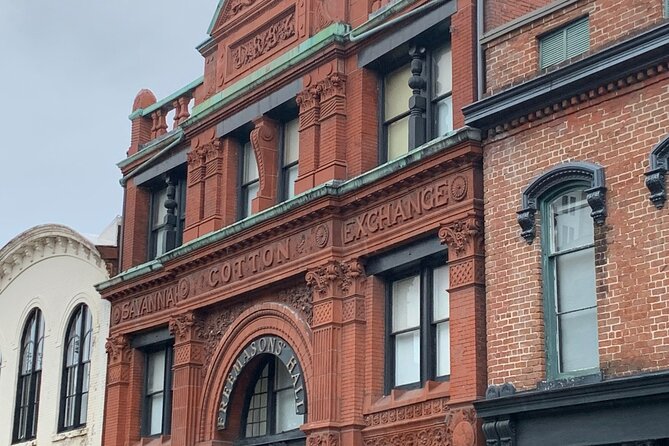
Savannah can seem easy to understand at first. Walk through the squares, admire the ironwork and columns, take a few photographs, and move on. The trouble is that the city’s beauty can blur its details. This tour slows the picture down and gives you a way to read it.
The focus is not only on architectural styles. You learn about the architects and builders who shaped the city, along with the owners, institutions, and preservationists connected to the buildings. That human angle gives the tour more weight than a simple list of dates.
You also get a look at the city’s square arrangement and the way its historic buildings relate to one another. Several people who already knew Savannah well found the architectural focus gave them information they had not picked up on earlier visits. That makes this a useful choice for a repeat visitor, not just someone seeing the city for the first time.
The route is described as an easygoing walk, but you should still expect to be outside for about two hours. Savannah weather can make a difference. Guides have provided water, carried umbrellas, and looked for shade when conditions were hot, but sensible shoes, sun protection, and water remain good ideas.
More Two-Hour Tours in the USA:
- Miami: 2-Hour Art Deco Bike Tour
★ 4.6 · 155 reviews - Guided Gaudí Trencadís Mosaic Workshop in Barcelona 2 Hours
★ 5.0 · 176 reviews - Gaudi’s Barcelona 2-Hour Segway Tour with a Live Guide
★ 4.9 · 67 reviews
Starting beside the Juliette Gordon Low Birthplace
The tour begins at 124 Abercorn Street, near the Juliette Gordon Low Birthplace Museum. This is an effective starting point because the first conversation turns to William Jay, often called Savannah’s father of architecture.
You do not enter the birthplace museum on this tour. Instead, the stop sets up the main idea: architecture is tied to people, taste, money, materials, and changing needs. The allotted time is about 10 minutes, so expect a focused outdoor talk rather than a full treatment of the building.
This opening should appeal to you if names and design details help you remember a place. If you mainly want interior access, make a note that house museum tickets are separate.
Harper Fowlkes House and the city’s private side
The next stop is Harper Fowlkes House, with a discussion of Charles Klusky. The tour continues to treat the building as evidence of how Savannah developed, rather than simply pausing for a photograph.
You then walk to Orleans Square, where the guide returns to the Harper Fowlkes House and discusses the site of what was once the Bullochs House. This pairing gives the route a useful rhythm. You hear about a building, then consider the earlier structure and the changes that shaped the square.
Orleans Square also brings you into the pattern of Savannah’s public spaces and residential streets. The route is not limited to the city’s most photographed corners, which helps explain why the walk can feel calmer than a standard introduction to downtown.
SCADstory and the old armory
At SCADstory, the subject shifts to Savannah’s original armory and architect William Gibbons Preston. The stop lasts about 15 minutes, giving the guide more time to explain the building and its place in the city.
This is one of the points where the tour’s wider purpose becomes clear. A building can have several identities over time. Its current use is only one part of the story, while its earlier civic or military role helps you understand why it was built in the first place.
You should not expect admission to SCADstory as part of the walk. The tour remains outdoors, with the guide using the exterior as a teaching tool.
A few more architecture walks in the USA worth a look
- Chicago Architecture River Cruise
★ 5.0 · 15,756 reviews - Chicago River 90-Minute Architecture Tour
★ 4.5 · 9,629 reviews - Chicago River: 1.5-Hour Guided Architecture Cruise
★ 4.8 · 8,046 reviews - Chicago Architecture Center River Cruise aboard First Lady
★ 5.0 · 5,536 reviews
The Gryphon Tea Room and Hyman Witcover
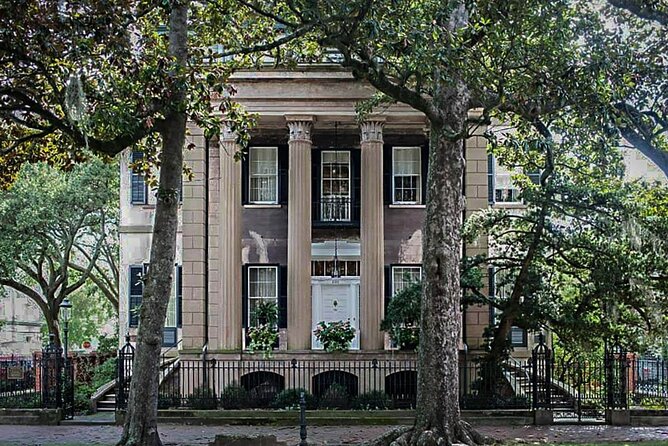
The stop at the Gryphon Tea Room brings in the Scottish Rights Temple, an appendage of the Freemasons, and architect Hyman Witcover. With roughly 15 minutes here, the guide can connect the structure to the organizations and public life that helped shape Savannah’s built environment.
This section should suit you if you enjoy the less obvious layers of a city. The tour is not only about famous homes. It also considers buildings tied to clubs, institutions, and civic groups, places that can be easy to pass without asking why they look the way they do.
The Gryphon Tea Room is identified as a stop for discussion, not a scheduled meal. Plan to eat separately unless your booking information says otherwise.
Mercer Williams House and the preservation story
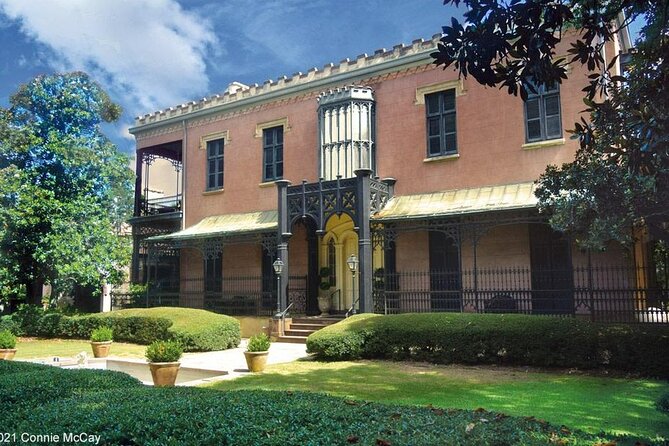
At Mercer Williams House Museum, the conversation turns to architect John Norris and preservationist Jim Williams. The building is one of the better-known names on the route, but the emphasis remains on architecture and preservation rather than a museum visit.
This is an important distinction. You get the exterior setting and the story connected to the house, but admission inside is not part of the $50 fee. If you want to tour the interior, you will need to arrange that separately.
The preservation angle adds useful context. Historic buildings do not simply survive because they are attractive. Owners, advocates, and preservationists make choices about what to repair, retain, or change. That idea carries through the rest of the tour.
Green-Meldrim House and John Norris
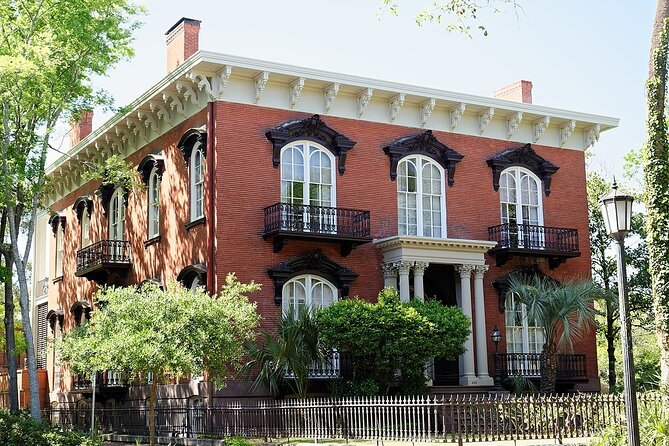
The next stop is Green-Meldrim House, again tied to John Norris. With about 15 minutes devoted to the site, you have time to compare it with other buildings associated with the architect.
Repeated attention to one architect may be a strength if you like seeing a body of work rather than isolated examples. You begin to notice how a designer’s choices can be compared across different homes and settings. If you prefer a broad survey of every period in Savannah, the concentrated focus on a handful of architects may feel narrower.
That is the tradeoff throughout the experience. This is not a general city tour with a quick architectural aside. It is an architecture-first walk that uses Savannah’s history to explain the buildings.
The Girl Scout First Headquarters
The Girl Scout First Headquarters provides another change of subject. Here, the guide discusses Andrew Low and John Norris, showing how the route connects private homes, civic structures, and organizations.
The stop lasts about 10 minutes. It is a reminder that architectural history is also social history. Buildings become meaningful through the people and groups who use them, not just through their exterior details.
This is also one of the reasons the tour can work for people who do not consider themselves architecture fans. The stories connect design to people, institutions, and the way Savannah grew. You do not need formal training in architecture to follow the discussion.
Lafayette Square, the cathedral, and the final view
The tour ends at Lafayette Square, in front of the fountain at the center of the square, with the listed endpoint at 330 Abercorn Street. The final stop includes St. John the Baptist Cathedral and J.D. Hall’s Hamilton-Turner House.
This ending gives you a strong visual finish. Lafayette Square lets you step back and consider the relationship between the square, the surrounding buildings, and the larger city plan. The cathedral and Hamilton-Turner House also provide a final comparison between different building types and design choices.
Because the tour ends here, you are well placed to continue exploring on foot. Use the supplied map to revisit earlier stops or plan a self-guided walk through nearby squares. The map is not a flashy extra, but it is one of the most practical parts of the experience.
What the $50 price really covers
At $50 per person, this tour costs more than a casual self-guided stroll, but you are paying for a focused lesson, a small group, a guide, a listening system, and a map. The value depends on what you want from Savannah.
If you only want to see the main sights and take photographs, the price may feel high. You can walk many of the same streets without paying. But the route’s real product is interpretation: the names, connections, design clues, and preservation stories that are easy to miss on your own.
The group limit of 10 matters here. A smaller group makes it easier to hear, ask questions, and keep the pace comfortable. Several guides, including Kelse, Kelsea, and Mike, are described as warm, prepared, and willing to answer questions in detail. Guide assignments can vary, so you should not book on the assumption that one particular person will lead your departure.
The optional headphones are another practical advantage. The system lets you hear the guide from as far as 150 feet away, so you do not have to crowd around every stop. That can make a real difference on a busy sidewalk.
Who will get the most from this walk
I would choose this tour if you enjoy old buildings, city planning, preservation, or the stories behind prominent homes. It is especially well suited to:
- First-time visitors who want more than a basic orientation
- Repeat visitors who have already taken general Savannah tours
- Architecture students and design-minded readers
- History fans who like connecting buildings with specific people
- Parents traveling with an older child interested in architecture
- Anyone who prefers a small walking group to a large vehicle tour
You do not need to know architectural terms before you arrive. The guides explain the subject through stories and visible examples, and questions are encouraged.
I would think twice if you have limited tolerance for walking outdoors, want interior tours, or prefer a fast list of major sights. The pace is designed for explanation, and the route can run beyond two hours when the group asks questions or the guide slows down.
Practical details that affect your day
The tour is offered in English and uses a mobile ticket. Confirmation is provided when you book. The starting point is 124 Abercorn Street, and the walk ends at Lafayette Square near the fountain, so plan your transportation around two different addresses.
The experience is near public transportation, and service animals are allowed. Most people can participate, though the activity is still an outdoor walk, so consider the heat, your footwear, and your comfort with standing at several stops.
It requires good weather. If poor weather cancels the experience, you are offered another date or a full refund. If the minimum number is not met, the same options apply.
You can cancel for a full refund up to 24 hours before the start time. Cancellations or changes inside that 24-hour window are not refunded or accepted. Since the tour averages booking about 27 days ahead, early planning is sensible, especially if your Savannah visit is short.
Should you book the Savannah architectural tour?
Book it if you want to understand how Savannah’s buildings came to be, not just photograph them. The strongest part is the connection between architects, owners, organizations, and preservationists, delivered in a small group with enough room for questions.
I would place it near the top of a first or repeat visit for anyone interested in architecture and history. The $50 fee is fair when you use the guide’s interpretation and continue with the map afterward. Just remember that this is an outdoor tour only. If interior access is essential, pair it with separate house museum visits.
FAQ
How long does the Savannah architectural tour last?
The tour lasts approximately two hours. It may run longer when the guide spends extra time answering questions or adjusts the pace for the group.
How much does the tour cost?
The price is $50 per person.
Where does the tour begin?
The tour begins at 124 Abercorn Street, Savannah, Georgia 31401.
Where does the tour end?
It ends at Lafayette Square, in front of the fountain in the center of the square. The listed endpoint is 330 Abercorn Street.
What buildings and places are included?
The route includes the Juliette Gordon Low Birthplace Museum, Harper Fowlkes House, Orleans Square, SCADstory, Gryphon Tea Room, Mercer Williams House Museum, Green-Meldrim House, Girl Scout First Headquarters, and Lafayette Square.
Are house museum admission tickets included?
No. The experience is an outdoor walking tour, and admission to house museums is not included.
Is the tour offered in English?
Yes. The tour is offered in English.
How large is the group?
The tour has a maximum of 10 participants.
Can I hear the guide clearly?
Noble Jones Tours provides optional listening technology that lets you hear the guide from up to 150 feet away.
Is there anything to take home?
Yes. You receive a map to help you continue exploring Savannah after the walking tour ends.
Can I cancel for a refund?
You can cancel at least 24 hours before the start time for a full refund. Cancellations and changes made less than 24 hours before the start time are not accepted and are not refunded.
Newly added in the USA
- Art Deco Tour of South Beach in French★ 4.5 · 8 reviews
- Award-winning Art Deco & Neon Lights Walking Tour★ 5.0 · 5 reviews
- Miami Beach Art Deco Segway Tour★ 4.5 · 17 reviews
- Boston: Freedom Trail History and Architecture Walking Tour★ 4.8 · 18 reviews
- Boston: Harbor and Charles River Architecture Boat Tour★ 4.6 · 9 reviews
- Chicago: Guided Tour with Architecture River Cruise★ 4.5 · 20 reviews
- Iconic Capitol Hill Architectural Walking Tour★ 5.0 · 21 reviews
- South Beach Food Tour- Culinary & Art Deco & History★ 5.0 · 22 reviews
2-Hour Experiences, compared.

Guided Gaudí Trencadís Mosaic Workshop in Barcelona 2 Hours
Read our review →
Gaudi’s Barcelona 2-Hour Segway Tour with a Live Guide
Read our review →
Life of Gaudi and Architectural | Walking Tour | 2h
Read our review →
Neoclassical Paris Architecture 2-Hour Private Walking Tour
Read our review →Browse the lists this tour appears in