
Review · 2-HOUR EXPERIENCES
The wonders of architecture 2 hours on foot in Barcelona
Barcelona’s architecture changes quickly on this walk. You begin beside the medieval cathedral, pass the ornate Palau de la Música Catalana, cross from the old city into the Eixample, and finish among Gaudí’s most famous neighbors on Passeig de Gràcia. The contrast is the point. Stone Gothic forms give way to color, curves, ironwork, and the playful excess of Catalan modernisme.
I like the small maximum of 10 people, which should make it easier to ask questions and hear the guide in busy streets. I also like the human side of the tour: guides such as Florence have been praised for clear storytelling, humor, family-friendly explanations, restaurant tips, and a willingness to adapt the route. The main drawback is that this is a fast exterior-focused walk. Admission to the cathedral, Palau de la Música, and private houses is not included, so you will not see their interiors during the scheduled stops.
Key points at a glance
- A clear architectural timeline: See medieval Barcelona, Catalan cultural revival, and modernist design in one compact route.
- French-language guidance: The tour is designed for French speakers and is led in a friendly, relaxed style.
- A group capped at 10: Small numbers make conversation and questions more practical.
- Six named stops: The route includes Barcelona Cathedral, Palau de la Música Catalana, Plaça Catalunya, Casa Lleó i Morera, Casa Amatller, and Casa Batlló.
- A useful first-day walk: The route connects the Gothic Quarter with the Eixample and ends near major central sights.
- Outdoor viewing with optional return visits: Entry fees are not included, so you can decide later which interiors deserve your time and money.
Why this two-hour route works
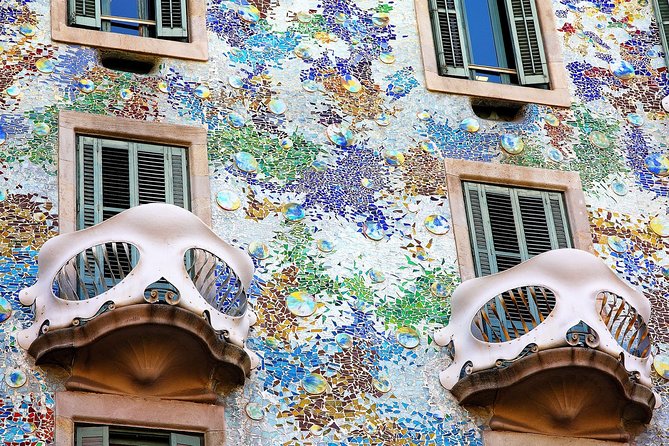
Barcelona can feel like several cities pressed together. The old center has narrow streets and medieval stone. The Eixample has broad avenues, planned blocks, and grand apartment buildings. Modernisme then adds sculpted balconies, colored tiles, unusual windows, and facades that seem to move.
This tour gives you a way to read that change. Instead of seeing Casa Batlló as an isolated photo stop, you meet it after seeing earlier buildings and urban districts. That makes the final comparison more useful. You begin with the city’s religious and civic traditions, then follow the growth of modern Barcelona and the wealthy families who commissioned striking homes.
The pace is brisk but manageable. The listed stops add up to about 80 minutes of structured explanation, leaving time to walk between them and pause for extra questions. Because the tour lasts around two hours, it fits neatly into a morning without taking over your day.
I would treat it as an introduction rather than a full architectural study. You get names, design details, stories, and context. If you want to inspect every tile or enter every building, you will need separate visits afterward.
More Two-Hour Tours in Barcelona:
- Guided Gaudí Trencadís Mosaic Workshop in Barcelona 2 Hours
★ 5.0 · 176 reviews - Gaudi’s Barcelona 2-Hour Segway Tour with a Live Guide
★ 4.9 · 67 reviews - Life of Gaudi and Architectural | Walking Tour | 2h
★ 5.0 · 35 reviews
Starting at Barcelona Cathedral
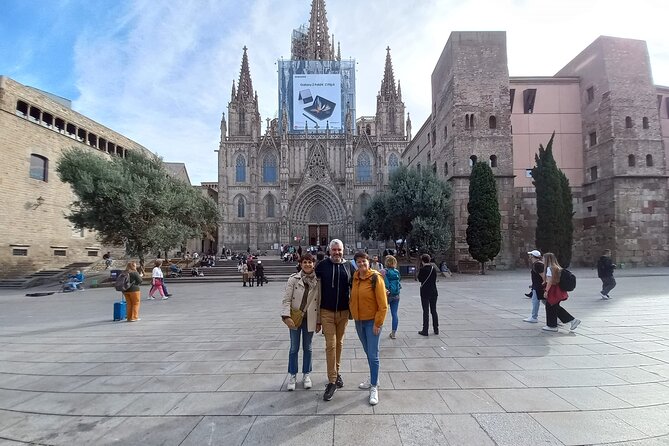
The meeting point is Plaça de Ramon Berenguer el Gran in Ciutat Vella, with a start time of 10:30 a.m. This places you near the cathedral and the edge of the Gothic Quarter. Arrive with your mobile ticket ready and give yourself enough time to find the square, since the old center has streets that can be confusing at first.
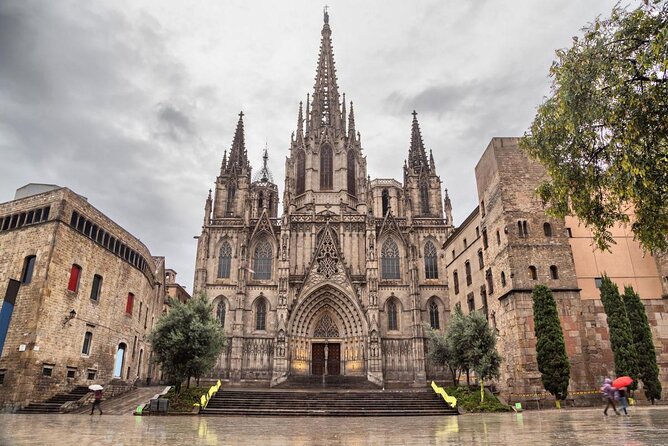
The cathedral stop lasts about 15 minutes. The guide focuses on details and stories tied to its construction, rather than asking you to absorb the whole building in one glance. That is a good approach here. The facade, towers, stonework, and surrounding streets can seem like a wall of information unless someone points out what deserves your attention.
Admission is not included. The stop is therefore best understood as an exterior introduction, unless you choose to return and pay for entry on your own. If the cathedral interior is important to you, plan a separate visit and check current opening details independently.
This beginning also gives the tour a useful sense of place. You are not starting with the most famous modernist facade. You are starting with Barcelona’s older civic and religious world, which helps the later buildings feel like part of a long argument about identity, wealth, and design.
Palau de la Música and Catalan cultural pride
From the cathedral area, the walk continues to the Palau de la Música Catalana. The scheduled explanation lasts around 15 minutes and centers on the building’s architecture, anecdotes, and founding myths connected to Catalonia.
The Palau is a strong choice for this route because it brings music, regional identity, and decoration into the story. You are not simply looking at a pretty concert hall. You are considering why a building connected to Catalan culture received such care and visual drama.
Again, admission is not included. The outside discussion may leave you wanting more, especially if you enjoy stained glass, sculpture, and concert halls. That is not a flaw in the tour itself, but it matters when you compare the price with a guided interior visit. This walk is priced for orientation and interpretation, not for a package of entrance tickets.
I like the way this stop follows the cathedral. The two buildings offer a useful comparison between older religious architecture and a later cultural institution. Your guide can also connect the building to local myths and the broader story of Catalan self-expression.
Plaça Catalunya, where two Barcelonas meet
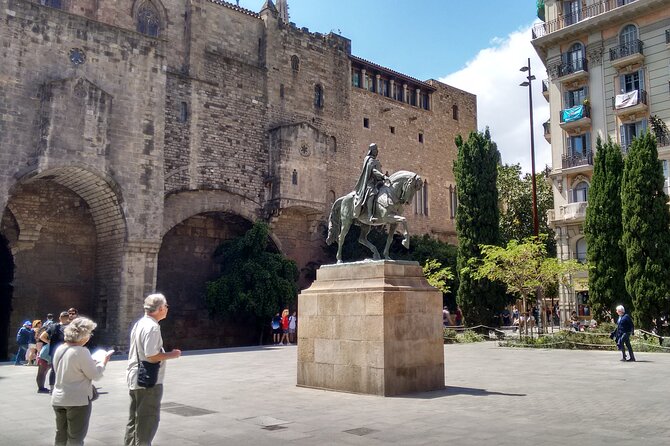
The next stop is Plaça Catalunya, a free public space and a natural hinge in the route. The tour spends about 15 minutes here, describing the square as the border between the old city and the modern city.
That description is more useful than it may sound. Plaça Catalunya is not just a place for photographs or directions. It marks a shift in the way Barcelona was organized and experienced. From here, the route moves toward the Eixample and its broad streets, planned blocks, and grand apartment buildings.
This is also where the tour’s urban story becomes clearer. The old city grew through layers of history and tight streets. The newer district offered room for expansion and larger homes. The architecture you see later reflects that change, with wealthy owners competing to make their buildings more distinctive.
The itinerary also refers to this section as the Champs Elysees in Barcelona. That points you toward the grand boulevard atmosphere of Passeig de Gràcia, where several of the most famous modernist houses appear. The walk is not only about individual facades. It is also about how Barcelona used streets and buildings to present itself as a modern European capital.
A few more architecture walks in Barcelona worth a look
- Barcelona: Sant Pau Recinte Modernista Entry Ticket
★ 4.6 · 2,567 reviews - Barcelona: Sagrada Familia, Modernism, and Old Town Tour
★ 4.7 · 1,621 reviews - Ramblas, Old Town, Gothic and Gaudi Architecture Walking Tour
★ 5.0 · 723 reviews - Historical and Modernist Bike Tour Barcelona
★ 5.0 · 262 reviews
Passeig de Gràcia and the competition of modernisme
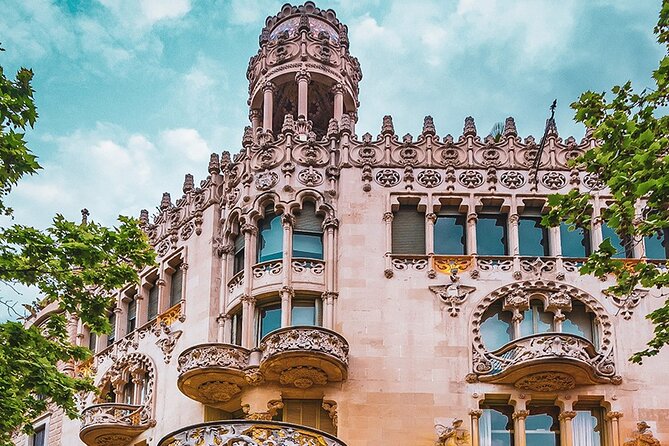
The route then reaches Casa Lleó i Morera, Casa Amatller, and Casa Batlló. These buildings are part of the famous block often called the Block of Discord, where several architects created very different facades beside one another.
Casa Lleó i Morera receives about 10 minutes. The tour describes it as one of the buildings on this celebrated block and uses the stop to show how much design ambition could be packed into a single city block. You may find the building’s details easier to appreciate after the guide explains where to look and how it differs from its neighbors.
Entry is not included. The practical value here is the comparison from the street. You can see how one building speaks through its own arrangement of windows, ornament, and surface treatment, then turn a few steps and meet a completely different design language.
Next comes Casa Amatller, also with about 10 minutes. This stop helps break the common habit of treating every unusual building in Barcelona as Gaudí’s work. Casa Amatller belongs to the same competitive modernist setting, but it has its own identity and deserves to be considered on its own terms.
This is one of the strongest reasons to take an architecture-focused walk rather than simply follow a list of famous photo locations. Your guide can explain the rivalry, the clients, and the changing tastes behind the facades. Even if you do not remember every architect’s name, you should leave with a better eye for differences in shape, decoration, and proportion.
The block can be crowded, and street viewing has limits. You may need to stand at an angle or wait for a clear view. A small group helps, but this is still a busy central area. Keep your attention on the guide and your surroundings.
Finishing at Casa Batlló
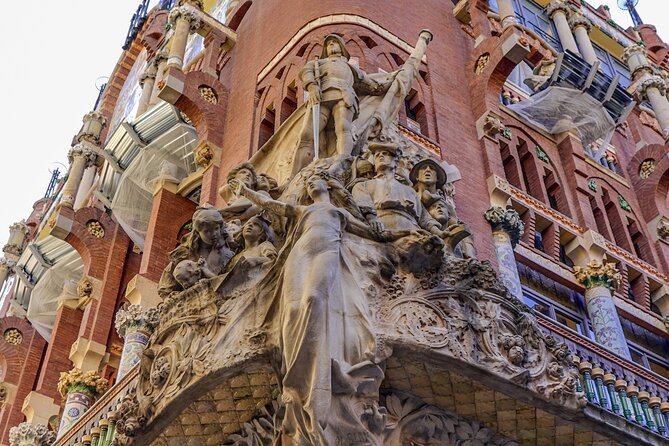
The final stop is Casa Batlló, where the tour spends about 15 minutes exploring the building’s distinctive features and Antoni Gaudí’s approach. The walk ends at Casa Batlló, at Passeig de Gràcia 43.
This is a sensible ending. By now, you have seen medieval construction, a Catalan cultural landmark, the city’s major urban divide, and several competing modernist facades. Casa Batlló becomes a finale rather than the whole story.
The building is famous for its curves, color, and imaginative detail. A guide can help you look beyond the broad impression and notice how the facade works as a complete composition. You may also hear how Gaudí’s design fits into the wider circle of architects and wealthy patrons who shaped this part of Barcelona.
Admission is not included. If you decide you want the interior, you can arrange that separately, but do not assume the walking tour ticket covers it. The exterior explanation still has value, especially if you are deciding which buildings deserve a paid visit.
The end point is useful for the rest of your day. You are close to major shopping streets, central transport links, and other Eixample sights. The tour does not return you to the starting square, so plan around a one-way walk.
What the guide adds
The provider, Barcelona Autrement, presents the experience in French and aims for a relaxed, approachable tone. Florence is the guide most often associated with the supplied feedback, while Valérie is also named in connection with other small-group visits. Availability of a particular guide is not guaranteed, so book this tour for its format and subject rather than for a promised individual.
The strongest pattern in the guide feedback is personal attention. Florence is described as explaining Barcelona naturally, with humor and a style that works for both younger and older family members. Some families used her for more than one visit, including groups with children as young as four and six.
That matters because architecture tours can become dry if they turn into a list of dates and names. Here, the emphasis appears to be on anecdotes, unusual details, local culture, and practical suggestions for the rest of your stay. Restaurant advice is also part of the guide’s helpful role, although it should be treated as an added benefit rather than a formal feature promised in every booking.
The guide has also been praised for adapting to requests and remaining friendly in poor weather. Still, the experience requires good weather, so a rainy-day cancellation is possible. If the minimum number of participants is not met, the tour may also be rescheduled or refunded.
Price, group size, and practical value
At $29.67 per person, the tour is reasonably priced for a two-hour guided walk, especially with a group limit of 10. The value comes from the sequence and explanation, not from included admissions.
You should think of the price as paying for a French-speaking guide who connects six important locations. You are not paying for cathedral entry, a Palau concert hall visit, or a Casa Batlló interior ticket. That keeps the cost lower and gives you control over which paid sights you visit later.
The mobile ticket is convenient, and the route is near public transportation. Most people can take part, and service animals are allowed. Because this is a walking experience, wear shoes that are comfortable for two hours and prepare for the possibility of standing on busy sidewalks while the guide speaks.
Confirmation is sent within 48 hours of booking, subject to availability. Free cancellation is available until 24 hours before the start time for a full refund. Changes or cancellations inside that 24-hour window are not accepted for a refund.
Who will get the most from this walk
I would choose this tour if you want a clear first look at Barcelona’s architecture without committing half a day to a formal museum visit. It suits first-time visitors, French-speaking families, couples, and anyone who wants a guide to explain why the buildings look so different from one another.
It is also a good match if you enjoy cities through their streets rather than only through interiors. The route gives you a practical sense of how the Gothic center connects to the Eixample and how modernist buildings fit into Barcelona’s social and cultural story.
Families may appreciate the short stops and conversational style. The small group can make it easier for children to ask questions, although the walk still involves city streets and repeated pauses.
I would choose something else if you want a slow technical study of Gaudí, a full interior tour, or guaranteed entry to several sites. The two-hour schedule gives you breadth, not exhaustive detail.
Should you book The Wonders of Architecture?
Book it if you want to see Barcelona’s major architectural contrasts in one efficient morning, with explanations in French and a group capped at 10. The route is especially useful early in your stay, when you want to understand the city’s layout and decide which buildings deserve a return visit.
Skip it if your priority is entering the cathedral, Palau de la Música, and Casa Batlló during the same outing. Those admissions are not included, and the tour is built around exterior viewing.
For most French-speaking visitors who value a warm guide, local stories, and a well-chosen route, the price is fair. You get a focused introduction to Barcelona’s architecture, plus practical ideas for the rest of your visit.
FAQ
How long does the architecture tour last?
The tour lasts approximately two hours.
Where does the tour begin?
It begins at Plaça de Ramon Berenguer el Gran in Barcelona’s Ciutat Vella.
What time does the tour start?
The scheduled start time is 10:30 a.m.
Where does the tour finish?
It ends at Casa Batlló, Passeig de Gràcia 43, in the Eixample.
Is the tour conducted in French?
Yes. The experience is conducted in French by passionate local guides.
Are admission tickets included?
No. Admission to Barcelona Cathedral, the Palau de la Música Catalana, Casa Lleó i Morera, Casa Amatller, and Casa Batlló is not included. Plaça Catalunya is free.
How many people can join the tour?
The tour has a maximum of 10 participants.
Can I cancel for a full refund?
Yes. You can cancel at least 24 hours before the local start time for a full refund. Poor weather or failure to meet the minimum number of participants may also lead to a rescheduled experience or full refund.
Newly added in Barcelona
- Roman & Gotic & Gaudi in Barcelona: private walking tour★ 4.5 · 2 reviews
- Barcelona Gaudi Tour: Sagrada Familia, Casa Batllo & Casa Mila★ 5.0 · 4 reviews
- Visit to the Modernist houses of the Americans★ 5.0 · 2 reviews
- Self-Guided Audio Tour-The Surrealist Barcelona of Dalí and Gaudí★ 3.5 · 8 reviews
- Barcelona Street Escape: Gaudi and the Hidden Treasure★ 5.0 · 17 reviews
- Gaudí & Catalan Modernism Private Walking Tour★ 5.0 · 11 reviews
- Gaudí and Barcelona Legends – Private Tour★ 5.0 · 4 reviews
- Sagrada Familia Private Tour – Unlock the mysteries of Gaudi★ 5.0 · 10 reviews
2-Hour Experiences, compared.
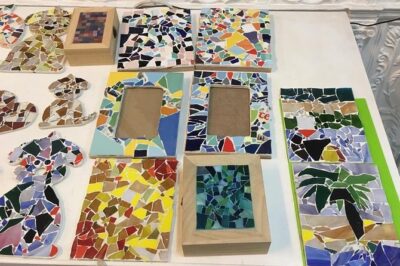
Guided Gaudí Trencadís Mosaic Workshop in Barcelona 2 Hours
Read our review →
Gaudi’s Barcelona 2-Hour Segway Tour with a Live Guide
Read our review →
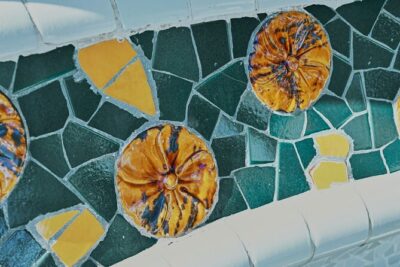
Life of Gaudi and Architectural | Walking Tour | 2h
Read our review →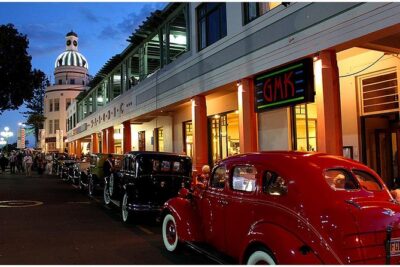
Small group – Napier City & Art Deco Tour, 2 hours
Read our review →
Neoclassical Paris Architecture 2-Hour Private Walking Tour
Read our review →
Browse the lists this tour appears in