
Review · TICKETS
Valencia: Art & Architecture Guided Tour with Monuments Tickets
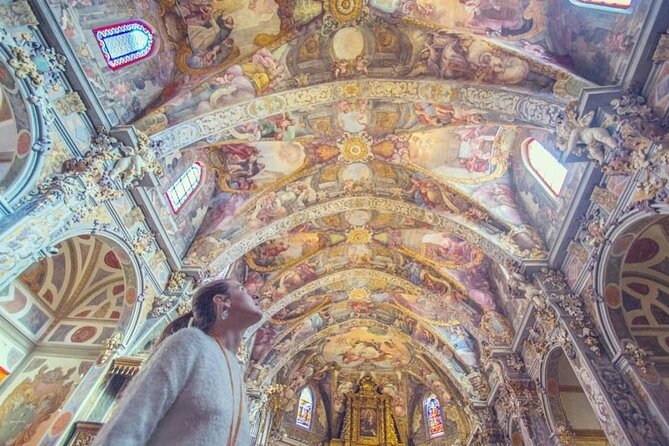
San Nicolás Church is the star here. Its Gothic bones are covered by nearly 2,000 square meters of restored Baroque frescoes, earning it the nickname Valencian Sistine Chapel. Add the Holy Chalice in Valencia Cathedral and the grand Gothic Silk Exchange, and this walking tour gives you far more than a quick look at old façades.
I like the way the route connects art with daily life, especially the explanation of why Valencia has so many palaces around El Carmen. I also like the included admission tickets, which can save time at three major monuments. The main drawback is pace: three hours covers a lot, so you may not get long photo stops or enough time for every question.
- San Nicolás Church: See its dramatic painted vaults and, when available, the church’s striking light presentation.
- La Lonja de la Seda: Enter Valencia’s UNESCO-listed Gothic silk exchange and learn how trade shaped the city.
- Valencia Cathedral: Explore centuries of architectural change and hear the story of the Holy Chalice.
- Art historian guides: Guides including Benito, Monika, Paulino, Uriel, Carmen, and Jorge have been praised for clear stories and local advice.
- Old-town orientation: Cover key sights on foot in about three hours, with no hotel pickup and a group capped at 20 people.
Why this Valencia walk works so well
This is a history-and-art tour of Ciutat Vella, Valencia’s old center, built around three paid monuments and several important exteriors. You walk from one sight to the next rather than sitting on a bus, so you get a better feel for how the old quarter fits together.
The route is useful on a first day. You see the main historic sights, learn the basic sequence of Valencia’s Roman, Islamic, medieval, Renaissance, and Baroque periods, and finish near the Cathedral and Basilica. That gives you a clear base for exploring on your own later.
The advertised price is $66.54 per person. That is not the cheapest way to see Valencia’s center, but it includes entry to San Nicolás, the Cathedral, and La Lonja de la Seda, along with a professional art historian guide. If you want only exterior views, you can spend less by walking independently. If you want context inside the buildings and help getting through admission lines, the price is easier to justify.
Groups can reach up to 20 people. Some departures have been much smaller, even just two people, but you should book on the assumption that you will be in a group. Small-group walking is a good match for this route, since several parts of the old center are easier on foot than by large vehicle.
Starting with the Serranos gateway and El Carmen
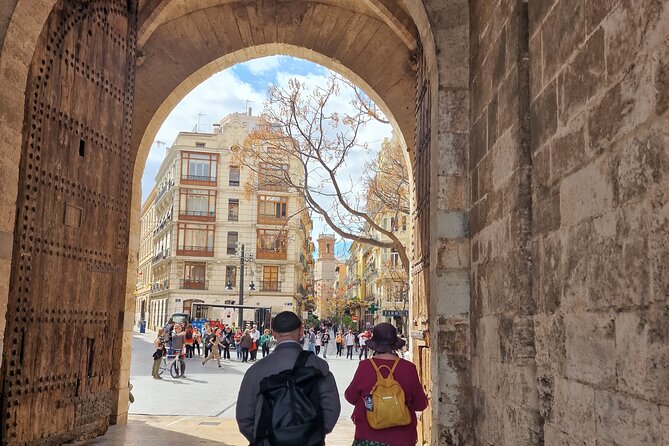
The route is described as beginning at Torres dels Serrans, the former main gate in Valencia’s medieval wall. The towers make a useful first lesson because they connect the city’s defenses with the Turia River and with the different walls built around Valencia over time.
The stop lasts about 20 minutes and has no admission charge. You should expect an exterior explanation rather than a long visit inside the towers. That is fine here. The point is to understand the city’s shape before moving into El Carmen.
Next comes the Palau de la Generalitat, another exterior-focused stop of about 20 minutes. The guide uses Valencia’s many palaces to explain why this part of El Carmen became a center of political and religious power.
This is one of the route’s more valuable transitions. Instead of treating each building as an isolated monument, the guide links the palaces to the people and institutions that shaped the old quarter. The stop does not include admission, so you should not expect an interior tour of the palace.
One practical point needs attention. The booking information gives Plaça de la Verge as the meeting and finishing point, while the route description says the tour starts at Torres dels Serrans. Check the final meeting instructions carefully before setting out. Both locations are in the old center, but they are not the same place.
More Entry Tickets in Spain:
- Barcelona: Park Güell and Gaudí House Museum Entry Ticket
★ 4.5 · 6,326 reviews - Barcelona: Gaudi’s Casa Vicens Skip-the-Line Entrance Ticket
★ 4.7 · 4,541 reviews - Barcelona: Gaudí’s Park Güell Tour with Fast-Track Ticket
★ 4.8 · 4,512 reviews
San Nicolás and the Valencian Sistine Chapel
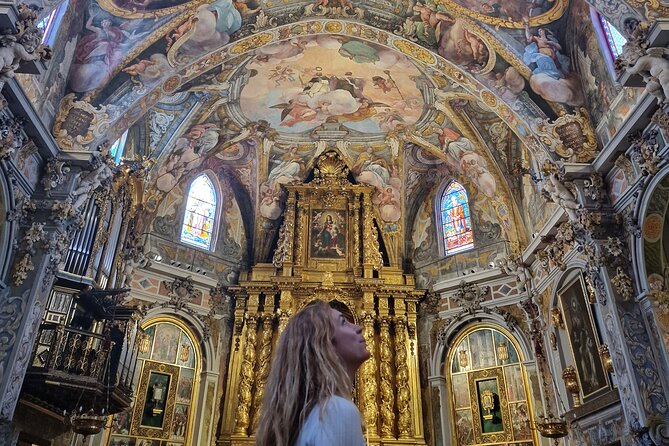
San Nicolás de Bari and San Pedro Mártir is the artistic high point for many people. The church has a Gothic structure dating back more than 700 years, but its interior was later given an extraordinary Baroque treatment.
Look upward and you see almost 2,000 square meters of restored frescoes across the vaults. The paintings cover such a large area that the church is often compared with the Sistine Chapel in Rome. The comparison is about scale and visual impact, not architectural style.
The guide explains how one building can show several layers of Valencia’s past. The site was used for worship in Roman times, later became a mosque, and then a Christian church. Its Gothic framework and Baroque decoration make the changes easy to read.
The visit lasts about 30 minutes and admission is included. That is enough time to understand the main artistic features, but not necessarily enough for a slow, solitary look at every painted detail. If church interiors matter most to you, plan to return independently if your schedule allows.
Several people have especially enjoyed a light presentation set to music inside San Nicolás. The supplied details do not promise that this presentation will run on every departure, so treat it as a possible extra rather than a guaranteed part of the tour. Still, it is worth asking your guide about it.
This stop also shows why a guide helps. Without explanation, you see a highly decorated church. With context, you can follow the contrast between the plain Gothic structure and the later painted surface, and understand why the building matters to Valencia’s religious and artistic story.
La Lonja de la Seda and the power of silk
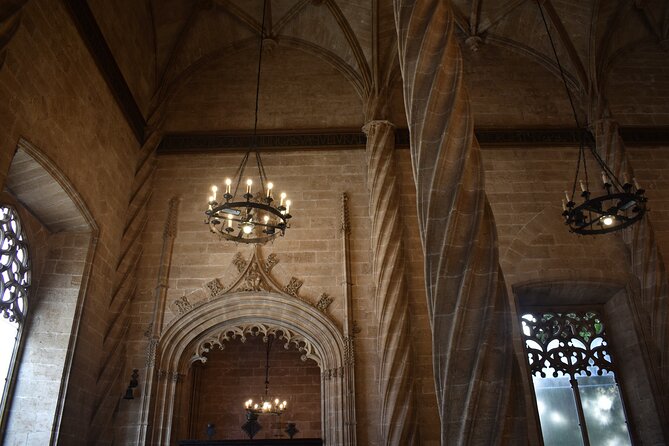
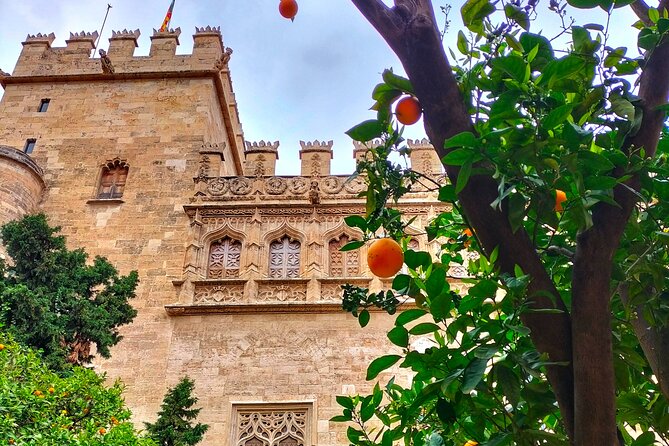
From San Nicolás, the tour continues to La Lonja de la Seda, Valencia’s famous Silk Exchange. This is one of Spain’s best examples of civil Gothic architecture, meaning a grand Gothic building built for commerce rather than worship.
La Lonja was constructed in just 15 years during the 15th century. Its scale reflects the strength of Mediterranean trade at the time, when silk and other goods brought wealth and international connections to Valencia.
You enter the building for roughly 30 minutes, and admission is included. The guide explains why silk mattered and helps you read the building as a place of business, contracts, and trade. This gives the stop a practical edge. You are not just looking at stone columns and ornament. You are seeing the place where commercial power was organized.
The building was named a UNESCO World Heritage Site in 1996 because it is an exceptional example of civil Gothic architecture and a strong reminder of the role played by Mediterranean cities in trade. That designation does not replace the visit, but it tells you why La Lonja deserves time even if you are more interested in history than architecture.
Some departures also include a look at the elaborate ceiling on the second floor. The route information specifically promises entry to La Lonja, but does not spell out every room or level visited on every departure. The guide’s explanation is the main benefit, with the exact interior path depending on access and timing.
Valencia Cathedral, the Holy Chalice, and Renaissance art
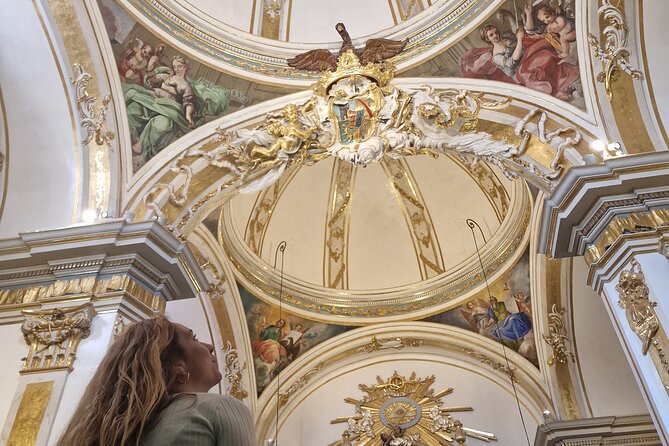
The Cathedral is another 30-minute interior visit, with admission included. It was built over an earlier Roman temple and later mosque, and construction began in the 13th century. Later changes added Romanesque, Gothic, Renaissance, and Baroque elements.
This mixture can feel confusing if you explore alone. A guide helps you sort the styles and see why the building looks less uniform than a cathedral built in one period. Here, architectural changes are part of the story.
The Cathedral’s most famous relic is the Holy Chalice. Many studies identify Valencia’s chalice as the cup used by Jesus at the Last Supper, although the claim remains a matter of faith and historical interpretation. Popes John Paul II and Benedict XVI used the relic during Eucharistic celebrations in Valencia, which gives the object special importance in the city.
The Cathedral also holds major early Spanish Renaissance paintings. Its high altar includes Renaissance frescoes that were rediscovered when a later Baroque vault was removed. That detail gives you a good example of how restoration can change the way people understand a building.
Thirty minutes is enough for an informed introduction, but it is not a full museum visit. If you want to study the chapels, artwork, or Holy Chalice at length, you may need a separate return visit. The benefit of seeing it with a guide is that you leave knowing what deserves a closer look.
More Guided Tours in Spain:
- Park Güell: Guided Tour with Optional Gaudí Experience Entry
★ 4.1 · 832 reviews - Barcelona: Gaudi’s Casa Vicens Guided Tour
★ 4.8 · 401 reviews - Barcelona: Casa Vicens, Pedrera, and Casa Batlló Guided Tour
★ 4.6 · 260 reviews - Guided Gaudí’s Trencadís Mosaic Workshop in Barcelona
★ 4.8 · 259 reviews
Finishing in Plaça de la Mare de Déu
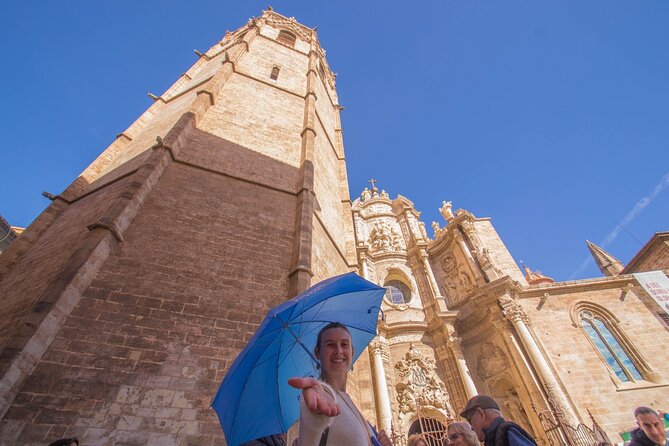
The final stop is Plaça de la Mare de Déu, where the Cathedral and Basilica face each other across one of Valencia’s key historic squares. The tour ends here, and the square is a practical place to continue exploring on foot.
The guide uses the setting to pull together the city’s religious and civic story. You have seen a former medieval gate, government palaces, a decorated Gothic church, a trade hall, and a cathedral shaped by many centuries. Ending beside two major religious buildings gives the route a clear visual finish.
This is also where you can ask for final advice. Guides such as Carmen have helped visitors with suggestions about local food and drinks, while other guides have pointed out small architectural details that are easy to miss. The quality of that personal guidance can vary by departure, but local recommendations are a useful bonus.
The walk covers roughly two to three miles according to one detailed description. It is not presented as strenuous, but you should be comfortable walking between sites and standing during explanations. Valencia can be hot, and one guide was praised for choosing shade when possible and stopping so the group could buy water. Even so, bring water and dress for the weather.
Guide quality and group experience
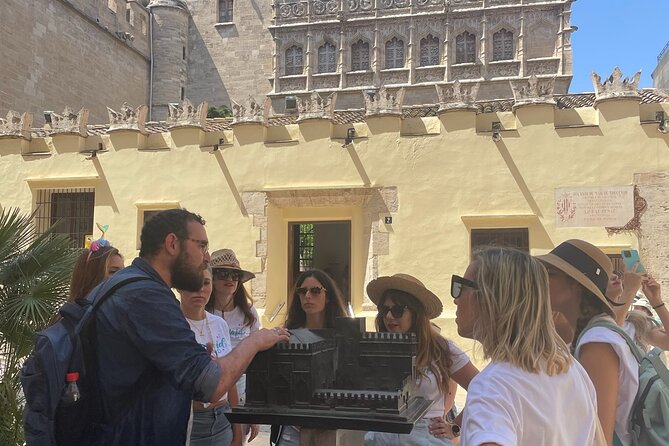
The strongest part of this tour is the guide. Benito has been praised for clear, engaging explanations of Valencia, while Monika has been noted for adding small details, food tips, and personal observations. Paulino has handled questions about Roman Valencia, San Nicolás, and the Holy Grail with confidence.
Uriel, Jorge, Joaquín, Carlos, Carmen, and Anais are also named among the guides who have led the experience. The best descriptions point to guides who explain styles, connect buildings to local customs, and keep the pace comfortable.
English ability may vary. One departure received criticism because the guide struggled at times with English, so this is a fair consideration if precise art vocabulary matters to you. Most of the available feedback points to clear communication, but no guided tour can guarantee the same guide or the same speaking style on every date.
Group management is another practical concern. One unhappy participant described getting separated near the Cathedral after unclear instructions. The provider disputed the account and attributed it to a misunderstanding, but the lesson for you is simple: stay close, listen carefully when the group moves, and confirm the next meeting point before entering a busy area.
The route is offered in English, with a maximum of 20 people. Children must be accompanied by an adult, and most people can take part. The tour is near public transportation, but hotel pickup is not included.
Who should book this tour?
I would choose this walk if you have limited time in Valencia, want to see the historic center on foot, and prefer explanations to a list of names in a guidebook. It is especially useful on your first day because it gives you a working map of the old center.
Art and architecture fans will get the most from San Nicolás, La Lonja, and the Cathedral. You do not need specialist knowledge, though. The guide’s job is to explain why the buildings look the way they do and how religion, trade, and government shaped them.
This is less suitable if you want a slow photography tour, a private experience guaranteed for your party, or long stretches of free time inside each monument. The schedule is full, and the three-hour format favors breadth and clear orientation over detailed study.
The tour is booked an average of 38 days ahead, so reserving early makes sense if your Valencia dates are fixed. Free cancellation is available up to 24 hours before the start time. Poor weather or failure to meet the minimum group size can lead to a changed date or full refund.
Should you book the Valencia Art and Architecture Tour?
Book it if you want the major historic sights explained in one efficient walk, especially if San Nicolás and La Lonja are high on your list. The included tickets, art-focused guide, and chance to avoid admission lines add real value to the $66.54 price.
Skip it if you prefer to set your own pace or already know Valencia’s old center well. For most first-time visitors, though, the combination of San Nicolás’s painted ceiling, La Lonja’s silk-trade story, and the Cathedral’s Holy Chalice makes this a strong introduction to the city.
FAQ
How long does the Valencia art and architecture tour last?
The tour lasts approximately three hours.
What admissions are included?
Admission to San Nicolás Church, Valencia Cathedral, and La Lonja de la Seda is included.
Is the tour offered in English?
Yes. The experience is offered in English with a professional art historian guide.
Where does the tour start and finish?
The meeting and end point are listed as Plaça de la Verge in Valencia’s Ciutat Vella. The route description also refers to Torres dels Serrans as the starting point, so check your final booking instructions carefully.
How large can the group be?
The maximum group size is 20 people.
Can I cancel for a full refund?
Yes. You can cancel at least 24 hours before the experience start time for a full refund. Changes or cancellations made less than 24 hours before the start time are not accepted for a refund.
Newly added in Spain
- Barcelona: Private Gaudi Guided Segway Tour★ 5.0 · 6 reviews
- Barcelona: Wonders of Gaudi Bike Tour★ 4.3 · 6 reviews
- Barcelona: Exclusive Exploration of Gaudi’s Masterpieces★ 5.0 · 2 reviews
- Barcelona: Guided tour e-bike Barcelona historical and modernist Barcelona★ 4.5 · 5 reviews
- Barcelona: Gaudi Tapas & Wine Tasting Small Group Tour★ 5.0 · 3 reviews
- Barcelona: E-Scooter Gaudí & the Sea Tour★ 4.3 · 10 reviews
- Barcelona Architecture Walking Tour With Casa Batlló Upgrade★ 4.8 · 11 reviews
- Barcelona Beyond Gaudí: Modernism, Rooftops, and Hidden Gems★ 5.0 · 2 reviews
Tickets, compared.
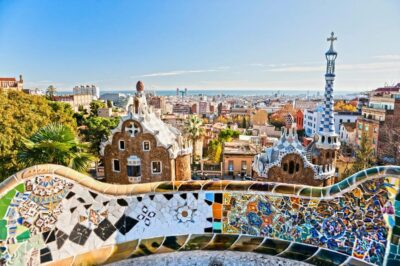
Park Güell and Gaudí House Museum Entry Ticket
Read our review →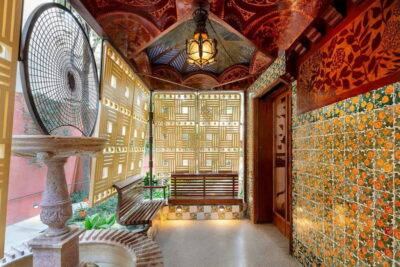
Gaudi’s Casa Vicens Skip-the-Line Entrance Ticket
Read our review →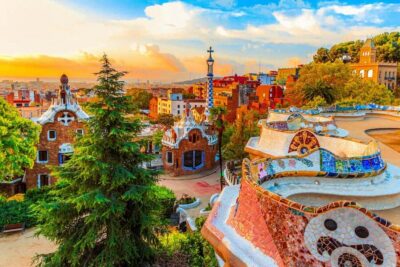
Gaudí’s Park Güell Tour with Fast-Track Ticket
Read our review →
Architecture River Cruise Skip-the-Ticket Line
Read our review →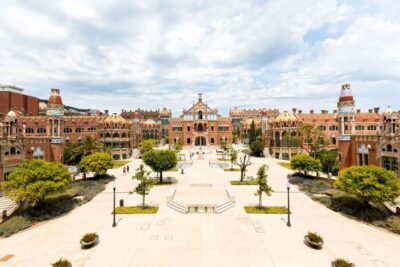
Sagrada Familia & Gaudi Tour Private or Small Group with Tickets
Read our review →
Gaudi´s Casa Vicens Skip the Line Ticket with Audioguide
Read our review →
Browse the lists this tour appears in