
Review · WALKING TOURS
Iconic Capitol Hill Architectural Walking Tour
Washington’s grandest buildings make more sense when you see how their designers, politicians, and public battles shaped them. This roughly one-mile walk begins in Union Station and leads you past the Supreme Court, the Capitol, and the Library of Congress, with stories about Thomas Jefferson, Robert Mills, Frederick Law Olmsted, and Daniel Burnham along the way.
I like the route for two clear reasons: you get both outdoor views and a proper look inside the Library of Congress, and the small group, capped at 20 people, gives a local guide room to explain details without turning the walk into a lecture. Sam has earned particular praise for mixing serious information with humor. The main drawback is that Capitol Hill can be difficult on protest days, when police lines and crowds may block views and make it hard to hear.
Key points at a glance
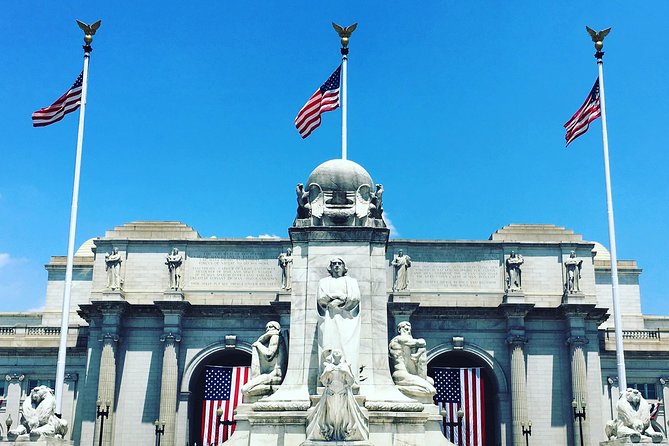
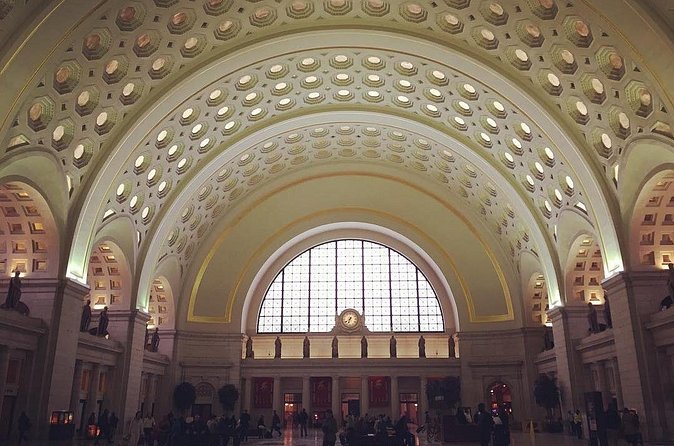
- Begin beneath Union Station’s great clock: The meeting point is an architectural attraction in its own right, with a restored Classical façade and grand interior.
- See three major institutions in one walk: The route links the Supreme Court, U.S. Capitol, and Library of Congress.
- Enter the Library of Congress: About 30 minutes are set aside for its elaborate design, symbols, and history.
- Walk only about one mile: The distance is manageable, but expect outdoor walking and some time on steps.
- Finish at the Capitol Visitor Center: A free interior Capitol tour may be possible, depending on timing and availability.
- Small group, local guide: The maximum is 20 people, with English-language guiding and personal attention.
Why this Capitol Hill walk works
The best feature here is the sequence. You do not simply arrive at the Capitol, take a photograph, and move on. You begin with Union Station, pass the Supreme Court, study the Capitol from its East side, enter the Library of Congress, and finish near the National Mall.
That order gives you a useful sense of Washington’s civic center. The buildings are close together, but each one represents a different branch or function of government. The guide connects their styles, designers, symbols, and political arguments, so you can read the streets with more awareness after the tour ends.
The tour lasts about two hours and covers roughly one mile. That is a good fit if you want substance without spending half a day on your feet. You should still wear comfortable shoes and be ready for outdoor conditions, since much of the experience takes place between buildings.
The group limit of 20 matters. It is not a private tour, but it is small enough for a guide to answer questions and keep the group together. Sam, one of the guides associated with the experience, has been praised for making serious material funny and approachable, including a memorable explanation of the Grant Memorial.
More Walking Tours in the USA
- The Official Art Deco Walking Tour by The Miami Design Preservation League
★ 5.0 · 1,580 reviews - Chicago in a Day: Food, History & Architecture Walking Tour
★ 5.0 · 1,153 reviews - Miami South Beach Art Deco Walking Tour
★ 5.0 · 1,039 reviews
Starting under Union Station’s great clock

Meet inside the Great Hall of Union Station, under the large clock. Enter through the main entrance, turn right, and look upward. This instruction is worth following carefully because the station is large, and the clock gives you a clear visual marker.
Union Station is more than a practical meeting point. It was once the largest train station in the world, and its history touches presidential inaugurations, wartime travel, diplomats, politicians, and even a runaway train. Before the walking route properly begins, the guide uses the station to show how architecture and national events overlap.
The building’s Classical façade, vaulted interior, and artwork have been restored after years of decline. That restoration gives you an immediate lesson in Washington’s architectural character: impressive public buildings can lose their purpose and shine, then return to public life through careful work.
This is also a smart place to begin because you are indoors at the start. If the day is hot, cold, or wet, you can get your bearings before heading outside. The activity does require good weather, though, so poor conditions can lead to a new date or a full refund.
From the Freedom Bell to the Supreme Court
The first outdoor stretch takes you past the Freedom Bell and the Columbus Memorial Fountain before reaching the steps of the Supreme Court. The stop at the fountain is brief, about five minutes, but it helps shift your attention from Union Station’s grand interior to the open civic spaces around Capitol Hill.
At the Supreme Court, the guide explains the building’s architecture, design, and role as the home of the judicial branch. You are given about five minutes here, so expect a focused exterior stop rather than a long visit inside.
The Supreme Court is one of those buildings that can look familiar from photographs yet feel more imposing in person. The broad façade and formal setting communicate authority before you know any details about its cases or interior. The guide’s value is in pointing out how the design supports that message.
This portion may feel short if your main goal is court history. The tour is primarily architectural and historical, so the emphasis is on the building and its place in Washington’s civic plan rather than on a detailed discussion of Supreme Court decisions.
The Capitol’s East side and the Statue of Freedom
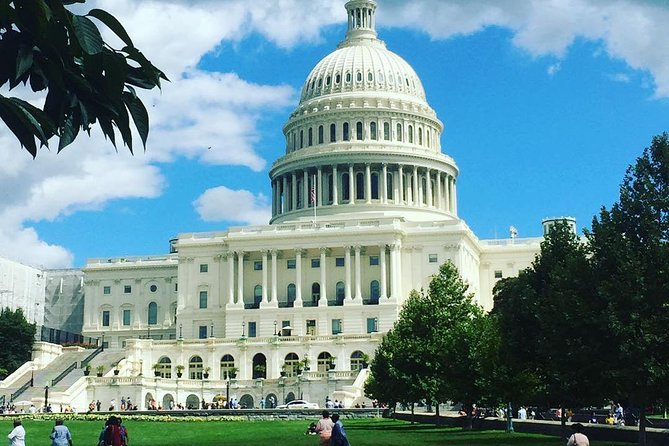
The route continues to the U.S. Capitol, where you get strong photo opportunities from the East side. The guide discusses the building’s troubled and changing history, giving you more than the usual quick photograph from the National Mall.
Look up at the dome for the Statue of Freedom. Her position at the top makes her easy to miss unless someone directs your attention upward. Her first unveiling also caused controversy, which gives the guide a useful opening to explain how national symbols can become political arguments.
The tour also brings in the designers and planners who shaped Washington. Thomas Jefferson, Robert Mills, Frederick Law Olmsted, and Daniel Burnham each had different ideas about the city, and those ideas met red tape, disorder, and public disagreement.
That context is one of the strongest reasons to choose this walk. Washington can look carefully planned, but its public buildings were not created without friction. You hear about the personalities behind the façades and the arguments that helped determine what the city became.
The Capitol stop lasts about 10 minutes. This is enough time for exterior history and photographs, but not enough for a full look at the grounds or a leisurely architectural study from every angle. If you want long photography stops, you may find the pace brisk.
Same city, a different facade:
- Chicago Architecture River Cruise
★ 5.0 · 15,756 reviews - Chicago River 90-Minute Architecture Tour
★ 4.5 · 9,629 reviews - Chicago River: 1.5-Hour Guided Architecture Cruise
★ 4.8 · 8,046 reviews - Chicago Architecture Center River Cruise aboard First Lady
★ 5.0 · 5,536 reviews
Thirty minutes inside the Library of Congress
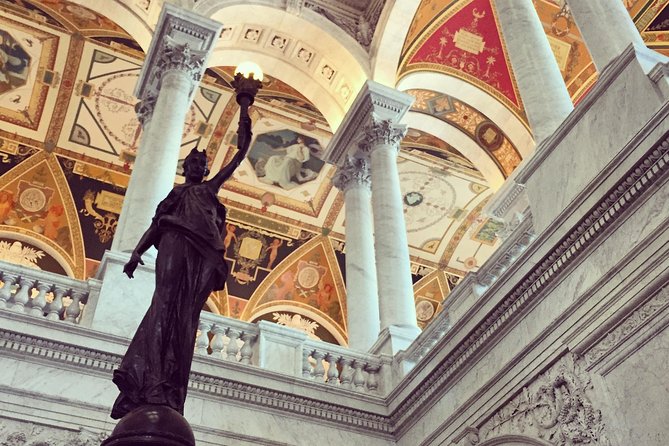
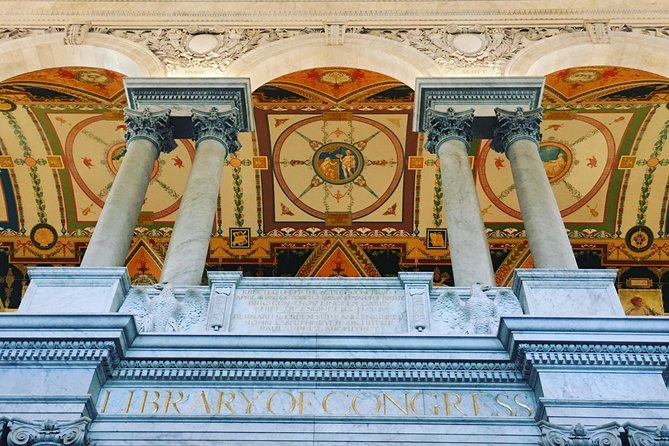
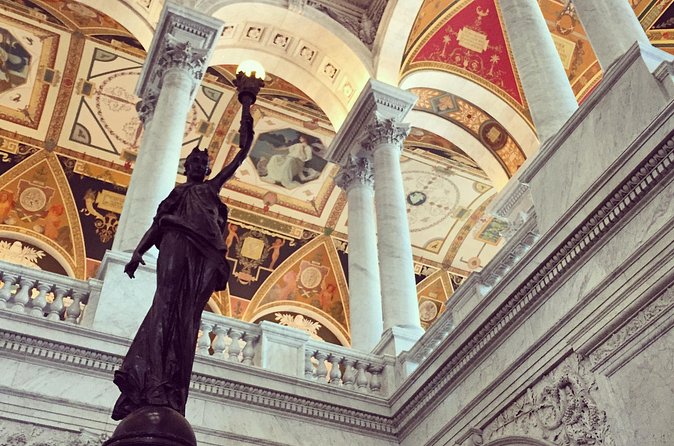
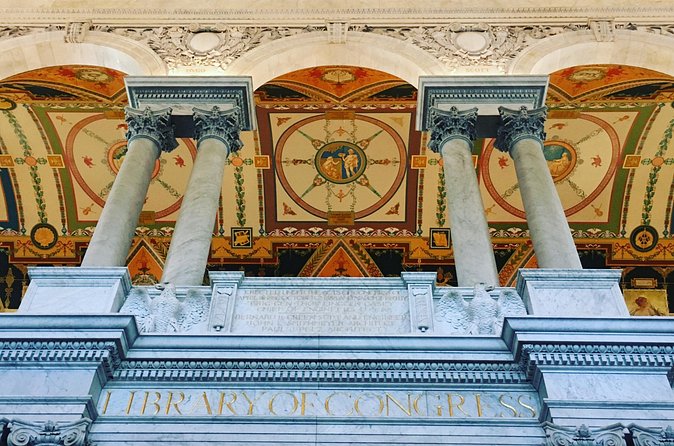
The Library of Congress Thomas Jefferson Building is the tour’s most substantial indoor stop. About 30 minutes are set aside for the building, including its elaborate design, symbolic details, and institutional history.
This is where the tour moves beyond the most familiar Washington sights. The Capitol and Supreme Court are instantly recognizable, but the Library of Congress rewards careful looking. The guide directs you toward decorative choices and secret symbols that are easy to miss when you walk through on your own.
The indoor visit also gives the day a welcome change of pace. After moving between large government buildings, you can spend time looking up, around, and across the Library’s detailed spaces rather than simply standing outside for a photograph.
An underground tunnel then connects the Library of Congress area with the Capitol. That practical link adds an unusual detail to the route and helps keep the walk moving without sending you back onto the street for every transfer.
The Library stop is included in the tour price, which improves the value. Admission arrangements and access can always depend on current building conditions, but the stated route includes entry rather than treating the building as an exterior-only sight.
Ending at the Capitol Visitor Center
The tour concludes inside the U.S. Capitol Visitor Center. The planned stop lasts about 15 minutes, and the guide can help you join a free interior Capitol tour if one is available at the right time.
Treat that free tour as a possible bonus, not a guaranteed part of the two-hour experience. Timing and availability determine whether you can join it. If you do not get a place, you still finish in a useful location near Capitol Hill, public transportation, and National Mall sights.
Ending here is convenient for the rest of your day. You can continue sightseeing, arrange your own Capitol visit, or use nearby transit without needing to retrace the entire route to Union Station.
The finish also makes the tour practical for first-time visitors. You begin at a major rail station and end near several of Washington’s central attractions, creating a simple one-way plan rather than a loop that returns you to the starting point.
What the $48 price buys you
The price is $48 per person. That is reasonable if you value interpretation and want entry to the Library of Congress included, especially since the experience connects several major buildings in a single two-hour route.
You are paying for a local English-speaking guide, a small-group format, the planned visit inside the Library of Congress, and help making sense of Washington’s design. You are not paying for a full-day sightseeing program, museum admission across the city, or a guaranteed interior Capitol visit.
I would judge the value by your interests. If you enjoy buildings, public art, government history, and short stories about how cities get planned, the price is easier to justify. If you mainly want exterior photographs and already know the Capitol area well, you could cover much of the route on your own for less.
The small group helps protect the value. With a maximum of 20 participants, the guide can speak directly to the group, though the experience is not private and a full group may still feel busy around security areas or crowded sidewalks.
The tour is often booked about 18 days ahead. That is a useful sign that you should not leave it until the last minute if your Washington dates are fixed, especially if you want a particular day.
Timing, weather, and Capitol Hill disruptions
Capitol Hill is an active political district, not a controlled museum complex. Marches, demonstrations, police activity, and security changes can affect the route. One reported experience became difficult because a march caused jostling, blocked access to buildings, and made the guide hard to hear.
That is not a reason to reject the tour, but it is a reason to set realistic expectations. Washington protests can be hard to predict, and the area around the Capitol may change quickly. If being close to a major demonstration would make you uncomfortable, check current conditions and keep some flexibility in your day.
The tour requires good weather. If rain or other poor conditions cause cancellation, you can receive a different date or a full refund. You can also cancel for a full refund up to 24 hours before the start time, but cancellations or changes made inside that window are not accepted.
The activity is open to most people, and service animals are allowed. Since it is a walking tour with outdoor sections and steps, you should still consider your own comfort with walking for about two hours.
Who should book this experience
I would choose this tour for a first or second visit to Washington, especially if you want a clear introduction to Capitol Hill without spending a full day in formal museums. It suits architecture fans, students of government, families with older children, and anyone who prefers stories about design over a list of dates.
It is also a good pick if you want a guide who can connect famous names to actual buildings. The stories about Jefferson, Mills, Olmsted, and Burnham make the city feel less anonymous and help you understand why Washington looks the way it does.
You may want another plan if you dislike group walking, need guaranteed access to the Capitol interior, or want to spend a long time at each stop. The tour offers a well-shaped overview, not an extended visit to every institution.
The strongest guide reports point to a style that combines humor with solid information. Sam is singled out for being personable and entertaining, and the explanation of the Grant Memorial received special praise. Guide assignments can change, so do not book solely on the expectation that Sam will lead your date.
Should you book the Iconic Capitol Hill Architectural Walking Tour?
Book it if you want a compact, well-organized route through Washington’s civic center, with a local guide to explain the buildings and an included visit to the Library of Congress. The Union Station start, one-way route, small group, and Capitol Visitor Center finish make the plan easy to fit into a sightseeing day.
Go in knowing that public demonstrations can disrupt the experience, and that the free Capitol interior visit depends on availability. At $48, it offers fair value for the guide, structure, and Library of Congress access, particularly for first-time visitors who want more context than a self-guided photo walk can provide.
FAQ
Where does the tour begin?
The tour begins inside the Great Hall of Union Station at 50 Massachusetts Ave NE, Washington, DC 20002. Enter through the main entrance, turn right, and look up for the large clock.
Where does the tour finish?
It finishes inside the U.S. Capitol Visitor Center in the Capitol Hill area, near National Mall sights and public transportation.
How long is the walking route?
The route covers roughly one mile and lasts about two hours.
What buildings can I see?
You see Union Station, the Supreme Court, the U.S. Capitol, the Capitol Grounds, the Library of Congress Thomas Jefferson Building, and the Capitol Visitor Center.
Is the Library of Congress included?
Yes. The route includes entry to the Library of Congress Thomas Jefferson Building, with about 30 minutes devoted to its design, symbols, and history.
Can I take a free tour inside the Capitol?
The guide can help you join a free interior Capitol tour at the end, but this depends on timing and availability.
How many people can join the tour?
The maximum group size is 20 participants.
Can I cancel for a refund?
You can cancel up to 24 hours before the start time for a full refund. Poor weather or failure to meet the minimum number of participants may also lead to a new date or a full refund.
Newly added in the USA
- Art Deco Tour of South Beach in French★ 4.5 · 8 reviews
- Award-winning Art Deco & Neon Lights Walking Tour★ 5.0 · 5 reviews
- Miami Beach Art Deco Segway Tour★ 4.5 · 17 reviews
- Boston: Freedom Trail History and Architecture Walking Tour★ 4.8 · 18 reviews
- Boston: Harbor and Charles River Architecture Boat Tour★ 4.6 · 9 reviews
- Chicago: Guided Tour with Architecture River Cruise★ 4.5 · 20 reviews
- South Beach Food Tour- Culinary & Art Deco & History★ 5.0 · 22 reviews
- Chicago River 90-Min Architecture Boat Tour★ 4.5 · 24 reviews
Walking Tours, compared.
The Official Art Deco Walking Tour by The Miami Design Preservation League
Read our review →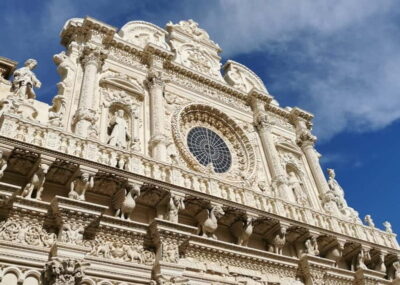
Baroque Architecture and Underground Walking Tour
Read our review →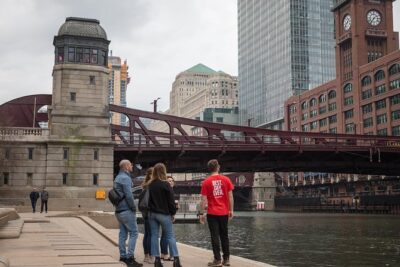
Chicago in a Day: Food, History & Architecture Walking Tour
Read our review →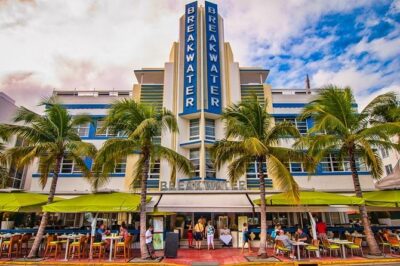

Ramblas, Old Town, Gothic and Gaudi Architecture Walking Tour
Read our review →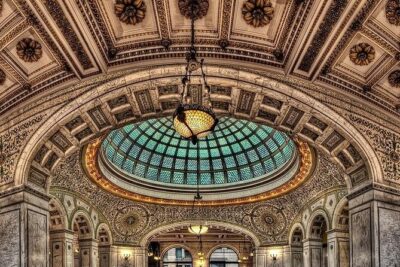
Chicago’s Secret Interiors Architectural Walking Tour
Read our review →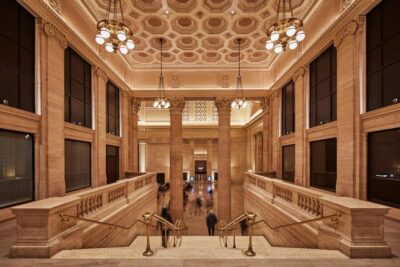
Browse the lists this tour appears in