
Review · FRANCE ARCHITECTURE TOURS
Paris: Discover the hidden architecture gems of Le Marais
Le Marais keeps its best stories behind plain doors and quiet courtyards. This 150-minute walk follows Paris from the Middle Ages through the Renaissance and into the age of aristocratic mansions, with stops at Hôtel des archevêques de Sens, Hôtel Lamoignon, Hôtel Carnavalet, and Place des Vosges.
I like the focus on architecture rather than a quick parade of sights, and I like that guide Louis Capion brings history to life with humor and family-friendly stories. The main caution is reliability: one recent booking ended with the guide not arriving, and the available praise refers to Montmartre tours rather than clearly to this Le Marais walk.
Key points to know
- Eight centuries in 150 minutes: The route links medieval, Renaissance, and 18th-century Paris.
- Place des Vosges is the grand finale: You finish at the city’s second-oldest square.
- Small details matter: Hôtels particuliers reveal how wealthy Parisian families lived and displayed power.
- Louis Capion leads the walk: He is praised for humor, energy, and a family-friendly approach.
- Start at Saint-Paul metro: Arrive about 10 minutes early outside the station, which has one exit.
- Check access before booking: The activity is marked wheelchair accessible in one place but not suitable for wheelchair users elsewhere.
Why Le Marais works so well for an architecture walk
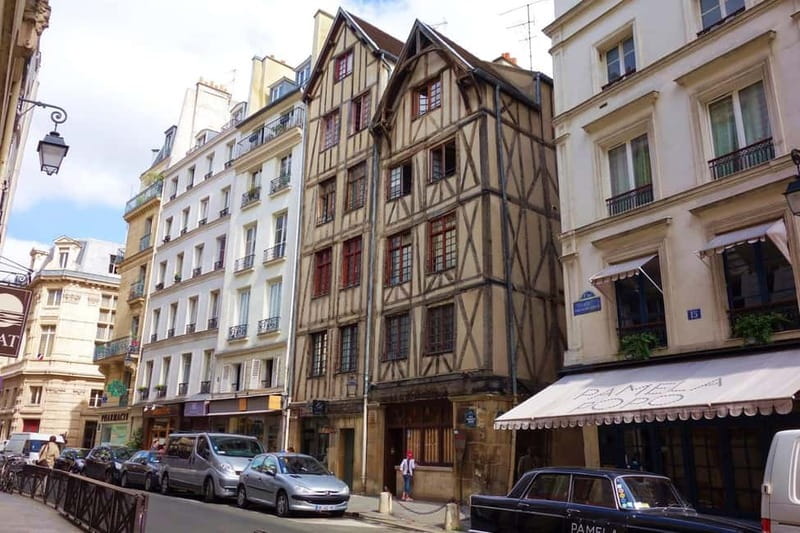
Le Marais is one of the few Paris districts where several eras sit close together. You can move from medieval religious architecture to Renaissance town planning, then to grand private residences built for nobles and officials. The streets make the city’s growth easier to read than a museum label ever could.
The key word here is hôtel particulier. It does not mean a hotel. It means a private urban mansion, usually built around a courtyard and designed for a wealthy family. These homes were not merely comfortable houses. Their entrances, gardens, stonework, and position near the royal quarter all helped announce status.
That gives this tour a useful theme. You are not only looking at pretty façades. You are learning how Parisian power worked. A doorway could separate servants from family. A courtyard could control privacy. A grand garden could tell the neighborhood that its owner mattered.
The walk also places these buildings in the wider story of Paris. The neighborhood changed as royal influence grew, as wealthy families moved in, and as political upheaval reshaped France. You will hear about the French Revolution, important residents, and the changing role of art and culture in the district.
A few more architecture walks in the world worth a look
- Chicago Architecture River Cruise
★ 5.0 · 15,756 reviews - Chicago River 90-Minute Architecture Tour
★ 4.5 · 9,629 reviews - Chicago River: 1.5-Hour Guided Architecture Cruise
★ 4.8 · 8,046 reviews
Starting at Saint-Paul and entering old Paris
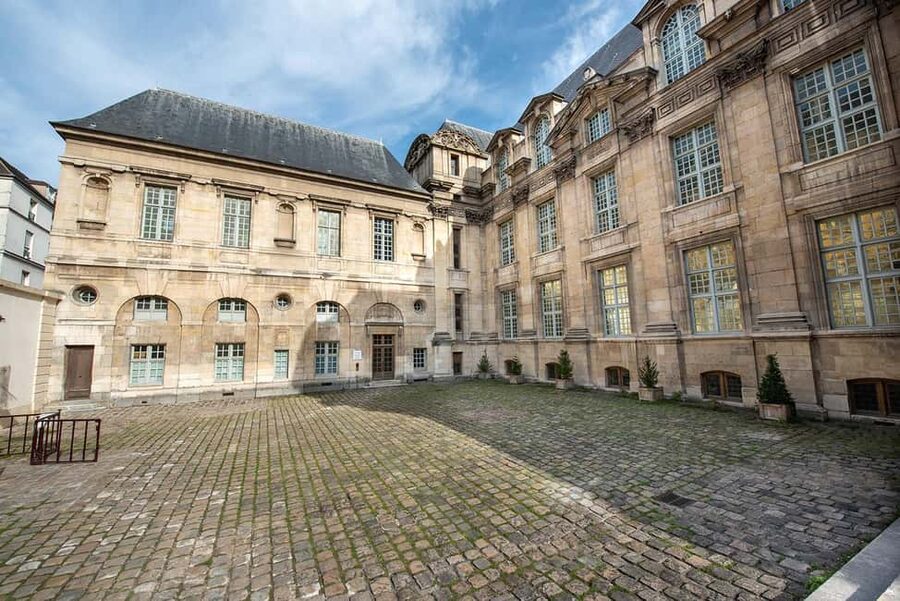
The meeting point is outside Saint-Paul metro station on Line 1. There is only one exit, which removes one common Paris problem: wandering around a station trying to guess which street corner is correct. Still, arrive 10 minutes before the start. That matters on a walking tour because a late arrival can leave you searching for a moving group.
Rue Saint-Antoine is a fitting place to begin. The tour uses the street as a gateway into Le Marais, then moves toward older and more formal parts of the quarter. The supplied route lists several early sightseeing stops without naming each one, so you should expect short pauses at architectural features rather than a long interior visit at every address.
Those unnamed stops are part of the appeal, but they also make the experience less predictable than a museum tour. You will not spend the full 20 minutes at each place simply looking at one building. Your guide will likely use façades, courtyards, street plans, and nearby details to explain how the area changed over time.
Because the route lasts 150 minutes, comfortable shoes are a must. This is a proper walking experience, not a coach tour with frequent seats. The pace should suit most people who can walk around central Paris for two and a half hours, but you should plan for standing outdoors throughout.
Hôtel des archevêques de Sens and medieval Paris
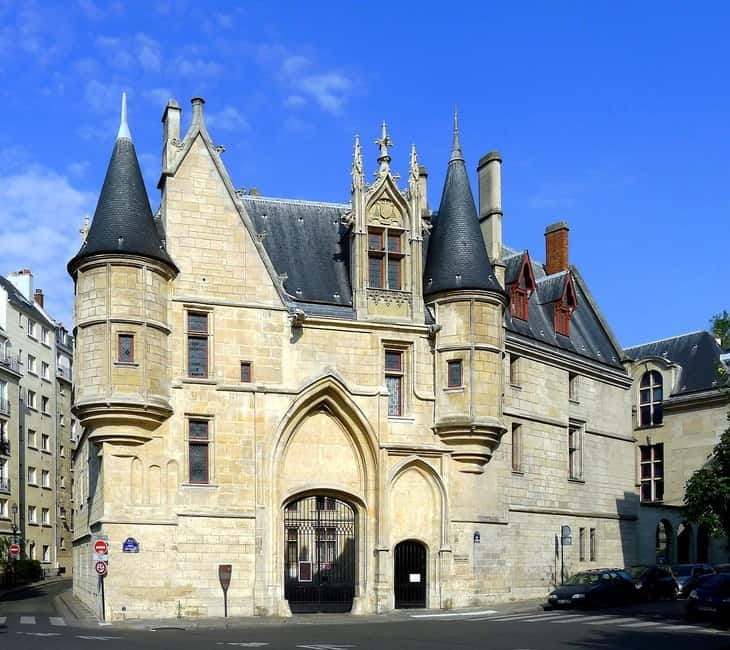
One of the most appealing stops is the Hôtel des archevêques de Sens. This medieval residence offers a glimpse of Paris before the district became associated with fashionable mansions and art galleries. Its name points to its original religious connection, and its architecture helps show how powerful church figures maintained a presence in the capital.
This is the kind of stop where a guide adds real value. Without context, an old stone building can look like one more attractive Paris façade. With an explanation of who used it and why it was built, you begin to see the building as part of the city’s old power structure.
The tour presents Le Marais as a place that changed in layers. Medieval Paris was not simply an earlier version of modern Paris. It had different centers of power, different social divisions, and a different relationship between religious and civic life. The Hôtel des archevêques de Sens gives the walk an early anchor before the route moves into later architectural styles.
The word hidden is often overused in Paris, but this stop earns attention because it is easy to pass without understanding its importance. You get more from it by listening for the details around its age, purpose, and setting rather than expecting a grand interior visit.
Hôtel Lamoignon and the private world of aristocrats
Hôtel Lamoignon is another important stop. It is described as one of the oldest hôtels particuliers in Paris, which makes it central to the tour’s main idea: the city’s wealthy families built private worlds within the street grid.
Look for the relationship between the building and the street. These mansions were made to protect private life while also presenting wealth to the public. The arrangement of an entrance, courtyard, and formal residence tells you much about the people who lived there and the servants who kept the household running.
This is where the guide’s architectural explanations should help you notice things you might otherwise walk past. The tour covers design styles and connects them to political, economic, and social change. That is more useful than memorizing dates. You begin to understand why certain forms became fashionable and why wealthy families wanted to live in this particular part of Paris.
Hôtel Lamoignon also helps bridge the gap between the medieval district and the more polished aristocratic quarter. The building carries the sense of an older Paris, but it belongs to the period when grand private residences shaped the look of Le Marais.
Same city, a different facade:
- Chicago Architecture Center River Cruise aboard First Lady
★ 5.0 · 5,536 reviews - Chicago: Architecture River Cruise Skip-the-Ticket Line
★ 4.8 · 4,325 reviews - Chicago River 45-Minute Architecture Tour from Magnificent Mile
★ 4.5 · 2,924 reviews - Barcelona: Sant Pau Recinte Modernista Entry Ticket
★ 4.6 · 2,567 reviews
Hôtel Carnavalet and the story of Paris itself
Hôtel Carnavalet receives a listed 20-minute sightseeing stop. It is a natural place to slow down because the building connects the history of one neighborhood with the story of the entire city.
The tour treats Hôtel Carnavalet as architecture first, but the building also gives the guide room to discuss residents, political events, art, and daily life. This is one of the points where the experience becomes more than a walk among old stones. The buildings become records of changing French society.
You may find this stop especially useful if you have already visited major Paris monuments and want a different angle. The Eiffel Tower and Arc de Triomphe tell a clear story of national ambition. Le Marais asks smaller questions: who owned this house, who worked there, who was allowed inside, and how did political change affect the people on these streets?
The 20-minute format should give you time to absorb the explanation without turning the walk into a lecture. Still, do not expect a full museum visit. The tour is conducted on foot and focuses on the setting, exterior architecture, and stories connected with the neighborhood.
Place des Vosges, Paris’s carefully planned square
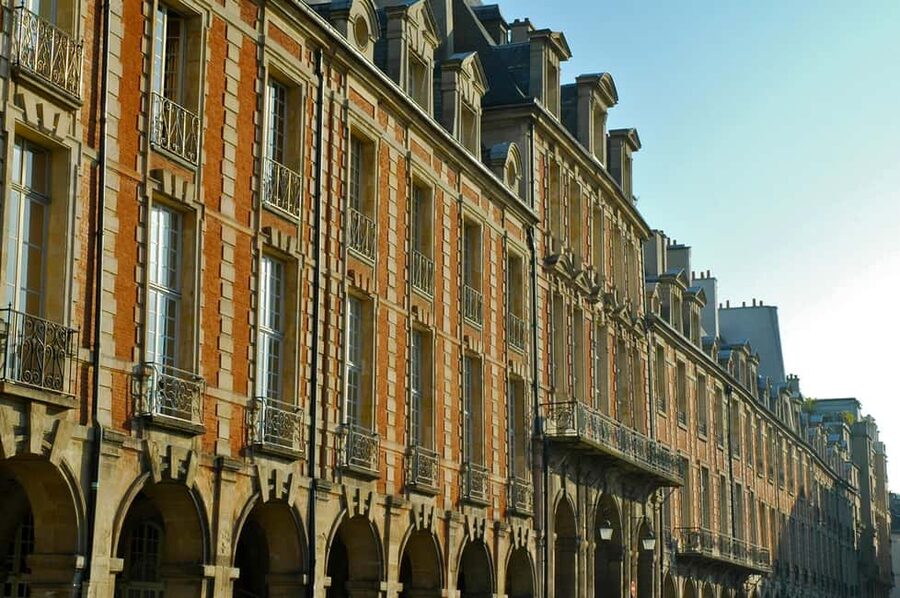
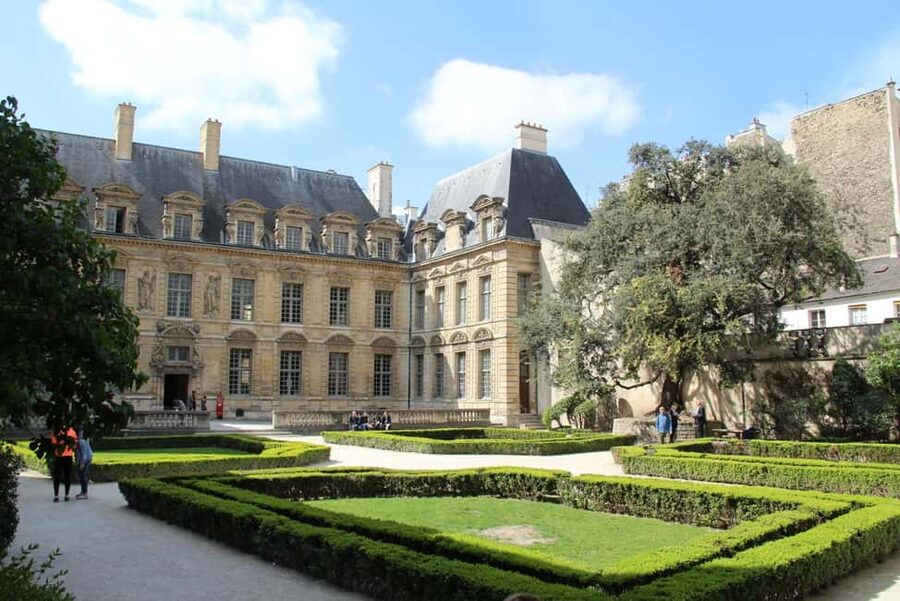
Place des Vosges is the best-known stop and the finish point. It is also described as the second-oldest square in Paris, giving the walk a strong closing image.
The square feels different from the narrower streets around it. Its regular layout, consistent façades, and arcades show a more controlled approach to city planning. Instead of a medieval street pattern that grew in pieces, you see a deliberate architectural idea carried around a complete public space.
This is a good place to consider the contrast between public order and private display. The square’s uniform appearance creates a sense of unity, while the residences around it still reflect the status of the people who occupied them. Your guide can connect that visual order to the royal and aristocratic world that shaped this part of Paris.
I like finishing here because you have time to compare the square with the earlier stops. The Hôtel des archevêques de Sens represents a much older Paris. Hôtel Lamoignon shows the growth of private urban mansions. Hôtel Carnavalet connects architecture with civic memory. Place des Vosges brings those threads together in a planned setting.
Since the tour finishes here, you can continue exploring Le Marais afterward. The experience does not include a stated meal, tasting, or restaurant reservation, but the guide shares advice about dining places in the neighborhood. Treat that as local orientation rather than a guaranteed food stop.
Saint-Paul-Saint-Louis and the neighborhood’s religious side
The itinerary also includes Paroisse Saint-Paul Saint-Louis, another 20-minute sightseeing stop. This gives the tour a chance to show how religious buildings fit into the changing social and political life of Le Marais.
The church is useful as a counterpoint to the private mansions. An aristocratic residence tells you about household power and social rank. A parish church shows the public and communal side of the district. Together, these stops help you read the neighborhood as a living part of Paris rather than a collection of elegant façades.
The route information places the church near the end of the sequence, while the stated finish is Place des Vosges. Exact walking order can vary, so listen for the guide’s route on the day. The important point is that the walk links religious, residential, and civic architecture rather than focusing on only one type.
What Louis Capion adds to the walk
The named guide is Louis Capion. Direct feedback about his guiding style describes him as friendly, funny, energetic, and good with children. Those qualities matter here because two and a half hours of architectural history can become dry if the presentation is too formal.
The strongest praise centers on his storytelling, humor, and ability to explain Paris in an accessible way. That suggests a good fit for families and for people who like history presented through anecdotes instead of a dense stream of dates.
I would keep one qualification in mind. The positive comments available for Louis describe tours of Montmartre, not clearly this Le Marais route. They tell you something useful about his presentation style, but they do not prove that every stop on this particular walk will be handled in the same way.
There is also a serious service warning. One recent booking recorded that the guide did not arrive. That is not a minor complaint, especially when you have arranged a timed activity in Paris. If you book, keep your confirmation details and meeting instructions handy, and consider contacting the provider if the meeting point is unclear on the day.
Is $41 a fair price for 150 minutes?
At $41 per person, the value depends on how much context you want. You are paying for an English-speaking guide, a focused route through several historic buildings, and an explanation of how Paris developed across eight centuries. There are no listed entry tickets, meals, or transport costs included.
Compared with simply walking through Le Marais on your own, the fee buys interpretation. You can see Place des Vosges for free, and you can pass Hôtel Carnavalet, Hôtel Lamoignon, and Saint-Paul-Saint-Louis without paying for a guided walk. The difference is the connection between them.
I would consider the price reasonable for a first visit if architecture and history are high on your list. You will get more from the district if you understand why the buildings look different and how their owners fit into Parisian life.
For repeat visitors, the value is more personal. If you have already seen the main monuments and want a slower look at one neighborhood, the route gives you a clear subject and a manageable length. If you prefer entering museums, eating as you walk, or covering a large area, $41 may feel less attractive.
The rating attached to the experience is 3.8 from four reviews, a small sample that should not be treated as a firm measure. The split between strong praise for Louis and one no-show complaint means I would book with sensible expectations rather than assuming everything will be flawless.
Who should book this Le Marais walk?
I would recommend it to you if you enjoy:
- Architecture explained in plain language
- Historic neighborhoods rather than only famous monuments
- Stories about aristocrats, religious figures, and political change
- A family-friendly guide with humor
- A two-and-a-half-hour walk with a clear beginning and finish
- Practical suggestions about places to eat in Le Marais
Families may find the approach easier than a formal museum tour, especially if Louis brings the same humor and energy described in the available feedback. First-time visitors can use the walk to get their bearings, while repeat visitors may appreciate the attention to buildings they previously ignored.
You may want another activity if you need a guaranteed interior visit, a food tour, a private group, or a fully dependable appointment. You should also ask about access before paying if anyone in your party uses a wheelchair. The information is contradictory: one section says the tour is wheelchair accessible, while another says it is not suitable for wheelchair users. Do not rely on the positive access label without confirmation.
Should you book this Le Marais experience?
Book this walk if you want to understand how Le Marais developed, not just photograph Place des Vosges. The route has a strong subject, a useful range of buildings, and a guide whose style is described as warm, funny, and family-friendly.
I would make the booking after weighing the service concern. The no-show report is serious, while the positive comments are about Montmartre rather than clearly about this exact tour. At $41, the walk is good value when the guide arrives and delivers the promised context. If you need certainty, confirm the appointment and meeting point ahead of time, and verify wheelchair access directly.
FAQ
Where does the tour meet?
Meet outside Saint-Paul metro station on Line 1. The station has only one exit.
How early should I arrive?
Arrive 10 minutes before the scheduled start time.
How long does the walking tour last?
The tour lasts 150 minutes, or two and a half hours.
What language is the tour in?
The live tour is conducted in English.
Where does the tour finish?
The stated finish point is Place des Vosges.
Which major sights are included?
The route includes Hôtel Carnavalet, Place des Vosges, Paroisse Saint-Paul Saint-Louis, Hôtel Lamoignon, and the medieval Hôtel des archevêques de Sens, along with other sightseeing stops.
Is wheelchair access available?
The information is inconsistent. One section identifies the activity as wheelchair accessible, while another says it is not suitable for wheelchair users. Confirm the route and access conditions before booking.
What is the cancellation policy?
You can cancel up to 24 hours in advance for a full refund. You can also reserve now and pay later.
Newly added in the world
- Venice Art and Architecture Private Walking Tour★ 4.5 · 11 reviews
- Basilica San Marco and the Pala d’Oro with Architect Guide★ 4.5 · 19 reviews
- Walking tour in Venice with an architect★ 5.0 · 16 reviews
- Private Munich Tour for History Buffs with Architectural Gems and WWII sites★ 5.0 · 3 reviews
- Neoclassical Paris Architecture 2-Hour Private Walking Tour★ 5.0 · 7 reviews
- Street Art and Architecture:Porto Speaks Through Its Streets★ 3.0 · 2 reviews
- Wrocław Architecture Cruise by Catamaran★ 4.7 · 25 reviews
- Porto Tour: Street Art & Architecture Experience 3h★ 5.0 · 4 reviews
France Architecture Tours, compared.
Bastille’s Architecture & Artisans Self-Guided Walking Tour
Read our review →
Private Art Nouveau and Art Deco tour near Opera
Read our review →
Neoclassical Paris Architecture 2-Hour Private Walking Tour
Read our review →Browse the lists this tour appears in