
Review · CASA BATLLO AND LA PEDRERA TOURS
Barcelona Gaudi Houses Tour: Casa Vicens, Pedrera & Casa Batlló
Barcelona’s Gaudí houses make the most sense together. Casa Vicens shows his early, colorful work, La Pedrera reveals his mature experiments with form, and Casa Batlló turns a city townhouse into something close to a dream. This tour links all three in about three hours, ending on Passeig de Gràcia.
I like the small maximum group of 12, which gives the guide a fair chance to answer questions. I also like the progression from Casa Vicens to La Pedrera and then Casa Batlló. You see Gaudí’s work change over time, rather than viewing three unrelated buildings.
The catch is the walking. The route between Casa Vicens and La Pedrera takes roughly 20 to 30 minutes, and the houses include stairs. You get a useful overview, but each building deserves more time than this schedule allows.
Key points to know before booking

- Three major Gaudí houses in one morning or afternoon: Casa Vicens, La Pedrera, and Casa Batlló are all included.
- A clear story of Gaudí’s development: The route moves from his early work at Casa Vicens to his later, more experimental designs.
- La Pedrera’s rooftop is a highlight: You’ll see its famous sculptural forms and Barcelona views.
- The tour ends at Casa Batlló: The starting point is in Gràcia, while the final stop is on Passeig de Gràcia.
- Expect walking and stairs: This is not a good choice if you need a slow, low-effort route.
- Price and group size matter: At $143.61 per person, the value comes from bundled entry and a guide who handles the route, not from extensive free time inside each house.
Why this route works for Gaudí fans
Antoni Gaudí did not design one single type of building. His work changed as his career developed, and these three houses give you a compact lesson in that change.
Casa Vicens is the early stop. La Pedrera, also called Casa Milà, is the final building Gaudí completed. Casa Batlló shows his ability to reshape an existing urban home into a highly personal work of art. Seeing them in this order gives the tour a natural structure.
I find that useful because Gaudí can otherwise become a blur of tiled surfaces, curving walls, dragons, and unusual chimneys. A good guide helps you see the difference between his early decorative style and his later interest in organic shapes, light, structure, and practical household design.
The guide also adds Barcelona context as you walk through Gràcia and along Passeig de Gràcia. Guides named Ramon, Jane, Jekaterina, Catarina, Tomo, Jun, and Jade have all been praised for explaining the architecture in a conversational way. The specific guide you receive is not guaranteed, but the tour is built around live commentary rather than a simple audio route.
More Casa Batllo and La Pedrera Tours in Barcelona:
- Complete Gaudi Tour: Casa Batllo, Park Guell & Sagrada Familia
★ 5.0 · 1,152 reviews - Gaudi´s Casa Vicens Skip the Line Ticket with Audioguide
★ 4.5 · 685 reviews - Barcelona: Casa Vicens, Pedrera, and Casa Batlló Guided Tour
★ 4.6 · 260 reviews
Casa Vicens: Gaudí before the famous curves
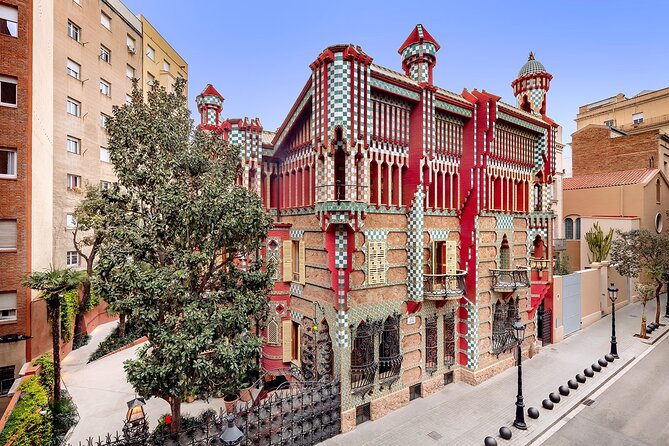
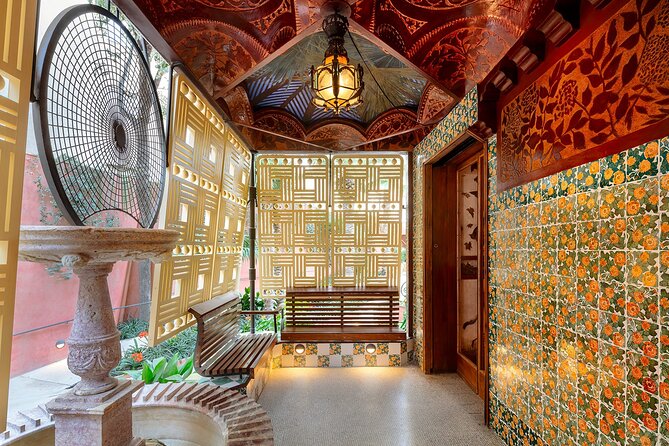
The tour begins at Casa Vicens, at Carrer de les Carolines 20-26 in the Gràcia district. This is an important choice of starting point. Casa Vicens is one of Gaudí’s early major works, and its design feels more patterned and decorative than the buildings later in the route.
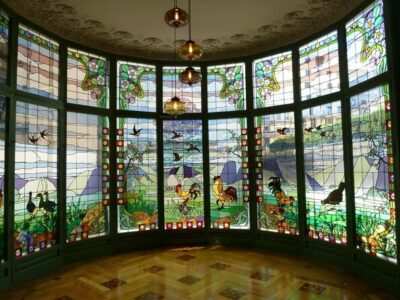
You enter with the guide and see the garden, ground floor, and first-floor areas included in the visit. The house gives you a strong first look at Gaudí’s use of color, ornament, and carefully arranged detail.
This is not just a quick photo stop outside. You go inside, where the guide can point out design features you might miss while wandering on your own. The visit lasts about an hour, so you have time to get oriented before the walking section begins.
Casa Vicens is also where the tour’s group size becomes useful. Its details are easy to overlook, especially if several groups are moving through the rooms at once. A guide can direct your attention to particular elements and explain how the house fits into Gaudí’s early career.
There is one practical warning. A previous booking experienced Casa Vicens being closed, and the schedule was not adjusted as expected. That appears to be an operational problem rather than a feature of the normal tour, but I would confirm the meeting details close to departure if access to all three houses is especially important to you.
The walk through Gràcia to La Pedrera
After Casa Vicens, you walk toward La Pedrera on Passeig de Gràcia. Depending on the group and pace, this section takes roughly 20 to 30 minutes. It is part of the experience, but it is also the main physical demand of the route.
You are not walking between isolated attractions with a vehicle waiting outside. You are moving through Barcelona’s streets, from the older Gràcia setting toward one of the city’s grandest avenues. The guide may use this time to discuss Barcelona, Catalan culture, Gaudí’s career, or the way the city changed around these buildings.
I like this connection between the stops because it gives the houses a sense of place. The downside is simple: hot weather, rain, a bad back, or limited mobility can make the transition tiring. Wear comfortable shoes, bring water, and do not plan a tight activity immediately afterward.
One guide, Ramon, was especially attentive to the pace of the group and helped arrange a taxi for people who preferred not to walk. You should not assume that this service is guaranteed, but it shows why it helps to tell the guide about mobility concerns at the start.
La Pedrera: patios, apartment, attic, and rooftop
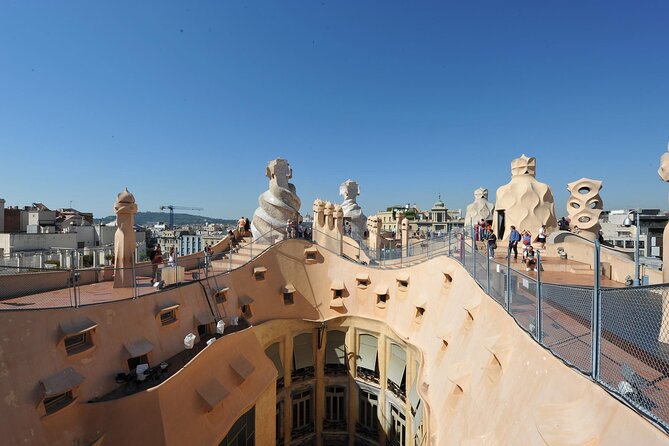
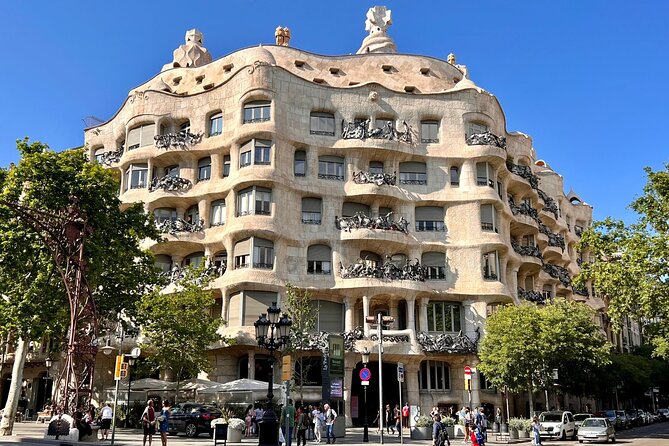
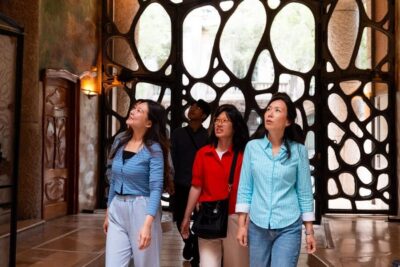
La Pedrera is the longest stop, at about one hour and 20 minutes. It is also the most varied visit, since the included areas cover the ground-floor patios, a tenant’s apartment, the attic, and the rooftop.
The patios are a good place to notice how Gaudí treated ordinary apartment features as part of the design. Instead of hiding structural elements, he made the interior spaces expressive. The painted surfaces and unusual shapes give the building a different mood from Casa Vicens.
The tenant’s apartment is especially useful because it shows how the building functioned as a home. You can see a preserved apartment furnished in the manner Gaudí designed, which adds practical scale to the more abstract architectural ideas. This is where you begin to understand that his work was not only about a striking exterior. He thought about doors, rooms, furniture, light, and daily use.
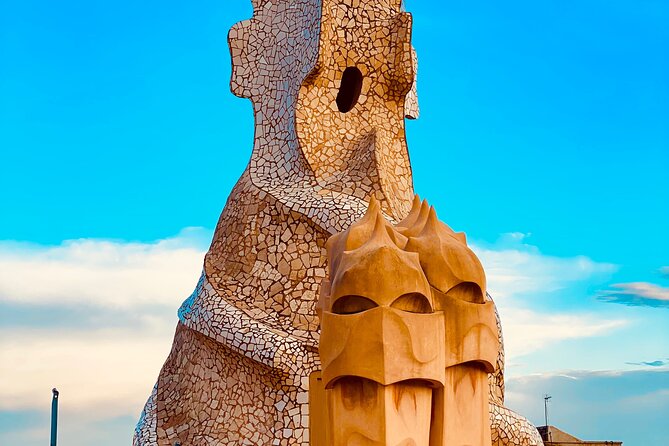
The attic and rooftop bring you back to Gaudí’s sculptural side. The rooftop is one of the tour’s clearest highlights. Its forms are practical in purpose but imaginative in appearance, and they frame views across Barcelona. You should allow yourself a moment to look outward rather than spending the entire time photographing the chimneys.
The group will move through La Pedrera at a set pace. That keeps the route on schedule, but it limits the time you can spend studying every room. One guide may also need to explain certain areas from outside or at designated points, since guide access is not identical in every part of the houses.
If you want a slow architectural study of La Pedrera, book a separate visit. If you want to understand the building’s main ideas and see the apartment and rooftop in the same visit, this stop delivers good value within the three-hour format.
More Gaudi Tours in Barcelona:
- Barcelona: Park Güell and Gaudí House Museum Entry Ticket
★ 4.5 · 6,326 reviews - Barcelona: Gaudí’s Park Güell Tour with Fast-Track Ticket
★ 4.8 · 4,512 reviews - Sagrada Familia & Gaudi Tour Private or Small Group with Tickets
★ 4.5 · 1,188 reviews - Park Güell: Guided Tour with Optional Gaudí Experience Entry
★ 4.1 · 832 reviews
Casa Batlló: a dramatic finish on Passeig de Gràcia
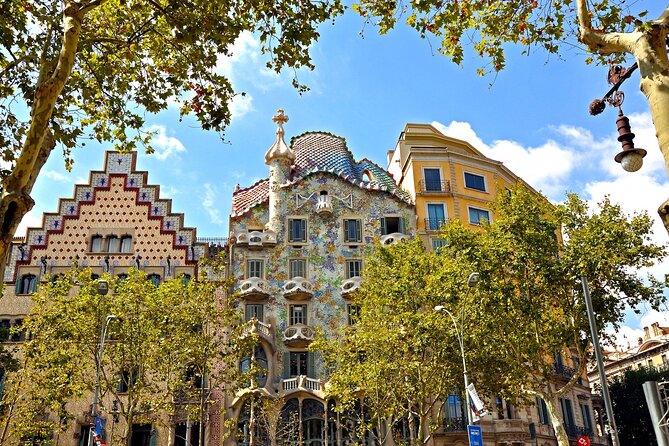
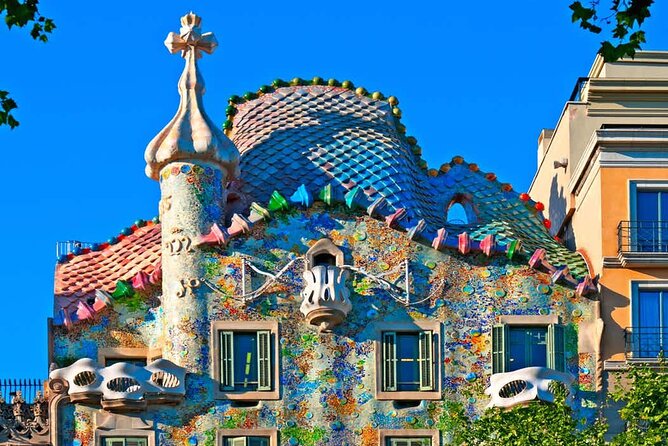
The final stop is Casa Batlló, at Passeig de Gràcia 43. Your guide first explains the façade, including its dragon-like rooftop and the symbolism attached to the building.
The exterior is easy to admire from the street, but the interior gives you more to work with. The included visit covers the main vestibule, noble floor, and back patio. The noble floor is the former principal living area, so it helps you see how Gaudí reshaped an elegant private home rather than designing a building from an empty site.
The back patio offers another change of mood. Gaudí used color, light, and surface treatment to make the interior feel connected to the overall design. Your guide can help you notice the way details repeat or shift as you move through the rooms.
Casa Batlló is a strong final stop because it brings together many themes introduced earlier: natural forms, unusual materials, symbolism, and the relationship between decoration and structure. Still, it is important to understand what is not included. You do not receive access to every area of the house, and this is not a complete building tour.
That limitation explains some of the mixed feelings about value. The included spaces are impressive, but a visitor expecting a full Casa Batlló experience may want more time or additional access. The tour ends here, which is convenient if you plan to continue along Passeig de Gràcia, but you are responsible for arranging your own next stop.
What the guide adds to the experience
The strongest part of this tour is the human explanation. Gaudí’s houses are visually loud, and it is easy to leave with a collection of attractive images but little sense of how the buildings relate to one another.
A good guide gives you a framework. Jane, for example, has explained Gaudí’s career, the financing and creation of the houses, and the difference between original features and later changes. Jekaterina has used pictures while talking and added suggestions for tapas after the tour. Ramon has been praised for answering questions, keeping the pace steady, and explaining the evolution of Gaudí’s style.
You should expect the quality of the day to depend partly on the guide assigned to your departure. English is the offered language, and the guide is intended to lead the group through the included spaces. Some departures have used listening devices, while another booking raised the lack of headsets as a problem. I would not count on a particular audio setup unless the operator confirms it.
The small group helps. A maximum of 12 people is far easier to manage than a large coach group, especially inside narrow rooms and crowded attractions. It also gives you a better chance to ask why a feature matters instead of simply following a flag through the building.
Is $143.61 a fair price?
At $143.61 per person, this is not a budget sightseeing walk. You are paying for admission to three major houses, a professional English-language guide, and the convenience of fitting them into one organized route.
The value is strongest if you already plan to visit all three buildings. Booking them separately can require more planning, separate timed entries, and a better understanding of how to move between Gràcia and Eixample. Here, the route is arranged from Casa Vicens to La Pedrera and then Casa Batlló, with the ticket fees included.
The value is weaker if you dislike set schedules or want a long, quiet visit at each house. Three hours sounds generous until you account for the walk between the first two stops, security or entry movement, and the time needed to keep a group together. You get a well-chosen sample, not a full day of architectural study.
The tour is commonly booked about 55 days ahead, so popular dates may fill early. If your Barcelona schedule is fixed, booking ahead is sensible. Free cancellation is available up to 24 hours before the start time. Cancellations inside that window are not refunded, and poor weather or failure to meet the minimum group size can lead to a rescheduled date or a full refund.
Who should book this tour?
I would choose this tour if you want a guided introduction to Gaudí beyond the Sagrada Família and Park Güell. It works particularly well for a first visit to Barcelona, when you want a clear overview without spending a separate day on each house.
It also suits people who like architecture explained in plain language. You do not need specialist knowledge. The guide can show you how Gaudí’s ideas developed, why the buildings look so different, and which details deserve your attention.
You should think twice if you have mobility limitations, back problems, or little tolerance for stairs. The route includes a substantial walk, and the buildings themselves are not flat, effortless spaces. One guide helped a participant use an elevator, but you should discuss your needs before relying on that kind of arrangement.
I would also avoid this tour if your main goal is uninterrupted photography or extended time in one building. The group must keep moving, and Casa Batlló in particular includes selected areas rather than the entire house.
My verdict on the three-house route
I like this tour because it treats Casa Vicens, La Pedrera, and Casa Batlló as chapters in one story. You get an early Gaudí house, his completed late work, and one of his most theatrical city interiors, all in a manageable route.
The best parts are the rooftop at La Pedrera, the furnished apartment, and the guide’s ability to connect architecture with Barcelona’s changing neighborhoods. The main weaknesses are the price, the long walk, and the limited access and time at each house.
Book it if you want structure, live explanation, and efficient access to three important Gaudí works. Skip it if you prefer to explore slowly or need a gentler day. For most visitors who want a focused introduction to Gaudí and can handle the walking, it is a worthwhile use of three hours.
FAQ
How long does the Barcelona Gaudí houses tour last?
The tour lasts approximately three hours. Casa Vicens takes about one hour, La Pedrera about one hour and 20 minutes, and Casa Batlló about 40 minutes.
Which houses are included?
The tour includes Casa Vicens, La Pedrera, also called Casa Milà, and Casa Batlló.
Where does the tour begin and end?
It begins at Casa Vicens, Carrer de les Carolines 20-26, in Gràcia. It ends at Casa Batlló, Passeig de Gràcia 43, in Barcelona’s Eixample district.
Is transportation between the houses included?
No vehicle transfer is listed between the houses. You walk from Casa Vicens to La Pedrera and then continue to Casa Batlló. The walk between the first two stops takes roughly 20 to 30 minutes.
Is the tour suitable for people with mobility issues?
The tour involves a considerable amount of walking and stairs, so it may not suit anyone with mobility limitations. Most people can participate, and one guide helped a participant use an elevator, but individual arrangements should not be assumed.
What happens if I need to cancel?
You can cancel up to 24 hours before the experience starts for a full refund. Changes or cancellations made less than 24 hours before the start time are not accepted for a refund.
Newly added in Barcelona
- Barcelona: Private Gaudi Guided Segway Tour★ 5.0 · 6 reviews
- Barcelona: Exclusive Exploration of Gaudi’s Masterpieces★ 5.0 · 2 reviews
- Barcelona: Guided tour e-bike Barcelona historical and modernist Barcelona★ 4.5 · 5 reviews
- Barcelona: Wonders of Gaudi Bike Tour★ 4.3 · 6 reviews
- Barcelona Architecture Walking Tour With Casa Batlló Upgrade★ 4.8 · 11 reviews
- Barcelona: Gaudi Tapas & Wine Tasting Small Group Tour★ 5.0 · 3 reviews
- Barcelona: E-Scooter Gaudí & the Sea Tour★ 4.3 · 10 reviews
- Barcelona Beyond Gaudí: Modernism, Rooftops, and Hidden Gems★ 5.0 · 2 reviews
Casa Batllo and La Pedrera Tours, compared.
Gaudi’s Casa Vicens Skip-the-Line Entrance Ticket
Read our review →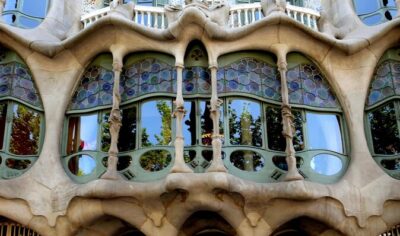
Complete Gaudi Tour: Casa Batllo, Park Guell & Sagrada Familia
Read our review →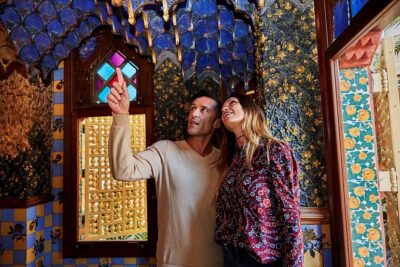
Gaudi´s Casa Vicens Skip the Line Ticket with Audioguide
Read our review →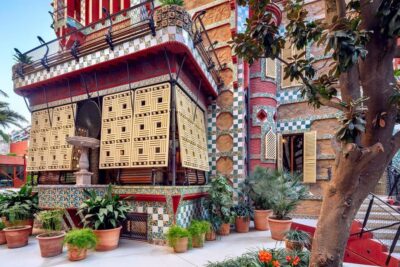
Casa Vicens, Pedrera, and Casa Batlló Guided Tour
Read our review →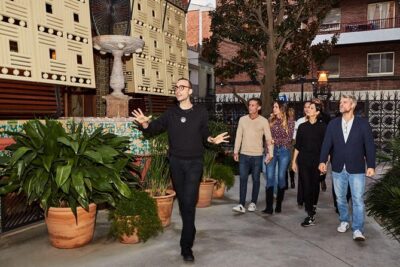
Barcelona Architecture Walking Tour With Casa Batlló Upgrade
Read our review →
Sweet Gaudi: the most delicious visit to Casa Vicens
Read our review →Browse the lists this tour appears in