
Review · ARCHITECTURE TOURS
Explore Ancient Chinese Architecture & Meet its People
The most rewarding part of this Beijing experience is not a grand palace or a famous gate. It is the chance to enter a traditional courtyard house in Dongsi Hutong and learn how old Beijing homes work from someone with a personal connection to them. Yuhua grew up in a former Prince Mansion, and she treats these buildings as homes, not just museum pieces.
I like two things in particular: the tour brings you into contact with ordinary Beijingers protecting their old neighborhoods, and it gives you something practical to do with the Dougong model, a traditional Chinese wooden bracket system. The main drawback is scope. Three hours is enough for a close look at one part of Beijing, but not enough to cover the city’s major sights as well.
Key points to know before you book
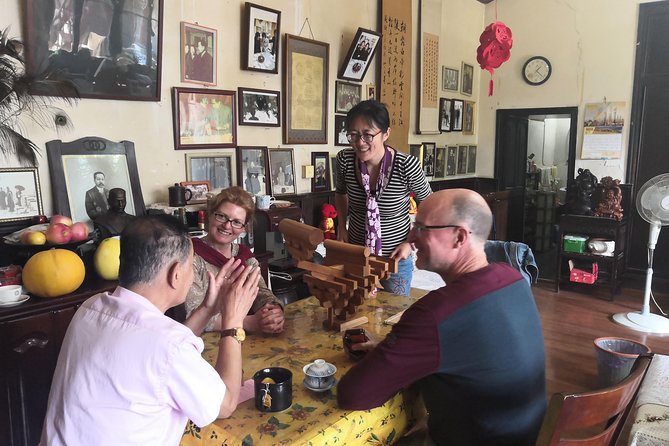
- Enter a traditional courtyard home in Dongsi Hutong: This is a personal look at old Beijing housing, not simply a walk past locked doors.
- Learn how to read Chinese architecture: Yuhua explains key features so later buildings around Beijing make more sense.
- Meet local preservation-minded residents: The experience includes contact with Beijingers making serious efforts to protect old houses and hutongs.
- Try assembling Dougong: This hands-on model shows how an important wooden bracket system fits together.
- Enjoy a private three-hour experience: Only your group takes part, which allows room for questions and conversation.
- Support cultural preservation: One percent of the payment goes to the Beijing Cultural Heritage Protection Center, a nonprofit that helps residents protect their cultural heritage.
Why Dongsi Hutong is the right setting
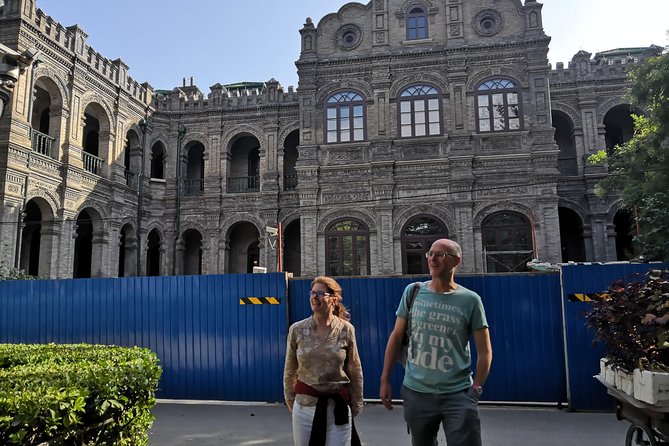
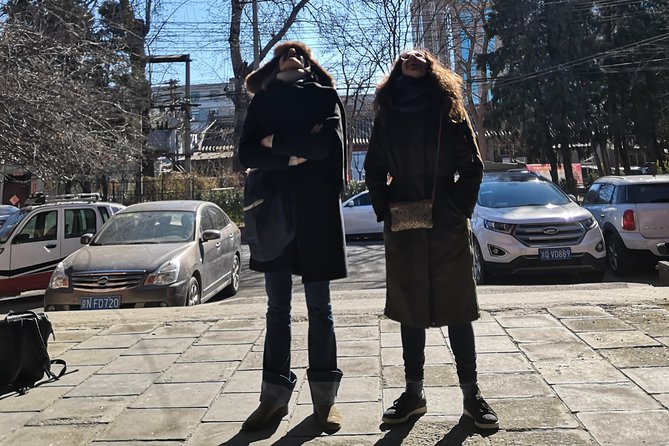
Beijing is often introduced through the Forbidden City, the Temple of Heaven, and the Great Wall. Those places matter, but they can leave you with a polished picture of the city. Dongsi Hutong offers a closer look at how people lived in courtyard homes and how traditional neighborhoods fit together.
Hutongs are lanes lined with older homes and community spaces. Many are changing or disappearing as Beijing grows. That gives this tour a useful purpose: you are not only looking at old architecture, you are considering what happens when historic homes remain part of daily life.
The setting also helps explain why architecture here is more than decoration. A courtyard house reflects family structure, privacy, movement, status, and climate. The details around a doorway or roof are tied to how the home was used. Yuhua’s aim is to help you notice those details instead of walking past them as background scenery.
I appreciate that the experience starts with a residential area rather than a major monument. You get a sense of Beijing at street level. The tradeoff is that hutongs are working neighborhoods, not carefully arranged museum galleries. Conditions may be modest, and the experience asks you to pay attention to ordinary surroundings.
A few more architecture walks in the world worth a look
- Chicago Architecture River Cruise
★ 5.0 · 15,756 reviews - Chicago River 90-Minute Architecture Tour
★ 4.5 · 9,629 reviews - Chicago River: 1.5-Hour Guided Architecture Cruise
★ 4.8 · 8,046 reviews
Inside the traditional courtyard house
The private access to a traditional courtyard house is the central feature. The exact house details are not specified, so you should not expect a fixed palace-style display with a large set of labeled rooms. Instead, the value comes from seeing the structure in context and learning how to look at it.
A courtyard house can tell you much through its arrangement. The open central space, the position of rooms, the entrances, and the relationship between private and shared areas all help explain traditional Chinese domestic life. Yuhua’s architectural primer is designed to give you the basic vocabulary for these features.
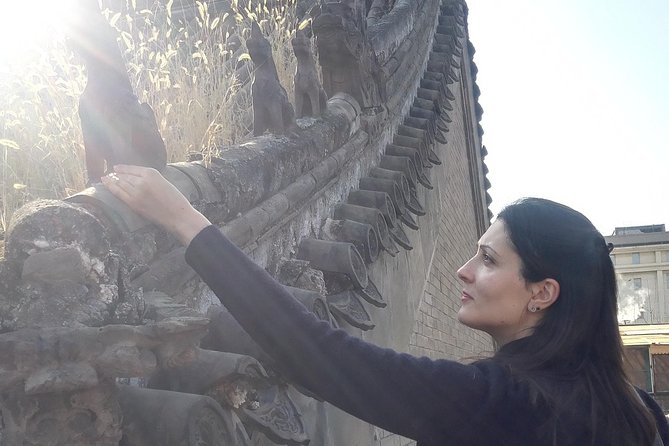
This is especially useful if you plan to visit more historic buildings in China. After this tour, you may notice roof lines, wooden joinery, courtyard layouts, and decorative elements that would otherwise blend together. The lesson is not meant to turn you into an architectural specialist. It gives you enough background to ask better questions and see more.
The personal connection matters here. Yuhua describes herself as someone who grew up in a former Prince Mansion, while also making clear that she is not royalty. That detail gives the tour a warm, human angle. She is sharing a kind of old home she feels attached to, not presenting a distant academic lecture.
Meeting the people who protect old Beijing
The tour also introduces you to local people who are working to preserve traditional buildings in the hutongs. This is one of the strongest reasons to choose it over a standard neighborhood walk.
You may meet Yuhua’s friends, including Grandpa Li and Uncle Zhu, who are mentioned as important figures in her connection to the area. The available details do not define their exact roles or guarantee a particular conversation, so it is best to think of these meetings as personal encounters within the preservation story, not a formal stage show.
That distinction is important. The point is not to turn residents into attractions. It is to understand that old architecture survives through people who live in, care for, repair, or advocate for these places. You get a view of preservation from the human side.
A donation of 1 percent of the payment goes to the Beijing Cultural Heritage Protection Center, a nonprofit organization that helps residents protect cultural heritage. That is a small contribution rather than the main reason to book, but it fits the purpose of the experience.
I like the way this connects architecture with daily life. You are not only asking how an old house was built. You are also asking who gets to remain in it, how neighborhoods change, and what local preservation means in a rapidly developing city.
The Dougong lesson makes the architecture easier to grasp
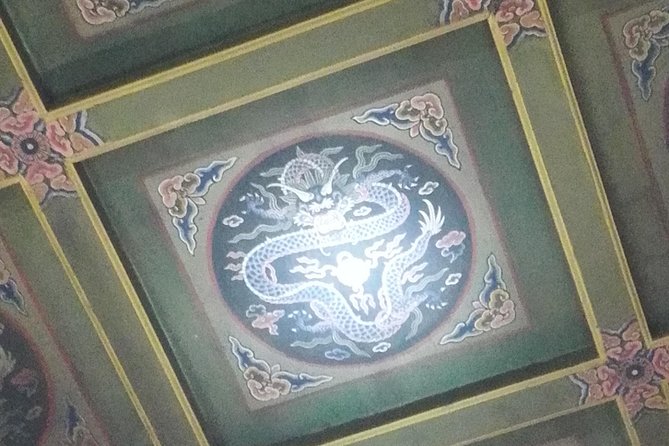
Many architecture tours rely on looking and listening. This one adds a hands-on element: you can try taking apart and putting together Dougong.
Dougong is a system of interlocking wooden brackets used in traditional Chinese construction. The model helps show how parts can support and connect without relying on the kind of modern construction logic you may know from home. Handling the pieces gives you a better sense of how a complex roof structure is assembled.
You should not expect to build a full historic roof in a few minutes. The exercise is a demonstration and a way to make the lesson memorable. Still, it is a smart addition. The difference between hearing about an architectural system and trying to fit its parts together is considerable.
This activity may appeal to families, design students, architecture fans, and anyone who enjoys learning by doing. It also gives the tour a change of pace. After time spent observing courtyard spaces and talking with residents, you have a physical problem to work through.
Same city, a different facade:
- Chicago Architecture Center River Cruise aboard First Lady
★ 5.0 · 5,536 reviews - Chicago: Architecture River Cruise Skip-the-Ticket Line
★ 4.8 · 4,325 reviews - Chicago River 45-Minute Architecture Tour from Magnificent Mile
★ 4.5 · 2,924 reviews - Barcelona: Sant Pau Recinte Modernista Entry Ticket
★ 4.6 · 2,567 reviews
What the three-hour schedule feels like
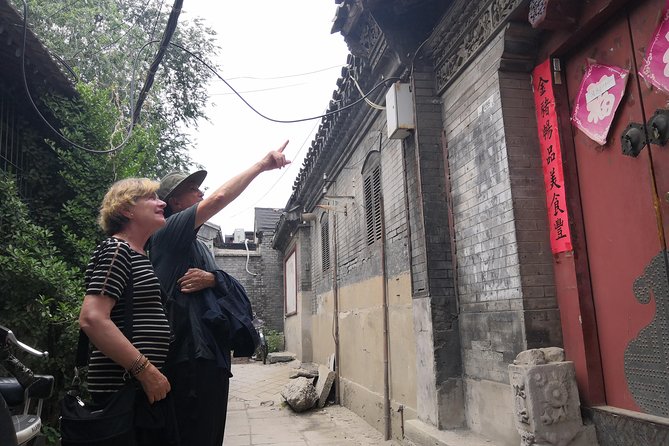
The experience begins at 9:00 am in Dongsi Subdistrict in Beijing’s Dongcheng District. It ends near Zhangzizhong Road, with Zhangzizhonglu Station on Subway Line 5, Exit A, listed as the transport reference point.
The full experience lasts about three to four hours, while the main itinerary is described as three hours. That is a useful morning plan. You can spend the afternoon on another Beijing sight, rest at your hotel, or continue exploring the Dongcheng area.
Because this is a private activity, only your group participates. That gives you more freedom to ask questions than you would have in a large walking group. It also makes the experience better suited to people who want a conversation about architecture, preservation, or local life.
The physical demand is listed as moderate. No detailed route or number of stairs is provided, so you should be prepared for ordinary walking through a hutong area and a traditional home. If mobility is a concern, ask for route details before booking rather than assuming every surface will be easy.
The mobile ticket is convenient, and confirmation is normally sent at booking. If you book within one day of departure, confirmation comes as soon as possible and depends on availability.
Is the $95.20 price fair?
At $95.20 per person, this is not a bargain-priced neighborhood stroll. The price makes more sense if you value access, personal guidance, and a private format rather than simply covering distance or checking off sights.
You are paying for several things at once: entry to a traditional courtyard home, a focused introduction to Chinese architecture, personal contact with preservation-minded residents, a Dougong activity, and a private guide. The 1 percent contribution to the Beijing Cultural Heritage Protection Center adds a small social benefit.
The value depends on your interests. If you want famous monuments, broad city coverage, or a quick orientation to Beijing, you can find cheaper ways to spend three hours. If you want to understand hutong homes and hear how preservation affects real people, this experience offers something more specific.
The two published ratings are both five-star ratings, but the sample is very small. One particularly positive account came from someone who had lived in China for a year and had long been interested in hutong life. Another came from someone who had visited Beijing many times and taken many tours, yet described this as one of their strongest travel experiences. Those details suggest the tour can work for repeat visitors as well as first-time visitors, especially if you want more than the usual highlights.
Who will enjoy this experience most?
I would choose this tour for you if you care about any of the following:
- Traditional Chinese architecture and construction
- Beijing’s hutongs and courtyard homes
- Local preservation efforts
- Small private tours with time for questions
- Meeting residents rather than only seeing monuments
- Hands-on learning through the Dougong model
It is also a good match for visitors who have already seen the Forbidden City and want a different side of Beijing. The subject is narrow, but that focus is the point.
I would be more cautious if you have only a short stay and this is your first morning in Beijing. You may prefer a broad introduction to the city’s major sights before spending several hours on architectural detail. I would also think twice if you dislike residential walks, personal conversation, or tours that focus on conservation problems as well as beauty.
The language ability of the guide is not specified in the supplied information, so check that point before booking if you need a particular language.
Timing, meeting point, and cancellation details
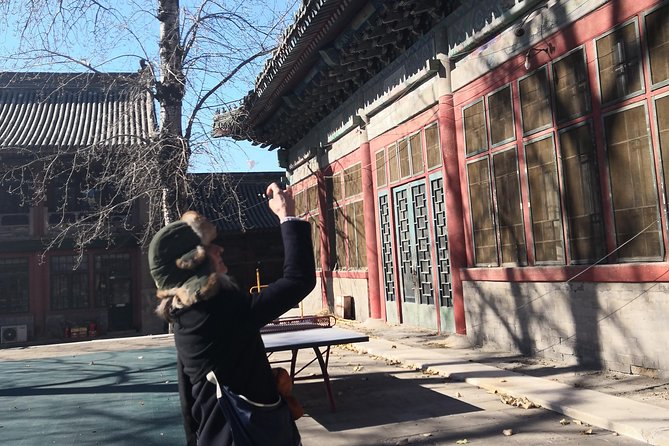
Meet at 9:00 am in Dongsi Subdistrict, Beijing’s Dongcheng District. The endpoint is near Zhangzizhong Road, and Zhangzizhonglu Station on Subway Line 5, Exit A, is the listed subway reference.
The tour is private and includes admission. Service animals are allowed, and the location is near public transportation.
Free cancellation is available if you cancel at least 24 hours before the start time. Cancellations or changes made less than 24 hours before the experience are not accepted for a refund. The experience depends on good weather. If poor weather causes cancellation, you can take a different date or receive a full refund.
Should you book Explore Ancient Chinese Architecture and Meet its People?
Book it if you want to understand Beijing through its old homes, local preservation work, and traditional construction methods. The combination of a courtyard house, personal introductions, and Dougong makes this more thoughtful than a simple hutong photo walk.
Skip it if you want a broad sightseeing tour or a low-cost introduction to the city. At $95.20, the experience asks you to value access and conversation. For architecture fans, repeat visitors, and anyone curious about what happens to old neighborhoods as Beijing changes, that is a fair exchange.
FAQ
Where does the experience begin?
It begins in Dongsi Subdistrict in Beijing’s Dongcheng District.
Where does the experience end?
It ends at Zhangzizhong Road in Beijing. Zhangzizhonglu Station on Subway Line 5, Exit A, is listed as the subway reference point.
What time does the tour start?
The scheduled start time is 9:00 am.
How long does the experience last?
The experience lasts about three to four hours, with the main itinerary listed as three hours.
Is this a private tour?
Yes. Only your group participates in the activity.
What will I see on the tour?
You will explore a traditional courtyard house in Dongsi Hutong, learn about ancient Chinese architecture, meet people connected with preserving hutong buildings, and work with a Dougong model.
Is admission included?
Yes. Admission is included.
Is the activity suitable for people with limited mobility?
The activity recommends a moderate level of physical fitness. No detailed accessibility information is provided, so ask for route details before booking if needed.
Are service animals allowed?
Yes. Service animals are allowed.
Can I cancel for a full refund?
Yes, if you cancel at least 24 hours before the experience starts. Changes or cancellations made less than 24 hours before the start time are not accepted for a refund.
What happens if the weather is poor?
The experience requires good weather. If it is canceled because of poor weather, you will be offered another date or a full refund.
Newly added in the world
- Barcelona: Guided tour e-bike Barcelona historical and modernist Barcelona★ 4.5 · 5 reviews
- Barcelona Architecture Walking Tour With Casa Batlló Upgrade★ 4.8 · 11 reviews
- Astana: Old City Tour, Imperialistic and Soviet Architecture★ 5.0 · 4 reviews
- Barcelona Beyond Gaudí: Modernism, Rooftops, and Hidden Gems★ 5.0 · 2 reviews
- An Architect’s Tour of Downtown Santiago★ 5.0 · 7 reviews
- Architecture Tour: Old Historic Madrid with an architect★ 4.3 · 3 reviews
- London: Architecture Tour of Benjamin Franklin House★ 5.0 · 5 reviews
- Architectural Wonders of KAFD, An Iconic Destination★ 5.0 · 3 reviews
Architecture Tours, compared.

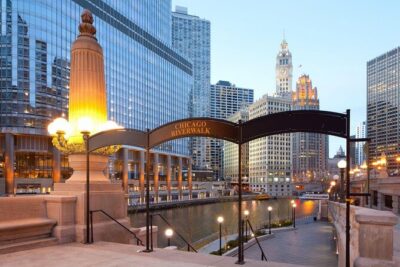

Chicago River: 1.5-Hour Guided Architecture Cruise
Read our review →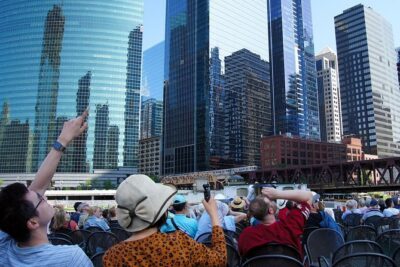
Chicago Architecture Center River Cruise aboard First Lady
Read our review →
Architecture River Cruise Skip-the-Ticket Line
Read our review →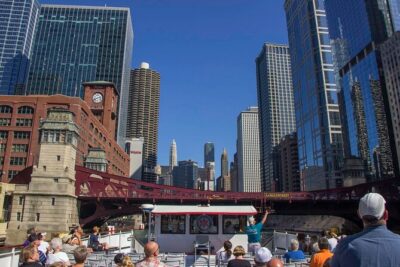
Chicago River 45-Minute Architecture Tour from Magnificent Mile
Read our review →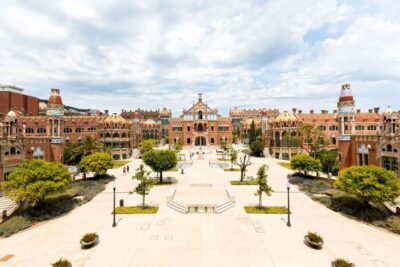

Browse the lists this tour appears in