Review · ARCHITECTURE TOURS
Architecture Tour of Brussels
Brussels reveals itself best through its buildings, and this compact walking tour connects the city’s grandest squares, theaters, churches, shopping arcades, and viewpoints. An architect guide leads you from Grand Place to Mont des Arts, explaining not only what you are seeing, but why the city grew in this particular shape.
I like the clear architectural focus and the wide range of stops. I also like the small group limit of 18, plus the chance to get personal explanations from guides such as Gamaal or Jimmy. The main drawback is the 8:00 pm start, which may make some details harder to see, especially inside or around buildings that you do not enter.
Key points to know before you book
- You cover a large part of central Brussels on foot: The route links Grand Place, the theater district, Sablon, BOZAR, and Mont des Arts.
- The focus is architecture and city history: You will compare Gothic, Baroque, royal, commercial, and modern buildings.
- Grand Place gets a proper introduction: The guide explains its change from a wooden market area to the ornate square you see today.
- Mont des Arts provides the final photo stop: You look toward Brussels City Hall, the old city, and the Royal Palace.
- The group is capped at 18 people: That is small enough for questions without promising a private tour.
- The price is modest for a guided city orientation: At $30.10 per person, you are paying for a professional local guide rather than transport or admission tickets.
Why this Brussels walk is more than a list of buildings
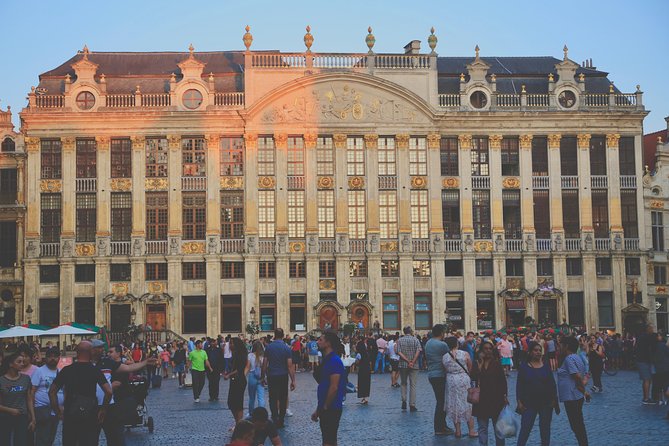
This tour works because the route tells a story. You begin at the city’s famous ceremonial center, pass through its old commercial and cultural quarters, then climb toward Sablon and Mont des Arts. The buildings are not treated as isolated photo stops. They show how Brussels changed from a fortified medieval town into a capital filled with royal, civic, artistic, and commercial architecture.
You should expect a brisk walking pace. The planned stops add up to about two hours, with roughly 20 minutes at Grand Place, 20 minutes at the Galeries Royales Saint-Hubert, and shorter explanations at several other sites. The route includes a hill toward the Manneken Pis wardrobe museum and continues toward Sablon, so comfortable shoes are sensible.
The tour is offered in English and includes a mobile ticket. Transport is not included, but the entire experience is built around walking through the central districts. The starting point is the Godiva shop at Grand Place 21/22, and the tour returns to the meeting point after finishing at Mont des Arts.
A few more architecture walks in the world worth a look
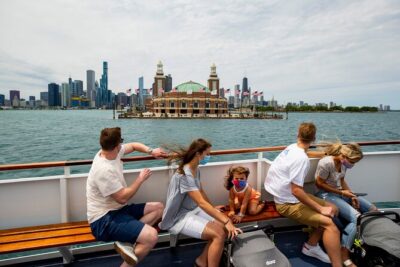
- Chicago Architecture River Cruise
★ 5.0 · 15,756 reviews - Chicago River 90-Minute Architecture Tour
★ 4.5 · 9,629 reviews - Chicago River: 1.5-Hour Guided Architecture Cruise
★ 4.8 · 8,046 reviews
Grand Place, from market square to architectural showpiece
Grand Place is the right place to start. It is Brussels at its most dramatic, with ornate facades gathered around a broad historic square. The square is a UNESCO World Heritage site and one of Belgium’s most visited places, but its present appearance was not created all at once.
Your guide explains how the area began as a market surrounded by wooden houses. Over time, those early structures gave way to the Gothic and Baroque buildings that define the square today. That change helps you read the facades as evidence of shifting wealth, power, and taste rather than as simple decoration.
Allow about 20 minutes here. You will study the fronts of the buildings and hear about notable people connected with them. This is one of the strongest parts of the route because the guide can point out details you might otherwise pass without noticing.
Grand Place is also the busiest point on the walk. If you want clear photographs, arrive a little early and take your own pictures before the group begins. The meeting point is easy to identify because it is at the Godiva shop on the square.
Galeries Royales Saint-Hubert and Brussels coffee culture
The Galeries Royales Saint-Hubert is one of the tour’s most distinctive stops. It is described as the first shopping mall in the world and dates from the same period as the Belgian state. Its covered passages show how commerce became part of the city’s public architecture.
The guide focuses on the architect’s ambition and the practical work needed to bring the project to life. That human story gives the building more meaning than a quick look at its glass roof and elegant shopfronts. You learn how a major urban project depended on persistence, planning, and a network of contacts.
This stop also connects architecture with literature and café culture. The route passes cafés associated with famous authors who used them as places to meet, write, and work. You will have about 20 minutes here, enough to notice the arcades and hear the background without turning the stop into a shopping break.
The practical catch is that this is a passageway rather than a museum visit. You are learning from the guide as you walk through it, not touring a separate interior collection.
La Monnaie and Place De Brouckereplein
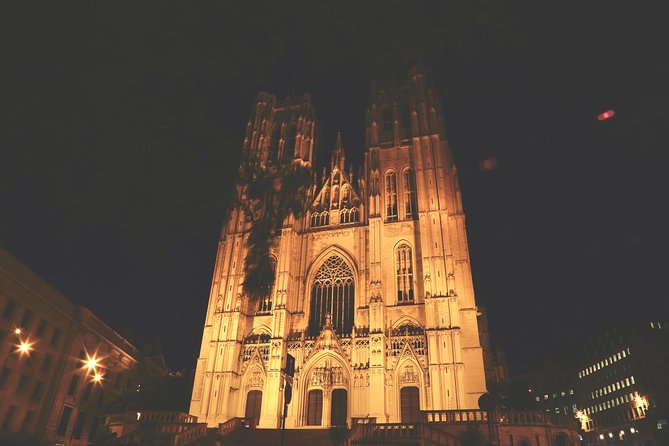
At La Monnaie, the subject shifts from shopping to performance and public life. This royal theater has a long history, and the guide places it within the surrounding shopping streets and the area connected with revolution. The stop lasts about 10 minutes, so expect a focused explanation rather than a full theater tour.
That short pause is useful because it shows how architecture can reflect civic change. A royal theater is not only a place for performances. It also belongs to the story of authority, public gathering, and political life in the capital.
The walk then continues to Place De Brouckereplein. Here, you discuss the former De Brouckere palace and the old river route that once ran through the city. The waterway became part of Brussels’ defense system, so this stop adds a layer of urban planning to the tour.
You may find this section less instantly striking than Grand Place or the Galeries Royales, but it gives you a better sense of how the city functioned. Brussels was shaped by water, trade, defense, and movement, not only by handsome facades.
Same city, a different facade:
- Chicago Architecture Center River Cruise aboard First Lady
★ 5.0 · 5,536 reviews - Chicago: Architecture River Cruise Skip-the-Ticket Line
★ 4.8 · 4,325 reviews - Chicago River 45-Minute Architecture Tour from Magnificent Mile
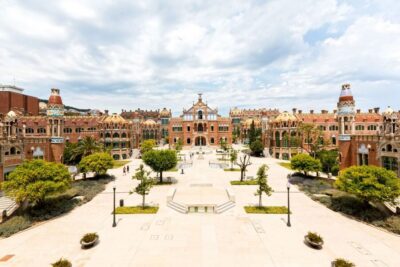
★ 4.5 · 2,924 reviews - Barcelona: Sant Pau Recinte Modernista Entry Ticket
★ 4.6 · 2,567 reviews
La Bourse and the changing heart of Brussels
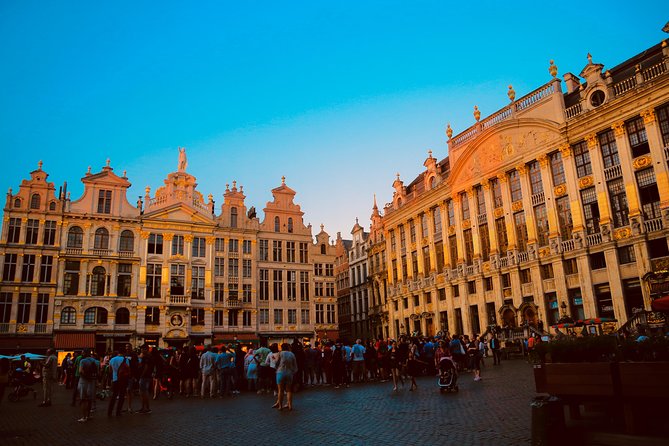
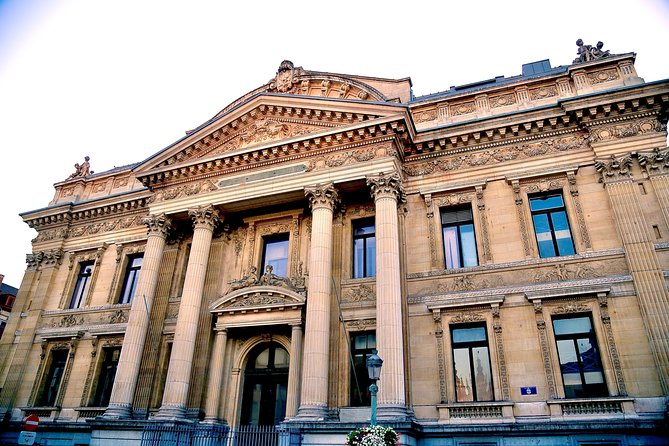
La Bourse de Bruxelles provides another lesson in how the city’s central spaces developed. The guide traces the history of the exchange from Bruges, to Grand Place, and then to its current square. That movement shows how commercial power shifted as Brussels grew in importance.
The building now forms part of Brussels’ art scene, giving the stop a modern connection as well as a historical one. You will spend about 10 minutes here. The explanation should help you see the building as part of a changing city rather than as a single old monument frozen in time.
Because several stops are close together, the route keeps moving. This is good if you want to cover central Brussels efficiently, but less suitable if you prefer long periods for sketching, photography, or quiet inspection.
Manneken Pis and the small statue with a large wardrobe
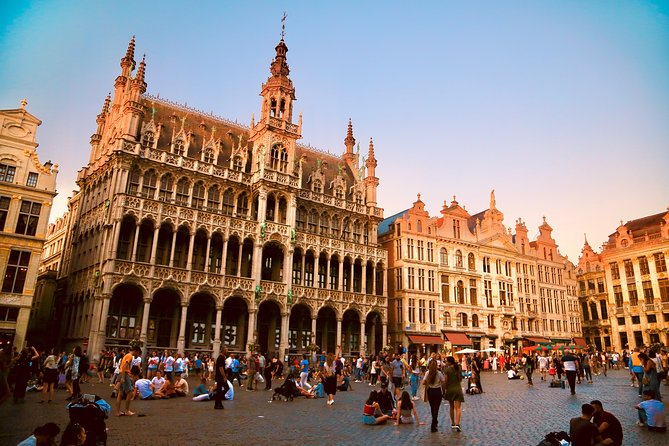
Manneken Pis is presented with a useful dose of humor. The guide calls it the greatest disappointment in Brussels, a fair warning if you expect a grand monument. The statue is small, but its fame is enormous, and its wardrobe contains more than 1,200 uniforms.
You will hear four stories connected with the boy and then climb the hill toward the wardrobe museum. The stop takes about 15 minutes. The point is not that the statue is architecturally impressive. Instead, it shows how legends, civic pride, and a sense of fun can turn a modest object into one of a city’s best-known symbols.
This is one of the places where the guide’s personality matters. Gamaal has been praised for explaining history in an engaging way and adapting the walk to the group’s interests. Jimmy has also been singled out for humor, practical recommendations, and care during difficult weather. The exact guide can vary, but you should expect the tone to depend partly on who leads your walk.
Jacques Brel, Sablon, and the city’s cultural side
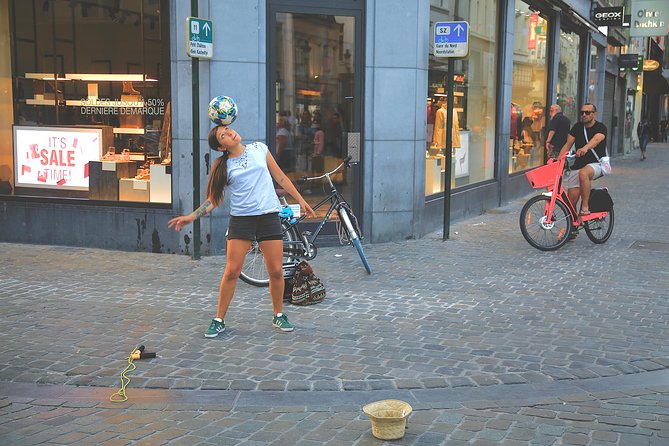
The Jacques Brel statue is a short five-minute stop, but the question behind it is more interesting than the amount of time suggests: why does Brussels honor this singer with a sculpture? The guide uses the statue to connect the city with one of its best-known cultural figures.
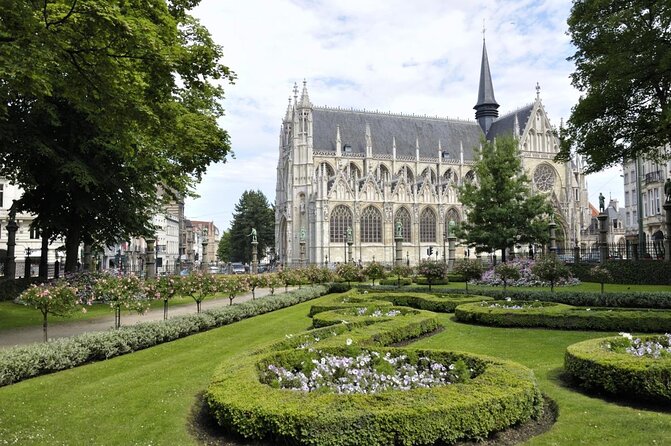
The route then reaches Notre Dame des Victoires au Sablon, where the subjects are chocolate and the church. This 15-minute stop combines one of Belgium’s most famous foods with one of Brussels’ important religious buildings. The church gives you another chance to compare styles and see how the city’s historic districts differ from the formal grandeur of Grand Place.
Sablon also makes the walking route feel less centered on the most obvious tourist sights. You are still in central Brussels, but the focus shifts toward church architecture, local identity, and the city’s long connection with chocolate.
BOZAR and the final view from Mont des Arts
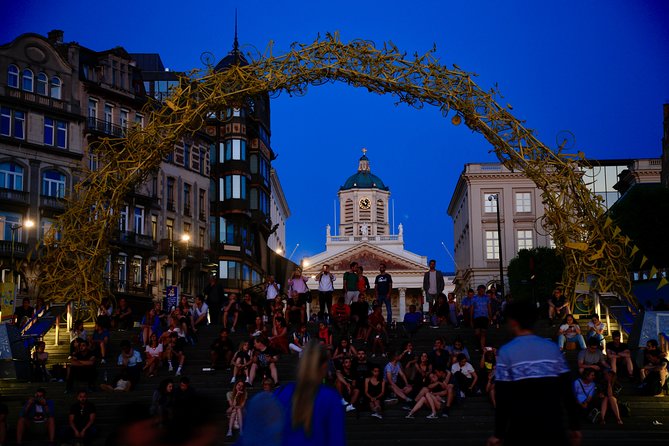
BOZAR, the Centre for Fine Arts, receives a brief five-minute introduction. The guide asks you to consider what lies behind its large walls, giving you a glimpse of Brussels’ modern cultural life. Since the stop is short, do not expect a full tour of the art center or its programs.
The final stop is Mont des Arts, with about 20 minutes for views and photographs. This is the natural finish to a walk that has moved through the old city and toward its upper districts. From here, the classic panorama includes the old city walls, Brussels City Hall’s tower, and the Royal Palace at the other end.
The view is especially useful because it helps you understand Brussels spatially. After hearing about markets, rivers, defenses, palaces, theaters, and churches, you can look back across the city and connect those pieces. Bring a phone or camera, since the viewpoint is one of the clearest photo opportunities on the route.
What $30.10 buys you
The price is $30.10 per person. For about two hours with a professional local guide, that is a fair rate, especially if you want context rather than a self-guided walk between landmarks. You are not paying admission fees because the stops are viewed from public areas, and no transport is included.
The value depends on how you like to visit a city. If you already know Brussels well and prefer to explore quietly, you may find the route too quick. If you have limited time, the tour gives you a useful first look at several central districts and helps you decide where to return later.
A group limit of 18 is another plus. It is not the same as a private walk, but it is small enough that the guide can respond to questions. One experience became a private tour simply because the group was small, though you should not book expecting that arrangement every time.
The tour is recommended by all recorded ratings, with a top rating based on 10 reviews. That is a small sample, so I would treat it as encouraging rather than final proof. The strongest pattern is clear: the guides receive praise for humor, detailed explanations, flexibility, and restaurant tips.
Timing, walking, and who should book
The 8:00 pm start creates a pleasant evening setting, and one German-language review specifically appreciated the atmosphere of an evening walk through the old town. At the same time, evening light can make architectural details harder to inspect. If your main goal is close study of facades, a daytime visit to Grand Place or the Galeries Royales may be worthwhile before the tour.
Most people can take part, and the route is near public transportation. You should still be ready to walk for two hours, including a climb toward the Manneken Pis wardrobe museum. Since the tour ends back at the meeting point, you do not need to arrange a separate ride from Mont des Arts.
I would choose this experience if you want:
- A guided introduction to Brussels architecture
- A compact route through major central sights
- Stories about city planning, famous figures, and public life
- An English-language walk with a small group
- A city viewpoint at the end
- A guide who can adjust explanations to your interests
I would hesitate if you want interior visits, museum time, or a slow photography walk. The attraction is the connected story and the guide’s explanations, not admission to buildings.
Should you book the Architecture Tour of Brussels?
Book it if you want a strong first orientation to central Brussels and enjoy learning how buildings reflect commerce, politics, religion, entertainment, and city defense. The combination of Grand Place, the Galeries Royales, La Monnaie, Sablon, BOZAR, and Mont des Arts gives you plenty of variety for $30.10.
The best reason to choose it is the guide. Gamaal and Jimmy are both noted for humor, clear explanations, flexibility, and useful local advice. The main caution is the evening timing and the brisk two-hour format. For most first-time visitors who want more than a checklist of sights, this is a sensible, good-value walk.
FAQ
How long does the Architecture Tour of Brussels last?
The tour lasts approximately two hours.
What time does the tour start?
The tour starts at 8:00 pm.
Where does the tour begin?
It begins at the Godiva shop at Grand Place 21/22, 1000 Bruxelles, Belgium.
Where does the tour end?
The activity ends back at the meeting point.
Is the tour offered in English?
Yes. The tour is offered in English.
Is transportation included?
No. Transport is not included. The experience is a guided walking tour.
How many people can join the tour?
The group has a maximum of 18 travelers.
Can I cancel for a full refund?
Yes. You can cancel at least 24 hours before the local start time for a full refund. Changes or cancellations made less than 24 hours before the start time are not accepted for a refund.
Newly added in the world
- Washington, DC: Georgetown Architecture Walking Tour★ 5.0 · 8 reviews
- Washington DC: Dupont Circle & Embassy Row Architecture Tour★ 5.0 · 6 reviews
- New Orleans : Garden District Architecture Walking tour★ 4.8 · 5 reviews
- Wilmington History and Architecture Tour★ 4.8 · 18 reviews
- Walk & Discover KL’s Architectural and Heritage Gems★ 5.0 · 7 reviews
- Unveiling Brno: History, Culture & Architectural Delights★ 5.0 · 2 reviews
- Vicenza: Palladian Architecture Private Walking Tour★ 3.3 · 3 reviews
- Private Colonial Williamsburg Architectural Tour★ 5.0 · 5 reviews
Architecture Tours, compared.

Chicago River: 1.5-Hour Guided Architecture Cruise
Read our review →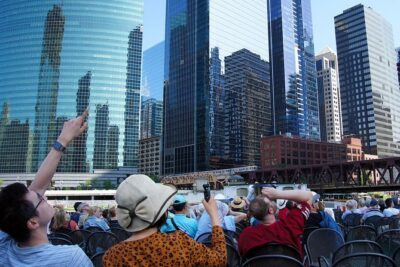
Chicago Architecture Center River Cruise aboard First Lady
Read our review →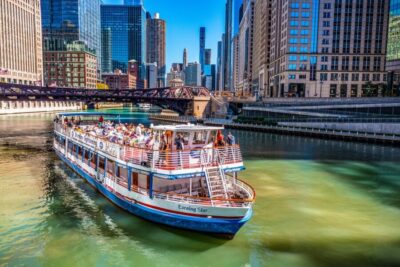
Architecture River Cruise Skip-the-Ticket Line
Read our review →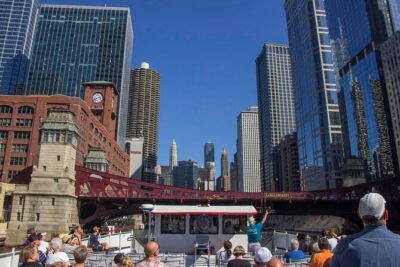
Chicago River 45-Minute Architecture Tour from Magnificent Mile
Read our review →