Review · ARCHITECTURE TOURS
Belgian Hidden Architectural Gem
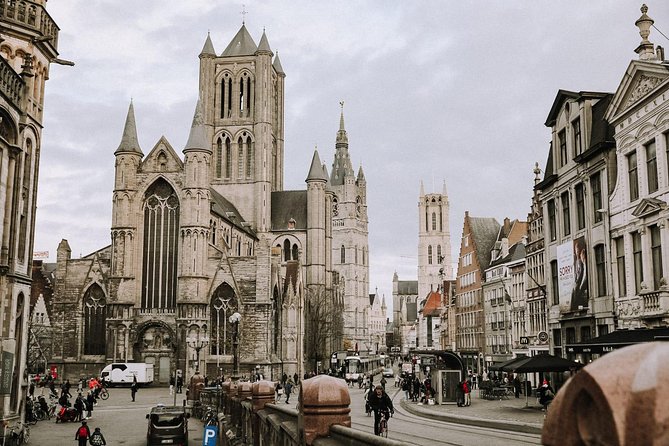
Ghent’s best stories are often tucked into its buildings, streets, and odd little monuments. This two-hour walk links the grand Vrijdagmarkt with Gravensteen, the medieval Counts of Flanders castle, while explaining how Ghent grew from a powerful European city into a modern technology center.
I like the small group, capped at 12 people, and the fact that a guide handles the route while you focus on the architecture. I also like the focus on stories you could easily miss alone, such as why a pillar sits in front of the castle and which building has Ghent’s finest Baroque facade. The main drawback is that the tour depends on good weather and does not include coffee, tea, or a listed interior admission to Gravensteen.
Key points to know before you book
- Vrijdagmarkt opens the tour with Ghent’s public face: Expect about 20 minutes around one of the city’s major historic squares.
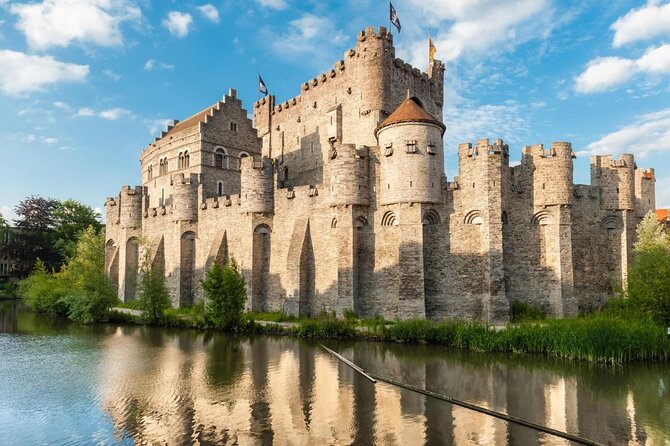
- Gravensteen provides the dramatic finish: The castle is one of Ghent’s oldest buildings and a clear symbol of medieval Flemish power.
- The guide adds the value: The walk is built around local explanations, architectural details, and stories beyond the standard postcard view.
- Jamal has earned special praise: One review describes his tour as humorous, informative, and especially strong on architecture, art, and history.
- The group stays small: A maximum of 12 people makes it easier to hear the guide and ask questions.
- Plan for an outdoor walk: The experience lasts about two hours, begins at 3:00 pm, and may be canceled in poor weather.
Why Ghent’s architecture works best with a guide
Ghent is not a city you understand from a single landmark. Its appeal comes from the way churches, civic buildings, old market spaces, and defensive structures fit together. Walk alone and you can admire the stonework. Walk with a good guide and you begin to see why the buildings are there, who paid for them, and what they reveal about the city’s changing fortunes.
That is the purpose of this experience. It is less a list of famous sights and more a guided lesson in how Ghent developed. You hear about the fall of the Holy Roman Empire, the power of the Flemish counts, the architecture around Vrijdagmarkt, and the city’s modern nickname as Belgium’s Silicon Valley.
I would choose this walk early in a Ghent visit if I wanted a quick sense of place. The route is only about two hours, so it gives you useful background without taking up an entire afternoon. It also leaves time afterward to return to the buildings that caught your eye.
The walk begins at the Stadshal, or City Pavilion, on Poeljemarkt. That makes the starting point easy to identify in central Ghent. The activity returns to the same meeting point, which is useful if you have onward plans or want to continue sightseeing from a known location.
A few more architecture walks in the world worth a look
- Chicago Architecture River Cruise
★ 5.0 · 15,756 reviews - Chicago River 90-Minute Architecture Tour
★ 4.5 · 9,629 reviews - Chicago River: 1.5-Hour Guided Architecture Cruise
★ 4.8 · 8,046 reviews
Vrijdagmarkt, 20 minutes around Ghent’s historic square
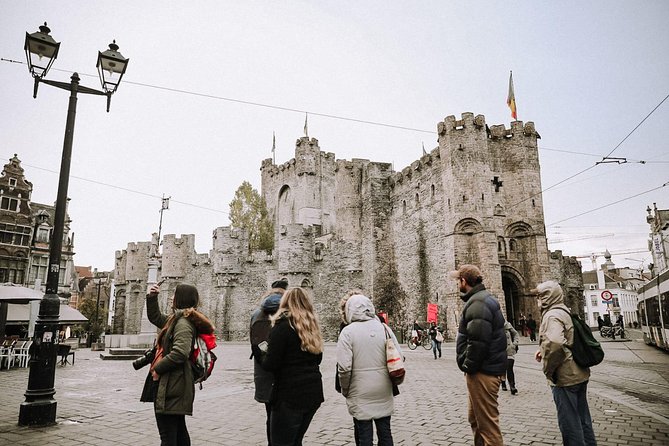
The first main stop is Vrijdagmarkt, the large Markt of Gent. This is not just a convenient open space for a walking tour. It is one of the city’s key public areas, surrounded by architecture that helps explain Ghent’s commercial and civic importance.
You can expect roughly 20 minutes here. That is long enough for a focused introduction, but not long enough for a detailed building-by-building study. The guide’s role matters most at this point. You are shown where to look and given the historical reasons behind the square’s design and buildings.
I like this opening because it starts with the city as a whole rather than rushing straight to the castle. A market square tells you how people used a city. It connects trade, government, public gatherings, and daily life. Ghent’s architecture becomes easier to read once you understand that setting.
The stop also gives the guide room to discuss European architecture. The experience is not limited to taking photographs of old facades. You learn how style and power changed over time, and how Ghent’s buildings reflect those shifts.
One practical point: the square stop is listed as free admission, but the tour itself is not free. You are paying for the guide’s time, route planning, and explanations rather than for an entry ticket at this stop. At $17.80 per person, that is a reasonable price if you value context and do not want to prepare with a guidebook.
The short walk toward Gravensteen
Between Vrijdagmarkt and the castle, the group crosses a street on the way to Gravensteen. The supplied route gives few details about this section, so you should think of it as a connecting walk rather than a separate sightseeing stop.
That simplicity is not a problem. A guided city walk does not need every minute filled with a named monument. The transition lets the guide connect the square to the castle and explain how Ghent’s historic center fits together.
The navigation is handled for you, which has real value in an unfamiliar city. You can pay attention to the rooflines, street pattern, and passing buildings instead of checking a map. If you have only just arrived in Ghent, this makes the walk a useful orientation.
The route does not appear to include a café break. Coffee and tea are specifically not included, so have a drink before the start if you prefer to walk with one already in hand. The 3:00 pm start is also worth noting. It fits well after lunch, but it may overlap with other afternoon plans.
Gravensteen, Ghent’s medieval power statement
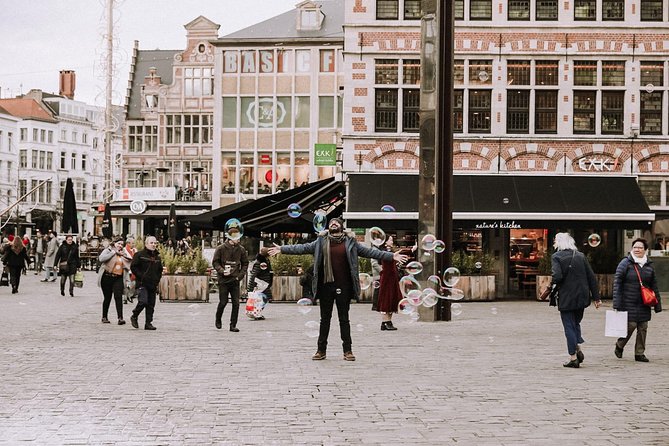
Gravensteen is the star of the route. Known as the castle of the Counts of Flanders, it is one of Ghent’s oldest buildings and a powerful reminder of the authority held by the Flemish counts during the medieval period.
The tour allows about 20 minutes at the castle. That is enough for an exterior explanation and a close look at the building’s role in the city. The stop is listed with free admission, and the included features name only the guide. You should therefore not assume that an interior castle visit is part of this experience.
This distinction matters. If you want to explore the inside of Gravensteen, check the current admission arrangements separately. The tour’s value here comes from interpretation, not from a bundled entry ticket.
The guide also explains why a pillar stands in front of the castle. That small detail is exactly the sort of thing most people would walk past. You may not remember every date from a city tour, but a strange object with a clear story tends to stay with you.
Another promised topic is which building has the most beautiful Baroque facade in Ghent. The wording suggests that the guide will point out a specific building and explain why it deserves attention. This adds variety to the castle stop. You are not simply looking at a fortress. You are comparing different architectural periods and the ideas of power, taste, and public display behind them.
Gravensteen also gives the tour a strong visual ending. The castle is easy to remember, and its medieval form contrasts with the later architecture introduced earlier in the walk. For a first visit, that contrast helps organize Ghent in your mind.
Same city, a different facade:
- Chicago Architecture Center River Cruise aboard First Lady
★ 5.0 · 5,536 reviews - Chicago: Architecture River Cruise Skip-the-Ticket Line
★ 4.8 · 4,325 reviews - Chicago River 45-Minute Architecture Tour from Magnificent Mile
★ 4.5 · 2,924 reviews - Barcelona: Sant Pau Recinte Modernista Entry Ticket
★ 4.6 · 2,567 reviews
A city story that reaches beyond the Middle Ages

The tour’s historical frame is broader than the two named stops. You hear about the fall of the Holy Roman Empire and the development of Ghent over time. The information provided does not spell out every part of the discussion, so I would treat this as a guided overview rather than a specialist lecture.
That is likely the right level for most people. A two-hour walk should give you a clear timeline, not bury you in dates and dynasties. The strongest guides use history to explain what you are looking at, and this experience is designed around that connection.
The modern angle is unusual for a castle-focused walk. Ghent has gained the nickname Belgium’s Silicon Valley, and the tour links the old city to its current technology identity. This keeps the experience from becoming a purely medieval story.
I especially like that balance. You get the counts, castles, and historic market space, but you also hear why Ghent matters now. A city feels more real when it is presented as a place that changed rather than a preserved museum.
The guide can make or break this small-group walk
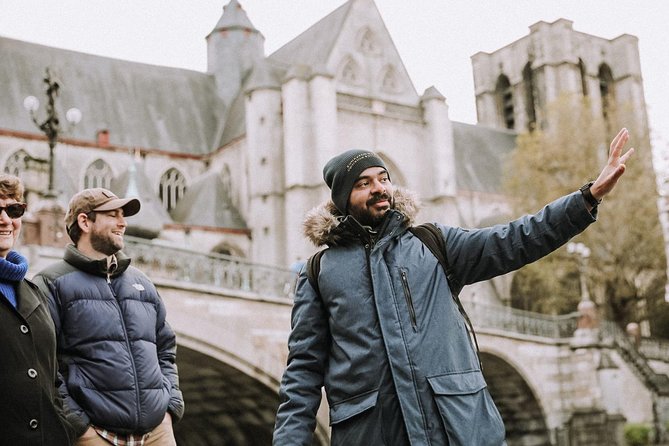
The guide is the main reason to book this experience instead of following a map. There are no listed museum entries, meals, or special transport included. You are buying a guided interpretation of Ghent.
The group maximum is 12 people. That is small enough for the guide to speak to the whole group without shouting, and it gives you a better chance to ask about a facade or historical detail. It is not a private tour, but it should feel more manageable than a large city walk.
Jamal is the only guide named in the available feedback. He is praised for an extensive grasp of architecture, art, and city history, along with a humorous and engaging manner. I would keep that in mind when setting expectations: the strongest part of the experience appears to be the guide’s enthusiasm and ability to make the material feel lively.
The published rating is 4.5 from two reviews, a very small sample. That score is encouraging, but it should not be treated as a broad measure of every departure or every guide. The useful detail is the specific praise for Jamal’s clear explanations, humor, and enthusiasm.
Is $17.80 good value for two hours?
At $17.80 per person, this is priced as an affordable guided introduction rather than a full sightseeing package. The cost does not include coffee, tea, or a listed castle entry. You are paying for the guide and the route.
I think the price works well for three kinds of visitors. First, it suits anyone arriving in Ghent without much preparation. Second, it works for people who enjoy architecture but want help understanding what they see. Third, it is useful if you have only a short stay and want a compact overview.
The value is weaker if you already know Ghent’s history, prefer to explore at your own speed, or mainly want to go inside Gravensteen. In that case, you may get more from arranging your own castle visit and using your time for interiors and independent wandering.
The small group improves the value. With only up to 12 people, you are not paying for a large crowd to be moved from place to place. The guide can focus on the buildings, the route, and questions from the group.
Timing, weather, and practical planning

The tour starts at 3:00 pm and lasts approximately two hours. That gives you a clear afternoon schedule, but you should arrive ready to walk outdoors for the full experience.
Good weather is required. If poor weather forces a cancellation, you are offered another date or a full refund. This protection helps, but the activity is non-refundable and cannot be changed for personal reasons once booked. Check your plans carefully before paying.
The experience is near public transportation, and mobile tickets are accepted. The meeting point is the Stadshal, or City Pavilion, at Poeljemarkt, 9000 Gent. The activity ends back at that same point.
Service animals are allowed, and most people can take part. The supplied information does not give a precise distance, accessibility surface, or number of stairs, so contact the provider if you need details beyond the general statement that most people can participate.
Who should book this Ghent walk?
I would recommend it to first-time visitors who want a clear introduction without committing to a long tour. The route brings together a major square, a famous castle, architectural discussion, and a broad story about the city’s past and present.
It also suits anyone who likes buildings but does not want to read a guidebook while walking. The guide handles navigation and supplies the context, leaving you free to watch the streets and facades.
Families and mixed-age groups may appreciate the short format and the castle focus, though the tour data does not specify a child price or family program. People with limited time may also find the two-hour length convenient.
I would be more cautious if your main aim is a full interior visit to Gravensteen. The experience appears to focus on the exterior and the surrounding city story, with no included entry listed. I would also avoid booking it if your schedule is fragile, since personal cancellations and amendments are not refundable.
Should you book Belgian Hidden Architectural Gem?
Book this tour if you want an affordable, small-group introduction to Ghent that puts architecture and local stories ahead of a simple checklist of sights. The combination of Vrijdagmarkt and Gravensteen gives you two very different views of the city, while the discussion of the Holy Roman Empire and Belgium’s Silicon Valley nickname adds useful context.
The best reason to choose it is the guide. Jamal’s reported humor, enthusiasm, and strong command of art, architecture, and history are exactly what this format needs. Just remember that the price covers the guided walk, not coffee, tea, or a clearly listed castle interior visit.
FAQ
Where does the tour begin?
The tour begins at the Stadshal, also called the City Pavilion, on Poeljemarkt, 9000 Gent, Belgium.
What time does the tour start?
The tour starts at 3:00 pm.
How long does the experience last?
The tour lasts approximately two hours.
Where does the tour finish?
The activity ends back at the meeting point at the City Pavilion.
What sights are included?
The route includes Vrijdagmarkt and Gravensteen castle, along with a street crossing on the way to the castle.
Is entry to Gravensteen included?
The provided information lists the guide as included but does not list a castle admission ticket. The Gravensteen stop is shown with free admission, so check the current arrangements if you want to enter the castle.
How many people can join the tour?
The group has a maximum of 12 participants.
Is coffee or tea included?
No. Coffee and tea are not included.
Is the tour available with a mobile ticket?
Yes. The experience offers a mobile ticket.
What happens if the weather is poor?
The tour may be canceled in poor weather. You will then be offered a different date or a full refund.
Newly added in the world
- Washington, DC: Georgetown Architecture Walking Tour★ 5.0 · 8 reviews
- Washington DC: Dupont Circle & Embassy Row Architecture Tour★ 5.0 · 6 reviews
- New Orleans : Garden District Architecture Walking tour★ 4.8 · 5 reviews
- Wilmington History and Architecture Tour★ 4.8 · 18 reviews
- Vicenza: Palladian Architecture Private Walking Tour★ 3.3 · 3 reviews
- Walk & Discover KL’s Architectural and Heritage Gems★ 5.0 · 7 reviews
- Unveiling Brno: History, Culture & Architectural Delights★ 5.0 · 2 reviews
- Private Colonial Williamsburg Architectural Tour★ 5.0 · 5 reviews
Architecture Tours, compared.

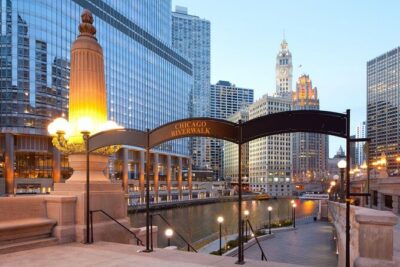

Chicago River: 1.5-Hour Guided Architecture Cruise
Read our review →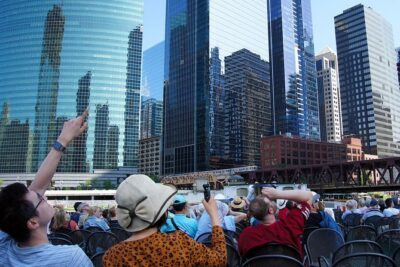
Chicago Architecture Center River Cruise aboard First Lady
Read our review →
Architecture River Cruise Skip-the-Ticket Line
Read our review →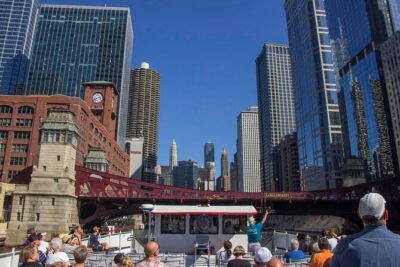
Chicago River 45-Minute Architecture Tour from Magnificent Mile
Read our review →