
Review · ART DECO TOURS
LA’s Art Deco & Beaux Art Architecture: Private Walking Tour
Downtown Los Angeles becomes much more interesting when you look up. This private walk links City Hall, the Bradbury Building, CalEdison, the Central Library, and the Eastern Columbia Building into one clear story about Beaux-Arts grandeur and Art Deco design. I like the private format and the route’s strong lineup of landmark buildings. I also like that you finish near public transport instead of having to find your way back across downtown.
The main consideration is price: $175 per person is a serious charge for a three-hour walk, especially for a solo visitor or couple. It makes more sense for a small group that values a private guide, a flexible pace, and close attention to architecture.
Key points at a glance
- Eight downtown landmarks in three hours: The route moves from City Hall to the Eastern Columbia Building with stops at major examples of Art Deco, Beaux-Arts, Art Moderne, and Romanesque Revival design.
- A genuinely private walk: Only your group participates, so you can take photos, ask questions, and spend more time at the buildings that catch your eye.
- A strong architectural progression: You see how earlier Beaux-Arts buildings influenced the sharper vertical lines and decoration of Art Deco.
- A photo-friendly route: The Bradbury Building, Central Library, CalEdison, and Eastern Columbia Building offer especially striking details.
- Useful downtown finish: The tour ends at 849 South Broadway, close to public transportation and taxi links.
- Plan for steady walking: The tour is wheelchair accessible, but you should still have a moderate level of physical fitness for a three-hour city walk.
Why this downtown route works
This tour is not just a list of old buildings. Its route gives you a way to read downtown Los Angeles by style and period. You begin with civic architecture, move through early twentieth-century office and commercial buildings, and finish with one of the city’s most recognizable Art Deco facades.
That sequence matters. Beaux-Arts design favored grand scale, classical references, and formal symmetry. Art Deco later brought stronger vertical lines, geometric decoration, stylized patterns, and a sense of modern speed. Your guide helps connect those ideas instead of leaving you to identify them on your own.
The walk covers about three hours, and the listed stops add up to that full time. You should not treat this as a quick photo circuit. The plan allows roughly 15 to 30 minutes at each location, enough to hear the story, look closely at materials and ornament, and take photographs without being rushed.
The private setup is the biggest practical advantage. If one person in your group is fascinated by tiled floors while another wants exterior photographs, your guide can respond to that interest more easily than on a large group tour. Guide names associated with this experience include Sam and Mary. The best feedback specifically highlights Sam’s city and building knowledge, along with a surprise rooftop viewing, though rooftop access should not be treated as guaranteed.
More Art Deco Tours in the USA
- The Official Art Deco Walking Tour by The Miami Design Preservation League
★ 5.0 · 1,580 reviews - Miami South Beach Art Deco Walking Tour
★ 5.0 · 1,039 reviews - Miami Beach Food and Art Deco Walking Tour
★ 4.5 · 245 reviews
Starting at Los Angeles City Hall
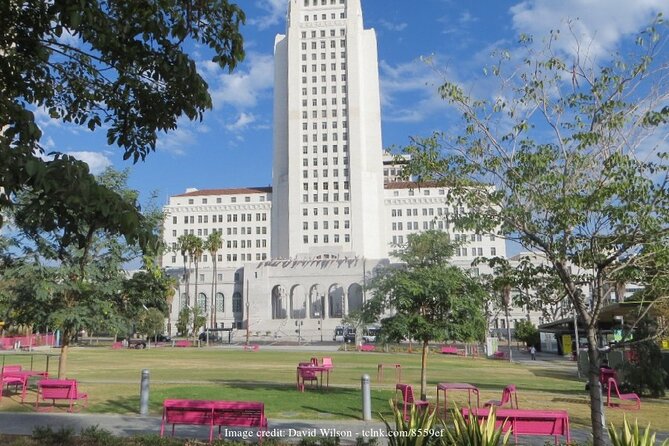
Meet your guide at Los Angeles City Hall, 200 North Spring Street. This is a sensible starting point because the building immediately gives you a lesson in how Los Angeles presents itself: civic, theatrical, and hard to place in one architectural category.
City Hall is famous not only as a working civic building but also for its frequent appearances in films. Its eclectic style makes it a useful opening example. You can begin thinking about the difference between a building that borrows from several traditions and one that follows the more disciplined geometry of Art Deco.
You have about 30 minutes here, and admission is free. That time is useful for exterior photographs and orientation. Your guide also takes care of navigation from this point, which matters in downtown Los Angeles, where short distances on a map can involve busy streets, confusing intersections, or changes in the feel of a block.
The next stop is the Los Angeles Courthouse, an example of Art Moderne architecture. Art Moderne is related to Art Deco but tends to use smoother surfaces and more streamlined forms. Seeing it soon after City Hall gives you a quick lesson in how design shifted toward a cleaner, more machine-age appearance.
The Bradbury Building and its famous interior
The Bradbury Building gets 30 minutes, and that is one of the route’s best uses of time. It is one of downtown’s oldest surviving Beaux-Arts buildings and one of Los Angeles’s most recognizable interiors.
The building is known for its ironwork, open central space, stairways, and natural light. You will want to look upward as much as forward. Details that are easy to miss from the sidewalk become clearer once you pay attention to the balconies, railings, and layered interior structure.
This is also a good place to ask your guide how Beaux-Arts ideas differ from Art Deco. The Bradbury’s decoration feels more elaborate and traditionally ornamental, while later Art Deco buildings on the route use stronger geometry and a more modern visual language.
Admission is free, but access inside can vary. The itinerary says you will admire the building, so your guide can explain what is available on the day. Allow time for exterior images even if interior access is limited.
The Title Guarantee Building’s vertical style
The 1930 Title Guarantee Building is a shorter stop, about 15 minutes, but it helps make the Art Deco point clearly. The former office building is now loft-style apartments, and its design emphasizes height and vertical movement.
Look for the way the facade draws your eye upward. Art Deco often uses repeated lines, narrow windows, stepped forms, and decoration that makes a building appear taller than it is. This is the kind of detail that can disappear when you simply walk past a downtown office building.
Because the building is now apartments, the stop is mainly about the exterior. You should not expect a long interior visit. Still, it provides a useful pause between the grand spaces of the Bradbury Building and the larger civic and commercial landmarks ahead.
More Walking Tours in the USA
- Chicago in a Day: Food, History & Architecture Walking Tour
★ 5.0 · 1,153 reviews - Chicago’s Secret Interiors Architectural Walking Tour
★ 5.0 · 635 reviews - Chicago: Secret Interiors Architecture Walking Tour
★ 4.9 · 498 reviews - Charleston: History and Architecture Guided Walking Tour
★ 4.8 · 349 reviews
Pershing Square and the Beaux-Arts Biltmore
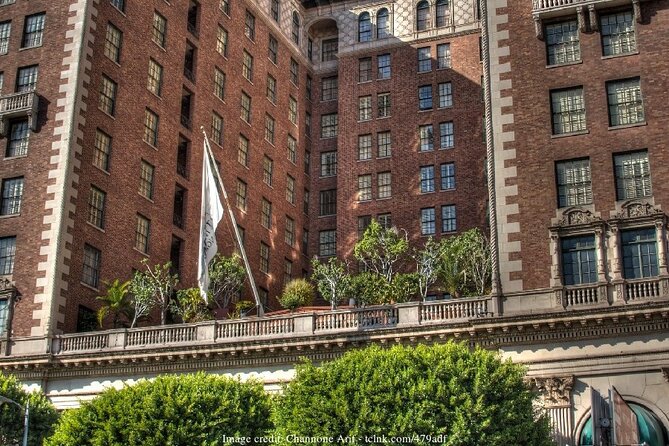
At Pershing Square, your guide explains the Beaux-Arts design that came before Art Deco. The stop lasts about 15 minutes and includes a look at the 1925 Biltmore hotel as a Beaux-Arts example.
This is less about spending time in the park and more about using the square as a viewing point. The Biltmore helps you spot classical scale, formal composition, and decorative ambition. Those qualities form a useful contrast with the cleaner lines of the Art Deco buildings you have already seen.
Pershing Square also gives the tour a change of pace. After several building-focused stops, you have a more open urban setting in which to compare facades across the surrounding streets. If you enjoy city photography, this is a good place to frame buildings within the wider downtown setting.
The CalEdison’s marble details
The CalEdison building receives about 30 minutes, making it one of the more substantial stops. Built in 1931 and placed on a prominent corner, it is an important Art Deco building with especially strong interior materials.
You might be able to enter and see marble floors and columns. That possibility is worth noting because the interior materials can tell you as much about the period as the facade. Polished stone, repeated patterns, and carefully planned entrances show how commercial buildings once used decoration to signal importance.
Interior access is not guaranteed, so keep your expectations practical. If you can enter, you get a closer look at surfaces that are easy to miss from the pavement. If you cannot, the exterior still makes the stop worthwhile, particularly for anyone interested in how Art Deco used a corner site to create a sense of presence.
Los Angeles Central Library, saved from demolition
The 1926 Los Angeles Central Library is another 30-minute stop. It is described as an early Art Deco building, and it carries an important preservation story: the Los Angeles Conservancy helped save it from demolition in 1978.
That background changes how you look at the building. You are not only examining a style. You are also seeing a place that survived a period when historic buildings were often treated as obstacles to redevelopment.
Pay attention to the tower, geometric details, and the way the building combines civic importance with decorative design. The Central Library is a strong stop for visitors who want more than pretty facades because it connects architecture with the changing priorities of Los Angeles.
The 30-minute timing allows for photographs and explanation without turning the visit into a full library tour. The experience focuses on the building and its design, not on browsing the library’s collections.
The Oviatt Building and PacMutual
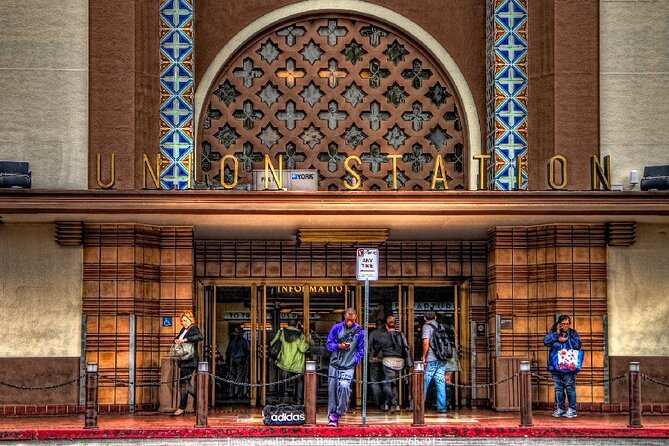
The Oviatt Building is an especially interesting stop because it carries more than one architectural identity. Parts of it were built in the Romanesque Revival style, while other sections were altered toward Art Deco after the owner visited the 1925 Paris exposition.
That story gives you a clear example of how architecture changes over time. A building does not always belong neatly to one style from the start. Owners remodel, fashions shift, and international exhibitions influence what seems modern back home.
The stop also includes a pass by PacMutual, originally built in 1908 with a Greek temple appearance and remodeled in the 1930s to give it an Art Deco look. This is exactly the sort of comparison that makes a guided walk useful. You can see an earlier classical reference and a later modern treatment on the same route.
You have about 15 minutes here, so expect an exterior-focused explanation rather than a long visit inside. Bring a wide-angle lens or use your phone’s wider setting if you want both the lower facade and upper details in one frame.
Ending at the Eastern Columbia Building
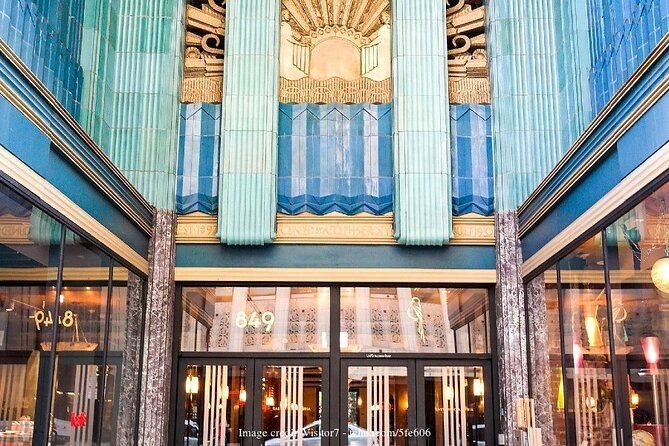
The tour ends at the Eastern Columbia Building, 849 South Broadway. This is the visual grand finale, with a greenish terra-cotta facade and a prominent clock tower that is easy to recognize from a distance.
The building was originally a department store and is now luxury condominiums. Its color, vertical form, and decorative treatment make it one of the most memorable examples on the route. You can take your time with photographs here, especially if you want a final image that sums up the Art Deco character of the walk.
The property is associated with celebrity ownership, including one condominium reportedly still owned by Johnny Depp. That detail may amuse some visitors, but the building’s design is the real reason to stop. The terra-cotta work and clock tower give you plenty to examine without relying on celebrity connections.
The finish is practical. You are close to public transportation and taxi links, and your guide can advise you on your next move. Since this is a point-to-point walk, you do not have to return to City Hall after the tour.
Price, private format, and group value
At $175 per person, this is not a budget architecture walk. The price is easier to justify when several people share a private booking and when you care about having a guide focused only on your group. Group discounts may improve the value, so check the final price for your party rather than judging the per-person figure alone.
You are paying for more than a route between buildings. The guide handles navigation, explains style changes, answers questions, and leaves room for photos. That is useful in downtown Los Angeles, where the buildings are spread across several blocks and the visual details are not always obvious from street level.
The tour does not include food, drinks, transportation during the walk, hotel pickup, or drop-off. No admission tickets are required for the listed stops, so you do not need to budget for entry fees. You should still arrange your own way to City Hall and plan how to continue from the Eastern Columbia Building.
The experience is offered in English and is a private activity. It is booked, on average, about 55 days ahead, which suggests you should reserve early if your dates are fixed.
Walking comfort and practical planning
The tour is wheelchair accessible and near public transportation. That is useful, but accessibility does not mean the walk will feel effortless. You should be prepared for about three hours on city streets, with a moderate physical fitness level recommended.
Wear comfortable shoes and bring water. The tour includes plenty of photo opportunities, so a phone or camera with enough battery is worthwhile. Since some interior access may depend on the day, the exterior architecture should remain your main expectation.
Start at the exact City Hall meeting point and allow time to find your guide. At the end, ask for help with onward transport if you are unfamiliar with downtown. The guide can advise you about public transportation and taxi links.
The tour requires good weather. If poor weather forces a cancellation, you are offered another date or a full refund. You can cancel for a full refund up to 24 hours before the start time. Changes or cancellations inside that window are not accepted.
Who will enjoy this tour most
I would choose this walk if you like architecture, city planning, preservation, photography, or film locations. It also suits families with an older child or teenager who is curious about buildings. One family specifically found the architectural focus a strong match for a son interested in the subject, and the guide added an unexpected rooftop viewing to the day. Again, that extra view should be treated as a possible bonus, not a promised feature.
The tour works well for first-time visitors who want a structured introduction to downtown. It is also useful if you have seen the Bradbury Building or Central Library before but never understood how their styles relate to one another.
I would think twice if you want a relaxed food tour, a broad Los Angeles overview, or a ride between sights. This is a focused architecture walk. You will spend much of the time looking at facades, materials, decorative patterns, and urban history.
Should you book this private architecture walk?
Book it if you want a close look at downtown Los Angeles architecture and value a private guide who can adjust the pace. The Bradbury Building, CalEdison, Central Library, Oviatt Building, and Eastern Columbia Building make a strong set of stops, while City Hall and the Biltmore provide useful context.
The price is high for a three-hour outing, so it makes the most sense for a small group using the private format. If you are happy to pay for focused guidance, easy navigation, and time for photographs, this is a well-planned introduction to LA’s older civic and commercial buildings. If you mainly want inexpensive sightseeing, you can visit several of these exteriors on your own.
FAQ
How long is the tour?
The tour lasts approximately three hours.
Where does the tour start?
It starts at Los Angeles City Hall, 200 N Spring St, Los Angeles, CA 90012.
Where does the tour finish?
It finishes at the Eastern Columbia Building, 849 S Broadway, Los Angeles, CA 90014.
Is the tour private?
Yes. Only your group participates in the activity.
What language is the tour offered in?
The tour is offered in English.
Are admission tickets required?
No tickets are required for the listed stops.
Is the tour wheelchair accessible?
Yes, the experience is wheelchair accessible.
Is public transportation available near the route?
Yes. The tour starts and finishes near public transportation. The end point also has taxi links.
What is not included in the price?
Food, drinks, hotel pickup and drop-off, transportation during the day if needed, and optional gratuities are not included.
Can I cancel for a full refund?
Yes. You can cancel at least 24 hours before the start time for a full refund. If poor weather causes the tour to be canceled, you are offered another date or a full refund.
Newly added in the USA
- Washington, DC: Georgetown Architecture Walking Tour★ 5.0 · 8 reviews
- Washington DC: Dupont Circle & Embassy Row Architecture Tour★ 5.0 · 6 reviews
- New Orleans : Garden District Architecture Walking tour★ 4.8 · 5 reviews
- Wilmington History and Architecture Tour★ 4.8 · 18 reviews
- Private Colonial Williamsburg Architectural Tour★ 5.0 · 5 reviews
- Castle to Capitol: Museums of the National Mall Architecture Tour★ 4.5 · 9 reviews
- Tulsa: Art Deco Walking Tour of Tulsa★ 5.0 · 8 reviews
- Monuments and Memorials Architectural Walking Tour★ 5.0 · 17 reviews
Art Deco Tours, compared.
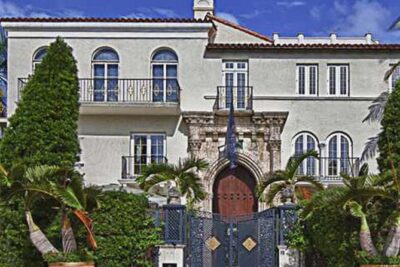
The Official Art Deco Walking Tour by The Miami Design Preservation League
Read our review →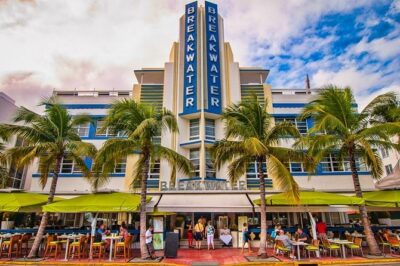
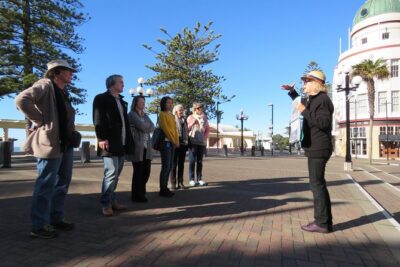
Guided 10am Morning Art Deco Walk From Napier Art Deco Trust
Read our review →
Award-winning Art Deco & Neon Lights Walking Tour in Miami Beach
Read our review →
Art Deco and Architecture Midtown Landmarks Tour
Read our review →Browse the lists this tour appears in