Review · GAUDí TOURS
Exclusive Gaudi Segway Guided Tour Architectural Marvels
Barcelona reveals itself quickly on this Gaudí-focused Segway ride. You glide from Roman walls and medieval lanes to the seafront, then cross town for Casa Milà, Casa Batlló, and the Sagrada Família. It is a smart way to cover ground when your feet need a break.
I like the use of Barcelona’s bike paths, which makes the route practical, and I like the guide’s flexibility. The guide can ask what interests you most and adjust the emphasis. The main catch is simple: at $75.19, this is a sightseeing ride, not an interior visit. Admission to several major attractions is not included.
Key points to know before you book
- Roman ruins and Gaudí in one outing: Start with the Roman wall in Plaça dels Traginers, then move through the city’s Modernisme landmarks.
- A useful route for first-time visitors: Port Vell, Port Olímpic, Sagrada Família, Passeig de Gràcia, Arc de Triomf, and El Born all fit into roughly three hours.
- Bike paths make the Segway practical: The route avoids some of the stress of covering Barcelona’s broad central streets on foot.
- Most famous buildings are exterior stops: You see Sagrada Família, Casa Milà, and Casa Batlló from the outside unless you arrange separate entry.
- Expect a group of up to 30 people: That is the stated maximum, so ask about group size if personal attention matters to you.
- Book ahead in busy periods: This activity is booked about 31 days ahead on average, and free cancellation applies up to 24 hours before departure.
A fast, fun way to connect Barcelona’s old and new sides
The appeal here is not a long lecture inside one monument. It is the city-wide sweep. In two to three hours, you move from ancient Roman stone in the Gothic Quarter to the open Mediterranean waterfront, then on to the fanciful facades of Antoni Gaudí.
That range gives you useful orientation. You see how the old center, harbor, Olympic waterfront, Eixample district, and Ciutadella area fit together. If Barcelona is new to you, this helps you decide where to return later with more time.
The Segway matters because Barcelona is spread out. Walking from the Gothic Quarter to Sagrada Família and then to Casa Batlló would take a large part of a day. This ride lets you cover those distances without turning the whole experience into a march.
The route also uses bike paths, a detail that makes a real difference. You are not simply weaving through every narrow lane in the old town. Instead, you get a mix of urban riding, landmark stops, and short pauses for pictures.
More Architecture Tours by Bike and Segway in Barcelona
- Barcelona e-Bike Tour: Gaudí & Old Town Small Group
★ 5.0 · 769 reviews - Historical and Modernist Bike Tour Barcelona
★ 5.0 · 262 reviews - Barcelona Bike tour, Gaudí houses or beach bike or eBike tour
★ 5.0 · 140 reviews
Starting at the Roman wall in Plaça dels Traginers
The meeting point is Carrer del Correu Vell, 6, in Ciutat Vella. The first stop is nearby at Plaça dels Traginers, where a section of Barcelona’s Roman wall offers a quick look at the city’s earliest urban layers.
This is a short stop, about 15 minutes, but it sets the tone well. The ancient stones are easy to appreciate without spending an hour on technical details. You are in the Gothic Quarter, surrounded by narrow streets and medieval buildings, yet the wall reaches back to Roman Barcelona.
I like this beginning because it keeps the tour from becoming only a Gaudí checklist. Barcelona’s Modernisme buildings are famous, but they make more sense when you first see the older city beneath them.
The route also passes through Passage Colom, a historic passage associated with Christopher Columbus. Shops, cafés, and older buildings give this section a more everyday feel. It is not a major formal stop, so treat it as part of the ride rather than a place for a long visit.
Port Vell and Cara de Barcelona
The next waterfront section brings you to Cara de Barcelona, the large, expressive Face of Barcelona sculpture. The stop is brief, about five minutes, and admission is not included. Since this is a public sculpture, the main point is the view, the photograph, and the chance to note the artwork’s strong visual character.
From there, the route reaches Port Vell. This harbor area combines yachts, promenades, restaurants, and the Maremagnum shopping center. The Christopher Columbus Monument is another landmark nearby, helping you understand Barcelona’s connection to the sea and its position at the edge of the Mediterranean.
Port Vell gives the ride a welcome change of pace. After the tight streets of Ciutat Vella, you have open space and water. You can look across the harbor, watch boats moving through the marina, and get a feel for the city’s modern waterfront.
The trade-off is that a Segway tour cannot linger everywhere. If you want to shop at Maremagnum, spend time by the monument, or sit for a meal, you will need to return on your own. Here, the harbor is part of a moving city tour.
Estació de França and the Olympic waterfront
The route continues past Estació de França, Barcelona’s grand historic railway station. Its classical and Mediterranean details date from the period of the 1929 International Exposition. Even if you do not enter, the station is worth noticing for its formal exterior and its place in Barcelona’s transport network.
Next comes Port Olímpic, created for the 1992 Summer Olympics. The area has beaches, promenades, restaurants, bars, and a marina filled with boats. Its broad, modern setting contrasts sharply with the Gothic Quarter.
Port Olímpic is listed as a five-minute stop, so you will not have time for a beach visit or a full meal. Still, it gives you a quick sense of how the city changed its waterfront for the Olympics and then turned that space into a leisure district.
The tour also passes the Monumental bullring. Its Moorish Revival design makes it one of Barcelona’s more unusual buildings. Bullfighting ended there in 2011, and the venue now hosts concerts, exhibitions, and other events. This is a useful cultural detail, since the building reflects both Spain’s older traditions and Catalonia’s changing public attitudes.
More Architecture Tours by Bike and Segway in Spain
- Barcelona: 2.5-Hour Gaudí Segway Tour
★ 4.8 · 114 reviews - Gaudi’s Barcelona 2-Hour Segway Tour with a Live Guide
★ 4.9 · 67 reviews - Barcelona Gaudí Segway Tour
★ 5.0 · 58 reviews - Barcelona Gaudi Guided Small Group E Bike Tour
★ 5.0 · 53 reviews
Sagrada Família deserves more than 15 minutes
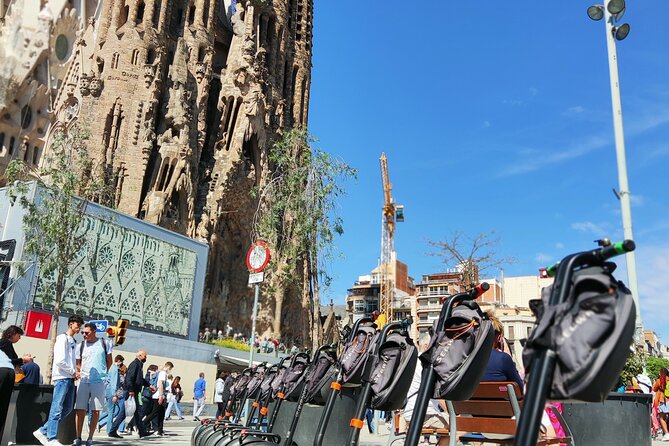
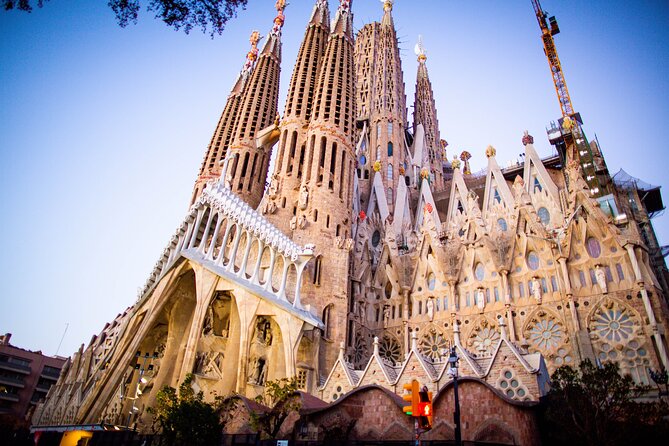
The Sagrada Família is the route’s big visual stop. The basilica’s towers, sculpted facades, and unusual forms make it recognizable from a distance, but a short pause still lets you study details that are easy to miss from a taxi or bus.
The stop lasts about 15 minutes, and admission is not included. That means you should not expect to tour the interior, see the stained glass up close, or climb a tower during this activity. If those are priorities, plan a separate timed entry before or after the ride.
Even from outside, the building explains much about Gaudí’s ideas. Organic shapes, religious stories, natural forms, and Catalan identity all appear in the design. Construction continues, funded by donations and ticket sales, so the building remains a work in progress rather than a finished monument frozen in time.
I would treat this stop as an introduction. The guide can point out the main features and help you get your bearings, while a later independent visit gives you the time the basilica deserves.
Passeig de Gràcia and Gaudí’s two famous facades
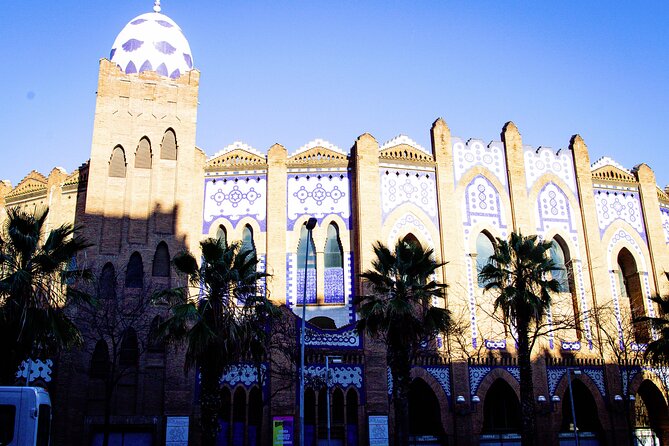
The ride then reaches Passeig de Gràcia, Barcelona’s grand boulevard and home to Casa Milà and Casa Batlló. These two buildings are close enough to compare, but they show different sides of Gaudí’s imagination.
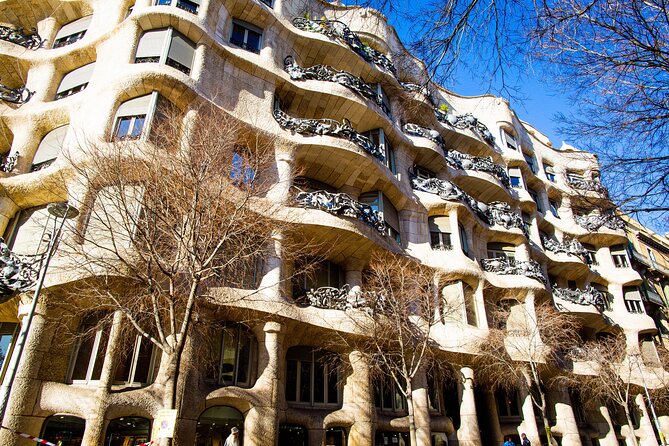
Casa Milà, known as La Pedrera, has a rolling stone facade and wrought-iron balconies that seem to shift as you look at them. Its rooftop is famous for sculptural chimneys and unusual forms. Inside are curved spaces, courtyards, and the Espai Gaudí museum.
The scheduled stop is about five minutes, with admission not included. That is enough for a quick exterior explanation and photographs, not for the rooftop or museum. If architecture is your main reason for coming to Barcelona, you may find this part too brief on its own.
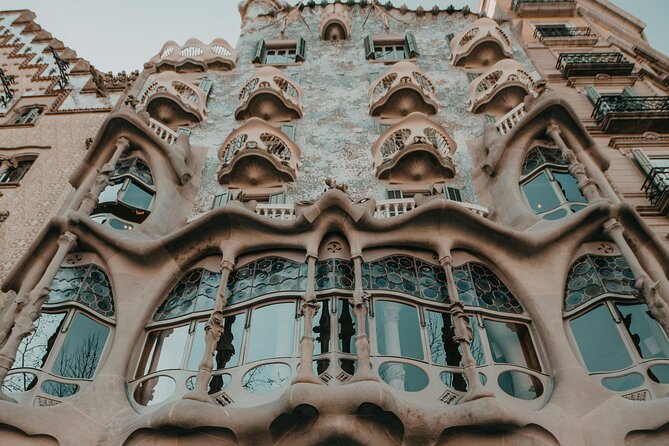
Casa Batlló is even more theatrical from the street. Its tiled facade, bone-like details, and dragon-inspired roofline give the building a strong fairytale quality. Gaudí remodelled it for the Batlló family between 1904 and 1906, and the house is one of the clearest examples of Barcelona’s Modernisme style.
Again, the stop is only about five minutes and does not include entry. You will see the facade, learn why its shapes matter, and take photographs. A separate visit lets you explore the Noble Floor, loft, and roof terrace, where the interior design carries the same organic style as the exterior.
This is where the tour’s value depends on your goal. If you want a broad first look at several Gaudí buildings, the short stops work well. If you want detailed architectural study, use this ride as an orientation and buy individual tickets for the buildings that interest you most.
Arc de Triomf and 20 minutes in Ciutadella Park
Passeig de Sant Joan leads toward the Arc de Triomf. Unlike many triumphal arches, Barcelona’s red-brick version was built as the entrance to the 1888 World Fair, not as a military victory monument. Sculpted details and inscriptions give it a festive, welcoming character.
The arch is a popular meeting point, and the route gives you a chance to appreciate its broad setting. From here, Parc de la Ciutadella offers shade, paths, gardens, sculptures, and open space.
The park receives the longest scheduled pause, about 20 minutes. That is a welcome chance to slow down after the city streets. The Cascada fountain is the main feature to look for. Josep Fontserè designed it with help from a young Antoni Gaudí.
The park also contains the Catalan Parliament and Barcelona Zoo, though the tour does not include admission to either. You can enjoy the public paths and scenery, but you should not plan a zoo visit during the ride.
This section is especially useful if you want a break from buildings. Barcelona can feel dense and stone-heavy in the old center and Eixample. Ciutadella gives you room to breathe before the final neighborhood section.
El Born brings the ride back to local streets
The route finishes through El Born, a historic district with narrow lanes, cafés, shops, galleries, and a more contemporary social scene. It sits between the Gothic Quarter and Ciutadella Park, so it makes a natural link between the tour’s older and newer sections.
Santa Maria del Mar is one of the neighborhood’s key sights. The Picasso Museum is also here, though neither museum entry nor a church visit is part of the Segway activity. You are seeing the area as a neighborhood, not touring each attraction.
That is a good choice for a moving tour. El Born is best appreciated by noticing the mix of medieval streets and modern businesses. You might spot a square or café worth returning to later, when you can leave the Segway behind and explore slowly.
The ride ends back at the original meeting point. Since the route covers a great deal of Barcelona, you may want to mark places you wish to revisit. The guide can also help you decide which areas deserve more time.
What $75.19 buys you
At $75.19 per person, this is not the cheapest way to see Barcelona. You are paying for the Segway, a guide, route planning, and the ability to connect distant districts in about three hours.
The price makes more sense if you value coverage and movement. You can see the Roman Quarter, harbor, Olympic waterfront, Sagrada Família, Passeig de Gràcia, Ciutadella Park, and El Born without arranging several separate transport hops.
It makes less sense if your priority is entering monuments. Admission is not included at Cara de Barcelona, Sagrada Família, Casa Milà, Casa Batlló, and other listed sights. The tour gives you the outside view and context, then you pay separately for interiors you choose.
Group discounts are available, which may improve the value for families or larger parties. The maximum group size is 30, so the experience may feel less personal when fully booked. The guide’s willingness to ask what you care about most is a useful counterpoint, but do not assume a private-tour level of attention.
Who should choose this Segway tour?
I would recommend it to a first-time visitor who wants a quick map of Barcelona’s main districts. It also suits anyone who finds long city walks tiring but still wants to see more than one neighborhood in a day.
The ride is a good match for:
- Visitors with only a short stay
- Couples or friends who enjoy active sightseeing
- Families looking for a change from museums
- Architecture fans who want to compare several Gaudí facades
- People who want a guide to help set priorities for later visits
I would be more cautious if you dislike group activities, feel uneasy about riding a Segway, or want long, quiet time at each landmark. The route is designed for movement, not close study.
The activity requires good weather. If poor weather cancels the ride, you are offered another date or a full refund. You can cancel for a full refund up to 24 hours before the start time, but cancellations or changes inside that window are not refunded or accepted.
Should you book the Gaudí Segway ride?
Book it if you want breadth, fresh air, and easy movement between Barcelona’s major sights. The guide’s ability to adjust the emphasis to your interests is valuable, and the bike-path route helps make a large city feel manageable.
Do not book it as a substitute for visiting Sagrada Família, Casa Milà, or Casa Batlló inside. Use it as a lively first look, then return to your favorite buildings with timed tickets and more time.
With only two published ratings, the perfect score is encouraging but not a large sample. The strongest practical point is the guide’s friendly, flexible approach, along with the chance to cover a surprising amount of Barcelona in three hours. For the right kind of sightseer, that is a fair use of $75.19.
FAQ
How long does the Gaudí Segway tour last?
The tour lasts approximately two to three hours.
Where does the tour start and end?
It starts at Carrer del Correu Vell, 6, in Barcelona’s Ciutat Vella district, and returns to the same meeting point.
Which major Gaudí sights are included?
The route includes stops at the Sagrada Família, Casa Milà, also called La Pedrera, and Casa Batlló.
Does the price include admission to the monuments?
No. Admission is not included at several stops, including the Sagrada Família, Casa Milà, Casa Batlló, and Cara de Barcelona.
How many people can join the tour?
The maximum group size is 30 people.
What happens if the weather is poor?
The activity requires good weather. If it is canceled because of poor weather, you can choose another date or receive a full refund.
More Gaudi Tours in Barcelona
- Barcelona: Park Güell and Gaudí House Museum Entry Ticket
★ 4.5 · 6,326 reviews - Barcelona: Gaudí’s Park Güell Tour with Fast-Track Ticket
★ 4.8 · 4,512 reviews - Sagrada Familia & Gaudi Tour Private or Small Group with Tickets
★ 4.5 · 1,188 reviews - Complete Gaudi Tour: Casa Batllo, Park Guell & Sagrada Familia
★ 5.0 · 1,152 reviews
Newly added in Barcelona
- Roman & Gotic & Gaudi in Barcelona: private walking tour★ 4.5 · 2 reviews
- Barcelona Gaudi Tour: Sagrada Familia, Casa Batllo & Casa Mila★ 5.0 · 4 reviews
- Visit to the Modernist houses of the Americans★ 5.0 · 2 reviews
- Barcelona Street Escape: Gaudi and the Hidden Treasure★ 5.0 · 17 reviews
- Gaudí & Catalan Modernism Private Walking Tour★ 5.0 · 11 reviews
- Self-Guided Audio Tour-The Surrealist Barcelona of Dalí and Gaudí★ 3.5 · 8 reviews
- Sagrada Familia Private Tour – Unlock the mysteries of Gaudi★ 5.0 · 10 reviews
- Gaudi’s Casa Batlló and La Pedrera with Chocolate Tasting★ 5.0 · 5 reviews
Gaudí Tours, compared.
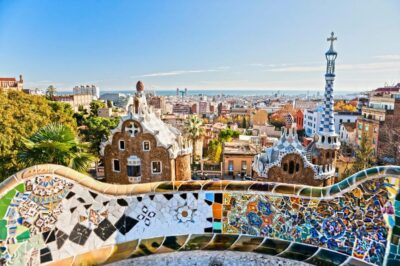
Park Güell and Gaudí House Museum Entry Ticket
Read our review →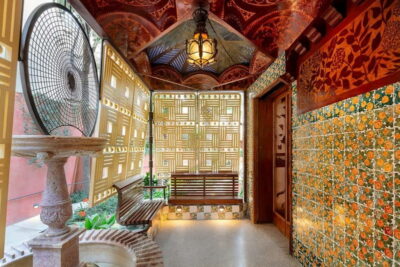
Gaudi’s Casa Vicens Skip-the-Line Entrance Ticket
Read our review →
Gaudí’s Park Güell Tour with Fast-Track Ticket
Read our review →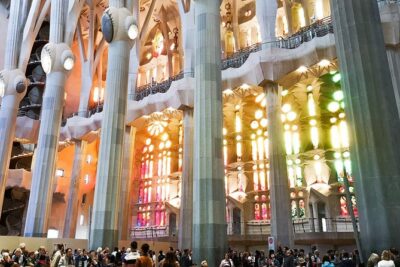
Sagrada Familia & Gaudi Tour Private or Small Group with Tickets
Read our review →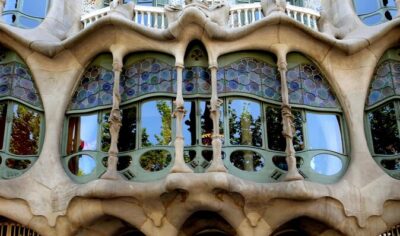
Complete Gaudi Tour: Casa Batllo, Park Guell & Sagrada Familia
Read our review →
Park Güell: Guided Tour with Optional Gaudí Experience Entry
Read our review →
Barcelona e-Bike Tour: Gaudí & Old Town Small Group
Read our review →