
Review · ARCHITECTURE TOURS
Lisbon Contemporary Architecture
Lisbon’s modern face is easy to miss behind its tiled churches and grand old squares. This private tour shifts your attention to the city’s daring new architecture, from the sculptural Champalimaud Foundation beside the Tagus to the wave-like MAAT and the planned city of Parque das Nações. Guide Nelson Leona can adjust the outing to your interests, which matters when your curiosity runs toward design rather than standard sightseeing.
I like two things here: you get both close views of individual buildings and a wider look at how an entire district was planned, and the included cable-car ride gives you a useful view over Parque das Nações. The main caution is price: at $181.39 per person, this is a serious spend for four hours, and admission to MAAT is not included.
Key points at a glance
- A private architecture tour: Your group travels on its own, with an English-speaking guide and no strangers added to the outing.
- Modern Belém in one stretch: See the Champalimaud Foundation, Belém Cultural Center, and MAAT near the Tagus.
- MAAT admission costs extra: The museum visit is part of the route, but its entry ticket is not included.
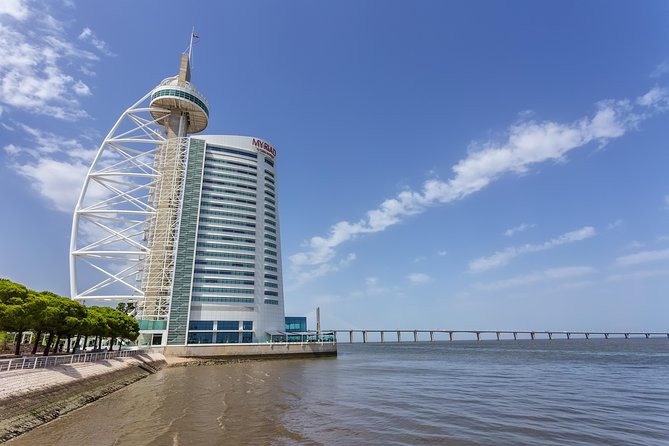
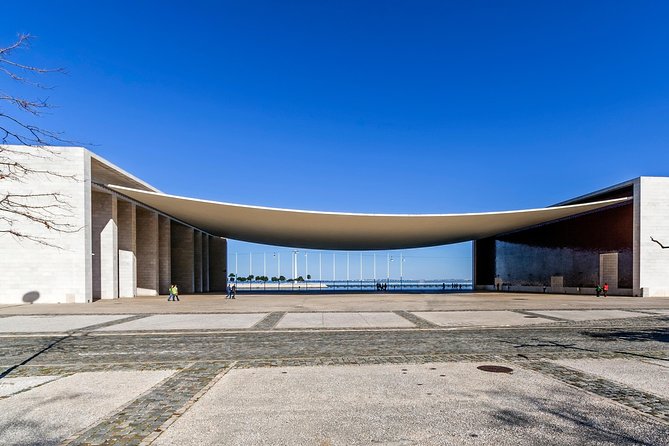
- A planned district with a cable-car view: Parque das Nações brings together the Portuguese Pavilion, Oriente Station, Vasco da Gama Tower, and other major projects.
- Guide Nelson Leona can tailor the route: The experience suits visitors who want more than a fixed list of landmarks.
- Free cancellation up to 24 hours ahead: Changes or cancellations inside that window are not refunded or accepted.
Why Lisbon’s newer buildings deserve a morning or afternoon
Most first-time visitors focus on Lisbon’s older quarters, and rightly so. But the city’s contemporary buildings tell a different story. They show how Portugal presents science, culture, industry, and the memory of the 1998 World Expo through design.
This four-hour outing links two useful areas. In Belém, you see modern buildings placed beside older monuments and the river. At Parque das Nações, you see a more deliberate attempt to create a new part of the city, with architecture taking many shapes across one planned zone.
I like that contrast. Belém asks how new design can live beside established landmarks. Parque das Nações asks what a modern district should look like when planners have room to think broadly. The tour gives you both questions in one compact experience.
The private format also changes the pace. You are not tied to a large group’s interests, and Nelson Leona can customize the route. One strong use of that flexibility is to spend more time on the buildings that catch your eye rather than treating every stop as an equal box to tick.
A few more architecture walks in the world worth a look
- Chicago Architecture River Cruise
★ 5.0 · 15,756 reviews - Chicago River 90-Minute Architecture Tour
★ 4.5 · 9,629 reviews - Chicago River: 1.5-Hour Guided Architecture Cruise
★ 4.8 · 8,046 reviews
Champalimaud Foundation, science in a sculptural setting
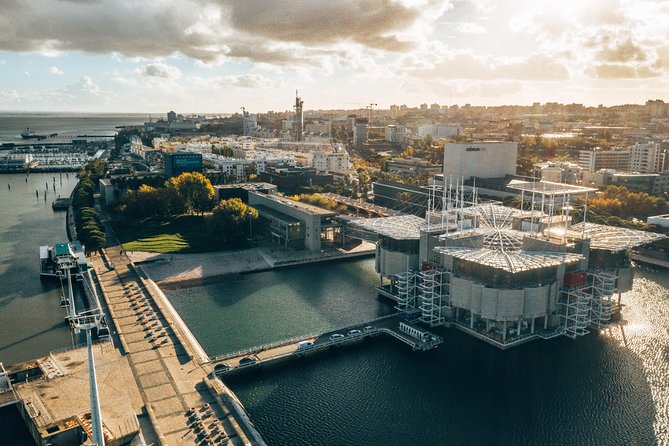
The Champalimaud Foundation is one of the tour’s most striking stops. It faces the Tagus in a location framed by the Tower of Belém and the Dock of Rocks, linking Portugal’s seafaring memory with its work in modern biomedical research.
The building is also known as the Center of Research into the Unknown. Its design by Charles Correa aims to make architecture feel almost like sculpture, while connecting beauty with the therapeutic purpose of the foundation’s work.
That idea is worth keeping in mind as you look at the building. This is not modern design for its own sake. The architecture is meant to reflect a place devoted to research and human health. You get a chance to consider how a building can shape the mood and meaning of the work inside it.
The setting beside the river adds to the effect, but it also makes this a primarily visual stop. The supplied details do not promise an interior visit or admission, so you should treat the foundation as an architectural viewing point unless your guide confirms otherwise.
I would pay attention to how the building handles open space, curves, and its relationship with the water. The surrounding historic references are part of the point. You are not looking at a futuristic object in isolation. You are seeing it answer the older symbols around it.
Belém Cultural Center beside Lisbon’s historic icons
The Belém Cultural Center is another major modern building in the area. Manuel Salgado and Vittorio Gregotti designed it on a site where contemporary architecture meets some of Lisbon’s most recognizable older structures.
That location makes the building more interesting than a modern complex placed in a new development. Its clean, modern form contrasts with the traditional architecture nearby, but the contrast is described as gentle rather than jarring.
This is a useful stop for understanding Lisbon’s approach to its past. The city does not have to freeze every historic district in time. It can add new cultural buildings while keeping the older setting in view.
You may find this stop especially useful if your interest is in urban design rather than only in dramatic shapes. The building’s value comes partly from the conversation between old and new. Ask your guide to explain how the center fits into Belém’s wider cultural setting, especially if you want the tour to spend less time on quick exterior photographs and more time on design choices.
The route information does not specify an admission visit inside the cultural center. Plan to experience it as part of the exterior architecture route unless your guide tells you otherwise.
MAAT, where art, architecture, and technology meet
MAAT, the Museum of Art, Architecture and Technology, is the most obvious centerpiece for many people. Its program brings those three subjects together in a setting built for debate, discovery, critical thought, and international exchange.
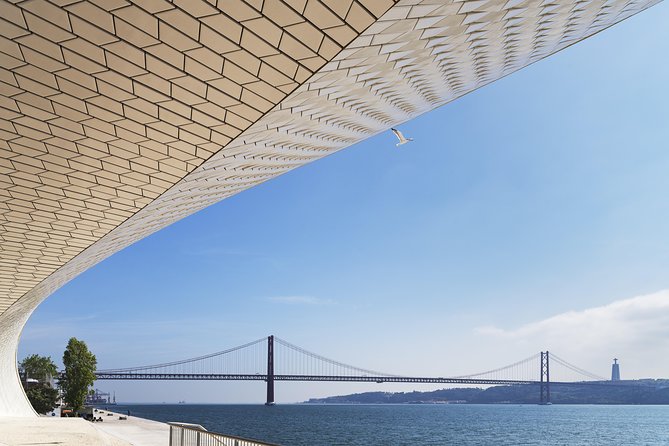
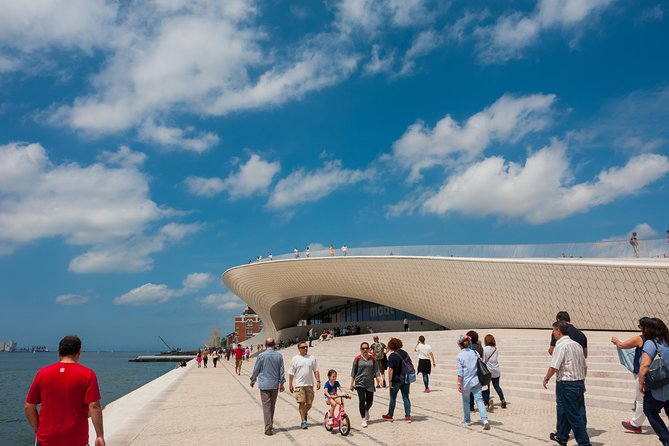
The building by Amanda Levete Architects is designed as a continuation of the riverside promenade. Its gently curved form is covered with 15,000 glazed tiles, and visitors can walk across the roof. That roof is not just decoration. It turns the building into part of the public walkway and offers another way to view the Tagus and Belém.
MAAT also connects with Central Tejo Power Station, one of Portugal’s notable industrial buildings from the first half of the 20th century. That pairing is one of the strongest reasons to include the museum on an architecture-focused route. You see a new, fluid structure beside a powerful example of industrial design.
The tour allows about one hour at MAAT, but admission is not included. This is an important cost detail. If you want to enter the museum, budget for the extra ticket and make sure the time available suits your priorities.
If your main interest is the outside of the building, the stop still has plenty to offer. The tiled surface, curving silhouette, roof path, and river position give you several ways to read the structure. If you want exhibitions as well, confirm the entry arrangements with the guide before you set out.
I like the way MAAT adds a practical question to the tour: can a museum become part of the city’s walking route instead of acting as a sealed box for art? The building’s answer is visible from the promenade and roof.
Same city, a different facade:
- Chicago Architecture Center River Cruise aboard First Lady
★ 5.0 · 5,536 reviews - Chicago: Architecture River Cruise Skip-the-Ticket Line
★ 4.8 · 4,325 reviews - Chicago River 45-Minute Architecture Tour from Magnificent Mile
★ 4.5 · 2,924 reviews - Barcelona: Sant Pau Recinte Modernista Entry Ticket
★ 4.6 · 2,567 reviews
Parque das Nações, a district planned for modern Lisbon
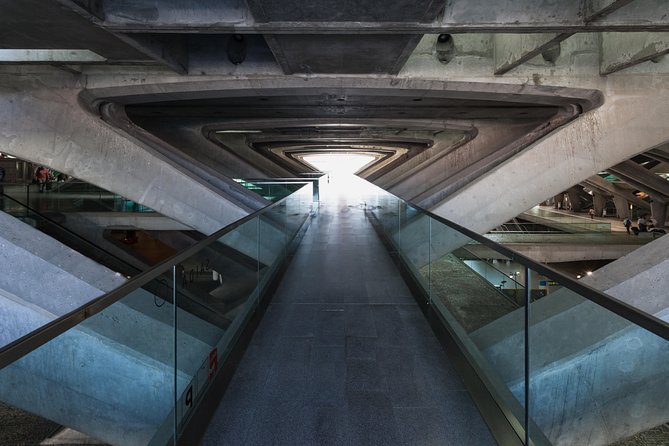
The second major part of the route takes you to Parque das Nações. From the beginning, the district was planned as an opportunity to create a new city area where architecture could take many forms.
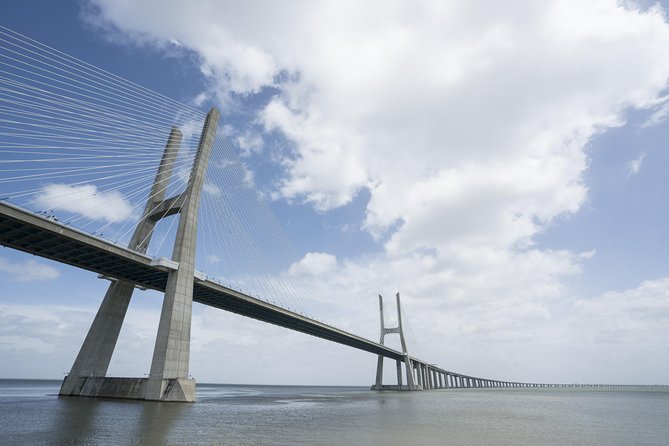
The examples listed for the district include the Portuguese Pavilion, Atlantic Pavilion, Knowledge Pavilion, Vasco da Gama Tower, and Oriente Station. You are not simply visiting one modern building here. You are looking at a collection of large projects that give the area its identity.
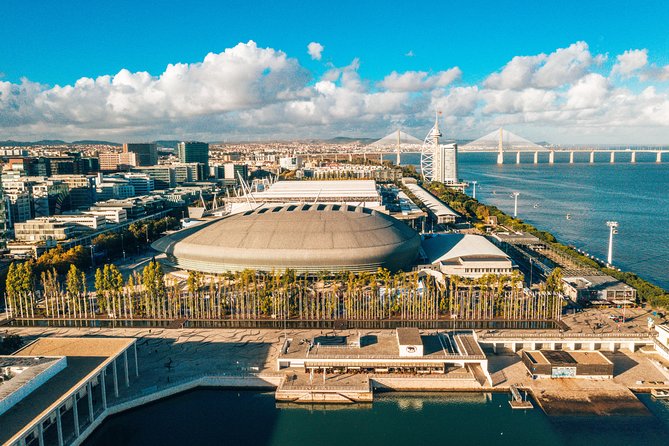
This is where the tour shifts from architectural detail to city planning. In Belém, individual buildings are placed in conversation with old Lisbon. At Parque das Nações, the whole district becomes the subject. You can consider how public buildings, transport facilities, cultural venues, and tall landmarks work together.
The scale may feel different from central Lisbon. That is part of the experience, but it can also be a drawback if you prefer compact streets and old-world details. Parque das Nações is best understood as a planned modern quarter, not as a substitute for Alfama or Baixa.
The district also makes the private format useful. With a guide, you can ask why one project is shaped as it is, how the buildings relate to the Expo-era development, and which structures deserve more of your attention. The available information does not give a detailed interior schedule for every building, so expect the emphasis to remain on the district’s architecture and public spaces.
The cable car gives you the view that street level cannot
The included round-trip cable-car ride is one of the tour’s practical highlights. From the ground, large buildings can be difficult to understand. Their height, spacing, and relationship to the river become clearer when you see them from above.
The ride gives you a bird’s-eye view of Parque das Nações and its major buildings. It also breaks up the walking and ground-level sightseeing with a different perspective.
Because the cable car is included while MAAT admission is not, this is one of the clearer built-in values of the tour. You receive a defined attraction rather than only an outside look at buildings. The ride is also useful for photographers and for anyone who wants to understand the district as a whole.
The cable-car experience should not be confused with a long guided ride through every part of Lisbon. It is tied to Parque das Nações and works as a viewing element within the architecture tour. The stated duration for this stop is about one hour, including the district visit and the cable-car component.
What the four-hour schedule means for you
Four hours is enough to create a strong introduction to Lisbon’s contemporary architecture, but it is not enough for slow museum visits at every stop. The stated route includes the Champalimaud Foundation, Belém Cultural Center, MAAT, and Parque das Nações, with about an hour assigned to MAAT and about an hour to Parque das Nações.
That leaves the remaining time for the other stops and movement between the two areas. The distance between Belém and Parque das Nações means the tour is designed as a selected overview rather than a leisurely walk through every site.
This is a good fit if you want a focused half-day activity. You can see major examples without giving up an entire day of your Lisbon visit. It is less suitable if you want detailed interior tours, extensive museum time, or a slow study of each building.
The private setup may help with that limitation. Nelson Leona can customize the trip to your preferences, so you can make your priorities clear at the start. If MAAT matters most, ask how much time can be reserved for it. If urban planning interests you more, request extra attention at Parque das Nações.
Price, private value, and what is included
The price is $181.39 per person. That is high compared with a basic group sightseeing tour, but the comparison is not quite equal. This is a private activity, so only your group participates, and the guide can shape the outing around your interests.
The price also includes the Parque das Nações cable-car ride. It does not include the MAAT admission ticket, which reduces the all-in value if you plan to enter the museum.
I would consider the cost reasonable for a small private group that wants informed guidance on modern design and has limited time. It is harder to justify for a solo visitor or a couple mainly seeking transportation between photo stops. Group discounts are available, so larger groups should check how the per-person price changes.
The strongest value is the combination of customization, private guiding, and a route that covers two very different modern districts. The weakest point is that the tour asks you to pay extra for the museum most likely to attract architecture fans.
Who will get the most from this tour
I would recommend this experience to you if you enjoy contemporary buildings, public spaces, urban planning, or the way new architecture sits beside older landmarks. It is also useful if you have already seen Lisbon’s main historic sights and want a different side of the city.
The tour suits visitors who value explanation. The buildings are visually interesting, but a guide helps connect them to science, culture, industry, and city planning. Nelson Leona is described as polite, personable, fluent in English, and able to discuss Lisbon and Portugal’s history, which adds context beyond the shapes of the buildings.
You may want to skip it if your main goal is old Lisbon, tiled churches, narrow lanes, or traditional neighborhoods. You should also think twice if the price feels too high for a four-hour outing, especially after adding MAAT admission.
The activity is offered in English, is near public transportation, and allows service animals. Most people can participate. The stated operating window runs Monday through Sunday from 7:00 AM to 8:00 PM, from May 19, 2019 through December 7, 2026.
Should you book this Lisbon architecture tour?
Book it if you want a private, focused look at Lisbon’s contemporary side and like having a guide explain why the buildings matter. The combination of the Champalimaud Foundation, Belém Cultural Center, MAAT, and Parque das Nações gives you a strong spread of modern design, from a research center beside the Tagus to a complete planned district.
The best booking strategy is to decide your priority before you go. If you want to enter MAAT, allow for its separate admission cost. If you care most about city planning and large public projects, ask Nelson Leona to give Parque das Nações extra attention.
At $181.39 per person, this is not a budget outing. But for a private group that wants modern Lisbon explained clearly, the tailored route and included cable-car view can make the cost worthwhile.
FAQ
How long does the Lisbon Contemporary Architecture tour last?
The tour lasts approximately four hours.
What is the price of the tour?
The listed price is $181.39 per person. Group discounts are available.
Is the tour private?
Yes. Only your group participates in the activity.
Is the tour offered in English?
Yes. The experience is offered in English.
Is admission to MAAT included?
No. The MAAT stop lasts about one hour, but the admission ticket is not included.
Is the Parque das Nações cable-car ride included?
Yes. The round-trip cable-car ride at Parque das Nações is included.
Where does the tour start and end?
It starts in Lisbon, Portugal, and ends back at the meeting point.
Can I cancel for a full refund?
Yes, if you cancel at least 24 hours before the experience starts. Cancellations or changes made less than 24 hours before the start time are not accepted, and the amount paid is not refunded.
Newly added in the world
- Venice Art and Architecture Private Walking Tour★ 4.5 · 11 reviews
- Basilica San Marco and the Pala d’Oro with Architect Guide★ 4.5 · 19 reviews
- Walking tour in Venice with an architect★ 5.0 · 16 reviews
- Sopot Private City Walking or Bike Tour with a local architect★ 5.0 · 19 reviews
- Lesser Poland Wooden Architecture Trail UNESCO Private Tour from Krakow★ 5.0 · 15 reviews
- Private Munich Tour for History Buffs with Architectural Gems and WWII sites★ 5.0 · 3 reviews
- Neoclassical Paris Architecture 2-Hour Private Walking Tour★ 5.0 · 7 reviews
- Street Art and Architecture:Porto Speaks Through Its Streets★ 3.0 · 2 reviews
Architecture Tours, compared.
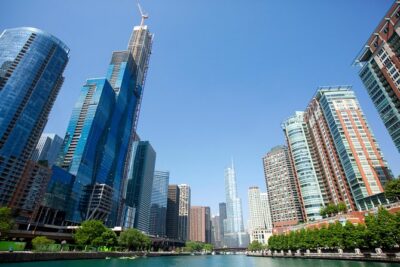
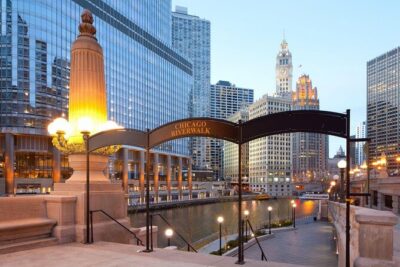

Chicago River: 1.5-Hour Guided Architecture Cruise
Read our review →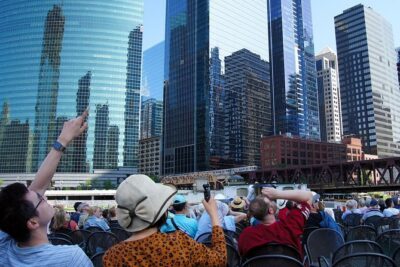
Chicago Architecture Center River Cruise aboard First Lady
Read our review →
Architecture River Cruise Skip-the-Ticket Line
Read our review →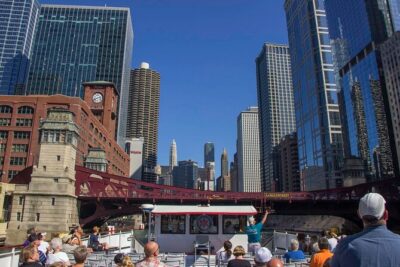
Chicago River 45-Minute Architecture Tour from Magnificent Mile
Read our review →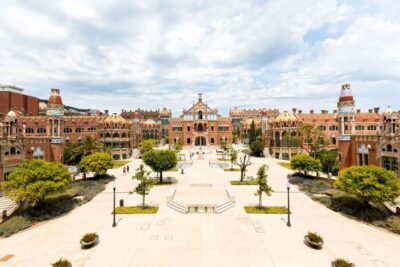

Browse the lists this tour appears in