
Review · 3-HOUR EXPERIENCES
3 Hour Midtown Manhattan Architectural Tour
Midtown Manhattan is best understood from the sidewalk, where grand hotels, office towers, civic buildings, and train stations form a living lesson in New York architecture. This three-hour walk links The Plaza, Rockefeller Center, the Empire State Building, the Chrysler Building, and Grand Central Terminal, while explaining the people, money, and changing styles behind them.
I like the small maximum of eight, which gives Annabel room to shape the walk around your interests. I also like the chance to see selected lobbies and interiors when access is available, including spaces whose details are easy to miss from the street. The main consideration is that this is a walking and listening tour, not an Empire State Building admission experience, and Midtown traffic can make some explanations harder to hear.
Key points to know before booking
- Annabel makes the architecture personal: She connects buildings to figures such as John Jacob Astor IV, Walter Chrysler, the Rockefellers, and Leona Helmsley.
- The route covers several design eras: You move from grand Beaux-Arts hotels and early skyscrapers to Art Deco and corporate modernism.
- Small groups matter: The tour accepts no more than eight people, and the guide can adjust the pace and subject matter.
- Interior access may add a lot: Selected hotel, store, and office lobbies can reveal materials and decorative details missed outdoors.
- The $85 price buys context, not admission tickets: You see major landmarks from the outside, while Empire State Building entry is not included.
- The walk finishes at Grand Central: That makes it easy to continue sightseeing, eat nearby, or use the subway and trains afterward.
Why Midtown works so well as an outdoor architecture classroom
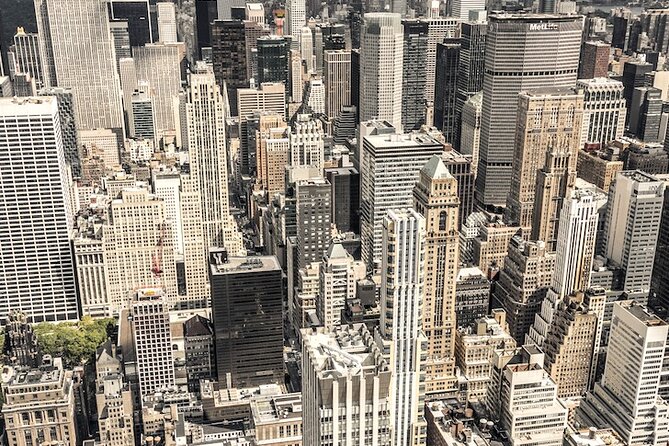
The strength of this tour is the way the buildings relate to one another. Midtown is not a single-style district. In a few blocks, you encounter French-inspired luxury, early skyscraper ambition, Art Deco ornament, streamlined corporate design, and the practical grandeur of a major rail terminal.
That variety gives the walk a clear storyline. You are not simply checking off famous facades. You are watching Fifth Avenue change from an exclusive residential street into a commercial corridor, then seeing New York reach upward with towers built by wealthy industrialists, hotel owners, and large corporations.
Annabel’s approach, based on the experience described, leans toward conversation rather than a nonstop speech. She links architectural choices with the personalities and events behind them. That helps if you know little about design, but it also gives repeat New York visitors a fresh way to read familiar streets.
The small group size is especially useful here. With eight people or fewer, you have a better chance to ask why a building looks a certain way, how its purpose affected the design, or what details to watch for next. Several tours have also operated with only one couple or a very small family group, allowing the guide to tailor the route and spend extra time on questions.
More Three-Hour Tours in New York City:
- Munich 3-Hour Segway Tour: Nazi Munich & Royal Architecture
★ 4.9 · 194 reviews - Barcelona: 3-Hour Discover Gaudí GoCar Tour
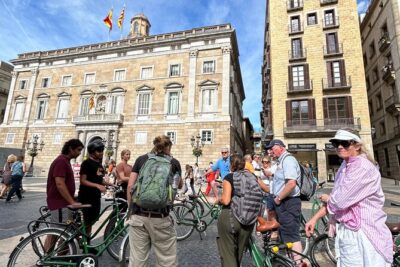
★ 4.5 · 123 reviews - Barcelona 3-hour Bike or E-Bike Tour: Gaudí By Bike
★ 5.0 · 24 reviews
The Plaza and Fifth Avenue’s old-money entrance
The tour begins at The Plaza, at 768 Fifth Avenue, at 9:00 a.m. The hotel was designed with the pomp of a French chateau, and its appearance sets the tone for the first part of the morning. This is a building made to signal wealth, ceremony, and permanence.
You get about 15 minutes here, with no admission charge. The Plaza is also familiar from films, so it can feel instantly recognizable even if this is your first visit to New York. Annabel’s role is to move beyond the movie image and explain how the building fits into Fifth Avenue’s social and architectural story.
From there, the route continues to The Sherry-Netherland. Its lobby was modeled after the Vatican Library, an unusual detail that gives you something specific to look for rather than a vague description of luxury. When it opened, it was noted as New York’s tallest residential hotel, another reminder that Midtown’s identity was shaped by buildings combining private apartments with hotel services.
The St. Regis New York follows. John Jacob Astor IV built it, and the hotel helped mark Fifth Avenue’s shift from Millionaires’ Row to a fashionable commercial avenue. This is one of the most useful historical connections on the walk: architecture here reflects a change in how New York functioned, not just a change in decorative taste.
Seagram Building and the language of corporate modernism
The Seagram Building offers a sharp change from the ornate hotels. Its design became a model for office towers around the world and is one of the most cited examples of corporate modernism.
This stop is valuable because it helps you recognize restraint as a design choice. Instead of relying on heavy decoration, the building presents a disciplined corporate image. Annabel can place it within the wider story of New York’s office architecture, showing how Midtown moved from elaborate historic styles toward clean modern forms.
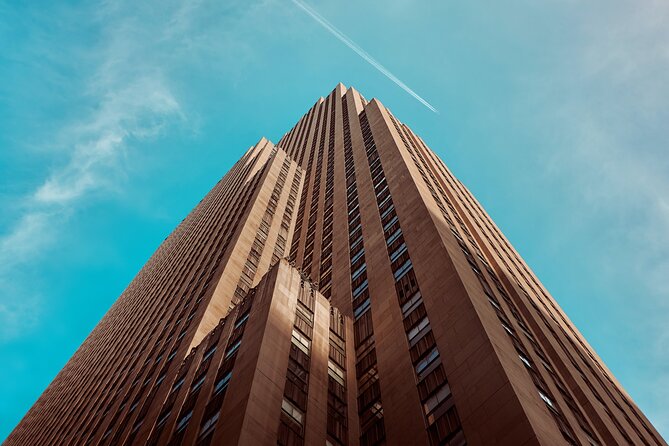
The General Electric Building, originally the RCA Building, brings the focus back to ornament. Its chrome and marble lobby and radio-wave crown show how a commercial tower could still use rich decorative effects. The building gives you a useful comparison with the Seagram Building: both represent business power, but they express it in very different visual languages.
The route is described as covering more than 20 architectural marvels, even though the main stops listed here are the key anchors. That means you should expect the spaces between them to matter. You are moving through a district where side views, setbacks, entrances, crowns, and street-level details help fill out the lesson.
Waldorf Astoria and Rockefeller Center’s planned city
At the Waldorf Astoria New York, the subject returns to grand hotel design. The hotel has hosted presidents, world leaders, celebrities, and foreign dignitaries, and its scale reflects the role luxury hotels once played in public life.
The point is not simply that the Waldorf Astoria is famous. Its story helps you understand how hotels served as social centers, political stages, and symbols of New York wealth. The firm behind it also designed The Sherry-Netherland, The Pierre, and Hotel Lexington, giving the morning a useful thread between several Midtown landmarks.
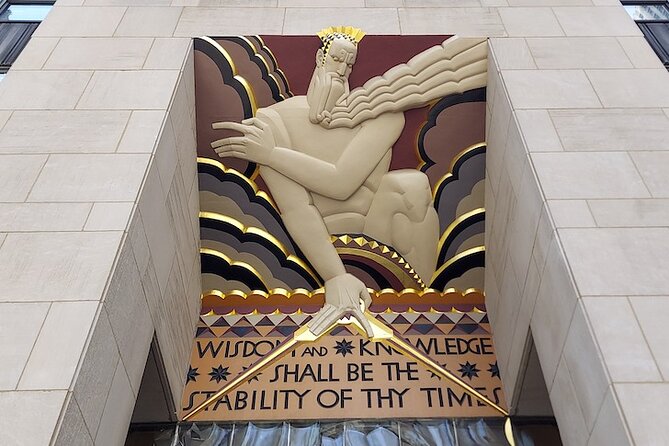
Rockefeller Center is one of the biggest stops in terms of ideas. The complex contains 19 commercial buildings across 22 acres and more than 100 artworks. At the height of the Great Depression, the project provided 60,000 jobs, making it both an architectural undertaking and a major economic event.
I would pay close attention here to the relationship between the buildings and the open spaces. Rockefeller Center was planned as a large unified development, not a collection of unrelated towers. Its artwork, plazas, and commercial uses all help explain why it remains one of the city’s most carefully shaped urban environments.
The experience can become more rewarding if Annabel is able to bring the group into selected lobbies or public interiors. Access is not promised for every building, but the chance to see interior materials and details adds a useful second layer to an outdoor tour. Several accounts describe visits inside public and private spaces, so it is worth asking about current access at the start.
A few more architecture walks in New York City worth a look
- Manhattan Architecture Yacht Cruise
★ 5.0 · 1,395 reviews - NYC: Around Manhattan Official NYC Architecture Cruise
★ 4.8 · 402 reviews - Art Deco and Architecture Midtown Landmarks Tour
★ 5.0 · 142 reviews - Tribeca Architecture And History Walking Tour
★ 5.0 · 141 reviews
The Empire State Building without the observation deck ticket
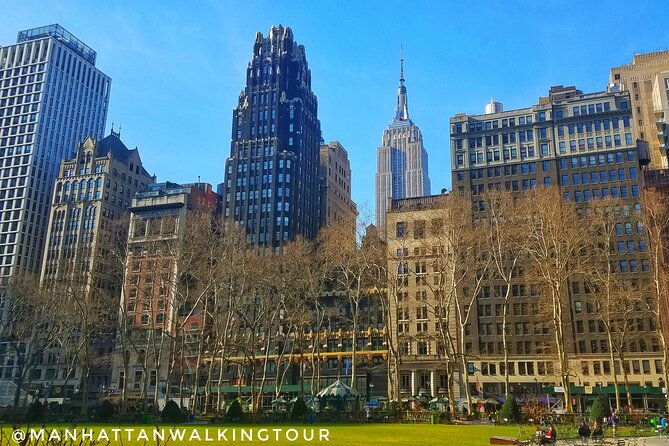
The Empire State Building is a major landmark on the route, but admission is not included. You see and discuss the building from the outside rather than taking an elevator to an observation deck as part of this experience.
Its construction story is a strong piece of New York history. The tower was built in 410 days and came in under budget. It remained the tallest building in the world for 40 years, and its name comes from Empire State, New York’s nickname.
This stop works best if you want context rather than a separate attraction ticket. If your main goal is to go inside the Empire State Building, you will need to arrange that independently. If you already plan to visit it on another day, the tour still gives you a clearer sense of its place in the race for height and the city’s development.
The timing also matters. The tour starts in the morning and reaches several major sights in sequence, so you get a concentrated look at Midtown before spending the rest of your day elsewhere. Wear comfortable shoes and expect a moderate level of physical activity. The route is a walk through busy central Manhattan, not a seated bus tour.
The New York Public Library and Chrysler Building
The New York Public Library’s Stephen A. Schwarzman Building offers a different kind of monument. Its roots reach back to the consolidation of the Tilden Trust, Astor, and Lenox libraries in 1895. When the building opened in 1911, the collection held 350,000 volumes. Today, the library system contains more than 55 million books and other items across seven floors of storage.
This stop broadens the tour beyond hotels and skyscrapers. It shows how civic and cultural buildings contributed to New York’s identity. The library’s grand exterior and public purpose make a useful contrast with the private luxury of The Plaza or The St. Regis.
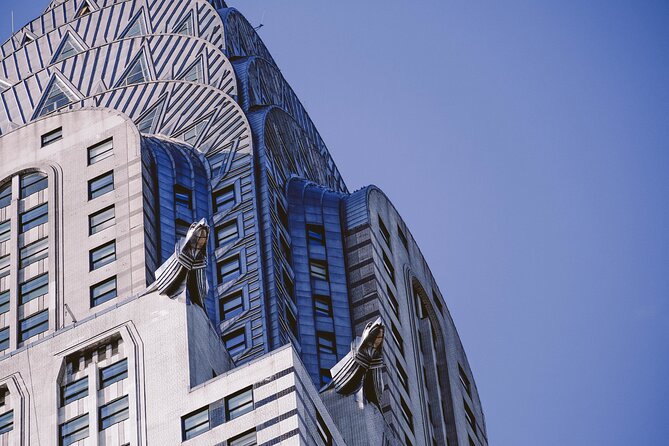
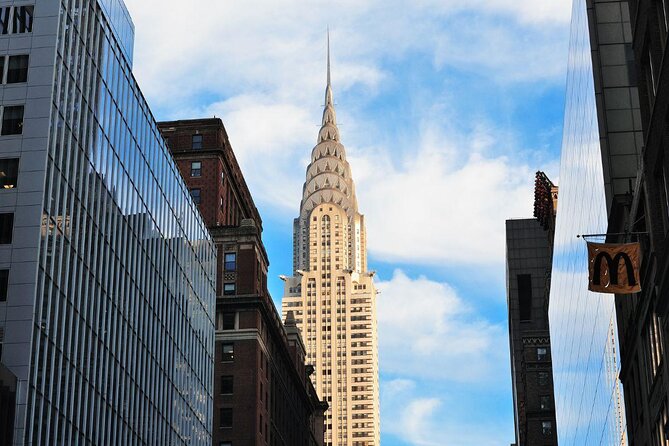
The Chrysler Building is the visual high point for many architecture fans. Walter Chrysler treated it as a personal symbol of his automobile company and its strength. Its famous Art Deco form has been described as jazz in stone and steel, a phrase that captures its energetic crown and polished machine-age character.
The Chrysler Building is also a good place to connect architecture with industry. Its design reflects the era’s fascination with speed, cars, radios, machines, and modern production. Annabel’s storytelling is particularly helpful here because the building’s ornament becomes easier to understand when you know what ideas it was meant to express.
Grand Central Terminal makes a fitting finish
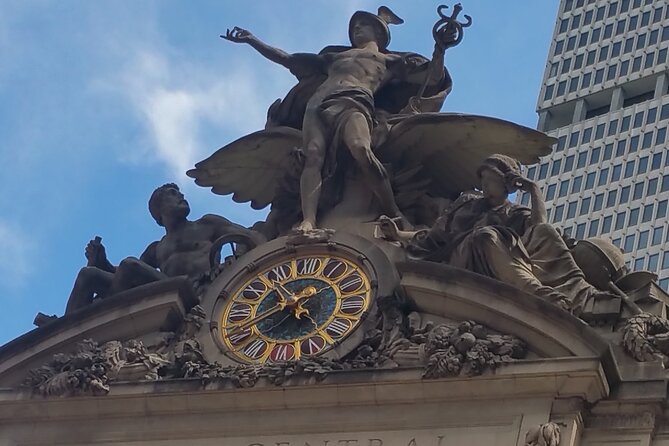
The walk ends at Grand Central Terminal, at 89 East 42nd Street. This is a practical ending point, since you can continue into the terminal, reach public transportation, or use Midtown as a base for the rest of your day.
Grand Central is both a transportation hub and an architectural landmark. Its 44 platforms and 67 tracks helped shape planning, engineering, architecture, and popular culture for decades. The building rewards a slower look, especially after a morning spent comparing different forms of construction and decoration.
Ending here gives the tour a satisfying shift from individual towers to a piece of city infrastructure. The Plaza and luxury hotels express private wealth. Rockefeller Center expresses planned commercial development. Grand Central shows how transportation can organize an entire urban district.
The stated itinerary allows roughly 15 minutes at each listed stop, but the actual flow may change with questions, traffic, access to interiors, and the group’s interests. Some small-group tours have lasted about three and a half hours rather than exactly three. Keep a little flexibility afterward instead of scheduling a tight appointment.
How much value does the $85 price offer?
At $85 per person, this is not the cheapest way to see Midtown. You can walk past many of these buildings for free. The value comes from having someone explain what you are seeing, put the buildings in time order, and point out details that are easy to overlook.
I think the price makes the most sense for three types of visitors. First, it suits a first-time visitor who wants a strong introduction without committing to several separate building tours. Second, it works for repeat New York visitors who have seen the landmarks but never understood how the styles and business interests connect. Third, it is a good choice for families or mixed-age groups because Annabel can adjust the discussion to the people in front of her.
The value is less clear if you want a highly technical architecture lecture focused on plans, materials, or formal design theory. The experience gives considerable attention to history, personalities, social change, and memorable stories. That is a strength for most sightseers, though a specialist may want a more academic format.
The guide’s ability to tailor the walk is one of the strongest reasons to book. You can ask for more attention to Art Deco, hotel interiors, corporate towers, public art, or the people who financed the buildings. The best experience will come from arriving with a few questions rather than treating the tour as a simple procession from one photo stop to the next.
Practical details for a smoother morning
The tour is offered in English and uses a mobile ticket. Confirmation is provided when you book, and service animals are allowed. The route begins outside The Plaza and ends at Grand Central Terminal, with public transportation available near the tour area.
Plan for a moderate physical fitness level. You will be walking through Midtown for about three hours, stopping outdoors and possibly entering selected buildings when access allows. Midtown traffic can be loud, and one useful improvement would be to gather briefly in a quieter spot at the start so everyone can hear the opening explanation.
The group maximum is eight people. That is small enough for a real exchange with Annabel, especially if the group has shared interests. It also means the experience may feel more like a guided conversation than a large standard city walk.
Free cancellation is available if you cancel at least 24 hours before the start time. Changes or cancellations made less than 24 hours before the 9:00 a.m. start are not accepted for a refund.
Who should book this Midtown architecture walk?
I would book this if you want to understand New York through its buildings, especially if you enjoy the connection between architecture, business, culture, and personal ambition. Annabel’s friendly, flexible approach suits people who prefer stories and discussion to a memorized list of dates.
It is also a smart choice for repeat visitors. The walk can make familiar places look different, from the Vatican Library-inspired lobby of The Sherry-Netherland to the art and planning of Rockefeller Center.
I would skip it if you mainly want interior admissions, an observation deck, or a fast photo tour. The Empire State Building ticket is not included, and access to other interiors can depend on current conditions. But if you want three focused hours of Midtown context, a small group, and a guide who can connect New York’s buildings with the people who shaped them, the $85 cost is fair.
FAQ
How long is the Midtown Manhattan architectural tour?
The tour lasts approximately three hours. Some tours may run longer when the group has questions or spends extra time at particular buildings.
Where does the tour start and finish?
It starts at The Plaza, 768 Fifth Avenue, at 9:00 a.m. It ends at Grand Central Terminal, 89 East 42nd Street.
Is admission to the Empire State Building included?
No. The tour includes seeing and discussing the Empire State Building, but its admission ticket is not included.
How many people can join the tour?
The activity has a maximum of eight travelers.
What language is the tour offered in?
The tour is offered in English.
Can I cancel for a full refund?
Yes, if you cancel at least 24 hours before the experience start time. Cancellations or changes made less than 24 hours before the start time are not accepted for a refund.
Newly added in New York City
- Manhattan Architecture Photography Tour★ 5.0 · 24 reviews
- Midtown North NYC Architecture Walking Tour★ 5.0 · 28 reviews
- Financial District NYC Architecture Walking Tour★ 5.0 · 26 reviews
- Holdouts: A NYC Architecture Walking Tour★ 5.0 · 31 reviews
- Midtown Manhattan Art and Architecture Walking Tour★ 5.0 · 32 reviews
- TriBeCa Architecture & History Walking Tour★ 5.0 · 37 reviews
- New York City: Flatiron Food, History, and Architecture Tour★ 4.8 · 43 reviews
- New York City: Art Deco and Architecture Landmarks Tour★ 5.0 · 76 reviews
3-Hour Experiences, compared.
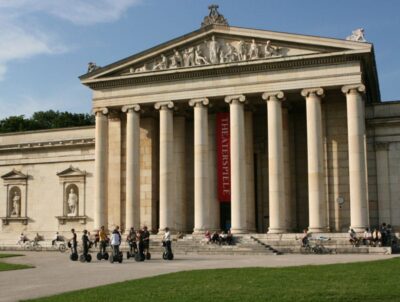
Munich 3-Hour Segway Tour: Nazi Munich & Royal Architecture
Read our review →
Barcelona 3-hour Bike or E-Bike Tour: Gaudí By Bike
Read our review →
Browse the lists this tour appears in