
Review · WALKING TOURS
Chelsea and the High Line NYC Architecture Walking Tour
The best part of this tour is the way it connects the High Line’s old rail history with the bold buildings that followed it. In two hours, you walk from the Whitney Museum through Chelsea and on to Hudson Yards, seeing how parks, property rights, and new architecture changed this side of Manhattan.
I like the small group, capped at 15, and the individual headsets, which let you hear the guide without crowding around him. I also like the focus on ideas, not just photo stops. Guide Ivan Shumkov explains air rights, public space, and the thinking behind buildings by Zaha Hadid, Jean Nouvel, and Bjarke Ingels.
The main drawback is the short running time. You see many important places, but most stops last only a few minutes, and there is no interior admission included. Wear comfortable shoes, and do not expect a slow art-gallery or museum visit.
Key points at a glance
- The High Line is the central story: Learn how an old elevated freight railway became one of New York’s best-known public parks.
- Ivan Shumkov brings a strong architecture focus: He covers design, urban renewal, public space, and the financial role of air rights.
- The route links old Chelsea with new Hudson Yards: The walk ends among some of Manhattan’s newest towers and public spaces.
- You see major modern buildings up close: Stops include 520 West 28th Street, 100 11th Avenue, 15 Hudson Yards, and the Spiral.
- A 15-person maximum keeps it personal: The headsets help you follow the guide even when the route gets noisy.
- The $49 price is fair for a focused city walk: It works best if you want context and interpretation rather than entry tickets.
Why this Chelsea walk is more than a stroll on the High Line
The High Line is easy to visit on your own. You can enter, walk a section, take photographs, and continue toward Chelsea Market or the Hudson River. What you cannot easily get on your own is the larger story of why the park exists and how it helped reshape the neighborhood around it.
This tour treats the High Line as a starting point for understanding New York development. You hear about the old elevated railway, the park’s creation, the use of air rights in funding, and the relationship between public space and private construction. That gives the walk a useful framework instead of turning it into a string of building names.
The route also shows several different ideas about modern city design. The High Line is a planted public walkway built on old infrastructure. Little Island is a public park set in the Hudson River. The Vessel is a large sculptural stair structure. Hudson Yards is a major new district built over rail yards. Each place raises a different question about who public space serves and how a city adds new life without erasing its past.
More Walking Tours in New York City
- Tribeca Architecture And History Walking Tour
★ 5.0 · 141 reviews - TriBeCa Architecture & History Walking Tour
★ 5.0 · 37 reviews - Midtown Manhattan Art and Architecture Walking Tour
★ 5.0 · 32 reviews
Starting at the Whitney Museum at 2 p.m.
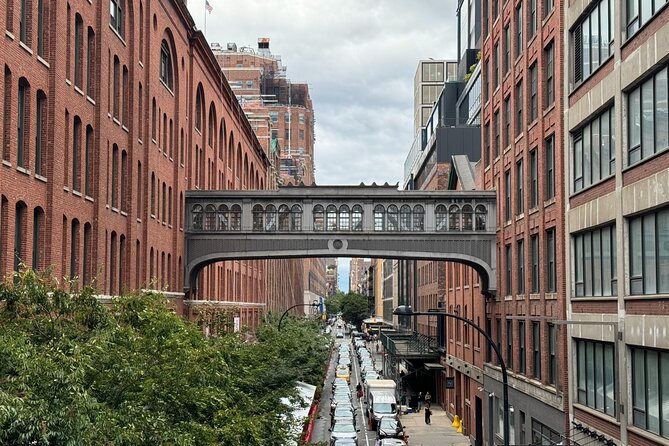
The walk begins outside the Whitney Museum of American Art at 99 Gansevoort Street. This is a useful meeting point because the museum sits at the southern end of the High Line and gives you an immediate sense of Chelsea’s blend of old industrial buildings, galleries, new apartments, and cultural institutions.
You do not receive museum admission as part of the tour, and the visit is mainly an exterior stop. That matters if you were hoping to see the Whitney’s collection. The benefit is that the tour keeps moving and uses the museum as an architectural and neighborhood landmark rather than spending most of the afternoon indoors.
The 2 p.m. start gives you a compact afternoon activity. At about two hours, it can fit before dinner, an evening show, or a separate museum visit. The trade-off is that the tour takes place during daylight hours only, so it is not designed around nighttime views of the buildings.
Walking the High Line with context
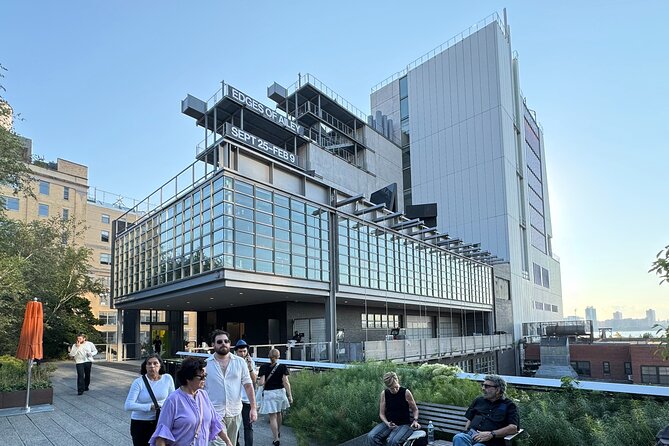
You spend about an hour around the High Line, making this the heart of the experience. The park’s appeal is obvious even without a guide: it carries you above the streets, offers changing views of buildings and the Hudson River, and turns an old piece of transport infrastructure into a public walkway.
The guide adds the part that is harder to spot. You learn how the High Line worked as a freight railway and how its later transformation affected nearby development. The discussion of air rights is especially useful because it explains the financial connection between the park and the buildings around it.
This is where Ivan Shumkov’s approach appears most valuable. He is described as covering not only the park’s history, but also its funding, urban renewal, and architectural setting. He also knows the buildings along the route, so you are not left with a basic account of the park and a list of famous architects.
The High Line can be crowded, and the route is still a city walk rather than a quiet garden visit. The personal headset helps. You can keep walking and looking around without needing to stand shoulder to shoulder with the guide.
The Whitney, The Standard, and Chelsea’s changing face
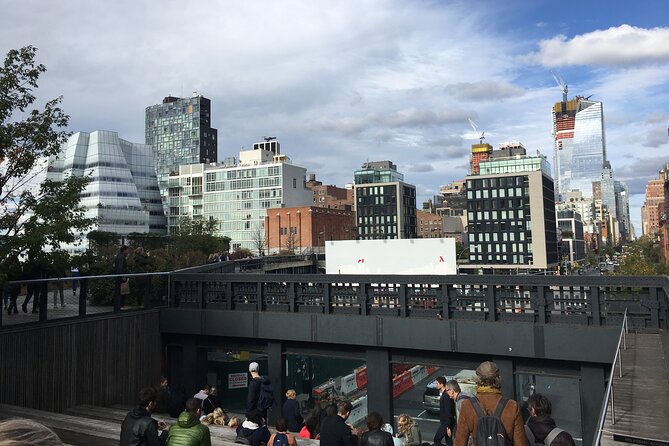
The short stops at the Whitney Museum and The Standard, High Line help show how different types of buildings gather around the park. The Whitney represents art and culture. The Standard is a highly visible hotel tied closely to the High Line’s central section.
The stop at The Standard lasts about five minutes, so you should expect a quick architectural and neighborhood explanation rather than a hotel visit. You will not be checking into the building or going inside as part of the tour. The value is in seeing how the High Line has become part of the identity and appeal of nearby properties.
This section is also a good reminder that Chelsea’s transformation is not only about public design. The park helped draw new investment, galleries, hotels, residences, and offices. The tour’s strength is that it lets you consider both sides: the pleasure of a public walkway and the development pressure that follows a successful public project.
More Walking Tours in the USA
- Holdouts: A NYC Architecture Walking Tour
★ 5.0 · 31 reviews - Midtown North NYC Architecture Walking Tour
★ 5.0 · 28 reviews - Financial District NYC Architecture Walking Tour
★ 5.0 · 26 reviews - Manhattan Architecture & Urban Design Walk
★ 4.5 · 2 reviews
Little Island and 100 11th Avenue
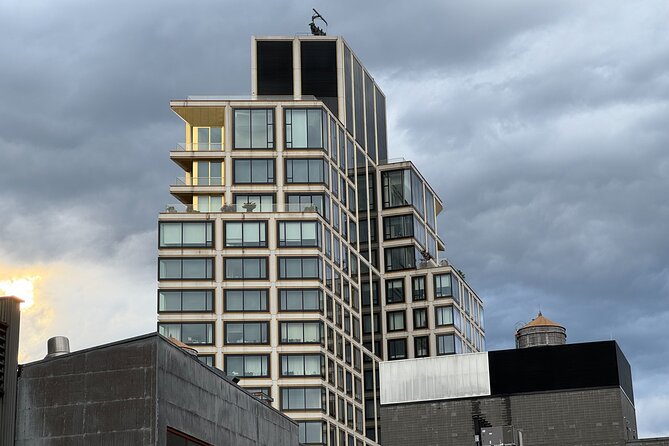
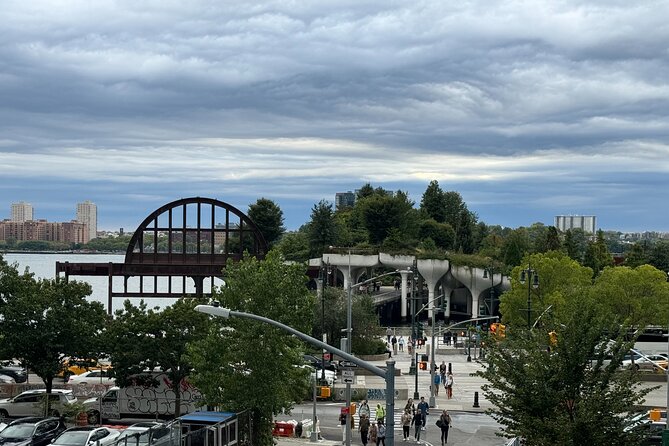
Little Island is viewed from the route as a park in the Hudson River. Its unusual form makes it a natural talking point about public space and contemporary design. Since the stop is a view rather than a listed admission visit, do not plan on exploring the park’s paths during this tour.
The route also includes 100 11th Avenue by Jean Nouvel. This building is one of the more distinctive modern structures in the area, and it gives the guide a chance to explain how an individual residential tower can respond to its surroundings.
These stops are brief, but that can work in your favor if you want a broad architectural survey. You see several different projects without spending the whole day on one building. If you prefer detailed technical discussion of every facade, though, the pace may feel brisk.
Zaha Hadid’s 520 West 28th Street
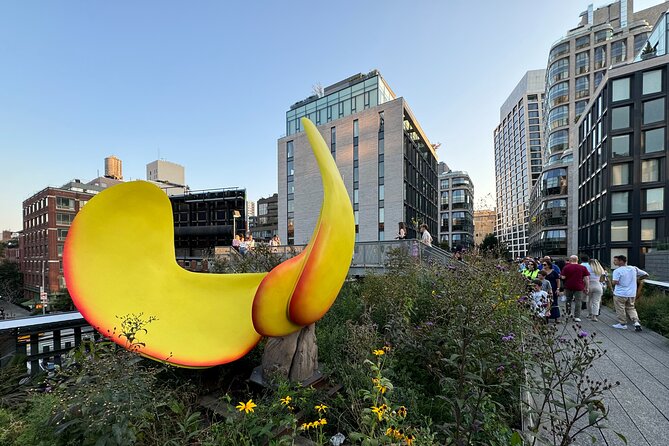
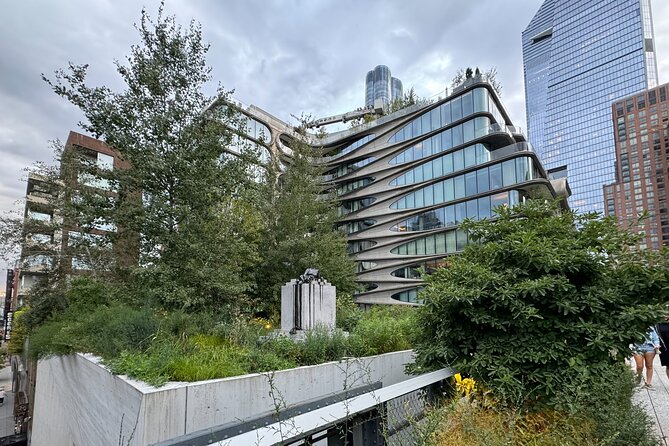
The five-minute stop at 520 West 28th Street is one of the tour’s clearest architecture highlights. Designed by Zaha Hadid Architects, the building is known for its flowing, sharply layered exterior. Even with only a short pause, its shape makes it easy to discuss how a modern residential building can become a visual landmark.
You will view the building from outside, not enter a private residence. That is typical for an architecture walk, but it is worth knowing before booking. The guide’s role is to explain the design and place it within Chelsea’s larger building boom.
This stop also shows why the route is better suited to people who enjoy design than to those seeking only scenic views. The High Line provides the outdoor experience, while buildings such as 520 West 28th Street provide the close study of materials, form, scale, and the relationship between old city blocks and new construction.
The Shed and the Vessel at Hudson Yards
As the walk continues north, the focus shifts from Chelsea to Hudson Yards. The Shed is a cultural building with a movable outer shell, and it is one of the more inventive projects on the route. You see it from outside and spend about five minutes there, so the stop is an introduction rather than a full architectural tour.
The Vessel is another quick stop. Its honeycomb-like stair structure became one of Hudson Yards’ most recognizable features, and its unusual shape gives the guide plenty to discuss. The tour does not include entry, tickets, or a climb inside.
These two stops are useful because they show different approaches to public architecture. The Shed is tied to performance and changing use. The Vessel is primarily a sculptural public structure and visual landmark. Seeing both in sequence helps you understand how Hudson Yards uses architecture to create identity for a new district.
Hudson Yards, 15 Hudson Yards, and the Spiral
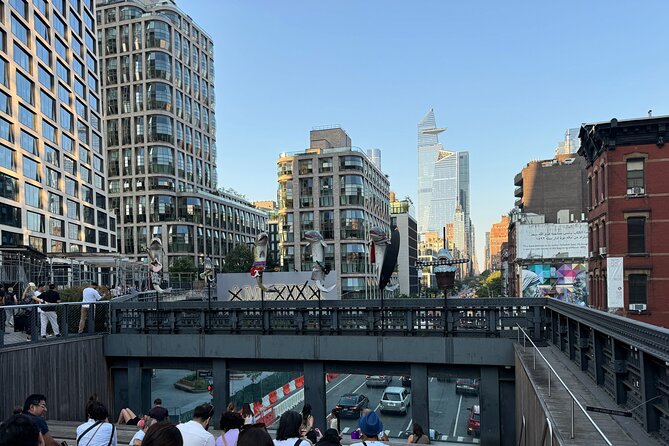
The tour spends about 10 minutes at Hudson Yards, then makes short stops at 15 Hudson Yards and the Spiral. This is the most concentrated section for recent commercial and residential development.
15 Hudson Yards, designed by Diller Scofidio + Renfro, gives you another example of a contemporary tower shaped by the demands of a new district. The Spiral, designed by BIG and dating from 2021, adds a newer chapter to the route. Its stepped form and planted terraces are part of the wider conversation about how tall office buildings can create outdoor space.
You should expect to hear how these buildings relate to Hudson Yards rather than receive a full interior tour. The final destination is 20 Hudson Yards, where the walk ends. Because the route covers several large projects in a short time, I would take notes or photograph building names if you want to look up individual architects later.
What the guide adds to a self-guided walk
The strongest part of this experience is the guide’s interpretation. Ivan Shumkov is repeatedly praised for explaining the High Line’s history, the role of air rights in funding, the architectural vision behind the buildings, and the broader meaning of public spaces.
That combination is important. A guide who only names architects would give you facts but not much understanding. Here, the focus includes urban renewal and public space, so you can think about why these projects were built and how they changed Chelsea.
The headset is a practical bonus. Each person receives an individual professional headset, and the group limit is 15. You can look at a building, keep your place on the walkway, and still hear the explanation. That is far easier than trying to gather around a guide on a busy Manhattan sidewalk.
The tour is also described as engaging and suitable for family groups. Still, the subject is architecture and city planning, so it will appeal most to adults and older children who enjoy asking why a building looks the way it does or how a neighborhood changes.
Is $49 a fair price?
At $49 per person, this is not the cheapest way to walk the High Line. The park itself is free, and you can see many of the same buildings without paying for admission. The price is paying for the guide’s time, the small group, the headset, and the organized explanation.
I think the value is good if you would otherwise walk through Chelsea without understanding the connections between the park, air rights, galleries, hotels, and Hudson Yards. It is less compelling if you mainly want a scenic walk or plan to visit the Whitney and other attractions independently.
No entrance tickets are included because the tour is an exterior walking experience. All listed fees and taxes are included, but tips are not. That keeps the cost fairly clear, though you should allow room for a gratuity if the guide gives you the thoughtful, detailed tour this experience is designed to provide.
Timing, fitness, and practical details
The route lasts about two hours and covers city streets, the High Line, and several outdoor public spaces. Most people can take part, but you should be comfortable walking for the full period and standing during short explanations.
The meeting point is the Whitney Museum of American Art at 99 Gansevoort Street. The tour ends at 20 Hudson Yards, so you do not return to the starting point. That one-way route is useful if you plan to continue exploring Hudson Yards afterward, but it means you should organize your transportation from the end rather than assume you will finish near the Whitney.
The tour runs in good weather. If poor weather causes cancellation, you can receive another date or a full refund. Free cancellation is available up to 24 hours before the start time, while changes or cancellations inside that window are not accepted.
Service animals are allowed, and the meeting point is near public transportation. Confirmation arrives when you book. Since the group can reach 15 people, the individual headset matters, especially if street noise or crowds make it hard to stand close to the guide.
Who should book this architecture tour?
I would choose this walk if you care about modern buildings, public parks, urban planning, or the way New York keeps changing. It is also a good fit if you want a guided activity that takes only one afternoon and ends in a useful part of Manhattan.
You will get the most from it if you recognize names such as Zaha Hadid, Jean Nouvel, Diller Scofidio + Renfro, and BIG, or if you are curious enough to learn them. The guide’s explanations give the route more depth than a standard sightseeing walk.
I would skip it if you want museum interiors, long stops, or plenty of free time for photographs. The pace is steady, the stops are short, and the tour is built around seeing many projects rather than studying one building in detail.
Should you book the Chelsea and High Line tour?
Book it if you want to understand why the High Line matters beyond its flowers and city views. The combination of Ivan Shumkov’s architectural guidance, personal headsets, a maximum of 15 people, and a route from the Whitney to Hudson Yards makes $49 a reasonable price for a focused introduction to Chelsea’s transformation.
The clearest reason to choose it is the connection between design and city finance. You do not just see the High Line, Little Island, the Vessel, and striking towers. You learn how public space, air rights, cultural buildings, and private development fit together. Just bring comfortable shoes, expect exterior viewing only, and remember that the two-hour schedule favors breadth over lingering.
FAQ
How long does the Chelsea and High Line architecture tour last?
The tour lasts approximately two hours.
Where does the tour begin?
It begins at the Whitney Museum of American Art, 99 Gansevoort Street, New York, NY 10014.
What time does the tour start?
The scheduled start time is 2:00 p.m.
Where does the tour end?
The tour ends at 20 Hudson Yards, New York, NY 10001.
How large is the tour group?
The activity has a maximum of 15 participants.
Are admission tickets included?
The tour includes the guide, all fees and taxes, and a professional individual headset for each participant. Admission tickets to attractions are not listed as included, and the tour views the featured buildings and public spaces from outside.
What happens if the weather is poor?
The experience requires good weather. If it is canceled because of poor weather, you will be offered another date or a full refund.
Newly added in New York City
- Race to the Sky: NYC Architecture Tour With SUMMIT One Ticket★ 5.0 · 3 reviews
- Private Flatiron Food, History and Architecture Tour★ 5.0 · 8 reviews
- New York Upper East Side Art and Architecture Tour★ 5.0 · 3 reviews
- New York Upper West Side Art and Architecture Tour★ 5.0 · 4 reviews
- New York Soho and the Village Art and Architecture Tour★ 5.0 · 4 reviews
- New York Midtown South Art and Architecture Tour★ 5.0 · 2 reviews
- Chelsea Galleries and High Line; Art, Architecture and History★ 5.0 · 14 reviews
- Custom Private New York Architecture, Art and City Tour★ 5.0 · 3 reviews
Walking Tours, compared.

The Official Art Deco Walking Tour by The Miami Design Preservation League
Read our review →
Baroque Architecture and Underground Walking Tour
Read our review →
Chicago in a Day: Food, History & Architecture Walking Tour
Read our review →

Ramblas, Old Town, Gothic and Gaudi Architecture Walking Tour
Read our review →
Chicago’s Secret Interiors Architectural Walking Tour
Read our review →
Browse the lists this tour appears in