
Review · NEW YORK CITY ARCHITECTURE TOURS
New York Upper East Side Art and Architecture Tour
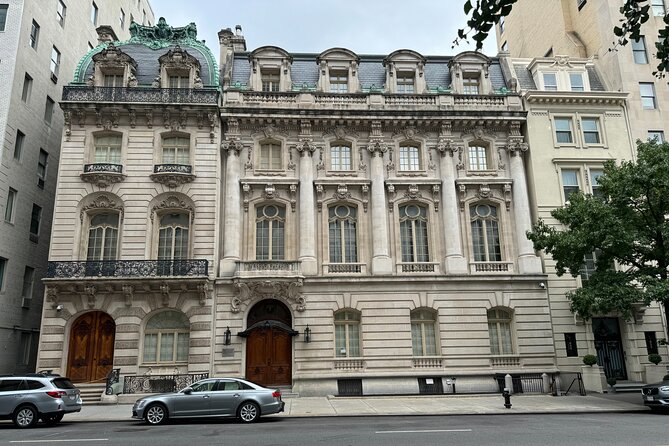
The Upper East Side is more than Fifth Avenue mansions and famous museums. This walk connects grand landmarks with the private homes, industrial fortunes, and social ambition that shaped the neighborhood. You’ll finish with a clearer sense of why these buildings look the way they do, rather than simply a list of handsome façades.
I like the small group limit of 15, which gives the guide room to answer questions, and I like the personal headsets, a smart touch on noisy Manhattan streets. Ivan, the founder and a guide on some departures, is especially praised for pointing out lesser-known buildings, including what he describes as New York’s first luxury home.
The main drawback is the short format. Two hours gives you a useful architectural introduction, but not time to tour the museums inside. The walk also requires good weather, and some of the travel between points is included in the tour time.
Key points at a glance
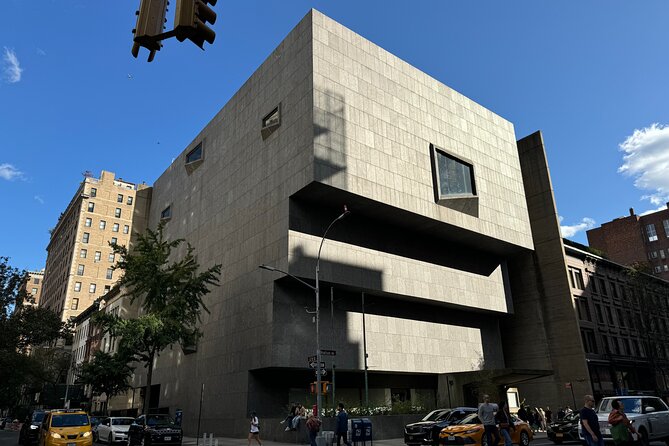
- Three major landmarks: Discuss the Guggenheim, Metropolitan Museum of Art, and Frick Collection from the street.
- A wider story: The walk adds lesser-known residences and links architecture to Gilded Age and industrial-era wealth.
- Small group format: A maximum of 15 people makes questions and personal attention more realistic.
- Useful audio equipment: Individual headsets help you follow the guide beside traffic and city noise.
- Easy afternoon timing: The 3:00 pm start fits neatly around a morning museum visit or other plans.
- Short but focused: Expect about two hours, with travel time included and no admission to the museums.
Why this Upper East Side walk is worth your afternoon
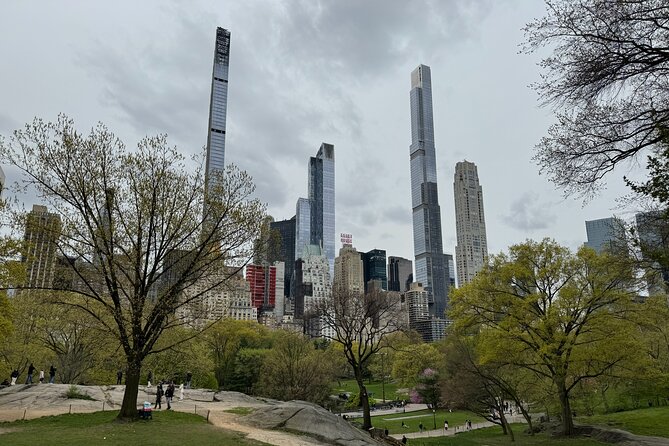
I see this tour as an introduction to the Upper East Side’s built environment. You are not simply being led from one famous museum to the next. The point is to read the street: the scale of a mansion, the materials on a façade, the position of a cultural institution, and the money or social purpose behind it.
That approach matters here. The Upper East Side can feel polished and self-explanatory, especially along Fifth Avenue. Yet the neighborhood’s buildings reflect several different New York stories, including industrial fortunes, Gilded Age society, private luxury, and the later growth of major art institutions.
The guide’s commentary gives those pieces a common thread. Based on the information available, Ivan leads some departures himself and brings attention to lesser-known buildings alongside the famous ones. That balance is one of the tour’s strongest features. You get the expected icons, but you are not confined to the standard postcard view.
The tour is conducted in English, Spanish, or Italian, and each participant receives an individual headset. On a city walk, this is more than a small convenience. Fifth Avenue traffic, buses, horns, and passing crowds can easily swallow a soft voice. The headset lets you keep looking at the building while still following the explanation.
A few more architecture walks in New York City worth a look
- Manhattan Architecture Yacht Cruise
★ 5.0 · 1,395 reviews - NYC: Around Manhattan Official NYC Architecture Cruise
★ 4.8 · 402 reviews - Art Deco and Architecture Midtown Landmarks Tour
★ 5.0 · 142 reviews
Starting near The Plaza at 3:00 pm
The meeting point is The Plaza, at 768 Fifth Avenue. The 3:00 pm departure gives you a practical afternoon option. You could spend the morning at another museum, have lunch nearby, and then meet the guide without committing to a full-day activity.
The location is near public transportation, which helps if you are coming from another part of Manhattan. You should still allow time to reach the meeting point, since the tour begins at a fixed hour. Confirmation is provided when you book, and the ticket is mobile, so you do not need to arrange a paper voucher.
The starting point also sets the tone. The Plaza area places you at the southern end of this stretch of Fifth Avenue, where grand hotels, residences, and cultural institutions sit close together. From there, the walk heads through the Upper East Side toward the Guggenheim finish.
One practical detail deserves attention: travel time counts within the roughly two-hour duration. That means the actual discussion at each landmark is focused rather than leisurely. If you want an unhurried stroll with long stops for photographs, this may feel brisk. If you want a well-shaped introduction before dinner or another evening plan, the timing works well.
The Guggenheim and the challenge of modern design
The Solomon R. Guggenheim Museum is one of the tour’s headline sights. You will see the building from outside and discuss its architecture, rather than enter for an exhibition. The stop is listed at about 10 minutes, so expect a concise explanation and time to take in the exterior.
The Guggenheim is useful on an architecture walk because it is not a conventional museum box. Its curved form and unusual profile make it easy to discuss how a building can become part of the art experience itself. Even from the street, you can consider the contrast between its sculptural exterior and the more traditional buildings along Fifth Avenue.
A short stop has both benefits and limits. You get a clear introduction without using much of the tour, but you will not have time to study every detail or explore the galleries. Admission is not included because this is an exterior-focused walk, so plan a separate museum visit if you want to go inside.
The tour ends at the Guggenheim, which is handy if you want to continue there after the walk. The supplied details do not promise admission or a timed entry, so treat the museum visit as a separate plan.
The Metropolitan Museum of Art from Fifth Avenue
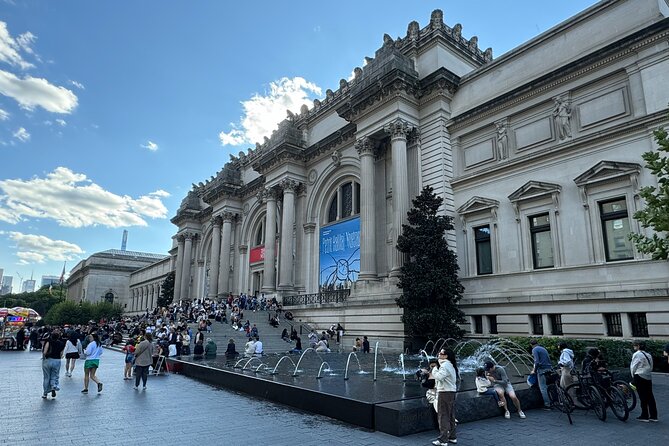
The Metropolitan Museum of Art receives about 15 minutes of discussion. That makes it the longest listed stop, which is sensible. The Met is too large and architecturally layered for a quick glance, even though this visit remains outside.
You will study the Met from Fifth Avenue and talk about its architecture. The exterior offers a different lesson from the Guggenheim. Instead of one bold modern form, the Met presents an institutional scale meant to signal permanence, authority, and cultural importance.
I like this part of the route because it helps you compare design choices. The Guggenheim asks how modern art can reshape a museum. The Met asks how a museum can present itself as a great civic institution. You do not need a background in architecture to follow that contrast. The guide’s job is to point out what your eyes might otherwise skip.
Again, admission is not included. That is not a flaw for an exterior walking tour, but it affects the value calculation. If the Met is a priority, set aside another block of time and buy a separate museum ticket or make whatever entry arrangements apply to your visit. The walking tour itself is about the building and the neighborhood context, not the collections inside.
Same city, a different facade:
- Tribeca Architecture And History Walking Tour
★ 5.0 · 141 reviews - New York City The Official Rockefeller Center Tour
★ 4.5 · 119 reviews - 3 Hour Midtown Manhattan Architectural Tour
★ 5.0 · 81 reviews - New York City: Art Deco and Architecture Landmarks Tour
★ 5.0 · 76 reviews
The Frick Collection and a more private side of the neighborhood
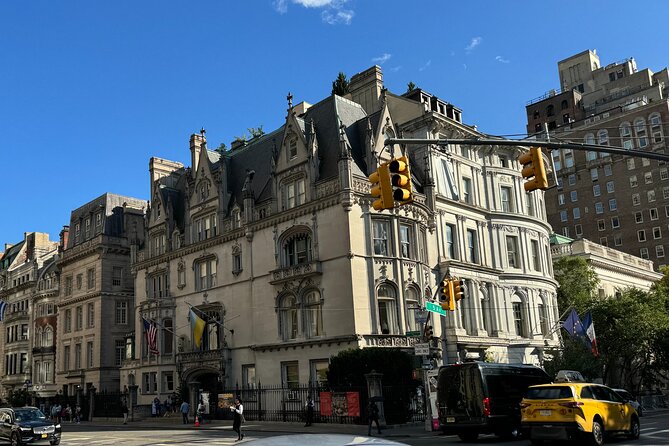
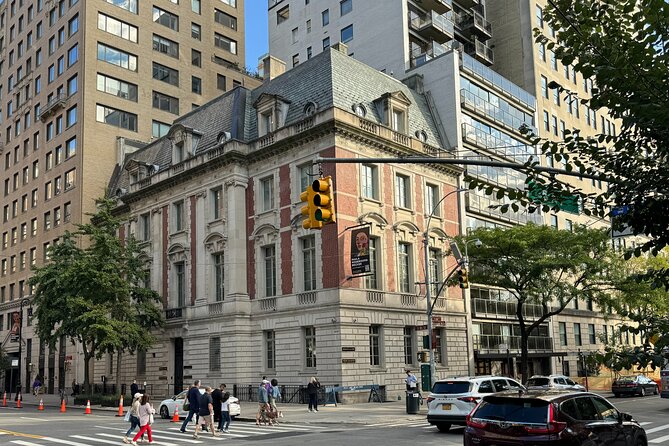
The Frick Collection provides a third architectural type. The tour discusses the Frick building for about 10 minutes, giving you another chance to compare public culture with private wealth.
The Frick’s former mansion helps explain the Upper East Side as a district of powerful individuals, not only large institutions. Its architecture is tied to the idea of a private residence built on an impressive scale, then adapted for public use. That makes it a useful counterpoint to the Met and Guggenheim.
The walk also gives attention to lesser-known residences. One especially interesting detail from the guide’s commentary is the mention of what was described as New York’s first luxury home. That kind of stop is valuable because it shifts your attention away from the three famous names in the brochure and toward the people who established the neighborhood’s social character.
The Frick stop is brief, so do not expect a full architectural lecture or interior tour. Its value comes from how it fits into the larger story. You are seeing how private homes and public museums share the same avenue, yet serve different purposes.
From famous façades to lesser-known buildings
The best reason to choose this experience is the promise of connections between major sights and less familiar structures. Anyone can recognize the Guggenheim or Met. It takes a guide to explain why another building across the street matters, who commissioned it, or how its use reflects the Upper East Side’s changing fortunes.
The available feedback gives Ivan particular credit for covering both iconic and lesser-known buildings. One detailed account highlights the breadth of the coverage and the way it helped make New York easier to understand. That is the right standard for this kind of walk. The goal is not to memorize every architect. The goal is to leave with a working sense of how the neighborhood developed.
Another account describes the tour as a look at industrial and Gilded Age history through design. That combination is important. Architecture here is not just decoration. It records wealth, ambition, business success, and the desire to display social position.
You should listen for those links as you walk. Ask the guide why one residence is grander than another, how a private mansion became a cultural institution, or what changed when a museum moved into the neighborhood. The small group makes those questions more practical than they would be on a large coach or crowded public tour.
What the $49 price buys you
At $49 per person, the tour is priced as a guided architectural walk rather than a museum admission package. The fee covers the guide, taxes and other listed fees, and the individual headset. Tips are not included.
I think the value is strongest if you already plan to see the Upper East Side but want more than photographs. A self-guided walk costs less, but you would need to research the buildings, build a route, and find a way to hear your own audio or notes over street noise. Here, the structure and commentary do that work for you.
The value is weaker if you expect interior access. You will not enter the Guggenheim, Met, or Frick as part of the experience, and the listed stops are short. If your main goal is to see art collections, spend the $49 on a museum visit instead, then explore the avenue on your own.
For someone interested in architecture, design, urban development, or New York society, the price is reasonable for a compact introduction. The maximum of 15 participants also matters. You are paying for a smaller setting, not simply transportation between sights.
Who will get the most from this walk
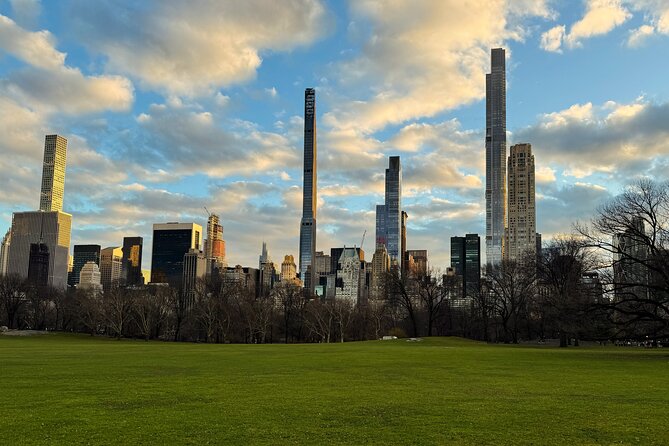
I would recommend this tour to first-time New York visitors who want a clear introduction to the Upper East Side without giving up half a day. It also suits repeat visitors who have seen the major museums but want more context for the streets around them.
It is a good match for:
- People who enjoy buildings, design, and city planning
- Visitors who prefer a guide to a self-guided audio app
- Couples or small parties who want time for questions
- Anyone with a busy schedule and a free afternoon
- Museum fans who want to compare the Met, Frick, and Guggenheim from the outside
It may not suit you if you dislike walking, need extensive time indoors, or want a tour centered on art collections rather than buildings. The available information confirms that most participants can take part, but it does not provide a detailed accessibility description beyond service animals being allowed and public transportation being nearby.
The weather policy also matters. The activity requires good weather, so keep a little flexibility in your schedule if possible. If poor weather cancels the tour, you are offered another date or a full refund.
Group size, language, and practical comfort
A maximum of 15 people is a useful middle ground. You get the social feel of a group walk without the scale of a large procession. I would still arrive ready to keep pace, since the duration includes movement between stops.
Guiding is available in English, Spanish, and Italian. The supplied details do not assign a specific language to each departure, so check the booking information when selecting your date if language matters to you.
The headset system is one of the most practical inclusions. It should help you hear the guide while looking up at façades rather than standing shoulder to shoulder around the speaker. Bring comfortable shoes and be prepared for a normal city walk, though the exact distance and street conditions are not specified.
The mobile ticket keeps the meeting process simple. Service animals are allowed, and the activity is near public transportation. You can cancel for a full refund up to 24 hours before the start time. Changes or cancellations inside that window are not refunded, and the cut-off uses New York local time.
My verdict on the Upper East Side Art and Architecture Tour
Book this walk if you want the Upper East Side explained through buildings, owners, institutions, and changing social power. The strongest features are the small group, individual headsets, and the attention to lesser-known residences alongside the Guggenheim, Met, and Frick.
Skip it if you mainly want museum entry or a long, slow photography walk. Two hours passes quickly, and travel time reduces the time available at each landmark.
For a focused afternoon introduction, the format is smart. You start near The Plaza, follow a guided route through one of Manhattan’s most architecturally important districts, and finish at the Guggenheim. At $49, it earns its price when you want interpretation and local context, not just directions.
FAQ
How long does the Upper East Side Art and Architecture Tour last?
The tour lasts approximately two hours. Travel time between points is included in that duration.
What time does the tour start?
The tour starts at 3:00 pm.
Where does the tour begin?
The meeting point is The Plaza, at 768 Fifth Avenue, New York, NY 10019.
Where does the tour finish?
The tour ends at the Solomon R. Guggenheim Museum, at 1071 Fifth Avenue, New York, NY 10128.
What buildings are discussed?
The tour discusses the Solomon R. Guggenheim Museum, the Metropolitan Museum of Art, and the Frick Collection. It also includes other Upper East Side buildings and residences.
Does the tour include museum admission?
No. The listed stops discuss the buildings from outside, and museum admission is not included.
How many people can join the tour?
The activity has a maximum of 15 participants.
What languages are available?
The in-person guide is available in English, Spanish, and Italian.
Are headsets provided?
Yes. Each participant receives a professional individual headset.
Can I cancel for a full refund?
Yes. You can cancel at least 24 hours before the start time for a full refund. Cancellations or changes made less than 24 hours before the start time are not refunded or accepted.
What happens if bad weather cancels the tour?
If poor weather causes a cancellation, you are offered a different date or a full refund.
Newly added in New York City
- Race to the Sky: NYC Architecture Tour With SUMMIT One Ticket★ 5.0 · 3 reviews
- New York Upper West Side Art and Architecture Tour★ 5.0 · 4 reviews
- Private Flatiron Food, History and Architecture Tour★ 5.0 · 8 reviews
- Chelsea and the High Line NYC Architecture Walking Tour★ 5.0 · 6 reviews
- New York Soho and the Village Art and Architecture Tour★ 5.0 · 4 reviews
- New York Midtown South Art and Architecture Tour★ 5.0 · 2 reviews
- Custom Private New York Architecture, Art and City Tour★ 5.0 · 3 reviews
- Chelsea Galleries and High Line; Art, Architecture and History★ 5.0 · 14 reviews
New York City Architecture Tours, compared.

Around Manhattan Official NYC Architecture Cruise
Read our review →
Art Deco and Architecture Midtown Landmarks Tour
Read our review →

New York City The Official Rockefeller Center Tour
Read our review →

Browse the lists this tour appears in