
Review · NEW YORK CITY ARCHITECTURE TOURS
New York Soho and the Village Art and Architecture Tour
New York’s buildings often reveal more than its museums do. On this compact walk from Cooper Square to Washington Square Park, you’ll read the city through old banks, modern residences, university buildings, public art, and streets shaped by changing communities. The route covers SoHo, the Village, the Lower East Side, and nearby areas without wasting time on long transfers.
I like the small group of no more than 15 and the personal headsets, which make it easier to ask questions and hear the guide beside noisy streets. I also like the range of stops, from the 1895 Bowery Savings Bank to the New Museum and Silver Towers.
The main consideration is the brisk two-hour format. You’ll see many buildings from the outside, and several stops last only five minutes. This is a strong introduction, not a slow architectural survey.
Key things to know before you book
- The route links several architectural eras: You’ll see the Cooper Union Foundation Building, a Herzog and de Meuron residence, the New Museum by SANAA, a former bank, university buildings, and public housing.
- Guide Ivan shapes the walk around your interests: The experience is designed for questions and conversation, rather than a fixed speech delivered to a large crowd.
- The tour begins at 5:30 pm: That timing lets you use the day for museums or sightseeing before meeting at Cooper Square.
- Personal headsets help on busy streets: You can hear the guide without standing shoulder to shoulder with the group.
- The walk finishes under Washington Square Arch: The endpoint puts you directly in one of Greenwich Village’s best-known public spaces.
- The $49 price buys interpretation, not entry tickets: All listed stops are included without separate admission, but the value comes from understanding what you are seeing.
Why this New York architecture walk is worth your time
SoHo and the Village are easy places to wander without a plan. You can admire cast-iron fronts, narrow streets, grand churches, and modern towers, yet miss the ideas behind them. This tour gives you a framework for reading the city.
You’ll look at how old commercial buildings were reused, how new projects fit into historic neighborhoods, and how public spaces change the way residents experience a block. The tour also moves beyond the postcard version of downtown Manhattan. It includes large institutions, apartment buildings, a former bank, campus architecture, and public housing.
That mix matters. A tour focused only on famous landmarks can make New York seem like a collection of isolated monuments. Here, the guide connects buildings to streets, neighborhoods, and urban planning. You’ll get a better sense of why one block feels formal and another feels improvised.
Guide Ivan is an important part of the experience. The tour is intended to stay personal, and the small group gives you room to ask about design, local history, or buildings you pass every day. One particularly useful idea from the tour is simple: look up and around. In downtown New York, that small habit can change an ordinary walk.
A few more architecture walks in New York City worth a look
- Manhattan Architecture Yacht Cruise
★ 5.0 · 1,395 reviews - NYC: Around Manhattan Official NYC Architecture Cruise
★ 4.8 · 402 reviews - Art Deco and Architecture Midtown Landmarks Tour
★ 5.0 · 142 reviews
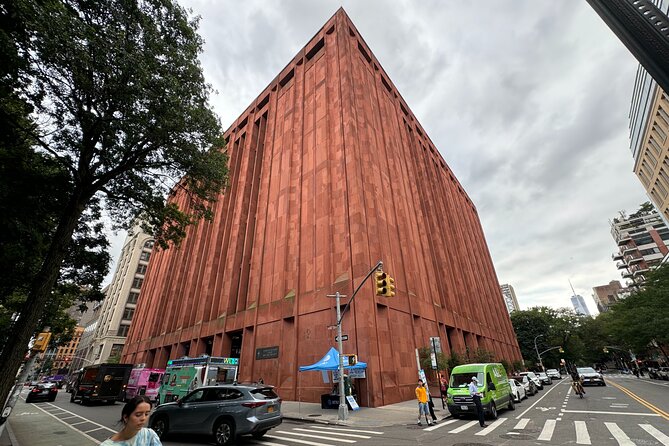
Starting at Cooper Square and the Cooper Union Foundation Building
Meet at Cooper Square at 5:30 pm. The first major stop is the Cooper Union Foundation Building, where the tour begins its architectural story.
The building provides a useful opening because Cooper Union is tied to education, public life, and the changing character of the surrounding streets. You’ll spend about 10 minutes here, with no admission charge listed. Expect the guide to establish the basic method for the walk: notice the building’s form, its setting, and the way people use the space around it.
Starting here also puts you close to several different downtown districts. The tour can move from an older institution to newer residential and cultural projects without requiring a subway ride between each one.
40 Bond Street and the New Museum
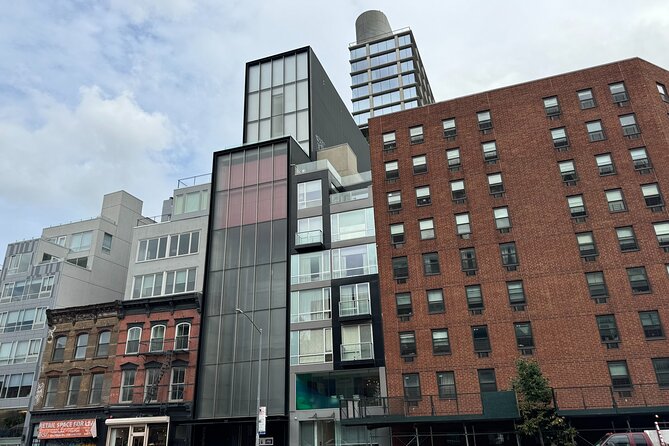
At 40 Bond Street, you’ll see residences designed by Herzog and de Meuron. The stop lasts about five minutes, so you should expect a focused explanation rather than an extended visit inside the property.
This is one of the tour’s clearest examples of modern design in an older neighborhood. It gives you a chance to consider how a new residential building announces itself among established streets and buildings. The value is less about entering the residence and more about learning how to inspect a contemporary façade and its relationship to the block.
The New Museum follows, with another five-minute stop. Designed by SANAA, it offers a sharp contrast to older downtown architecture. Its presence adds a major art institution to the route and helps explain how museums can affect the identity and movement of a neighborhood.
The short timing is both useful and limiting. You’ll see the exterior and hear the key points, but this is not a substitute for visiting the museum’s exhibitions. If you want time inside, plan a separate visit.
PUBLIC Hotel and the old Bowery Savings Bank
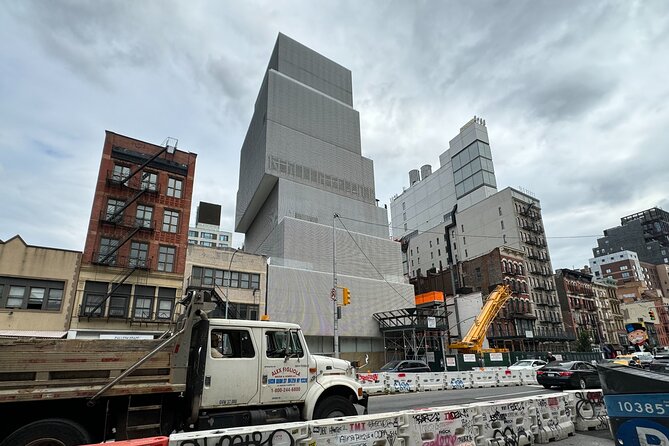
The PUBLIC Hotel is another brief stop. It adds a recent hospitality project to the walk and keeps the focus on how contemporary buildings fit into the city’s older street pattern.
Next comes Capitale, the former Bowery Savings Bank designed by McKim, Mead & White in 1895. This is one of the route’s most striking shifts in mood. The building represents the scale and formality of a major financial institution from the late 19th century, while the hotel and New Museum show more recent approaches to urban design.
You’ll spend about five minutes here. Since the itinerary describes Capitale as a visit rather than a long interior tour, listen closely and use the time to compare materials, scale, and purpose with the modern buildings you have just seen.
The route also includes the Little Singer Building, the Scholastic Building by Aldo Rossi, and New York’s old cathedral. These stops fill out the architectural story, even though exact visit times are not specified. The range is useful: you are not looking at one style or one period, but at layers of New York built for commerce, education, religion, art, and daily life.
Same city, a different facade:
- Tribeca Architecture And History Walking Tour
★ 5.0 · 141 reviews - New York City The Official Rockefeller Center Tour
★ 4.5 · 119 reviews - 3 Hour Midtown Manhattan Architectural Tour
★ 5.0 · 81 reviews - New York City: Art Deco and Architecture Landmarks Tour
★ 5.0 · 76 reviews
NYU, Houston Street, and Washington Square
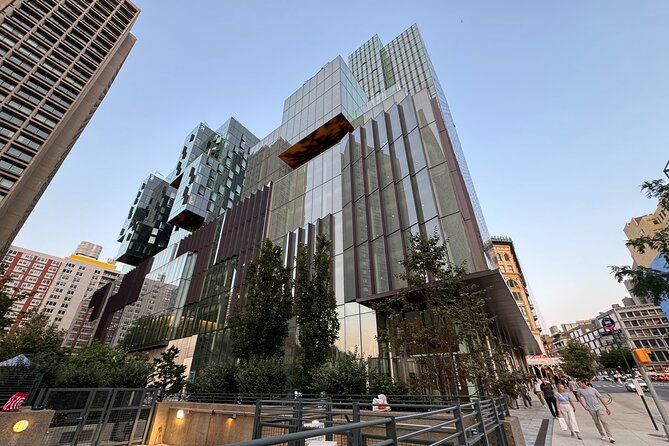
The tour then reaches New York University’s main campus. You’ll look at newer additions to the campus and residences along Houston Street and around Washington Square, with about five minutes listed for this stop.
NYU is especially helpful for understanding how a university can spread through an existing neighborhood rather than sit behind a single enclosed campus. The guide can point out how buildings and residences relate to public streets, nearby businesses, and one of Manhattan’s most important parks.
This section also gives the walk a practical urban-planning angle. You are not just studying façades. You are considering who uses a building, how it meets the sidewalk, and how a large institution affects the surrounding area.
Because the tour moves quickly, you will not examine every NYU building in detail. Still, this is a valuable section for anyone interested in how New York adds new construction without abandoning its older street network.
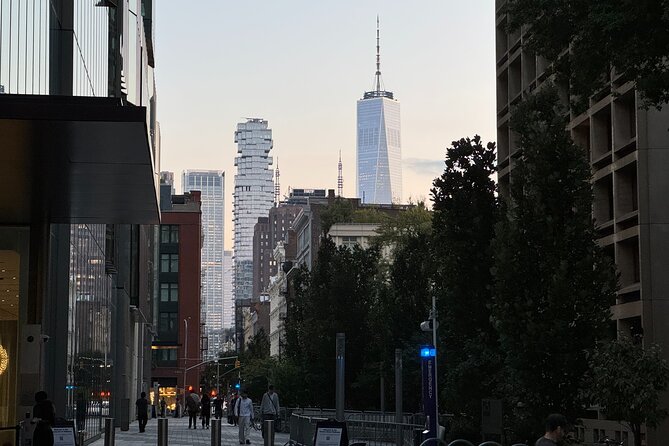
Silver Towers and public art
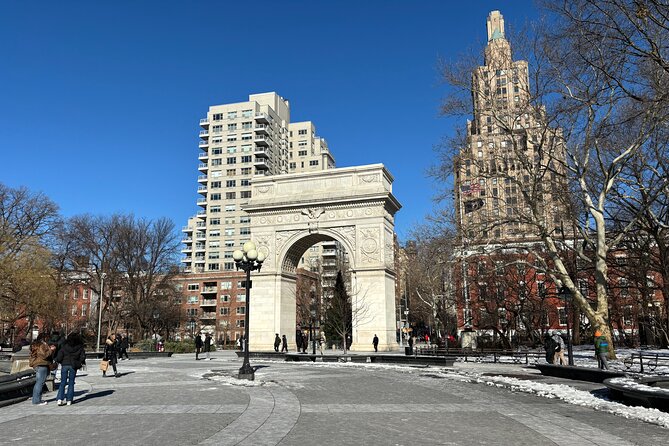
Silver Towers receives about 10 minutes, making it one of the longer stops. Here, the focus turns to the buildings, the public spaces around them, and the art connected with the site.
This is an important change from the commercial and cultural buildings earlier in the route. Silver Towers lets you consider housing, open space, and public art together. The question becomes not only what a building looks like, but how a group of buildings creates a place for people.
You may find this section especially useful if you care about urban planning. Large residential projects can feel separate from the traditional image of downtown Manhattan, yet they reveal how the city has tried to provide housing and shared space at a substantial scale.
The extra time here should help the guide explain the relationship between towers, open areas, and art. Since the tour has a maximum of 15 people, you should have a better chance to ask about a detail that catches your eye.
Bobst Library and Washington Square Arch
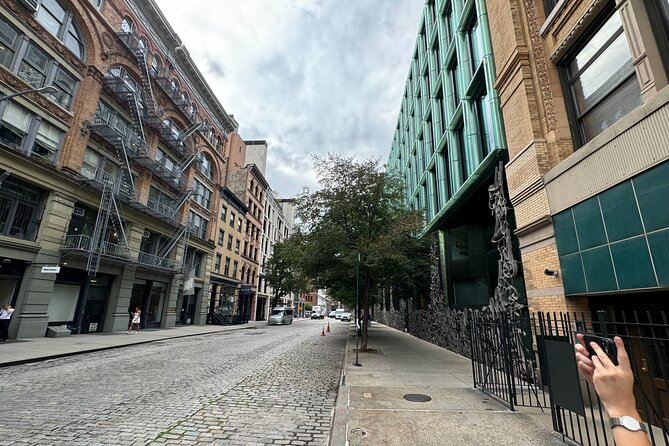
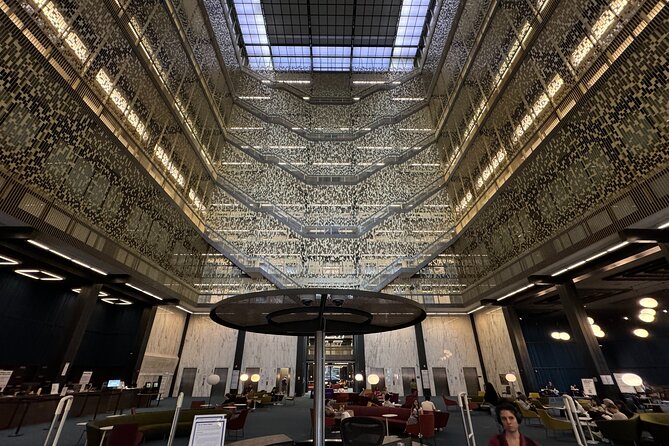
At Bobst Library, you’ll enter the building for about five minutes. That interior visit breaks up the mostly exterior route and gives you another example of institutional architecture.
Five minutes is not enough for a full library tour, so think of this as a focused architectural stop. The guide can direct your attention to the building’s design and function, while you get a quick sense of how it differs from the residences, museums, and older commercial structures earlier in the walk.
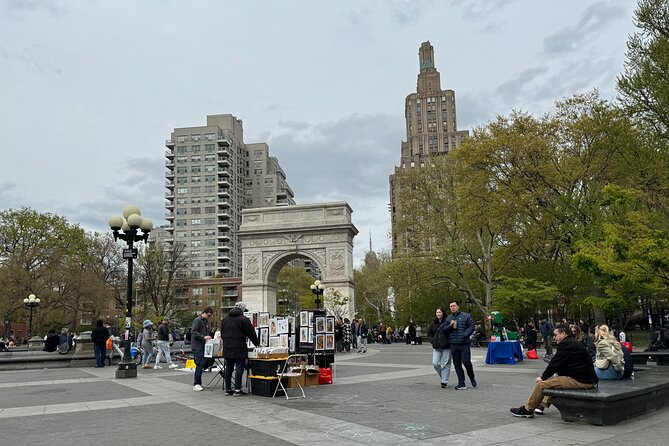
The final stop is Washington Square Park, where the tour ends beneath Washington Square Arch. You’ll spend about 10 minutes here. The arch and park provide a natural closing point because they bring together public space, architecture, campus life, and neighborhood activity.
Ending here is convenient. You are not left on an anonymous side street, and you can continue exploring Greenwich Village after the tour. The route’s endpoint also makes it easy to stop for food or take a separate evening walk.
What the two-hour schedule really feels like
Two hours is a sensible length for a first look at downtown architecture. You get enough ground to see several neighborhoods, but the tour should not consume your entire evening.
The tradeoff is pace. Stops range from about five to 10 minutes, and travel between them counts within the approximate two-hour duration. You should wear comfortable shoes and arrive ready to keep moving. This is a walking tour, not a series of long building visits.
The 5:30 pm start is well chosen for many schedules. You can spend the earlier part of the day at a museum, shopping in SoHo, or visiting another part of Manhattan, then use the tour as a bridge into your evening. The exact light and street conditions will vary by season, but the late-day start generally suits anyone who wants to combine sightseeing with dinner afterward.
Personal headsets are a real practical benefit. Downtown streets can be loud, and a guide’s explanation is easy to lose when a group is spread across a sidewalk. With individual headsets, you can look at a building while still following the commentary.
Who will get the most from this tour
I would choose this walk if you like architecture, city planning, art institutions, or the small details of New York buildings. It also suits people who have visited Manhattan before and want to see familiar neighborhoods differently.
It works well for local residents, too. The route can change your understanding of buildings you have passed many times. Ivan’s approach allows the discussion to follow your interests, so you can ask about design, history, or the way a building fits its surroundings.
This is less suitable if you want extensive interior access, a relaxed photography stop at every building, or a tour devoted only to SoHo cast-iron architecture. The route covers more ground than its title might suggest, including NYU, Silver Towers, Bobst Library, and Washington Square Park.
Most people can participate, and the experience is near public transportation. Service animals are allowed. The supplied information does not give a detailed accessibility assessment, so if you have specific mobility needs, confirm the walking conditions before booking.
Is $49 a fair price?
At $49 per person, the tour is priced as a guided specialty walk rather than a basic neighborhood stroll. The fee includes all listed fees and taxes, an in-person guide, and a professional individual headset. You do not pay separate admission for the stops described.
The value depends on how much interpretation you want. If you are happy to photograph buildings and read about them later, you can explore these neighborhoods for free. But it is harder to understand why a building matters, how a new residence relates to an old bank, or how university and public-housing projects shape the city without guidance.
The small-group limit improves the value. A maximum of 15 people is still large enough to share energy, but small enough for questions. Tips are not included, so plan to add one if the guide gives you the thoughtful, tailored experience this format promises.
The activity is often booked about 71 days ahead, which suggests that planning early is sensible if your New York dates are fixed. Confirmation arrives when you book, and the ticket is mobile.
Weather, cancellations, and simple planning advice
The tour requires good weather. If poor weather forces a cancellation, you can receive a different date or a full refund. The same applies if the minimum number of participants is not reached.
For your own cancellation, you must cancel at least 24 hours before the 5:30 pm start for a full refund. Cancellations or changes made within 24 hours are not refunded or accepted. Check the local cut-off time carefully.
I would meet at Cooper Square a little early, with comfortable shoes and a phone containing the mobile ticket. Since the end is Washington Square Arch, you can plan dinner or another Village activity afterward rather than returning to the starting point.
Should you book the SoHo and Village Art and Architecture Tour?
Book it if you want a smart introduction to downtown New York architecture and prefer a guide who can answer questions instead of a large scripted group. The range of buildings is the strongest feature: Cooper Union, Herzog and de Meuron, SANAA, McKim, Mead & White, Aldo Rossi, NYU, Silver Towers, Bobst Library, and Washington Square Arch all appear within one short walk.
The tour is also a good choice for repeat visitors and New Yorkers who want to notice more in familiar streets. Guide Ivan’s personal approach, the headsets, and the small group make the $49 fee reasonable for readers who value context.
Skip it if your priority is long interior visits, a slow pace, or a single-neighborhood study. With its compact schedule, this experience gives you a clear architectural map of downtown, then leaves you free to explore the Village on your own.
FAQ
How long does the tour last?
The tour lasts approximately two hours, including travel time between stops.
Where does the tour begin?
The tour begins at Cooper Square, New York, NY 10003.
Where does the tour end?
It ends at Washington Square Park under Washington Square Arch.
What time does the tour start?
The scheduled start time is 5:30 pm.
How many people can join the tour?
The experience has a maximum of 15 travelers.
Are headsets provided?
Yes. Each participant receives a professional individual headset.
Can I cancel for a full refund?
Yes, if you cancel at least 24 hours before the experience start time. Cancellations within 24 hours are not refunded.
Newly added in New York City
- Race to the Sky: NYC Architecture Tour With SUMMIT One Ticket★ 5.0 · 3 reviews
- New York Upper East Side Art and Architecture Tour★ 5.0 · 3 reviews
- New York Upper West Side Art and Architecture Tour★ 5.0 · 4 reviews
- Private Flatiron Food, History and Architecture Tour★ 5.0 · 8 reviews
- Chelsea and the High Line NYC Architecture Walking Tour★ 5.0 · 6 reviews
- New York Midtown South Art and Architecture Tour★ 5.0 · 2 reviews
- Chelsea Galleries and High Line; Art, Architecture and History★ 5.0 · 14 reviews
- Custom Private New York Architecture, Art and City Tour★ 5.0 · 3 reviews
New York City Architecture Tours, compared.

Around Manhattan Official NYC Architecture Cruise
Read our review →
Art Deco and Architecture Midtown Landmarks Tour
Read our review →
New York City The Official Rockefeller Center Tour
Read our review →

Browse the lists this tour appears in