Review · WALKING TOURS
Tribeca Architecture And History Walking Tour
Tribeca’s appeal is easy to miss if you simply stroll its polished streets. This 2.5-hour walking tour shows how farmland became one of Manhattan’s most expensive addresses, with old cast-iron buildings, grand landmarks, movie history, and stories hiding above street level. Guide Meghan Sara is known for making the architecture lively, funny, and easy to follow.
I like the mix of serious history and playful stops, especially the Ghostbusters firehouse and the small details you might otherwise walk past. I also like the compact group size, which allows the guide to adjust the talk to your interests. The main drawback is simple: you will be outdoors for the full tour, and the experience depends on good weather.
Key things to know before you book
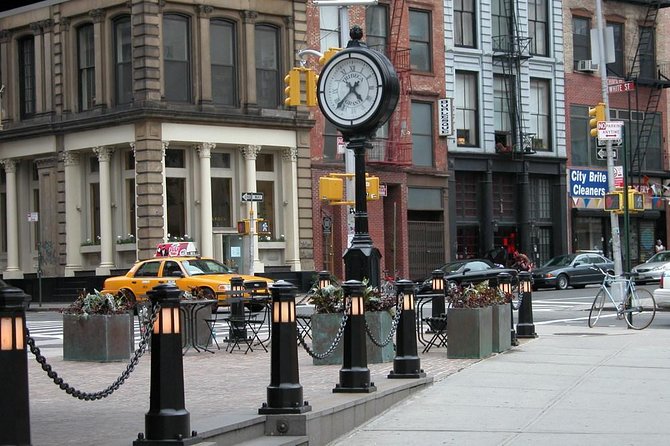
- More than 15 stops in 2.5 hours: You get a broad introduction to Tribeca rather than one long lecture at a single landmark.
- A strong guide can make or break it: Meghan Sara is especially praised for her humor, energy, architecture knowledge, and storytelling.
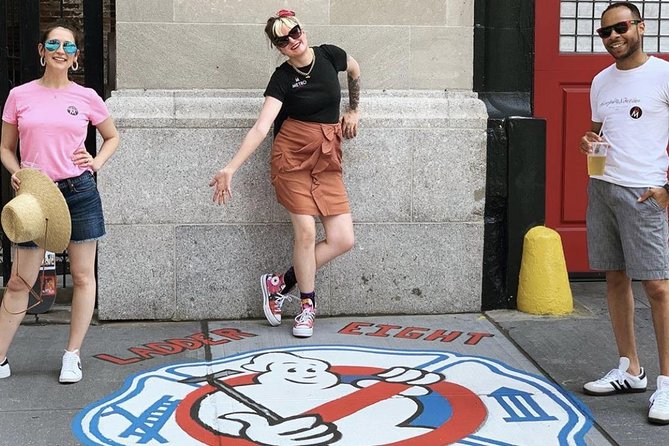
- The Ghostbusters firehouse is a fun bonus: You stop at Company 8 for photos and learn why the building matters beyond its film role.
- Useful for locals as well as visitors: The route looks at details even longtime New Yorkers may pass without noticing.
- Small groups help: The tour has a maximum of 15 people, making questions and guide interaction easier.
- Bring weather-ready clothes: Snacks are not included, and you should expect a steady outdoor walk from Chambers Street toward Tribeca Park.
Why Tribeca makes such a good walking-tour subject
Tribeca is not a neighborhood that explains itself at a glance. Today, it is known for high property prices, celebrities, restaurants, and handsome old buildings. Its earlier identity was very different. This walk traces the change from farmland to a working district and then to one of New York’s most sought-after residential areas.
I find that timeline more interesting than a simple parade of expensive homes. You begin near the civic core of Lower Manhattan and move into streets shaped by several eras of New York life. The guide explains how Tribeca got its name, how its buildings developed, and how the area gained its current reputation.
You do not need prior architecture training. The point is not to memorize architectural terms. It is to learn how to look: at facades, building materials, proportions, old commercial details, and the relationship between grand historic structures and newer changes.
The tour is also a good reminder that neighborhood history is rarely tidy. Tribeca’s present-day glamour sits on top of work, trade, industry, redevelopment, and changing fortunes. That gives the walk more substance than a celebrity-address tour.
More Walking Tours in New York City
- TriBeCa Architecture & History Walking Tour
★ 5.0 · 37 reviews - Midtown Manhattan Art and Architecture Walking Tour
★ 5.0 · 32 reviews - Holdouts: A NYC Architecture Walking Tour
★ 5.0 · 31 reviews
Starting at Tweed Courthouse on Chambers Street
The meeting point is Tweed Courthouse at 52 Chambers Street, a practical location near public transportation and several major Lower Manhattan sights. Starting here places you close to the older civic center of Manhattan before the route heads west into Tribeca.
The opening section sets up the area’s long story. You learn how Tribeca developed and how it moved from open land to a built-up part of New York. That historical frame matters because the buildings make more sense once you understand what the neighborhood was used for at different times.
Expect the guide to talk while you walk, with stops for pictures and explanations. The tour covers over 15 locations, so the rhythm is usually a blend of short walks and focused pauses rather than one extended stop. That keeps the experience moving, though anyone hoping to enter many buildings should set expectations carefully.
The tour includes mobile ticketing, and confirmation is provided when you book. Since the group can reach 15 people, arrive ready to find the guide around the stated 11 a.m. start time. The exact flow may vary with the group and street conditions.
Cast-iron buildings and the details above eye level
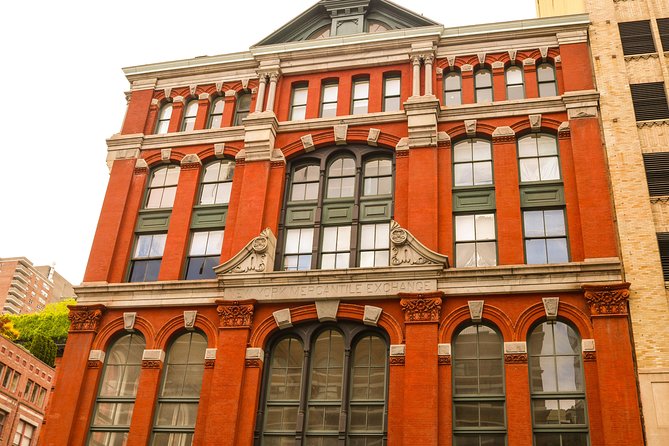
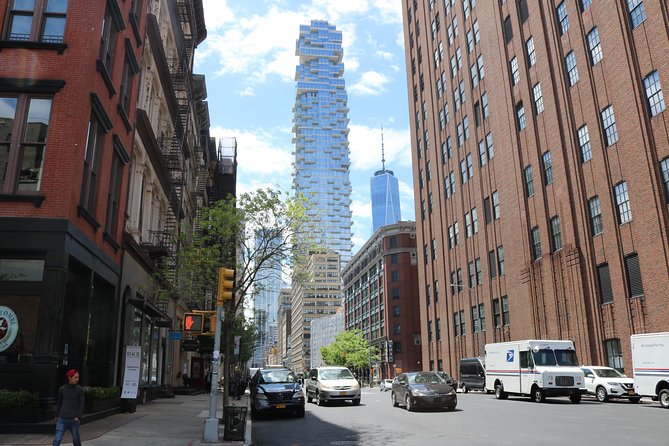
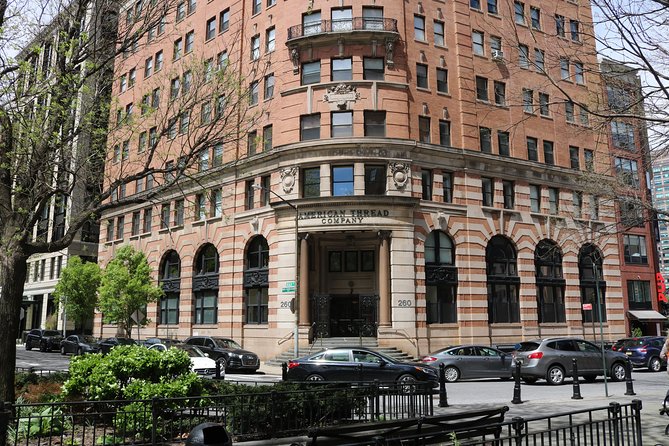
One of the best reasons to choose this walk is the concentration of older cast-iron buildings. You may notice the broad outlines of these structures on your own, but a guide helps you read the small features that give them character.
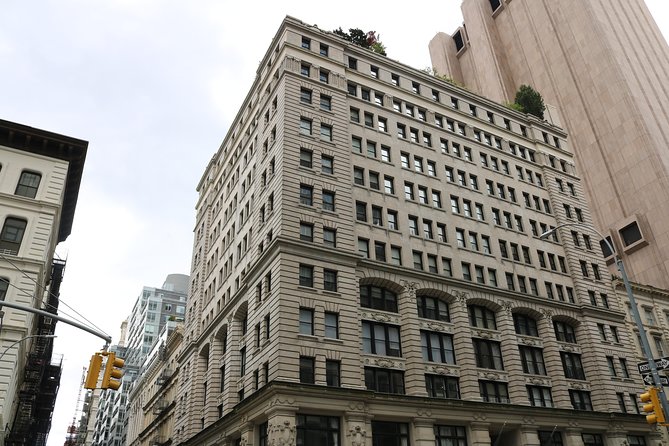
Look up as you walk. Facade decoration, window patterns, building fronts, and changes between neighboring properties can tell you about age, purpose, and status. The tour is designed for people who enjoy beautiful buildings but do not want a technical architecture class.
I especially like the way this subject can appeal to two different audiences. If you already enjoy architecture, you get a closer look at one of Lower Manhattan’s most appealing collections of historic structures. If you normally find building history dry, the guide connects it to people, businesses, neighborhood change, and curious local stories.
The walk also gives you a better sense of Tribeca’s scale. It is not just a collection of isolated landmark facades. Streets, blocks, building types, and later changes work together to create the neighborhood you see today.
A mix of history, architecture, and pop culture
This is not a pure preservation tour. The guide balances architecture and Manhattan history with lighter stories, local recommendations, and pop-culture references. That balance is one of the experience’s strongest features.
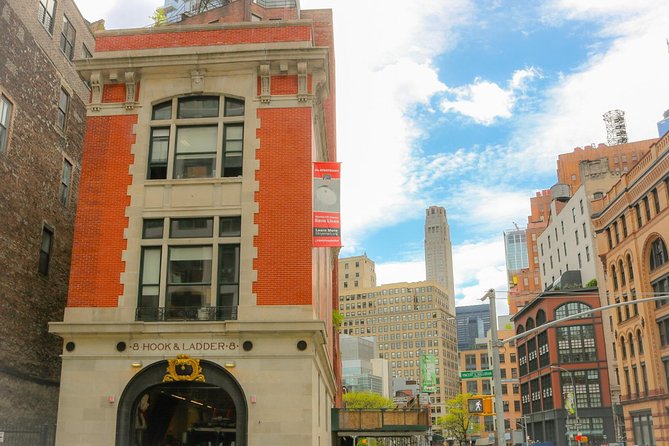
The Ghostbusters stop is the clearest example. Company 8 at 8 Beach Street is famous as the firehouse used in the movie, giving you an obvious photo opportunity. But the stop does not treat the building as nothing more than a film backdrop. You also learn why the firehouse has importance beyond its Hollywood connection.
That makes the stop useful even if you are not a major Ghostbusters fan. Movie lovers get a recognizable location, while history-minded visitors get more context. It is a short stop of about 10 minutes, so it adds variety without taking over the tour.
The route also includes stories that may sound unexpected at first, such as the guide’s mention of New York’s beavers. You should not expect every fact to be a major historical event. Part of the pleasure is collecting odd details that make the neighborhood easier to remember.
More Walking Tours in the USA
- Midtown North NYC Architecture Walking Tour
★ 5.0 · 28 reviews - Financial District NYC Architecture Walking Tour
★ 5.0 · 26 reviews - The Official Art Deco Walking Tour by The Miami Design Preservation League
★ 5.0 · 1,580 reviews - Chicago in a Day: Food, History & Architecture Walking Tour
★ 5.0 · 1,153 reviews
What you can expect from Meghan Sara
Several guides may lead this experience, but Meghan Sara is specifically associated with many of the strongest sessions. Her style is animated, warm, and highly interactive. She uses gestures, humor, and short stories to keep the material from feeling like a textbook.
That matters on an architecture walk. Buildings do not move, and the street can be noisy. A guide who can hold your attention while pointing out details makes a clear difference. Meghan is also praised for adapting the tour to the group’s interests, which is helpful if you want more architecture, more history, or more local food suggestions.
You can expect recommendations for cafes, bakeries, restaurants, and places to eat after the walk. Those suggestions make the tour more useful early in your New York stay, since you can use Tribeca as a lunch or dinner stop later in the trip.
The experience also suits families and mixed-age groups. A 14-year-old can stay engaged because the walk is not built only around dates and formal architectural labels. Film references, unusual stories, and visual details give younger participants several ways into the subject.
Why the small group matters
The maximum group size is 15 people. That is not a private tour, but it is small enough to feel more personal than a large street crowd.
A small group helps when the guide is pointing out a detail on a high facade or explaining something beside a busy street. It also gives you a better chance to ask questions. If the group shares a particular interest, the guide can spend a little more time on it without losing control of the route.
There are limits. This is still a walking tour in New York, and the guide cannot stop for every question or take everyone inside every building. Some interior access is mentioned as a brief possibility in the tour experience, but you should mainly plan for an outdoor route.
The pace is generally manageable, with stops along the way. One useful touch is that the route includes chances to warm up and take restroom breaks when conditions require it. Still, wear comfortable shoes and bring water.
Price, timing, and what the $50 buys you
At $50 per person, this is not the cheapest way to see Tribeca. You can walk the streets for free. The value comes from the interpretation: the guide shows you what to notice, explains how the neighborhood changed, and connects individual buildings to a wider Manhattan story.
The price is easier to justify if you enjoy architecture, local history, or guided storytelling. It is also worthwhile if you are visiting New York for a short time and want a focused introduction to a neighborhood that can otherwise feel expensive but opaque.
The 11 a.m. start is well chosen for a first visit. You finish around 1:30 p.m., leaving time for lunch and more exploring. Since the guide offers food recommendations, I would schedule the walk early in your stay and keep the afternoon flexible.
The tour includes Manhattan recommendation guides, but snacks are not included. Bring something to drink and plan your own food stop. That is not a serious flaw, though it is worth remembering because two and a half hours outdoors can make you hungry.
The tour is booked an average of 25 days ahead, so advance planning makes sense, especially if your New York dates are fixed. The cancellation policy is friendly: you can receive a full refund if you cancel at least 24 hours before the start. Changes or cancellations inside that window are not accepted for a refund.
Ending near Tribeca Park and 8 Beach Street
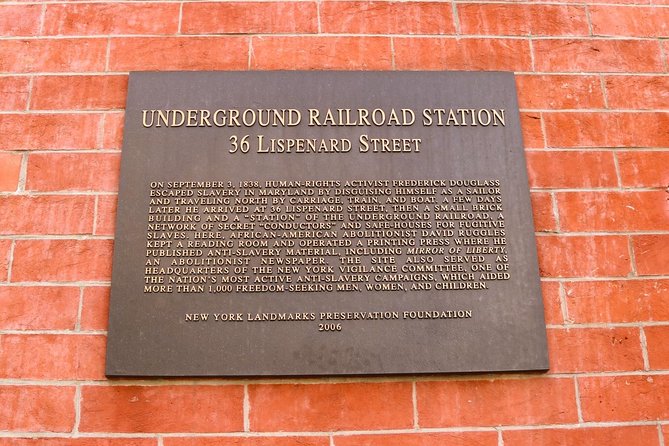
The tour finishes around Tribeca Park, an area described as having a 300-year connection to the early history of New York City. The listed endpoint is 8 Beach Street, which is also the location of the Ghostbusters firehouse. In practical terms, you finish in Tribeca rather than returning to Chambers Street.
That is useful because you can continue exploring, eat nearby, or make your way to another part of Manhattan. It also means you should not book a tight appointment back near the starting point immediately after the walk.
The final location gives the tour a nice sense of progression. You start near Lower Manhattan’s civic history and finish inside the neighborhood itself, after seeing how Tribeca’s past and present fit together.
Who should book this Tribeca walk?
I would recommend it to you if you like buildings, city history, film locations, and local stories in equal measure. It is particularly useful for first-time visitors who want a neighborhood introduction with more substance than a quick photo stop.
Locals can also get real value from it. The route is built around details you may have passed many times without noticing. If you have lived in New York for years, the guide’s unusual facts and architectural focus can still give you a new way to see Tribeca.
Families with older children and teenagers should consider it too. The Ghostbusters connection adds an easy hook, while the pace and storytelling keep the experience from becoming a formal lecture.
I would be less keen on this tour if you dislike walking, need guaranteed indoor access, or want a food-focused experience. Food recommendations are included, but tastings and snacks are not. Also, poor weather can lead to cancellation or a change of date, so keep that in mind when planning.
Should you book the Tribeca Architecture and History Walking Tour?
Book it if you want to understand why Tribeca looks the way it does, not just take pictures of its best-known buildings. The strongest reason to go is the guide-led interpretation, especially with someone like Meghan Sara, who can turn facades, old streets, movie history, and odd local facts into one coherent walk.
At $50, the tour asks you to pay for insight rather than admission. For me, that is fair value when the group stays small and the guide brings the neighborhood to life without assuming you already care about architecture.
Choose it early in your visit, wear good shoes, check the weather, and leave room for lunch afterward. If that sounds like your kind of New York morning, this is a smart way to get beyond the usual Lower Manhattan checklist.
FAQ
How long does the Tribeca Architecture and History Walking Tour last?
The tour lasts approximately 2 hours and 30 minutes.
Where does the tour begin?
It begins at Tweed Courthouse, 52 Chambers Street, New York, NY 10007.
Where does the tour end?
It ends in Tribeca near Tribeca Park, with the listed endpoint at 8 Beach Street, New York, NY 10013.
What time does the tour start?
The stated start time is 11 a.m.
Is the Ghostbusters firehouse included?
Yes. The route includes a stop at Ghostbusters Firehouse Company 8, with about 10 minutes set aside to see it and take photos.
What happens if the weather is poor?
The experience requires good weather. If it is canceled because of poor weather, you can choose another date or receive a full refund. You can also cancel for a full refund if you do so at least 24 hours before the start time.
More History Walks in New York City
- New York City: Flatiron Food, History, and Architecture Tour
★ 4.8 · 43 reviews - Charleston’s Best Highlights: History, Culture & Architecture
★ 5.0 · 422 reviews - Palm Springs Modernism Architecture & History Bike Tour
★ 5.0 · 359 reviews - Charleston: History and Architecture Guided Walking Tour
★ 4.8 · 349 reviews
Newly added in New York City
- Manhattan Architecture Photography Tour★ 5.0 · 24 reviews
- Midtown North NYC Architecture Walking Tour★ 5.0 · 28 reviews
- Financial District NYC Architecture Walking Tour★ 5.0 · 26 reviews
- Holdouts: A NYC Architecture Walking Tour★ 5.0 · 31 reviews
- Midtown Manhattan Art and Architecture Walking Tour★ 5.0 · 32 reviews
- TriBeCa Architecture & History Walking Tour★ 5.0 · 37 reviews
- New York City: Flatiron Food, History, and Architecture Tour★ 4.8 · 43 reviews
- New York City: Art Deco and Architecture Landmarks Tour★ 5.0 · 76 reviews
Walking Tours, compared.

The Official Art Deco Walking Tour by The Miami Design Preservation League
Read our review →
Baroque Architecture and Underground Walking Tour
Read our review →
Chicago in a Day: Food, History & Architecture Walking Tour
Read our review →

Ramblas, Old Town, Gothic and Gaudi Architecture Walking Tour
Read our review →
Chicago’s Secret Interiors Architectural Walking Tour
Read our review →