
Review · WALKING TOURS
Midtown North NYC Architecture Walking Tour
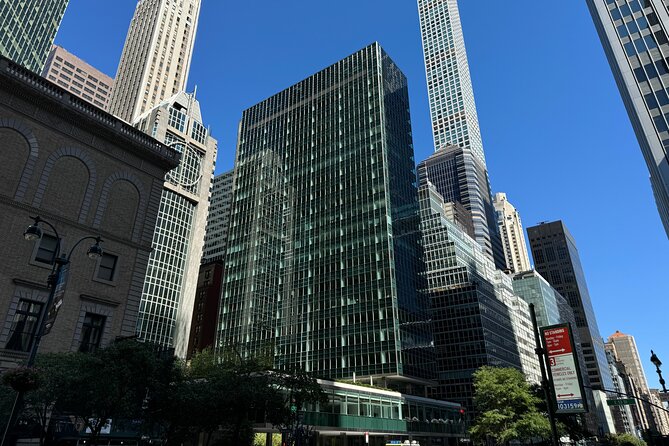
Midtown North is where New York’s architectural eras crowd together. In two hours, you move from Grand Central Terminal and the Chrysler Building to the Seagram Building, Rockefeller Center, MoMA, and the newest supertall towers. The most interesting part is learning how these buildings relate to one another, not simply collecting famous façades.
I like the small maximum of 15 people, which makes it easier to ask questions. I also like the individual headsets, a smart touch on noisy Midtown streets. Guides include architect and urban planner Ivan Shumkov and retired architect William, both of whom can explain technical ideas in plain language.
The main consideration is pace and content. You cover many buildings in about two hours, mostly from the outside, and some explanations may be more technical than casual sightseers expect. Bring comfortable shoes and an interest in how cities are built.
Key points to know before you book
- A compact tour of major styles: See Art Deco, modernism, Gothic Revival, corporate modern, and new supertall design in one walk.
- A strong guide-led experience: Ivan Shumkov and William bring professional architecture backgrounds and welcome questions.
- Personal headsets included: You can hear the guide without pressing into a sidewalk crowd.
- A useful Midtown route: Start near the Harvard Club and finish at Apple Fifth Avenue, passing through several of Manhattan’s most important avenues.
- Small-group format: The tour accepts no more than 15 people, creating a more conversational setting.
- Good value for architecture fans: At $59, the price is reasonable if you want interpretation, context, and access to an expert rather than a self-guided list of buildings.
Why this Midtown walk is more than a checklist of buildings
Many New York sightseeing walks point at a tower, give you its date, and move on. This one aims to explain why Midtown looks the way it does. You hear about architects, clients, construction choices, city rules, and the changing idea of what a New York office building should be.
That difference matters. A building can look impressive without making much sense. With a guide, you begin to notice the setback of a tower, the relationship between a plaza and the street, or the reason one façade feels calm while another feels theatrical.
The route also gives you a fast lesson in New York architecture. Grand Central introduces Beaux-Arts grandeur and transportation planning. The Chrysler Building brings Art Deco glamour. The Seagram Building represents disciplined modernism, while Rockefeller Center shows how architecture, art, commerce, and public space can work together.
You should not expect long indoor visits. The scheduled stops are short, often five or ten minutes, and the buildings are discussed from public areas. That keeps the walk moving, but it also means the value comes from the guide’s explanation rather than from entering every landmark.
More Walking Tours in New York City
- Tribeca Architecture And History Walking Tour
★ 5.0 · 141 reviews - TriBeCa Architecture & History Walking Tour
★ 5.0 · 37 reviews - Midtown Manhattan Art and Architecture Walking Tour
★ 5.0 · 32 reviews
Meeting at the Harvard Club and getting oriented
The tour starts at the Harvard Club of New York City at 35 West 44th Street. That is a fitting opening because the area around 44th Street quickly introduces the mix of private clubs, office towers, hotels, churches, and major public institutions that define Midtown.
The Harvard Club itself receives a ten-minute visit. You can expect the guide to use it as a way to discuss the building and its setting rather than treat it as a full museum stop. Since the club is a private institution, do not assume the tour includes an extended interior visit.
The walk then moves toward Grand Central Terminal. Travel time is part of the two-hour duration, so this is not two hours of stationary talks. You should allow for a steady urban walk, street crossings, and pauses while the guide positions the group where a building can be seen clearly.
The included headsets are particularly useful here. Midtown traffic, delivery trucks, subway grates, and crowds can swallow a normal speaking voice. An individual headset lets you look upward while still following the explanation.
Grand Central Terminal and the city before skyscrapers
Grand Central Terminal is one of the route’s best early stops because it shows that New York’s great buildings were not created in isolation. The terminal is tied to rail travel, grand public architecture, and the growth of Midtown as a business center.
The stop is scheduled for about ten minutes. That is enough for a focused discussion, though not enough for a full tour of the terminal’s interior details. If you want time for the main concourse, celestial ceiling, and side passages, plan to return on your own.
What makes this stop useful is the contrast it creates. Grand Central is heavy, ceremonial, and built to make arrival feel important. Later towers on the route are lighter, more abstract, and shaped by corporate needs. The guide can help you see that shift as part of New York’s changing identity.
Seagram Building and the clean logic of modernism
The Seagram Building receives another ten-minute stop. Designed by Ludwig Mies van der Rohe with Philip Johnson, it is one of the key buildings for understanding modern corporate architecture in New York.
You will discuss the building from outside, focusing on its disciplined façade and the open plaza in front. The stop is valuable because it shows that modernism was not only about using steel, glass, and simple lines. It was also about setting a tower back from the avenue and giving the city a public space.
This is the kind of place where a trained guide adds real value. Without context, the Seagram Building can look like a dark glass office tower. With context, you can consider its proportions, materials, relationship to the street, and influence on later office design.
If you prefer grand ornament on every façade, this stop may feel restrained. That is part of the point. The tour helps you understand why restraint itself became a powerful architectural statement.
More Walking Tours in the USA
- Holdouts: A NYC Architecture Walking Tour
★ 5.0 · 31 reviews - Financial District NYC Architecture Walking Tour
★ 5.0 · 26 reviews - The Official Art Deco Walking Tour by The Miami Design Preservation League
★ 5.0 · 1,580 reviews - Chicago in a Day: Food, History & Architecture Walking Tour
★ 5.0 · 1,153 reviews
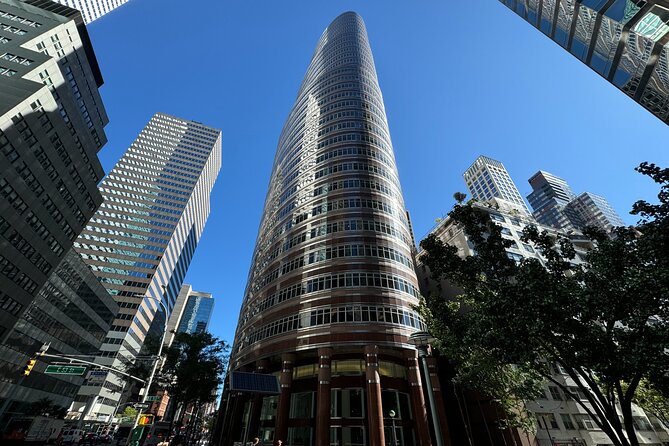
The new JPMorgan Chase tower beside old Midtown
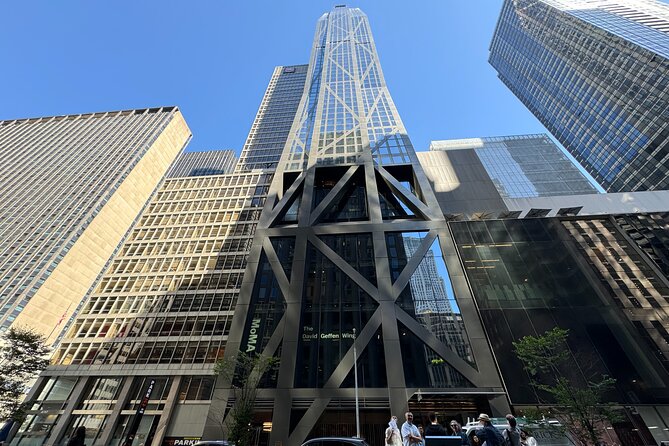
The route continues to the new JPMorgan Chase office tower between Vanderbilt Avenue and Park Avenue. The stop lasts about five minutes, but it provides a useful comparison with the older buildings nearby.
Here, the subject is not just a single landmark. It is the replacement and renewal of Midtown office space. New construction must fit into a district already filled with historic towers, transit infrastructure, protected views, and demanding commercial needs.
This is also where the walk becomes especially relevant to present-day New York. You are not looking only at famous buildings from the past. You are seeing how the city continues to build upward and reshape its business center.
Chrysler Building and Art Deco drama
The Chrysler Building is a quick five-minute stop, but it is one of the route’s visual highlights. William van Alen designed it in 1930, and its stainless-steel crown remains one of the clearest expressions of Art Deco in Manhattan.
A short pause is enough to study the famous upper decoration and the way the tower narrows as it rises. The building was designed to suggest speed, machinery, and modern luxury, which makes it a sharp contrast with the Seagram Building’s quiet geometry.
The drawback is simple: five minutes passes quickly. If you want detailed photographs or a long look at the crown, you may need to return after the tour. The walk gives you the architectural reading. Your own later visit gives you time to linger.
St. Patrick’s Cathedral and the Gothic Revival contrast
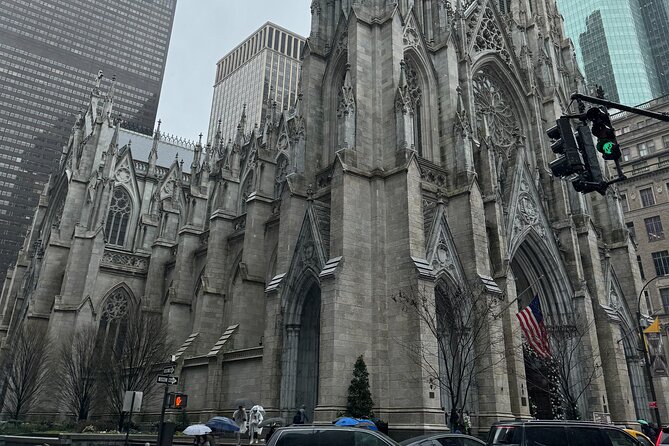
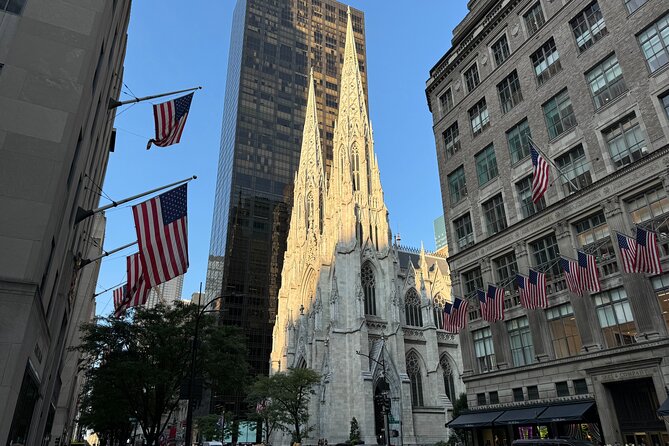
St. Patrick’s Cathedral receives another five-minute visit. Its Neo-Gothic form provides a strong change of mood after the corporate towers and Art Deco skyline.
The cathedral is important not only as a religious building but also as a reminder that Midtown’s identity was never purely commercial. Its vertical stone architecture, pointed forms, and elaborate detail create a visual argument that differs sharply from the glass towers around it.
A brief stop can help you compare old and new ideas of height. The cathedral rises through Gothic structure and ornament. Nearby office towers rise through steel, glass, elevators, and economics. Seeing them in the same sequence makes the contrast easier to grasp.
The tour does not promise a lengthy interior visit, so treat this as an architectural and urban-design stop rather than a cathedral tour.
Lever House and the changing corporate office
Lever House by Skidmore, Owings & Merrill, completed in 1953, is scheduled for five minutes. Its design is a useful next step after the Seagram Building because it shows another version of mid-century corporate modernism.
The building’s form and façade helped establish the image of the modern office as a clean, carefully controlled slab set above a more open base. You can look at how the tower meets the street and how the architects handled the relationship between vertical office space and public ground.
This stop works best if you pay attention to details that are easy to miss while rushing along Park Avenue. Ask the guide about the building’s materials, proportions, and role in the history of office design. The small group and headsets make that practical.
MetLife Building and the scale of Park Avenue
The MetLife Building, designed by The Architects Collaborative in 1962, is another five-minute stop. It gives you a chance to consider a much larger and more forceful office presence near Grand Central.
Its scale can be hard to judge from a single viewpoint. A guide can help you read the mass of the building, its position over the terminal area, and the way Midtown’s transportation network shaped the towers above it.
This is one of the tour’s useful comparisons. You see a sequence of office buildings rather than isolated icons. The Seagram Building, Lever House, MetLife Building, and JPMorgan Chase tower represent different moments in corporate New York, each responding to its own era and needs.
MoMA, Rockefeller Center, and the heart of Fifth Avenue
The Museum of Modern Art is seen from outside, with about ten minutes devoted to discussion. That limitation is worth noting. The tour does not include museum admission or time inside the galleries, but the exterior provides a chance to discuss how a major cultural institution fits into Midtown’s commercial core.
For art and architecture fans, this is a natural pause. The route has already covered corporate design, religious architecture, transportation, and skyscrapers. MoMA adds the question of how modern art is presented to the public.
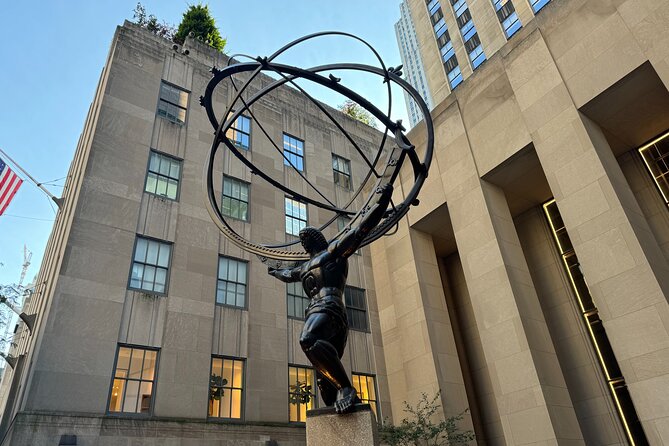
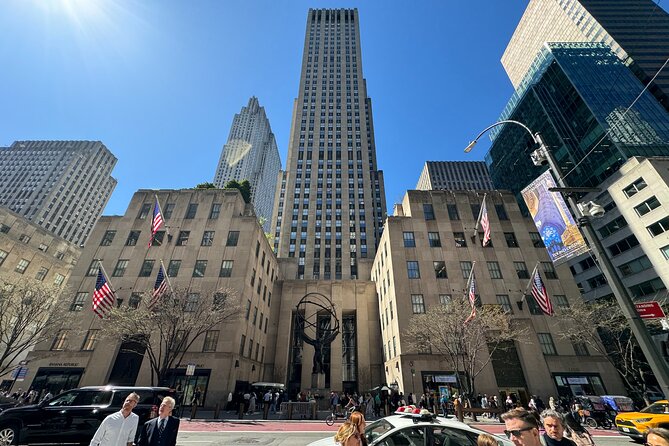
Rockefeller Center follows with another ten-minute stop. This is one of the strongest parts of the route because Rockefeller Center is not merely one building. It is a coordinated group of towers, plazas, artworks, shops, and public spaces.
The guide can explain how the center was planned as an ensemble. Look beyond the well-known plaza and skating rink. Notice the way buildings frame open space and how sculpture and decoration help create a unified identity.
This is also a good place to ask questions. One participant used the guide’s expertise to ask about the stern expression of the Atlas statue. That sort of question is exactly what a small guided walk handles well. You are encouraged to look closely, not simply accept the official postcard view.
Steinway Hall and the newest supertall towers
The route passes Steinway Hall and Steinway Tower by SHoP Architects, completed in 2022. This is a pass-by rather than a scheduled stop, but it adds a current chapter to the walk.
The tower helps you consider the return of very slender, very tall residential buildings to Manhattan. Its presence also raises practical questions about land value, engineering, views, and the changing mix of uses in Midtown.
The final listed stop is Central Park Tower by Adrian Smith and Gordon Gill Architecture, completed in 2023. You spend about five minutes here before ending at Apple Fifth Avenue, 767 Fifth Avenue.
Central Park Tower lets the guide bring the story into the present. After seeing early twentieth-century terminals, Art Deco towers, postwar office buildings, and Rockefeller Center, you finish with a new supertall shaped by current technology and property demand.
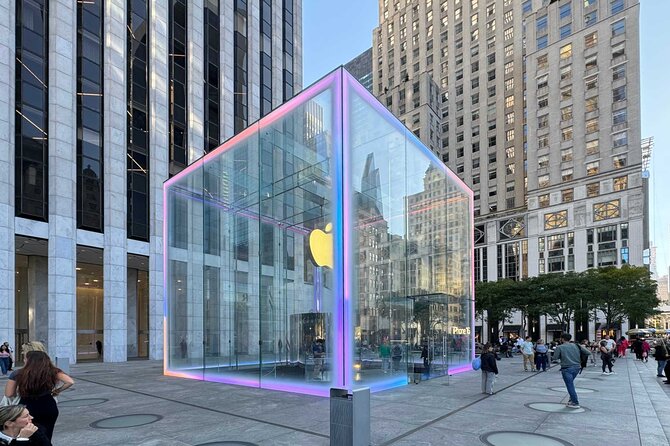
The route ends near Apple Fifth Avenue, which is convenient for continuing along Fifth Avenue or into Central Park. The finish is not a formal attraction visit. It is a practical endpoint in one of Manhattan’s most walkable sightseeing areas.
The guides and the value of expert interpretation
The guide is the main reason to choose this walk over a self-guided stroll. Ivan Shumkov is described as an architect, urban planner, Columbia professor, and Harvard graduate. William is a retired architect and current city employee. Both bring professional experience rather than only memorized dates.
Ivan has also tailored private walks around specific interests, including construction, art, engineering, and a family member’s preferred buildings. That suggests a flexible teaching style, though a regular shared tour will not necessarily receive the same level of customization as a private booking.
The explanations can become technical. If terms about structure, planning, materials, or design theory lose you, ask for a simpler explanation. The guide welcomes questions, and the personal headsets make it easier to stay involved without interrupting the group.
Language support is listed for English, Spanish, and Italian in person. The product is offered in English, so confirm the language arrangement you need when booking.
Is $59 a fair price?
At $59 per person, this is not the cheapest way to walk through Midtown. You can see many of these buildings for free with a map and a phone.
The price makes more sense if you want interpretation. You are paying for about two hours with an architecture specialist, a route that connects buildings across several eras, personal audio equipment, and a maximum group size of 15. All fees and taxes are included. Tips are not.
I consider that a fair price for a serious architecture introduction, especially if you are new to New York or want to understand more than the skyline’s surface. It is less compelling if you mainly want interior access, long photo stops, or a relaxed pace with little technical discussion.
Who should book this walk?
I would recommend it to first-time visitors who want a useful introduction to Midtown, architecture students, design fans, urban planning enthusiasts, and New Yorkers who suspect they have been walking past important buildings without noticing them.
It also suits families with one particularly architecture-minded member, since the guide can answer detailed questions. A private version may be better for a birthday outing or a group with a narrow interest in engineering, construction, or a specific period.
You should think twice if two hours of exterior commentary sounds tiring. The route includes multiple stops and city walking, and the schedule is fairly full. Comfortable shoes are sensible, and good weather matters because the experience can be canceled or moved if conditions are poor.
Should you book the Midtown North Architecture Walking Tour?
Book it if you want Midtown to make more sense. The strongest feature is not the number of landmarks. It is the connection between them, from Grand Central’s grand civic design to the Chrysler Building’s Art Deco sparkle, Rockefeller Center’s planned public world, and the latest supertall towers.
At $59, the tour offers good value for readers who enjoy buildings and want an expert’s eye. Choose it with realistic expectations: most stops are outside, the timing is brisk, and some material may be technical. If that sounds like a benefit rather than a burden, this is a smart way to see New York with new eyes.
Free cancellation is available up to 24 hours before the start time. Cancellations inside that window are not refunded, and poor-weather cancellations offer a different date or a full refund.
FAQ
How long is the Midtown North Architecture Walking Tour?
The tour lasts approximately two hours, and travel time between stops is included in that duration.
Where does the tour begin?
It begins at the Harvard Club of New York City, 35 West 44th Street, New York, NY 10036.
Where does the tour end?
The walk ends at Apple Fifth Avenue, 767 Fifth Avenue, New York, NY 10153.
What buildings are included?
The route includes Grand Central Terminal, the Seagram Building, the new JPMorgan Chase tower, the Harvard Club, the Chrysler Building, St. Patrick’s Cathedral, Lever House, the MetLife Building, MoMA from outside, Rockefeller Center, Steinway Hall and Tower as a pass-by, and Central Park Tower.
How large is the group?
The tour has a maximum of 15 people.
Are headsets provided?
Yes. Each person receives a professional individual headset.
What languages are available?
The in-person guide languages are English, Spanish, and Italian. The experience is listed as offered in English.
Can I cancel for a refund?
You can cancel at least 24 hours before the start time for a full refund. Cancellations or changes made less than 24 hours before the start time are not refunded or accepted.
Newly added in New York City
- Manhattan Architecture Photography Tour★ 5.0 · 24 reviews
- Financial District NYC Architecture Walking Tour★ 5.0 · 26 reviews
- Holdouts: A NYC Architecture Walking Tour★ 5.0 · 31 reviews
- Midtown Manhattan Art and Architecture Walking Tour★ 5.0 · 32 reviews
- TriBeCa Architecture & History Walking Tour★ 5.0 · 37 reviews
- New York City: Flatiron Food, History, and Architecture Tour★ 4.8 · 43 reviews
- New York City: Art Deco and Architecture Landmarks Tour★ 5.0 · 76 reviews
- 3 Hour Midtown Manhattan Architectural Tour★ 5.0 · 81 reviews
Walking Tours, compared.
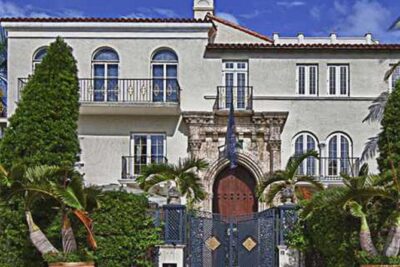
The Official Art Deco Walking Tour by The Miami Design Preservation League
Read our review →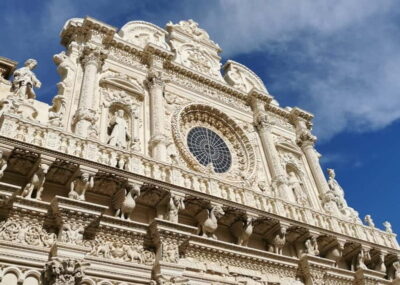
Baroque Architecture and Underground Walking Tour
Read our review →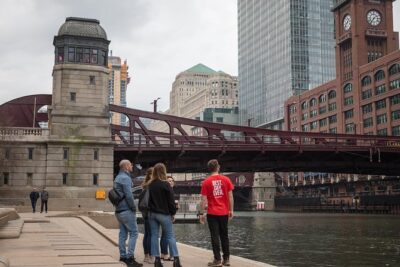
Chicago in a Day: Food, History & Architecture Walking Tour
Read our review →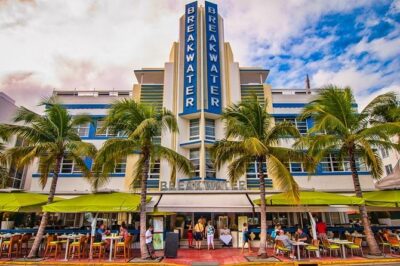

Ramblas, Old Town, Gothic and Gaudi Architecture Walking Tour
Read our review →
Chicago’s Secret Interiors Architectural Walking Tour
Read our review →

Browse the lists this tour appears in