Review · WALKING TOURS
TriBeCa Architecture & History Walking Tour
TriBeCa’s best stories are written into its buildings. On this 2.5-hour walk, you trace the neighborhood from farmland to an industrial district, then to one of New York’s most expensive residential areas. The route includes the A. T. Stewart Building, Frederick Hotel, Ghostbusters Firehouse, and the hard-to-find Staple Street sky bridge.
I like the way this tour connects architecture with social history, rather than treating old facades as decoration. I also like the practical local advice at the end, including affordable brunch ideas, photo spots, and speakeasies.
The main thing to consider is the pace. You’ll be on your feet for most of the morning, and the tour runs rain or shine. If the weather turns severe, the operator offers a new date or a full refund, but you still need comfortable shoes and proper clothing.
Key points at a glance

- TriBeCa’s farmland-to-factory story: Follow the neighborhood’s shift from open countryside to a major 19th-century industrial center.
- Architecture you can read from the sidewalk: Compare former dry-goods warehouses, commercial landmarks, hotels, and newer luxury residences.
- The Ghostbusters Firehouse: Hear the real history behind one of New York’s most recognizable movie locations.
- The Staple Street sky bridge: Find an unusual overhead passage that is easy to miss without a guide.
- A guide who brings energy: Meghan Sara is frequently praised for clear explanations, humor, patience, and lively storytelling.
- Useful New York tips: Leave with suggestions for budget-friendly brunch, hidden speakeasies, and good places to take photographs.
Why TriBeCa works so well on foot
TriBeCa is a good neighborhood for walking because its identity changes from block to block. The name refers to the area below Canal Street, and the streets carry layers of New York’s past without requiring a museum ticket or a long subway ride between sights.
You begin near the southern end of TriBeCa and walk north. That direction matters. Instead of seeing a random set of handsome buildings, you follow the neighborhood’s development in sequence: rural land, commerce, industry, warehouses, housing, and modern reinvention.
I find this kind of tour more useful than a quick photo stop. You learn why the buildings look the way they do and how their original purpose shaped the streets around them. A former warehouse is not simply an old building with large windows. It points to the goods, workers, businesses, and transport systems that made New York grow.
The walking format also lets the guide point out small details that are easy to miss from a bus or taxi. You can pause, look upward, compare building materials, and ask why one structure survived while another changed use.
More Walking Tours in New York City
- Tribeca Architecture And History Walking Tour
★ 5.0 · 141 reviews - Midtown Manhattan Art and Architecture Walking Tour
★ 5.0 · 32 reviews - Holdouts: A NYC Architecture Walking Tour
★ 5.0 · 31 reviews
From farmland to an industrial address
TriBeCa began as countryside on the edge of early New York. Over time, the area was absorbed into a growing city. Streets replaced open land, and commercial activity moved in as New York became a major port and trading center.
The tour explains this change through the neighborhood’s buildings. By the 19th century, TriBeCa had become an industrial hub, with dry-goods warehouses and commercial premises serving the city’s expanding economy.
That shift helps explain the district’s broad, sturdy architecture. Buildings made for storage and trade needed different proportions from private townhouses. Look for large windows, strong masonry, substantial loading areas, and upper floors designed for work rather than domestic life.
The useful point here is that TriBeCa’s architecture is practical before it is pretty. Its handsome appearance today can hide a working past. The guide connects those old commercial forms to New York’s rise as a business center.
The story also gives you a better way to understand present-day TriBeCa. Luxury residences occupy buildings that once handled dry goods. The neighborhood’s current prices are part of a long cycle of change, not an isolated modern trend.
The A. T. Stewart Building and New York firsts
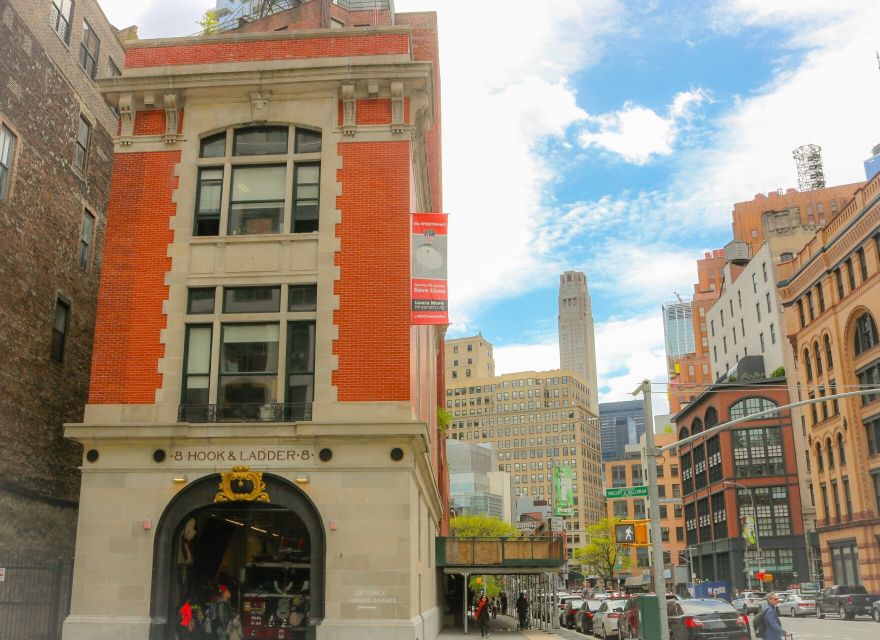
The A. T. Stewart Building is one of the tour’s key stops. It brings you into the world of early New York retail and commerce, when new kinds of stores and commercial buildings were changing how the city worked.
The tour also points out the Frederick Hotel and other sites connected with New York firsts. These stops are valuable because they widen the story beyond TriBeCa itself. You are not only looking at local buildings. You are seeing how the neighborhood helped shape the city’s habits, business culture, and public image.
A good guide makes these connections clear without turning the walk into a list of dates. Meghan Sara, the guide most often named in the available tour information, is described as friendly, funny, patient, and full of useful detail. She has covered subjects such as architectural styles, air rights, historic events, and the stories tied to individual streets.
Air rights are especially worth hearing about in New York. They help explain why development can be so complex, and why the value of a building is not always limited to the land directly beneath it. Even if you know little about real estate, this idea gives you a better sense of how old neighborhoods continue to change.
Warehouses that became homes
TriBeCa’s former warehouses are among its defining features. Their original owners built them for work, storage, and trade. Later, many were adapted into residential spaces, helping turn the district into a fashionable place to live.
The tour explores this conversion instead of presenting it as a simple success story. Reusing old buildings can protect architectural character, but it also changes who can afford to live in the neighborhood and how the streets feel.
As you walk, you can compare the solid older structures with modern buildings that have joined them. The contrast is part of TriBeCa’s character. Some blocks retain an industrial look, while newer construction signals the area’s high-end present.
I like this part of the walk because it gives you a practical way to read adaptive reuse. Notice the difference between a building designed for merchandise and one designed for residents. The windows, entrances, floor plans, and street-level spaces all tell you something about the building’s former life.
You should not expect interior visits to these private residences. The value is in understanding the exteriors and the changes they represent. For anyone interested in cities, this may be more rewarding than simply seeing another luxury address.
More Walking Tours in the USA
- Midtown North NYC Architecture Walking Tour
★ 5.0 · 28 reviews - Financial District NYC Architecture Walking Tour
★ 5.0 · 26 reviews - The Official Art Deco Walking Tour by The Miami Design Preservation League
★ 5.0 · 1,580 reviews - Chicago in a Day: Food, History & Architecture Walking Tour
★ 5.0 · 1,153 reviews
The Ghostbusters Firehouse beyond the movie
The Ghostbusters Firehouse is an easy crowd-pleaser, but the tour does more than point at a movie facade. You learn the building’s real story and the way famous screen locations become part of a neighborhood’s public identity.
This stop works well for mixed groups. Film fans get a recognizable landmark, while architecture and history fans get context beyond the movie. It is also a useful reminder that New York’s most photographed places often have lives that began long before the camera arrived.
The firehouse is one of the tour’s more accessible moments. You do not need specialist knowledge to enjoy it, and it breaks up the heavier material about industry, development, and social change.
Still, keep your expectations realistic. This is a walking tour, not a movie-location tour built around multiple film sites. The Ghostbusters Firehouse is one memorable stop within a broader architectural and historical route.
Finding the Staple Street sky bridge
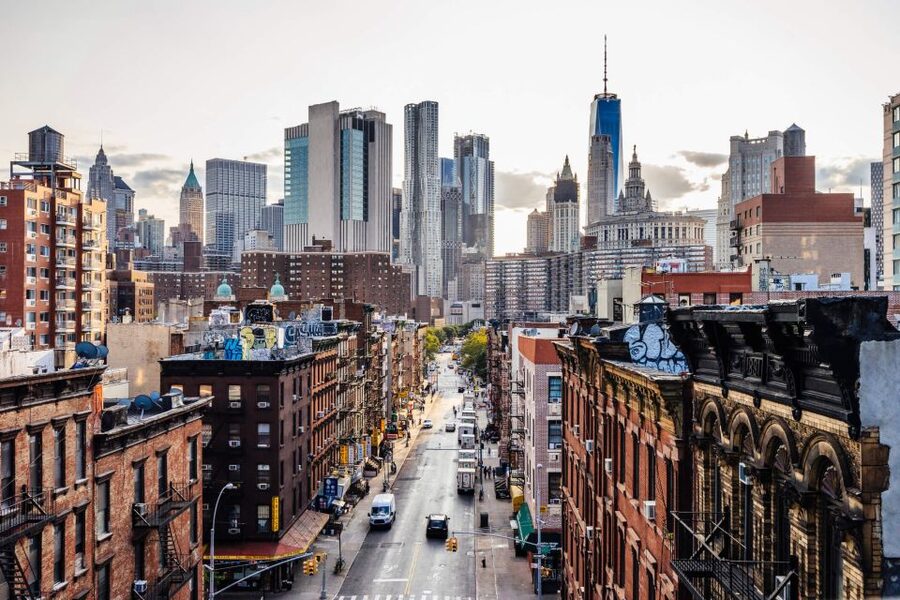
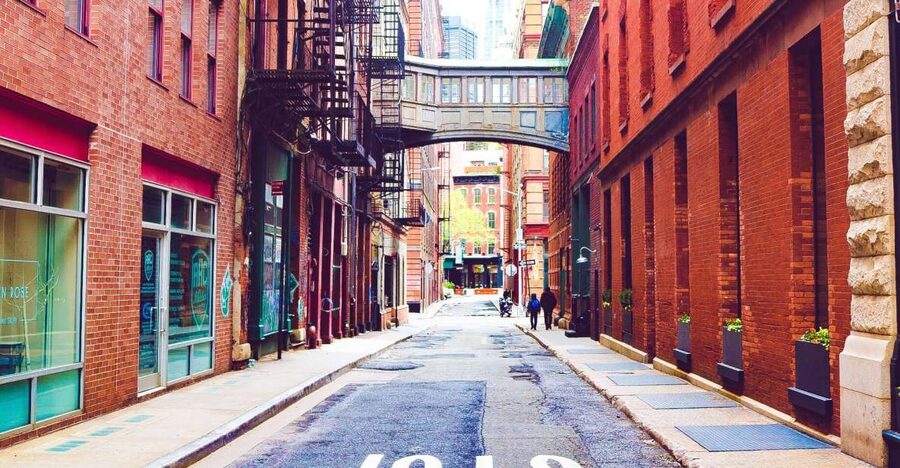
The Staple Street sky bridge is one of the most unusual features on the route. It links buildings above the street and can be surprisingly hard to find if you do not know where to look.
This is exactly the kind of place where a walking guide earns the $40 price. You might pass near it on your own and never notice the view above you. The guide gives you the location, explains its place in the neighborhood, and creates a pause for photographs.
The sky bridge also illustrates TriBeCa’s mix of old and new uses. A structure that might once have served a practical business need now attracts attention as an architectural oddity. It shows how ordinary working infrastructure can become a memorable city sight.
Bring a phone or camera if you enjoy urban details. The tour includes advice on good photo spots, and this is likely to be one of the places you will want to photograph. Be mindful that the tour is conducted from public streets and does not promise access inside private buildings.
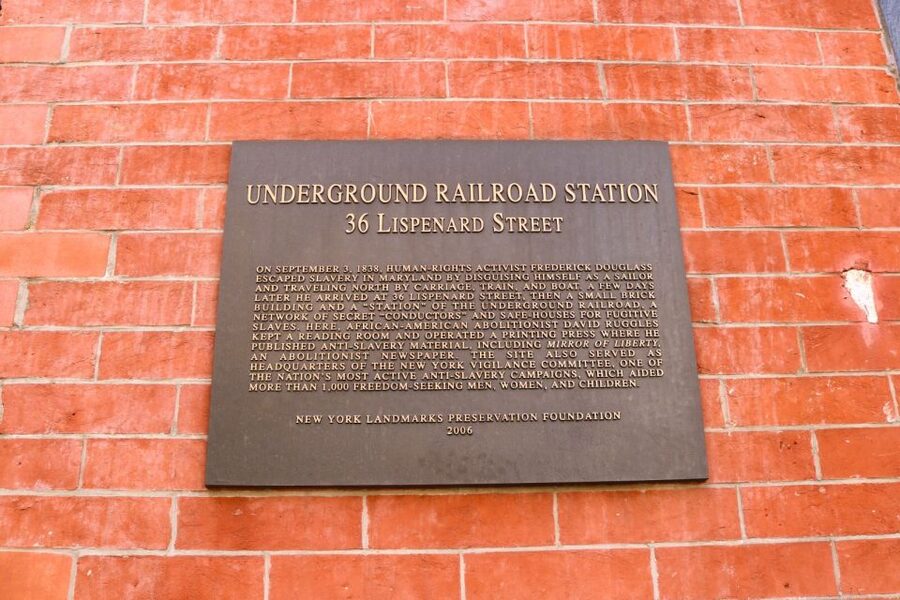
TriBeCa’s less visible fight against slavery
One of the more important parts of the tour concerns TriBeCa’s role in the 19th-century fight against slavery. This is the neighborhood’s less obvious history, and it adds moral and political weight to a route that could otherwise focus only on buildings.
The subject is useful because New York is often presented through commerce, immigration, entertainment, and architecture, while its connection to the slavery debate can receive less attention. TriBeCa’s streets were part of those wider arguments and movements.
The tour presents this history as part of the neighborhood itself, not as a separate lecture. That approach helps you connect civic events to actual places. A street corner or building can carry a story about business and politics at the same time.
If you prefer tours that stick only to famous landmarks, this portion may feel more serious than the movie-location stops. I see that as a strength. It gives the walk greater balance and helps explain New York as a city shaped by conflict as well as commerce.
The guide makes the difference
A neighborhood tour depends heavily on the person leading it. Here, the guide is a New York City certified professional, and the strongest praise centers on the delivery: clear explanations, energy, humor, and a willingness to answer questions.
Meghan Sara is the guide named most often in the supplied information, though guide availability can vary. Her style is described as outgoing and engaging. People particularly valued the special details she pointed out, including air rights, architectural styles, and stories about individual buildings.
Two short breaks are part of the experience, which helps on a 2.5-hour walk. They give you time to rest, take photographs, or ask a question without trying to keep pace while listening.
The route is conducted in English. If you enjoy asking questions, say so early. The walk seems designed to support conversation, and the guide’s patience is a real advantage for anyone who wants more than a memorized speech.
Is $40 a fair price?
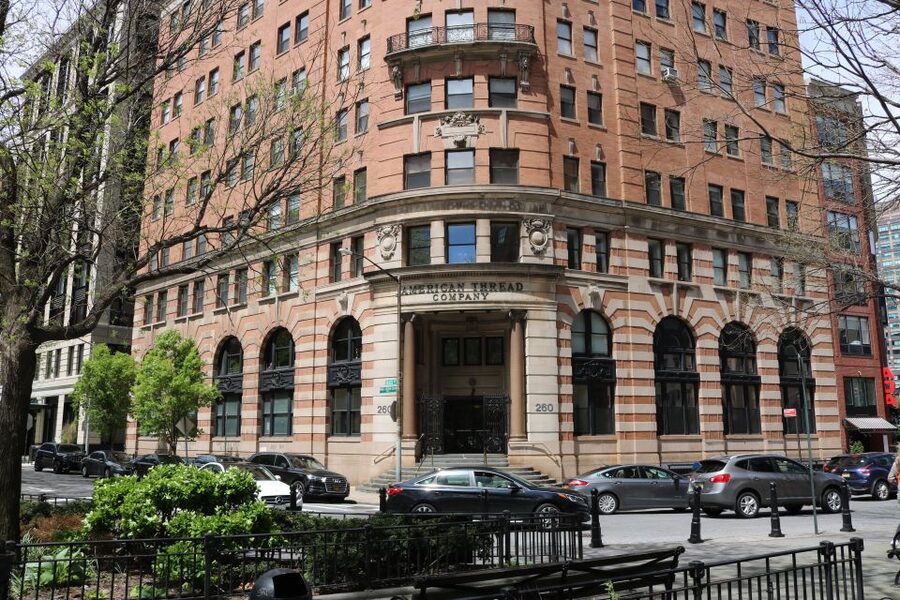
At $40 per person, this is not the cheapest way to spend a morning in Manhattan. You can walk through TriBeCa for free, and many of the sights are visible from public streets.
The value comes from the explanation and the route planning. A guide turns separate buildings into one clear story. You learn why the neighborhood changed, what its architecture was built to do, and how its public image evolved.
I think the price is fair if you care about architecture, New York history, urban change, or photography. It is also a good choice early in a New York visit, since the neighborhood recommendations can help with the rest of your day. The guide offers suggestions for affordable brunch, speakeasies, and photo locations.
The cost is less compelling if you want interior access, major museum admissions, or a broad overview of all Manhattan. This is a focused neighborhood walk. Its strength is detail, not the number of attractions checked off.
A 5 out of 5 rating from 37 ratings suggests a very strong response to the experience, especially to the guide’s presentation. I would still choose it for its subject matter rather than rely on the rating alone. TriBeCa is best suited to people who enjoy looking closely and listening for the story behind a facade.
Timing, meeting point, and comfort
The tour usually operates in the morning and lasts 2.5 hours. Morning timing works well in New York because you can pair the walk with brunch afterward, using the guide’s budget-friendly suggestions.
Meet under the black Metro Tours umbrella. The nearest subway options are Brooklyn Bridge City Hall on the 4, 5, 6, J, or Z lines; City Hall on the R or W; and Park Place on the 2 or 3.
The tour is wheelchair accessible. Still, contact the operator if you need specific route details, since accessibility can depend on street conditions and the exact route used that day.
Wear comfortable shoes. You will be walking outdoors, stopping often, and looking up at buildings. Bring clothing suited to the forecast, plus sunscreen or an umbrella as needed.
The tour runs in rain or shine. If conditions become too severe, the operator will contact you by email, phone, or text and offer a new date or full refund. You can also cancel up to 24 hours ahead for a full refund, and the reserve-now, pay-later option keeps your plans flexible.
Who should book this TriBeCa walk?
I would choose this tour if you like architecture with a human story. It suits first-time New York visitors who want something beyond the usual observation decks, as well as repeat visitors looking for a quieter, more focused neighborhood.
It is a strong match for photographers, history fans, movie-location enthusiasts, and anyone curious about how old commercial buildings find new life. Families with older children may also enjoy the mix of Ghostbusters, unusual architecture, and city history.
You may want to skip it if you dislike walking, prefer large attractions with indoor seating, or want a tour in a language other than English. It is also not the right pick if your main goal is entering historic buildings, since the experience centers on the streets and exteriors.
My verdict on the TriBeCa Architecture and History Walking Tour
Book it if you want to understand TriBeCa rather than simply photograph it. The route covers a surprising range: farmland, industry, retail, adaptive reuse, movie history, air rights, slavery-era activism, and modern luxury housing.
The best reason to go is the combination of places that are easy to miss and stories that are hard to assemble alone. The Staple Street sky bridge and Ghostbusters Firehouse provide memorable landmarks, while the A. T. Stewart Building, Frederick Hotel, warehouses, and social history give the neighborhood depth.
At $40, the tour earns its keep through its guide and its connections. Come ready to walk, listen, and look above street level. If that sounds like your kind of New York morning, this is a smart, focused choice.
FAQ
How long is the TriBeCa Architecture and History Walking Tour?
The tour lasts 2.5 hours and is usually available in the morning.
What language is the tour conducted in?
The live guided tour is conducted in English.
Where does the tour meet?
Look for the black Metro Tours umbrella. Nearby subway stations include Brooklyn Bridge City Hall, City Hall, and Park Place.
Which subway lines are closest to the meeting point?
You can use the 4, 5, 6, J, or Z to Brooklyn Bridge City Hall; the R or W to City Hall; or the 2 or 3 to Park Place.
Is the tour wheelchair accessible?
Yes, the activity is listed as wheelchair accessible.
Does the tour operate in bad weather?
Tours go out rain or shine. If the weather becomes too severe, the operator will contact you with an option to rebook or receive a full refund.
What should I bring?
Bring comfortable shoes and clothing suited to the weather. Sunscreen and an umbrella may be useful, depending on the forecast.
Can I cancel for a full refund?
Yes. You can cancel up to 24 hours before the tour for a full refund.
More History Walks in New York City
- New York City: Flatiron Food, History, and Architecture Tour
★ 4.8 · 43 reviews - Charleston’s Best Highlights: History, Culture & Architecture
★ 5.0 · 422 reviews - Palm Springs Modernism Architecture & History Bike Tour
★ 5.0 · 359 reviews - Charleston: History and Architecture Guided Walking Tour
★ 4.8 · 349 reviews
Newly added in New York City
- Manhattan Architecture Photography Tour★ 5.0 · 24 reviews
- Midtown North NYC Architecture Walking Tour★ 5.0 · 28 reviews
- Financial District NYC Architecture Walking Tour★ 5.0 · 26 reviews
- Holdouts: A NYC Architecture Walking Tour★ 5.0 · 31 reviews
- Midtown Manhattan Art and Architecture Walking Tour★ 5.0 · 32 reviews
- New York City: Flatiron Food, History, and Architecture Tour★ 4.8 · 43 reviews
- New York City: Art Deco and Architecture Landmarks Tour★ 5.0 · 76 reviews
- 3 Hour Midtown Manhattan Architectural Tour★ 5.0 · 81 reviews
Walking Tours, compared.

The Official Art Deco Walking Tour by The Miami Design Preservation League
Read our review →
Baroque Architecture and Underground Walking Tour
Read our review →
Chicago in a Day: Food, History & Architecture Walking Tour
Read our review →

Ramblas, Old Town, Gothic and Gaudi Architecture Walking Tour
Read our review →
Chicago’s Secret Interiors Architectural Walking Tour
Read our review →