
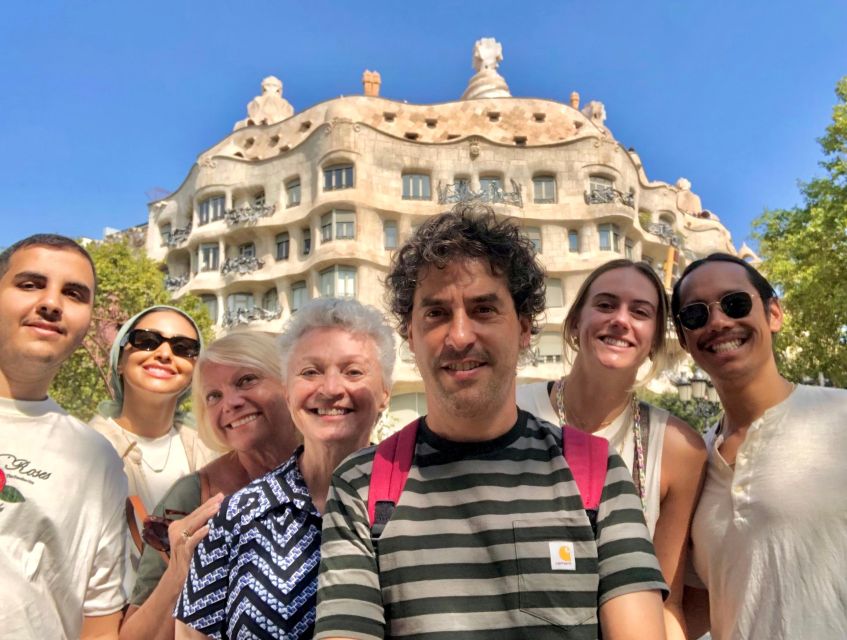
Review · GAUDí TOURS
Gaudí & Modernism with a Historian.
Barcelona’s Modernisme makes far more sense when you see it as a product of industrial change, ambition, and social tension, not just as a collection of fanciful buildings. Historian Mariano Pesin connects Gaudí’s work to the city’s rise as an international metropolis, then points out details you might otherwise walk past.
I like two things right away: the tour treats Gaudí as part of a wider period rather than the whole story, and it uses original objects from the era to make that period feel less distant. I also like the calm coffee stop at the end, where you can continue the conversation in a beautiful courtyard.
The main drawback is simple: this is a walking tour with a fixed start time, and Barcelona’s weather can change quickly. You need water, suitable clothing, and a little discipline about arriving on time. The tour waits no more than 10 minutes, even with advance notice.
Key points about the Gaudí and Modernisme walk
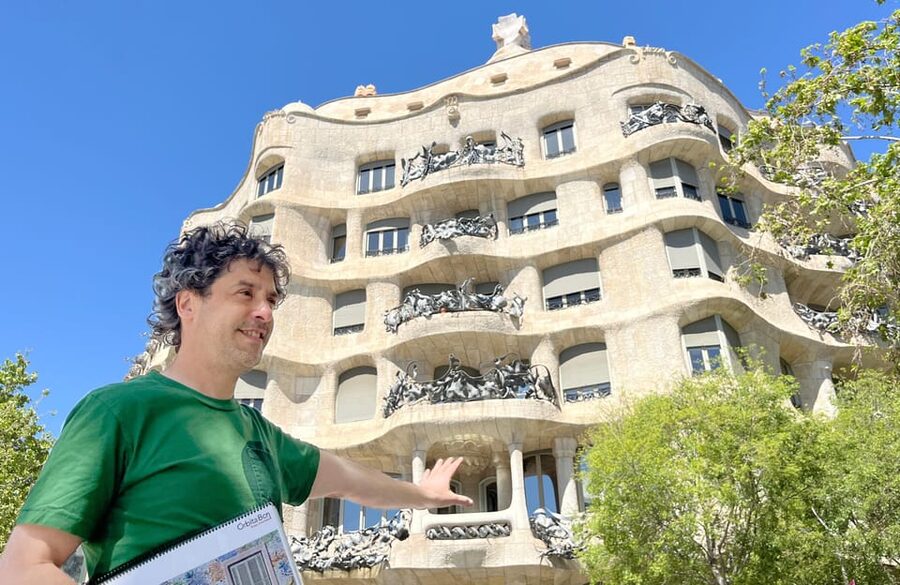
- Mariano Pesin leads the tour: He presents Barcelona’s architecture alongside its social, political, economic, and artistic setting.
- The focus reaches beyond Gaudí: You learn how the Modernisme period developed between 1888 and 1930.
- Casa Milà is a major stop: The route examines Gaudí’s work and the natural symbolism found in his designs.
- Original period objects add texture: Mariano shares items from the era instead of relying only on dates and building façades.
- The route is manageable but outdoors: It lasts 2.5 hours, begins at Passeig de Gràcia, and ends on Carrer de Pau Claris.
- The finish is unusually relaxed: The group goes to a coffee shop surrounded by nature after the walking portion.
Why Barcelona’s Modernisme needs a wider story
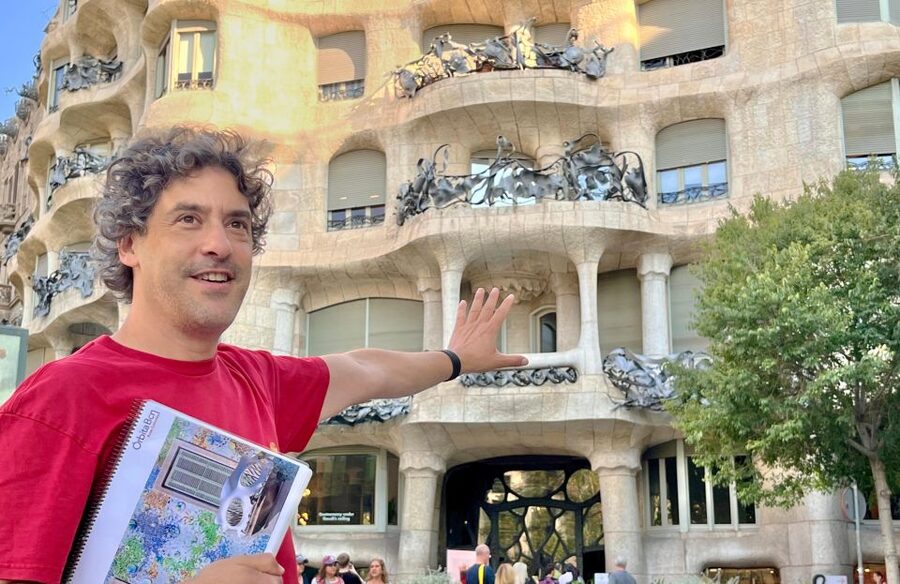
A quick look at Gaudí’s buildings can leave you with a narrow picture of Barcelona. You see unusual stonework, twisting forms, and decorative color, but you may not understand why this style appeared when it did.
This tour sets Modernisme between 1888 and 1930, a period when Barcelona was changing quickly. Industrial growth helped turn the city into a modern and international metropolis. New wealth created clients who wanted impressive homes and public buildings, while artists and architects searched for new forms of expression.
That context matters. Gaudí did not create in isolation. His work grew from a city shaped by industry, money, politics, art, and a strong sense of local identity. Mariano explains those forces as part of the walk, giving you a way to read Barcelona’s streets after the tour ends.
I especially like that the experience includes Picasso as part of the wider story. The point is not to turn the walk into a general art lecture, but to show that Barcelona attracted important creative figures during a period of major change.
You should expect an interpretive tour rather than a simple list of buildings. Mariano explains why the period developed, who supported it, and how artistic ideas appeared in stone, iron, glass, and decoration. If you want only quick facts and photo stops, this may feel more detailed than necessary. If you want the city to make better sense, the added background is the main value.
More Gaudi Tours in Barcelona:
- Barcelona: Park Güell and Gaudí House Museum Entry Ticket
★ 4.5 · 6,326 reviews - Barcelona: Gaudí’s Park Güell Tour with Fast-Track Ticket
★ 4.8 · 4,512 reviews - Sagrada Familia & Gaudi Tour Private or Small Group with Tickets
★ 4.5 · 1,188 reviews
Starting on Passeig de Gràcia
The meeting point is in front of the Camper Store at Passeig de Gràcia, 2. This puts you at the beginning of one of Barcelona’s most important streets for Modernisme, so the setting fits the subject from the first minute.
Arrive early. The tour starts on time, and the maximum waiting period is 10 minutes with prior notice. That policy is worth taking seriously, especially if you are relying on a crowded city bus, searching for the meeting point, or trying to coordinate a group.
Passeig de Gràcia is also a useful place to begin because the tour can introduce Barcelona’s wealth and expansion before turning to individual buildings. The street helps you understand the setting in which wealthy patrons commissioned ambitious architecture.
Bring water before you arrive. The information for the experience also advises using the toilet before the walk and dressing for changing temperatures. Those are plain tips, but they matter during a 2.5-hour outdoor experience with no promise of a long indoor break.
Reading Gaudí at Casa Milà
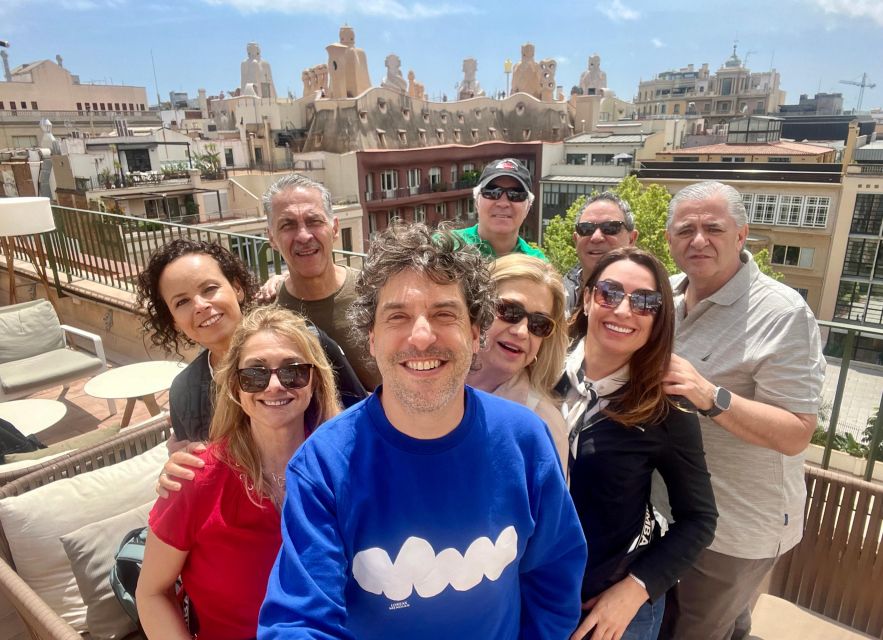
Casa Milà is listed as a guided stop, with 30 minutes noted in the itinerary information. The listing also describes the tour as explaining Gaudí’s history in front of his most famous buildings and analyzing Modernist symbolism, so this is where the architectural discussion becomes especially concrete.
Gaudí’s work is often presented as a collection of strange shapes. Mariano takes a different approach by examining the ideas behind them, especially the influence of nature. You learn to look at forms as deliberate choices rather than visual oddities.
That approach can change the way you walk through Barcelona. Instead of seeing a façade as decoration, you begin asking what natural forms inspired it, how the structure differs from conventional architecture, and what the design says about the period’s taste and confidence.
The tour also looks at Gaudí’s relationship with wealthy patrons. That is an important part of the story. An architect may have unusual ideas, but large projects require money, clients, and people willing to take risks. Mariano explains how Gaudí worked with influential figures to create buildings that became symbols of the city.
One point to check before booking is what access is included at Casa Milà. The supplied details clearly promise a guided explanation at the site, but they do not state that an interior admission ticket is included. If entering the building is essential to you, confirm the arrangement before paying.
Modernisme beyond one famous architect
The best part of the tour may be its refusal to reduce Barcelona’s Modernisme to Gaudí alone. You study the period’s social, political, economic, and artistic sides, which gives the buildings a more human setting.
Barcelona’s industrial growth created new fortunes and new ambitions. A successful family could use its home or business building to display taste, status, and modern thinking. At the same time, artists were responding to new ideas about nature, design, identity, and city life.
This does not mean the walk becomes dry or academic. Mariano’s style, as reflected in the experience itself, is built around storytelling, humor, and close attention to the city. Several parts of the feedback praise his ability to make art, personalities, and history enjoyable rather than remote.
That personality seems to be a major part of the experience. You are not simply receiving information from a guide who recites dates. The stated emphasis is on analysis and conversation, and the final coffee stop gives the group time to keep discussing Barcelona in a more relaxed setting.
I would choose this tour early in a Barcelona visit. The ideas you learn can sharpen your eyes for the rest of your stay. You might notice Modernist details on an ordinary street, recognize the influence of nature in another building, or better understand why the city feels so architecturally distinctive.
A few more architecture walks in Barcelona worth a look
- Barcelona: Sant Pau Recinte Modernista Entry Ticket
★ 4.6 · 2,567 reviews - Barcelona: Sagrada Familia, Modernism, and Old Town Tour
★ 4.7 · 1,621 reviews - Ramblas, Old Town, Gothic and Gaudi Architecture Walking Tour
★ 5.0 · 723 reviews - Historical and Modernist Bike Tour Barcelona
★ 5.0 · 262 reviews
Original objects and small details
The inclusion of original objects from the period is a useful touch. Buildings can feel remote when you only hear about famous architects and wealthy patrons. Objects offer a more direct connection with daily life and the material culture of the era.
The details provided do not specify exactly what the objects are, so I would not book this expecting a particular museum-style collection. Their value is in supporting the story Mariano tells. They help move the period from a set of architectural dates into something people made, used, bought, and lived around.
The same is true of the tour’s attention to subtle details. One strong feature of this kind of walk is learning to notice things that are easy to miss when sightseeing alone. The route is not just about identifying Casa Milà. It is about understanding how decoration, symbolism, and urban design work together.
This is where a historian-led walk can be worth more than a basic orientation tour. You are paying for interpretation, not simply transportation between famous addresses. The group remains on foot, and the guide’s explanations are the central feature.
The coffee stop on Carrer de Pau Claris
The tour finishes at C. de Pau Claris, 179, in the 08037 Barcelona area. At the end of the walking portion, Mariano invites the group to an exclusive coffee shop surrounded by nature.
The coffee stop gives the experience a softer landing than many city tours. You can pause, ask follow-up questions, and think over the buildings you have just seen. It also helps explain why the tour feels more personal than a quick photo-focused walk.
The wording does not say that coffee is included in the $65 price, so check that detail before booking. The important point is the setting and the chance for conversation, not a promised drink or meal.
A relaxed ending may suit you if you like asking questions and comparing impressions. It may be less useful if you need to leave immediately for another timed attraction. Since the walk ends at a different address from the starting point, plan your next move with that final location in mind.
Is $65 a fair price?
The cost is $65 per person for 2.5 hours. That places the experience in the paid guided-tour category rather than the casual free-walking-tour range, so the value depends on what you want from a guide.
You are paying for a historian-led interpretation of Barcelona’s Modernisme, focused attention on Gaudí, discussion of the period’s wider forces, original objects, and a coffee-shop conversation at the end. The route is not built around checking off many attractions. Its strength is the quality and depth of the explanation.
For someone already interested in architecture, art, or Barcelona’s development, $65 can be reasonable. You are likely to gain a better framework for the rest of your sightseeing. The high rating of 4.8 from 17 reviews also suggests strong satisfaction, with the most positive reactions centered on Mariano’s enthusiasm, humor, and ability to make the material memorable.
For a visitor who wants only exterior photos and a short introduction, the price may feel high. You might get more from a cheaper general walking tour if your main goal is basic orientation. This experience is a better fit when the guide’s interpretation matters as much as the route.
Who will enjoy this experience most?
I would recommend the tour to you if you enjoy understanding the forces behind a city’s architecture. It suits adults, older children, students, and anyone who wants more than a quick explanation of Gaudí’s unusual shapes.
It is also a good choice for repeat visitors. You do not need to be seeing Barcelona for the first time to benefit from it. The focus on subtle details and the broader Modernisme period can give a familiar city a new reading.
The tour is available in English and Spanish. That makes it useful for English-speaking visitors who want a full explanation, as well as Spanish speakers who prefer to discuss the subject in Spanish.
The experience is listed as wheelchair accessible. Since it is a walking route, you should still confirm any specific mobility needs before booking, especially if you require detailed information about surfaces, stops, or access to particular buildings.
I would be less likely to choose it for very young children who need constant movement, or for anyone who dislikes scheduled walking tours. The content is central to the experience, and the group needs to keep moving at the appointed time.
Practical planning before you book
Allow the full 2.5 hours and avoid scheduling a major attraction immediately afterward. The coffee stop is part of the planned experience, and rushing away could weaken one of its more personal features.
Wear comfortable clothing and prepare for temperature changes. The instructions specifically call attention to the forecast, so a light extra layer may be sensible depending on the day. Carry water, and use the toilet before meeting Mariano.
The tour begins at Passeig de Gràcia, 2, in front of Camper Store, and ends at Carrer de Pau Claris, 179. Save both addresses so you do not assume you will return to the starting point.
Mariano’s phone number is +34 667098989. Keep it available in case you have trouble locating the meeting point, but do not rely on a late arrival being accepted. The tour starts on time, with a maximum 10-minute wait when advance notice has been given.
You can cancel up to 24 hours before the experience for a full refund. The reserve-now-and-pay-later option also keeps your plans flexible, which is useful if your Barcelona schedule is not settled.
Should you book Gaudí and Modernisme with a Historian?
Book it if you want Barcelona’s architecture explained through people, money, politics, industry, and artistic ideas. Mariano Pesin’s role is the key reason to choose this experience. The strongest praise focuses on his enthusiasm, humor, care for the group, and ability to turn a walk into a wider appreciation of the city.
Choose another option if you want interior access to several buildings, a very short overview, or a tour built mainly around photographs. The supplied details promise guided analysis and a Casa Milà stop, but they do not confirm admission to interiors.
For the right audience, $65 buys more than a walk past Gaudí’s façades. It gives you a way to read Barcelona with sharper eyes, then leaves you time to continue the conversation over coffee. That combination of historical context, personal guiding, and careful observation makes this a strong pick for architecture-minded visitors.
FAQ
How long does the tour last?
The Gaudí and Modernisme tour lasts 2.5 hours.
What is the price?
The price is $65 per person.
Who leads the tour?
The guide is Mariano Pesin, a historian who explains Barcelona’s Modernisme and Gaudí’s work.
Which languages are available?
The tour is offered in English and Spanish.
Where does the tour begin?
It begins at Passeig de Gràcia, 2, in front of the Camper Store.
Where does the tour finish?
The tour finishes at C. de Pau Claris, 179, 08037 Barcelona, Spain.
Is Casa Milà part of the route?
Yes. Casa Milà is listed as a guided stop, with 30 minutes noted in the itinerary information.
Is the tour wheelchair accessible?
Yes, the experience is listed as wheelchair accessible.
Can I cancel for a full refund?
Yes. You can cancel up to 24 hours in advance for a full refund.
Newly added in Barcelona
- Roman & Gotic & Gaudi in Barcelona: private walking tour★ 4.5 · 2 reviews
- Barcelona Gaudi Tour: Sagrada Familia, Casa Batllo & Casa Mila★ 5.0 · 4 reviews
- Visit to the Modernist houses of the Americans★ 5.0 · 2 reviews
- Self-Guided Audio Tour-The Surrealist Barcelona of Dalí and Gaudí★ 3.5 · 8 reviews
- Barcelona Street Escape: Gaudi and the Hidden Treasure★ 5.0 · 17 reviews
- Gaudí & Catalan Modernism Private Walking Tour★ 5.0 · 11 reviews
- Gaudí and Barcelona Legends – Private Tour★ 5.0 · 4 reviews
- Sagrada Familia Private Tour – Unlock the mysteries of Gaudi★ 5.0 · 10 reviews
Gaudí Tours, compared.
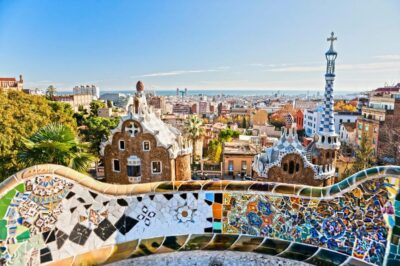
Park Güell and Gaudí House Museum Entry Ticket
Read our review →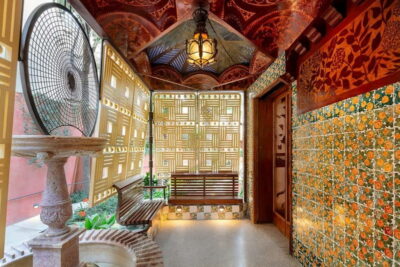
Gaudi’s Casa Vicens Skip-the-Line Entrance Ticket
Read our review →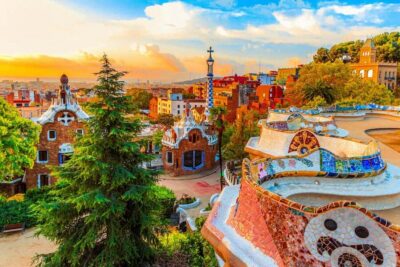
Gaudí’s Park Güell Tour with Fast-Track Ticket
Read our review →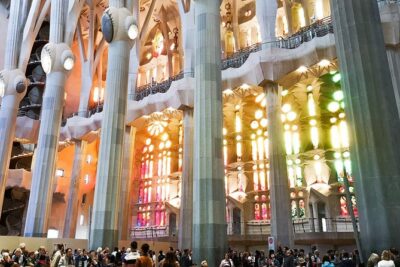
Sagrada Familia & Gaudi Tour Private or Small Group with Tickets
Read our review →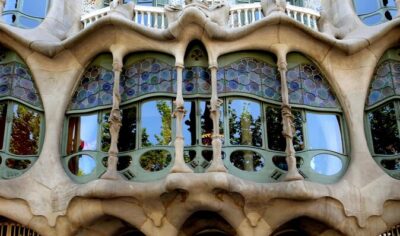
Complete Gaudi Tour: Casa Batllo, Park Guell & Sagrada Familia
Read our review →
Park Güell: Guided Tour with Optional Gaudí Experience Entry
Read our review →
Barcelona e-Bike Tour: Gaudí & Old Town Small Group
Read our review →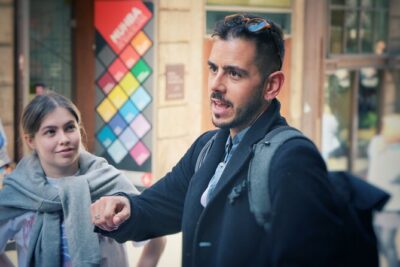
Ramblas, Old Town, Gothic and Gaudi Architecture Walking Tour
Read our review →Browse the lists this tour appears in