
Review · WALKING TOURS
Los Angeles: Downtown History & Architecture Walking Tour
Downtown Los Angeles makes more sense when you read its buildings as chapters. This 150-minute walk connects movie palaces, Art Deco facades, Beaux-Arts landmarks, and modern city planning while your Belgian guide, Mark, adds a useful outside perspective to local stories. You are not just checking off sights. You are looking at why DTLA changed, who shaped it, and how the city is trying to reinvent itself.
I like two things right away. First, the route links famous spots such as the Bradbury Building and Last Bookstore with broader questions about urban design and public life. Second, the guide keeps the tour conversational, so your questions can steer the discussion. The main consideration is the walking: this is not designed for wheelchair users or people with mobility impairments, and comfortable shoes are essential.
Key points at a glance
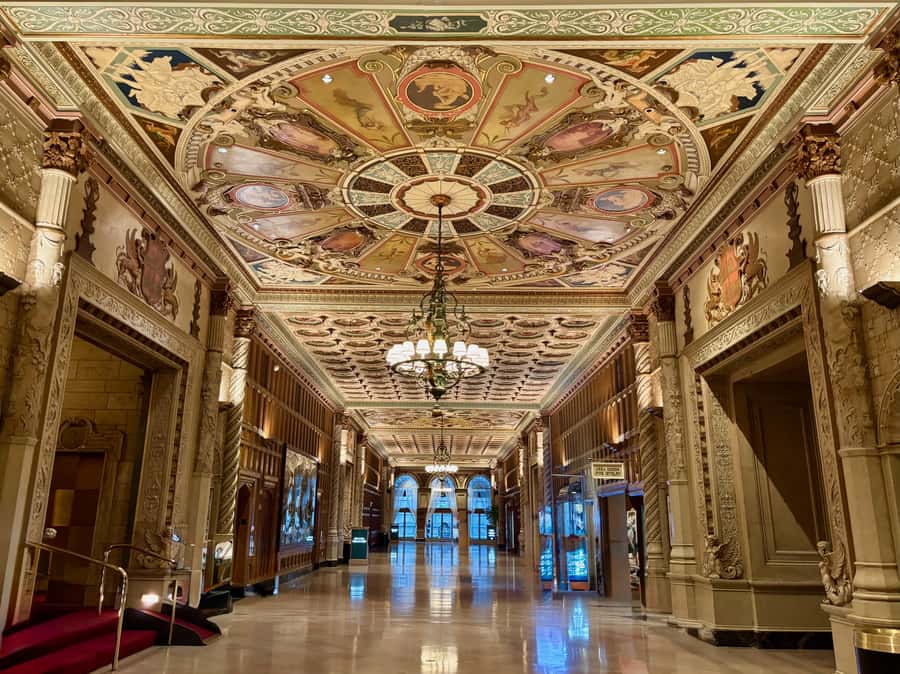
- Architecture with context: See Art Deco, Beaux-Arts, and Modernist design as part of Los Angeles history, not as isolated photo stops.
- A strong film connection: Broadway’s old theaters and the Bradbury Building tie DTLA to Chaplin, JFK, Michael Jackson, Taylor Swift, and Jisoo.
- A guide with a broad view: Belgian guide Mark brings a European comparison to conversations about American cities and Los Angeles life.
- A flexible, discussion-based walk: The experience is built around questions, opinions, and stories rather than a fixed lecture.
- Easy public transport access: The Central Library is next to the 7th Street Metro station, with another possible start at the Grand Central Market parking garage.
- Good value for architecture fans: At $30 per person, the tour offers two and a half hours of guided interpretation, not just sightseeing.
Why this DTLA walk is different
Many Downtown Los Angeles tours focus on famous buildings or film locations. This one tries to connect the pieces. You move through areas shaped by commerce, entertainment, immigration, politics, redevelopment, and changing ideas about how a city should work.
That wider view is the best reason to book. The guide does not treat architecture as decoration. He explains how buildings reflect money, social habits, planning choices, and the ambitions of the people who built them. If you are an architecture student, an urbanist, or simply someone who wants more than a list of dates, you will have plenty to think about.
The guide’s Belgian background also adds a useful comparison. You can discuss how European cities and American cities handle public space, old buildings, transportation, and redevelopment. That does not make the tour less local. It gives you another way to see familiar Los Angeles subjects.
Mark is described as an enthusiastic DTLA resident and podcast host with years spent exploring the area and talking with Angelenos and international visitors. His approach is lively and personal. Several parts of the experience can be adjusted to your interests, which is especially valuable if you already know some Los Angeles history.
More Walking Tours in the USA
- The Official Art Deco Walking Tour by The Miami Design Preservation League
★ 5.0 · 1,580 reviews - Chicago in a Day: Food, History & Architecture Walking Tour
★ 5.0 · 1,153 reviews - Miami South Beach Art Deco Walking Tour
★ 5.0 · 1,039 reviews
Starting near the Central Library or Grand Central Market
The walk can begin at two locations: the Los Angeles Central Library or the Grand Central Market parking garage. Check your booking carefully, since the meeting point depends on the option you choose.
The Central Library is the most convenient choice for many people. It sits near the 7th Street Metro station, so you can reach the tour without arranging a car. It is also a fitting place to begin a walk about the city’s architecture and public institutions.
If you start near Grand Central Market, you are already close to several important downtown sights. The market itself provides a lively introduction to central Los Angeles, though the focus here is the city around it rather than a food tasting program. Do not arrive expecting a meal to be included.
The route is urban and active. Bring water, sunscreen, a hat, and a camera. Los Angeles can feel very different in direct sun than it does on a cool morning, so check the forecast and dress for the conditions. Good walking shoes matter more than stylish ones.
Bunker Hill and the changing center of Los Angeles
Bunker Hill helps explain why DTLA can feel like several cities layered together. The area was once an affluent residential district, then changed as Los Angeles grew and modernized. Today, its older associations meet large cultural buildings, offices, hotels, transit links, and newer development.
The guide uses Bunker Hill to explain change rather than presenting it as a frozen historic quarter. You will hear about how Los Angeles moved from a smaller commercial center toward a major global city, and how redevelopment can preserve some memories while erasing others.
This is one of the stronger parts of the walk for anyone interested in city planning. You are encouraged to think about who public spaces serve, what makes a neighborhood welcoming, and how a city balances old structures with new construction.
The route may include stops and discussions that are not listed as formal landmarks. That is a plus. You spend time noticing streets, facades, hotels, and public areas that could easily be missed if you only followed a sightseeing checklist.
Angels Flight and the vertical city
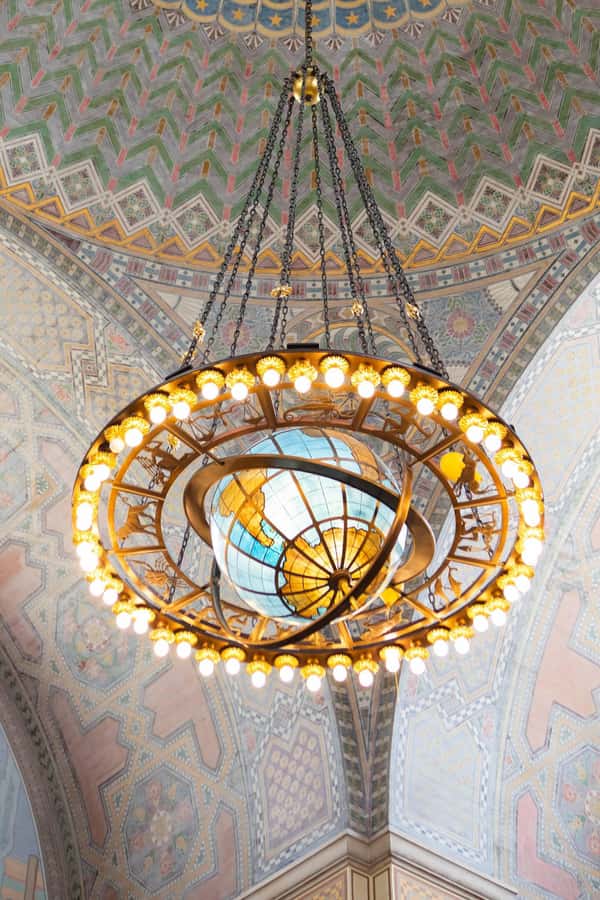
Angels Flight Railway offers a compact way to talk about Los Angeles topography and movement. The funicular is closely tied to Bunker Hill and gives the tour a physical reminder that downtown is not completely flat or uniform.
The stop is less about a long visit and more about placing the surrounding district in context. You can connect transportation, hillside development, and the changing shape of central Los Angeles. It is also an easy place to take a photograph and get a sense of how the older downtown relates to the newer city around it.
Do not confuse this stop with a separate railway ride included in the tour. The itinerary lists a guided visit and sightseeing at Angels Flight, but it does not promise a ticket or a ride. The value here is the story and setting.
Same city, a different facade:
- Chicago Architecture River Cruise
★ 5.0 · 15,756 reviews - Chicago River 90-Minute Architecture Tour
★ 4.5 · 9,629 reviews - Chicago River: 1.5-Hour Guided Architecture Cruise
★ 4.8 · 8,046 reviews - Chicago Architecture Center River Cruise aboard First Lady
★ 5.0 · 5,536 reviews
Grand Central Market and Broadway’s commercial past
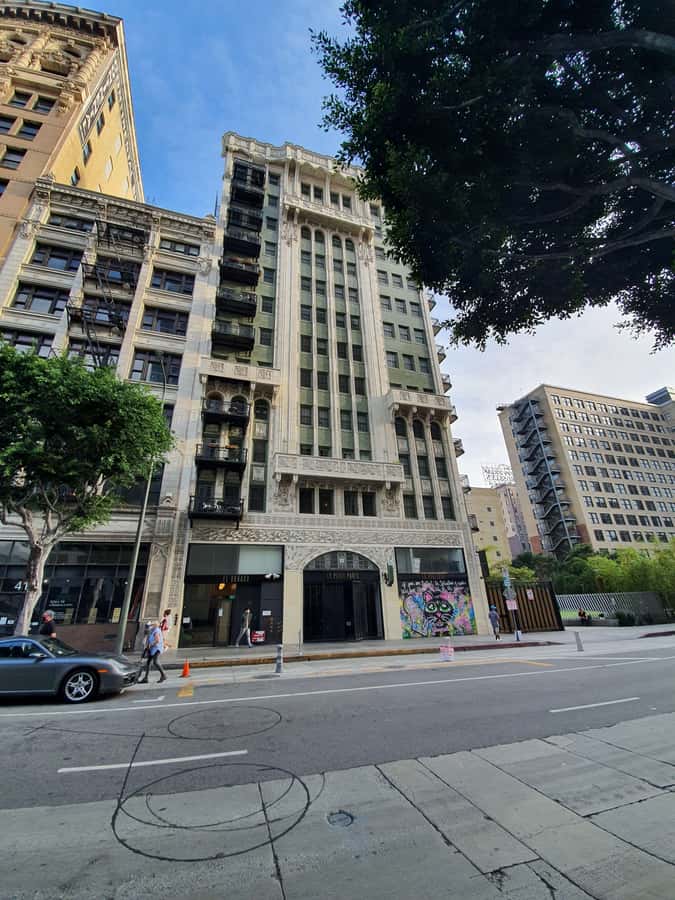
Grand Central Market is one of the route’s useful orientation points. It shows how food, commerce, and public life have long been part of downtown’s identity. The planned walk through the market area lasts about 10 minutes, so this is an introduction, not an extended market visit.
From here, the tour moves toward Broadway and the Theater District. Broadway once served as a major commercial heart of Los Angeles, and its grand storefronts and theater facades still show the confidence of the city’s earlier growth.
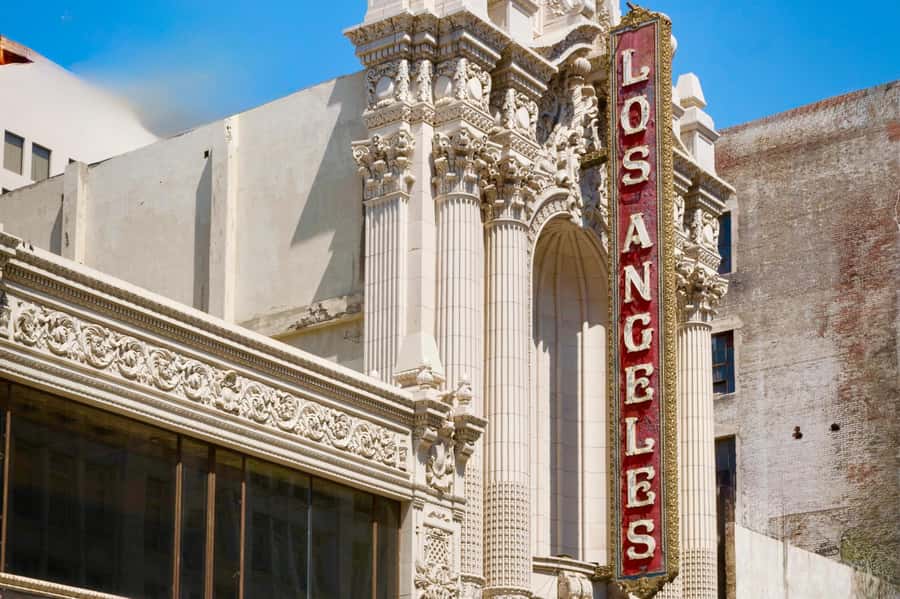
The Theater District is a major reason to choose this walk over a general downtown stroll. Los Angeles is usually associated with Hollywood studios and movie stars, but Broadway reveals the audience side of that story. Its historic movie palaces show where people gathered to watch films, socialize, and take part in the city’s entertainment culture.
The area is also a reminder that Los Angeles film history did not happen only on studio lots. The theaters, streets, hotels, and shops around them helped create the public world of moviegoing. The guide connects these places with the glamour and grit of Hollywood’s golden age.
Film references are woven through the route. You may hear about Chaplin, JFK, Michael Jackson, Taylor Swift, and Jisoo in connection with downtown locations or their screen and cultural history. These names add recognition, but the tour does not rely on celebrity trivia alone. The better payoff is seeing how popular culture uses real city spaces.
The Bradbury Building in twenty minutes
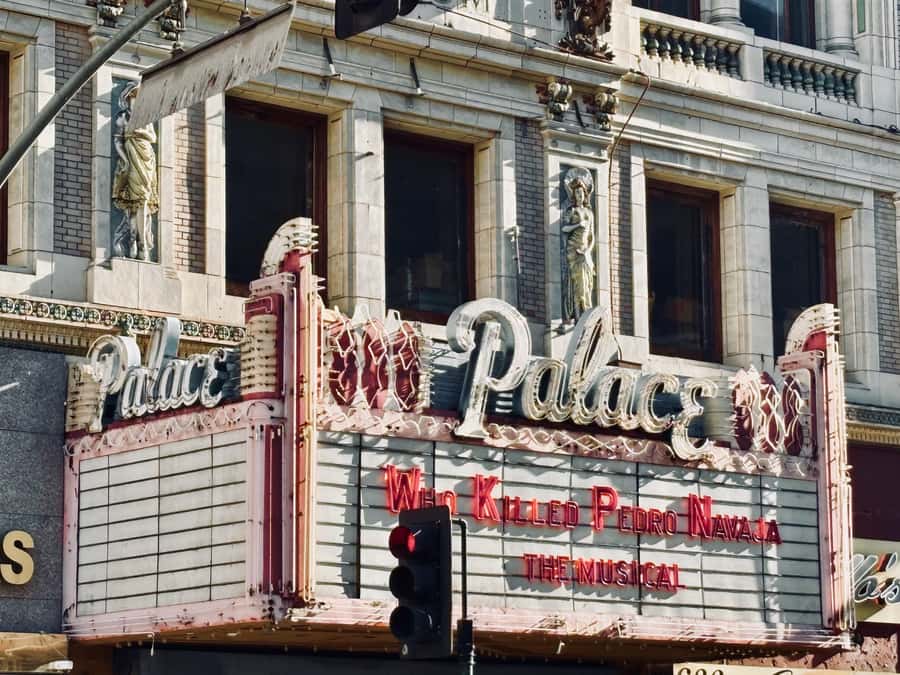
The Bradbury Building is the architectural centerpiece of the tour. Allow roughly 20 minutes here, although the pace may vary with the group and the guide’s discussion.
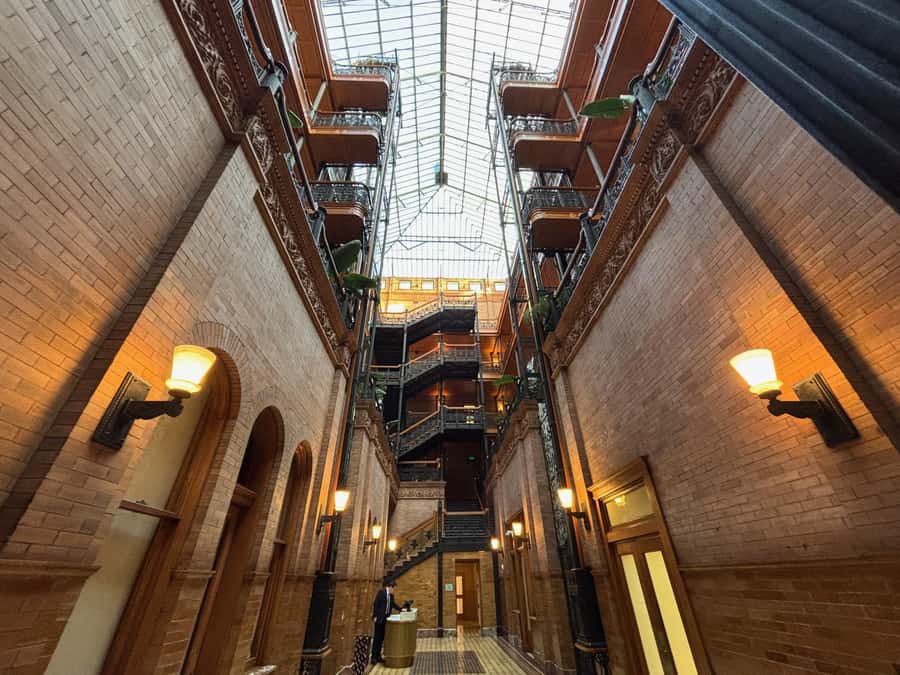
Its interior details make it one of the most rewarding photo stops in DTLA. Look for the ornate ironwork, stairways, balconies, and light-filled central space. The building gives you a clear example of how a structure can feel both practical and theatrical.
The guide places the Bradbury within the larger mix of Art Deco, Beaux-Arts, and Modernist design found downtown. That comparison matters. Instead of seeing the building as a one-off curiosity, you begin to recognize how different architectural styles express different periods and ambitions.
The Bradbury also connects naturally to Los Angeles screen history. Its distinctive interior has helped make it a familiar cinematic location, and that gives the architecture an extra layer for movie fans. Even if you do not know the films associated with it, the building is worth seeing for its design.
Photography is encouraged, but be considerate of the building’s rules and other people. A camera or phone with enough storage is useful. This is one stop where you will probably want more than a quick snapshot.
The Last Bookstore and DTLA’s creative side
The Last Bookstore is another planned 20-minute stop. Its unusual interior makes a sharp contrast with the formal lines of the Bradbury Building. You get a sense of how an older commercial space can be reused for a modern cultural purpose.
The shop is known for its distinctive design and book-centered atmosphere. The tour treats it as part of the neighborhood’s current identity, not simply as a retail stop. This is where the walk shifts from historic downtown to the creative activity that now draws people back into the area.
You should have time to look around and take photographs, but this is not presented as an extended shopping session. If you want to browse carefully or buy books, plan to return on your own.
I particularly like the pairing of the Bradbury Building and the Last Bookstore. One shows a landmark preserved for its architecture and film associations. The other shows how downtown can find new uses for older spaces. Together, they make the idea of a changing Historic Core easy to understand.
A conversational guide rather than a scripted lecture
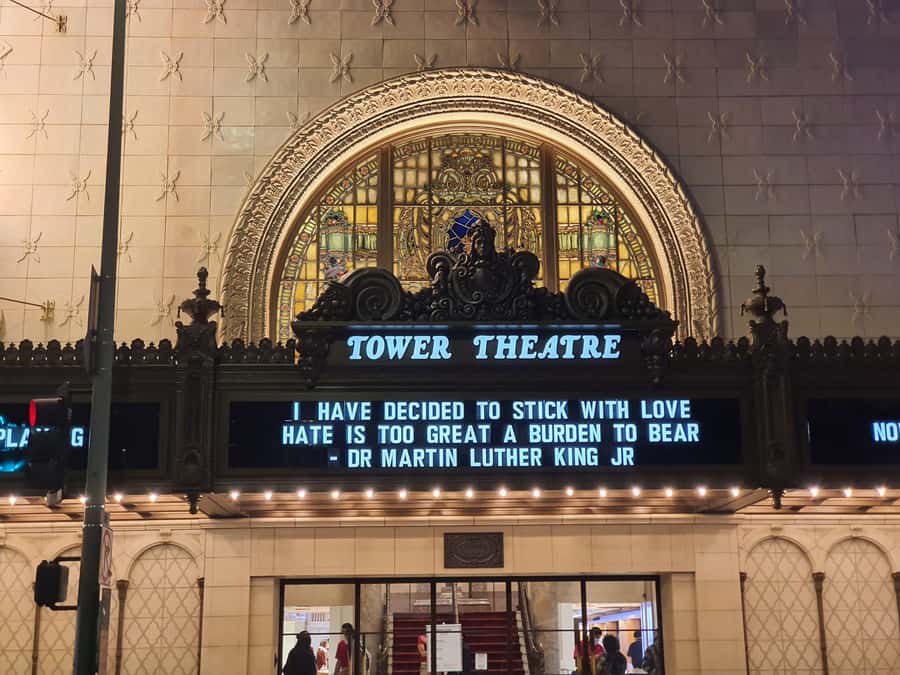
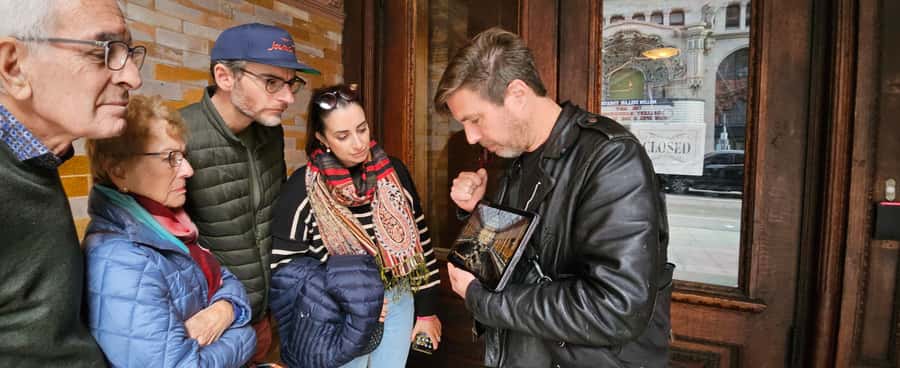
The tour’s format may be its biggest strength. You are invited to ask questions and discuss subjects such as politics, public space, architecture, culture, and the future of DTLA.
That makes the experience work well for small private groups and for people with specific interests. If you care about design, the guide can spend more time on buildings and planning. If you care about film, you can follow the movie connections. If you want a basic introduction, the route still covers the main story of downtown.
The approach also means the exact feel of the tour can change from one group to another. That is good if you enjoy conversation, but less ideal if you want a tightly timed lecture with identical information at every stop.
The guide’s tone is warm and inclusive, with facts supported by examples and personal enthusiasm for the neighborhood. He has also tailored walks for Los Angeles residents, not only first-time visitors. That is a useful sign if you live nearby or have already seen the city’s main attractions.
The tour is offered in English or French, and a private group option is available. A private walk costs more in many booking situations, but the advantage is the ability to focus the discussion around your group’s interests.
Is $30 a fair price?
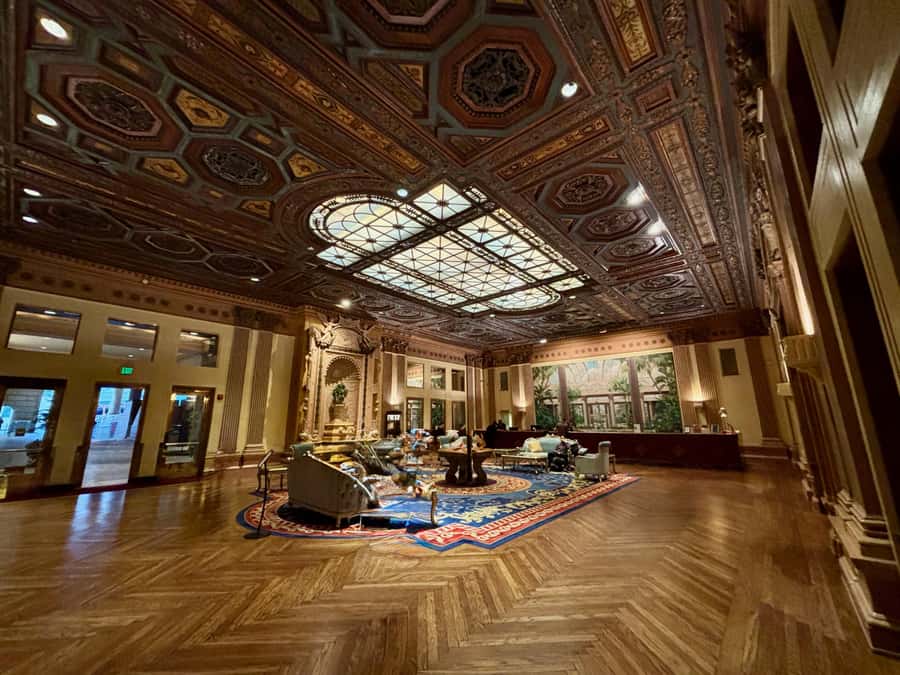
At $30 per person, this is a reasonable price for a 150-minute guided city walk. You are paying for interpretation, route planning, and access to a guide who can connect individual buildings to wider subjects.
The value is strongest if you like architecture, urban history, film culture, or city politics. A visitor who only wants quick photo stops may find the discussion too substantial. For that person, a shorter sightseeing walk could be a better fit.
The tour may also run longer than the advertised two and a half hours if the group asks questions or the guide adds stories. That can be welcome, but keep it in mind if you have a dinner reservation or another timed activity afterward.
You can reserve now and pay later, and cancellation is allowed up to 24 hours before the start for a full refund. Those terms make it easier to fit the walk into a changing Los Angeles schedule.
Who will enjoy this walking tour most?
I would choose this experience if you want to understand how DTLA works rather than simply pass through it. It suits first-time visitors who want a strong introduction, but it can also reward Los Angeles residents who have never connected the area’s separate landmarks.
It is particularly good for:
- Architecture fans who want design explained in social and political context.
- Film lovers interested in movie palaces and recognizable city locations.
- Visitors who prefer conversation to a memorized speech.
- Couples or small groups who want a private option.
- People using public transport, thanks to the Metro access near the Central Library.
- Adults and older children who can manage two and a half hours of city walking.
It is not suitable for children under six, wheelchair users, or people with mobility impairments. The exact amount of uphill or uneven walking is not specified, so anyone concerned about mobility should ask before booking.
Practical advice before you go
Wear shoes that can handle a long urban walk. Bring water, sunscreen, a hat, and a camera, and check the weather before leaving.
Confirm your starting point, since the tour may begin at the Central Library or Grand Central Market parking garage. The possible end points are the Central Library or Hotel Per La, Autograph Collection, which can help you plan your next stop.
Do not schedule anything too close afterward. The official duration is 150 minutes, but a lively group discussion can extend the walk. If you want a quieter experience with more control over timing and subject matter, consider the private-group option.
Should you book it?
Book this tour if you want DTLA explained through buildings, movies, and city life, rather than a quick parade of landmarks. At $30, it offers good value for a thoughtful 150-minute introduction, especially with a guide who can tailor the conversation and add a European comparison.
Skip it if you dislike walking, prefer a strictly timed itinerary, or mainly want to ride Angels Flight or browse the Last Bookstore. For everyone else, this is a smart way to see why Downtown Los Angeles is more than a backdrop for films. It is a city center still working out what it wants to become.
FAQ
How long is the Downtown Los Angeles walking tour?
The tour lasts 150 minutes, or two and a half hours. It may run longer if the group spends extra time discussing the sights.
How much does the tour cost?
The listed price is $30 per person.
Where does the tour begin?
The possible starting points are the Los Angeles Central Library and the Grand Central Market parking garage. The meeting point depends on the option booked.
Which languages are available?
The live tour is offered in English and French.
Is a private tour available?
Yes. A private group option is available.
Is the tour suitable for wheelchair users or young children?
The tour is not suitable for wheelchair users, people with mobility impairments, or children under six. Comfortable shoes are recommended for all participants.
More History Walks in the USA
- Charleston’s Best Highlights: History, Culture & Architecture
★ 5.0 · 422 reviews - Palm Springs Modernism Architecture & History Bike Tour
★ 5.0 · 359 reviews - Charleston: History and Architecture Guided Walking Tour
★ 4.8 · 349 reviews - Historic Georgetown: History, Gossip, & Architecture Walking Tour
★ 5.0 · 321 reviews
Newly added in the USA
- Art Deco Tour of South Beach in French★ 4.5 · 8 reviews
- Award-winning Art Deco & Neon Lights Walking Tour★ 5.0 · 5 reviews
- Miami Beach Art Deco Segway Tour★ 4.5 · 17 reviews
- Boston: Freedom Trail History and Architecture Walking Tour★ 4.8 · 18 reviews
- Boston: Harbor and Charles River Architecture Boat Tour★ 4.6 · 9 reviews
- Iconic Capitol Hill Architectural Walking Tour★ 5.0 · 21 reviews
- Chicago: Guided Tour with Architecture River Cruise★ 4.5 · 20 reviews
- South Beach Food Tour- Culinary & Art Deco & History★ 5.0 · 22 reviews
Walking Tours, compared.
The Official Art Deco Walking Tour by The Miami Design Preservation League
Read our review →
Baroque Architecture and Underground Walking Tour
Read our review →
Chicago in a Day: Food, History & Architecture Walking Tour
Read our review →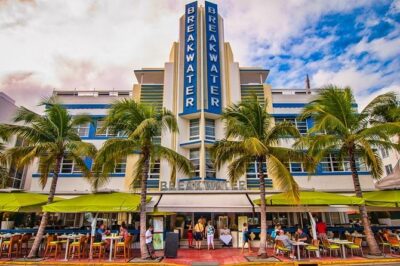
Ramblas, Old Town, Gothic and Gaudi Architecture Walking Tour
Read our review →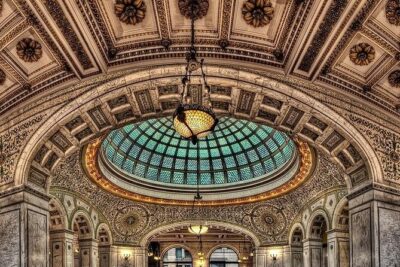
Chicago’s Secret Interiors Architectural Walking Tour
Read our review →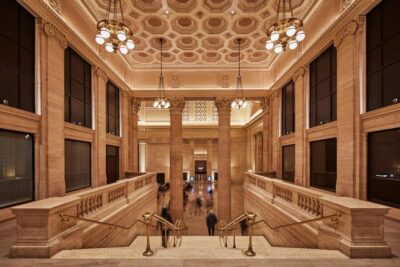
Browse the lists this tour appears in