
Review · WALKING TOURS
Puebla Architecture Walking Tour
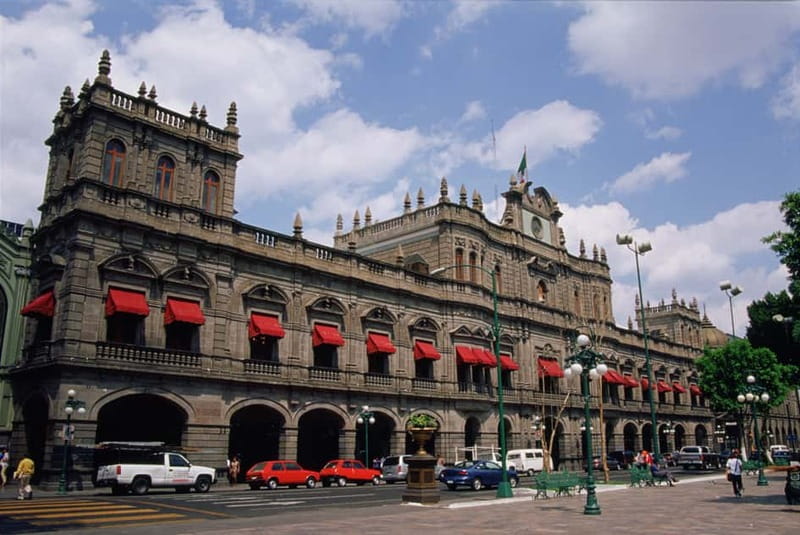
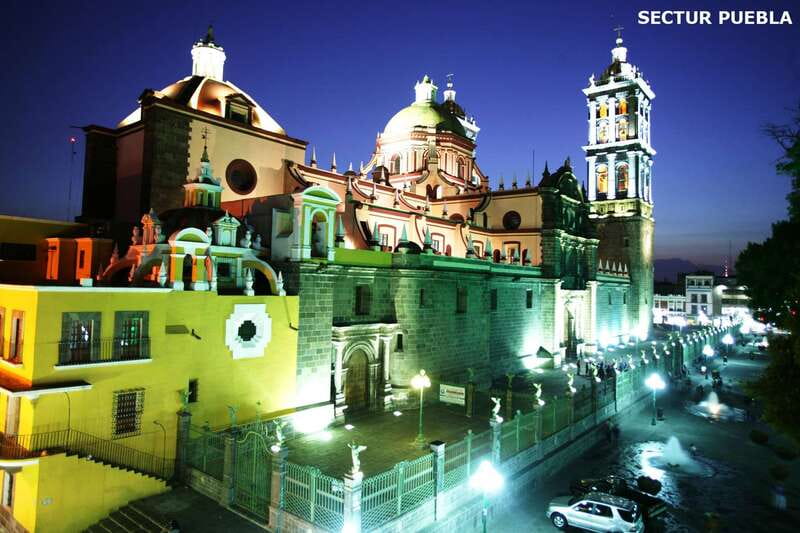
Puebla’s historic center packs centuries of architecture into an easy three-hour walk. You’ll begin at the main square, enter a gilded cathedral with some of the highest church towers in the Americas, then move through Baroque chapels, tiled streets, artisan stalls, and old neighborhood lanes.
I like the private-group format, which gives you room to ask questions, and I like the crossword puzzle that turns the walk into an active search for details. The guides include Ronnie and Guadalupe, and the tour is offered in English or Spanish.
The main drawback is simple: you must reach the meeting point yourself. Transportation from your hotel is not included, and three hours on Puebla’s streets may feel brisk if you want long stops for shopping, photographs, or quiet time inside each church.
Key details before you book
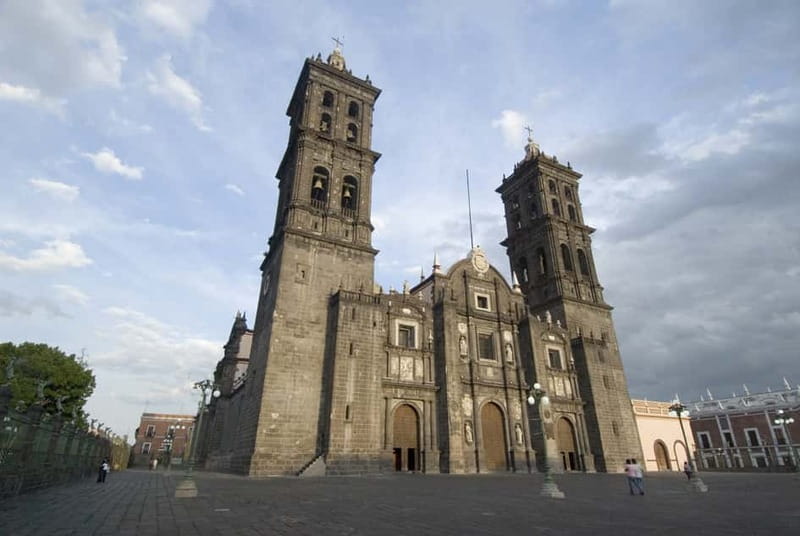
- The cathedral is the tour’s grand opening: See Puebla’s gilded main church and its famous towers before exploring smaller architectural treasures.
- Rosario Chapel brings the Baroque close up: Its gold-covered stucco and dense ornament make it one of the city’s most memorable interiors.
- More than 5,000 buildings shape the lesson: You’ll look at different styles and construction techniques rather than simply walk past old facades.
- The crossword keeps you involved: Use facts from the guide to complete a Puebla city puzzle during the walk.
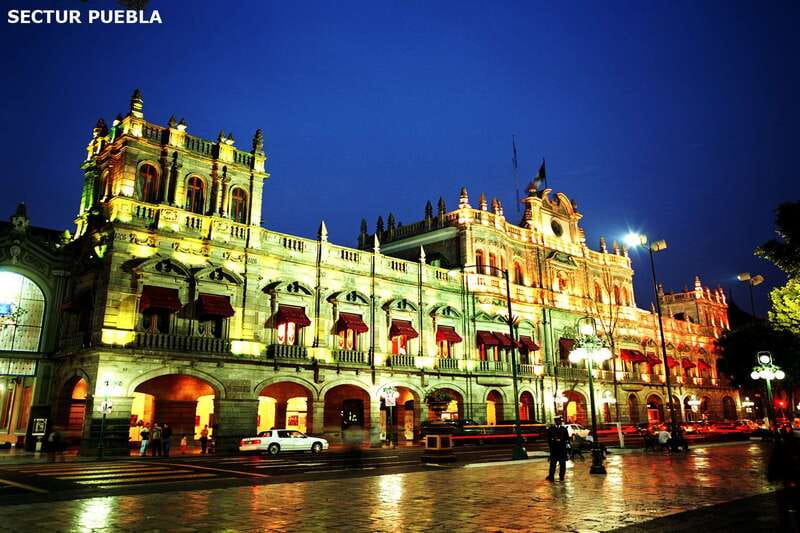
- The route mixes major sights and local corners: Candy street, Sapos alley, artist neighborhoods, and the Parian handcraft market add variety.
- It is a private, accessible tour: A live guide speaks English or Spanish, and the experience is wheelchair accessible according to the tour information.
Starting at Puebla’s main square
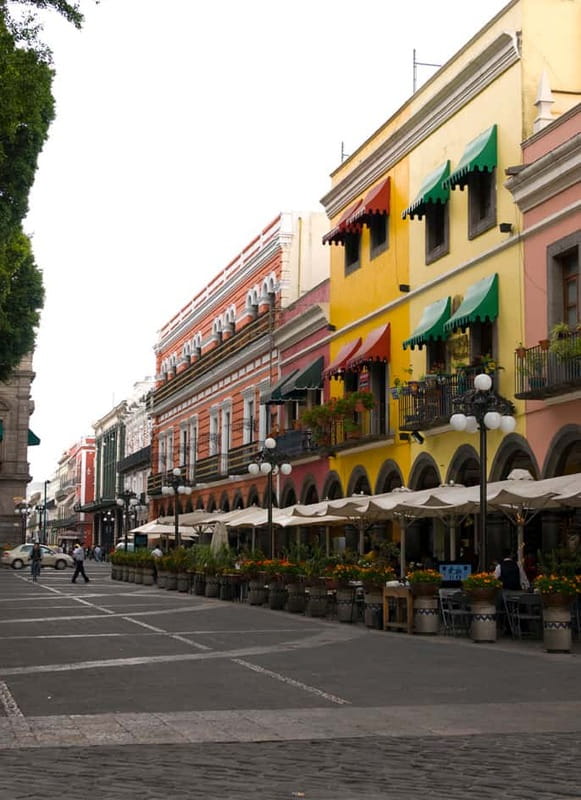
The meeting point is at Av. Juan de Palafox y Mendoza 14, Portal Hidalgo. At the visitor center, look for the Tip Tours & DMC booth. Since hotel transport is not part of the tour, allow enough time to reach the center without rushing.
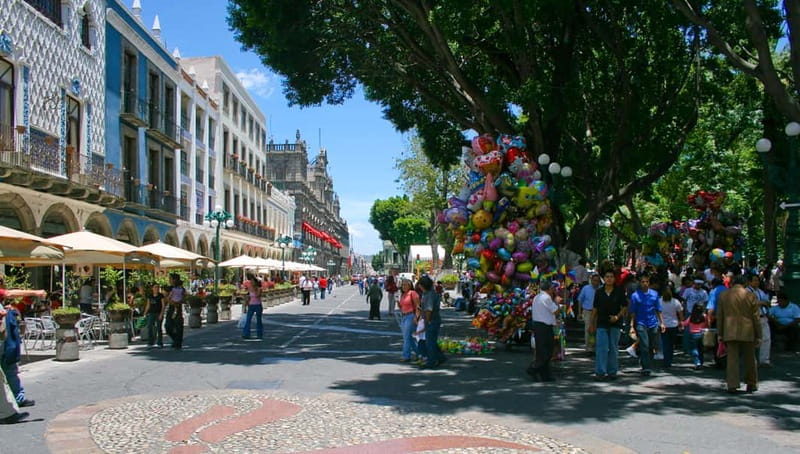
The main square is the right place to begin. Puebla’s historic core is compact enough to explore on foot, but it contains a surprising range of buildings and public spaces. Your guide will use the square to set the scene before leading you toward the cathedral and the surrounding streets.
I like this kind of beginning because it gives you a useful map in your head. Instead of seeing Puebla as a string of unrelated churches and shops, you start to understand how the central district fits together. The crossword also begins to matter here. Keep a pen handy if one is not supplied, and pay attention to names, dates, styles, and small visual clues.
The tour is private, so the pace can be more personal than on a large group walk. You can ask for clarification in English or Spanish, and you will not need to compete with a crowd to hear the guide. The available feedback specifically praises the guides for clear explanations, welcoming manners, and careful answers to questions. Ronnie and Guadalupe are among the guides named for this experience.
More Walking Tours in the world:
- Lecce: Baroque Architecture and Underground Walking Tour
★ 4.6 · 1,248 reviews - Chicago in a Day: Food, History & Architecture Walking Tour
★ 5.0 · 1,153 reviews - Ramblas, Old Town, Gothic and Gaudi Architecture Walking Tour
★ 5.0 · 723 reviews
Entering Puebla Cathedral
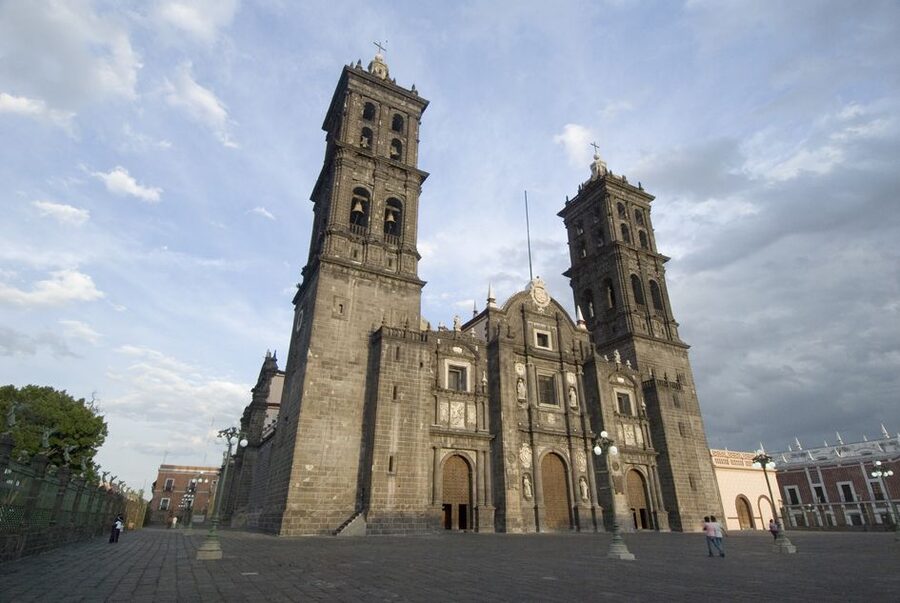
The cathedral is the tour’s most imposing stop. Construction took more than 300 years, and that long building period helps explain why the church carries such a large range of artistic and architectural details.
Inside, look for the gilded decoration, sculpture, and paintings that give the building its cultural weight. The church is not presented simply as a grand photo stop. Your guide will explain what you are seeing and why the cathedral matters to Puebla’s identity.
The towers are a major part of the visit. The tour describes them as the highest cathedral towers on the continent, a claim that gives the exterior a powerful sense of scale. Even before you enter, take time to look up from the square and study the balance between the towers, facade, and open space around the church.
A practical point: cathedral visits work best when you resist the urge to rush through the entrance. The exterior can be easier to understand after your guide points out its forms, while the interior rewards a slower look at the decorative details. Because the whole walk lasts three hours, your guide will need to manage the time carefully. You should have enough to appreciate the site, but not unlimited time for private contemplation.
The cathedral is also a strong choice for people who want a cultural introduction to Puebla without booking a full-day excursion. It gives you a major landmark early in the route, then lets you compare it with smaller buildings later.
Rosario Chapel and Mexican Baroque detail
The Rosario Chapel offers a very different experience from the cathedral. Its scale is more intimate, but the decoration is dense and highly ornamental. Gilded stucco covers much of the interior, creating the glowing effect that has made the chapel one of Puebla’s best-known examples of Mexican Baroque design.
The chapel was once described as the eighth wonder of the world. That historical reputation helps explain why it receives so much attention on the tour, but the real pleasure is visual. You can study the layers of decoration at close range, seeing how sculpture, painted elements, and gold surfaces work together.
This stop is especially useful if you are not familiar with Mexican Baroque architecture. A guide can point out patterns and techniques that might otherwise blur into one wall of ornament. The contrast with the cathedral is also valuable: one is broad and monumental, while the other feels concentrated and intensely decorated.
I would not choose this tour only for a quick photo inside the chapel. The point is to look carefully and listen to the explanation. If you enjoy churches, decorative arts, or architectural detail, this may be the strongest stop of the morning. If ornate interiors are not your interest, it may feel visually crowded, particularly after the large scale of the cathedral.
Walking through candy street

The route then shifts from major religious buildings to Puebla’s everyday historic center. Candy street is one of the city’s most playful attractions, with its connection to local sweets and traditional food shops.
The tour description does not promise a tasting, so you should treat this as a street visit rather than a food tour. You can still use the stop to see how commerce fits into the old center. Shops, facades, and street activity help show that Puebla’s historic district is not a museum sealed off from daily life.
This is also a good moment to ask your guide about the candy traditions and the buildings along the lane. Since the crossword uses information from the walk, details here may help you complete some of its clues.
The street adds welcome variety after the churches. Three hours can feel heavy if every stop is another formal interior, so candy street gives the route a lighter change of pace. You may want to save shopping for after the tour, though. A tight walking schedule is better suited to browsing than to making purchases and carrying bags for the rest of the route.
A few more architecture walks in the world worth a look
- Chicago Architecture River Cruise
★ 5.0 · 15,756 reviews - Chicago River 90-Minute Architecture Tour
★ 4.5 · 9,629 reviews - Chicago River: 1.5-Hour Guided Architecture Cruise
★ 4.8 · 8,046 reviews - Chicago Architecture Center River Cruise aboard First Lady
★ 5.0 · 5,536 reviews
Sapos alley and the artist neighborhoods
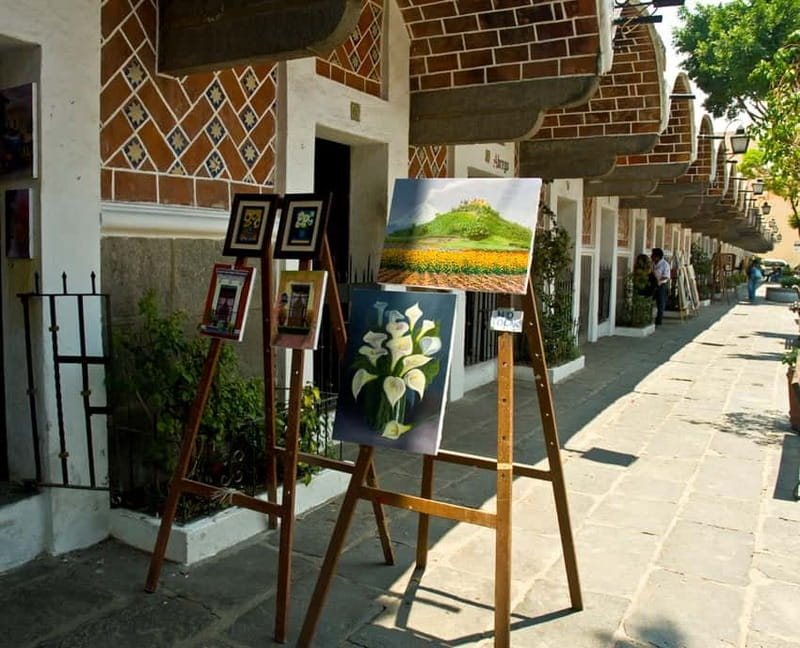
Sapos alley brings you into another side of central Puebla. The route includes the intricate alley and nearby artist neighborhoods, giving you a closer look at smaller urban spaces rather than only the city’s grand monuments.
The word intricate is useful here. The appeal is not just one famous building. It is the way narrow lanes, older facades, decorative details, and small businesses create a different rhythm from the main square.
The artist neighborhoods are another chance to see Puebla as a living city. You will pass through areas associated with local creative work, and your guide can connect these places to the broader architectural story. The tour does not list a specific gallery or workshop visit, so do not expect a formal art class or studio appointment. Think of this section as a neighborhood walk with cultural context.
I like this part because it helps prevent the tour from becoming a checklist of monuments. You are still learning about architecture, but you are also seeing how the old center functions at street level. The route’s private format should be useful here, since you can ask your guide to explain a facade or pause briefly when something catches your eye.
The Parian handcraft market
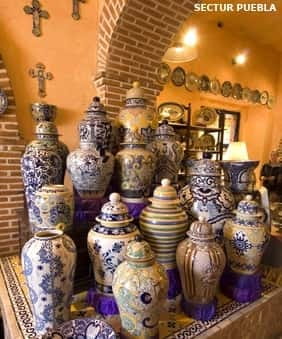
The Parian handcraft market gives the tour a practical ending. It is a place to see Mexican craftwork and get a sense of the city’s commercial traditions. The market also offers a chance to compare the carefully finished architecture of churches and civic buildings with the color and texture of handmade goods.
The market is worth treating as both a cultural stop and a shopping option. You can browse without making the entire tour about buying souvenirs. If you find something you want, remember that the walk may continue, so you may prefer to return later with more time and free hands.
Because the tour includes several neighborhoods and public spaces, the market feels like a natural final chapter. You have seen Puebla from its grandest religious interiors to its narrow lanes and working commercial streets. The route gives you a broad first look at the center without sending you out of town.
What the 5,000-building catalogue adds
The tour refers to more than 5,000 buildings included in its architectural catalogue. You will not enter all of them, of course. The figure gives you a sense of the scale of Puebla’s historic center and explains why a guided walk can be more useful than wandering without a plan.
A guide helps you notice the differences among architectural styles and building techniques. You may find that a doorway, facade, window, tiled surface, or ornamental detail tells you more than a famous landmark does. The tour is built around that close reading of the city.
This is where the experience earns its place for architecture fans. You are not only visiting the cathedral and Rosario Chapel. You are learning how to look at the streets between them. Once you begin comparing details, Puebla’s center becomes more rewarding on your own later.
The crossword supports this approach. It turns the walk into a small challenge and gives you a reason to remember facts instead of letting them pass by. It is a good fit for families, students, and adults who prefer an active tour rather than a long spoken lecture.
Is $59 a fair price for three hours?
At $59 per person, the tour sits in the midrange for a private guided city walk. The price includes the guide and entrance fees to the sites visited. It does not include transportation to the starting point, insurance, food, drinks, or shopping.
The value depends on how you use the guide. If you want a quick orientation and plan to visit the cathedral and chapel on your own, you may prefer to spend less and explore independently. If you want explanations in English or Spanish, entrance arrangements handled for you, and the flexibility of a private group, the price is easier to justify.
The cathedral and Rosario Chapel are the strongest value points because they combine major sights with context you may not get from a brief self-guided visit. The neighborhood sections add even more value if you are interested in urban design, local crafts, and the way the historic center works beyond its headline monuments.
A three-hour length is also practical. You can fit the tour into a morning or afternoon and still have time for a meal, additional sightseeing, or a return to the market. The tradeoff is that the schedule cannot linger everywhere. If you want extensive shopping or long photography stops, plan to come back after the walk.
Who will enjoy this Puebla walk?
I would recommend this tour to you if you want a focused first look at Puebla’s center, especially if you enjoy churches, historic buildings, and guided explanations. It also suits anyone who likes learning through small tasks, since the crossword gives the walk a playful structure.
The private format is helpful for couples, families, and small groups with different interests. You can ask questions without waiting for a large group to move on, and the live guide can explain the sights in English or Spanish.
The tour is listed as wheelchair accessible, which makes it worth considering for visitors who need an accessible option. Still, the experience takes place on city streets and includes lanes, public areas, churches, and a market. If you have specific mobility needs, contact the provider before booking so you can confirm that the route works for you.
You may want another option if your main goal is food tasting, shopping, nightlife, or a long museum visit. Those elements are not the focus here. This is an architecture and history walk with a few lively commercial and artistic stops along the way.
Useful planning details for the three-hour route
Reservations must be made at least 24 hours before the tour date. You can reserve now and pay later, which helps if your Puebla schedule is still changing. Cancellation is free up to 24 hours in advance for a full refund.
Starting times vary, so check availability before choosing your day. Since transportation is not included, use the meeting address at Portal Hidalgo when planning your route to the center.
The tour has a 4.9 rating from six reviews, with repeated praise for clear explanations, friendly service, and strong command of Puebla’s history and sights. One guest specifically praised Ronnie’s communication and manner, while another had a particularly good experience with Guadalupe. That pattern fits the tour’s main strength: a human guide who can turn a walk through old streets into a readable story.
Should you book the Puebla Architecture Walking Tour?
Book it if you want Puebla’s major architectural sights explained in a compact, private walk. The cathedral, Rosario Chapel, candy street, Sapos alley, artist neighborhoods, and Parian market create a well-balanced route, and the crossword adds more involvement than a standard follow-the-guide stroll.
Skip it if you prefer to wander alone, spend long periods shopping, or focus mainly on food. For most first-time visitors interested in Puebla’s historic center, $59 is reasonable because entrance fees and a live bilingual guide are included. Just arrive at the Portal Hidalgo meeting point ready to walk, look up, and pay attention to the details between the famous stops.
FAQ
Where does the Puebla Architecture Walking Tour meet?
The meeting point is Av. Juan de Palafox y Mendoza 14, Portal Hidalgo. At the visitor center, find the Tip Tours & DMC booth.
How long does the tour last?
The walking tour lasts three hours.
What languages are available?
The live guide is available in Spanish and English.
Is the tour private?
Yes. The experience is offered for a private group.
Are entrance fees included?
Yes. Entrance fees to the sites visited are included, along with the guide.
Is transportation from my hotel included?
No. Transportation from your hotel to the starting point is not included.
Newly added in the world
- Washington, DC: Georgetown Architecture Walking Tour★ 5.0 · 8 reviews
- Washington DC: Dupont Circle & Embassy Row Architecture Tour★ 5.0 · 6 reviews
- New Orleans : Garden District Architecture Walking tour★ 4.8 · 5 reviews
- Wilmington History and Architecture Tour★ 4.8 · 18 reviews
- Unveiling Brno: History, Culture & Architectural Delights★ 5.0 · 2 reviews
- Vicenza: Palladian Architecture Private Walking Tour★ 3.3 · 3 reviews
- Walk & Discover KL’s Architectural and Heritage Gems★ 5.0 · 7 reviews
- Private Colonial Williamsburg Architectural Tour★ 5.0 · 5 reviews
Walking Tours, compared.
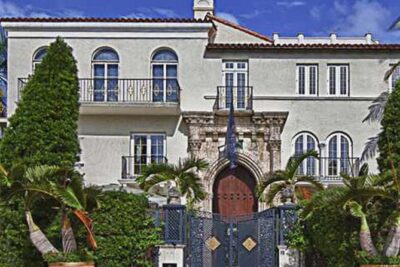
The Official Art Deco Walking Tour by The Miami Design Preservation League
Read our review →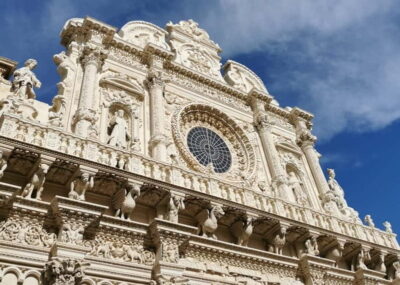
Baroque Architecture and Underground Walking Tour
Read our review →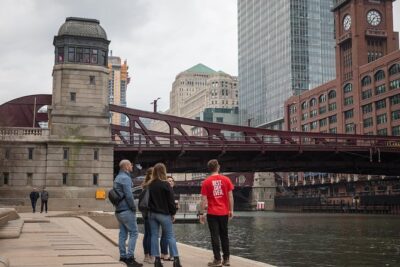
Chicago in a Day: Food, History & Architecture Walking Tour
Read our review →

Ramblas, Old Town, Gothic and Gaudi Architecture Walking Tour
Read our review →
Chicago’s Secret Interiors Architectural Walking Tour
Read our review →
Browse the lists this tour appears in