
Review · TICKETS
Barcelona: Sant Pau Recinte Modernista Entry Ticket
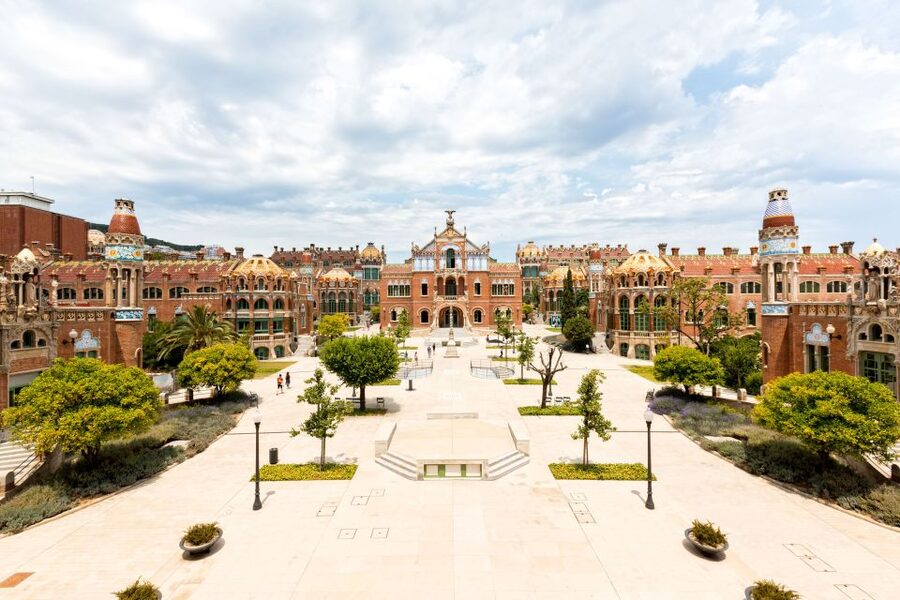
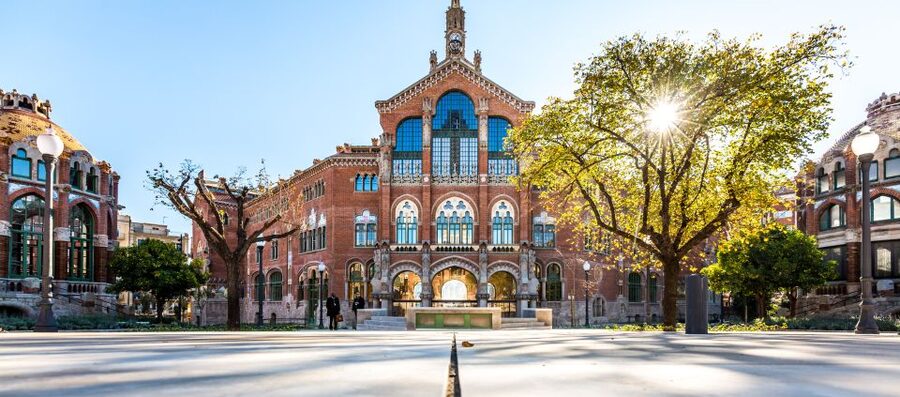
Sant Pau is not simply an old hospital with pretty tiles. It is a carefully planned garden hospital, built between 1905 and 1930 by architect Lluís Domènech i Montaner so patients could recover among fresh air, sunlight, greenery, and art. The result is one of Barcelona’s most rewarding places to see Modernisme without the crush of the city’s biggest sights.
I like the peaceful gardens and the way the pavilions connect through underground passages. I also like the human story: this was a public hospital serving Barcelona for about a century, not just a decorative palace. The main drawback is that a guided tour is not included, so you need to read the displays or arrange an audio guide if you want the fullest explanation.
Key points to know before you go
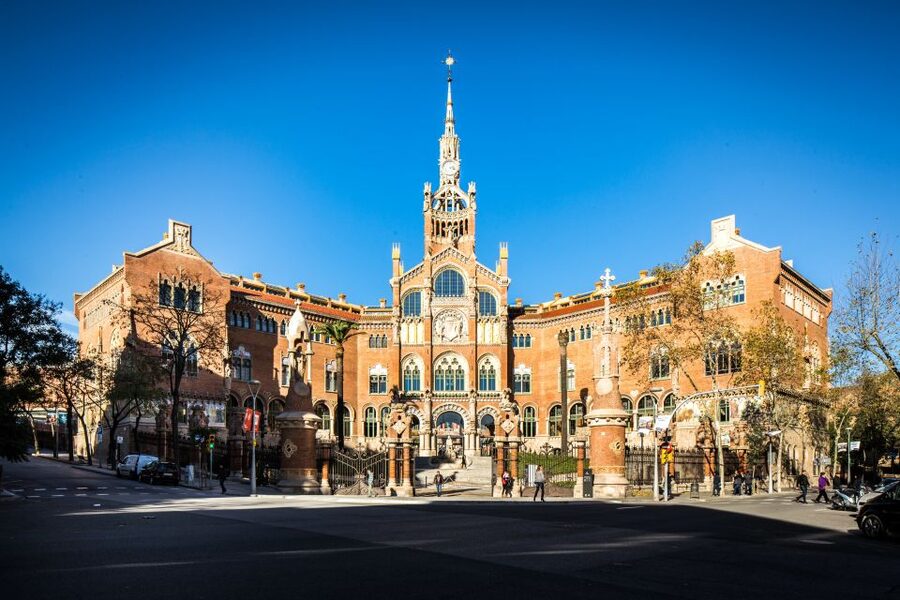
- A real working hospital until recently: Sant Pau only became a museum after serving Barcelona’s public for around 100 years.
- The underground passages matter: They connect the pavilions and help you understand how the hospital functioned.
- Look beyond the main facade: Side walls contain mural mosaics that are easy to miss if you hurry.
- Plan on at least 90 minutes: Many people spend closer to two hours because there is a lot to inspect.
- It is near Sagrada Família: You can combine the two, but Sant Pau offers a quieter change of pace.
- The $21 ticket is self-guided: You pay for entry, not a live guide or guided walking tour.
Why Sant Pau deserves time beyond Barcelona’s famous churches
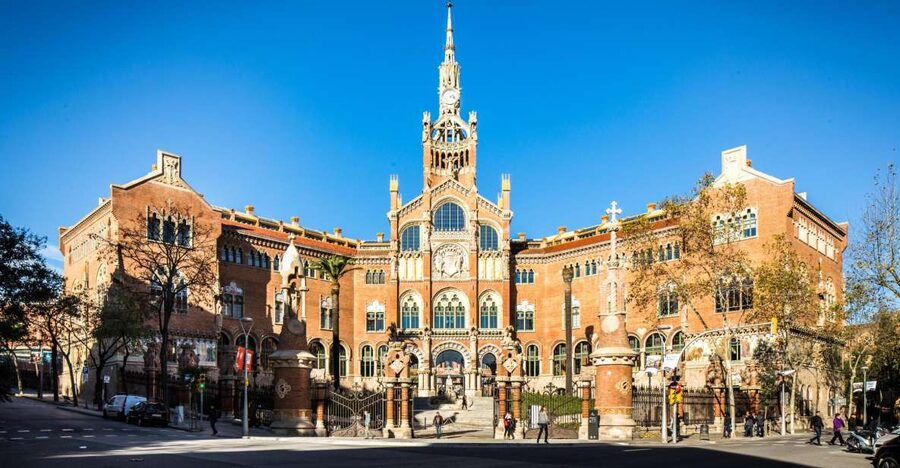
Barcelona is rightly famous for Antoni Gaudí, but Modernisme was a wider artistic movement. Sant Pau gives you a chance to see the work of another major architect, Lluís Domènech i Montaner, in a setting built for public welfare rather than private wealth.
The site was created when Barcelona’s old Hospital de la Santa Creu in El Raval had become too small. The answer was an ambitious new complex on the city’s expanding northern side. Domènech i Montaner designed separate pavilions connected by underground corridors, with gardens between them. This layout allowed different hospital functions to be separated while giving patients light, air, and pleasant surroundings.
That idea was advanced for its time. Sant Pau was intended to help poor patients, and its design reflected growing interest in hygiene, sanitation, and the role of surroundings in recovery. You see that purpose in the broad open spaces, planted areas, bright interiors, and separation of buildings.
The architecture is lavish, but it was not decoration for decoration’s sake. Sculpture, tile, stained glass, and color helped turn an institution into a place that felt humane. That combination is what makes Sant Pau more than another beautiful Barcelona building.
More Entry Tickets in Barcelona:
- Barcelona: Park Güell and Gaudí House Museum Entry Ticket
★ 4.5 · 6,326 reviews - Barcelona: Gaudí’s Park Güell Tour with Fast-Track Ticket
★ 4.8 · 4,512 reviews - Sagrada Familia & Gaudi Tour Private or Small Group with Tickets
★ 4.5 · 1,188 reviews
Entering the Art Nouveau complex
The address is Calle Sant Antoni Maria Claret, 167, in Barcelona’s Eixample district. The entrance area gives you your first sense of scale, but the real surprise comes as you move toward the central buildings and courtyards.
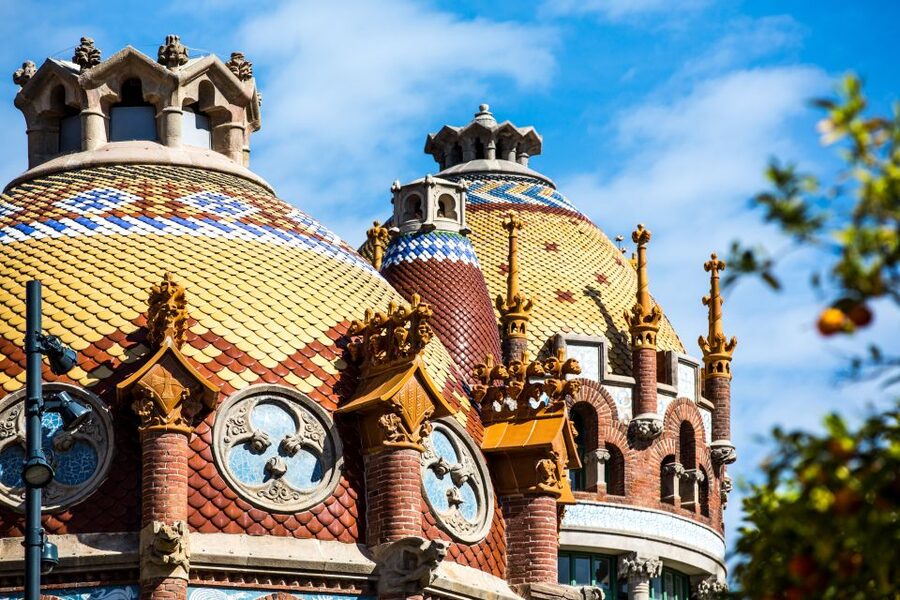
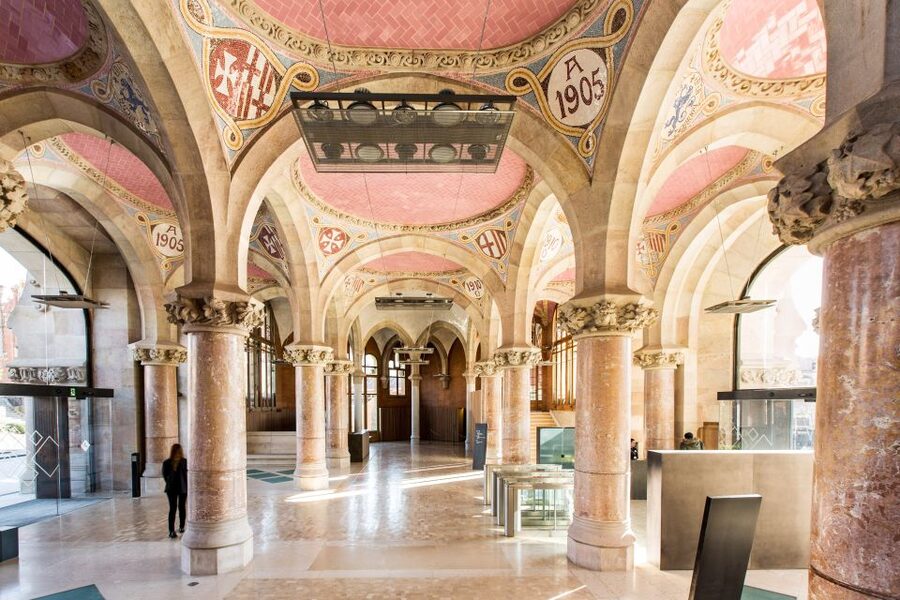
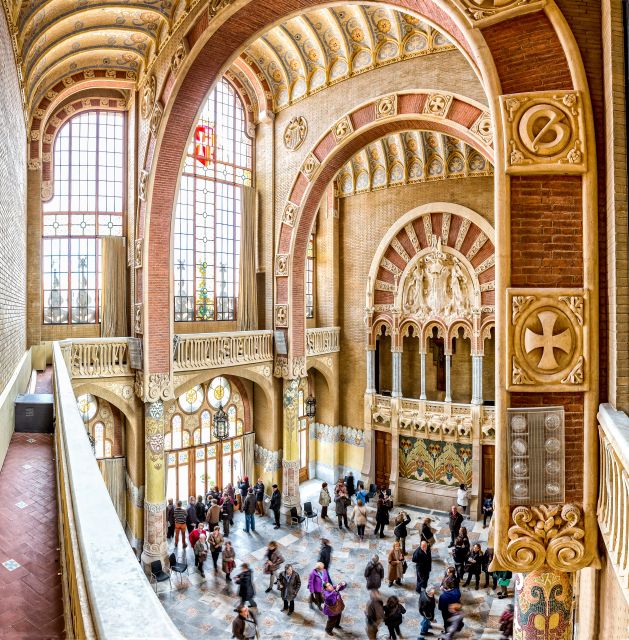
Give yourself a moment before rushing inside. Sant Pau rewards slow looking. The complex uses warm brick, pale stone, ceramic decoration, carved figures, floral motifs, and colored glass. The details can feel almost theatrical, yet the overall plan remains clear and orderly.
The central administrative building is usually the visual anchor. Its grand scale and detailed decoration make it easy to compare with Barcelona’s famous Modernista landmarks. You may hear it casually described as a Gaudí-style hospital, but it is the work of Domènech i Montaner, with its own design language and structure.
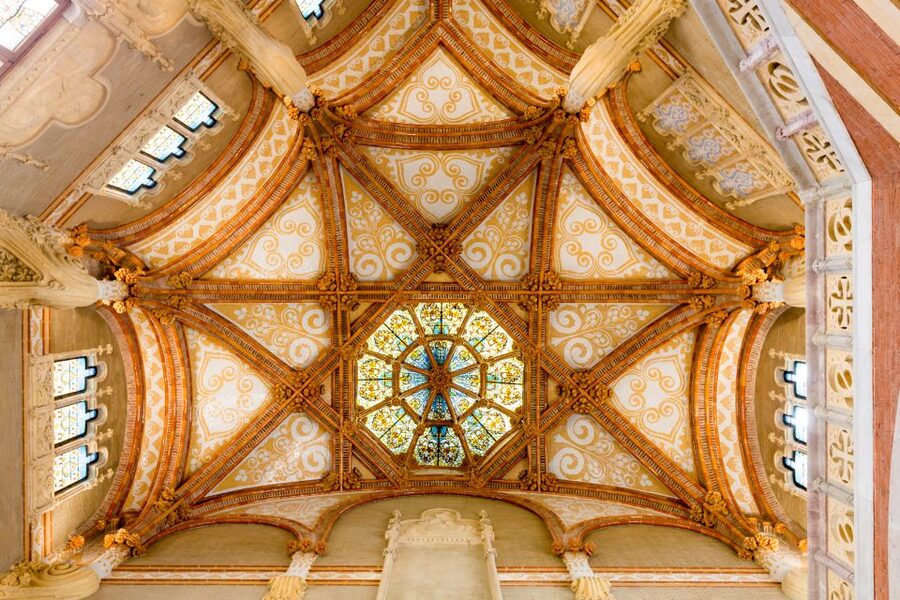
As you walk, look up frequently. Decorative ceilings, rooflines, towers, ceramic panels, and stained glass are easy to miss at eye level. The front buildings receive much of the attention, but the side walls and less obvious corners contain some of the best mosaics.
Following the pavilions and gardens
The heart of the visit is the movement from pavilion to pavilion. Rather than seeing one enormous hospital block, you explore a small planned city. Gardens and open paths separate the buildings, making the complex feel calmer than its urban location suggests.
The gardens are not just a pleasant pause between interiors. They explain the original medical concept. Patients were meant to have access to air, light, plants, and outdoor space. That approach may seem ordinary now, but it was a meaningful change from crowded older hospitals.
You can look at the pavilions from several angles, then enter selected restored spaces to see how the hospital worked. The route gives you both the decorative side of Modernisme and the practical side of healthcare. This mix is especially interesting if you work in medicine, nursing, public health, or science.
Inside, watch for the contrast between the public grandeur of the complex and the ordinary business of treating patients. Hospital rooms, medical instruments, and displays help place the architecture in its working context. One restored room is presented as it appeared in 1932, giving you a more direct sense of the people who used the building.
The experience is strongest when you connect the beautiful surroundings to the institution’s purpose. This was built to care for people, not simply to impress them.
Underground passages that explain the hospital
The underground passages are one of Sant Pau’s most useful features. They connect the separate pavilions and show how staff and services could move around the complex without crossing every garden and courtyard.
These corridors also add variety to the visit. After looking at bright facades and open spaces, you move below ground into a more functional part of the hospital. The contrast helps you understand that Sant Pau was a working medical institution, not a set of decorative buildings arranged for tourists.
Take your time here. The passages may not have the instant visual impact of the main facade, but they answer practical questions about how the complex operated. They also help you read the site as a complete plan rather than a collection of unrelated structures.
For visitors interested in hospitals, the underground route is likely to be one of the most memorable parts. It gives the architecture a human and logistical dimension.
A few more architecture walks in Barcelona worth a look
- Barcelona: Sagrada Familia, Modernism, and Old Town Tour
★ 4.7 · 1,621 reviews - Ramblas, Old Town, Gothic and Gaudi Architecture Walking Tour
★ 5.0 · 723 reviews - Historical and Modernist Bike Tour Barcelona
★ 5.0 · 262 reviews - Sant Pau Recinte Modernista Entrance Ticket in Barcelona
★ 4.5 · 230 reviews
Decorative details worth slowing down for
Sant Pau is a place where a quick circuit can leave you with only a general impression. The details deserve a slower pace.
Look for:
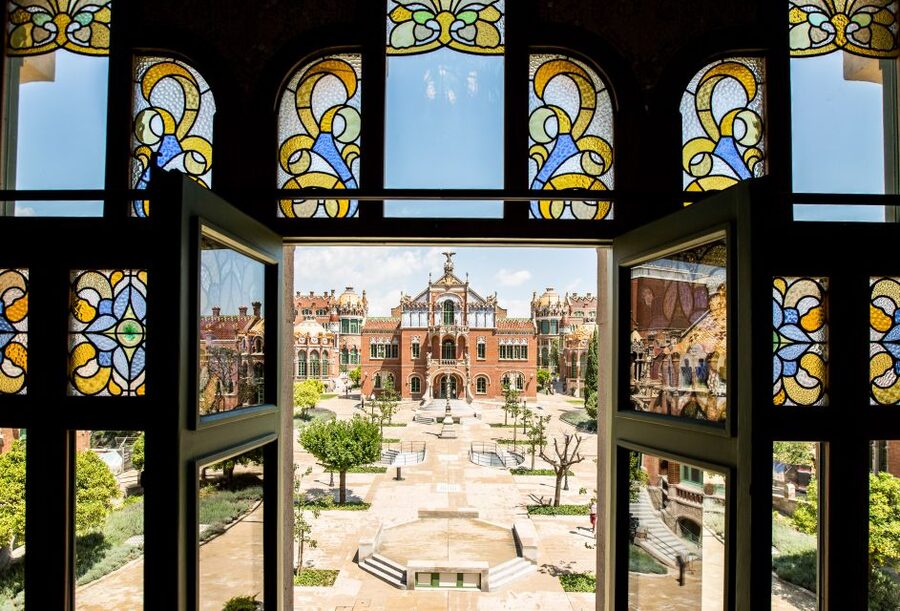
- Mosaics on side walls: Walk around the fronts of the buildings instead of stopping only in the central courtyard.
- Stained glass: Colored windows bring light into spaces that might otherwise feel institutional.
- Sculpture: Carved decoration carries religious, natural, and medical themes.
- Ceramic work: Tiles add color and help unify the different pavilions.
- Roof and ceiling details: The upper parts of the buildings are easy to miss, so look up.
- Courtyard views: Sit for a few minutes and study how the pavilions frame the open spaces.
The decoration is not limited to one grand room. It continues across the complex, so your attention keeps shifting between small details and broad views.
Photography is tempting, but do not let your camera turn the visit into a checklist. The scale and color are easier to appreciate when you stop trying to record every surface.
The hospital story behind the beauty
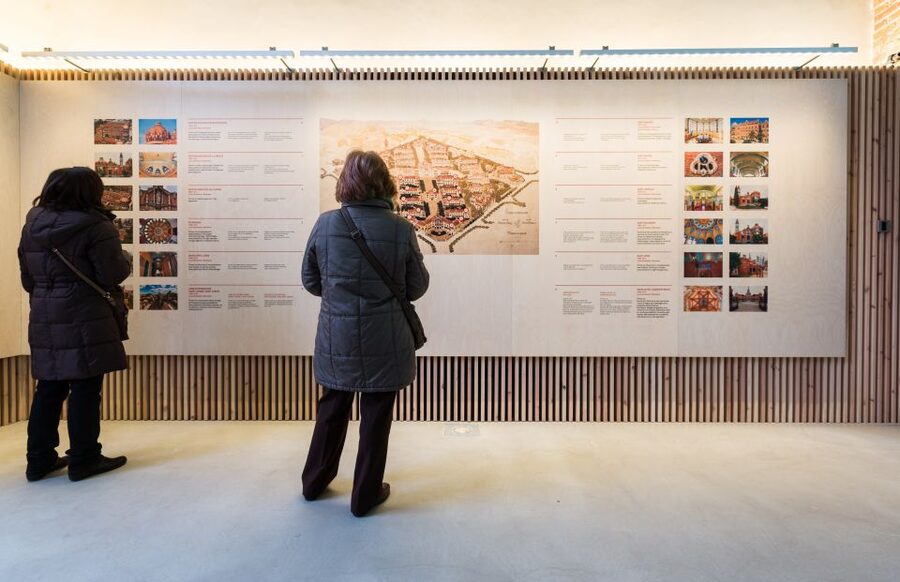
Sant Pau’s history gives the visit its weight. The old Hospital de la Santa Creu needed a new home because it had outgrown its location in El Raval. The replacement complex reflected new thinking about public health, charitable care, and hospital design.
The institution had long been connected with welfare and service to the poor. That matters when you look at the elaborate decoration. Sant Pau was not a private residence built to display one family’s fortune. It was a public-serving hospital designed to give vulnerable patients a more humane setting.
The site remained a hospital for roughly a century. That recent working life is part of the appeal. You are not looking at a building that stopped functioning centuries ago. Medical staff and patients used these pavilions, rooms, gardens, and corridors within living memory.
Displays about medical instruments and former hospital rooms help bridge the gap between the elegant architecture and everyday treatment. If you have worked in healthcare, you may find the changing relationship between medical staff, hospital administration, and patient care especially interesting.
Even without a medical background, you can understand the basic idea: the building was designed around recovery, hygiene, and dignity. The architecture gives those ideas a physical form.
What the self-guided format is really like
This is an entry ticket, not a guided tour. You can walk at your own pace, stop when you want, and spend more time in the areas that interest you. A printed plan or pamphlet can be enough for visitors who prefer to explore independently.
The self-guided format is a good fit if you dislike being hurried. You can pause in the courtyard, reread a display, or return to a building without holding up a group. It also works well for families and mixed-interest groups, since each person can move at a different speed.
The tradeoff is context. Without a live guide, you may not receive a clear explanation of how every building fit into the hospital system or why particular decorative elements matter. Some visitors specifically wished they had used an audio guide, while others found the written information sufficient.
If you want the richest interpretation, check whether an audio guide is available when you book or arrive. If you prefer architecture, photography, and quiet observation, the independent format may be all you need.
The suggested visit lasts about 1.5 hours. I would allow two hours if you want to read the displays, inspect the medical material, explore the passages, and sit in the gardens. It is possible to move faster, but the site rewards patience.
Timing, crowds, and combining it with Sagrada Família
Sant Pau is only a short distance from Sagrada Família, making it an easy pairing in a Barcelona sightseeing plan. The two places share the Modernisme period, but the experience is different. Sagrada Família is a major religious landmark with enormous public attention. Sant Pau is spread across gardens and pavilions, so it usually feels less compressed.
An early arrival can make a real difference. One visitor arrived at 9:30 in the morning and found the complex especially calm. Visiting early also gives you better conditions for courtyard photographs and quiet inspection of the architecture.
The attraction is valid for one day, so you are not forced into a tightly timed 90-minute sprint. Check the current starting times and opening arrangements when you reserve. The ticket has free cancellation up to 24 hours in advance, and the reserve-now, pay-later option can help if your Barcelona schedule is still shifting.
The nearby metro makes the site straightforward to reach. It can also be a practical stop before leaving Barcelona, especially if you have small carry-on bags. Lockers are available, though the space is described as suitable for carry-on luggage rather than large suitcases.
There is no cafe listed as part of the experience. You will find cafes outside the complex, so plan your food break before or after the visit rather than expecting refreshments inside.
Is the $21 entry ticket good value?
At $21 per person, Sant Pau is not a throwaway stop, but it offers more than a single decorated room. You are paying to see a large architectural complex, restored interiors, gardens, underground connections, medical displays, and the story of a public hospital.
The value is strongest for visitors who enjoy architecture and history. You can spend 90 minutes here without feeling that you have simply looked at one facade and left. If you take two hours, study the details, and use the displays, the price compares well with other major Barcelona attractions.
The ticket is less compelling if you only want a quick photograph or if you already have a packed schedule of costly sights. Sant Pau requires attention. Its appeal grows as you notice how the buildings connect, how the gardens serve the medical plan, and how the decorative program continues from one pavilion to the next.
Because there is no guided tour included, the value depends partly on how much interpretation you want. Independent visitors get flexibility. Visitors who want a strong narrative should budget time for reading or arrange an audio option if available.
Who will enjoy Sant Pau most
I would recommend Sant Pau especially to:
- Architecture fans who want more than the usual Gaudí stops.
- Medical and nursing professionals interested in older hospital design and treatment.
- Visitors who appreciate public history and social welfare.
- Families who prefer open courtyards and a flexible self-guided visit.
- Repeat visitors to Barcelona looking for a major sight that is often calmer than the city’s headline attractions.
- Anyone pairing the complex with Sagrada Família.
It may be less suitable if you need constant live explanation or if you are looking for a fast attraction with only one main room. The site is large enough that some visitors may wish more buildings were open or that the route had clearer signs. Keep that in mind if you prefer a tightly directed museum experience.
The complex is wheelchair accessible. Children 11 and under are admitted free, but a parent or guardian must accompany them. Pets, smoking, alcohol, and drugs are not allowed.
Should you book Sant Pau Recinte Modernista?
Yes, if you want to see Barcelona’s Modernisme from a different angle. Sant Pau combines extraordinary architecture with a serious public purpose, and the gardens and underground passages keep the visit from feeling like another indoor museum.
Book it if you can give it at least 90 minutes, and arrive early if you want a quieter visit. Look closely at the side mosaics, go below ground, and do not forget the medical rooms and instruments. I would choose Sant Pau over another generic sightseeing stop, especially for repeat visits or anyone interested in healthcare and city planning.
Skip it only if your schedule is so tight that you would rush through the complex, or if you strongly prefer a live guide and do not want to read or use an audio option. For most visitors who value thoughtful architecture, human stories, and a peaceful break from central Barcelona, the $21 ticket earns its place.
FAQ
How long does the Sant Pau Recinte Modernista visit take?
The experience is described as a 1.5-hour visit, but you can spend around two hours if you want to explore the pavilions, gardens, underground passages, displays, and medical rooms carefully.
Is a guided tour included?
No. The ticket includes entrance to Sant Pau Recinte Modernista, but not a guided tour.
Is the visit self-guided?
Yes. You explore the complex at your own pace. Written material is available, and some visitors choose an audio guide for more explanation.
How much does admission cost?
The listed price is $21 per person.
Where is Sant Pau Recinte Modernista?
The meeting point is Calle Sant Antoni Maria Claret, 167, 08025 Barcelona, Spain.
Is Sant Pau close to Sagrada Família?
Yes. The complex is a short distance from Sagrada Família and can be combined with a visit there.
Is the site wheelchair accessible?
Yes, Sant Pau Recinte Modernista is wheelchair accessible.
Are children admitted free?
Children under 12 are admitted free. A parent or guardian must be present.
Can I cancel my booking?
You can cancel up to 24 hours in advance for a full refund. A reserve-now, pay-later option is also available.
Newly added in Barcelona
- Barcelona: Private Gaudi Guided Segway Tour★ 5.0 · 6 reviews
- Barcelona: Guided tour e-bike Barcelona historical and modernist Barcelona★ 4.5 · 5 reviews
- Barcelona: Wonders of Gaudi Bike Tour★ 4.3 · 6 reviews
- Barcelona: Exclusive Exploration of Gaudi’s Masterpieces★ 5.0 · 2 reviews
- Barcelona Architecture Walking Tour With Casa Batlló Upgrade★ 4.8 · 11 reviews
- Barcelona: Gaudi Tapas & Wine Tasting Small Group Tour★ 5.0 · 3 reviews
- Barcelona: E-Scooter Gaudí & the Sea Tour★ 4.3 · 10 reviews
- Barcelona Beyond Gaudí: Modernism, Rooftops, and Hidden Gems★ 5.0 · 2 reviews
Tickets, compared.
Park Güell and Gaudí House Museum Entry Ticket
Read our review →
Gaudi’s Casa Vicens Skip-the-Line Entrance Ticket
Read our review →
Gaudí’s Park Güell Tour with Fast-Track Ticket
Read our review →
Architecture River Cruise Skip-the-Ticket Line
Read our review →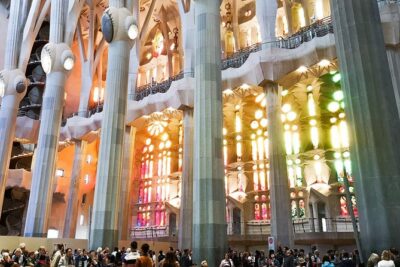
Sagrada Familia & Gaudi Tour Private or Small Group with Tickets
Read our review →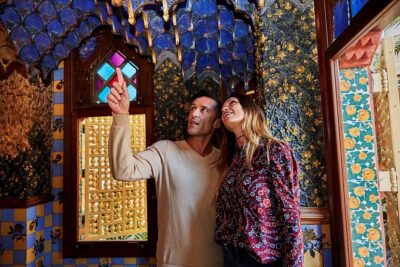
Gaudi´s Casa Vicens Skip the Line Ticket with Audioguide
Read our review →

Browse the lists this tour appears in