
Review · HISTORICAL TOURS
The History and Architecture of Downtown Los Angeles
Downtown Los Angeles comes alive on this tour through its buildings, courtrooms, movie sets, and old neighborhoods. You ride the 1901 Angels Flight, trace Bunker Hill’s past, sample mochi in Little Tokyo, and see places tied to Blade Runner, La La Land, Batman, Bosch, OJ Simpson, Bugsy Siegel, and Charles Manson. Chris, the tour’s creator, leads the walk himself, rather than handing you over to a guide reading prepared lines.
I like the way the tour connects grand architecture with ordinary city life. The mochi stop at Fugetsu-Do and the food advice for Grand Central Market give the day a local flavor, while the Bradbury Building and Walt Disney Concert Hall give architecture fans plenty to see. The main caution is simple: three hours means several miles on foot, with some slopes, little sitting, and limited restroom access.
Key points about this Downtown LA walk
- Ride Angels Flight for free as part of the tour, then learn why Bunker Hill once depended on the short funicular.
- See major works by Frank Gehry and Arata Isozaki, including Walt Disney Concert Hall and the Museum of Contemporary Art area.
- Visit Little Tokyo through food and memory, with a mochi sample from Fugetsu-Do, founded in 1903.
- Connect City Hall and the Civic Center to famous film and court cases, from Dragnet to the Lincoln Lawyer.
- Step inside the Bradbury Building, one of the tour’s strongest architecture and film stops.
- Finish near Grand Central Market, with practical suggestions for finding a good meal.
Why Downtown LA makes a better history lesson than Hollywood
Los Angeles is often sold through movie stars, palm trees, and hillside homes. This walk takes a different route. Downtown is where the city began with 44 people, and its streets show how a small settlement became a huge American city.
The story is told through buildings rather than a long lecture. You see grand civic projects, Japanese American history, old commercial blocks, modern art spaces, and places that filmmakers have repeatedly used as ready-made scenery.
That mix is the tour’s greatest strength. You are not simply stopping for photographs. You are learning why the buildings are there, how the neighborhoods changed, and how Los Angeles keeps turning its past into part of its present.
Chris has led tours for KTLA, Spectrum News1, and NHK Japan. The experience is designed around his own research and interests, and that matters on a route with so many subjects. He can move from architecture to true crime, then from a movie reference to neighborhood history without making the walk feel like separate tours stitched together.
The pace is not built around rushing from one attraction to the next. Still, you should expect a proper city walk, not a short sightseeing loop. One outing covered about five miles, and the full experience lasts three hours.
More History Walks in the USA:
- Chicago in a Day: Food, History & Architecture Walking Tour
★ 5.0 · 1,153 reviews - Charleston’s Best Highlights: History, Culture & Architecture
★ 5.0 · 422 reviews - Palm Springs Modernism Architecture & History Bike Tour
★ 5.0 · 359 reviews
Angels Flight and the old Bunker Hill
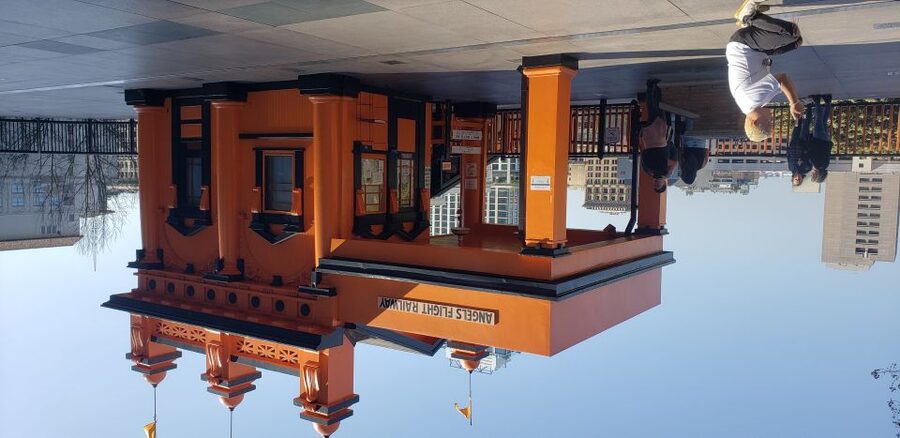
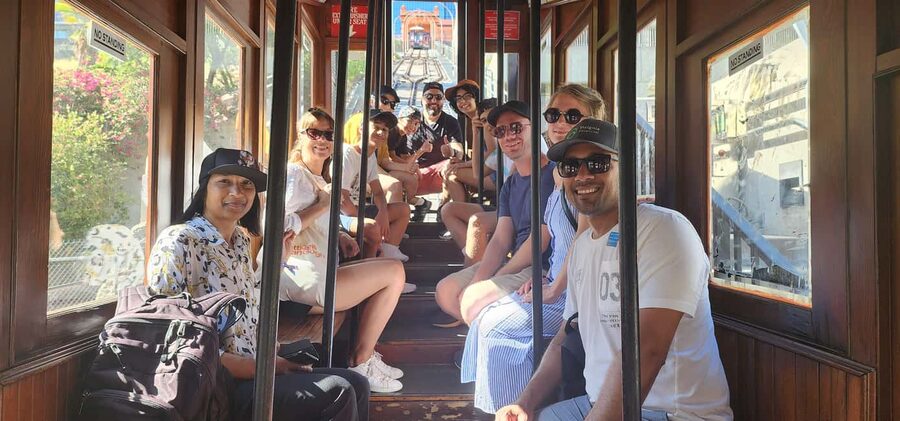
Meet at the lower part of Angels Flight Railway, at the stairs to the left of the train. This is a useful starting point because you begin with one of Downtown LA’s most recognizable sights rather than spending the first half hour getting oriented.
Angels Flight opened in 1901 and carries you up Bunker Hill in about ten minutes, including the sightseeing stop and explanation. The ticket is included, so you do not need to pay extra for this part.
The ride also sets up the first important story. Bunker Hill was once a residential community, and Angels Flight helped people move between the hill and the lower part of downtown. Today, the little railway can feel like a film prop, but the point of the tour is to show you that it once served daily life.
Fans of television and film may recognize it from Bosch and La La Land. The references are enjoyable, but the stronger part is seeing how a tiny piece of transport fits into the city’s growth.
At the top, the tour moves through Bunker Hill and past major cultural buildings. There are slopes, so take the warning about comfortable shoes seriously. In hot weather, bring water and expect Chris to look for shade when possible.
Gehry, Isozaki, and Downtown’s modern cultural center
The route passes the Museum of Contemporary Art, The Broad, Walt Disney Concert Hall, and the Music Center. Each stop gives you a different view of how Los Angeles presents art, music, and public life.
Walt Disney Concert Hall receives the most attention, with about fifteen minutes for a guided look. Frank Gehry’s stainless-steel exterior is hard to miss, but a guide helps you notice more than the unusual curves. You get context about how the concert hall developed and why it became such a major part of Downtown’s identity.
The Broad and the Museum of Contemporary Art receive shorter stops, around five to ten minutes each. These are mainly photo and explanation points rather than full museum visits. You should not expect time to tour their galleries, but you will see how they fit into the same cultural district.
The Music Center is another pass-by stop. The route keeps you moving, which is helpful because Downtown has far more major buildings than any three-hour walk can cover.
Architecture fans will appreciate the range of designers. Frank Gehry is the best-known name here, but Arata Isozaki is also part of the story. You get a useful reminder that Los Angeles architecture is not only Spanish revival houses and glass towers. Its public buildings also reflect late twentieth and early twenty-first century design.
City Hall, the Civic Center, and LA’s courtroom stories
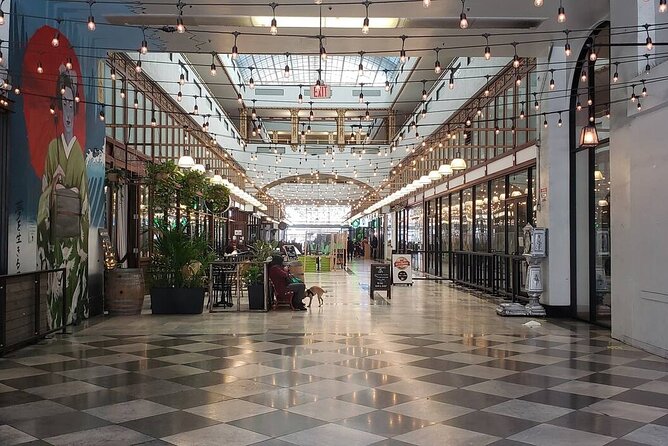
City Hall is the visual anchor of the Civic Center section, which takes about twenty-five minutes. Its role reaches well beyond government. The building has appeared in Batman, Superman, War of the Worlds, The Lincoln Lawyer, The Rookie, and Dragnet, among other productions.
That list gives you an easy way into the subject, but the building itself is the main attraction. You can look at City Hall as a movie location, a working civic building, and a symbol of Los Angeles all at once.
The tour also points out where high-profile criminal and civil cases have been handled. OJ Simpson, the Night Stalker, Bugsy Siegel, and Charles Manson are part of the courtroom story. This is not a separate true-crime tour, so the cases support the wider history of the Civic Center rather than taking over the whole outing.
I like this section because it connects public architecture with the people who have shaped the city’s reputation. It also adds a practical sense of place. Names that usually appear in headlines become tied to actual streets and buildings.
Do not expect a full courthouse visit or courtroom access. The value is in understanding the area from the outside and hearing how law, government, entertainment, and public memory overlap in Downtown LA.
A few more architecture walks in the USA worth a look
- Chicago Architecture River Cruise
★ 5.0 · 15,756 reviews - Chicago River 90-Minute Architecture Tour
★ 4.5 · 9,629 reviews - Chicago River: 1.5-Hour Guided Architecture Cruise
★ 4.8 · 8,046 reviews - Chicago Architecture Center River Cruise aboard First Lady
★ 5.0 · 5,536 reviews
Little Tokyo through Fugetsu-Do and Japanese Village Plaza
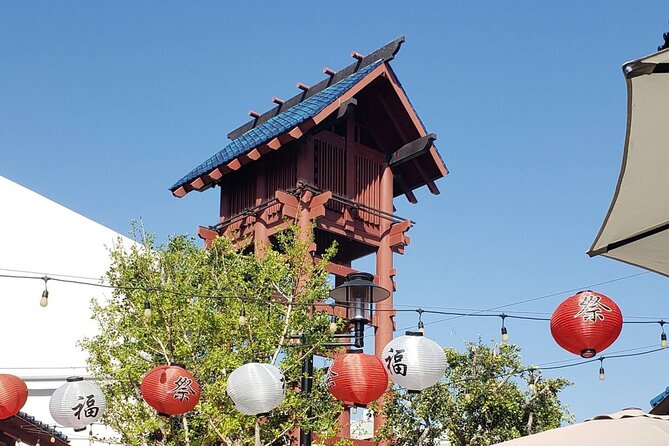
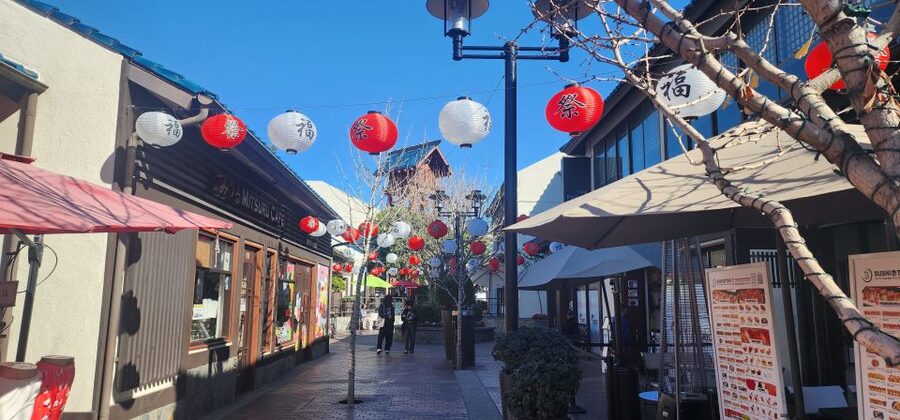
After the Civic Center, the route heads into Little Tokyo. This is one of the more enjoyable changes of mood during the walk. The neighborhood brings food, shopping, Japanese American history, and a more intimate street feel after the large civic and cultural buildings.
The stop at Fugetsu-Do is included, with a mochi sample. The confectionery dates to 1903 and is described as the oldest in Los Angeles. Ten minutes is not enough for a full food tour, but it is enough to taste something and get a useful introduction to one of Little Tokyo’s long-running businesses.
You also visit Japanese Village Plaza and Astronaut Ellison S. Onizuka Street. These stops help you see Little Tokyo as more than a place to eat. The neighborhood has gone through serious changes and difficult periods, and the tour places its shops and public spaces within that wider story.
Plan to return later if you want to shop or eat. The tour only offers a brief taste, and the neighborhood has more to explore than the schedule allows. The included mochi is a small detail, but it makes the history easier to remember and gives you a practical reason to make Little Tokyo part of your own LA plans.
Historic Core, the Bradbury Building, and a movie-set classic
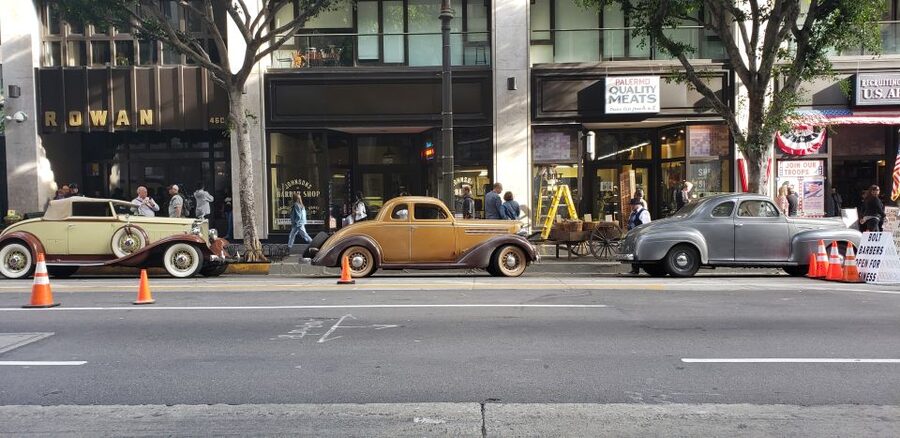
The Historic Core brings some of the tour’s most memorable interiors and street scenes. You pass Vibiana, then reach the Bradbury Building for a roughly ten-minute visit and guided explanation.
The Bradbury Building feels unlike the modern concert hall district. Its interior takes you into another period, with ornate ironwork, stairs, balconies, and a strong sense of age. It also played a major role in Blade Runner, so science-fiction fans have a clear reason to pay attention.
The tour uses the building well because it links architecture and film without treating either as an afterthought. You can appreciate the design on its own, then recognize why filmmakers chose it for a futuristic story.
The visit is brief, so this is not a slow architectural sketching session. Bring your camera, but also listen to the explanation. The building is more rewarding when you understand its place in Downtown’s changing fortunes.
Biddy Mason Memorial Park follows. The stop gives the walk another human and social dimension. It is easy for a city tour focused on grand buildings to forget the people who lived and worked around them, so this pause helps widen the story beyond architects and movie studios.
The Last Bookstore and Grand Central Market
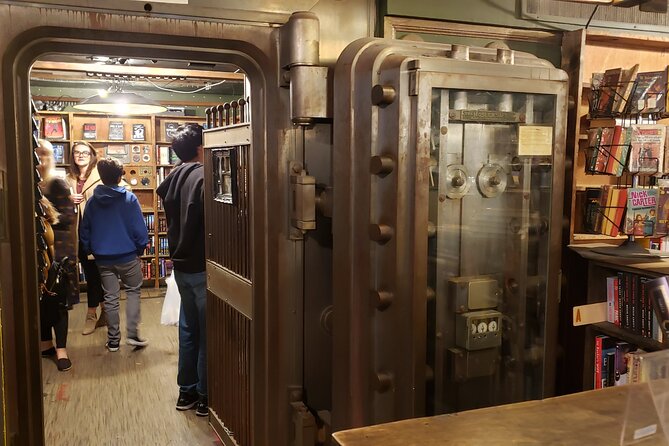
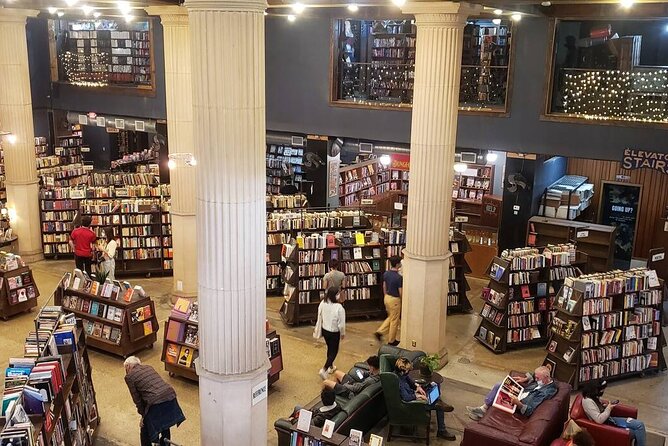
The Last Bookstore is housed in a 1915 bank and is described as Los Angeles’s largest new and used bookstore. The setting is part of its appeal. You get a chance to look around a memorable interior rather than simply photographing another exterior.
The stop is useful for readers, architecture fans, and anyone who wants a break from formal sightseeing. It also gives you a practical place to return to if you have time after the tour.
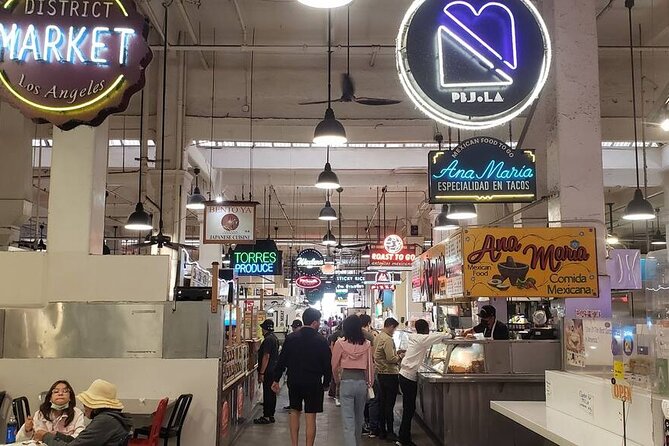
The walk ends at Grand Central Market, with about ten minutes for a food-market visit and recommendations on where to eat. Drinks are not included, and you should budget separately for anything you buy here.
This is a smart ending. Grand Central Market is more useful when you have guidance about what to try, especially if you are staying downtown for several days. The tour does not promise a full meal or a long market crawl, so think of it as an orientation and a chance to choose your next stop.
Afterward, you return to the starting point at 341 South Hill Street. If you parked nearby, lots around Grand Central Market generally cost about $10 to $20 per day. The market also has restrooms across from the meeting point, so use them before the walk begins. There are only a couple of restroom opportunities once the tour is underway.
What the $39 price really covers
At $39 per person, the tour offers good value if you want a guide to connect many separate sights in one morning or afternoon. Angels Flight is included, as is the mochi sample, and the route covers major architecture, Little Tokyo, the Civic Center, the Historic Core, and film locations.
You are not paying for museum admissions or a full meal. Several stops are pass-bys, and the tour does not provide drinks or parking. The value comes from the interpretation, the route planning, and the guide’s ability to explain why these places matter.
A self-guided walk would cost less, especially if you skipped the funicular. But you would need to research the buildings, work out the order, and connect the film references and court history yourself. For a first visit to Downtown LA, $39 is a reasonable price for three hours of structure and context.
Who should book this walk
I would choose this tour if you enjoy architecture, city history, movies, true crime, bookstores, and local food in roughly equal measure. It also suits anyone staying downtown for several days who wants an orientation before exploring alone.
The tour is a strong choice for families with older children, couples, solo visitors, and anyone who prefers a guide who can answer questions. Chris is described as funny, patient, flexible, and attentive to the group. Several outings were small, which can make the experience feel personal, though group size can change.
You should think twice if walking several miles is difficult. The tour includes gentle slopes and long periods on your feet, and it is not suitable for people with mobility impairments. Los Angeles heat can also make the route harder, so carry water, wear comfortable shoes, and bring a camera.
The tour is offered in English only. Free cancellation is available up to 24 hours before the start, and you can reserve now and pay later if you want to keep your plans flexible.
Should you book the Downtown LA history tour?
Book it if you want to understand Downtown Los Angeles rather than simply collect photographs. The strongest parts are the personal guiding by Chris, the Angels Flight ride, the thoughtful architecture route, the mochi at Fugetsu-Do, and the way City Hall and the Civic Center are tied to both public life and film.
Skip it if you want a short, relaxed outing with little walking or if you prefer spending hours inside museums. This is an active city walk with brief visits and plenty of outdoor time.
For most first-time visitors who want an alternative to the usual Hollywood circuit, I would book it early in a Downtown stay. You will finish with a clearer sense of how Los Angeles grew, plus a useful list of places to revisit for food, books, and a closer look.
FAQ
Where does the Downtown Los Angeles tour begin?
Meet at the lower part of Angels Flight at 341 South Hill Street. Look for the area with stairs to the left of the train, where your guide should be waiting.
How long does the tour last?
The tour lasts three hours.
Who leads the tour?
Chris, the creator of the tour, leads the experience. The tour is conducted in English.
Is the Angels Flight ride included?
Yes. The Angels Flight ride is included in the tour price.
Is food included?
A mochi sample at Fugetsu-Do Bakery Shop in Little Tokyo is included. Drinks and any other food purchases are not included.
How much walking is involved?
You should be ready to walk several miles, with one outing covering about five miles, and manage a couple of gentle slopes. Comfortable shoes and water are recommended.
Is parking available?
Parking is available at Grand Central Market and in nearby lots. It usually costs $10 to $20 per day.
Newly added in the USA
- Art Deco Tour of South Beach in French★ 4.5 · 8 reviews
- Award-winning Art Deco & Neon Lights Walking Tour★ 5.0 · 5 reviews
- Miami Beach Art Deco Segway Tour★ 4.5 · 17 reviews
- Boston: Freedom Trail History and Architecture Walking Tour★ 4.8 · 18 reviews
- Boston: Harbor and Charles River Architecture Boat Tour★ 4.6 · 9 reviews
- Chicago: Guided Tour with Architecture River Cruise★ 4.5 · 20 reviews
- Iconic Capitol Hill Architectural Walking Tour★ 5.0 · 21 reviews
- South Beach Food Tour- Culinary & Art Deco & History★ 5.0 · 22 reviews
Historical Tours, compared.
Chicago in a Day: Food, History & Architecture Walking Tour
Read our review →
Charleston’s Best Highlights: History, Culture & Architecture
Read our review →
Palm Springs Modernism Architecture & History Bike Tour
Read our review →
Historic Georgetown: History, Gossip, & Architecture Walking Tour
Read our review →
Charleston History, Homes, and Architecture Guided Walking Tour
Read our review →
Historical and Architectural Chicago Fireboat River & Lake Cruise
Read our review →Browse the lists this tour appears in