
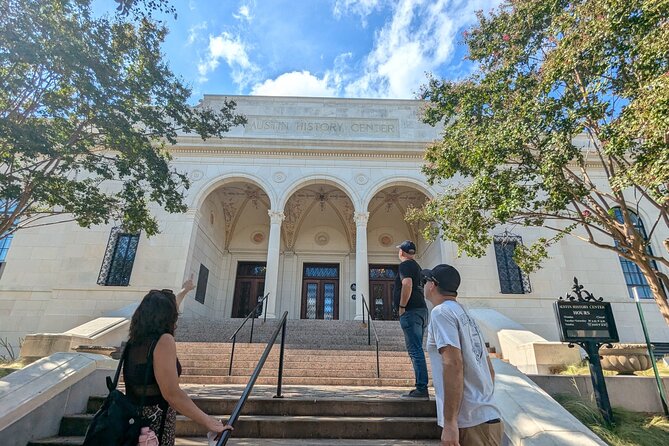
Review · WALKING TOURS
Downtown Austin Historical Architecture Walk
Austin’s best architectural stories are packed into a surprisingly small area. This walk links the grand Texas Capitol, Civil War-era homes, an Art Deco courthouse, a cathedral, a famous hotel, and an old theater in one tidy route through downtown.
I like the varied architecture and the fact that you actually enter the Driskill rather than only view it from the sidewalk. I also like the guide-led storytelling, especially if Emily leads your group. She has a strong grasp of local history and may add an extra stop when she sees that you are keen on buildings. The main drawback is pace: with eight stops in 1 hour 45 minutes, most places get a short look from outside.
Key Points
- The Driskill is the only interior visit, giving you a closer look at Austin’s grandest historic hotel.
- Bremond Block offers a calm change of scene, with well-kept Victorian houses built after the Civil War.
- The Texas Capitol receives a short but useful introduction from the south lawn rather than an interior tour.
- The route connects government, residential, religious, and commercial architecture in one compact walk.
- Emily has earned special praise for clear answers and local suggestions, making this useful early in an Austin stay.
- The $56 price reflects a small-group history lesson, not admission tickets, since the listed stops are free to enter or view.
Why This Short Austin Walk Works
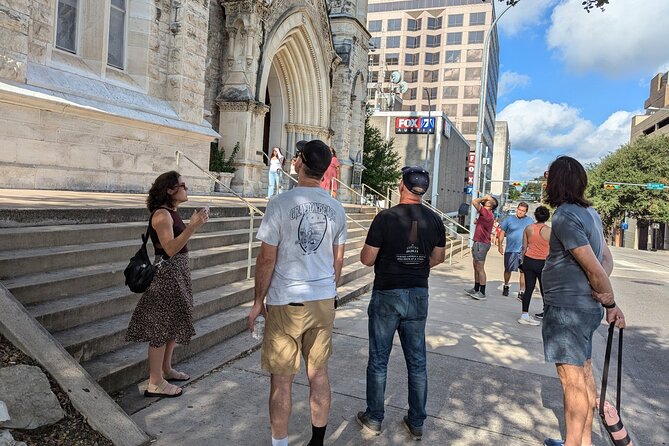
Austin is often sold through music, food, and nightlife. Those are good reasons to visit, but the city center also tells a quieter story through its buildings. This tour lets you read that story in physical form, moving from government power to private homes and then toward the commercial heart of downtown.
The route begins at 103 East 5th Street at 9:45 a.m. and returns to the same meeting point. That makes it easy to fit into a morning, and it gives you a useful orientation before spending the rest of the day in central Austin.
You should expect steady walking and frequent stops. The tour requires a moderate level of fitness, and you will spend much of the time outdoors. The pace is not designed for a slow photographic study of every facade. Instead, the guide gives each building a clear place in Austin’s story, then keeps the group moving.
The maximum group size is 25 people. That is large enough to have energy but still manageable for a walking tour, provided you stay near the guide. The strongest part of the experience is the interpretation. You are not simply handed a list of construction dates. You hear why the buildings look the way they do and how the city around them changed.
More Walking Tours in the USA
- The Official Art Deco Walking Tour by The Miami Design Preservation League
★ 5.0 · 1,580 reviews - Chicago in a Day: Food, History & Architecture Walking Tour
★ 5.0 · 1,153 reviews - Miami South Beach Art Deco Walking Tour
★ 5.0 · 1,039 reviews
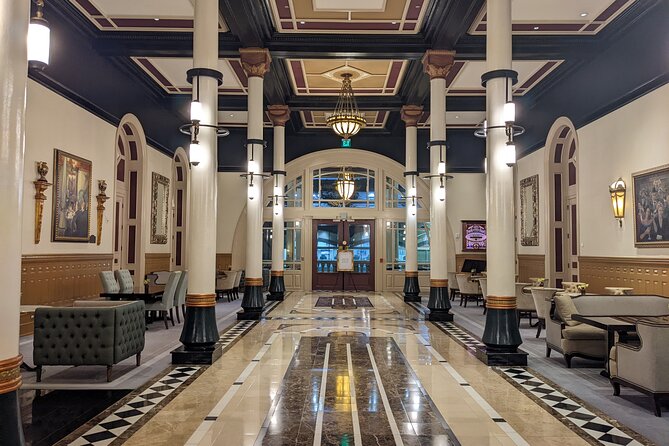
The Driskill: Begin Inside Austin’s Grand Hotel
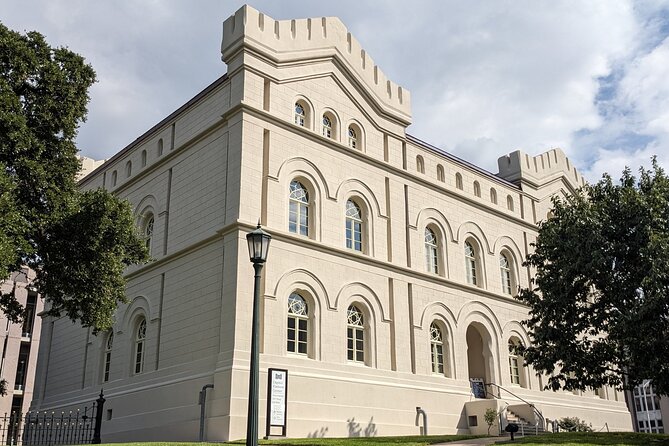
The Driskill receives about 20 minutes, making it the longest stop on the route. It is also the one place you go inside. That matters because architecture can be hard to appreciate from a pavement crowded with traffic and pedestrians.
Inside, the guide explains the hotel’s unusual past and the ideas that shaped its design through the years. The description promises a wild history, and that is useful shorthand for what makes the stop memorable: the Driskill is not treated as a pretty old building alone. Its architecture becomes a way to discuss changing tastes, ambitions, and stories in Austin.
You will not get a full hotel tour with access to every room. Instead, think of this as a focused visit to the public interior, paired with an explanation of the building’s design and past. It is a good opening stop because it gives you something to see up close before the walk shifts to facades and civic buildings.
If architecture is your main interest, arrive ready to look up and around. Decorative details are easier to miss when you are listening to the guide and keeping with the group. The 20-minute allotment should give you a solid introduction, but not enough time for a leisurely architectural survey.
Bremond Block and Austin’s Victorian Homes
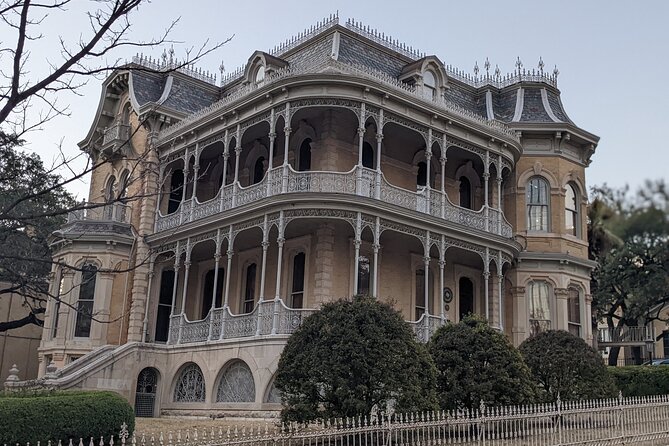
The Bremond Block is one of the most appealing stops for anyone who likes residential architecture. You stroll around a well-preserved group of Victorian homes and learn how their styles changed over time.
This is where the walk feels most personal. Government buildings can seem distant and official. Houses show how families wanted to present themselves, what materials and decorative choices were fashionable, and how private life once occupied land now given to offices and large public buildings.
The homes were built after the Civil War, and the block offers a strong contrast with the Driskill. You move from a grand hotel built to impress a broad public to residences shaped around individual households. The guide also explains the architectural evolution of the houses, so you can compare details instead of seeing the block as one uniform row.
Plan on about 20 minutes here. That is enough for a stroll and a thoughtful explanation, though you may wish for more time if you enjoy photographing porches, trim, rooflines, or other Victorian features. Keep in mind that this is an exterior visit. The appeal comes from the streetscape and the guide’s explanation, not from entering the houses.
The Travis County Courthouse’s Pre-Depression Art Deco
The Heman Marion Sweatt Travis County Courthouse gets about 10 minutes from the outside. Its pre-Depression Art Deco design gives the route another clear change in style.
This is a useful lesson in how public architecture can signal confidence and order. The courthouse does not look like the Victorian homes at Bremond Block or the older forms around the Capitol. Its geometric Art Deco character belongs to a later period and reflects a different idea of modern civic design.
Ten minutes may sound brief, but it suits an exterior stop. The guide can point out the major features and explain why the building matters without turning the walk into a technical seminar. If you like fine architectural detail, you may want to use the pause for a few quick photographs, then listen closely for the historical context.
Same city, a different facade:
- Chicago Architecture River Cruise
★ 5.0 · 15,756 reviews - Chicago River 90-Minute Architecture Tour
★ 4.5 · 9,629 reviews - Chicago River: 1.5-Hour Guided Architecture Cruise
★ 4.8 · 8,046 reviews - Chicago Architecture Center River Cruise aboard First Lady
★ 5.0 · 5,536 reviews
The Governor’s Mansion in a Former Residential Quarter
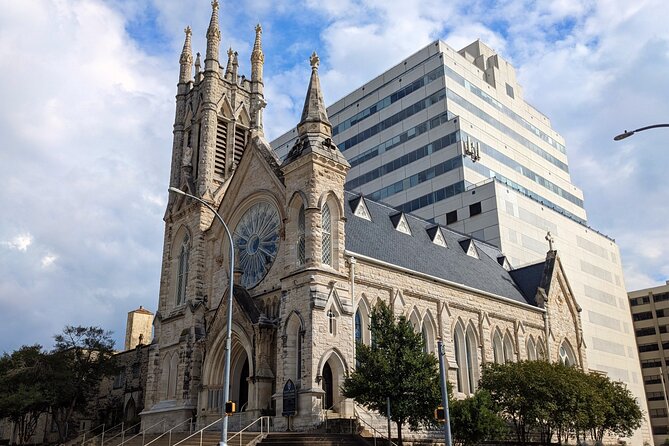
The Texas Governor’s Mansion can seem oddly placed beside government and commercial buildings. That apparent mismatch is the point of the stop.
About 100 years ago, the surrounding blocks held many houses, including some larger than the Governor’s Mansion. The building therefore makes more sense when you picture the area before downtown development changed its character. It was not always an isolated residence surrounded by official buildings and offices.
You see the mansion from outside for roughly 10 minutes. The value here is less about a long architectural inspection and more about learning how Austin’s central district changed. The guide helps you read the building in relation to the neighborhood that once surrounded it.
This is a good example of why a walking tour can tell more than a guidebook photograph. A building may seem out of place until you understand what used to occupy the blocks around it. You leave with a clearer sense of Austin’s growth, not just a memory of one house.
The Texas State Capitol from the South Lawn
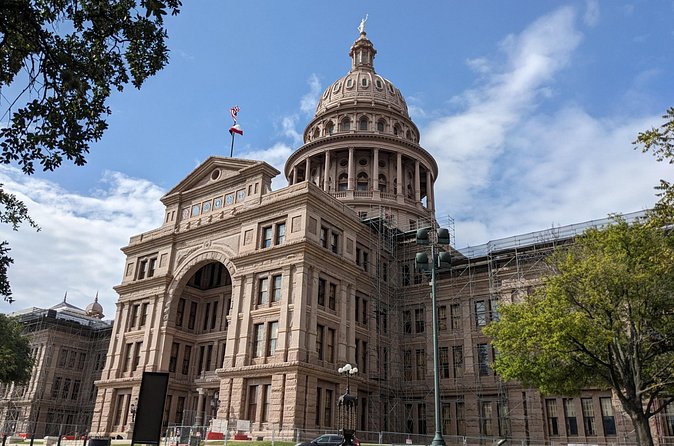
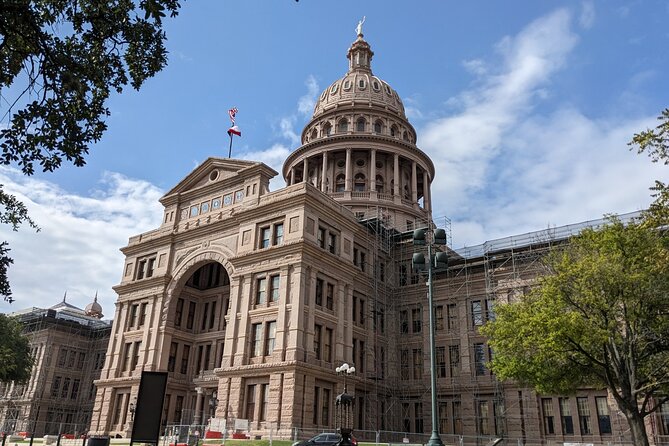
The Texas State Capitol is the largest state capitol building in the country, so a 10-minute stop cannot cover everything. The tour wisely keeps the explanation focused and views the building from the south lawn.
From there, the guide shares a few of the building’s more unusual architectural stories. That approach works well for a short walk. You get a strong visual impression and enough context to understand why the Capitol is central to Austin’s identity, without pretending that you have explored the whole complex.
Do not book this experience expecting a Capitol interior visit. The stop is outside. If you later want to spend more time with the building, you can use the walk as an introduction and return on your own, though the tour itself does not include that extended visit.
The south lawn also gives you space to take in the Capitol’s scale. After the tighter residential streets around Bremond Block, the change is dramatic. The route keeps shifting between intimate buildings and symbols of public power, which is one reason the walk feels more varied than a simple downtown landmark tour.
Saint Mary Cathedral and Its Unusual Construction
Saint Mary Cathedral receives another 10-minute exterior stop. The guide explains the cathedral’s history and its distinctive construction, giving the walk a religious building to set beside the civic and commercial examples.
This is a valuable change of subject. Architecture here is not only about government, wealth, or business. A cathedral also shows how a community expressed faith and permanence through materials, shape, and craftsmanship.
You will learn from the outside rather than enter the building. That limits what you can see, but it also keeps the tour moving and allows the cathedral to fit into the larger story of central Austin. Pay attention to the way the guide explains the construction, since that is the feature singled out for this stop.
The Capitol Complex Visitors Center
The Capitol Complex Visitors Center is one of the more curious points on the route. From outside, the guide discusses what is described as the oldest and possibly strangest state building still standing in Austin.
It does not fit neatly with its neighbors. That visual tension is exactly why it belongs on an architecture walk. Buildings gain meaning through contrast, and this stop helps you notice how different periods and design choices can sit side by side in the same government district.
Again, you spend about 10 minutes outside. The stop is not meant to replace a full visit to the center. It is a quick architectural reading, useful for people who want to understand why downtown Austin does not have one single look.
The Paramount Theatre and Commercial Austin
The final stop is the Paramount Theatre, viewed from across the street. You get about five minutes to study the theatrical ornamentation on this 1915 building.
This is the shortest stop, but it completes the route nicely. After government buildings, homes, a courthouse, a mansion, a Capitol, and a cathedral, you finish with architecture designed to attract an audience and create a sense of occasion. The commercial district speaks in a different visual language.
Because you remain across the street, the stop is brief and observational. You will not receive a theater admission or an interior performance experience. Still, the exterior decoration makes the point: commercial buildings often had to advertise their purpose before anyone walked through the door.
What the $56 Price Really Covers
At $56, this is not a ticket bundle. Admission tickets are listed as free at each stop, and the tour includes an English-speaking guide rather than paid entry to multiple attractions.
The value comes from the explanation and the route. If you would happily walk downtown alone and read plaques, the price may feel high. If you want someone to connect the buildings, explain style changes, answer questions, and point out details you might miss, the cost is easier to justify.
The strongest case for the price is the guide’s role. Emily has been especially effective with people who already know something about architecture. She has answered detailed questions, adjusted the walk for those interests, and sometimes added extra places when the group wanted more. That suggests the experience is not limited to a fixed speech delivered without regard for the people standing in front of the guide.
One person with a preservation background and an architect spouse found the tour worthwhile, which is a useful sign for serious architecture fans. At the same time, the walk is also suited to beginners because the route covers broad styles and clear examples without requiring prior study.
Timing, Walking, and Group Size
The 9:45 a.m. start is practical. You can finish before lunch and use the rest of the day for museums, food, music, or more independent sightseeing. One smart tip is to take this tour early in your Austin stay. The guide may suggest local places to visit, and the route itself helps you understand where central Austin’s main areas sit.
The full experience lasts about 1 hour 45 minutes. Most stops run 10 minutes, with 20 minutes each at the Driskill and Bremond Block and only five minutes at the Paramount Theatre. That timing tells you exactly what kind of tour this is: broad, brisk, and varied.
Wear comfortable walking shoes and prepare for an outdoor activity. The tour requires moderate physical fitness, and the information provided does not promise indoor shelter at every stop. Service animals are allowed, and the meeting point is near public transportation.
The group can include up to 25 people. If you want a private, slow-paced architectural consultation, this is not that. If you like having a guide and a small crowd while moving through the city, the size should work well.
Who Will Get the Most From This Walk
I would recommend this experience to you if you want a compact introduction to Austin’s built environment. It suits first-time visitors, architecture fans, history-minded couples, and anyone who prefers to understand a city through its streets rather than only through major attractions.
It is especially useful for people who like comparisons. You will see Victorian homes, Art Deco civic design, a grand hotel, a cathedral, the state Capitol, and a decorated theater in one outing. The contrasts do much of the teaching.
You may want to skip it if you dislike outdoor walking, want extensive interior access, or prefer to spend an hour and 45 minutes inside a single major site. Only the Driskill is entered, and several stops are limited to 10 minutes from the pavement.
The perfect audience is curious but not necessarily expert. If you already work in preservation or architecture, Emily’s ability to answer questions may add real value. If you know little about Austin’s buildings, the clear progression from government to homes to commerce gives you a useful framework.
Should You Book the Downtown Austin Historical Architecture Walk?
Book it if you want a focused morning walk that explains why central Austin looks the way it does. The route is compact, the building types vary widely, and the guide adds the context that a self-guided stroll often misses.
I would book it early in an Austin visit, especially if you like using local advice to shape the rest of your plans. The $56 cost is reasonable for a guided architectural tour, but less appealing if you only want free landmark views.
The best reason to go is the combination of the Driskill interior, Bremond Block’s Victorian homes, and the Capitol area’s civic buildings. The main caution is the brisk schedule and limited interior access. If those limits suit you, this is a useful, well-focused way to meet Austin through its buildings.
FAQ
Where does the tour begin?
The tour begins at 103 East 5th Street, Austin, Texas 78701.
What time does the tour start?
The scheduled start time is 9:45 a.m.
How long does the tour last?
The experience lasts approximately 1 hour and 45 minutes.
Where does the tour end?
The activity ends back at the meeting point.
Is the tour conducted in English?
Yes. An English-speaking tour guide is included.
Do you go inside any buildings?
Yes. The Driskill is the interior visit. The other listed stops are viewed from outside.
How many people can join the tour?
The maximum group size is 25 people.
Can I cancel for a full refund?
Yes. You can cancel at least 24 hours before the local start time for a full refund. Cancellations or changes made within 24 hours are not refunded or accepted. If poor weather causes the tour to be canceled, you will be offered another date or a full refund.
More History Walks in the USA
- Charleston’s Best Highlights: History, Culture & Architecture
★ 5.0 · 422 reviews - Palm Springs Modernism Architecture & History Bike Tour
★ 5.0 · 359 reviews - Charleston: History and Architecture Guided Walking Tour
★ 4.8 · 349 reviews - Historic Georgetown: History, Gossip, & Architecture Walking Tour
★ 5.0 · 321 reviews
Newly added in the USA
- Washington, DC: Georgetown Architecture Walking Tour★ 5.0 · 8 reviews
- Washington DC: Dupont Circle & Embassy Row Architecture Tour★ 5.0 · 6 reviews
- New Orleans : Garden District Architecture Walking tour★ 4.8 · 5 reviews
- Wilmington History and Architecture Tour★ 4.8 · 18 reviews
- Private Colonial Williamsburg Architectural Tour★ 5.0 · 5 reviews
- Castle to Capitol: Museums of the National Mall Architecture Tour★ 4.5 · 9 reviews
- Tulsa: Art Deco Walking Tour of Tulsa★ 5.0 · 8 reviews
- Monuments and Memorials Architectural Walking Tour★ 5.0 · 17 reviews
Walking Tours, compared.
The Official Art Deco Walking Tour by The Miami Design Preservation League
Read our review →
Baroque Architecture and Underground Walking Tour
Read our review →
Chicago in a Day: Food, History & Architecture Walking Tour
Read our review →

Ramblas, Old Town, Gothic and Gaudi Architecture Walking Tour
Read our review →
Chicago’s Secret Interiors Architectural Walking Tour
Read our review →
Browse the lists this tour appears in