
Review · GAUDí TOURS
Gaudi’s Modernist Legacy: Small Group Walking Tour
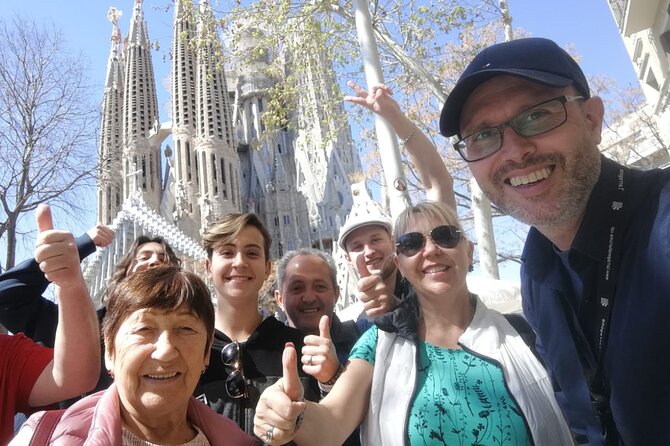
Barcelona’s Modernist story makes the most sense on foot. On this 2.5-hour walk, you move from the elegant Passeig de Gràcia to Gaudí’s Casa Batlló and Casa Milà, then finish at Sagrada Família. The buildings are famous, but the guide helps you notice the details that a quick photo stop misses.
I like the small maximum of 12 people, which gives you a fair chance to hear the guide and ask questions. I also like the broad start-time choice and the way the tour connects Gaudí with other Catalan Modernist architects, including Domènech i Montaner. The main catch is important: this is primarily an exterior walking tour, and admission to Sagrada Família, Casa Batlló, and Casa Milà is not included.
Key points to know before booking
- Casa Batlló and Casa Milà anchor the walk: You get close architectural explanations at two of Gaudí’s most famous homes.
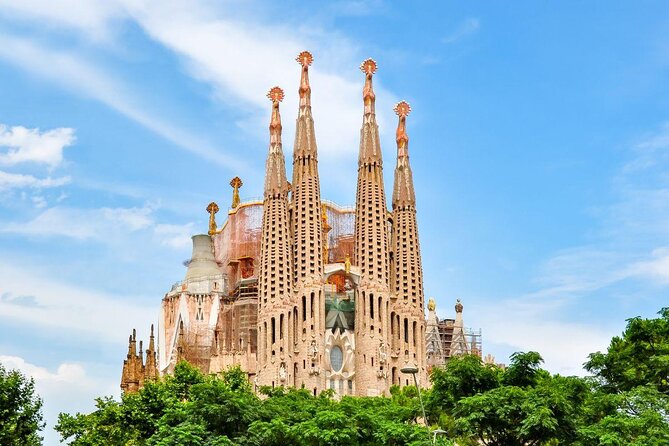
- The tour ends at Sagrada Família: Your guide explains the basilica’s design and symbolism, but an interior visit is not included.
- Groups are capped at 12: That is small enough for personal questions and a more relaxed pace.
- Guides bring strong subject knowledge: Named guides praised in the feedback include Roberto, Antonio, Montse, José Carlos, Laura, Jordi, Alfredo, Tony, and Miguel.
- The route begins near Plaça de Catalunya: Meet at Carrer de Fontanella 2 and finish in the Eixample at Sagrada Família.
- Clarify the ticket issue: The walking tour explains the major buildings, but you should arrange separate admission if you want to go inside them.
Why Barcelona’s Modernist architecture works best on foot
Gaudí gets most of the attention, yet Barcelona’s Modernist movement was not a one-man show. This walk helps place him among architects who reshaped the city in the late nineteenth and early twentieth centuries.
You start in the historic center at Carrer de Fontanella 2, then head toward Passeig de Gràcia. This change in scenery matters. The walk begins with the city’s grand commercial avenue, where wealthy families commissioned elaborate homes and shops competed for attention.
The route is not only about spotting unusual façades. It gives you a way to read them. Look for organic lines, ceramic decoration, sculpted stone, wrought iron, stained glass, and references to nature. A strong guide can turn a wall, doorway, or balcony into part of a larger story about Catalan identity and Barcelona’s growth.
The group limit helps here. With 12 people or fewer, you are less likely to be stranded at the back of a crowd while the guide points to a small detail above the pavement. The walk still takes place in a busy city, so you should expect street noise and regular pedestrian traffic, but the format is more personal than a large coach tour.
More Walking Tours in Barcelona
- Ramblas, Old Town, Gothic and Gaudi Architecture Walking Tour
★ 5.0 · 723 reviews - Barcelona 1.5h Private Old Town, Gothic & Ramblas Walking Tour
★ 5.0 · 318 reviews - Barcelona: Ramblas, Old Town & Gaudí Houses Walking Tour
★ 4.9 · 239 reviews
Passeig de Gràcia, Barcelona’s grandest architectural showcase
Passeig de Gràcia is one of the most useful parts of the route because several impressive buildings sit close together. It is also one of Barcelona’s most fashionable avenues, lined with high-end shops and elegant façades.
You will see how Modernist architects used private houses as public statements. These were not plain apartment blocks. Owners wanted homes that displayed taste, wealth, and modern ideas, while architects competed to create something more original than the building next door.
This is where the guide’s commentary earns its keep. Without context, the buildings can blur into a parade of ornate fronts. With a clear explanation, you begin to compare the different architects and notice how each used color, texture, curved forms, and symbolism in a distinct way.
The avenue is also a practical place to ask your guide for restaurant suggestions. Montse, one of the guides praised for her advice about Catalan culture, architecture, and local dining, was especially appreciated for useful restaurant recommendations. Food advice is not a promised part of the tour, but the setting makes it a natural question to ask.
Palau de la Música and the Modernist beginnings
One stop brings attention to a house connected with Lluís Domènech i Montaner, who taught Gaudí at university. The route also includes a look at the Palau de la Música Catalana, one of Barcelona’s most striking Modernist buildings.
This section gives the tour needed balance. If every explanation focused only on Gaudí, you could leave thinking Barcelona’s architectural story begins and ends with him. Domènech i Montaner shows another side of the movement, with its own use of decoration, craft, symbolism, and theatrical color.
The Palau de la Música is particularly rewarding from the outside. Its design reflects the Modernist love of elaborate ornament and the idea that architecture should involve many art forms at once. The tour does not include a concert or a separate interior visit, so think of this as an architectural introduction rather than a full Palau experience.
Casa Amatller and the chocolate connection
Casa Amatller is one of the most memorable stops because it sits beside Casa Batlló and helps you compare two very different Modernist approaches. It was created for a family associated with chocolate making, and that connection gives the building a pleasingly human detail amid all the grand architecture.
You can also buy chocolate to take home, though food is not included in the tour price. This is a useful small stop for anyone who wants a local souvenir that is easier to pack than a ceramic tile or a large art book.
Casa Amatller matters because it prevents the nearby buildings from becoming background scenery. Ask your guide to point out how its façade differs from Gaudí’s work. The contrast is part of the lesson: Barcelona’s Modernism was a conversation among architects, not a single visual formula.
More Walking Tours in Spain
- Barcelona Architecture Walking Tour With Casa Batlló Upgrade
★ 5.0 · 137 reviews - Treasures of Barcelona: Private Gaudi Walking Tour
★ 5.0 · 128 reviews - Night Tapas Walking Tour in Barcelona Modernist Area with Small Group and Dinner
★ 4.5 · 56 reviews - Private Barcelona Modernism and Gaudí Walking Tour
★ 4.7 · 54 reviews
Casa Batlló, where Gaudí’s imagination takes over
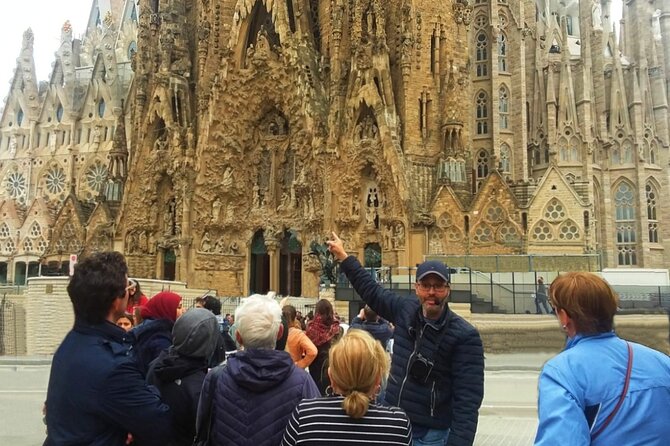
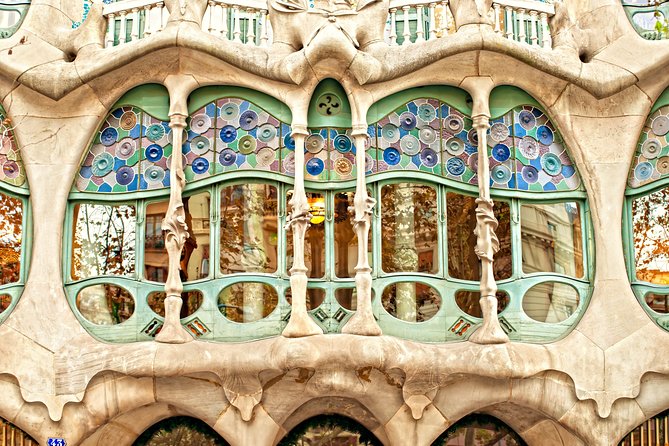
Casa Batlló is the visual high point for many people. Its colored surface, curved forms, and fantasy-like details make it hard to mistake for an ordinary apartment building.
The house was created with unusual freedom, allowing Gaudí to develop an intensely personal design. Its organic forms suggest bones, scales, waves, or a creature from a Catalan legend, depending on what your eye catches first. The building is also tied to the story of St. George, the patron saint of Barcelona and many other places.
A good guide will slow down here. You want time to take photographs, but you also want to understand why the building feels alive. Look above eye level, where balconies and roof details can be missed in a hurried walk. The façade rewards patient viewing.
One practical point deserves emphasis. The walking tour does not include admission to Casa Batlló. You see and discuss the building from outside, and the tour information describes the Modernist walk as including Casa Batlló and La Pedrera, not entry to both. If you want the full interior experience, buy a separate ticket and allow extra time outside this tour.
Casa Milà and Gaudí’s organic apartment block
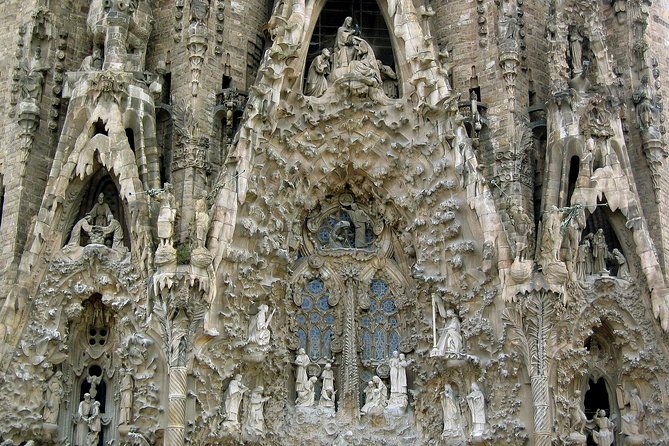
Casa Milà, widely called La Pedrera, presents a different side of Gaudí. Casa Batlló feels colorful and storybook-like. Casa Milà is heavier, more sculptural, and built around flowing stone forms that seem to move across the façade.
The building was designed as a Modernist residence shaped around changing social needs, while still drawing heavily from nature. Its exterior can look rough and irregular, especially compared with the polished avenue around it. That is exactly why it deserves explanation.
The guide can help you see the building as more than a strange apartment block. Notice the undulating stone frontage, the ironwork, and the way the structure rejects rigid straight lines. La Pedrera is a UNESCO World Heritage Site, as is Casa Batlló, and both reflect Gaudí’s ability to make a private home feel like a complete artistic world.
Again, plan on an exterior visit during this walk. Admission is not included, so save La Pedrera’s interior, rooftop, and museum areas for another time if they are high on your list.
The St. George legend and Catalan identity
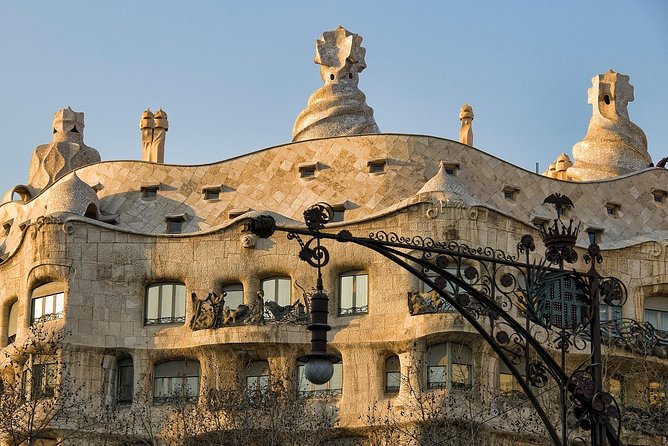
The St. George references add a cultural layer to the architecture. In Catalonia, St. George is closely linked with local identity, and his legend appears in the decorative language around the city.
This is one reason a guided walk can be more useful than a self-guided route. You might notice a dragon-like shape or a floral pattern, but the guide connects it to the building’s story and to the wider culture of Barcelona.
The tour also gives you a basic introduction to Catalan history and city life. Several guides, including José Carlos, Antonio, Roberto, Laura, and Jordi, were praised for explaining both architecture and Barcelona itself. The strongest feedback focused on guides who made the subject clear, added humor, and adapted their explanations to the group.
Ending at Sagrada Família
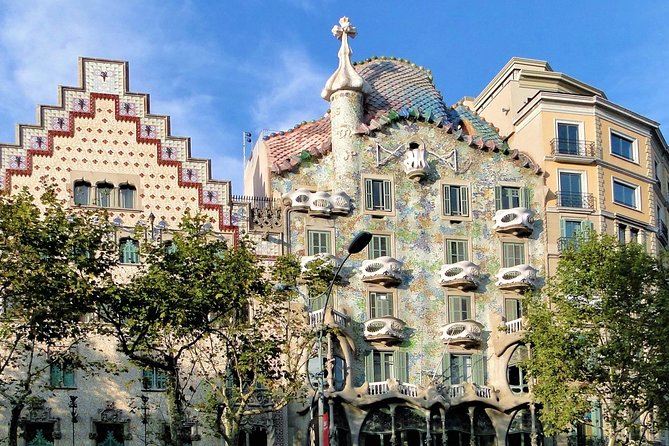
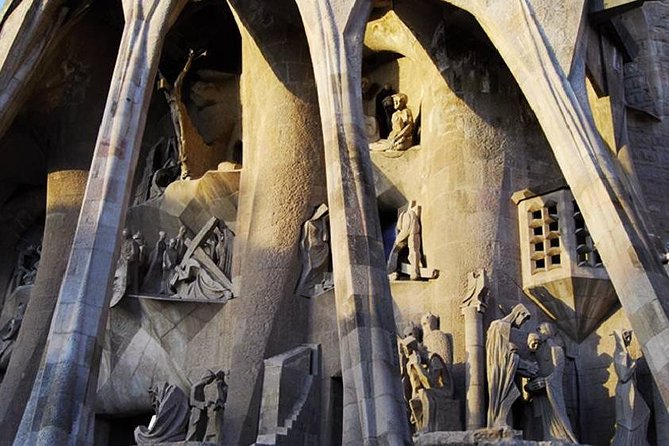
The final stop is Sagrada Família, Gaudí’s most famous work and the endpoint of the walk. Even from outside, the basilica gives you plenty to study: sculpted façades, organic forms, towers, religious symbols, and the way the structure seems to grow rather than simply rise.
The guide provides a thorough explanation of Modernist architecture and Sagrada Família. That makes the ending useful even if you plan to visit the interior later. You can look for the building’s natural shapes, the symbolic scenes on the façades, and the way light and color are intended to work inside.
Be clear about what you are booking. The tour ends at Sagrada Família and explains the building, but it does not include entry. One piece of feedback specifically pointed out that some people expected admission because of unclear wording about free access. The safest approach is to treat this as an exterior visit and book a separate basilica ticket if you want to go inside.
That distinction also affects the timing. One guide reportedly ran about an hour over after spending too long at earlier stops, leaving less time for Sagrada Família. The advertised duration is about 2 hours and 30 minutes, but the pace can vary with the guide and the group. If you have a timed Sagrada Família admission afterward, leave a generous gap.
What the guides add to the experience
The guide is the main variable in a walking tour, and the feedback here is strongest on this point. Antonio was praised for careful research, enthusiasm, and a fun manner. José Carlos was noted for clear explanations and an accommodating approach.
Roberto received particular praise for adjusting the walk to the group and helping a family member using a wheelchair. Laura was appreciated for her passion for art and architecture, while Montse brought strong explanations of Catalan culture and useful restaurant suggestions. Jordi, Alfredo, Tony, and Miguel were also singled out for making the architecture easier to understand.
You cannot request a particular guide with certainty from the information provided, but these names give you a useful idea of the experience’s best quality: the right guide can turn a sightseeing walk into a lively architecture lesson.
The group size helps guides adapt. One account described a very small group of three, which felt almost private. That will not be the normal expectation, but the cap of 12 still gives you a better chance of direct conversation than a large group format.
Price, walking effort, and overall value
At $22.01 per person, this is a modestly priced introduction to Barcelona’s Modernist center. I consider it good value if your goal is orientation, context, and help seeing the details on the outside of several major buildings.
The price is less compelling if you expect multiple interior visits. Food, drinks, hotel pickup, and drop-off are not included, and admission to the major landmarks is not included either. You are paying for the guide, the route, and the explanations.
The walk lasts about 2 hours and 30 minutes. Most people can participate, and the route is near public transportation. Wear comfortable shoes, since you are moving through central Barcelona on foot and stopping repeatedly along city streets.
The walk begins at Carrer de Fontanella 2 in Ciutat Vella and ends at Sagrada Família in Eixample. That point-to-point route is convenient because it leaves you near one of Barcelona’s most important sights rather than returning you to the start.
Who should book this Modernist walk?
I would choose this tour if you are visiting Barcelona for the first time, want a clear introduction to Gaudí, or find architecture easier to understand with a guide beside you. It also suits anyone who wants to compare Gaudí with Domènech i Montaner and other Modernist figures.
Families and mixed-interest groups may like the short format and the chance to stop for photographs. The guide can adjust the amount of detail, and the small group makes it easier to ask questions without interrupting a large crowd.
You should think twice if you dislike walking, want long interior visits, or already know Barcelona’s Modernist buildings well. You may get more from separate timed admissions to Casa Batlló, La Pedrera, and Sagrada Família.
The tour is offered in English, and service animals are allowed. Confirmation arrives at booking, and free cancellation is available up to 24 hours before the start time. A cancellation made within 24 hours is not refundable.
Should you book it?
Book this walk if you want the city’s Modernist buildings explained rather than simply photographed. The strongest reason to choose it is the combination of a small group, a central route, and guides who bring warmth, humor, and useful local advice.
Skip it if your main goal is to enter Gaudí’s buildings during the same outing. In that case, arrange separate tickets and allow enough time between appointments. For a first look at Barcelona’s architecture, though, the route offers a sensible starting point and finishes exactly where many visitors most want to continue: at Sagrada Família.
FAQ
How long does the Gaudí Modernist walking tour last?
The tour lasts approximately 2 hours and 30 minutes.
Where does the tour begin?
The meeting point is Carrer de Fontanella 2, Ciutat Vella, Barcelona.
Where does the tour end?
The tour ends at Sagrada Família in Barcelona’s Eixample district.
Is admission to Sagrada Família included?
No. The tour includes an explanation of Sagrada Família, but admission is not included.
Are tickets to Casa Batlló and La Pedrera included?
No. The walking tour includes the buildings as sightseeing and explanation stops, but entrance tickets are not included.
How large is the tour group?
The group has a maximum of 12 people.
Is the tour offered in English?
Yes. The experience is offered in English.
Is hotel pickup or drop-off included?
No. Hotel pickup and drop-off are not included.
Can I cancel for a full refund?
Yes. You can cancel at least 24 hours before the local start time for a full refund. Changes or cancellations made less than 24 hours before the start time are not accepted for a refund.
More Gaudi Tours in Barcelona
- Barcelona: Park Güell and Gaudí House Museum Entry Ticket
★ 4.5 · 6,326 reviews - Barcelona: Gaudí’s Park Güell Tour with Fast-Track Ticket
★ 4.8 · 4,512 reviews - Sagrada Familia & Gaudi Tour Private or Small Group with Tickets
★ 4.5 · 1,188 reviews - Complete Gaudi Tour: Casa Batllo, Park Guell & Sagrada Familia
★ 5.0 · 1,152 reviews
Newly added in Barcelona
- Barcelona: Private Gaudi Guided Segway Tour★ 5.0 · 6 reviews
- Barcelona: Exclusive Exploration of Gaudi’s Masterpieces★ 5.0 · 2 reviews
- Barcelona: Guided tour e-bike Barcelona historical and modernist Barcelona★ 4.5 · 5 reviews
- Barcelona: Wonders of Gaudi Bike Tour★ 4.3 · 6 reviews
- Barcelona Architecture Walking Tour With Casa Batlló Upgrade★ 4.8 · 11 reviews
- Barcelona: Gaudi Tapas & Wine Tasting Small Group Tour★ 5.0 · 3 reviews
- Barcelona: E-Scooter Gaudí & the Sea Tour★ 4.3 · 10 reviews
- Barcelona Beyond Gaudí: Modernism, Rooftops, and Hidden Gems★ 5.0 · 2 reviews
Gaudí Tours, compared.
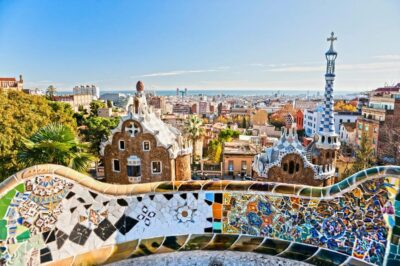
Park Güell and Gaudí House Museum Entry Ticket
Read our review →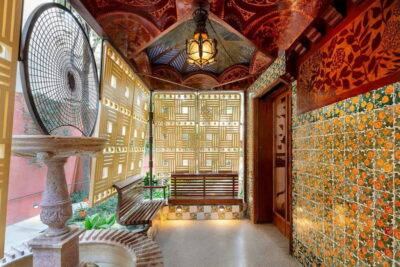
Gaudi’s Casa Vicens Skip-the-Line Entrance Ticket
Read our review →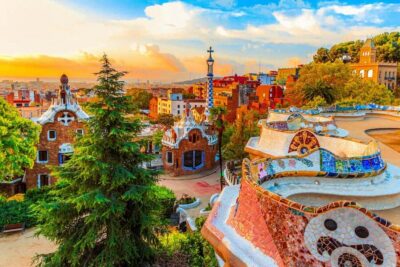
Gaudí’s Park Güell Tour with Fast-Track Ticket
Read our review →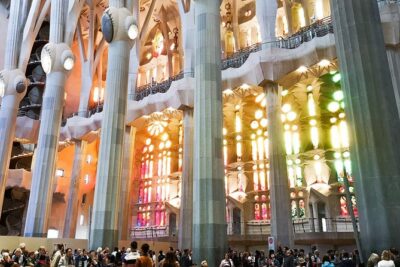
Sagrada Familia & Gaudi Tour Private or Small Group with Tickets
Read our review →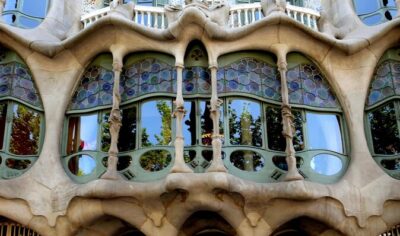
Complete Gaudi Tour: Casa Batllo, Park Guell & Sagrada Familia
Read our review →
Park Güell: Guided Tour with Optional Gaudí Experience Entry
Read our review →
Barcelona e-Bike Tour: Gaudí & Old Town Small Group
Read our review →
Ramblas, Old Town, Gothic and Gaudi Architecture Walking Tour
Read our review →Browse the lists this tour appears in