Review · PRIVATE
Architectural Budapest: Private Tour with a Local Expert
Budapest’s architecture tells the story of a city that has changed hands, rebuilt itself, and kept moving forward. This private tour links grand landmarks such as St. Stephen’s Basilica, the Opera House, and Parliament with less expected sights, including the Art Nouveau Postal Savings Bank and the round Hotel Budapest.
I like the one-to-one format, which lets you ask why a building looks the way it does instead of following a fixed lecture. I also like the chance to shape the route around your interests. One guide, Beata, adjusted the focus for a group that wanted opera, Szimpla Bar, and parts of the city they had barely seen.
The main drawback is cost. At $578.41 for up to two people, this is a serious outlay for about two hours, and entry tickets plus transport are extra. The route also covers a lot of ground, so it is not a good pick if walking is difficult.
Key points to know before booking
- A private two-hour architecture walk gives you room to ask questions and change the focus as you go.
- The route connects Pest and Buda, ending near Hotel Budapest in the Buda district rather than returning to the starting point.
- Beata is one guide who has led this experience, with the ability to adjust the tour to the group’s interests.
- The itinerary mixes famous sights with unusual architecture, including the Postal Savings Bank and a cylindrical modernist hotel.
- Transport and entry fees are not included, so you may need to pay separately to reach some stops or enter monuments.
- The $578.41 price covers up to two people, making the value better for a pair than for one person.
Why Budapest works so well as an architecture tour
Budapest gives you a clear lesson in how cities grow. Classical churches, grand government buildings, Art Nouveau decoration, medieval walls, and modernist concrete all sit within the same city. In two hours, you can see not just attractive buildings, but different ideas about power, religion, trade, national identity, and modern life.
The route begins in Pest at St. Stephen’s Basilica and eventually reaches Buda. That change matters. Pest has broad avenues, formal public buildings, and ornate commercial architecture. Buda brings hills, older defenses, royal buildings, and views shaped by the Danube.
You should think of this as an introduction rather than a full architectural survey. Two hours is enough to give you a strong framework, but not enough for long interior visits or detailed time at every stop. The value comes from the guide connecting the buildings into a story.
Because the tour is private, you can tell the guide what you already know. You might want to focus on religious architecture, the city’s modern growth, Art Nouveau design, or the way Buda Castle affects the skyline. If you prefer a broad overview, the guide can keep the route moving.
More Private Tours in the world:
- Best of Chicago: Architecture & Highlights City Private Tour
★ 5.0 · 94 reviews - Private Harajuku Omotesando Architecture Walking Tour
★ 5.0 · 67 reviews - Private Santa Barbara History and Architecture Walking Tour
★ 5.0 · 56 reviews
St. Stephen’s Basilica sets the tone
The tour begins at St. Stephen’s Basilica on Szent István tér. This is an easy meeting point in central Budapest, and the church gives the tour a suitably grand opening.
The basilica is known for its neoclassical design, large dome, and role as a major religious landmark. Even if you are not especially interested in church architecture, it is useful as a starting point because it shows Budapest’s taste for scale and ceremony.
Ask the guide to point out the parts that reveal the building’s design logic. The broad form and prominent dome are not there simply for decoration. They make the church a major presence in the surrounding square and help explain why religious buildings played such a strong part in the city’s public image.
The exact amount of time here can change. Since no interior admission is included, you should not assume that the tour includes a full visit inside the basilica. The guide may discuss the building from outside or explain how to visit it separately.
Andrássy Avenue and the Budapest Opera House

From the basilica, the route turns toward Andrássy Avenue, one of Budapest’s best-known boulevards. It is lined with impressive buildings, luxury shops, and cultural institutions. More than a pleasant walk, the avenue shows how Budapest planned a grand urban corridor for movement, display, and civic life.
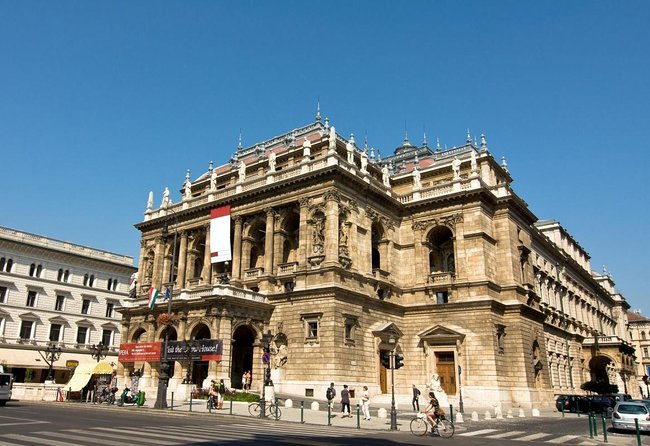
The Hungarian State Opera House is the highlight here. Its neo-Renaissance style gives you a sharp contrast with the basilica’s neoclassical character. The Opera House also adds a cultural layer to the tour, since architecture and performance have long worked together in this part of the city.
A guide can help you read the building beyond its ornate exterior. Look for the way a performance hall needs to project importance before you even enter. The building has to signal ceremony, wealth, and artistic ambition from the street.
The practical limit is time. A two-hour private walk cannot promise a long interior visit or a performance. Entry tickets are not included, and the tour information does not confirm interior access. If the Opera House is a top priority, ask the guide before the tour how much attention it can receive.
The Postal Savings Bank reveals Budapest’s playful side
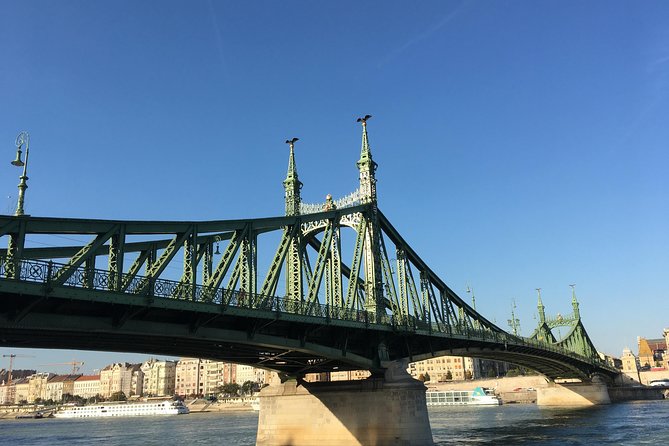
The Postal Savings Bank brings a different mood. This early twentieth-century building is known for its Art Nouveau design, a style that allowed architects to move away from strict classical rules and use decoration in more inventive ways.
The building is important because it shows that Budapest’s architecture was not only about monumental churches, opera houses, and government buildings. Functional structures could also receive a bold artistic treatment. A bank or postal facility still had practical work to do, but its exterior could carry a strong visual identity.
This is the kind of stop that makes a private tour useful. You might pass it on your own and register only that it looks unusual. With a guide, you can place it in the wider change from historic styles toward early modern design.
The building may be especially appealing if you like details, surfaces, and decorative motifs. It also helps break up the route between the more famous landmarks. The tour does not treat Budapest as a string of postcard views. It gives space to buildings that explain how the city functioned.
A few more architecture walks in the world worth a look
- Chicago Architecture River Cruise
★ 5.0 · 15,756 reviews - Chicago River 90-Minute Architecture Tour
★ 4.5 · 9,629 reviews - Chicago River: 1.5-Hour Guided Architecture Cruise
★ 4.8 · 8,046 reviews - Chicago Architecture Center River Cruise aboard First Lady
★ 5.0 · 5,536 reviews
Parliament beside the Danube
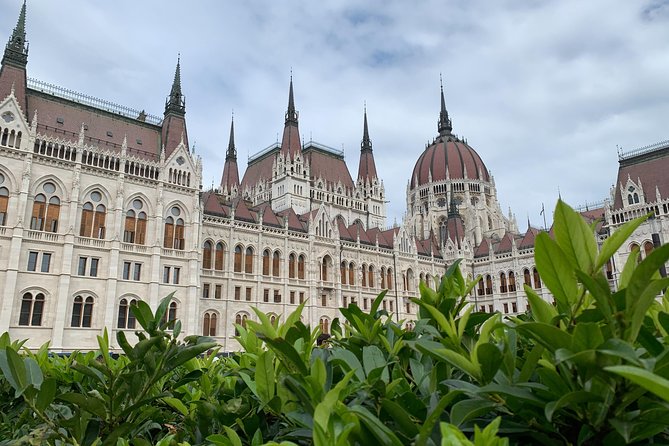
The Hungarian Parliament Building is the route’s great civic landmark. It rises beside the Danube in Gothic Revival style and represents Hungary’s political center and national story.
Even from the outside, Parliament is difficult to miss. Its scale and position give it a powerful effect on the riverfront. A guide can explain how the building fits into Budapest’s skyline and why the Danube setting matters. The view is not just about a single building. It is about the relationship between the river, the city’s two sides, and the public institutions gathered along the water.
This stop may be one of the tour’s strongest moments for first-time visitors. You get a major Budapest sight, but the architectural focus helps you see it with more care. Instead of only taking a photo, you can consider the Gothic Revival choices, the building’s political purpose, and its role in the city’s identity.
Again, do not assume that entry is part of the experience. Monument tickets are excluded, and the advertised tour is built around a local guide and tailored route. If you want to go inside Parliament, arrange that separately and confirm whether it fits your schedule.
Crossing toward Castle Hill
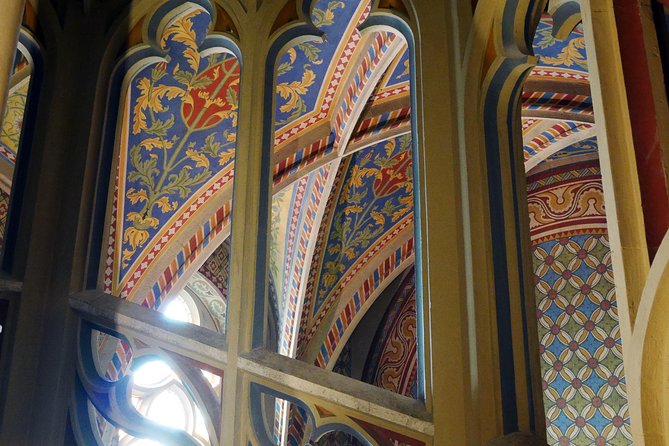
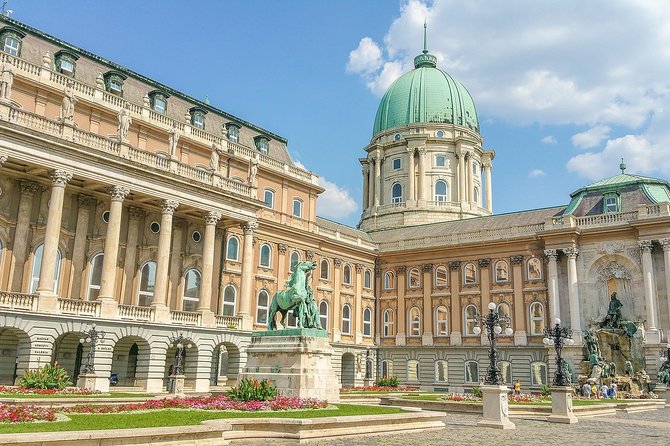
The route then shifts from Pest to Buda and ends in the Buda district. This is an important change in both scenery and subject matter. Castle Hill brings you closer to Budapest’s medieval past, with Buda Castle, Matthias Church, and Fisherman’s Bastion forming the main architectural group.
The district shows several periods in one compact area. Royal power, religious life, military defense, and tourism all appear in the same setting. The result is a more layered experience than the formal boulevards of Pest.
Buda Castle also helps explain the shape of Budapest’s skyline. Its position above the river gives it visual power from many parts of the city. The guide can connect the hilltop buildings with the broader question of how Budapest developed around the Danube.
The route may feel physically demanding here. The tour is not recommended for people with impaired mobility, and the itinerary can cover a fair distance between central Pest and Buda. Wear sensible shoes and ask about the planned path if hills or extended walking are a concern.
Matthias Church and Fisherman’s Bastion
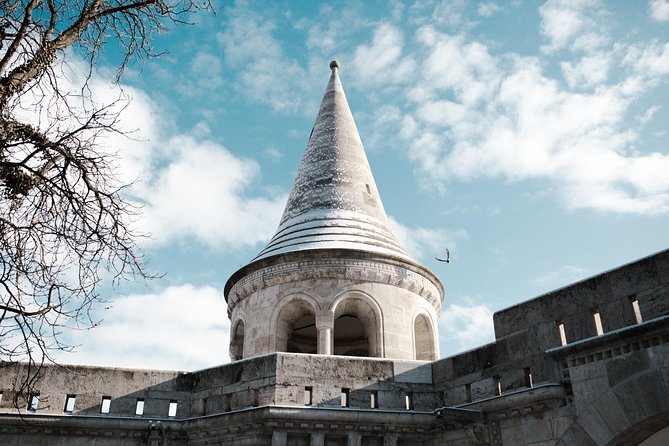
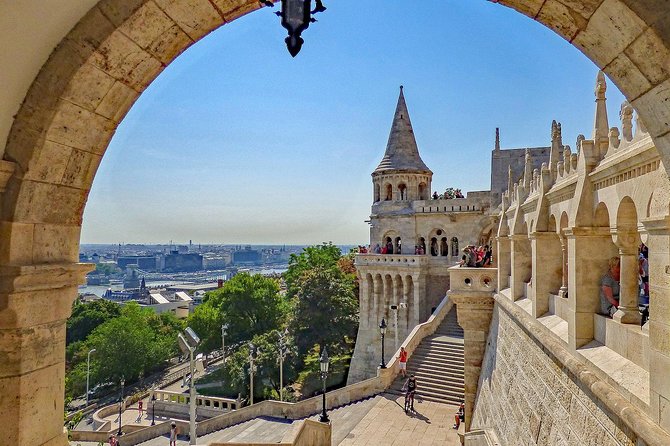
Matthias Church and Fisherman’s Bastion add two very different notes to Castle Hill. The church represents the religious and historic side of the district, while Fisherman’s Bastion is known for its unusual forms and viewing points.
Together, they show why Castle Hill is more than one castle building. It is a district where architecture creates a sense of place through walls, towers, church forms, terraces, and elevated views. Your guide can help you separate the medieval elements from later additions and explain how the area reflects Budapest’s changing image.
The tour’s private format is useful here because you can decide how much time to spend on details. If you care about church design, you can ask for more attention to Matthias Church. If you are more interested in city views and defensive architecture, Fisherman’s Bastion may become the focus.
There is a tradeoff. With seven major stops listed across two hours, some of these places may receive only a short explanation. The itinerary can change with weather and your pace, so treat the route as a flexible overview rather than a promise of equal time at every landmark.
Hotel Budapest provides a modern finish
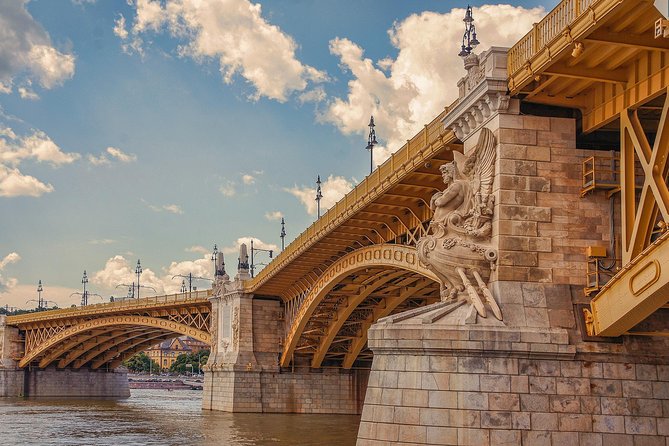
The final stop is Hotel Budapest, a cylindrical modernist building in the Buda district. It is an unexpected ending after churches, opera architecture, royal buildings, and Gothic Revival Parliament.
Its round form gives you a direct comparison with Budapest’s older styles. The building shows how the city continued to experiment with shape and function in the modern period. That contrast is one of the tour’s best ideas: you finish by looking at a building that would feel out of place beside a medieval church, yet belongs to the same evolving city.
Hotel Budapest also reinforces the tour’s main theme. Budapest is not frozen in its grand nineteenth-century image. Its skyline includes modern buildings and later additions, and those structures help explain the city as it exists now.
The end point is on Szilágyi Erzsébet fasor in Buda, not back at St. Stephen’s Basilica. Plan your next move before the tour begins. The description does not include transport, so any bus, tram, or taxi costs are yours to cover.
What the private format is really worth
The price is $578.41 per group of up to two people. For two, that works out to about $289.21 per person. For one person, the cost is much harder to justify unless a highly personal architecture lesson is exactly what you want.
The strongest value comes from the flexibility. You are not paying for a large group tour with a fixed script. You are paying for a local guide, a private setting, and an itinerary that can adapt to your interests and walking speed.
That matters if you have already seen Budapest’s famous sights and want a sharper way to understand them. It also matters if your group has mixed interests. One person may care about the Opera House, another about Art Nouveau buildings, and another about Buda Castle. The guide can shift the balance.
The price is less attractive if you mainly want transport between landmarks, interior entry, or a long visit at one site. Those costs are separate, and two hours passes quickly. You should also remember that personal expenses are not included.
The experience receives a 4.5 rating from two published reviews, so there is not enough feedback to treat that score as a firm prediction. One detailed account praised the history and architecture focus, the hidden places along the route, and the way Beata adapted the tour for different age groups. Those are the clearest reasons to book, but the small number of reviews means you should judge the format and price for yourself.
Timing, walking, and simple planning tips
The tour lasts about two hours, but the time includes movement between several parts of the city. You will get more from it if you arrive ready to walk and if you tell the guide your priorities at the start.
A few practical choices will improve the experience:
- Decide if you want more famous landmarks or more unusual buildings.
- Tell the guide if you have already visited the basilica, Opera House, Parliament, or Castle Hill.
- Ask how the route will handle transport between Pest and Buda.
- Wear shoes suited to city walking and Castle Hill.
- Budget separately for public transport, taxis, museums, and monument entry.
- Keep your plans after the tour flexible, since the endpoint is in Buda.
The tour is near public transportation, and service animals are allowed. Most people can take part, but the experience is not recommended for people with impaired mobility. Weather can also change the stops, so an outdoor route needs some flexibility.
Who should book Architectural Budapest
I would choose this tour for a couple who wants a focused introduction to Budapest and prefers conversation over a large group. It is also a good fit for architecture students, design-minded visitors, and anyone who wants to understand why the city looks so different from one district to the next.
Families may like the mix of churches, opera, unusual buildings, and city views. Beata’s reported ability to adjust the route for different ages is encouraging, though guide assignment is not guaranteed.
I would skip it if your main goal is a cheap overview, extensive interior access, or a slow visit to every major monument. You can cover more ground for less money on a group sightseeing tour, and you may prefer a dedicated Parliament or Castle Hill visit if one site matters most.
Should you book this private Budapest architecture tour?
Book it if you value a personal route and want a guide to connect Budapest’s major buildings with less familiar examples. The mix of St. Stephen’s Basilica, Andrássy Avenue, the Opera House, the Postal Savings Bank, Parliament, Castle Hill, and Hotel Budapest gives you a broad view of the city’s architectural changes.
At $578.41 for up to two people, the tour needs to feel special to be worthwhile. Tell the guide what you want before setting out, use the flexibility, and do not expect entry tickets or transport to be included. If you want a tailored architectural conversation and can handle the price and walking, this is a strong choice. If you want a budget-friendly sightseeing circuit, choose something simpler.
FAQ
How long does the Architectural Budapest tour last?
The tour lasts approximately two hours.
How much does the private tour cost?
The price is $578.41 per group of up to two people.
Is the tour private?
Yes. Only your group participates, and the itinerary is tailored to your interests and walking pace.
Where does the tour begin?
The meeting point is St. Stephen’s Basilica at Budapest, Szent István tér 1, 1051 Hungary.
Where does the tour end?
The tour ends in Buda at Budapest, Szilágyi Erzsébet fasor 47, 1026 Hungary.
Are transport and entry tickets included?
No. Transportation, museum admission, monument entry, and personal expenses are not included.
Can I cancel for a full refund?
Yes, if you cancel at least 24 hours before the experience start time. Cancellations made within 24 hours are not refunded, and changes within that period are not accepted.
Newly added in the world
- Washington, DC: Georgetown Architecture Walking Tour★ 5.0 · 8 reviews
- Washington DC: Dupont Circle & Embassy Row Architecture Tour★ 5.0 · 6 reviews
- New Orleans : Garden District Architecture Walking tour★ 4.8 · 5 reviews
- Wilmington History and Architecture Tour★ 4.8 · 18 reviews
- Unveiling Brno: History, Culture & Architectural Delights★ 5.0 · 2 reviews
- Vicenza: Palladian Architecture Private Walking Tour★ 3.3 · 3 reviews
- Walk & Discover KL’s Architectural and Heritage Gems★ 5.0 · 7 reviews
- Private Colonial Williamsburg Architectural Tour★ 5.0 · 5 reviews
Private, compared.
Sagrada Familia & Gaudi Tour Private or Small Group with Tickets
Read our review →
Barcelona 1.5h Private Old Town, Gothic & Ramblas Walking Tour
Read our review →
Treasures of Barcelona: Private Gaudi Walking Tour
Read our review →
Sagrada Familia & Gaudi Guided Tour Private or Small Groups
Read our review →
Best of Chicago: Architecture & Highlights City Private Tour
Read our review →
Private Harajuku Omotesando Architecture Walking Tour
Read our review →
Private Santa Barbara History and Architecture Walking Tour
Read our review →